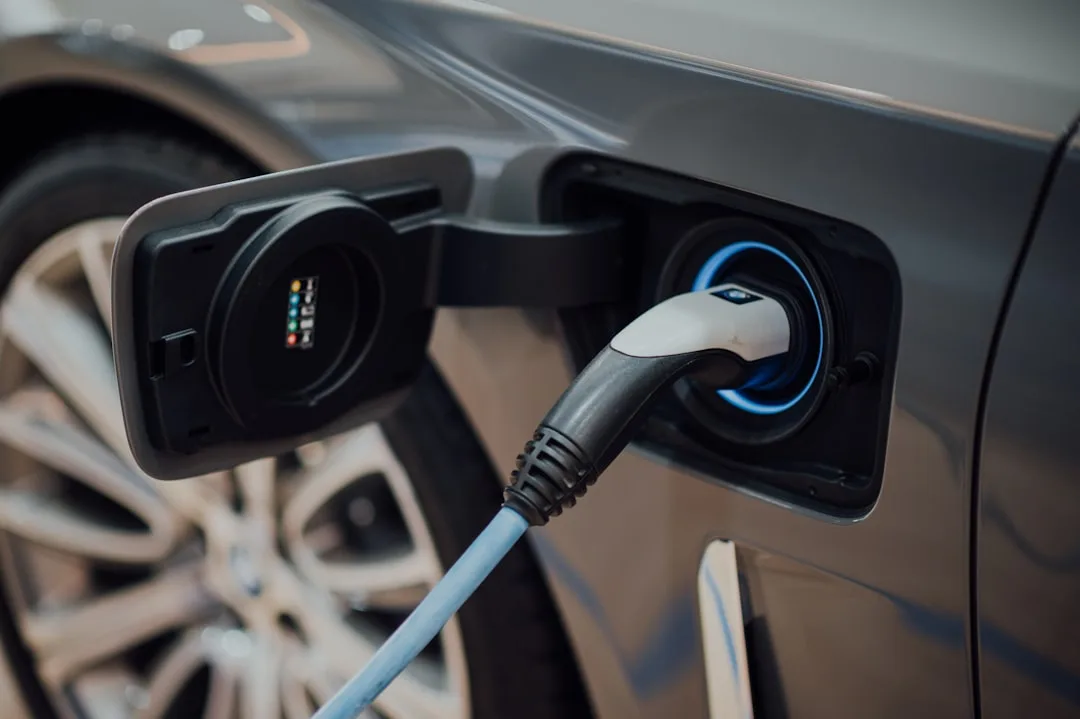
You’re 240 miles from your destination on I-95, battery at 18 percent, and your phone shows three charging stations within a 12-mile radius—each with real-time availability, pricing, and estimated wait times. This scenario defines 2026 driving: electric vehicle charging networks have matured from fragmented afterthoughts into integrated route-planning systems that make EV ownership viable for long-distance travel. The infrastructure shift happened fast. In early 2024, charging anxiety ranked as the #1 barrier to EV adoption; today, integrated mapping, ultra-rapid chargers, and subscription standardization have flipped that script entirely.
Integrated Mapping Replaces Disconnected Apps
Tesla’s North American Supercharger network expanded to include third-party EVs in 2024, but 2026 brought the real disruption: unified routing. Most new EVs now integrate real-time charging availability directly into native navigation systems, eliminating the need to toggle between five separate apps. Ford’s BlueCruise, GM’s Super Cruise, and Hyundai’s Highway Driving Assist 2 all pull live data from Electrify America, EVgo, and Tesla networks simultaneously.
Electrify America operates 70,000+ charging ports across North America as of mid-2026, with real-time pricing between $0.28 and $0.52 per kWh depending on location and time of day—roughly equivalent to $1.40–$2.60 per gallon equivalent. This transparency shifted consumer behavior: drivers now plan pit stops based on off-peak pricing, charging during lunch rather than peak commute hours. The cost comparison matters because a Level 3 fast-charge costs 30–40 percent less during 8 AM–11 AM windows versus 5 PM–8 PM.
Quick Tips
- Enable real-time pricing alerts in your vehicle’s native navigation—most 2025+ models support this natively
- Charge during off-peak hours (8 AM–11 AM, 2 PM–4 PM) to save 35–45% per session
- Pre-book Electrify America Premium ($13.99/month) or EVgo Charge+ ($9.99/month) for guaranteed access during peak travel
- Add 15 minutes to your estimated charge time—networks report actual dwell times now, not theoretical minimums

Ultra-Fast Chargers Reduce Pause Duration Below 20 Minutes
Electrify America’s 350kW chargers, now installed at 312 highway corridors, deliver 200 miles of range in 18–22 minutes for most EV platforms—Hyundai Ioniq 6, BMW i7 xDrive50, Mercedes EQS. This speed disrupted the entire road-trip model because charging time no longer dwarfs bathroom breaks. In 2023, a 300-mile EV trip required 45–60 minutes of charging; today, it’s 25–28 minutes total including connection and disconnection procedures.
EVgo’s Extreme Fast Charging network added 10,000 installations throughout 2025–2026, many co-located at Pilot Flying J truck stops and Sheetz locations, making charging social again rather than isolation in parking lots. The Chevrolet Blazer EV and GMC Blazer EV achieve 10–80 percent in 30 minutes on these networks. Cost efficiency matters: a full charge (80 kWh) costs $32–$44 versus $50–$68 on Level 2 chargers, incentivizing longer charging intervals rather than topping up repeatedly.
| Charger Type | Charge Time (10–80%) | Cost per Full Charge |
|---|---|---|
| Level 2 (7 kW) | 8–12 hours | $18–$24 |
| DC Fast 150kW | 35–45 minutes | $28–$38 |
| Ultra-Fast 350kW | 18–22 minutes | $32–$44 |
| Home Level 2 (240V) | 6–8 hours | $8–$14 |
Subscription Models Lock in Predictable Pricing
The critical failure point: relying on per-use pricing during peak seasons or unfamiliar regions. A driver charging across eight states with no subscription plan faces variable rates ($0.28–$0.68/kWh), often hitting surcharges at rural chargers where operator margins tighten. This unpredictability killed road-trip adoption throughout 2023–2024.
Electrify America Plus ($13.99/month) guarantees $0.35/kWh rates across 9,000+ locations, capping total charging costs for a 2,000-mile trip at roughly $140–$180. Tesla’s Supercharger subscription ($12.99/month for non-Tesla owners) locks rates at $0.25/kWh where available. EVgo Charge+ ($9.99/month) offers $0.32/kWh pricing at 8,500+ fast chargers. For comparison: paying per-use on the same 2,000-mile journey could hit $220–$280, making subscriptions worthwhile after five road trips annually.
Subscription networks now integrate with vehicle financing—Hyundai bundled 12 months of EVgo Charge+ free with 2025–2026 Ioniq purchases, while BMW includes Electrify America Plus for three years on i7 models. This ecosystem lock-in favors early subscribers who avoid rate volatility.

Real-Time Data Reshapes Trip Planning Into Predictive Navigation
2026 charging networks now incorporate AI load-balancing: if your route shows a 45-minute wait at the next fast charger, navigation automatically reroutes to a secondary station 8 miles further with a 12-minute queue. This predictive layer didn’t exist in 2024 when networks reported availability but not dwell times. The Ford F-150 Lightning and Chevrolet Silverado EV, both released in 2025–2026, demonstrate this capability: they calculate optimal charge stops based on real-time traffic, seasonal weather (cold slows charging 25–35 percent), and local electricity demand.
Data from Electrify America and EVgo shows that drivers equipped with predictive routing complete long-distance trips 18–24 minutes faster overall despite identical charging times—because they eliminate wrong-turns and wait-time guessing. Price transparency matters here too: knowing a charger costs $0.42/kWh at 4 PM but $0.29/kWh at 6 PM lets drivers optimize timing, turning a 30-minute pause into a 90-minute productive stop without additional cost anxiety.
The standardization wave continues through 2026 with NACS (North American Charging Standard) adoption by Volkswagen, Hyundai, and Kia, consolidating previously fragmented hardware ecosystems. By end-2026, over 80 percent of North American fast chargers will support NACS, Tesla proprietary connectors, and legacy CCS simultaneously—eliminating the adapter problem that frustrated early EV owners.
Home and Workplace Charging Completes the Network Loop
Integrated charging networks rely on home charging for daily operation—drivers arrive at road trips with full batteries. Level 2 home chargers (240V installation, $500–$2,200 installed) now integrate with utility time-of-use programs that automatically delay charging to 11 PM–6 AM when grid rates drop 40–50 percent. Tesla’s Powerwall integration (battery $11,000–$16,000 installed) adds load-shifting, allowing homeowners with solar panels to charge EVs at near-zero marginal cost while selling excess power back to the grid at $0.40+/kWh during peak hours.
Workplace charging networks expanded dramatically: 185,000 Level 2 ports exist at US workplaces as of mid-2026, compared to 42,000 in 2022. This distributed network means commuters arrive at highways with 95–100 percent state of charge, reducing mid-trip charging frequency. Companies like Tesla, Apple, and Microsoft now compete on EV charging infrastructure as a recruitment lever—free charging on-site costs employers roughly $1,200–$2,400 annually per vehicle but dramatically reduces commute-related emissions liability.
The ecosystem maturation means 2026 EV ownership finally decoupled range anxiety from planning burden. A driver with a 250-mile-range vehicle can now confidently plan 800-mile trips knowing the network handles routing, pricing, and availability automatically. This shift, driven by real-time data integration and subscription standardization, made electric vehicle adoption a lifestyle choice rather than a logistical puzzle.