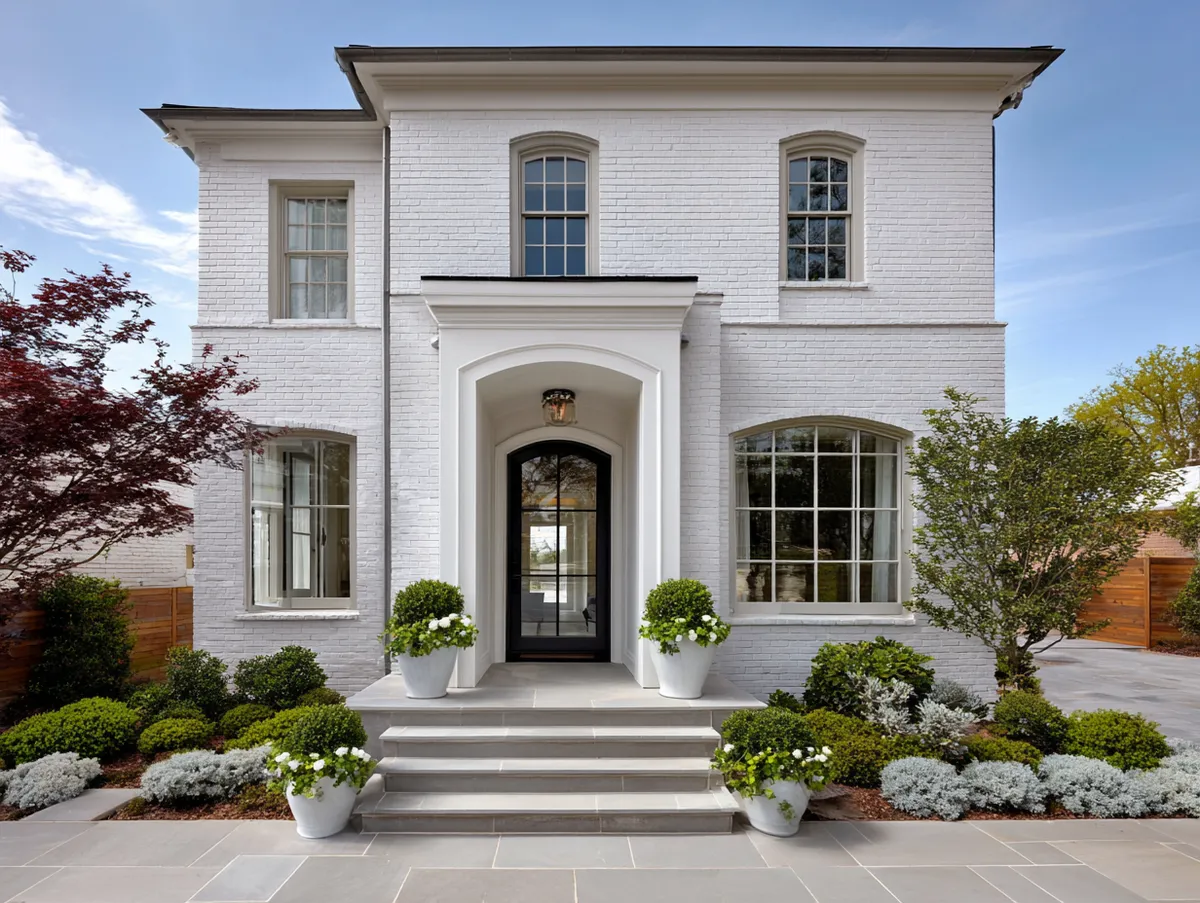
There’s a quiet poetry in the way architecture meets material. In certain places, the boundary between raw material and sculpted form disappears completely, revealing not only what a home is made of, but also how it breathes, glows, and evolves with time. Nowhere is this more evident than in a residence where the honesty of exposed surfaces and the repetition of gentle curves unite into something far greater than the sum of its parts. Here, the exposed brick becomes both a statement and a canvas, while arches sculpt a meditative rhythm across space and shadow. This house, nestled into a quiet Vietnamese street, doesn’t shout for attention—it whispers, draws you in, and invites you to feel your way across textured surfaces and soft transitions.
The Warmth and Rhythm of Brick
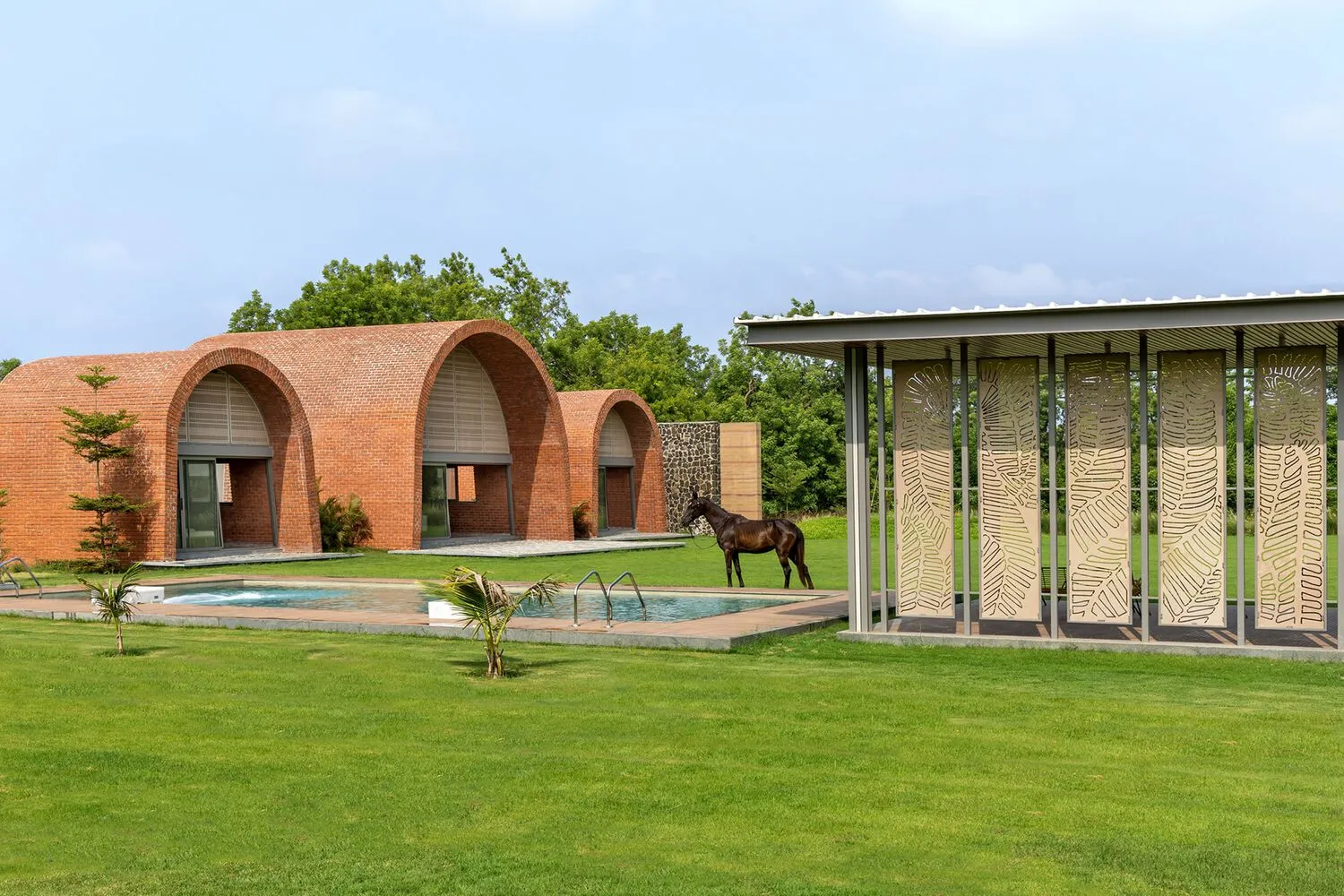
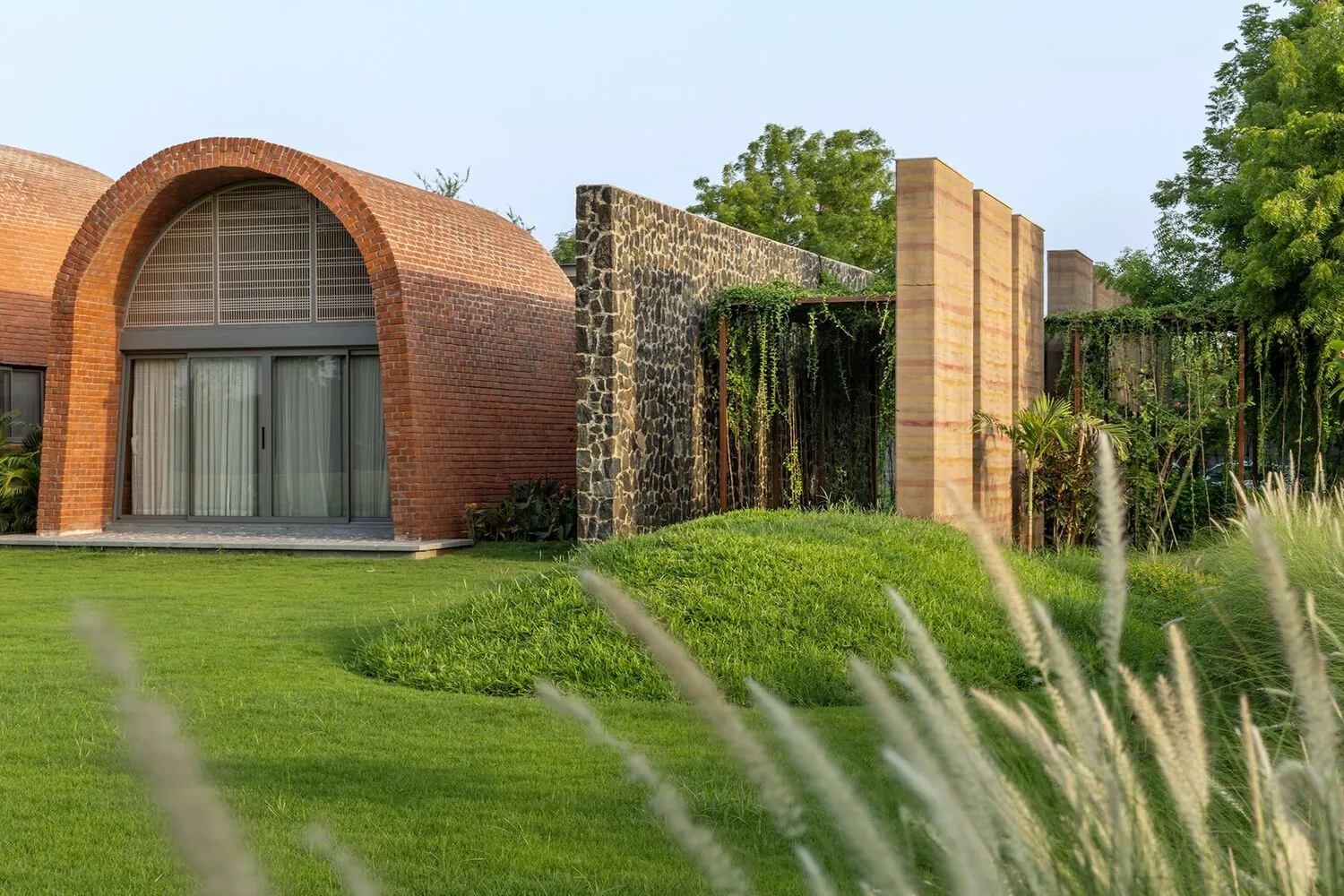
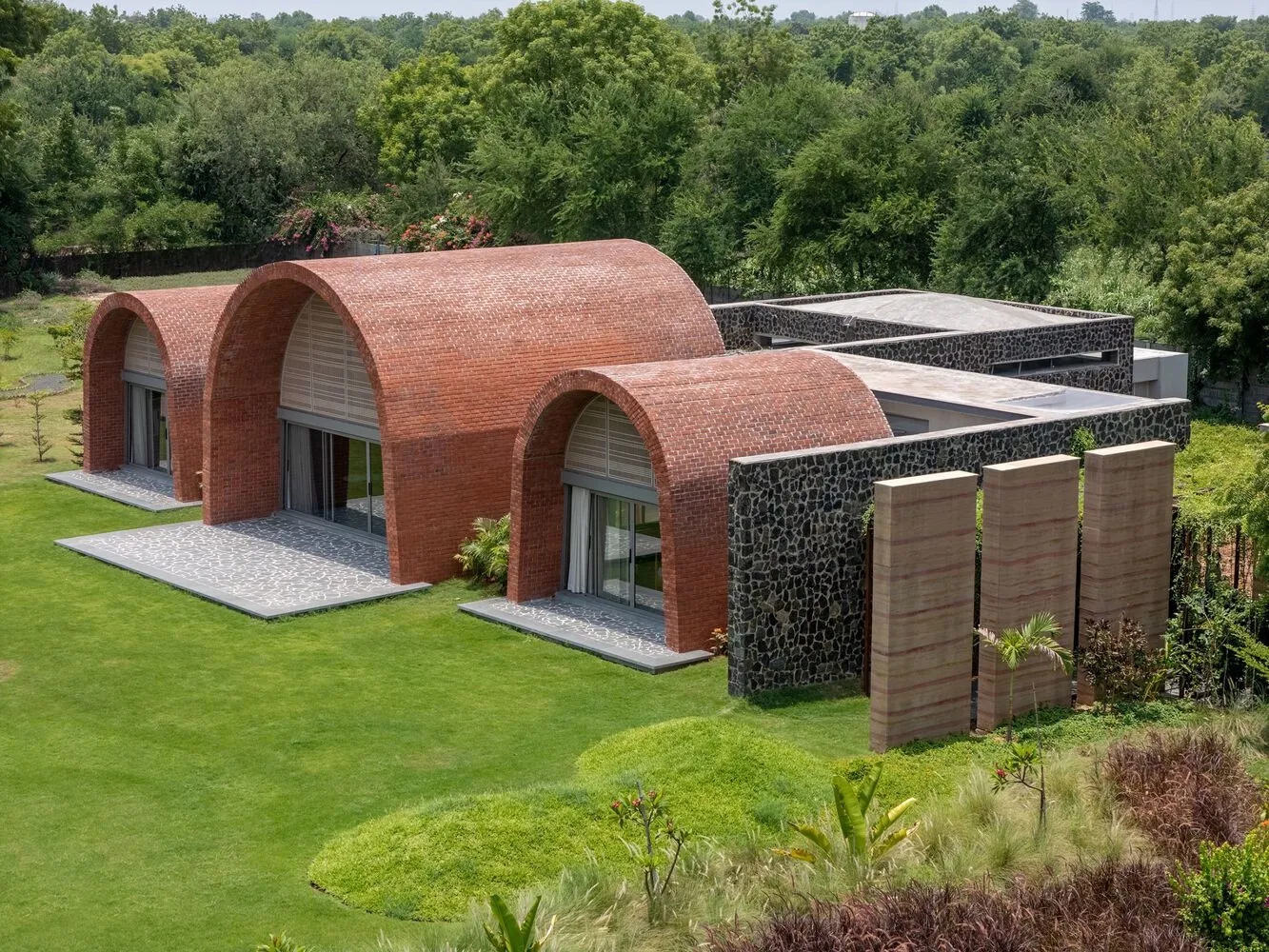
There’s something ancient and enduring about brick. It holds the memory of fire and earth, molded into form and purpose. In this home’s exterior, brick is not masked or smoothed over. It is laid bare, unpainted and unrefined, allowing its full material presence to guide the tone of the building. Every brick in the wall carries a slight variation—subtle shifts in tone, a trace of ash, a crack that catches the light differently than its neighbor. Together, they create a tapestry of organic imperfection, forming an exterior that feels tactile even before you’ve touched it.
The composition of the brickwork isn’t just decorative. It acts as a skin that breathes. Tiny gaps between some bricks serve as light filters and air passages, cooling the interior naturally and connecting it to the environment. The wall doesn’t just frame the house—it participates in the daily rhythm of light and wind. At certain hours, the sun casts intricate shadows through the porous parts of the façade, painting ephemeral murals on the courtyard floor. At night, the ambient glow of interior lights breathes back through the same bricks, transforming the exterior into a lantern.
This strategy embraces the local climate while elevating the design into something poetic. Brick, often considered a humble or utilitarian material, is honored here for its full expressive potential. It’s as if the architects peeled away every unnecessary element and let the warmth of the material speak in its own language. And in this case, the dialect is one of patience, texture, and craft.
Arches That Carve Silence Into Space
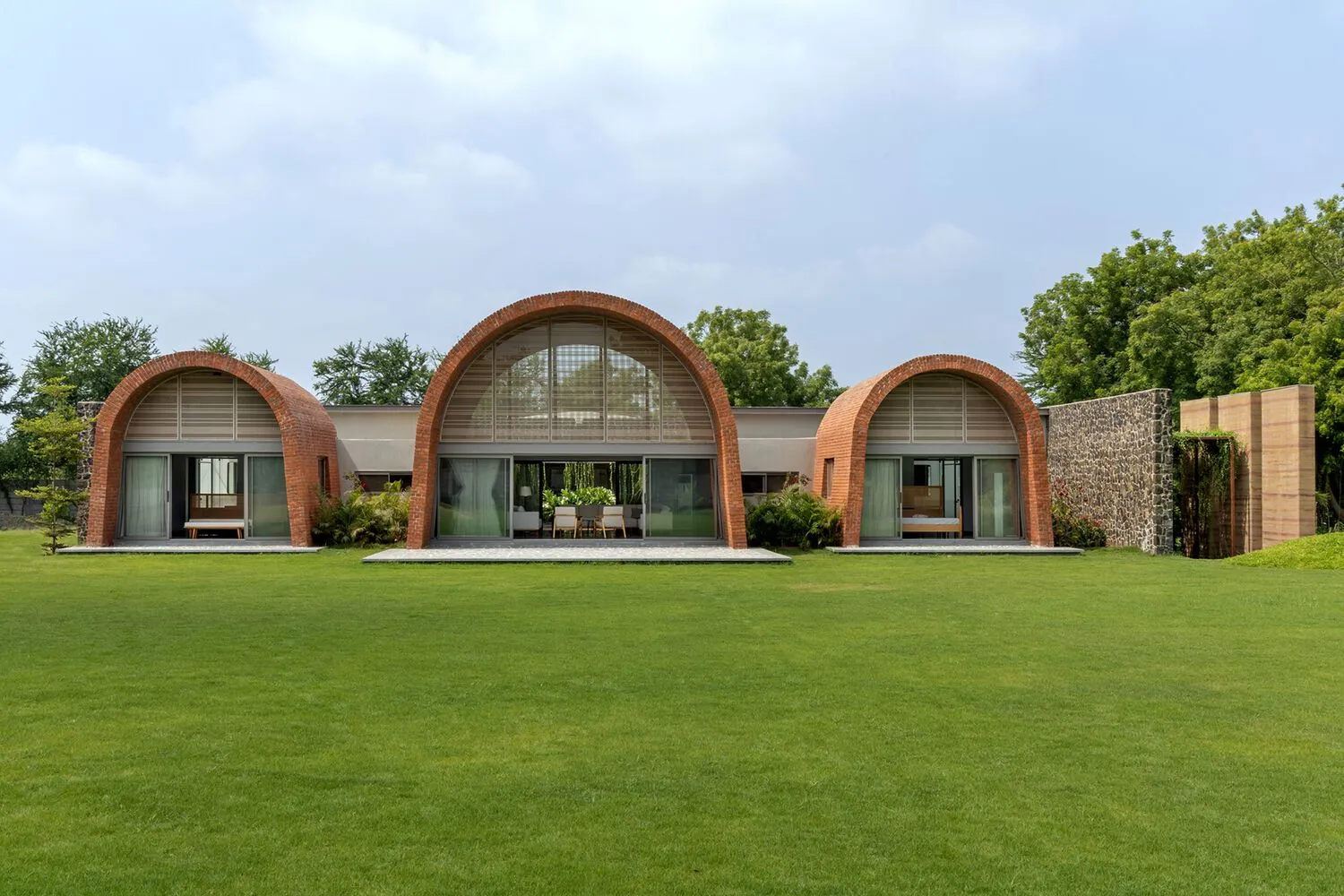
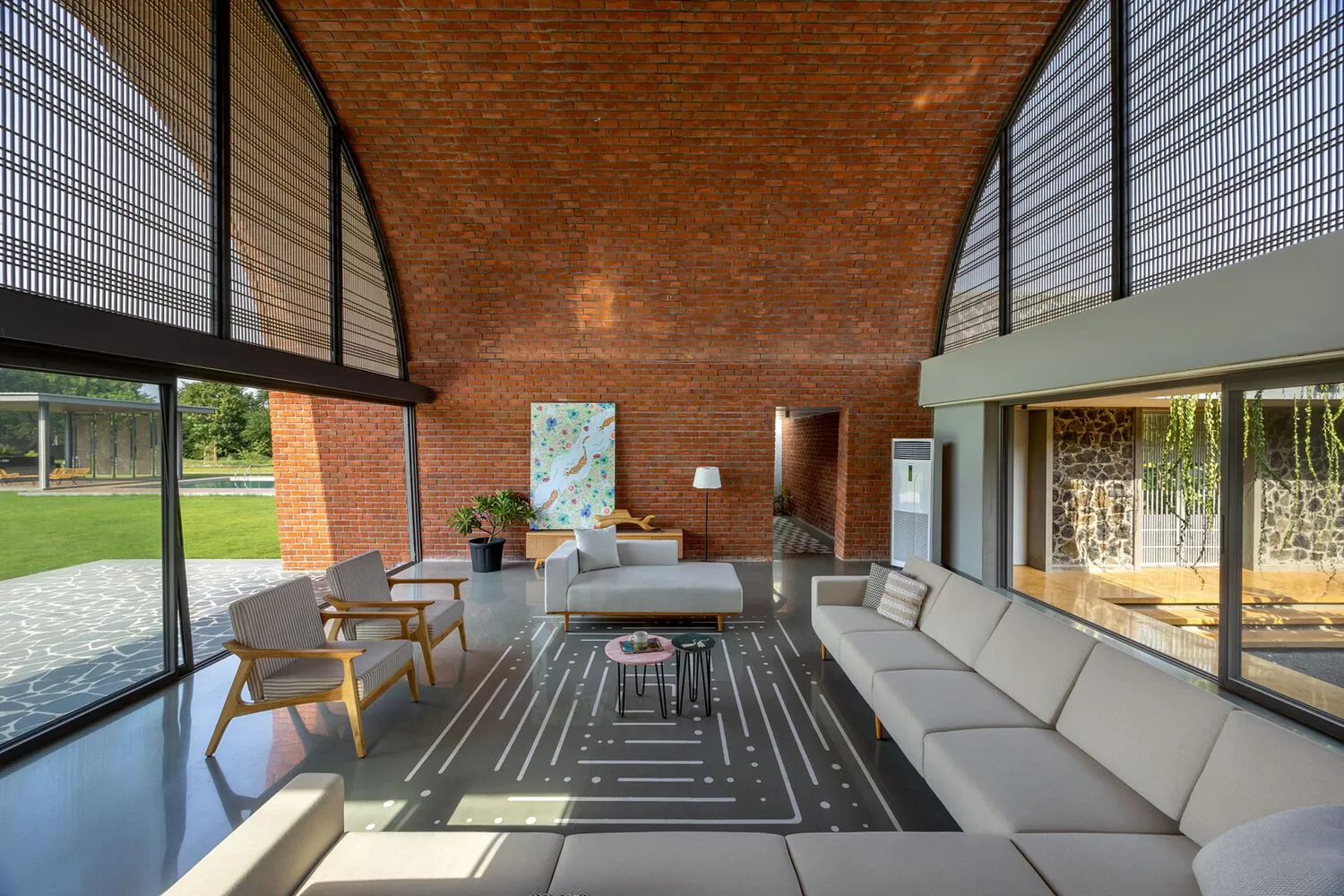
Where brick brings earthiness, arches bring breath. Their repetition throughout the structure softens the geometry, creating a language of curved thresholds that suggest movement and stillness at once. These aren’t the heavy Romanesque arches of fortress-like strength, but light, quiet spans that echo a spiritual sensibility. They filter light in soft waves and blur the edges between rooms, between indoors and out.
Each arch is perfectly calibrated—not only as a visual element but as a structural gesture. They guide your eye upward and across, giving the building a certain floating quality, despite its rooted material palette. In the exterior elevation, the arches are not ornamental flourishes—they are embedded into the architectural soul of the home. Arched doorways, arched windows, and even arched gaps in the outer brick skin offer moments of spatial compression and release. Moving through them is like walking through a musical score, each curve a note held just a second longer to linger in the mind.
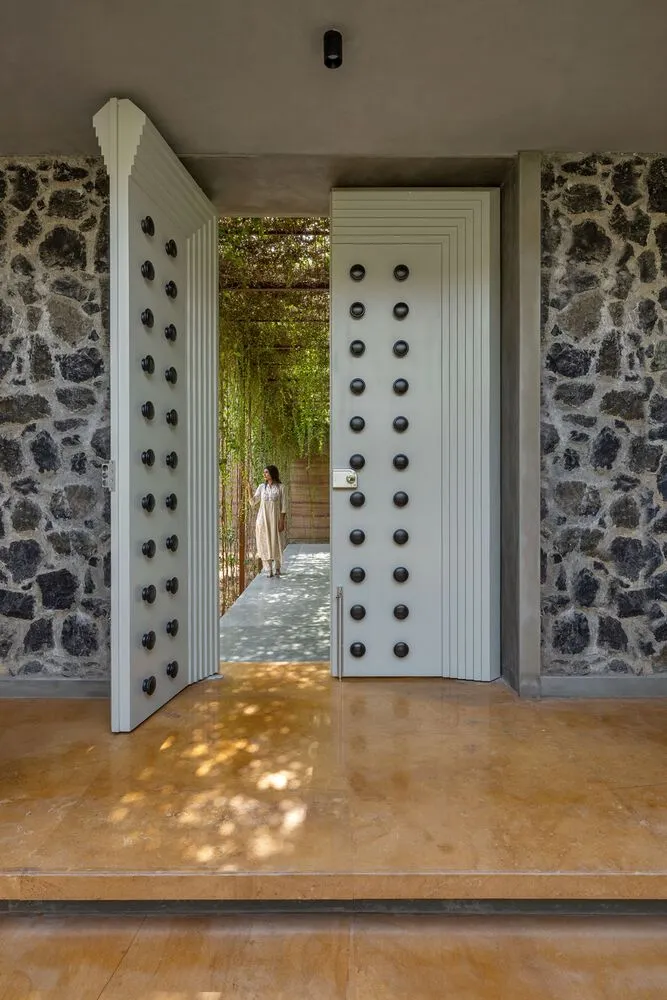
In this home, arches do more than frame views—they frame experiences. An arch at the entrance welcomes you with ceremony. A series of inner arches carries you from room to room without urgency. Their curves soften the passage of time and light. Even the shadows they cast have an emotional texture to them—never harsh, always embracing. The architectural language here is sensual, slow, and considered.
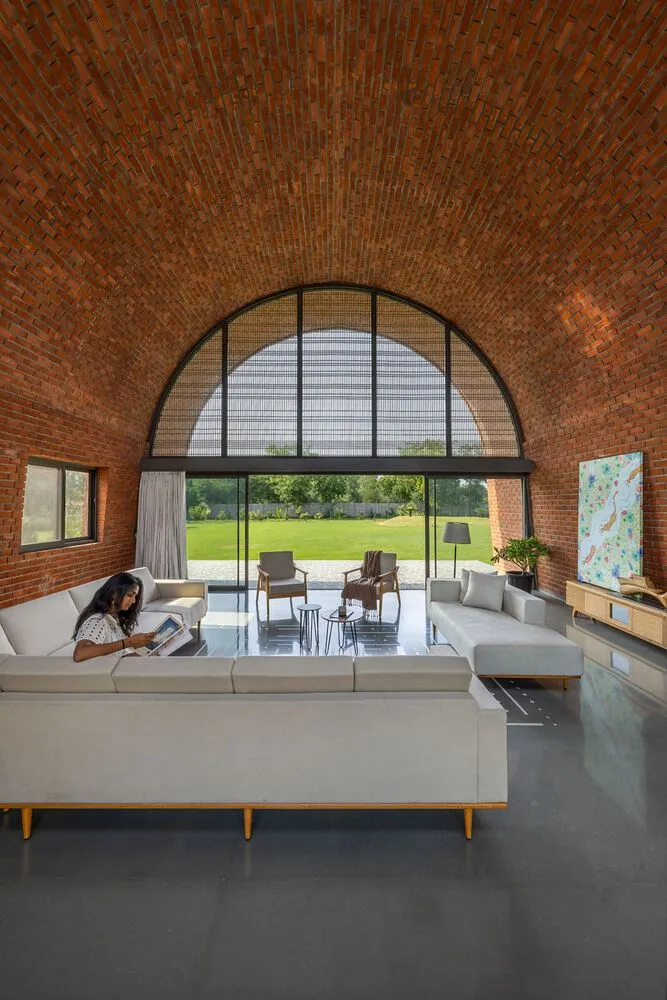
Dialogue Between Inside and Outside
The exterior form is deeply introverted—an urban sanctuary enclosed behind layers of brick and arch. Yet, paradoxically, it never feels closed. That’s the genius of the design: an interplay of opacity and porosity, enclosure and invitation. The courtyard, partially shaded by arched overhangs, serves as a mediator between the interior spaces and the outside world. It’s here that brick and air meet most beautifully. One moment, you are standing beneath a solid, earthen wall; the next, you are immersed in filtered light and the scent of tropical greenery growing up along the arches.
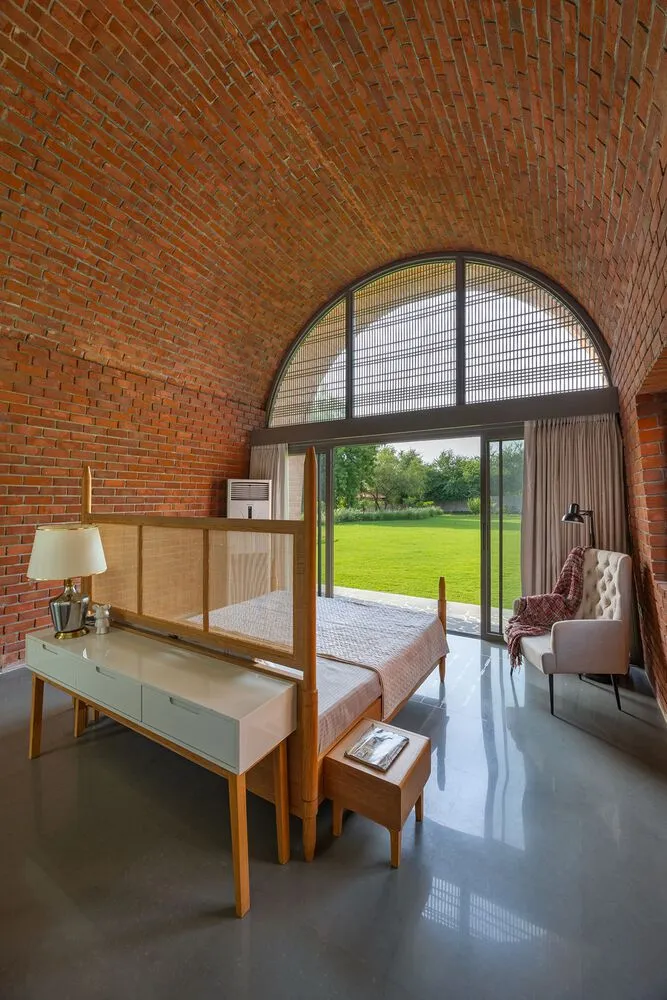
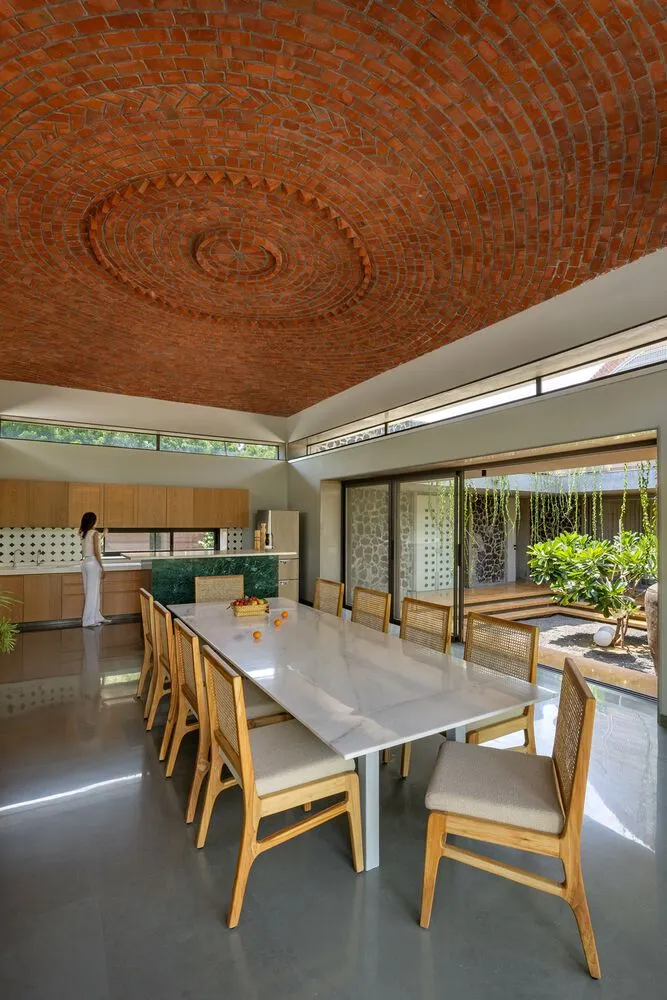
Materials guide the transitions. Concrete floors anchor your feet, while brick walls engage your senses. The woodwork—subtle, minimal—appears only where needed, allowing brick and curve to carry the weight of expression. Glass, when it’s used, is carefully set back into the depth of arched niches, so it never breaks the visual continuity. Everything is intentional. Everything is restrained.
Inside, the continuity of materials makes the space feel like an inward spiral. Vaulted ceilings mimic the exterior arches, creating cohesion from facade to heart. The brick reappears as accent and detail, never dominating, always complementing the whitewashed surfaces and gentle grey tones. Nothing here is loud. The home speaks in a hushed tone of peace.
What emerges is an experience of interiority that feels both intimate and open. It’s not about vast rooms or grand gestures. It’s about thresholds, shadows, and the subtle curvature of walls that invite you to sit, to pause, to listen to the silence they contain.
Contextual Sensibility and Lasting Impact
Perhaps the most admirable quality of this structure is its ability to belong. It doesn’t seek to stand out through novelty but to root itself in its place, its materials, and the rhythms of the people who live in it. The use of exposed brick is as much a cultural gesture as an aesthetic one—reflecting vernacular materials, honoring traditional craft, and embracing the climate with passive design.
The choice of arches isn’t just about elegance—it’s about kindness. Curved forms reduce visual aggression, soothe the gaze, and guide the body with gentleness. In a world dominated by hard lines and loud signals, there’s something revolutionary about architecture that values quietude. The house doesn’t impose; it holds space for life to unfold, for seasons to shift, for daylight to stretch and retreat through the familiar outlines of each archway.
Over time, the exposed brick will continue to age and patina. Rain will leave marks. The sun will deepen its colors. The house is not frozen in perfection—it is alive, and its surface tells stories. Even the irregularities are welcome, as they signal the human hands that shaped each form. And that’s where the soul of this design lies—not in glossy finishes, but in the honest expression of texture, curvature, and light.
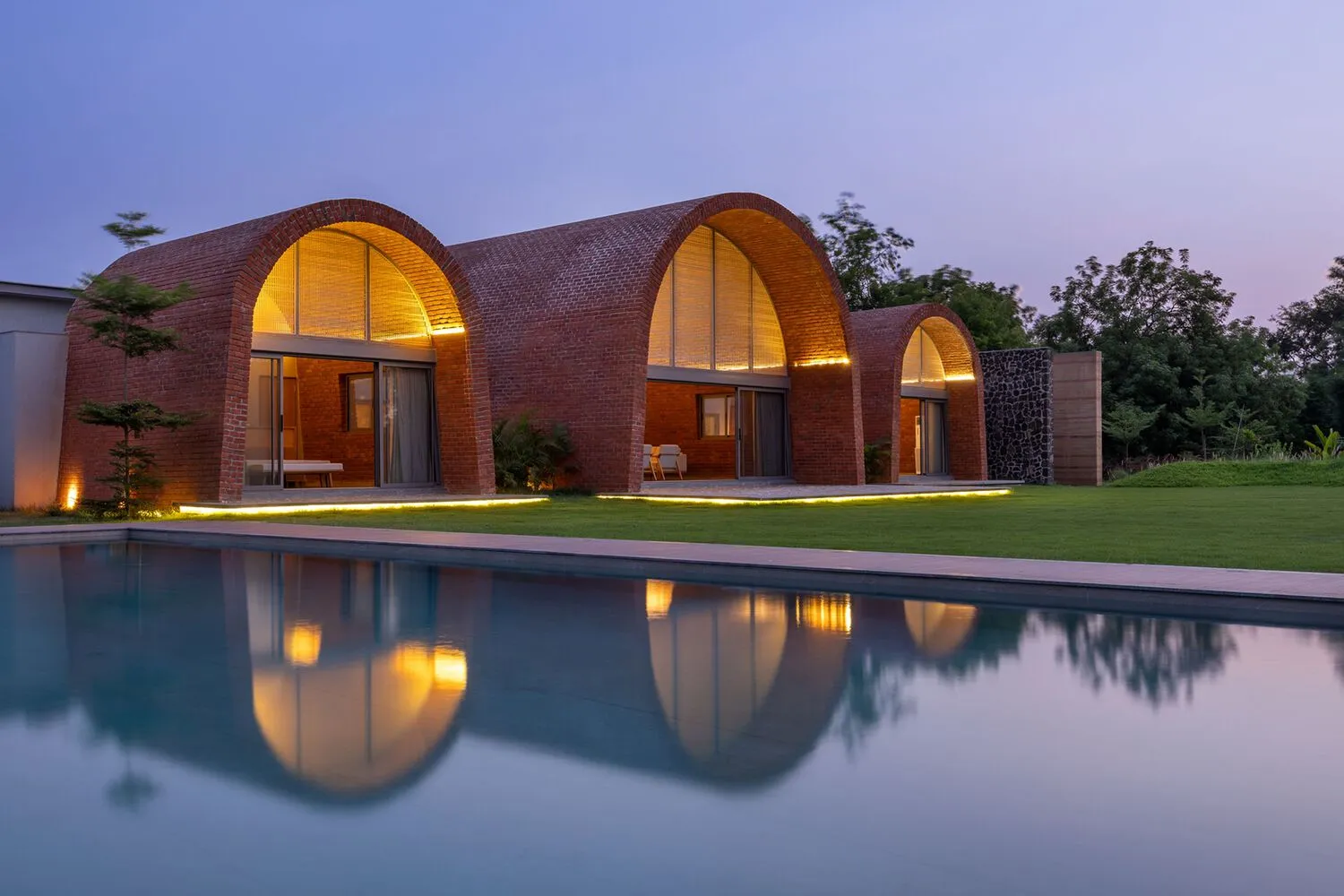
In a rapidly changing architectural landscape, where glass towers rise and steel frames dominate, it’s deeply moving to witness a home that returns to foundational materials and ancient forms. The combination of brick and arches here is more than a design statement—it’s a philosophy of presence, of warmth, of remembering what it means to dwell. Every curved line, every textured wall, every filtered ray of light serves to ground and elevate at the same time. This is architecture that doesn’t just shelter—it teaches us how to see, how to pause, and how to feel again.