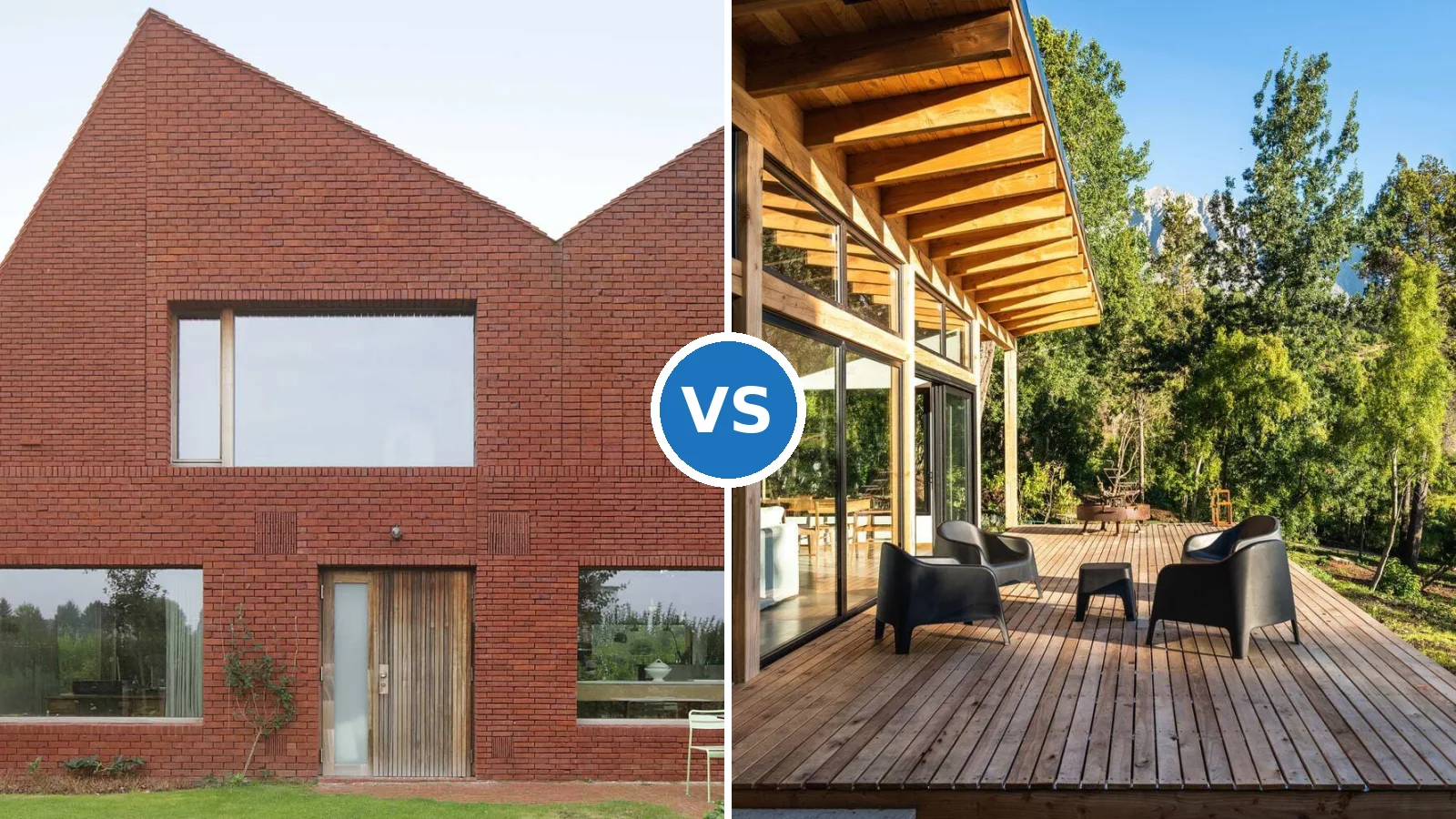
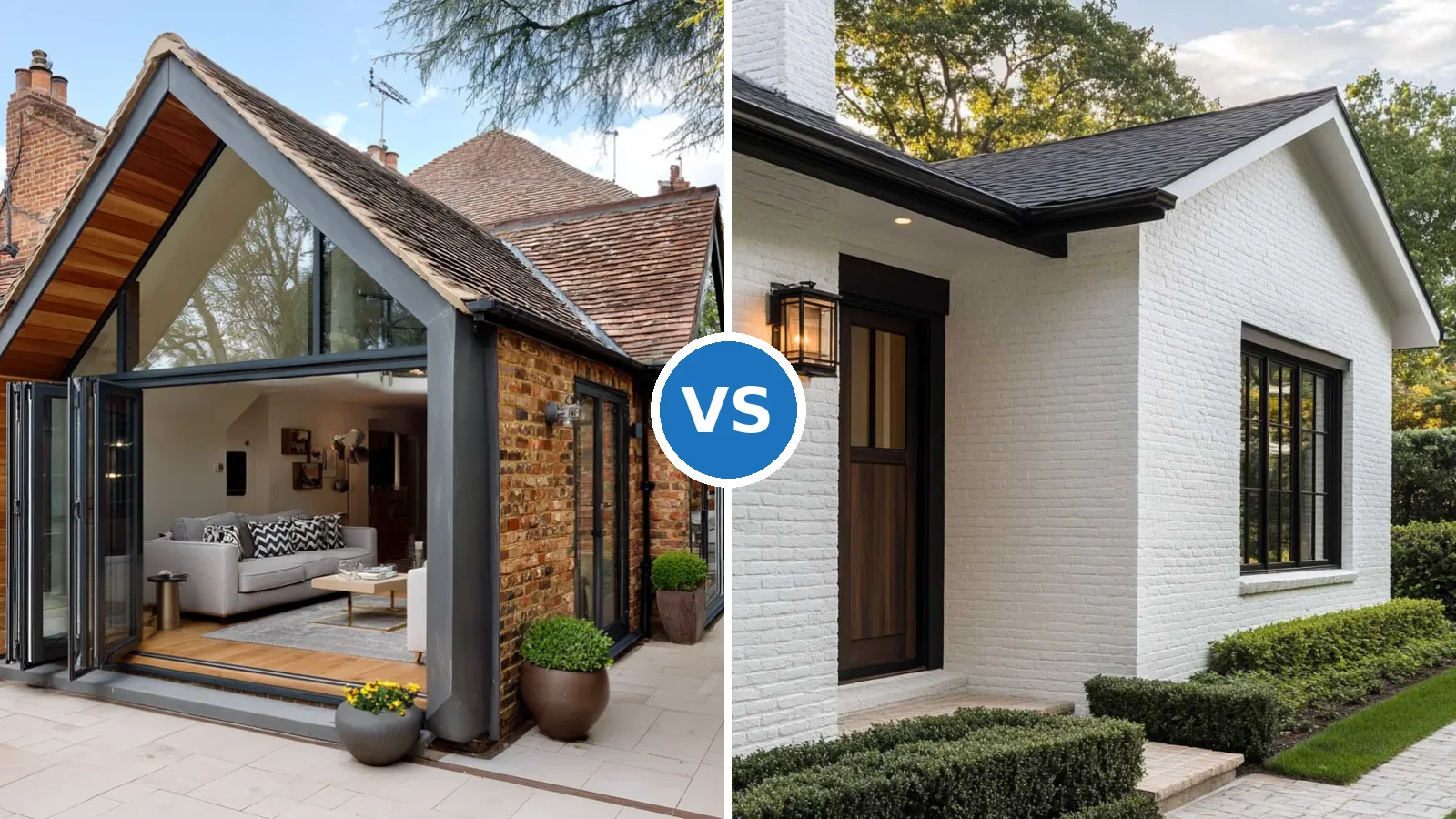
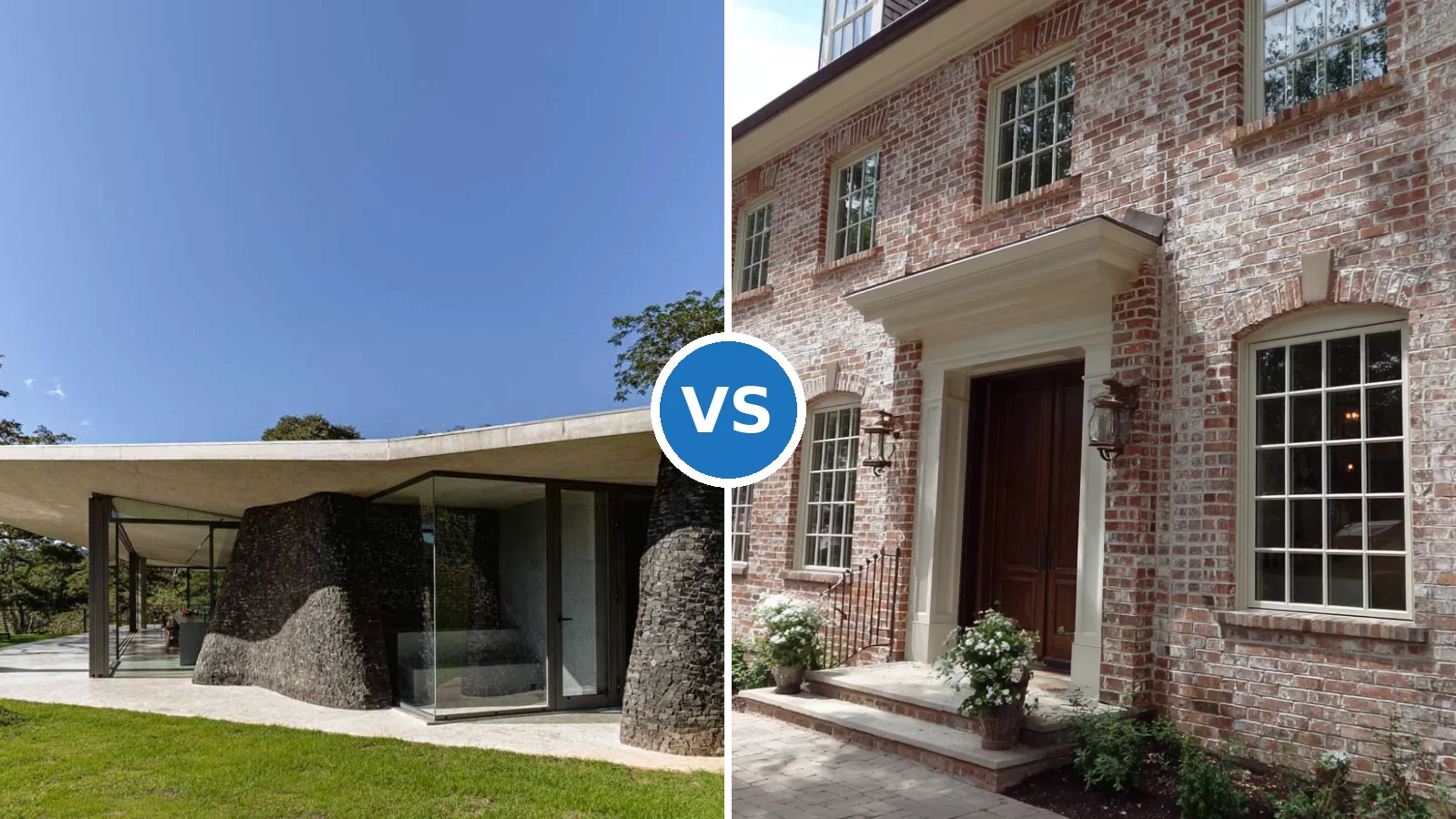
Mixing brick and stone exterior combinations is one of the few design moves that ages beautifully when done right — and looks like a contractor accident when done wrong. I’ve watched hundreds of facades fall apart not because of the materials themselves but because of how they were combined: same undertone, same texture weight, no clear hierarchy. You’ll notice the problem the moment you squint at the house from the street — both materials compete instead of one anchoring the other. The fix isn’t complicated, but it does require thinking about your facade the way a compositor thinks about a photograph.
Brick brings uniformity and warmth. Stone brings mass and visual contrast. Put them together without a plan and you get mud. Get the pairing right and your house stops looking assembled and starts looking built.
Quick read:
- Mixing brick and stone exterior works best when one material dominates (70%) and the other accents (30%)
- Red brick pairs with fieldstone or limestone — not granite, which reads too cold
- Stone at the base, brick above: structurally logical, visually grounded
- Mortar color is the third material — match it to the recessive tone, not the dominant one
- Avoid mixing more than two stone types in a single facade — it looks like leftover inventory
- Cultured Stone by Boral runs $8–$12/sq ft installed; natural fieldstone runs $25–$50/sq ft
Rustic Brick and Stone Combinations That Actually Hold Together Visually
The rustic look is the most forgiving category for mixing brick and stone exterior — and still the most botched. My go-to combination is a warm buff brick paired with irregular fieldstone on the lower third of the facade. The rough surface of fieldstone absorbs light differently than brick, which is what creates the depth. You need that contrast in surface finish, not just color. If both materials have the same matte flatness, the facade reads as one undifferentiated wall of brown.
I’ve bought samples of Endicott brick in their Autumn Ironspot color ($1.20/brick) alongside local limestone chunks and held them together in afternoon light. The iron spotting in the brick pulls just enough warmth from the gray limestone to make the two feel like they belong on the same house. Try that same brick next to white quartz and it looks like two separate renovation projects collided. Stone selection matters more than most contractors will tell you.
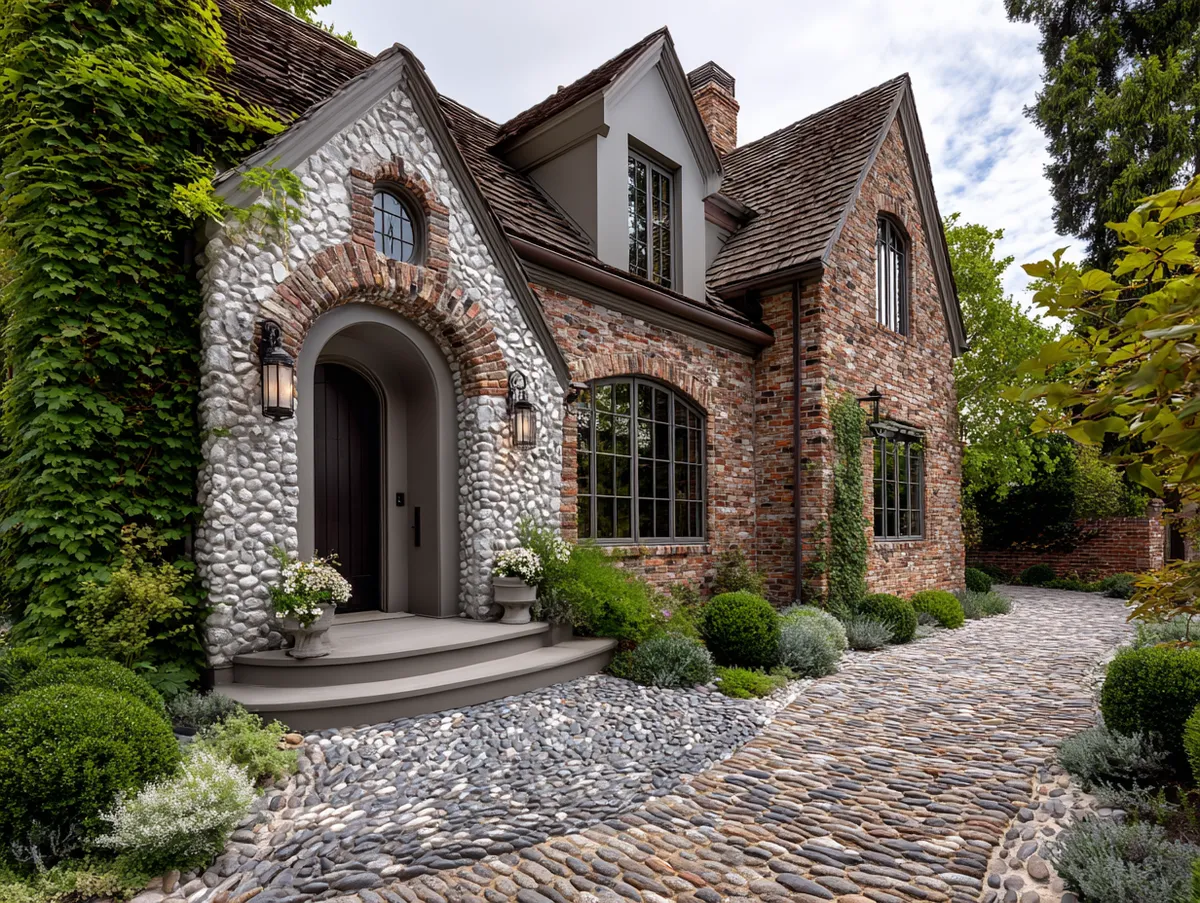
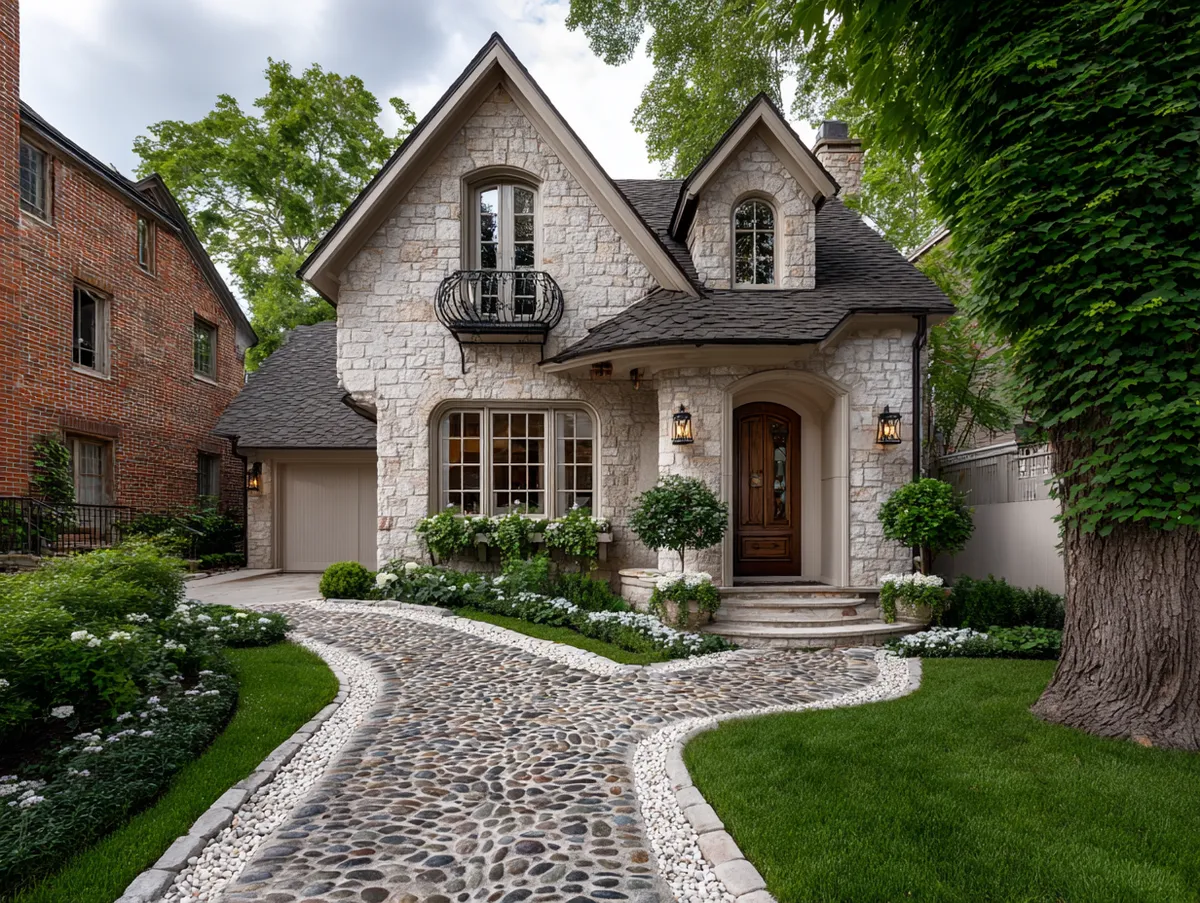
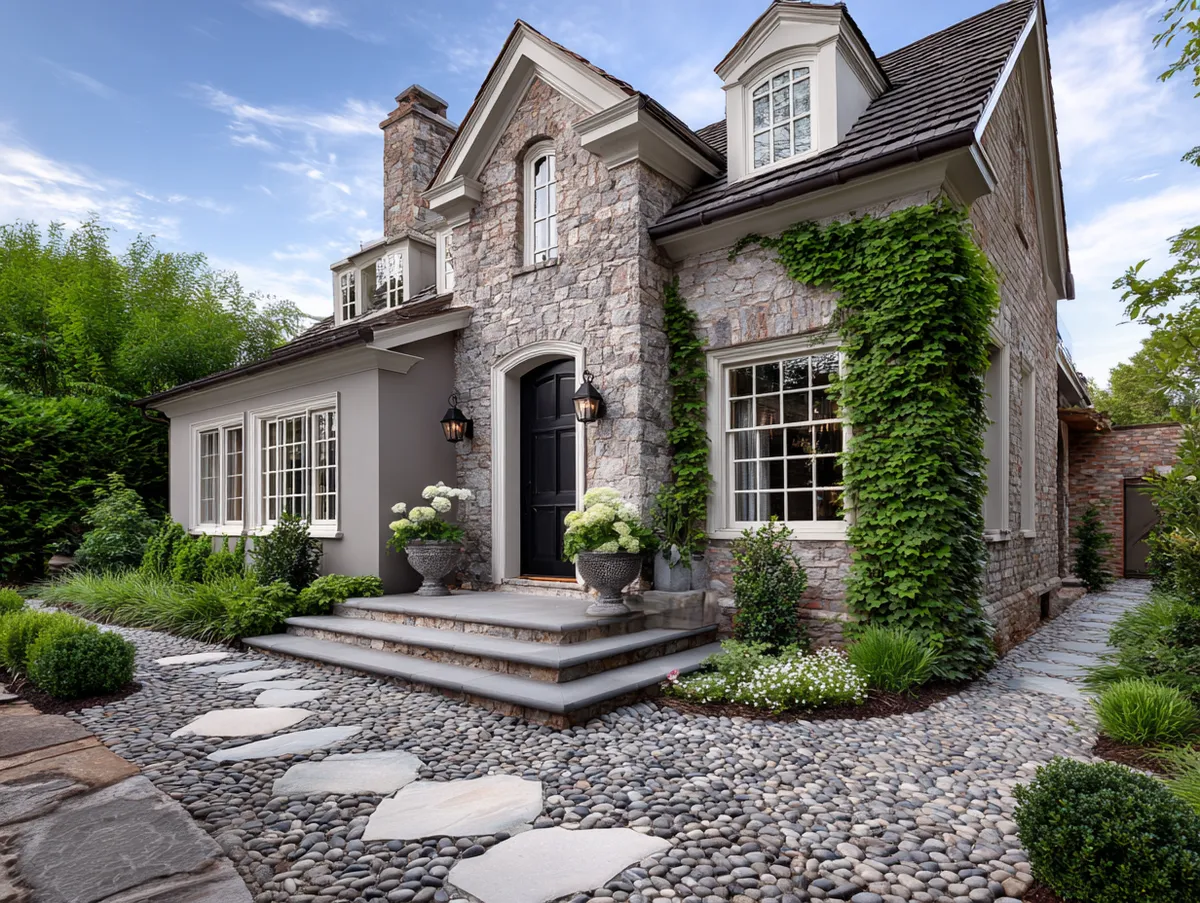
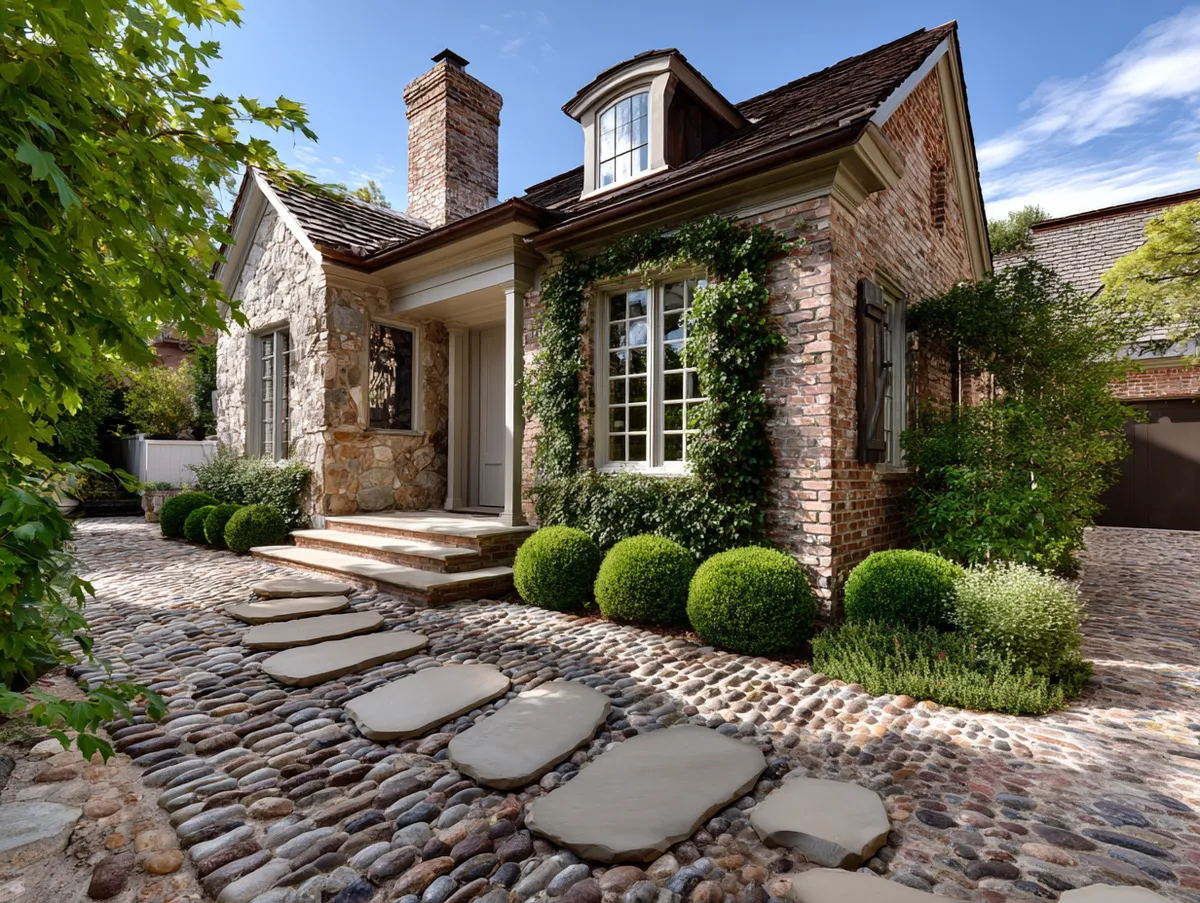
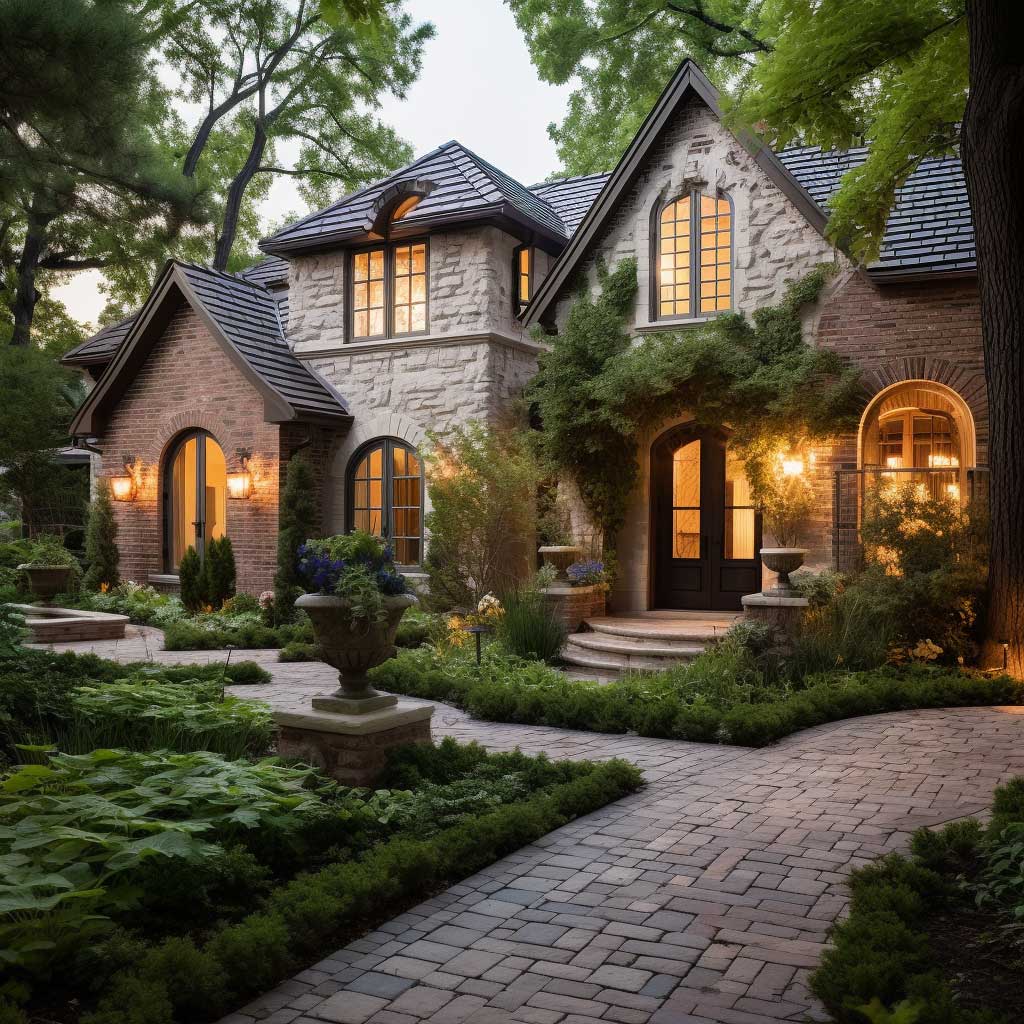
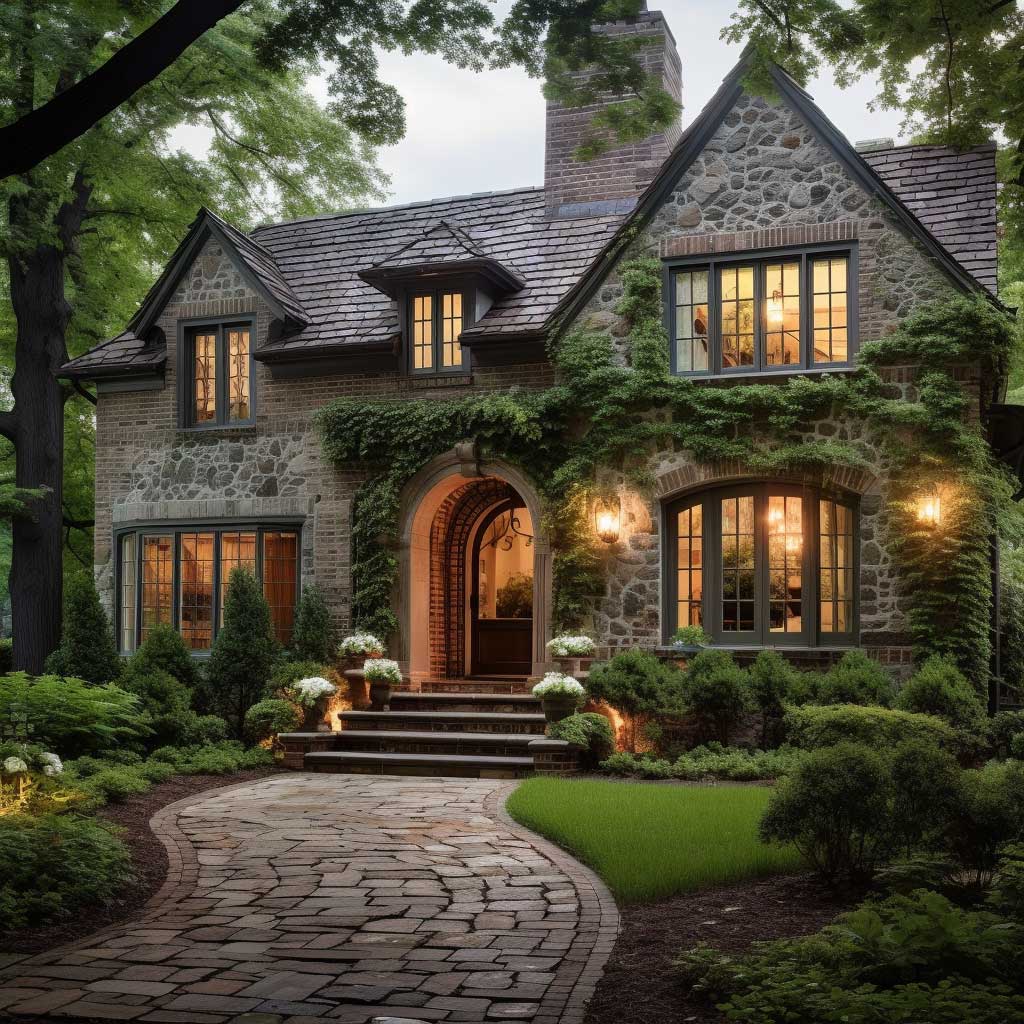
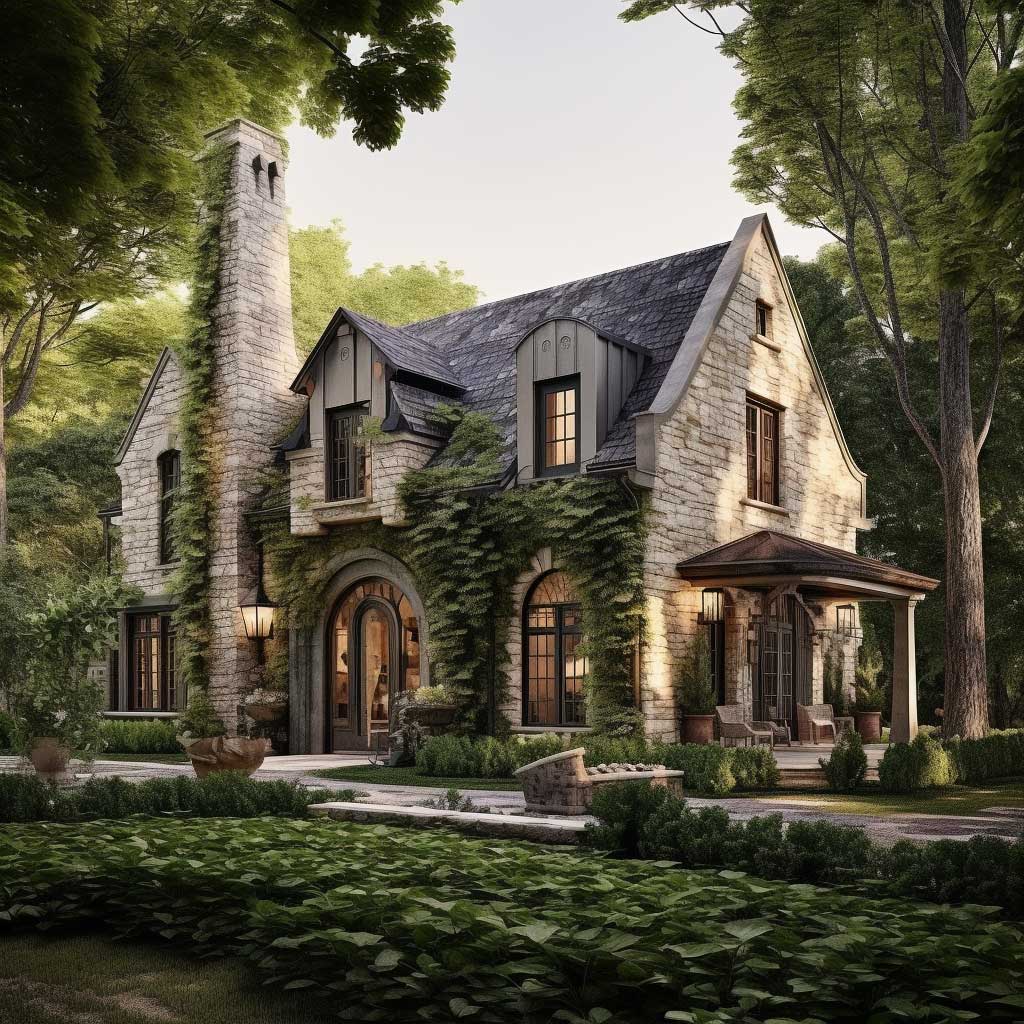
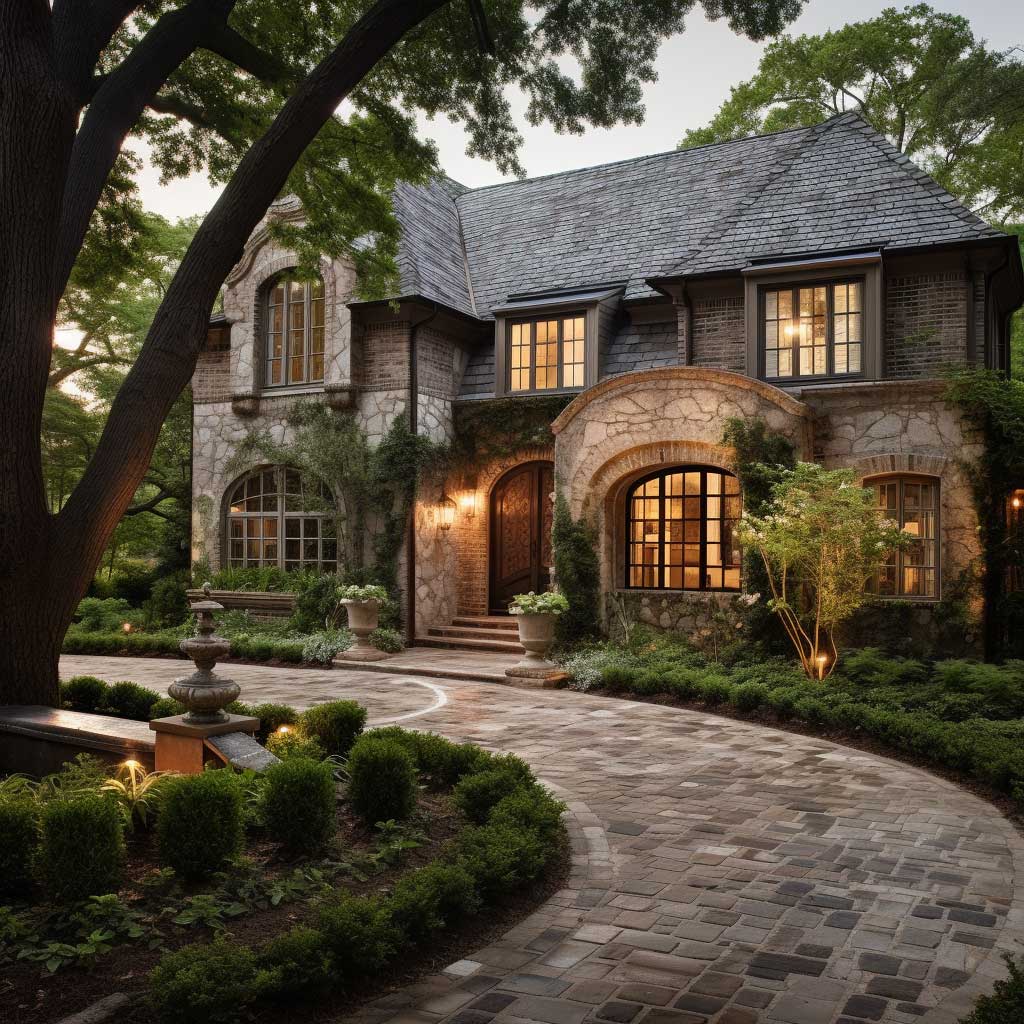
What I’ve learned from staring at failed facades: the mistake is almost never the individual material. It’s the mortar. A gray mortar between warm buff brick drags the whole thing cold. I stole this trick from a mason in Pennsylvania — match your mortar to the secondary material, not the primary. If your stone is warm cream limestone, mix a slightly sandier mortar. That one call changes whether the facade looks intentional or improvised. For a 2,000 sq ft exterior, mortar color is a $200 decision that affects the $40,000 result.
Durability is not the question here — both brick and natural stone will outlast every other part of the house. What wears out is the grout and the visual logic. Both materials resist moisture, insects, and temperature cycling without sealing. The rustic look specifically benefits from this: weathering deepens the contrast between textures over time rather than blurring it. That’s the opposite of most exterior finishes, which look best the day they’re installed.
Don’t do this: Mixing river rock with red brick. River rock is round, smooth, and dimensionally unpredictable — it creates busy, unresolved transitions against the ordered rectangular grid of brick. I’ve seen this combination on at least a dozen houses and it has never photographed well, never sold well, and never looked like a decision rather than an accident. If you want natural stone with red brick, go to split-face limestone or ashlar-cut fieldstone. Flat faces, consistent joint lines, problem solved.
For deeper inspiration on how stone reads at the facade level across different house styles, the house front stone designs gallery on this site shows how stone cladding shifts in character depending on cut and coursing — useful context before you finalize your brick pairing.
When Geometric Brick Meets Stone and Neither One Apologizes
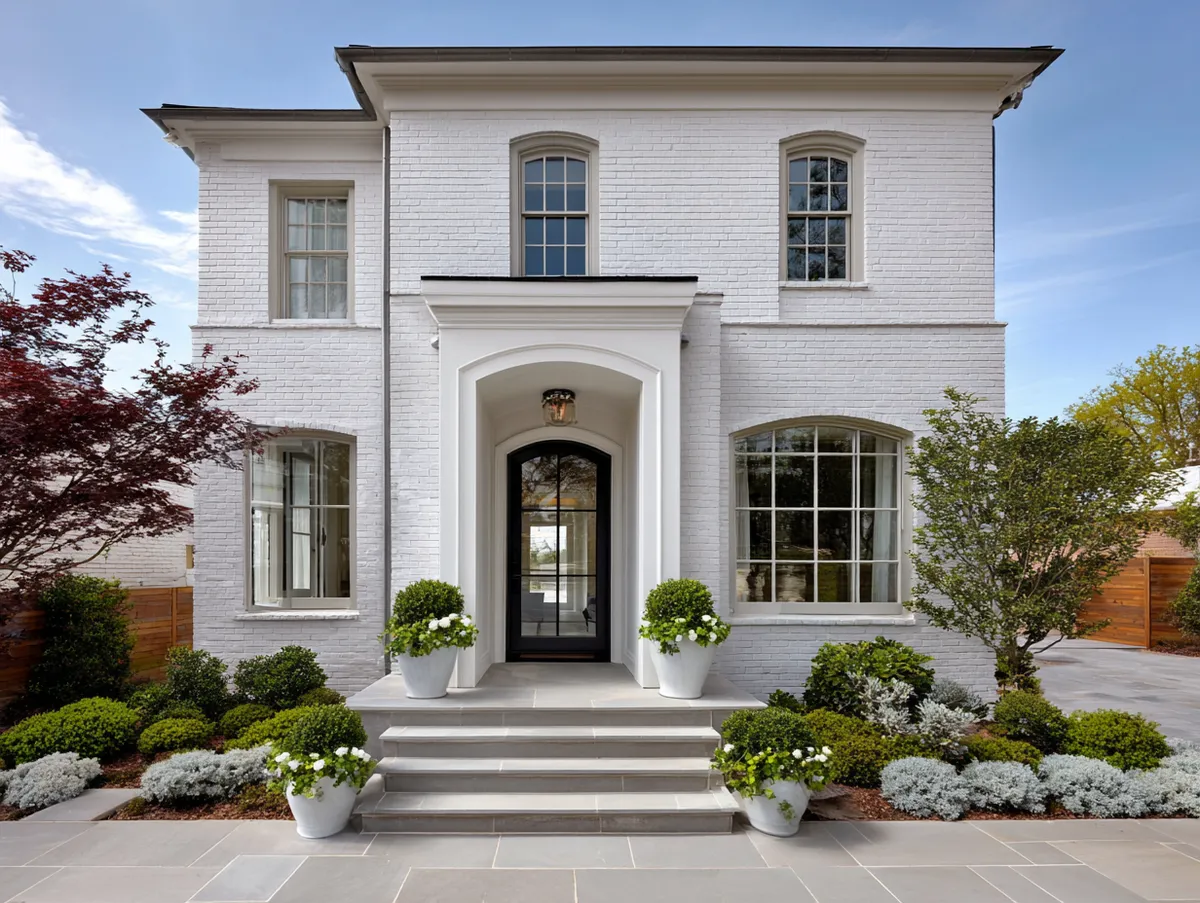
Modern brick and stone exterior combinations work differently from rustic ones. You’re not after warmth — you’re after weight and precision. The combinations that photograph well in contemporary architecture share one trait: the stone is cut to a consistent dimension and set in a running bond or ashlar pattern, not randomly. Random stone in a modern design looks like cost-cutting. Dimensioned stone — think 4″x12″ or 6″x18″ slabs of basalt or bluestone — reads as an intentional design element.
You’ll notice the strongest modern combinations keep the brick in a simple standard format — no decorative coursing, no soldier courses — and let the stone carry the visual complexity. Architect firms like Walker Warner and Olson Kundig have used dark basalt panels against pale Roman brick to create facades that feel geological rather than decorative. That’s the target register for this aesthetic. Roman brick (extra long, thin profile) currently runs about $2.50–$4.00 per brick through Acme Brick; basalt cladding panels run $18–$30/sq ft installed.
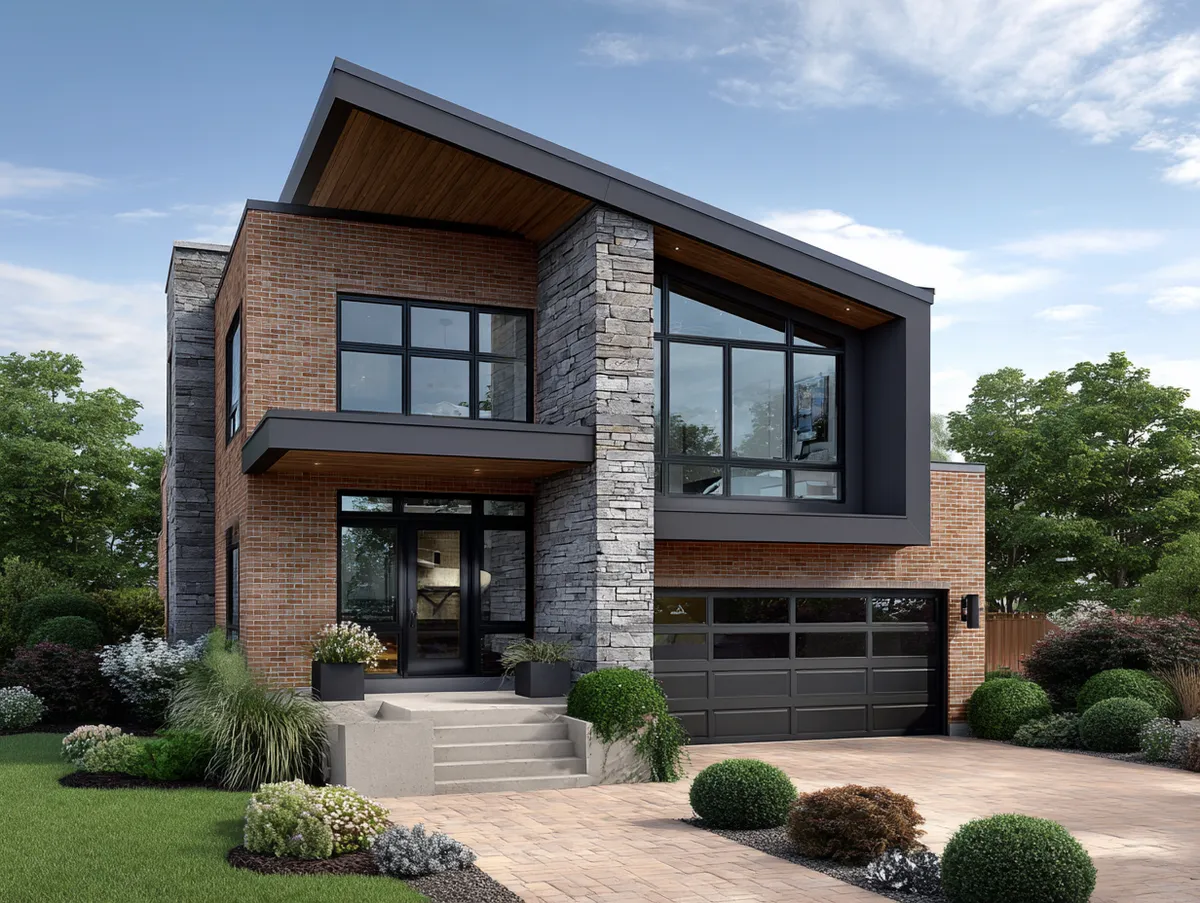
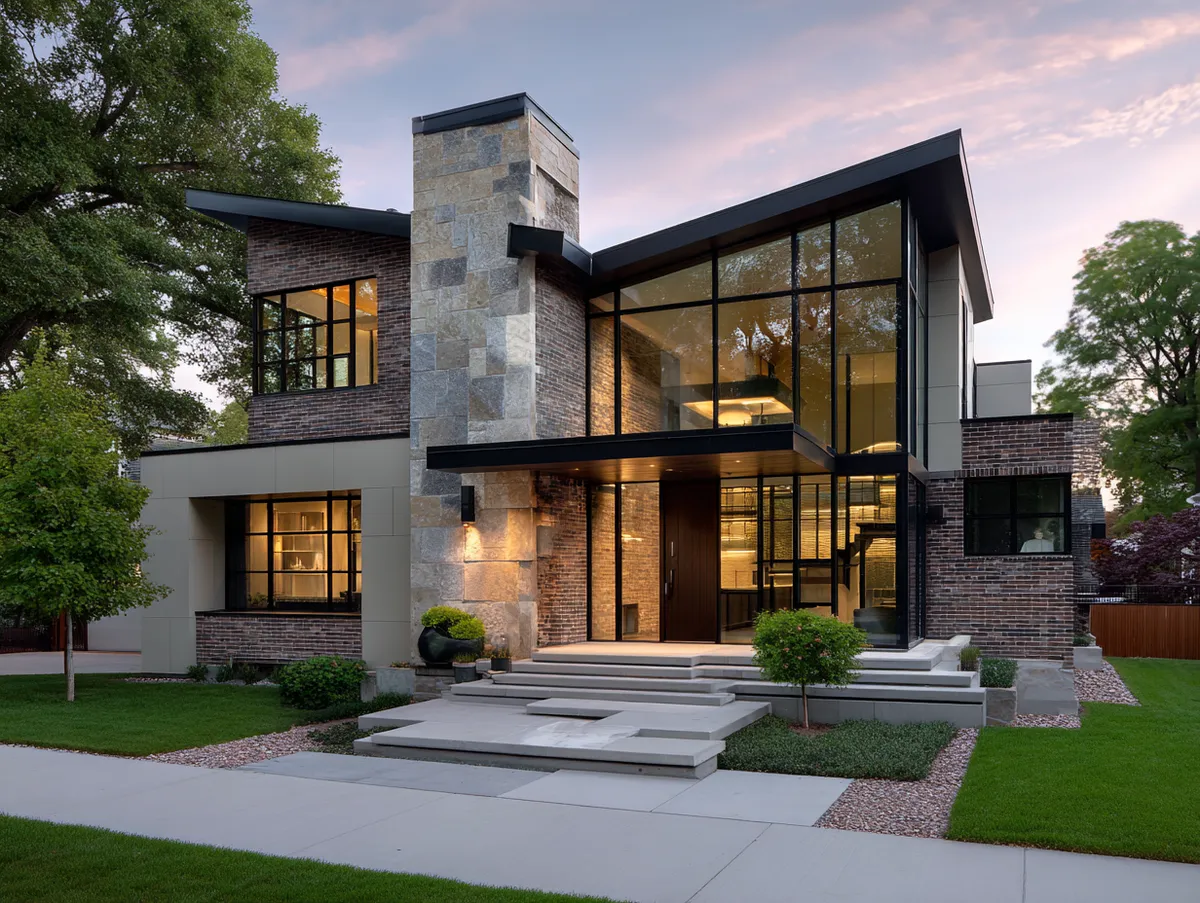
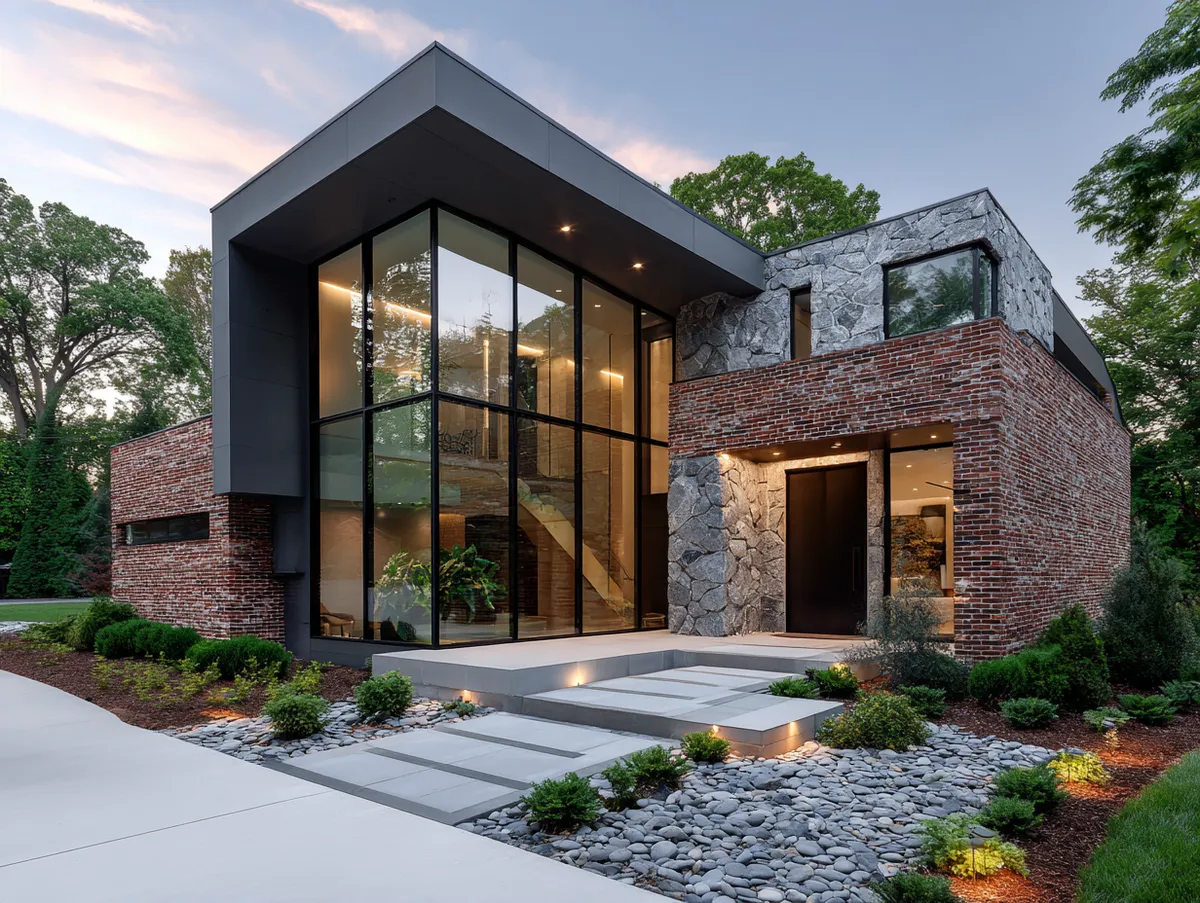
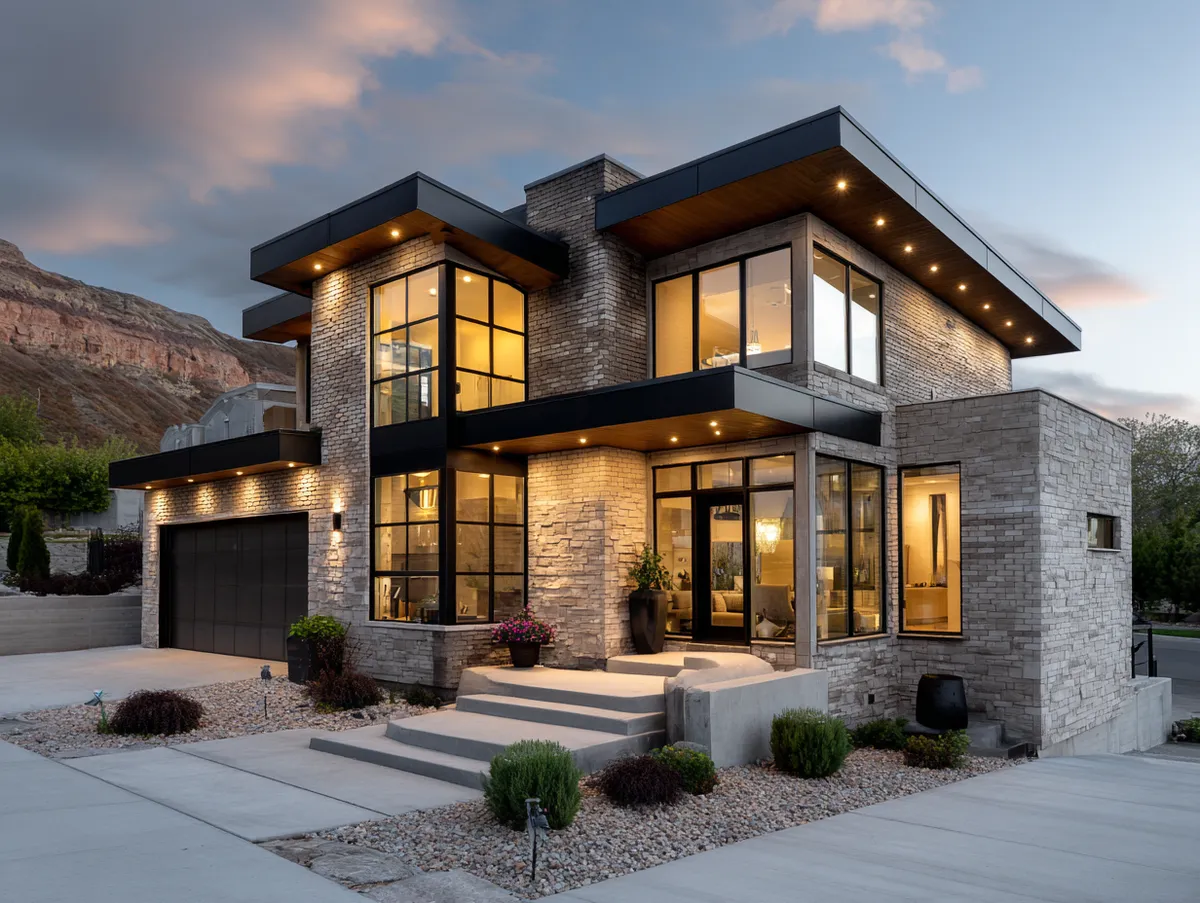

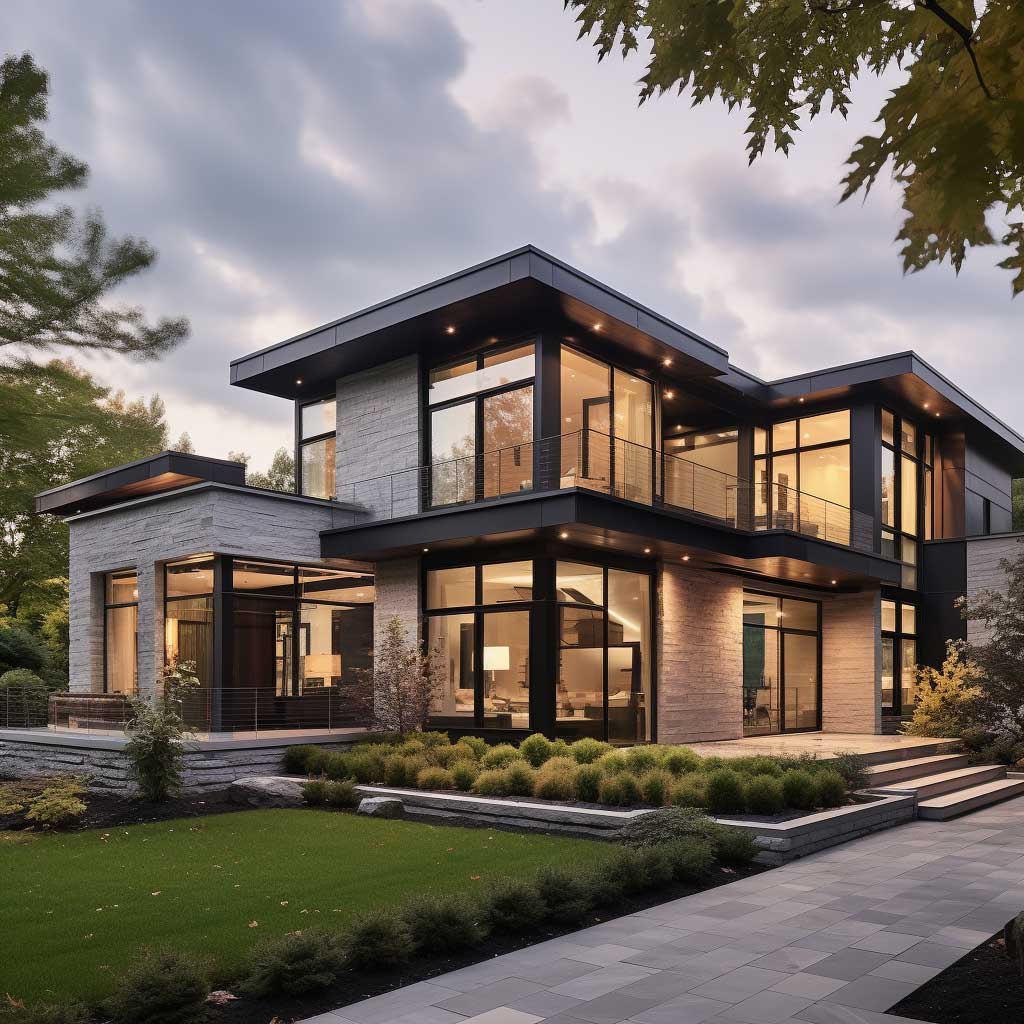
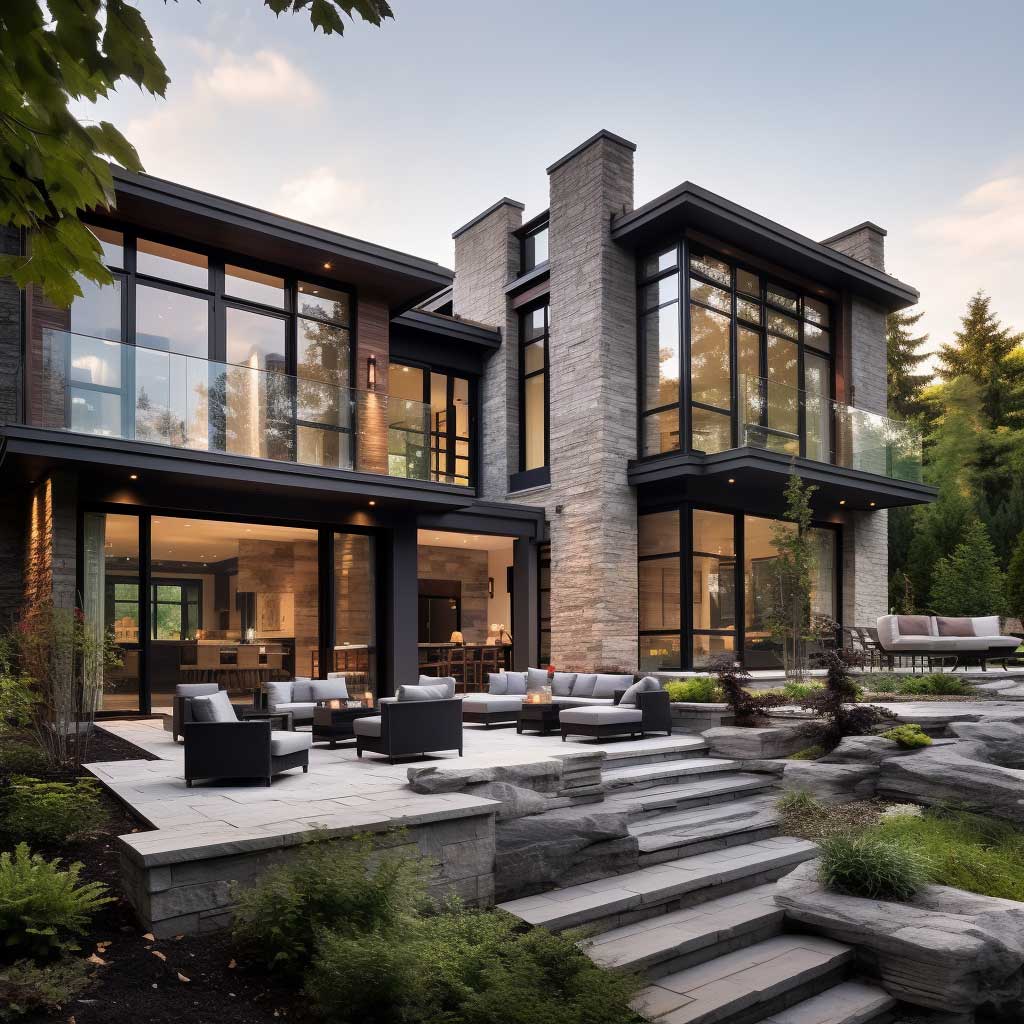
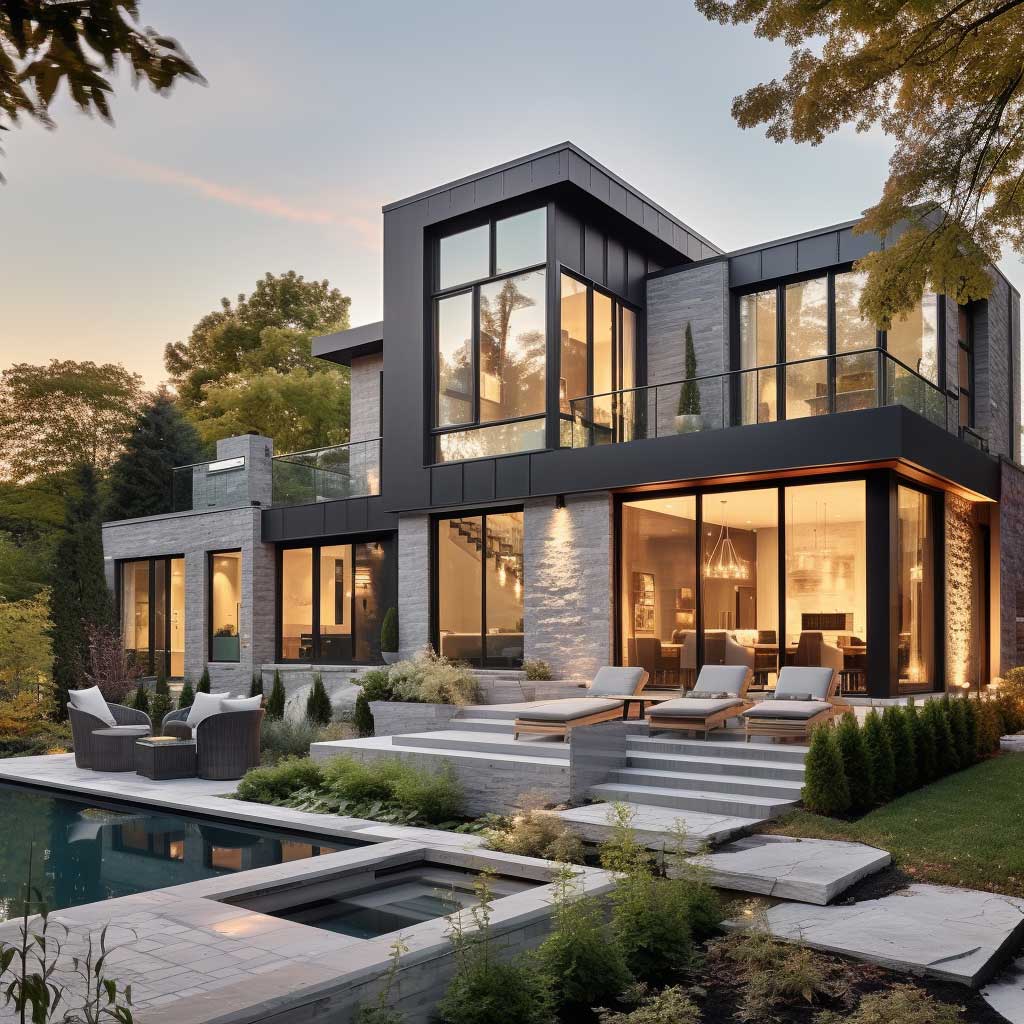
What kills modern brick-and-stone combinations is mismatched joint depth. Brick joints are typically 3/8″ raked or flush; stone panel joints in contemporary designs are often 1/4″ or less, sometimes dry-set with invisible caulk. If your mason uses the same joint detail on both materials, the result looks like a mistake rather than a material transition. Specify this in your construction documents, not verbally on site. I own two projects where this went wrong because the instruction was assumed, not written.
How do you know if your stone choice reads as modern rather than rustic? Rub your hand across a sample slab. If the surface variation is more than 1/4 inch peak to valley, it’s a rustic material regardless of color. Modern stone cladding is either honed flat or split-face in a consistent register — the texture variation is controlled, not organic. That’s the divide. Choose wrong and the entire geometric composition collapses into something that reads as unfinished rather than considered.
For brick-specific design decisions including coursing patterns and color families that work across material combinations, the modern brick wall exterior designs roundup covers the current range well — particularly useful for understanding which brick formats scale correctly against stone.
Classic Brick and Stone Facade Pairings Built to Last 80 Years
Traditional brick and stone exterior combinations have one advantage over every other approach: there are 150 years of built examples to study. Colonial Revival, Tudor Revival, Craftsman — each of these styles developed specific conventions for mixing the two materials, and those conventions exist because they were field-tested across thousands of houses over decades. I’ve spent time photographing French provincial facades in older suburbs and the pattern is consistent: stone at structural punctuation points (arches, window surrounds, porch columns), brick for field coverage.
The reason this convention works is structural logic made visible. Think of the facade like a load diagram — stone at the points where the eye reads weight and support, brick in the spans between. It’s the same reason stone lintels above windows read correctly even when the actual structural load is carried by a steel angle behind the veneer. Your eye expects weight at those moments. Deliver it. Acme Brick’s Heritage line and Glen-Gery’s Colonial Williamsburg series both come in warm reds that pair cleanly with Indiana limestone at around $12–$18/sq ft for the limestone veneer.
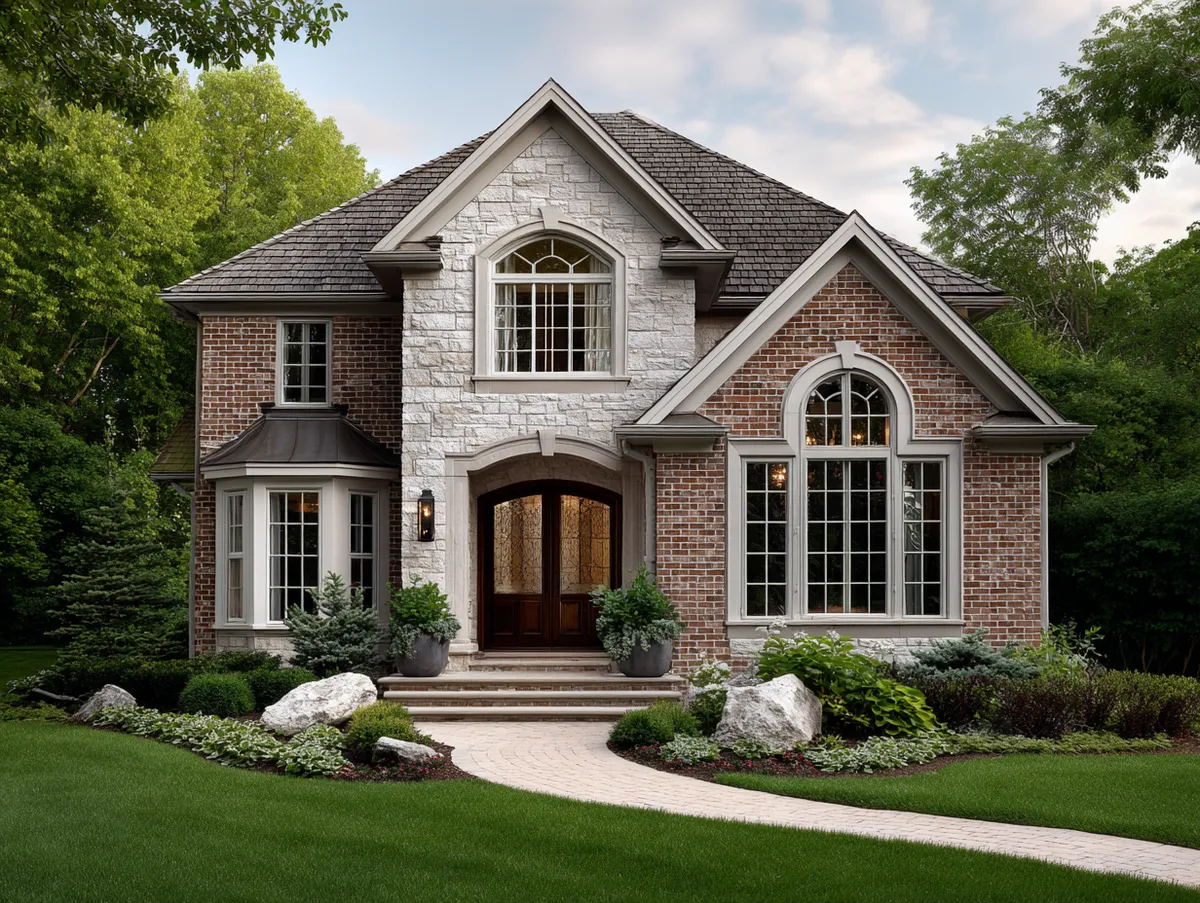


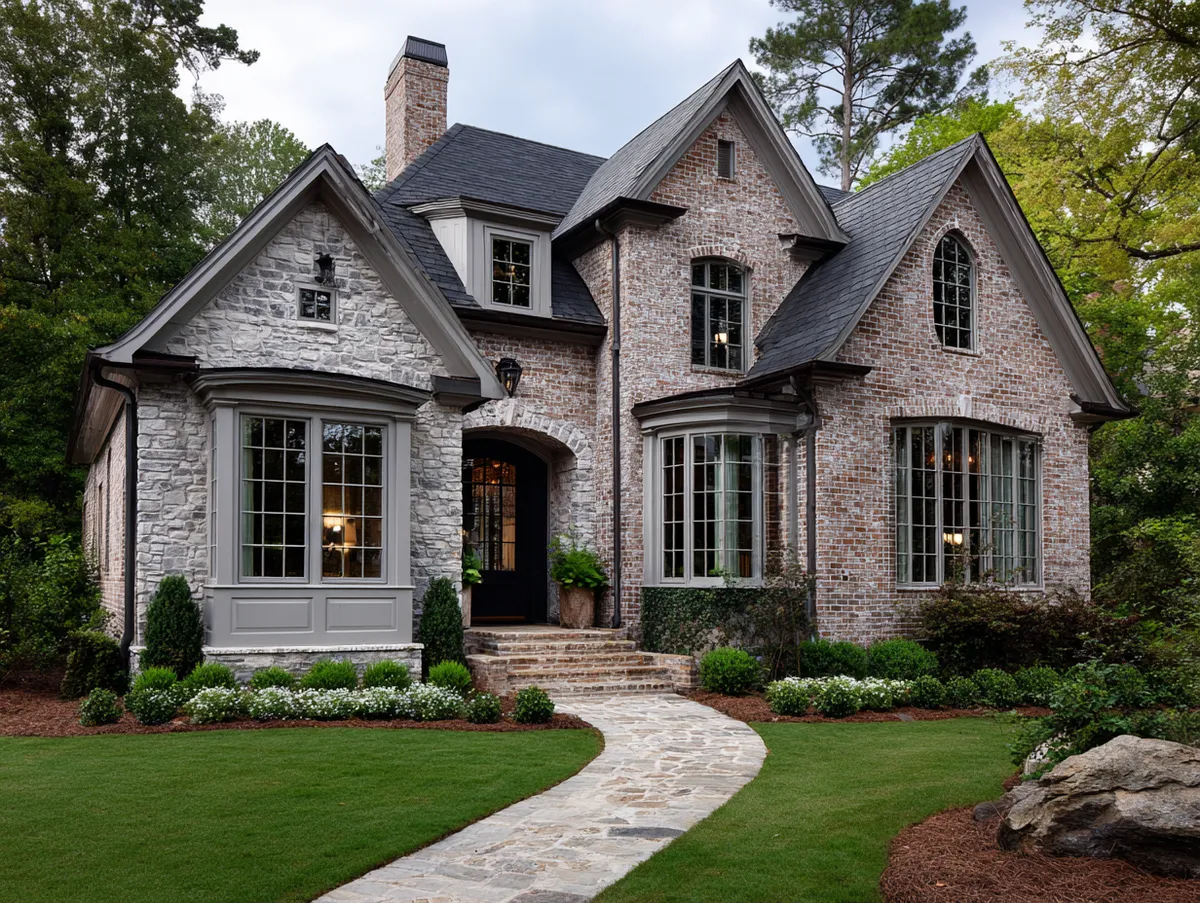


Maintenance reality: brick and natural stone require almost no annual attention beyond inspecting the mortar joints every five to seven years. What I’ve seen fail on traditional facades is not the materials — it’s the painted wood trim between them. If you’re mixing brick and stone on a traditional house, eliminate wood trim wherever possible and run the stone directly to the brick transition. A Craftsman bungalow I photographed in Indiana had been standing since 1924 with its original brick and limestone intact; the porch fascia had been replaced three times. The masonry is not the maintenance item. The other stuff is.
This Old House’s masonry overview covers mortar types and structural principles worth reading before you finalize your material spec — particularly the distinction between Type N and Type S mortar for above-grade brick veneer work: The Basics of Masonry.
Worth saving
The facade gets the material right and the combination wrong — here’s how to fix it
Mixing brick and stone exterior isn’t about picking two materials you like. It’s about understanding which one anchors and which one punctuates — then sticking to that hierarchy across every elevation.
Mortar color, surface texture contrast, and joint depth are the three decisions nobody talks about. Get them right and the materials sell themselves. Skip them and no amount of expensive stone will save the result.
Save this post — refer back before your material spec meeting, not after.
Related Topics
FAQ
What is the best combination of brick and stone for a home exterior?
How do you mix brick and stone on a facade without it looking like a mistake?
What is the difference between mixing stone and brick exteriors for rustic vs modern styles?
How much does a brick and stone exterior combination cost?
Does mixing red brick and stone exterior work or does it always look dated?
Can I use cultured stone instead of natural stone with brick exterior?
Complete guide
Stone in Architecture and Design — From Floors to Facades
Cladding, flooring, interiors, kitchens, bathrooms, outdoor — all in one place
Complete guide
Brick in Every Room and Facade Worth Seeing
Exteriors, interiors, patios, bathrooms, colors, patterns, materials — all in one place