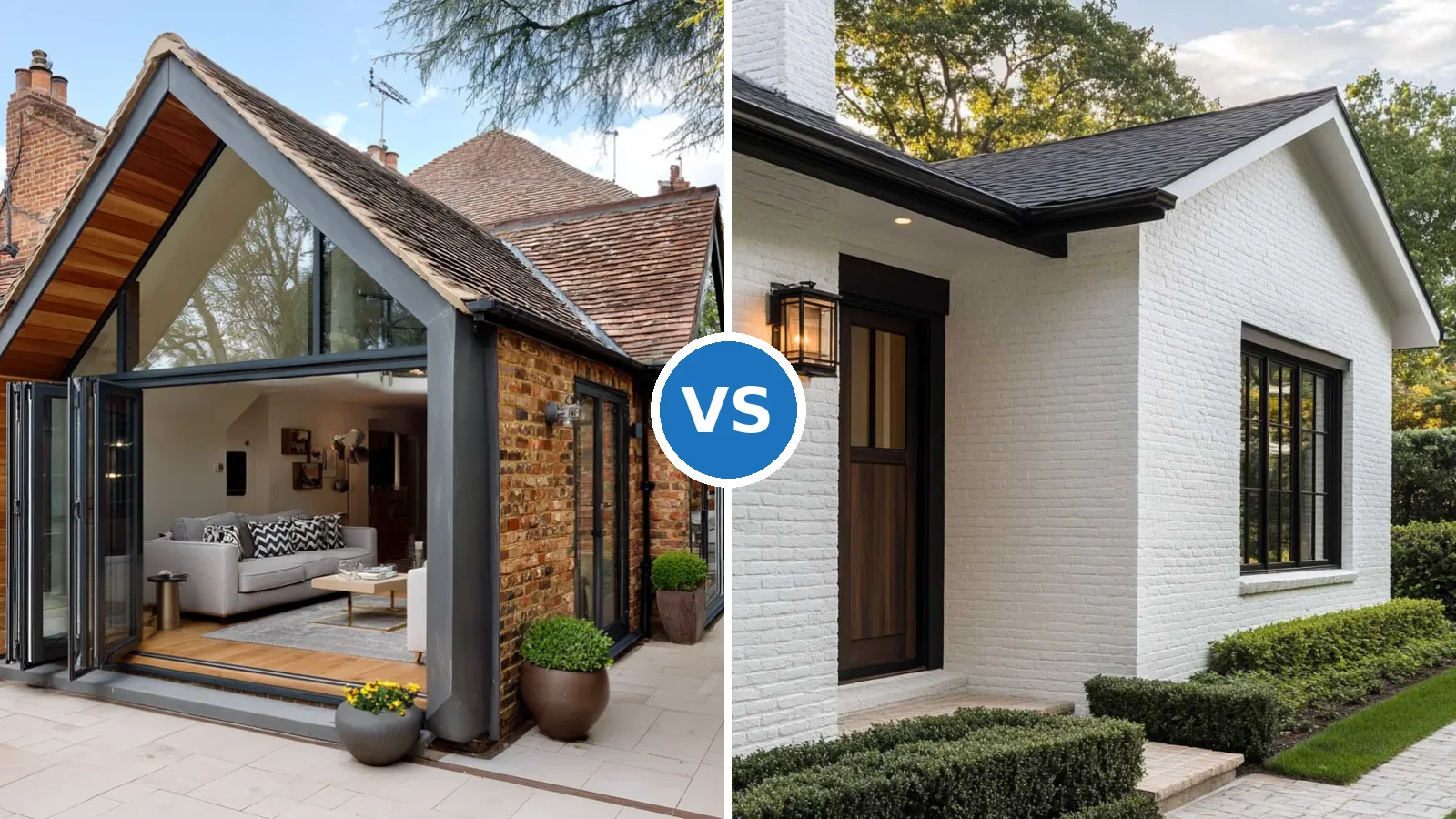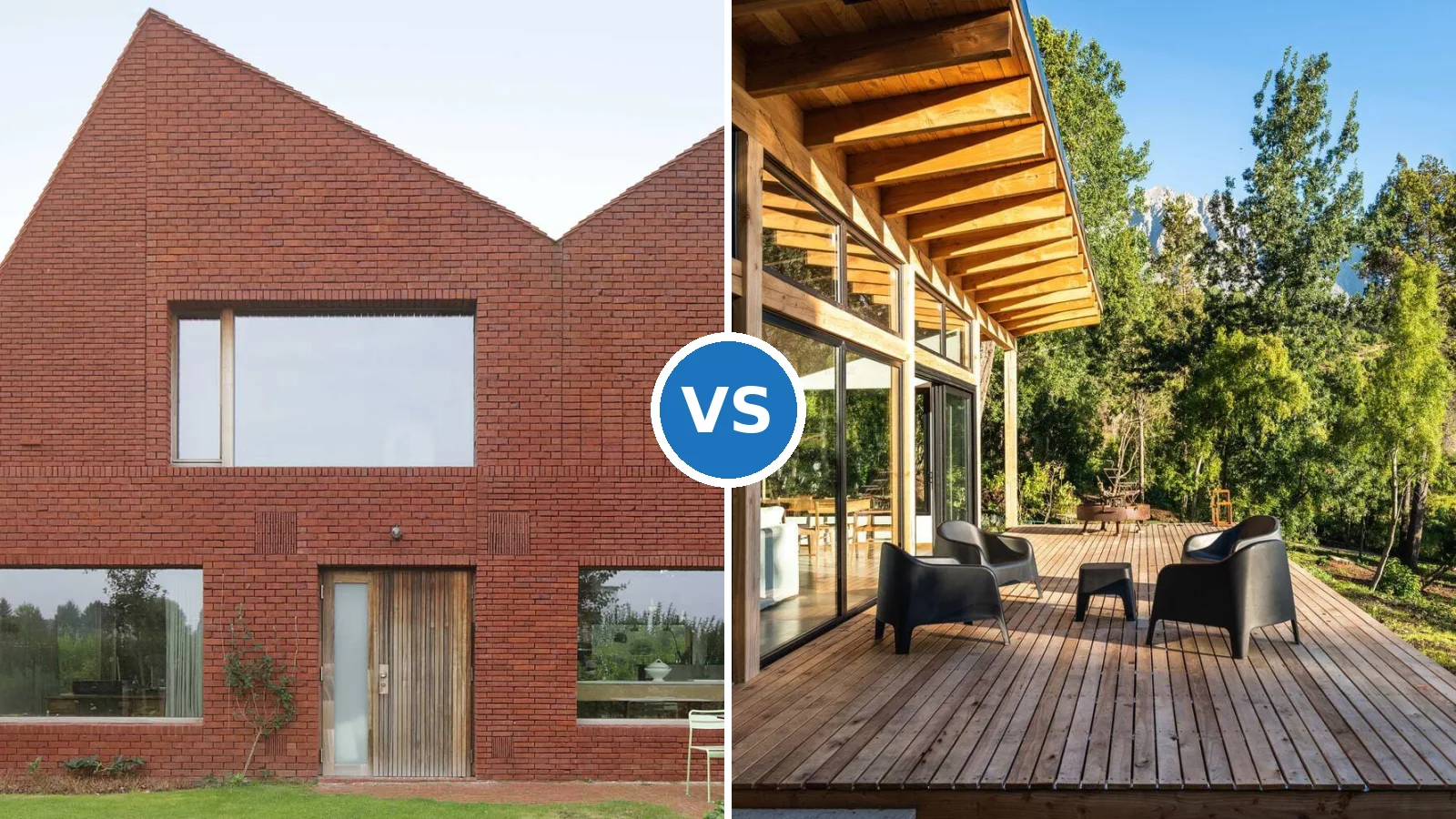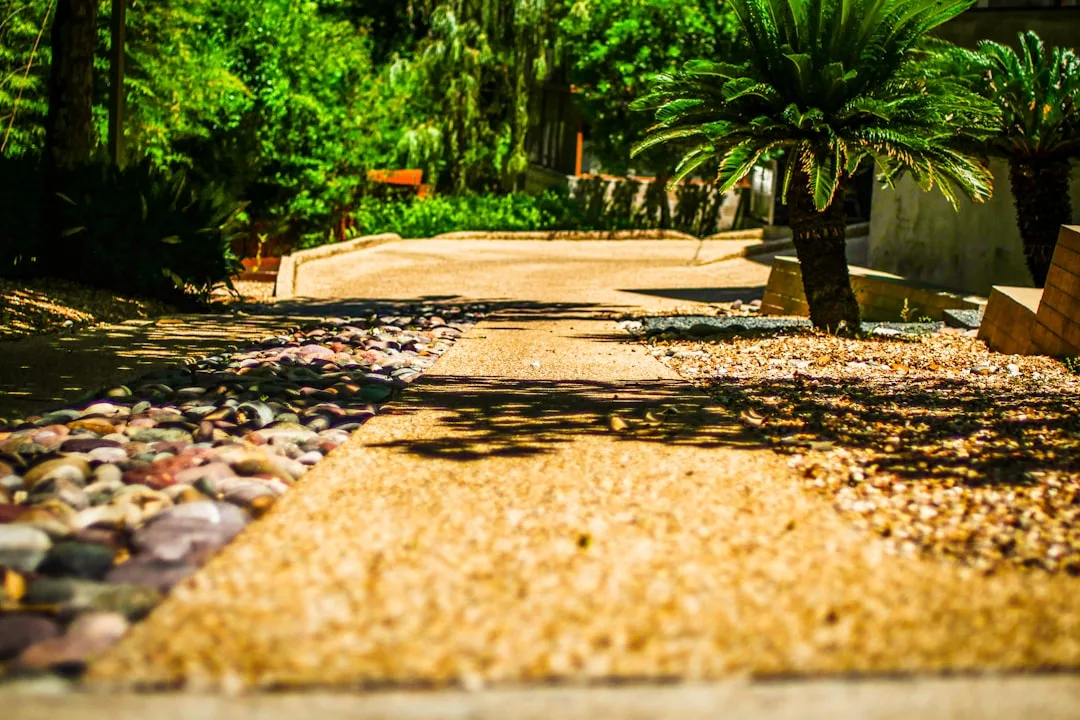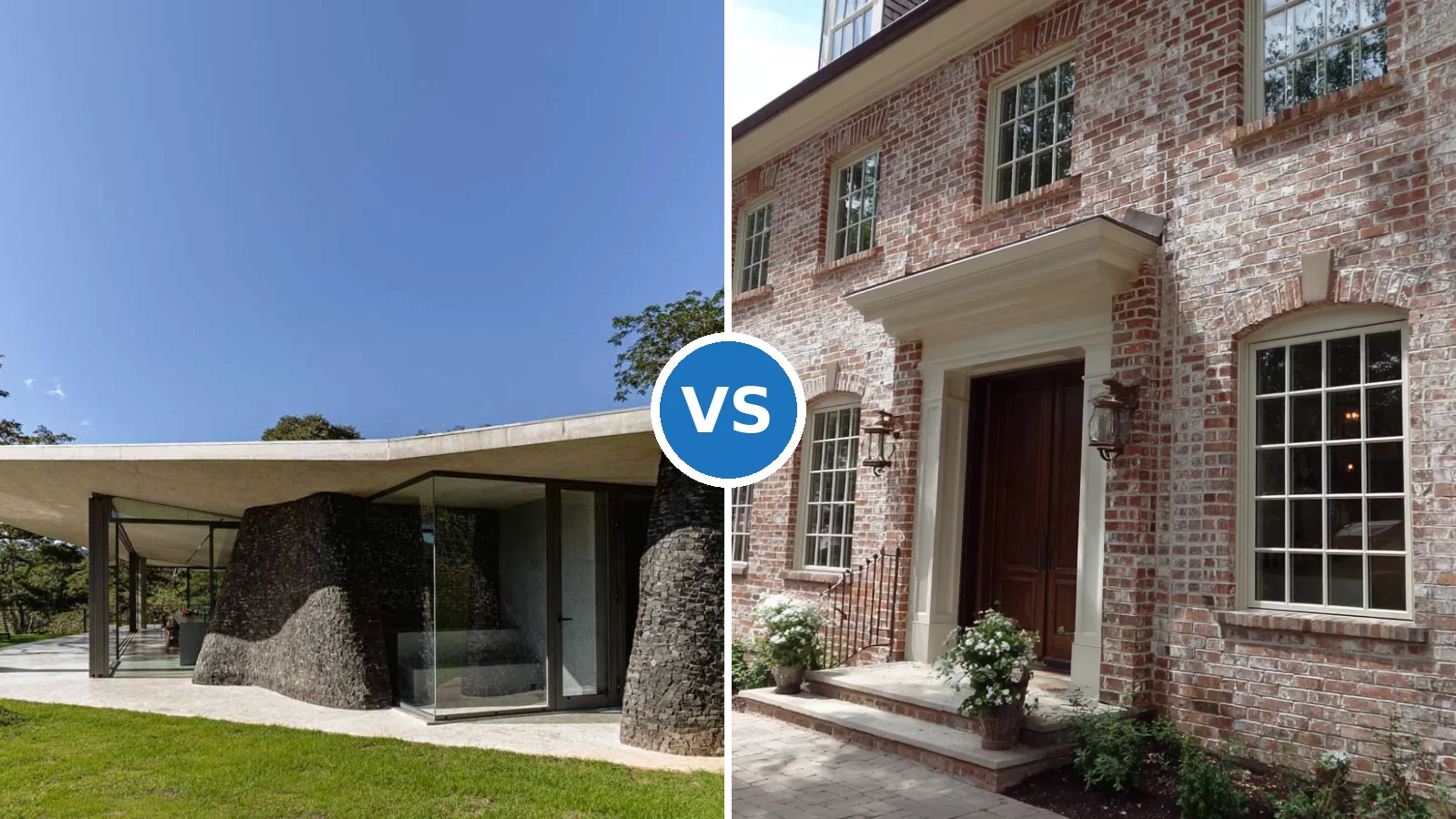
You’re standing at the fence line, wondering which skin your home should wear. The decision between brick vs concrete isn’t just about aesthetics—it shapes how your house interacts with weather, requires maintenance, and commands the landscape for decades to come. Curved concrete exterior designs emphasize fluidity and integration with natural surroundings, while modern brick wall designs deliver timeless durability paired with geometric precision. Each material carries its own maintenance burden, cost profile, and visual language.
Choose curved concrete if you’re designing in a tropical climate and want to blur the boundary between indoors and outside. Choose modern brick if you prefer a material that hardens with age and works beautifully with mixed materials like wood, metal, or glass.

What each material actually is
Curved concrete is poured in place, shaped to follow topography, and left with a raw, textured finish that captures earth tones. The material becomes structural poetry—it carries light differently throughout the day, rippling across barrel vaults and flowing through organic forms that seem to grow from the site itself. Concrete here is not monolithic but sculptural, inviting touch and movement.
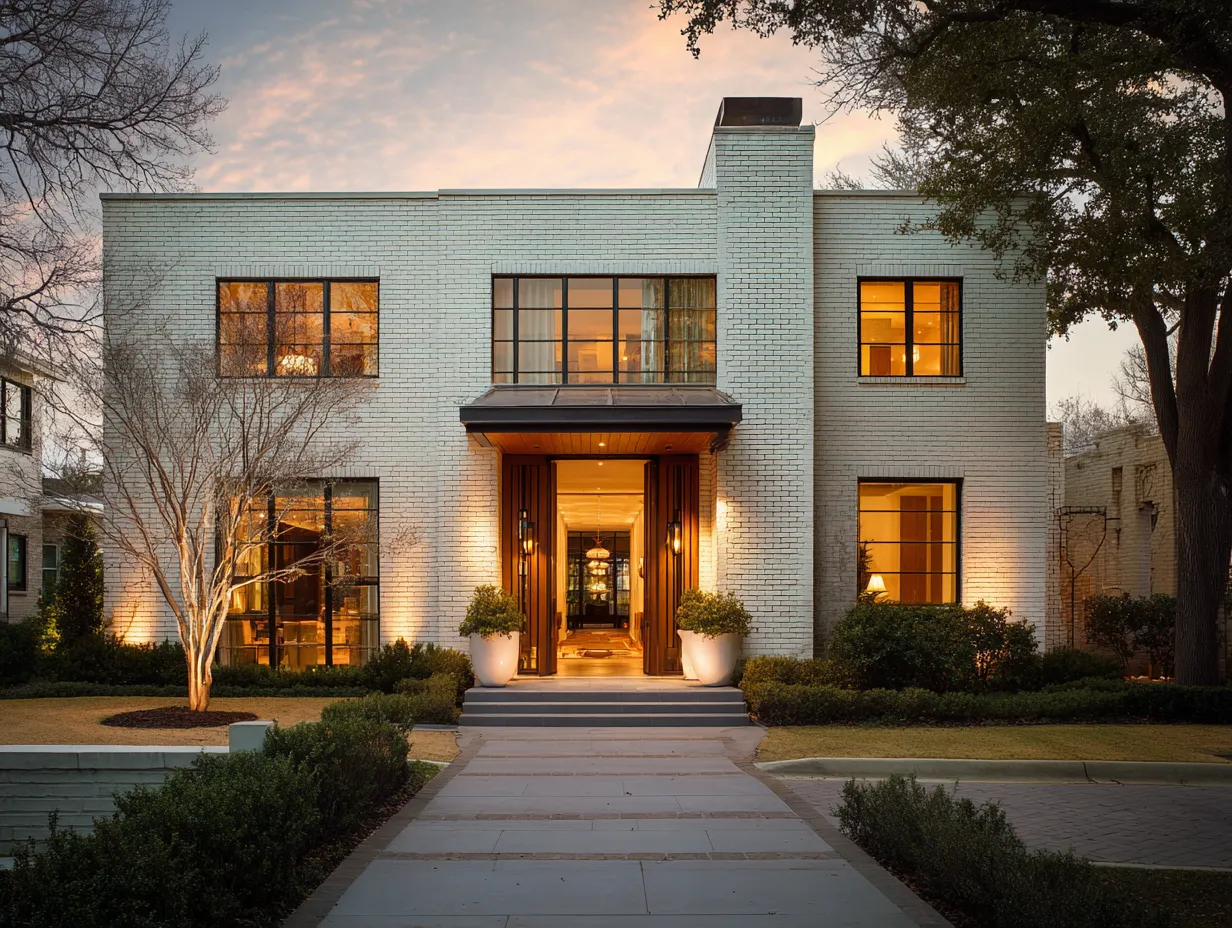
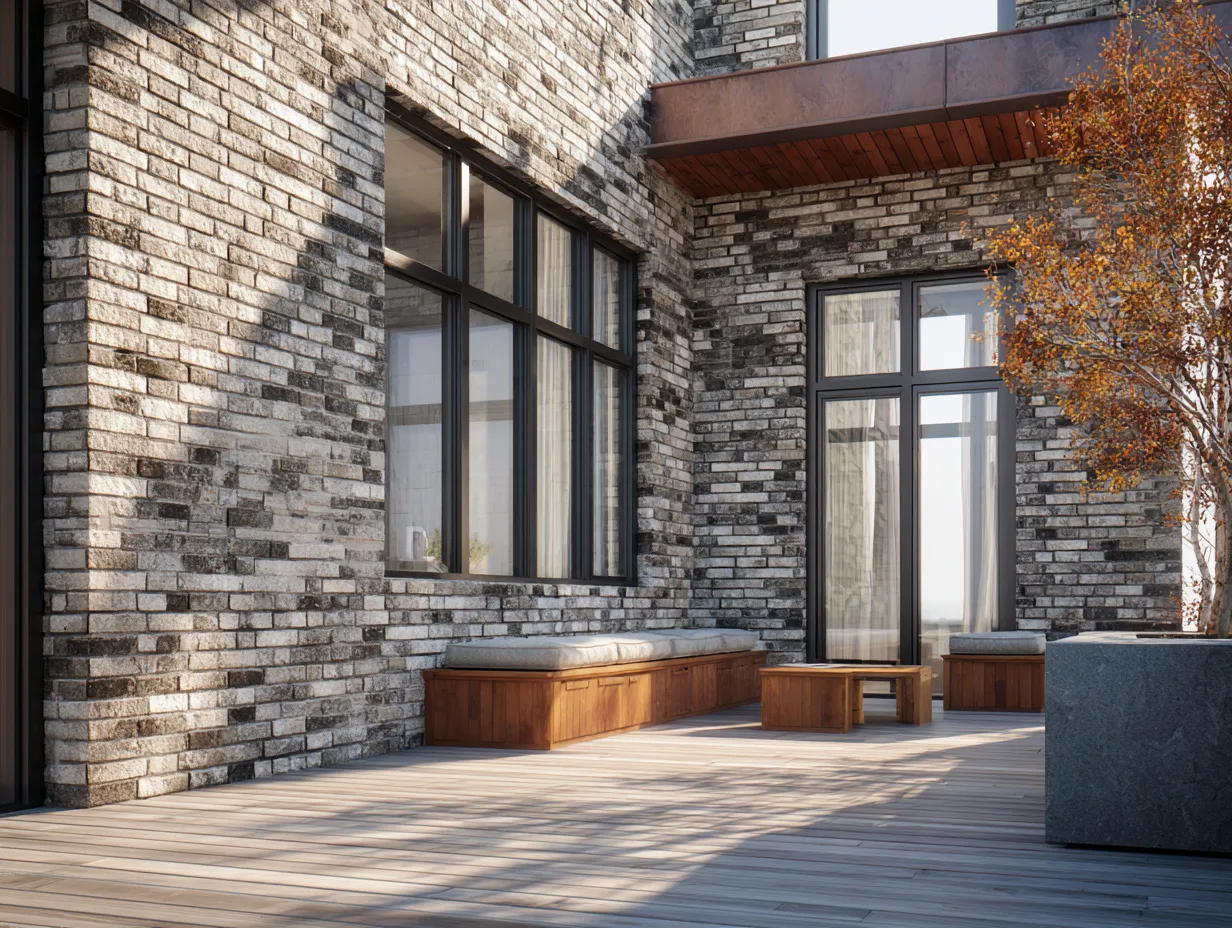
Modern brick wall design uses clay fired at high temperatures into a durable building block, available in whites, charcoals, earth tones, and deeper hues. Brick is applied as solid mass or thin veneer, then arranged in patterns—herringbone, basket weave, geometric sequences. The mortar joint and bond pattern become as important as the brick color itself, creating visual rhythm and depth.
Quick Verdict
- Choose curved concrete if you live in a tropical climate, want organic forms that flow with the landscape, and appreciate how a material ages visibly.
- Choose modern brick if you need a material that requires almost no maintenance, works with any climate, and pairs well with other materials like wood or metal.
- Choose concrete if budget is tight upfront and you’re designing courtyards or sculptural outdoor spaces.
- Choose brick if you plan to stay in the home for 30+ years and want a facade that only improves with time.
Durability and maintenance head-to-head
Concrete, especially in tropical regions with high humidity and salt air, requires vigilance. The raw, textured surface catches algae, moss, and staining easily. Sealing is recommended, though many designers intentionally embrace weathering as part of the material’s aging story. The surface can develop fine cracks over time, particularly if the climate swings between wet and dry seasons.
Brick is one of the few building products that is 100% recyclable and can be salvaged for reuse on future projects. It outlasts nearly every alternative on the market without sealing or special coatings. Brick does not degrade; it only gains character. Mortar may need repointing after many years, but the brick itself is virtually maintenance-free.
If you pair brick with other materials—steel, wood, or glass—you inherit their maintenance demands too. Corten steel will rust intentionally and won’t bleed onto brickwork, but untreated steel will streak. Cedar wood cladding ages to gray and pairs beautifully with warm-toned brick, but cheaper pressure-treated pine turns green and peels.
| Criteria | Curved Concrete | Modern Brick |
|---|---|---|
| Durability without sealing | Moderate; prone to algae, staining | Excellent; nearly permanent |
| Climate performance in tropics | Good if designed well; humidity demands care | Proven; works in all climates |
| Maintenance level | Regular; surface needs monitoring | Minimal; occasional mortar repoint only |
| Cost per square foot (material) | $8–$12/sq ft (poured in place); sealing adds cost | $15–$25/sq ft full brick; $6–$9/sq ft thin veneer |
| Visual aging | Can look weathered quickly | Improves with time; patina deepens charm |
| Material recyclability | Difficult to recycle; usually landfilled | 100% recyclable; salvageable for reuse |

Where curved concrete wins
Concrete shines in tropical and warm climates where the goal is to dissolve the boundary between inside and outside. The material’s ability to curve, flow, and adapt to uneven terrain is unmatched. Barrel vaults, terraces, and organic walkways create spaces that feel sculptural rather than constructed, as if the land itself has been gently shaped into shelter.
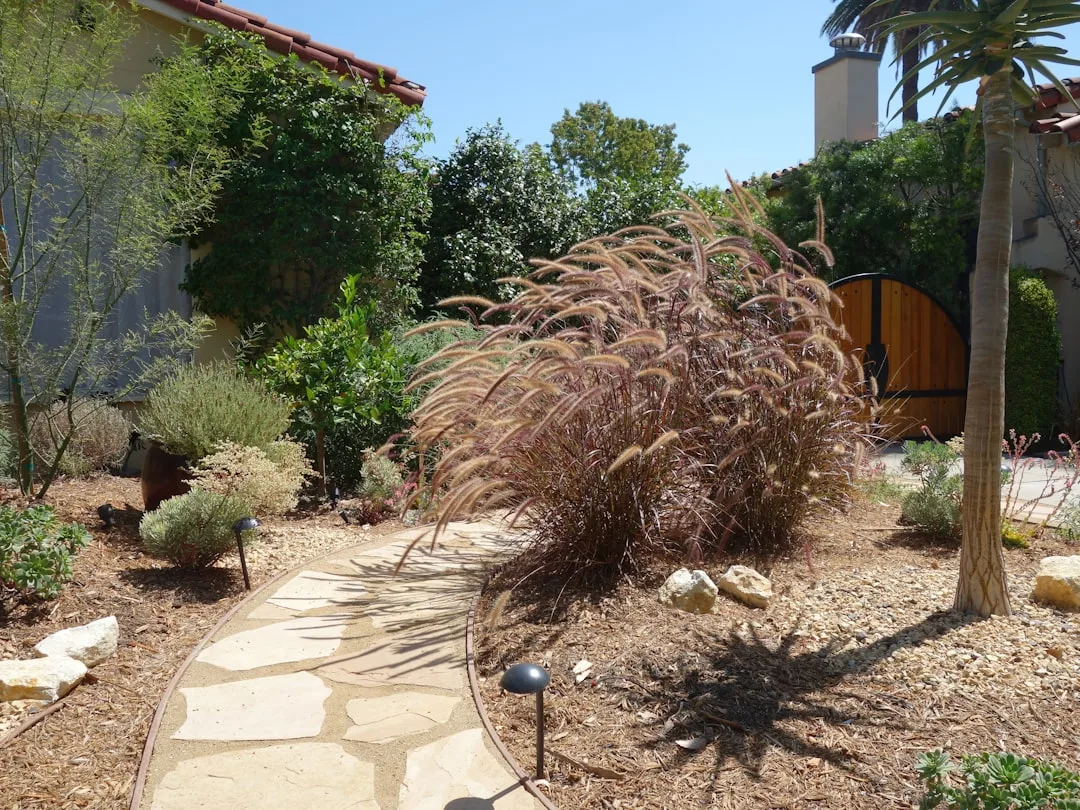
The sensory experience is immediate. Light plays across curved surfaces throughout the day, and the raw texture of the concrete invites touch in a way that finished surfaces don’t. For homes designed around open courtyards with native trees, water features, and integration with forest or jungle, concrete is the only material that feels native to the philosophy.
Initial material costs are lower than brick, especially for large sculptural forms. The continuity of concrete—where walls, stairs, and even built-in furniture seem to rise from the same pour—creates visual simplicity that reads as luxury despite the budget.


Where modern brick wins
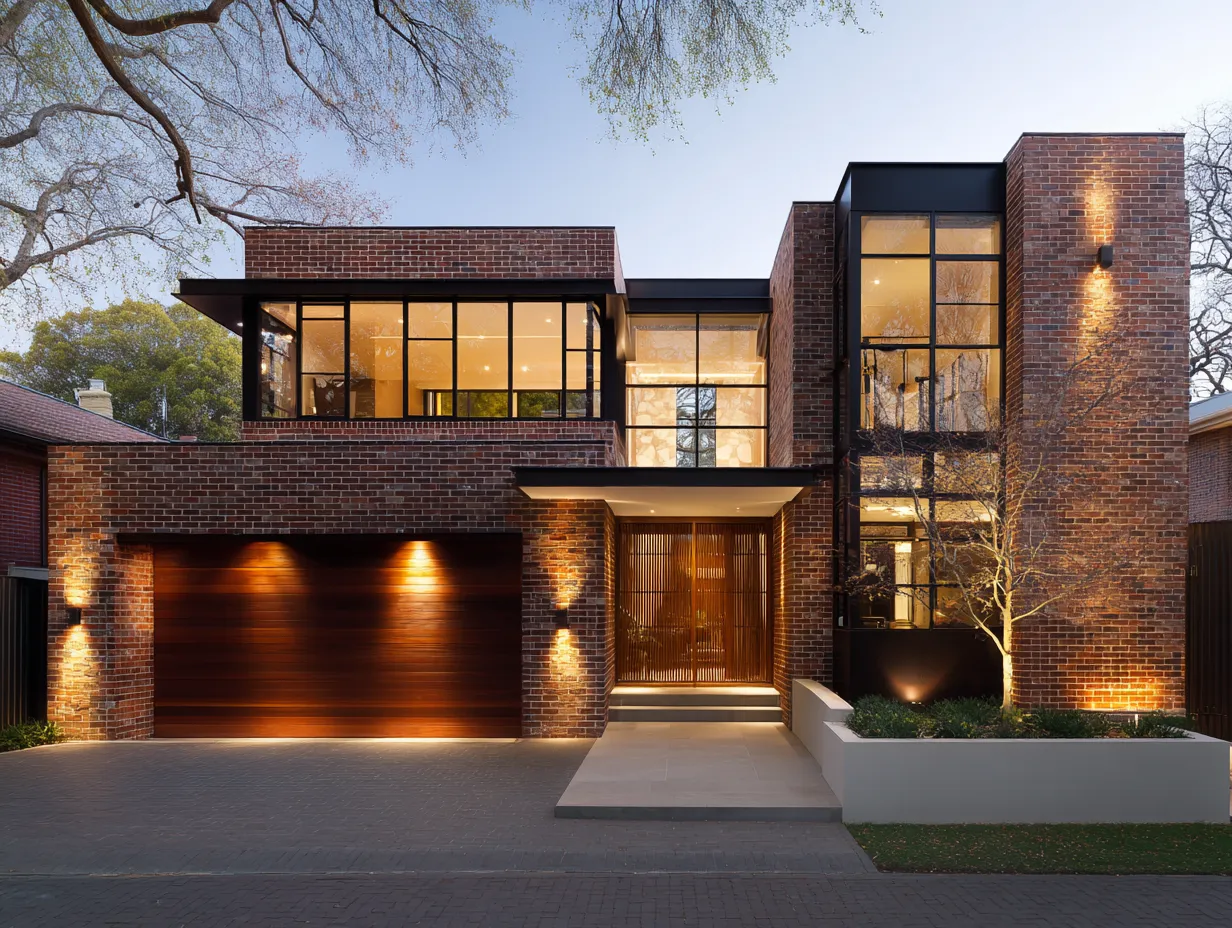
Brick’s real estate is its longevity and flexibility. A brick facade built today will look intentional and beautiful in 50 years without repair or reseal. The material works equally well in modernist, industrial, farmhouse, or coastal designs. It accepts bold contrasts with other materials—dark charcoal brick frames floor-to-ceiling windows to create visual drama that makes modest houses command attention.
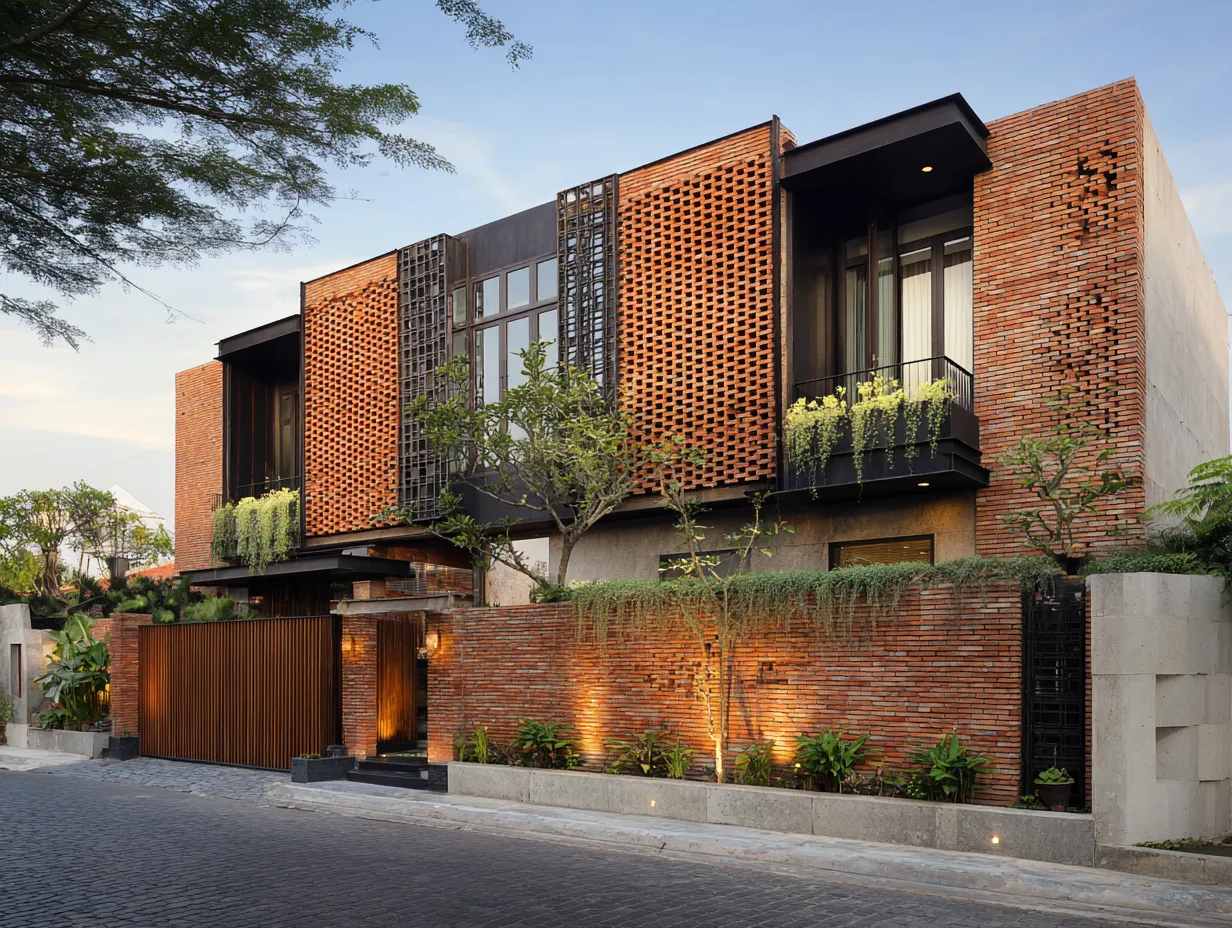
Brick pattern design offers creative control impossible with concrete. Herringbone, basket weave, and geometric sequences create rhythm and depth. Mortar color can be adjusted to complement or contrast the brick, fundamentally changing the facade’s character. This flexibility allows homeowners to refine their design over time without structural overhaul.
Thin brick veneer ($6–$9 per square foot) makes brick accessible for budget-conscious projects. Full brick ($15–$25 per square foot) delivers authenticity that ages into an asset. When paired with clear low-E glass, cedar cladding, or Corten steel, brick becomes the anchor that makes mixed-material designs feel coherent rather than chaotic.
The number one mistake people make when choosing
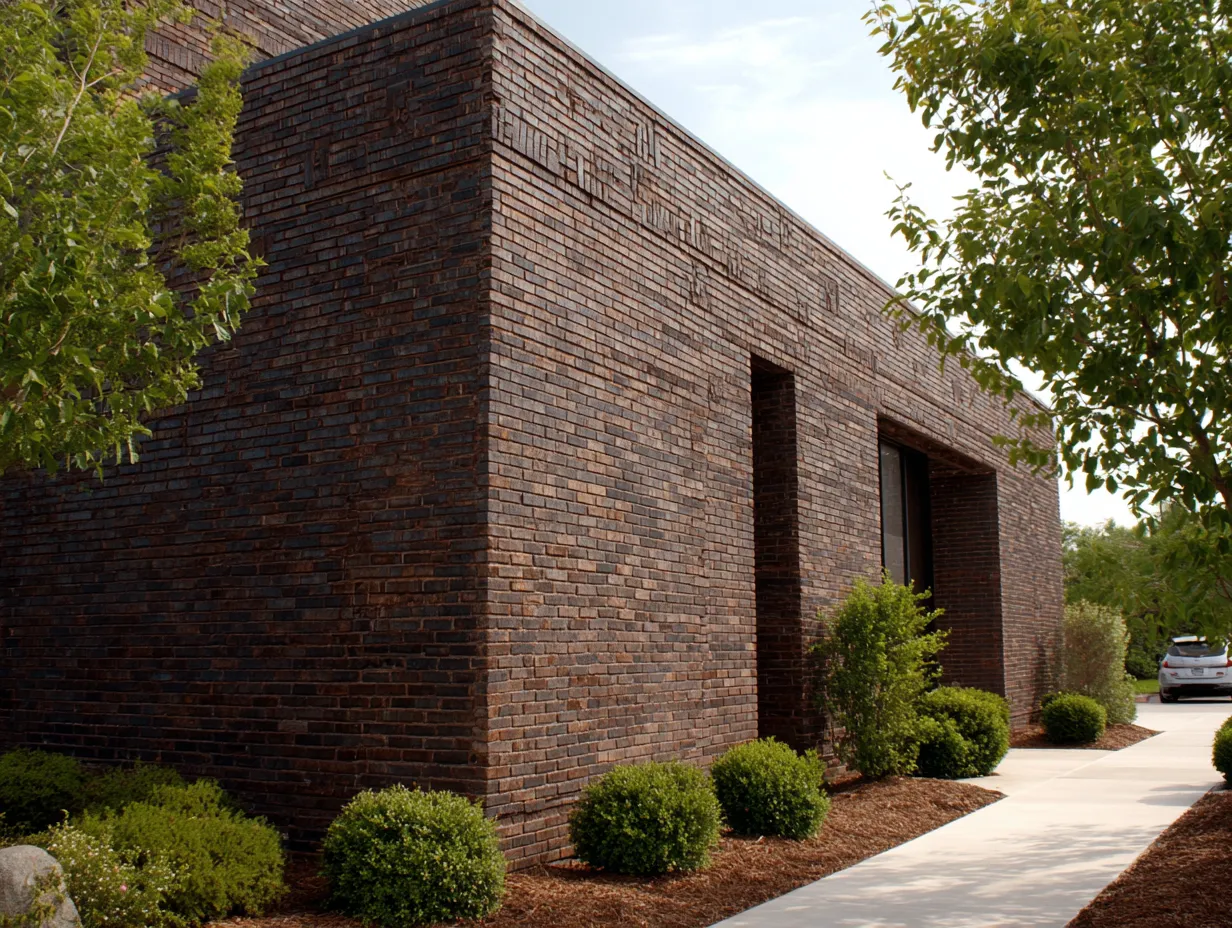
The biggest error is ignoring mortar color and bond pattern when selecting brick. A homeowner once chose a gorgeous red brick only to discover that the standard gray mortar made the facade look dull and institutional. The same brick with dark mortar—a $2/square-foot difference—transformed the house into something architecturally striking.
With concrete, the inverse mistake happens: people assume raw concrete will stay pristine. It won’t. Without a sealing strategy or acceptance of weathering, the material will develop stains, algae creep, and an aged look within the first few years in humid climates. Building a test panel before committing to either material prevents costly regret.
The second error is underestimating mixed-material maintenance. Pairing brick with untreated steel or budget pine cladding can result in rust streaks or peeling wood within seasons, ruining the entire facade. Material pairings demand equal durability tiers.
Final verdict — which suits your home
Curved concrete is the right choice if your home sits in a tropical or warm climate, your design emphasizes open courtyards and landscape integration, and you’re willing to seal or embrace weathering. The material rewards thoughtful design and delivers an experience—light, texture, form—that brick cannot replicate.