
When a dwelling rises from the earth, there are moments when it feels less like construction and more like poetry carved into landscape. Among trees and sky, the presence of wood joined with an angular roof becomes more than a shelter; it is a quiet conversation between material and form, between exterior presence and the passage of light. The story begins with the rhythm of timber surfaces, the warm tone of cladding, and the sharp silhouette of a roofline that cuts against the horizon. This is not just a building but a canvas where texture, shape, and nature unite.


Wood Exterior and Texture
The first encounter is always visual, and it is the texture of wood that greets the eye before anything else. Vertical panels line the walls with precision, each board carrying its own grain, its own subtle variations of amber, russet, and honey. The exterior is alive with this timber skin, never static, always shifting with sun and shadow. In the morning, the wooden facade glows with softness, as if the house itself breathes warmth into the cool air. By dusk, the same boards deepen into bronze and shadow, the rhythm of grain becoming almost musical in its repetition.
Wood here does not merely protect; it communicates. It is tactile, it invites touch, it whispers of forests and craftsmanship. Each plank is a reminder of the tree it once was, transformed but still rooted in memory. To walk alongside this cladding is to experience architecture as a living narrative, where the exterior itself becomes a storyteller.


Angular Roof Silhouette
Above the wooden walls, the angular roof asserts its presence like a sculptor’s gesture. Sharp, clean lines reach upward, a geometry that feels both contemporary and timeless. The roof does not shy away from the sky; it embraces its role as mediator between earth and heavens. From some angles, it resembles folded paper, origami frozen in timber and steel, precise yet expressive.
The roofline extends beyond its practical role of protection. It shapes how the house is perceived, how light touches the structure, how shadows cascade across the exterior wood. When snow falls, it settles neatly into the angled planes, creating crisp white layers against the warm brown beneath. When rain drizzles, droplets glide along the incline and disappear into the ground like notes in a symphony. This meeting of material and form creates a sense of balance, a harmony where structure becomes sculpture.

Interior Glow and Wooden Beams
Stepping inside, the transition from exterior to interior is seamless, for wood follows everywhere. Exposed beams stretch across ceilings like ribs of a grand organism, guiding the eye upward. These beams are not merely functional; they are poetic lines in the composition, giving rhythm to space. Under their weight, the air feels both sheltered and expansive, a paradox that only timber can evoke.
Glass walls frame the outside world, yet it is the wood that frames the experience. Its warm tone contrasts with the brightness of glass, softening reflections, making daylight gentle rather than harsh. Sun filters through openings, scattering patterns across the wooden floor. The interior glows as if lit from within, the warmth of timber amplifying every flicker of natural light.
Furniture carved in harmony with the beams continues the narrative. Wooden tables, wooden stair rails, wooden shelves—all speak the same language. To dwell here is to inhabit a forest distilled into architecture, not by chance but by intention.

Connection of Roof to Sky
The angular roof does more than define shape; it creates dialogue with the sky itself. Its slopes frame patches of blue, its sharp edges slice through clouds, its peaks echo distant mountains. From inside, skylights cut into the incline, turning the heavens into a shifting canvas of light and shadow. In summer, sunbeams travel across the wooden floor in arcs, marking time like a sundial. In winter, gray skies lend a contemplative softness to the space.
The roof is not silent; it is responsive. Rain taps against it, creating rhythms that blend with the creaking of wood. Wind rushes past its edges, humming through rafters in tones that shift with the weather. Every change in atmosphere becomes part of the life of the house. This is not a mute shelter but an instrument, playing the symphony of seasons in collaboration with nature.


Exterior Balance with Landscape
Surrounding trees and open fields make the exterior a participant in its environment rather than an intruder. The wooden cladding mirrors the trunks of trees, while the angular roof echoes the peaks of hills in the distance. The entire form seems to rise naturally, as though carved by wind and time rather than designed by human hands.
Paths of stone lead toward the wooden facade, and each step feels like an approach toward an artwork. The smell of timber lingers in the air after rain, blending with the scent of grass and soil. Birds perch on the roof’s edges, their songs mixing with the creak of beams and the whispers of leaves. The house, through its materials and geometry, becomes part of the larger ecosystem, never dominating but always conversing.

Play of Light on Wood Surfaces
At different hours, the exterior becomes a gallery of shadows. Morning casts elongated silhouettes of nearby branches across the wooden walls, etching temporary drawings that shift as the sun ascends. Noon brings brilliance, highlighting the golden tones of timber and emphasizing the sharp edges of the angular roof. Evening softens everything, shadows deepening into violet and the wood returning to its earthy roots.
Artificial lighting at night is subtle, placed to highlight the grain of panels and the slope of the roof without overwhelming them. Warm lights glow softly behind glass, making the wooden exterior shimmer like a lantern. The result is not ostentation but quiet presence, a beacon of warmth in the dark landscape.

Craftsmanship and Material Honesty
The most remarkable aspect is how honestly the materials are presented. Wood is not painted or hidden; it is celebrated in its natural state. Its knots, its veins, its slight imperfections become part of the story. The roof, with its deliberate geometry, does not disguise its boldness; it embraces it. There is no ornamentation that feels false, no attempt to cover what is already beautiful.
Craftsmanship is visible in the precise alignment of boards, the careful joining of beams, the balance of roof planes. Every detail feels considered, every junction an opportunity for beauty. To stand before the exterior is to sense the hand of artisans who respected both material and form.
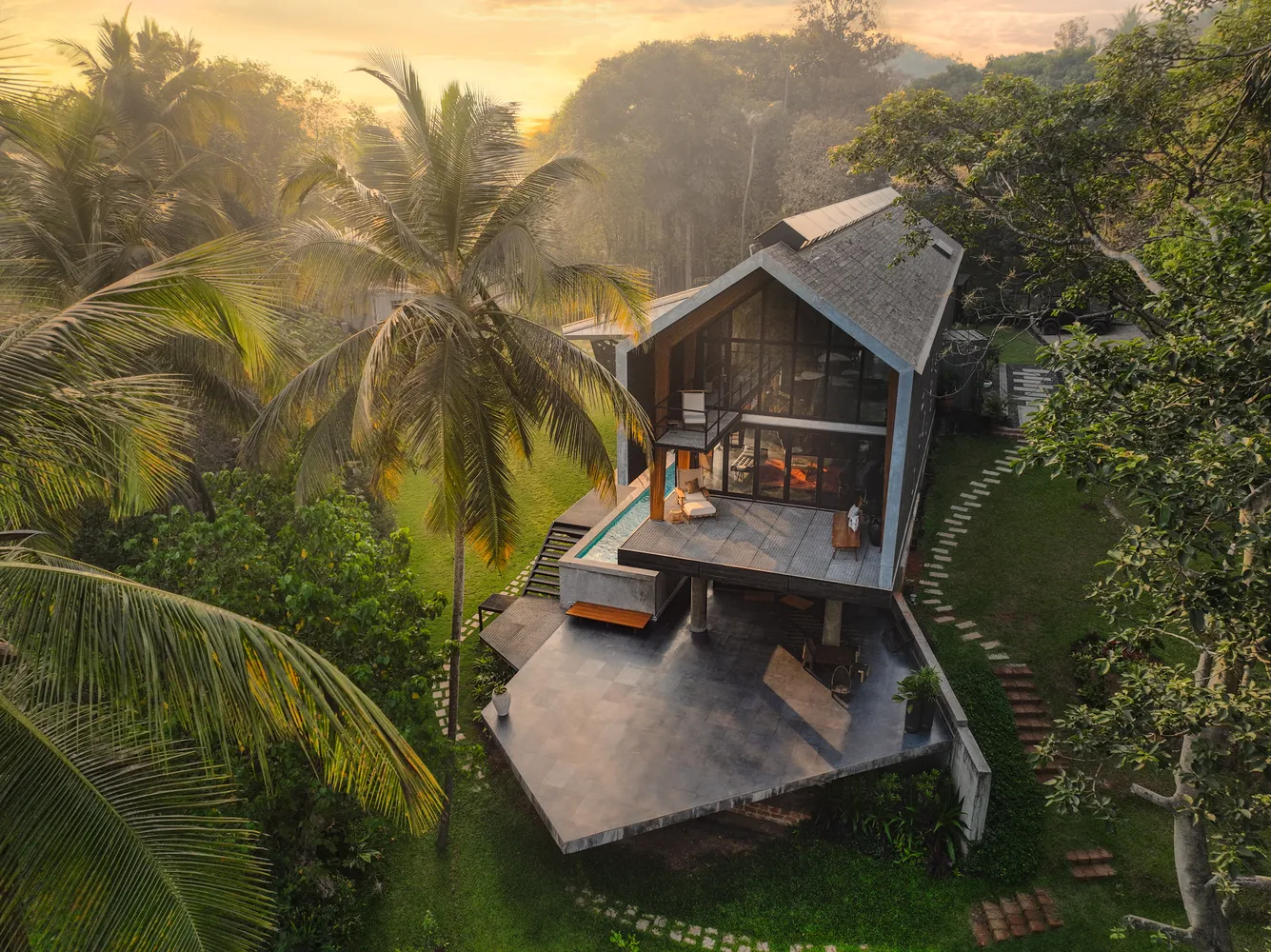
In this place, architecture becomes more than walls and roof. It becomes a meditation on harmony—between wood and sky, between angular form and organic grain, between exterior presence and interior glow. The timber cladding, rich with warmth, anchors the dwelling to the earth. The angular roof, sharp and assertive, lifts it toward the heavens. Together, they create not just a structure but a living dialogue with nature. This dwelling demonstrates that when material is honored and form is purposeful, the result is not just shelter but art that endures.
| Architects | http://architecturediscipline.com/ |
| Images | Studio Charuau |
Complete guide
Roof Design Ideas for Every Style, Shape and Home
Flat, gable, shed, curved, green, thatched — all in one place
Complete guide
Wood in Every Room — Floors, Walls, Facades and Furniture
Paneling, ceilings, kitchens, facades, plywood, timber houses — all in one place
You Might Also Like

Related Topics