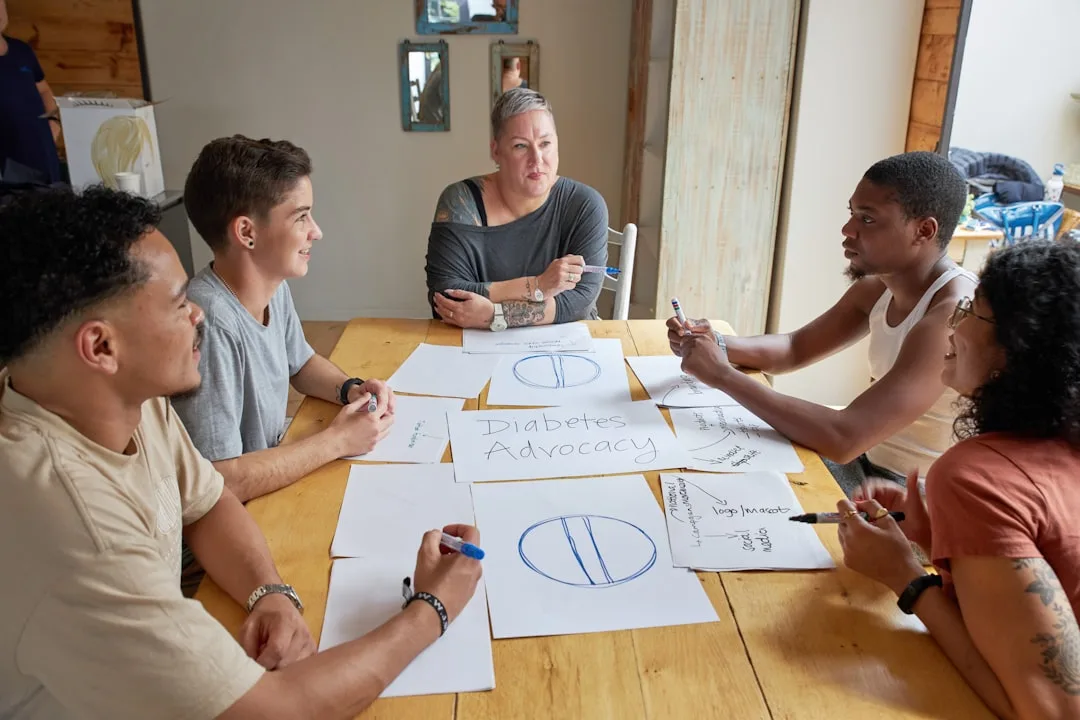
Solo study for professional certifications has met its match. Group certification cohorts—structured learning groups with synchronized start dates, peer accountability, and shared exam timelines—have become the dominant pathway for professionals pursuing credentials in 2026. Unlike self-paced online courses where 80% of enrollees never finish, cohort models lock in commitment through social obligation and real-time peer feedback.
The shift is rooted in a simple behavioral truth: humans finish what they commit to publicly and with others. A working manager juggling a CompTIA Security+ exam alongside email and meetings needs more than asynchronous videos—they need classmates checking in, study partners reviewing practice questions, and instructors who know their names and progress.
This isn’t nostalgia for classroom learning. It’s engineering accountability into remote credential pathways.
Why Cohort Models Drive Completion Rates Up
Coursera and LinkedIn Learning launched structured cohort tracks in early 2025, and the numbers shifted immediately. Professionals in 8-12 week cohort groups reported completion rates near 74%, compared to 18-22% for self-paced equivalents on the same platforms.
The mechanism works because cohorts create three friction points that fight dropout: scheduled live sessions, peer presence, and visible progress tracking. When your cohort has 35 people and you skip a Tuesday workshop, someone notices. When Marcus in accounting posts his practice test score at 67%, you study harder before posting yours.
Employers now fund cohort seats specifically because the ROI is measurable. A pharmaceutical sales rep completing a Certified Sales Professional credential via cohort finishes in 10 weeks and is revenue-ready; a solo learner stretches the timeline to 7-9 months, if they finish at all.
Quick Tips
- Join cohorts with defined start and end dates—open-enrollment groups lack urgency and stall in week 3.
- Pick credentials aligned with your current job (not aspirational roles two years out)—relevance drives engagement.
- Choose platforms with built-in cohort dashboards showing peer progress and study metrics, not just course videos.
- Schedule your cohort sessions at the same weekly time every week to build habit, not just calendar blocks.

How Peer Accountability Replaces Solo Procrastination
Google Career Certificates restructured their entire pathway in late 2025 to emphasize peer review and group project milestones. Instead of watching video modules in isolation, learners now complete weekly assignments reviewed by cohort members using a standardized rubric.
This peer-review mechanism—where your practice project is evaluated by three peers, not an algorithm—forces two things: you write better work because you know humans will assess it, and you learn the material deeper by critiquing others’ work.
Procrastination disappears because the deadline is shared, not theoretical. You’re not studying alone at midnight two days before the exam.
| Learning Model | Typical Completion Rate | Time to Credential |
|---|---|---|
| Self-paced online | 16-22% | 6-14 months |
| Group cohort with live sessions | 71-76% | 8-12 weeks |
| Cohort with peer review | 78-84% | 8-10 weeks |
| Cohort with live mentor check-ins | 82-89% | 8-10 weeks |
The Mistake: Joining Cohorts That Start Monthly or On-Demand
Here’s what kills cohort learning: picking a program with rolling enrollment or monthly start dates. If your cohort has people starting every Monday, there is no cohort—there’s a rotating population of strangers at different study phases.
A finance professional signs up for a CPA exam prep cohort on June 15th and expects to start immediately. The program says “cohort launches July 7th.” She waits three weeks, loses momentum, and by July 7th she’s considering self-paced alternatives because the initial urgency has cooled.
Or worse: a cohort starts on June 1st with 40 people, but new people can still join through June 15th. By week 2, the original 40 have completed foundation modules while newcomers are watching week 1 videos. The group fractures into micro-cohorts of different paces, and the accountability advantage vanishes entirely.
The best cohorts close enrollment immediately after the start date and move as a unified group for the entire duration.

Why Companies Are Shifting Training Budgets to Cohort Credentials
McKinsey’s 2025 Skills Taxonomy Report noted that organizations investing in structured group certification programs saw 34% faster role transitions and 18% higher performance in the first 90 days post-credential compared to self-directed learning.
That’s not surprising—a data analyst who earns a Google Data Analytics Certificate via a 10-week cohort doesn’t just learn the tools; she learns them in conversation with people doing the same job at other companies. She builds a professional network during the credential itself, not after.
How AI Personalization Enhances Cohort-Based Learning Without Losing Group Dynamics
The tension between personalized learning paths and cohort cohesion is real. A 50-person data science cohort can’t move at one pace—some learners need deeper SQL fundamentals, others want to jump straight to machine learning. The solution emerging across platforms is hybrid: maintain the cohort structure and peer accountability while layering individual learning adjustments underneath.
This is where AI Tutoring Personalization Reshapes One-Size-Fits-All Education in 2026 becomes practical. Each cohort member follows the same weekly projects and discussion sessions, but an AI system identifies who needs extra practice with specific concepts and surfaces supplementary material in real time. A learner struggling with statistical distributions gets targeted micro-lessons; another who’s already strong there moves into advanced applications. Both show up to the same Thursday live session prepared and at the right depth.
Employers value this approach because it maintains the networking and shared credential rigor that makes cohorts attractive, while reducing the dropout rate that plagued early cohort programs. When learners don’t fall behind, they stay engaged—and they graduate alongside their peers, ready to step into roles together or with meaningful relationships already in place.
Governance and Accountability in Scaled Cohort Programs
As cohort credentials grow from niche offerings to mainstream hiring channels, quality oversight matters more. AI Governance in Education Moves From Pilot to Proven Outcomes addresses how institutions maintain standards when scaling. Cohort programs now embed automated completion verification, peer review auditing, and outcome tracking—ensuring that a certificate earned in a 50-person cohort carries the same weight across companies and geographies.
This governance layer also protects the cohort model itself. When employers see consistent performance data and transparent qualification standards, they’re more willing to hire cohort graduates as a group, which then reinforces the cohort’s value proposition. The cycle strengthens: trusted outcomes drive employer confidence, which drives enrollment, which funds better instruction and peer experiences.