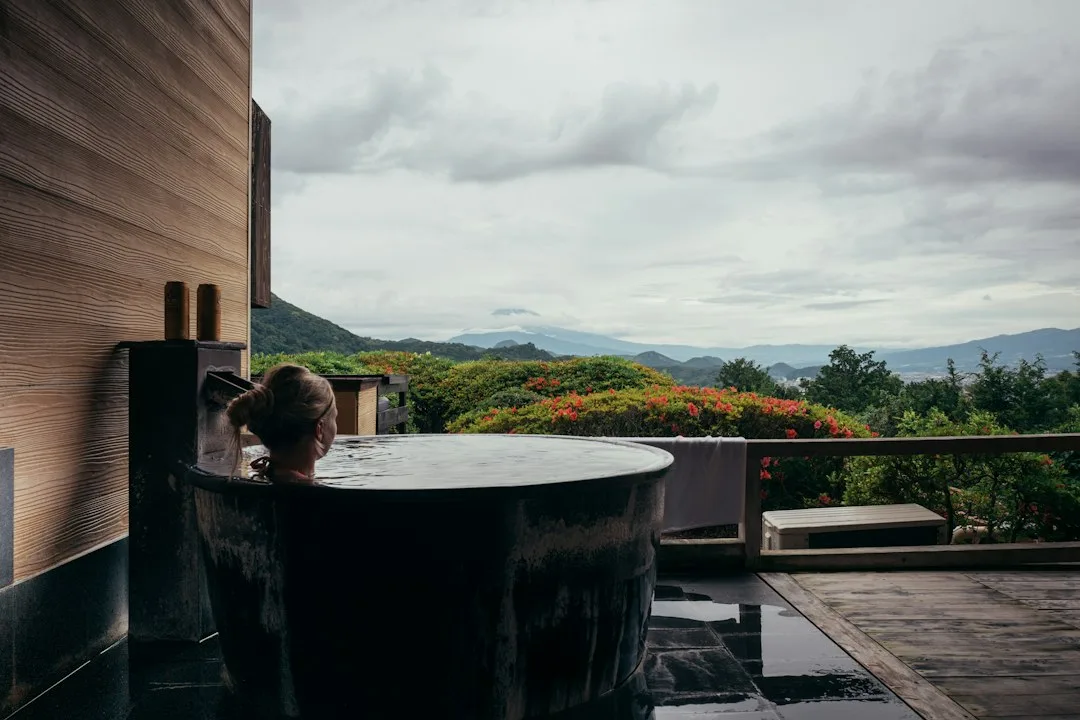
Most travelers who land at Haneda spend their first night in a business hotel that could sit in Osaka, Seoul, or Singapore. A growing share now skip that model and book onsen ryokan stays, where a tatami room, a kaiseki dinner, and a mineral bath arrive in one reservation.
The trade is quiet, but it shows up in booking patterns across Japan’s hot spring towns. Smaller inns in Kinosaki and Beppu often ask guests to reserve well ahead for autumn weekends.
Why Travelers Are Moving Past Tokyo Hotels
Tokyo is still the main gateway, and that is exactly why the contrast hits so hard. A ryokan is a traditional inn where staff greet you at the entrance, you change into a cotton yukata, and dinner arrives in a sequence of small courses. Within hours a Shinkansen bullet train can carry you west, so the city is never far behind.
Mineral baths are the other draw. Onsen water varies by spring, with sulfur, iron, and bicarbonate waters each giving a different feel. Many inns offer private outdoor baths called rotenburo, so you can soak without sharing a bathhouse.
Quick Tips
- Book a room with a private outdoor bath if privacy matters to you.
- Confirm your dinner time at check-in and ask about seating.
- Pack slip-on shoes, since you will remove them at every entrance.
- Ask whether the inn has a public bath as well as a private one.
Where the Best Hot Spring Towns Sit
Kinosaki Onsen in Hyogo Prefecture has seven public bathhouses, and guests traditionally wear a yukata and wooden geta sandals to walk between them. Beppu on Kyushu is known for its geothermal sites, including the red-hued Blood Pond Hell, which is a sight rather than a bath.
Yufuin, also on Kyushu, sits in a valley where morning mist lifts off the surrounding fields. Hakone, within reach of Tokyo by train, offers a Hakone Free Pass covering rail, bus, and cable car access.
| Town | Region | Where the Appeal Lies |
|---|---|---|
| Kinosaki Onsen | Hyogo | Seven public bathhouses and a willow-lined canal walk |
| Beppu | Oita, Kyushu | Geothermal sites including Blood Pond Hell |
| Yufuin | Oita, Kyushu | Valley village with morning mist and small cafes |
| Hakone | Kanagawa | Rail and cable car access from Tokyo with lake views |
| Kurokawa Onsen | Kumamoto | Forest inns with outdoor baths above a river valley |
Getting There Without Losing a Day
The Japan Rail Pass covers most JR lines, including many Shinkansen routes between Tokyo, Kyoto, and Hakata. From Hakata, local limited express trains reach Beppu and Yufuin, so Kyushu fits into a single rail itinerary.
Check current pass rules before you book, since eligibility and coverage can change. Not every private railway is included, so a Hakone Free Pass may suit that leg better. Read the fine print for each route before you commit.
The Mistake That Ruins a Ryokan Night
The most common mistake is arriving late after a long transfer. Many ryokan set dinner at a fixed time, and kitchens plan around it. Picture a guest who misses a connection and rolls in at 9:40 pm, only to find the kaiseki course cleared and a bowl of rice left.
The second mistake happens in the bath. Guests who step into the soaking pool without washing first at the seated shower stations break a rule everyone else follows. Wash, rinse, then enter, and keep the small towel out of the water.
Packing and Dressing for an Inn Stay
Ryokan provide yukata, but mountain towns cool quickly after dark in autumn. Pack a light layer for evening walks between baths, and choose soft fabrics that wrap easily and slip on and off.
Tabi socks and slip-on shoes spare you from fumbling at every doorway. For more on dressing for movement and comfort, see How Fashion Influences Travel and Adventure.
Who Should Book One and Who Should Skip It
Choose a ryokan if you want slow evenings, a multi-course dinner, and a bath before bed. Skip it if you want late nights, a flexible schedule, or a city to explore after dark.
Couples and solo travelers who enjoy quiet routines tend to get the most from these stays. Families with very young children may find shared bath rules harder to manage, so a private bath is worth requesting.
Timing your ryokan booking across the seasons
Ryokan rooms in popular onsen towns fill quickly during cherry blossom season in late March and early April, and again during the autumn foliage months of October and November. Booking through Japanese platforms such as Jalan or Rakuten Travel often shows more room types and meal plans than international sites. Many properties in places like Hakone and Kinosaki Onsen set their dinner times at check-in, so it helps to message the inn in advance if you have a late train connection.
Shoulder seasons offer quieter corridors and easier access to the communal baths. Winter stays in Kaga Onsen in Ishikawa Prefecture can feel especially rewarding, since snow outside makes the outdoor baths feel like a true retreat. Keep in mind that heating in older buildings can be modest, so pack a warm layer for walking between your room and the bath.
Bath and dinner etiquette that guests often miss
Before entering a communal bath, wash your body thoroughly at the low stool and shower area, then rinse off completely. The bath water is shared, so it should never be used for washing. Tie long hair up, keep a small hand towel called a tenugui folded on your head or on the edge of the tub, and never let it touch the water.
Multi-course kaiseki dinners at places such as Hoshinoya Kyoto or the smaller family-run inns of the Hakone area usually arrive course by course over ninety minutes or more. Eat at a steady pace, and ask the staff before photographing the dishes, since some chefs prefer guests to enjoy the plates as served. Tipping is not expected in Japan, so a simple thank-you and a small bow at departure are the customary way to show appreciation.