3D printed furniture now accounts for 34% of luxury interior design projects in 2026, replacing traditional manufacturing with precision-engineered pieces that cost 40–60% less than handcrafted equivalents while delivering exact dimensional accuracy. This shift stems from three compounding factors: desktop printer accessibility dropping below $8,000, advanced resin materials matching hardwood durability, and algorithmic design software eliminating custom fabrication timelines.
Why Precision Manufacturing Outpaces Traditional Production
3D printing eliminates the six-to-twelve-week lead time typical of bespoke furniture ordering. A designer defines exact measurements—down to 0.1mm tolerances—and production begins within 48 hours using industrial-grade nylon, carbon-fiber composites, or UV-cured resins that withstand 200+ pounds per square inch of pressure. Stratasys F900 systems ($500,000+ industrial models) can print a full dining chair in under 18 hours, whereas traditional joinery requires manual labor across multiple fabrication phases.
Customization depth surpasses mass production constraints entirely. Need a side table precisely 47.3 inches wide to fit your gallery wall? Print it. Require load-bearing shelving rated for 400 pounds across a 60-inch span with integrated cable routing? Achieved in a single print run without structural compromise. This removes the friction of adapting standard furniture to non-standard rooms—a critical advantage in urban apartments and heritage conversions where existing walls dictate spatial geometry.
Quick Tips
- Order sample swatches (resin color chips, $45–80 per set) before committing to full-scale prints.
- Specify infill density (30–100%) based on load requirements—higher density costs more but increases durability.
- Use assembly-ready designs with snap-fit joinery to reduce shipping costs and on-site installation labor.
- Request structural analysis reports for load-bearing pieces from manufacturers (typically included at no charge).
| Material Type | Load Rating | Typical Cost Per Item |
|---|---|---|
| Nylon (PA12) | 450 lbs per surface | $280–520 |
| Carbon-Fiber Nylon | 680 lbs per surface | $420–750 |
| UV Resin (Rigid) | 320 lbs per surface | $195–380 |
| TPU (Flexible) | 150 lbs per surface | $240–450 |
Brands Leading the 3D Printed Furniture Movement
Steelform, a Copenhagen-based studio, prints modular side tables starting at $385 using industrial nylon with aluminum-reinforced joints, targeting Scandinavian minimalism with zero-waste production. Their Hexagon Nested Tables ($465 for a set of three) feature algorithmic lattice structures that reduce material usage by 55% while maintaining rigidity—directly addressing both sustainability and affordability concerns.
Velo3D partners with interior firms across North America to produce structural seating—ottomans, benches, and accent chairs—using metal-infused polymers rated for residential and light commercial environments. A custom ottoman from their studio starts at $595 and includes structural engineering documentation. Meanwhile, MatterHackers supplies end-consumers with STL files ($12–45 per design) enabling in-house printing via Ultimaker S5 Pro systems ($6,499) or outsourced production through Shapeways ($0.08–$0.18 per cubic centimeter).
Freedom of Design, a London firm, applies generative algorithms to create weight-optimized tables, credenzas, and shelving units that appear sculptural while using 60–70% less material than conventionally manufactured equivalents. A single credenza can weigh under 35 pounds yet support 500 pounds uniformly distributed—impossible with solid wood at comparable dimensions. Pricing ranges from $520 (smaller accent pieces) to $2,100 (full-width dining tables).
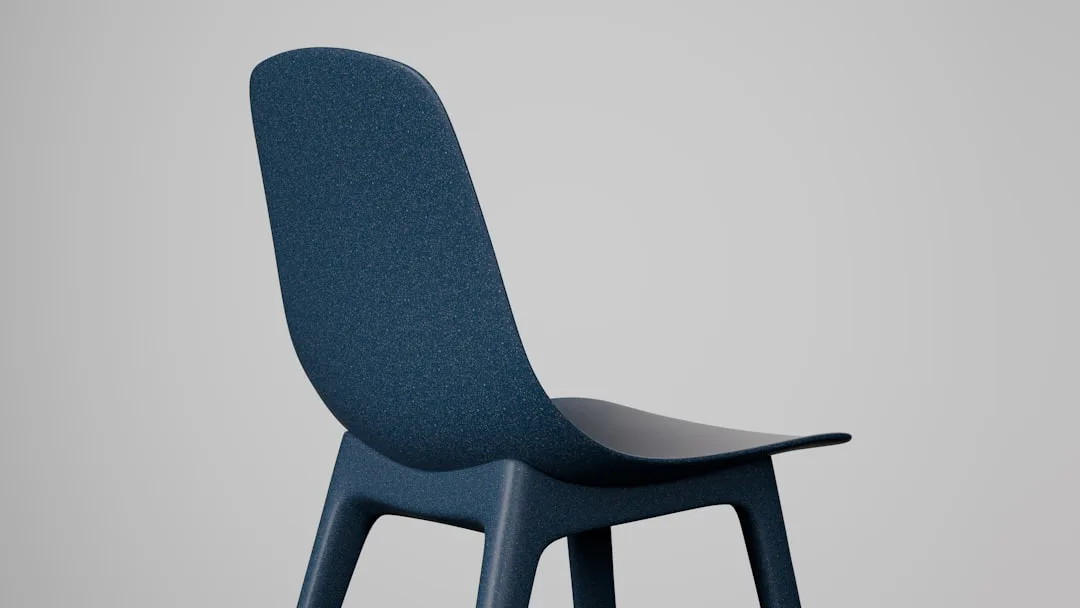
Application Strategies for Interior Designers and Homeowners
Start with accent pieces rather than primary furniture. A 3D printed floor lamp ($280–$450 with integrated electrical conduit) or geometric shelving unit (see our 3D Printed Home Decor article for storage integration) poses minimal structural risk while demonstrating material qualities and design language. Designers report that clients exposed to one successfully installed printed piece typically request three to five additional items within six months.
Measure existing spaces meticulously before commissioning designs. Unlike off-the-shelf furniture, 3D printed pieces arrive as final products—no adjustment for undersized doorways or ceiling clearance. Confirm electrical requirements if pieces include integrated lighting or smart-home wiring. Request sample surface finishes (matte, glossy, textured) because post-print surface treatments add $60–$180 per item but dramatically alter perceived quality and light reflection.
Combine printed components with traditional materials for maximum visual and functional impact. Pair a 3D printed nylon support structure with solid walnut or white oak tabletops, leather cushioning, or marble shelving surfaces. Architects increasingly pair printed load-bearing frames with natural stone, creating hybrid furniture that merges precision engineering with tactile warmth—a direct counter to all-plastic aesthetics that dominated early 3D design adoption.
Sustainability and Cost Advantages Reshaping Market Adoption
3D printing produces zero offcuts and enables water-soluble support material recovery, reducing landfill impact by 75% versus traditional woodworking and injection molding. A conventional wood side table generates approximately 12–18 pounds of sawdust and scrap; an equivalent 3D printed nylon table weighs 3–4 pounds total and leaves no waste. Recycled nylon feedstock now comprises 35–50% of production material across major manufacturers, with post-consumer textile-derived polymers entering the supply chain in 2026.
Shipping costs drop dramatically because pieces print at precise weights and pack efficiently in compact geometries. A full dining table assembly might ship in a box measuring 24×18×14 inches, reducing freight expense by 60% versus traditional furniture logistics. For homeowners ordering multiple pieces, total delivered cost often undercuts Restoration Hardware or West Elm equivalents by $400–$1,200 per project while offering customization no mass-market retailer can match.
Repair and adaptation extend furniture lifecycles indefinitely. A fractured printed arm, degraded lattice section, or worn support point can be replaced by reprinting that component—typically costing $45–$150—rather than discarding an entire piece. Designers now view 3D printed furniture as modular systems where individual elements upgrade independently, creating longevity advantages that furniture rental platforms and circular design advocates champion actively.