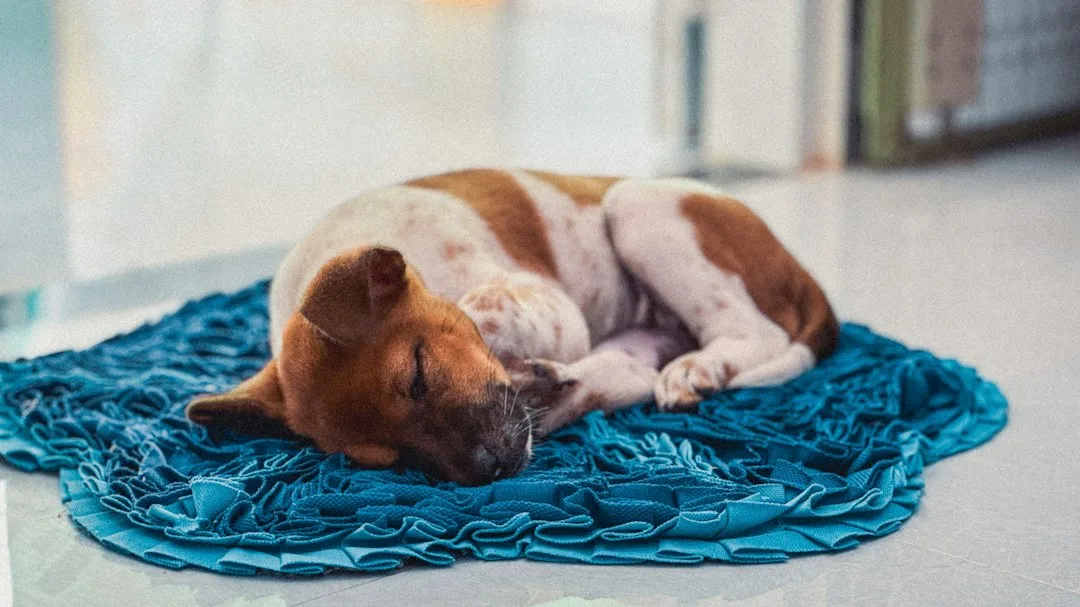
Living with pets is one of life’s greatest joys — until your favorite sofa becomes a scratching post or your freshly mopped floors are covered in muddy paw prints. The good news? Pet-friendly home design has evolved far beyond choosing dark-colored carpets and hoping for the best. Today’s approach blends smart material choices, thoughtful layouts, and built-in pet zones that make life better for everyone — two-legged and four-legged alike.
Whether you’re renovating a whole house or simply rethinking a few rooms, this guide walks you through every layer of creating a home that genuinely works for pets without looking like a kennel. From flooring and fabrics to furniture placement and dedicated pet nooks, you’ll find practical, design-forward solutions that hold up to real life with animals.
Why Pet Friendly Interior Design Starts with the Floor
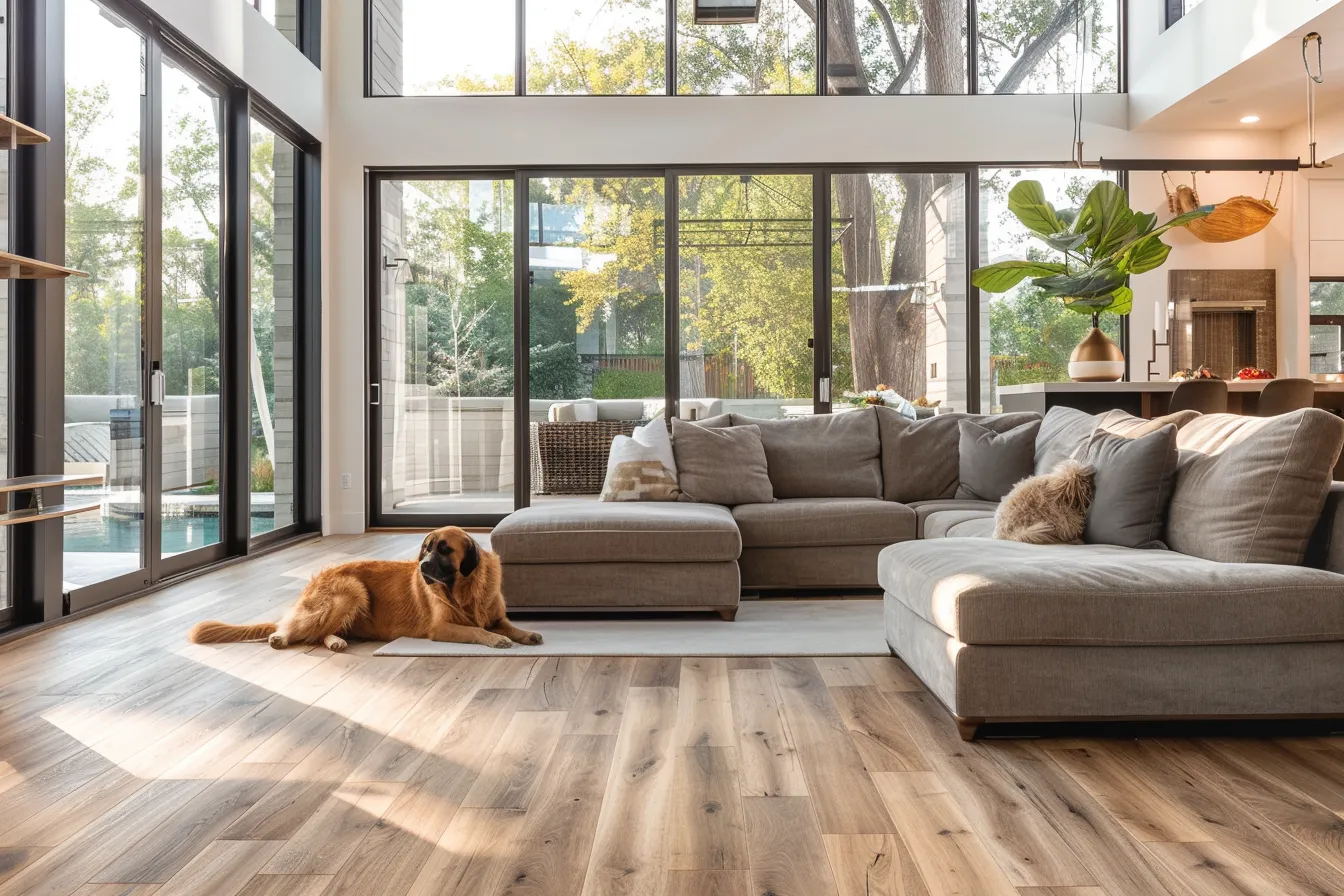
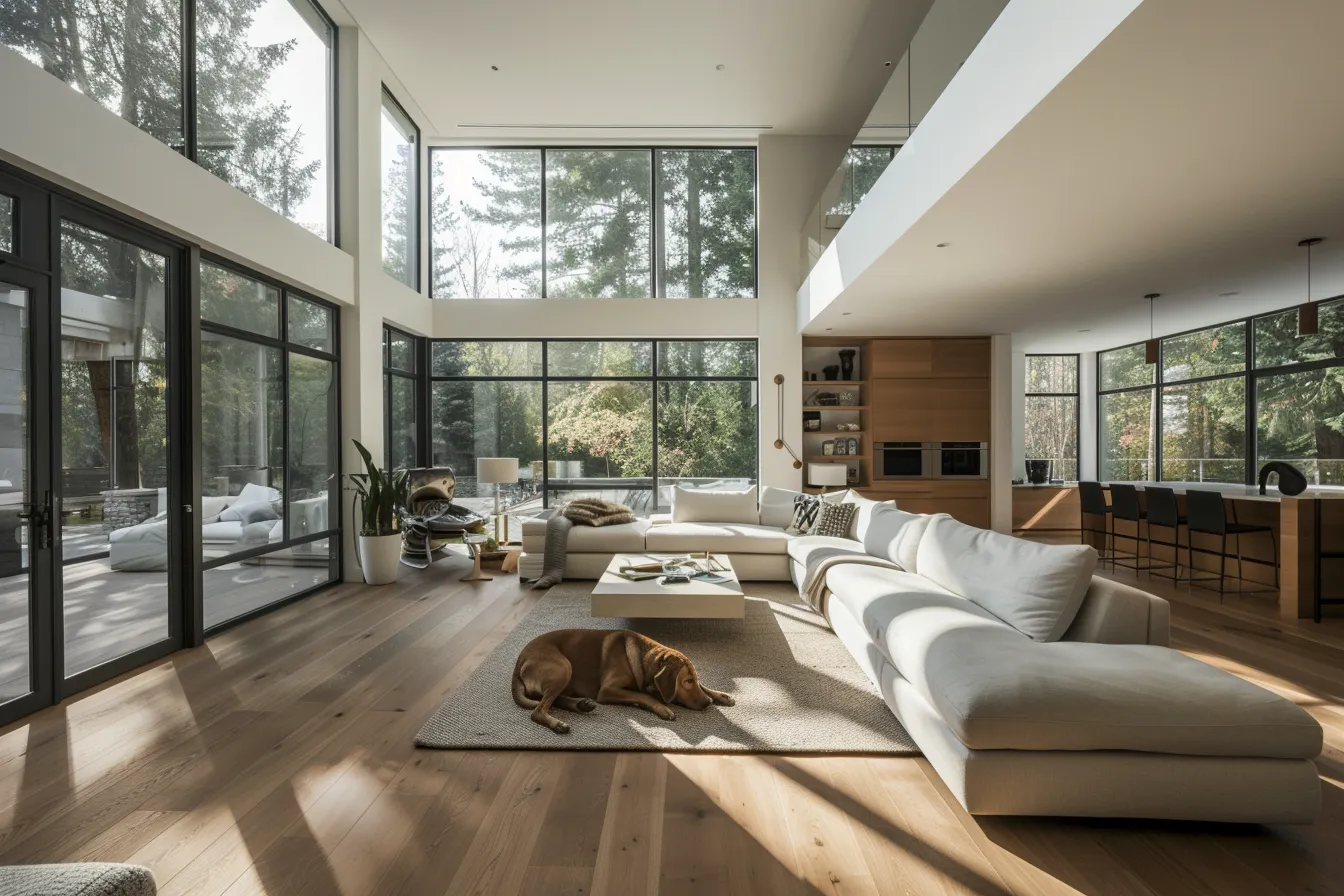
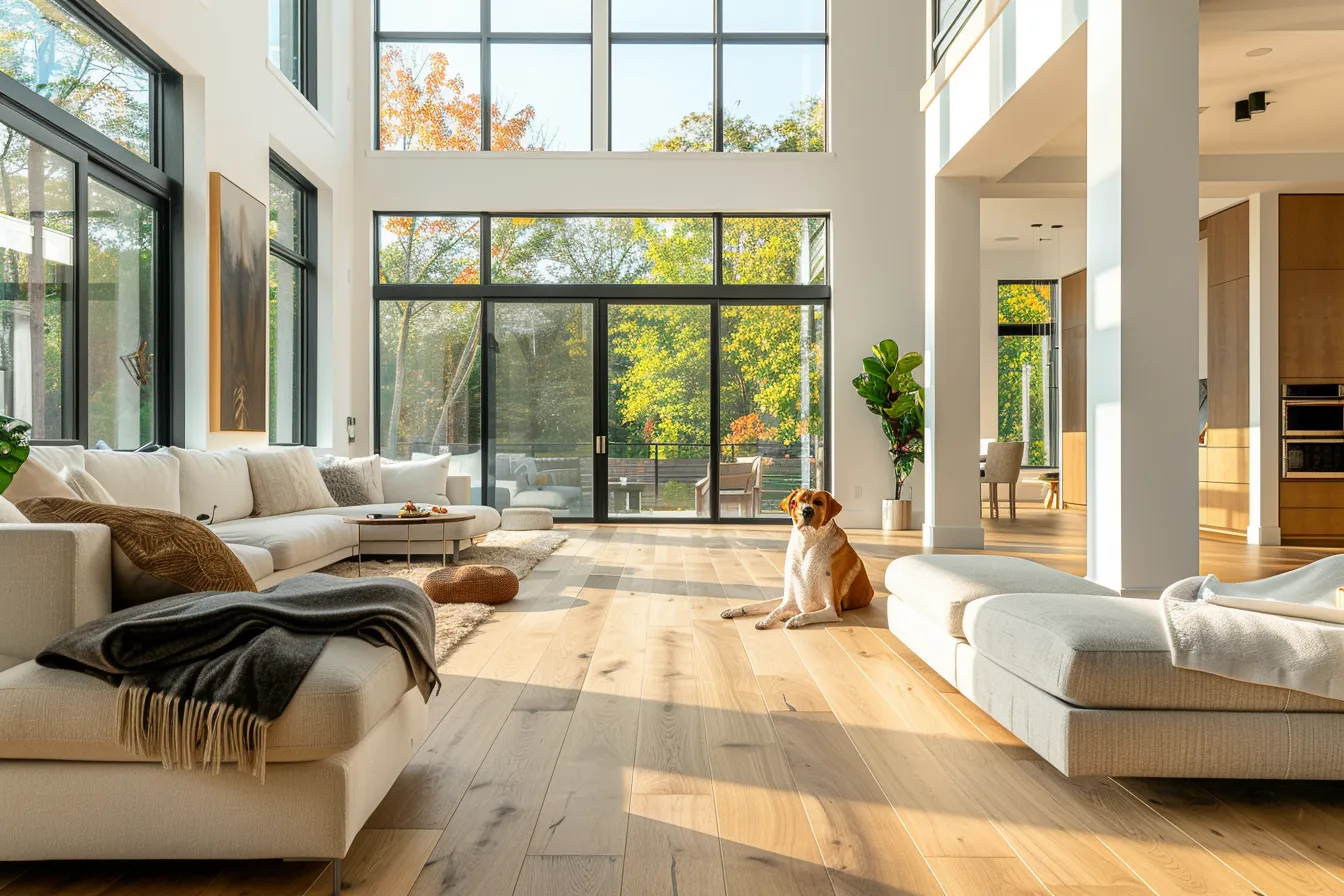
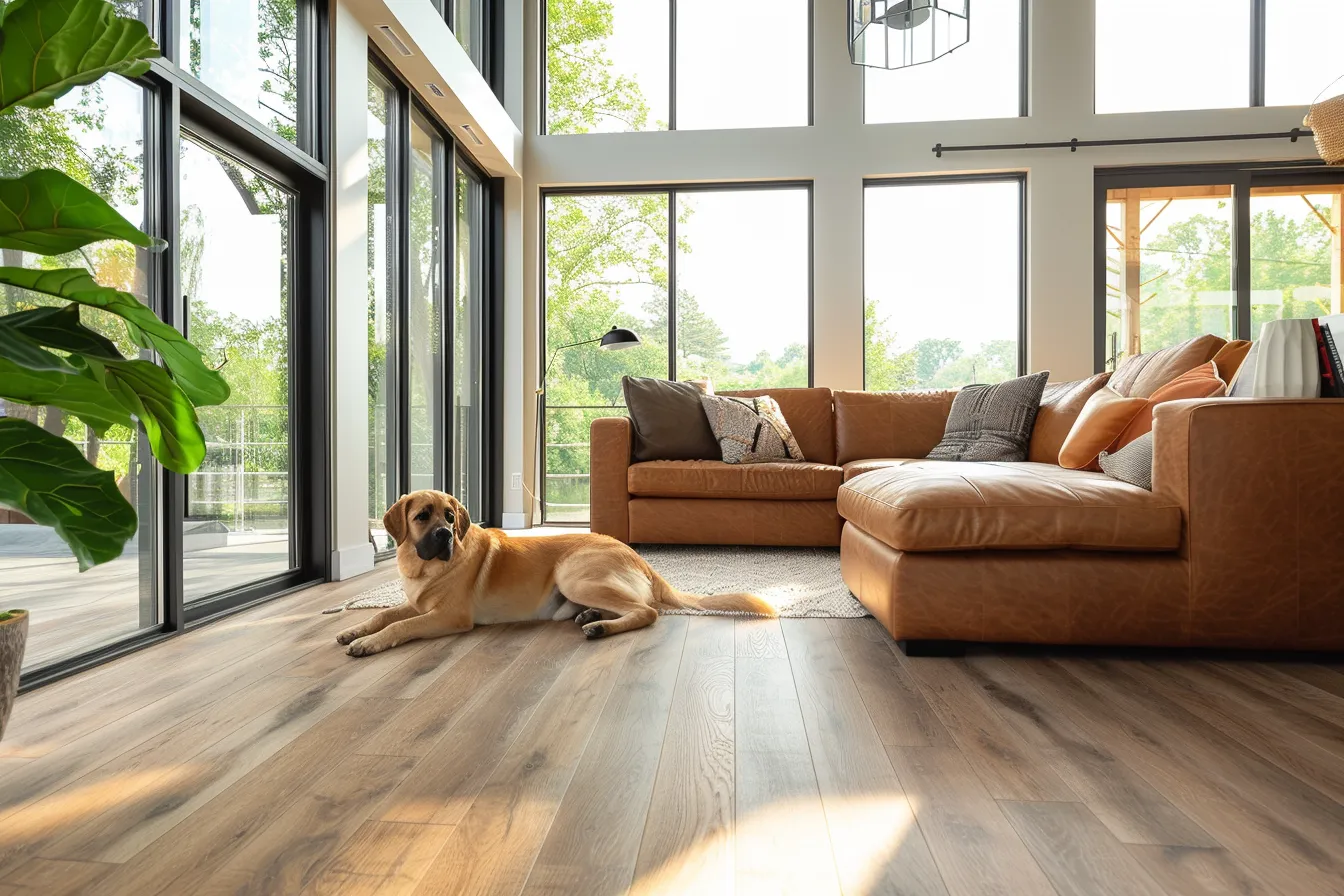
Your flooring choice is the single biggest decision in any pet-friendly home. Dogs with long nails can scratch hardwood in weeks; cats can snag loop-pile rugs with ease; and any pet can have an accident that warrants fast, complete cleanup. The right floor handles all of this without constant refinishing or replacement.
Here’s a quick comparison of the most popular flooring options for pet owners:
| Flooring Type | Scratch Resistance | Moisture Resistance | Comfort for Pets | Ease of Cleaning |
|---|---|---|---|---|
| Luxury Vinyl Plank (LVP) | ★★★★★ | ★★★★★ | ★★★★☆ | ★★★★★ |
| Porcelain Tile | ★★★★★ | ★★★★★ | ★★☆☆☆ | ★★★★★ |
| Hardwood (site-finished) | ★★☆☆☆ | ★★☆☆☆ | ★★★★☆ | ★★★☆☆ |
| Bamboo | ★★★☆☆ | ★★★☆☆ | ★★★☆☆ | ★★★★☆ |
| Cork | ★★☆☆☆ | ★★☆☆☆ | ★★★★★ | ★★★☆☆ |
| Cut-pile Carpet | ★★★☆☆ | ★☆☆☆☆ | ★★★★★ | ★★☆☆☆ |
Luxury Vinyl Plank wins on almost every metric — it’s waterproof, durable, warm underfoot, and available in wood-look finishes that fool the eye completely. Porcelain tile is equally tough but feels cold in winter, which matters if your dog likes to sprawl. If you’re committed to real wood, look for species with a Janka hardness rating above 1,300 (Brazilian cherry, white oak, hickory) and apply a polyurethane finish with satin sheen that hides micro-scratches between refinishes.
Choosing Fabrics and Furniture for a Pet Proof Home Design
Upholstery is the next great battlefield. Pets shed, scratch, and occasionally chew — and not all fabrics are created equal under those conditions. The key is choosing materials that resist both damage and odor without making your living room look clinical.
The best fabric choices for pet owners include:
- Microfiber: Tightly woven synthetic fibers repel hair and resist claw snags. Wipes clean easily with a damp cloth.
- Crypton and performance fabrics: Engineered specifically for stain, moisture, and odor resistance. Used in hospitals and hotels — built for real life.
- Leather and faux leather: Hair doesn’t stick, and most liquids bead off. Scratches can patina nicely on full-grain leather; faux options need a bit more care.
- Canvas and denim: Sturdy, washable, and affordable. Great for slipcovers that can go right in the washing machine.
- Avoid: velvet, silk, loose weaves, and boucle — all trap hair, snag on claws, and are nearly impossible to fully clean.
When it comes to furniture shape, opt for pieces with removable, washable cushion covers. Sofas with tight backs (no separate back cushions) collect less hair. Raised legs make vacuuming underneath effortless. And if you’re shopping for a new sofa specifically, check out our full guide to the best sofas for pet owners — it covers sectionals, sleepers, and modular systems with hands-on durability testing.
Built-In Pet Zones That Elevate Your Home for Pets Design
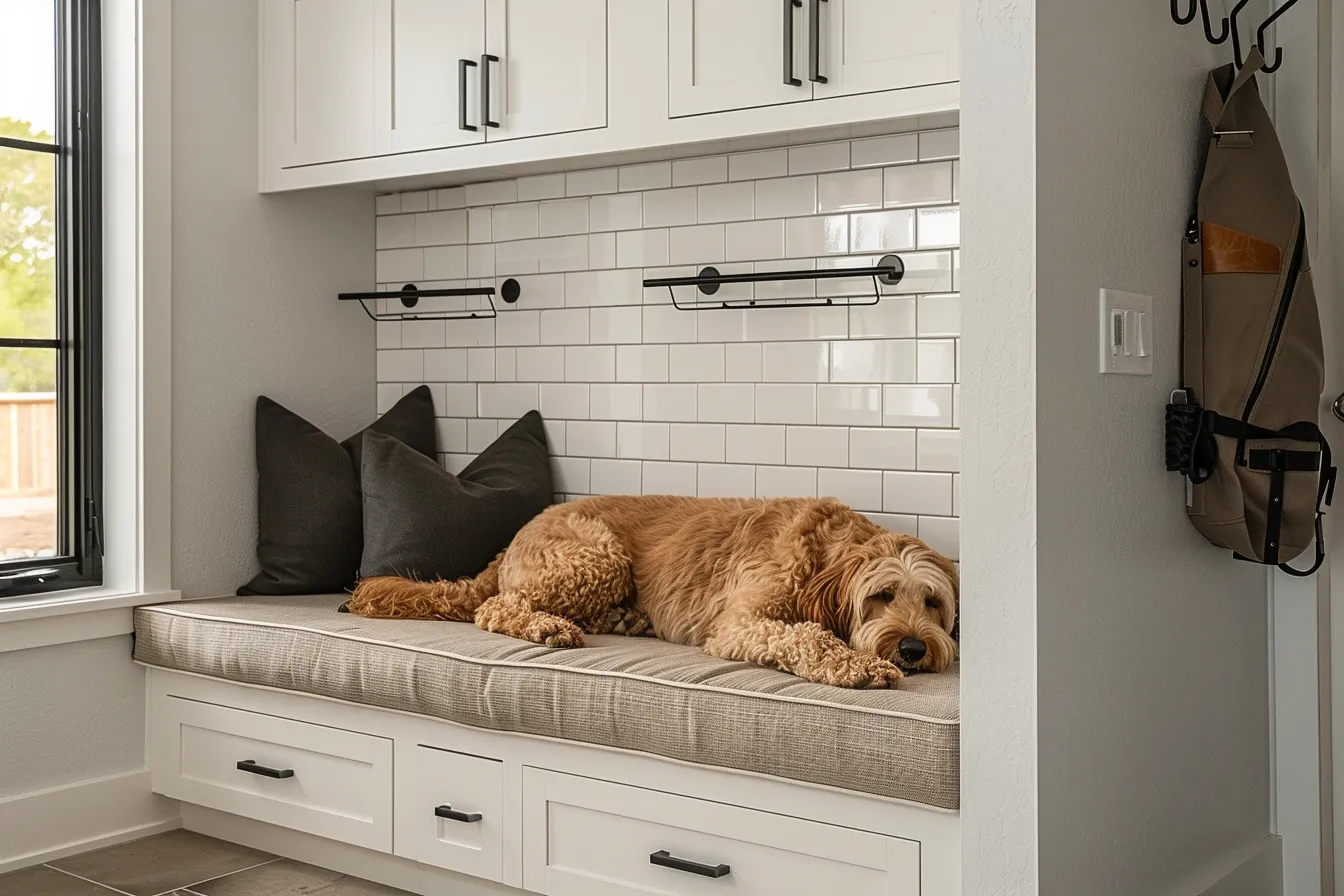
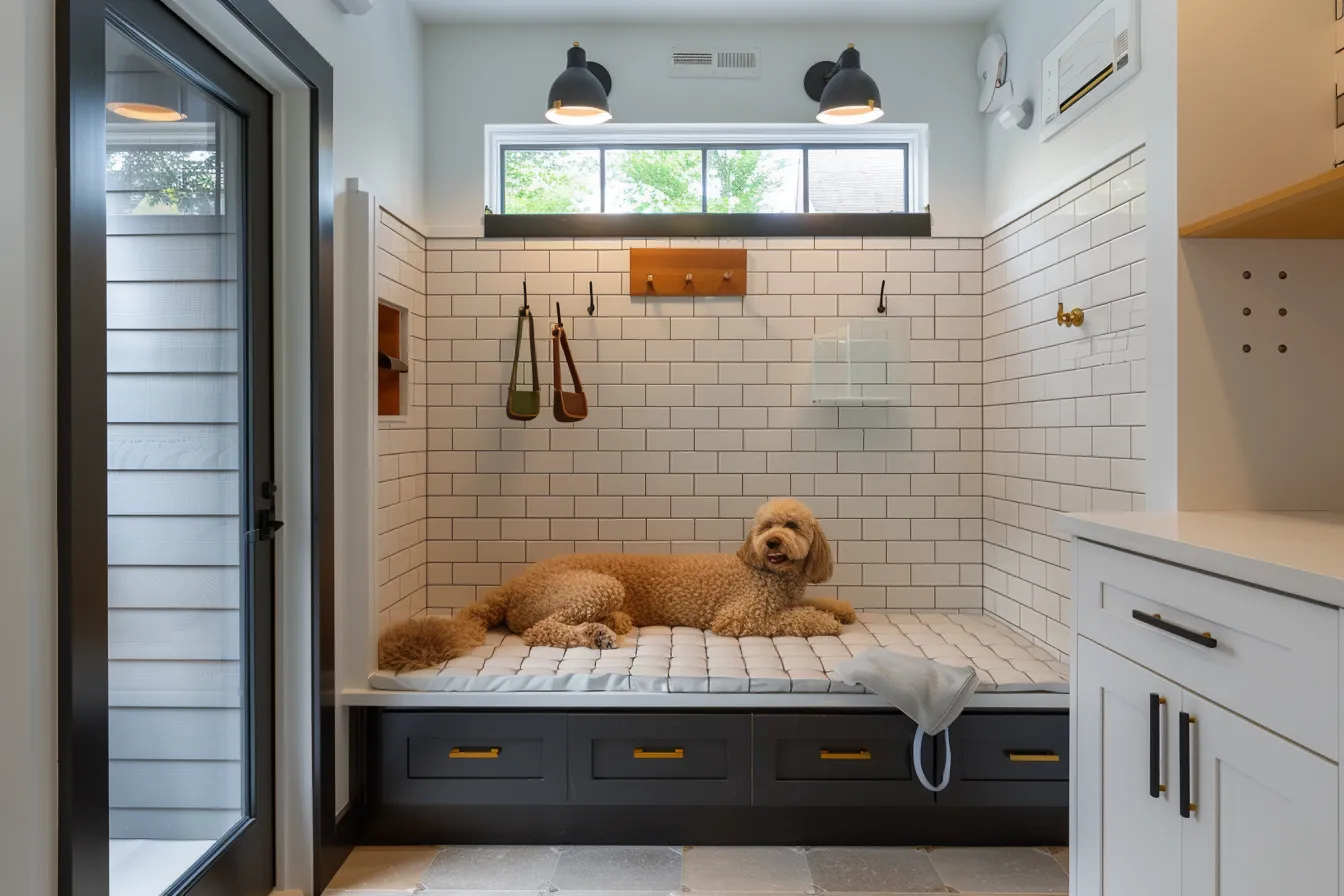
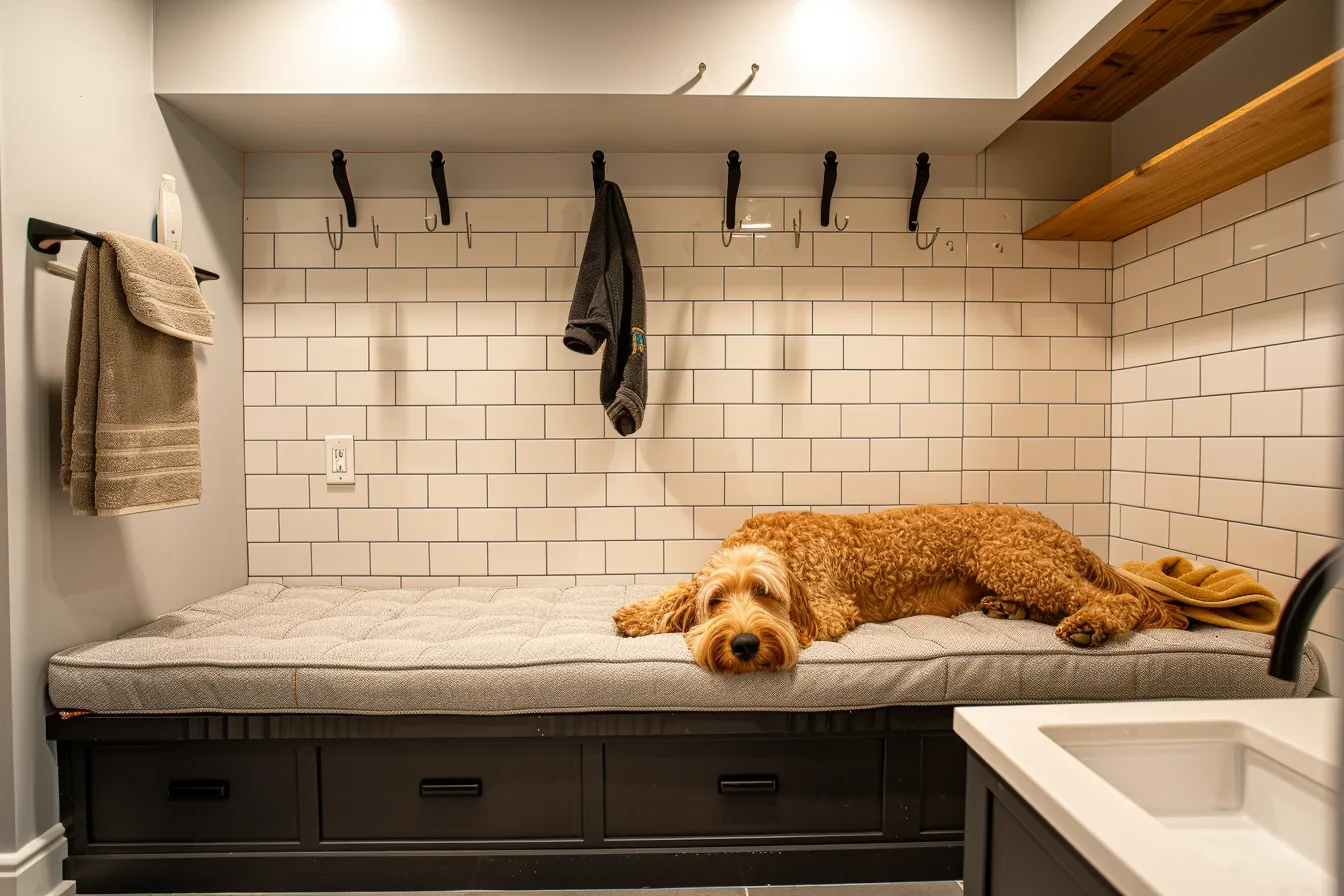
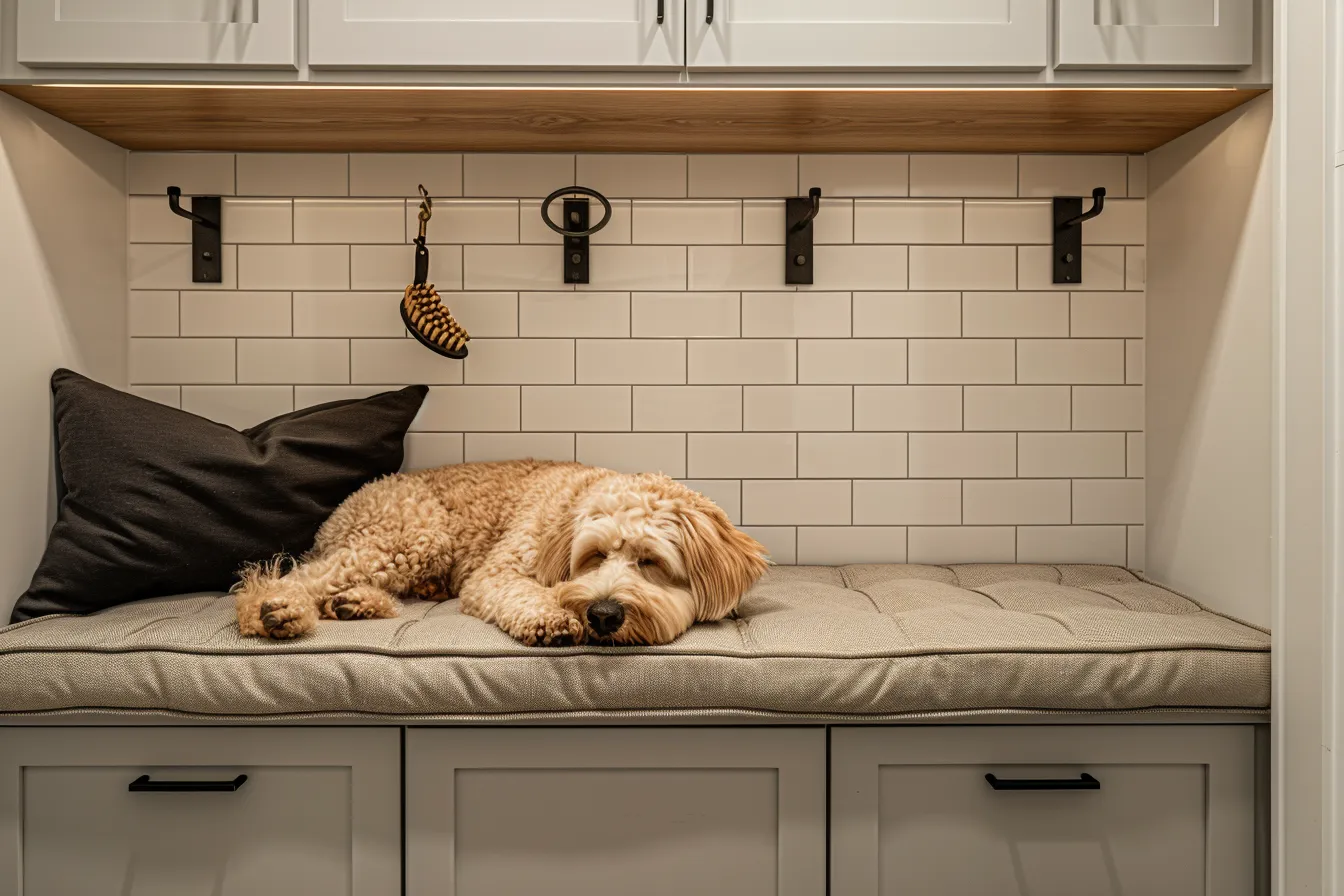
One of the smartest shifts in modern pet-friendly home design is the move toward purpose-built pet spaces — areas of the home that are designed specifically around your animal’s needs, rather than improvised afterthoughts shoved in a corner. Done well, these zones don’t just serve your pet; they actually improve the overall flow and aesthetic of your home.
Ideas for built-in pet zones that look intentional and work beautifully:
- Under-stair dog nook: The space beneath a staircase is a natural den. Frame it out with a custom door, add a built-in cushion and some ambient lighting, and you have a retreat your dog will choose over the couch.
- Kitchen cabinet pet feeding station: A lower cabinet with a pull-out drawer that holds food and water bowls keeps feeding areas tidy and off the main traffic path. Some designs include a built-in mat to catch spills.
- Mudroom pet wash station: A low-profile tiled basin with a handheld showerhead near the back door solves the muddy-paws problem before it ever reaches the living room.
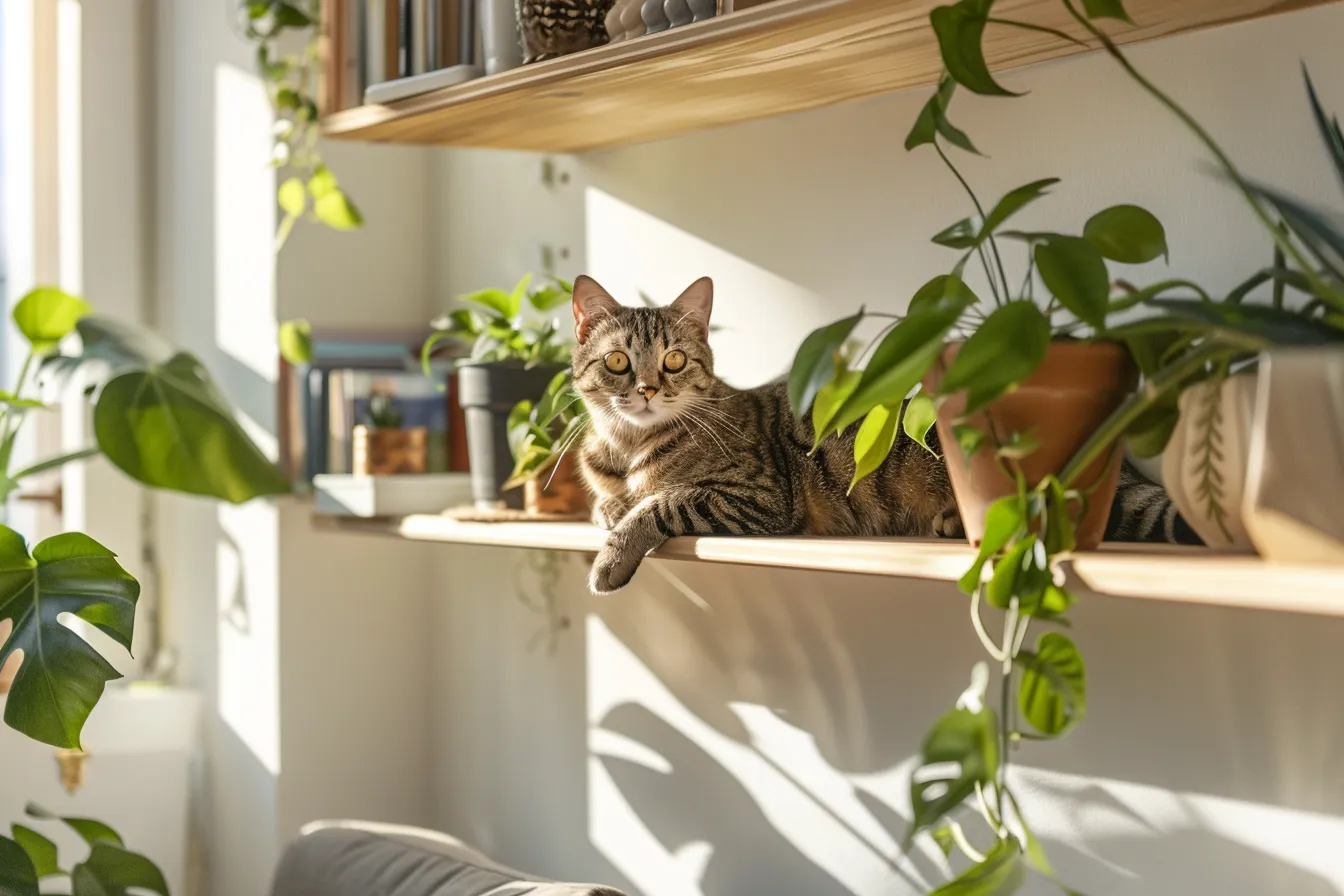
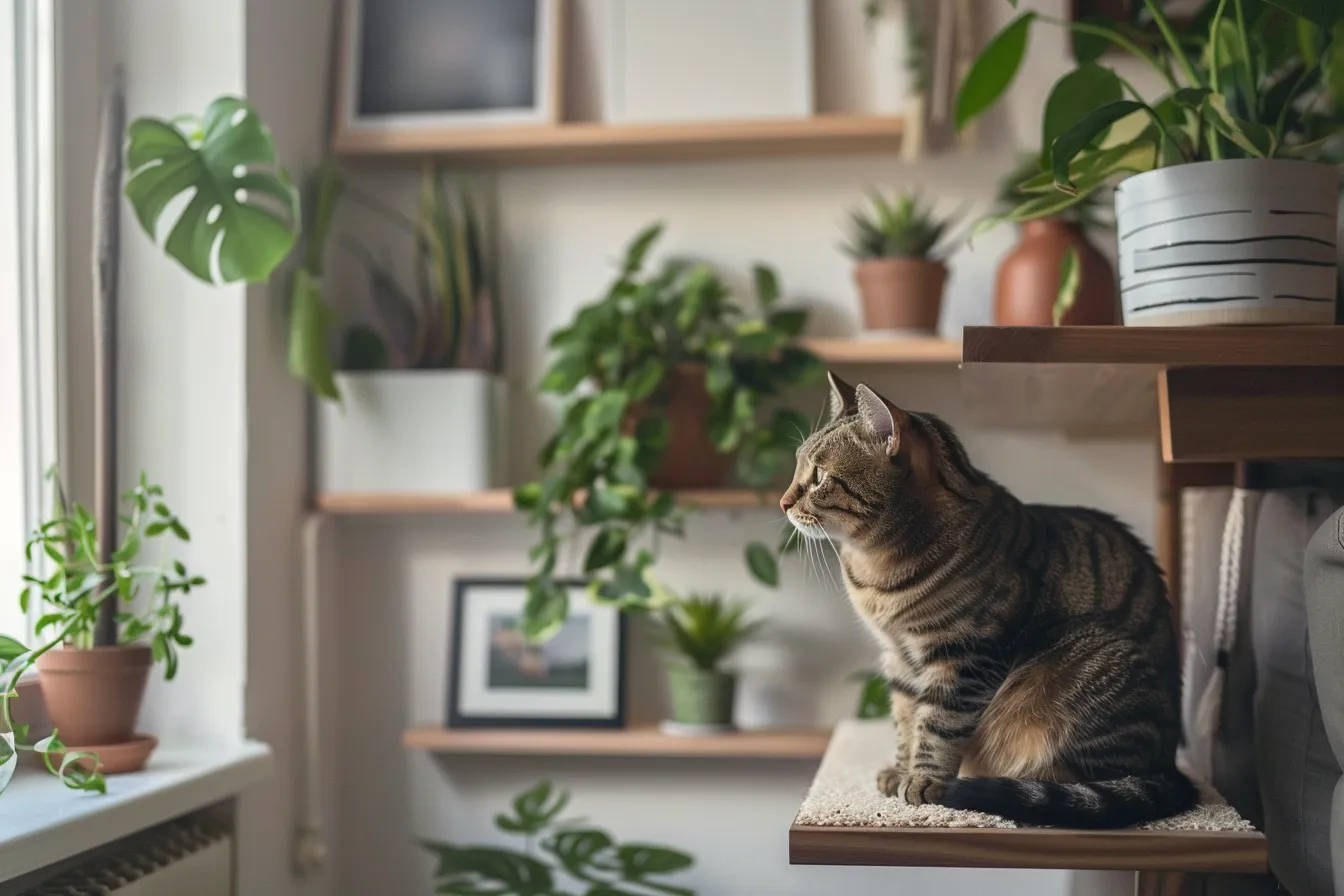
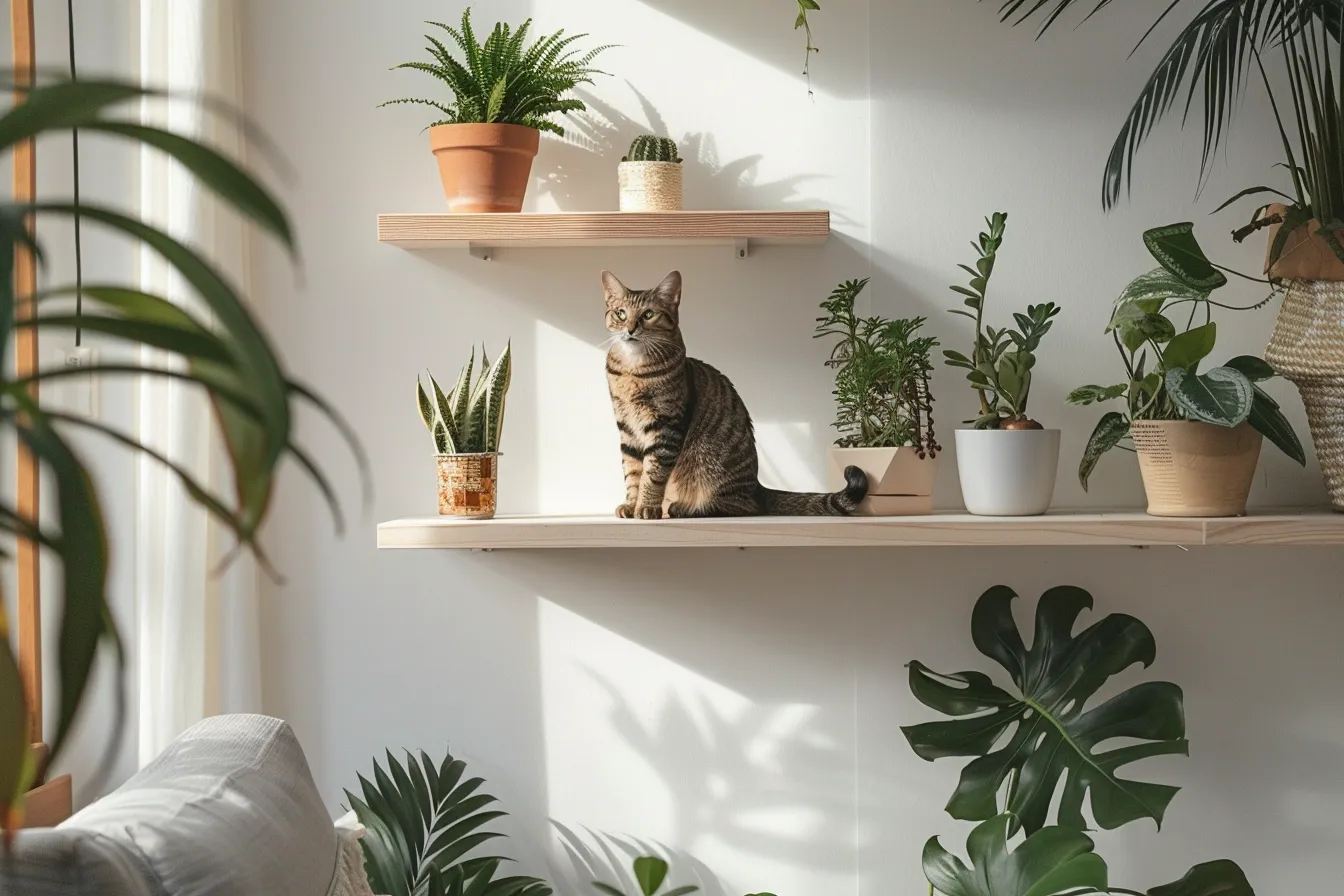
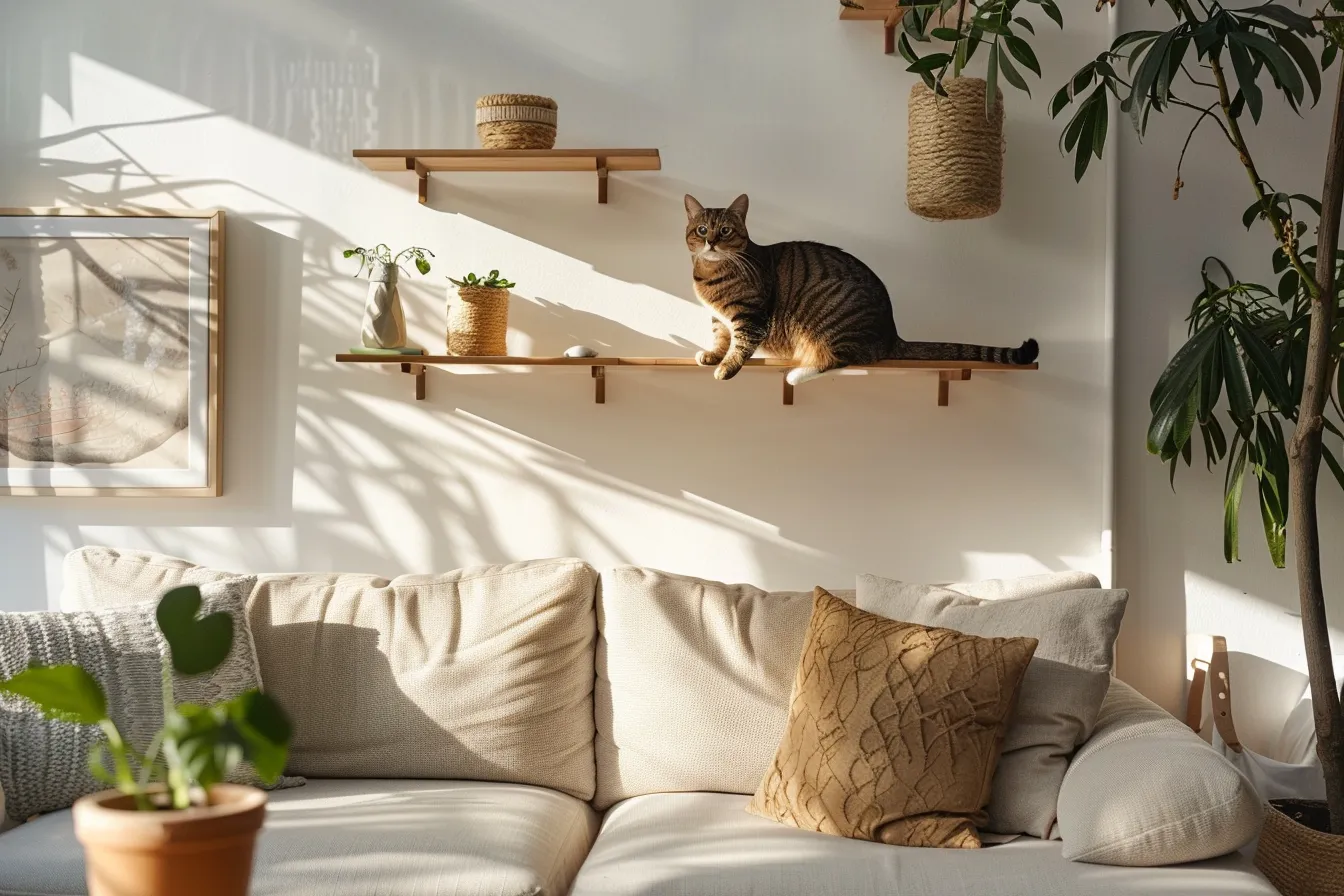
- Cat wall system: Floating shelves, wall-mounted bridges, and hidden litter box cabinets give cats vertical territory while keeping the floor clear and uncluttered.
- Window seat with storage: A cushioned bench at window height gives dogs and cats their coveted perch while the base holds pet supplies, leashes, and blankets.
Paint, Walls, and Finishes in a Pet Safe Home Design
Walls take more abuse than most people expect when you have pets. Dogs lean against them, cats scratch corners, and enthusiastic tail-waggers leave smudges at a very specific height. The solution isn’t to avoid color or texture — it’s to choose finishes that can handle cleaning without showing wear.
Always use a satin or semi-gloss finish on walls in pet-heavy areas. Flat and eggshell paints scuff and stain easily and can’t withstand the repeated wiping that pet ownership demands. Satin reflects just enough light to feel sophisticated while standing up to scrubbing. For high-contact zones like hallways and lower wall sections, consider board-and-batten or wainscoting — wood paneling is far more durable than drywall at knee-and-tail height and adds architectural character in the process.
Color-wise, medium-toned neutrals and warm earthy palettes are the most forgiving — they don’t show every smudge the way stark white does, and they don’t make every tuft of pet hair as visible as a dark charcoal wall would. If you’re planning a broader refresh that includes walls, floors, and furniture simultaneously, our whole-home interior refresh guide walks through how to build a cohesive color palette from scratch with pets (and kids) in mind.
Pet Friendly Outdoor Home Design for Yards and Gardens
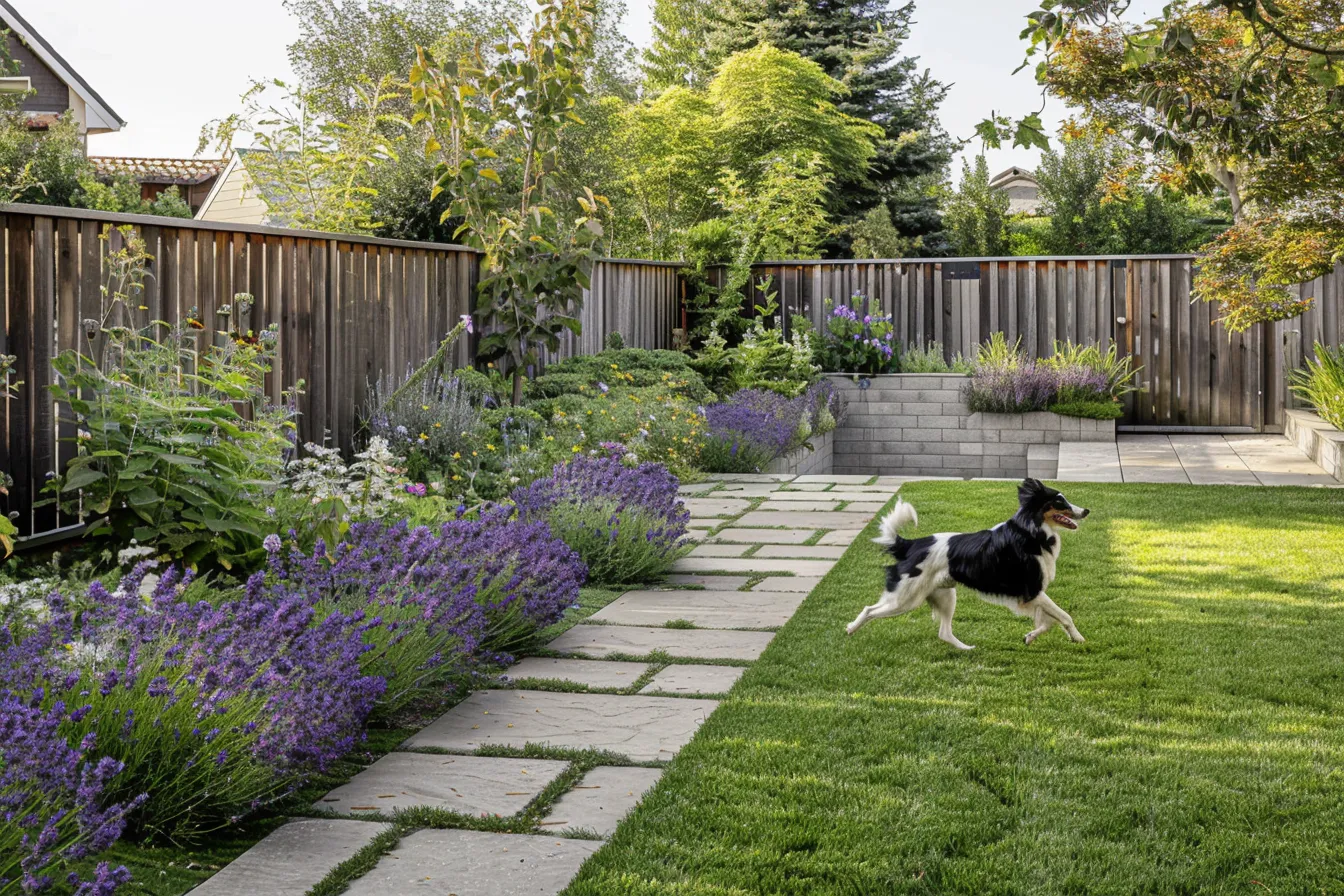
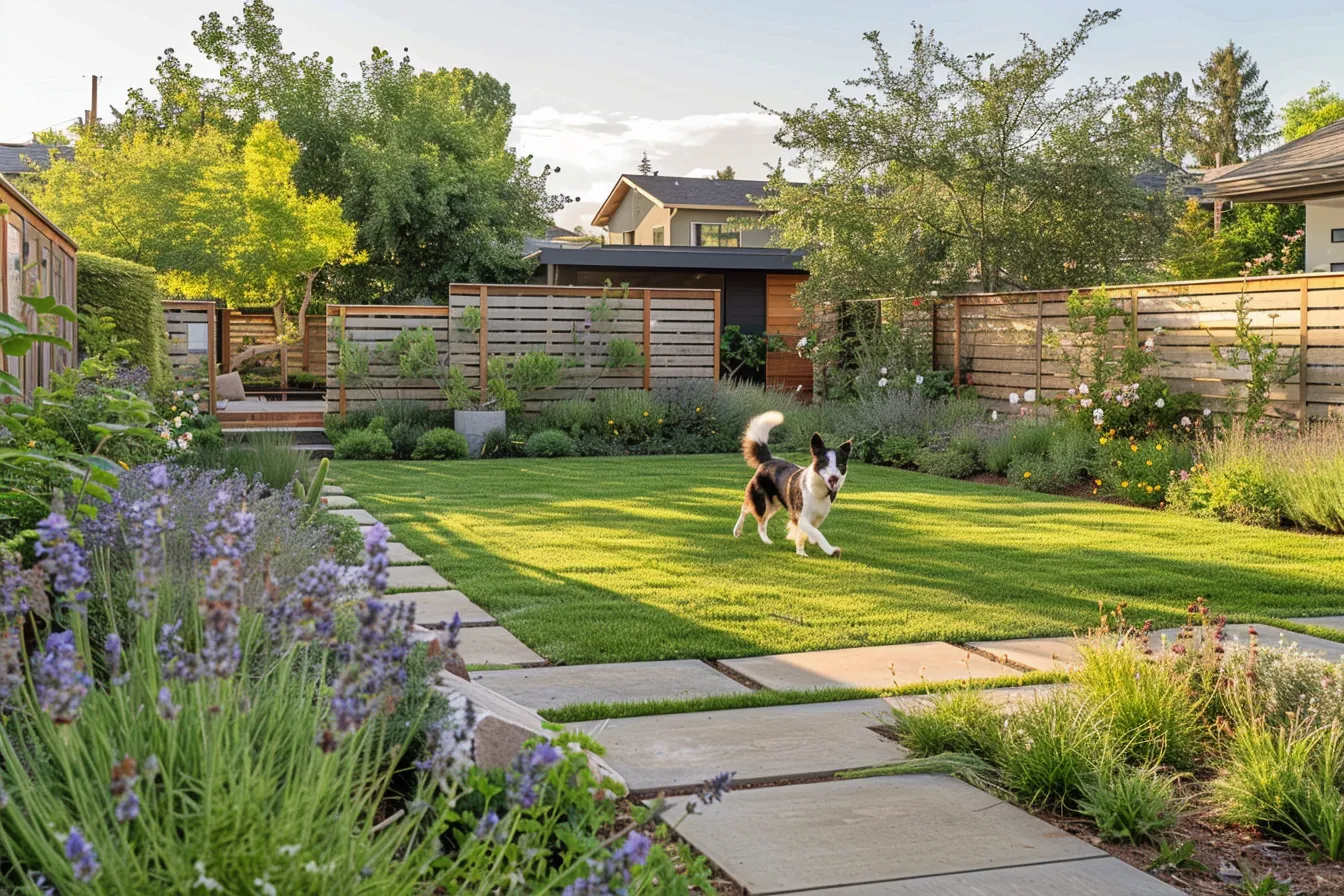
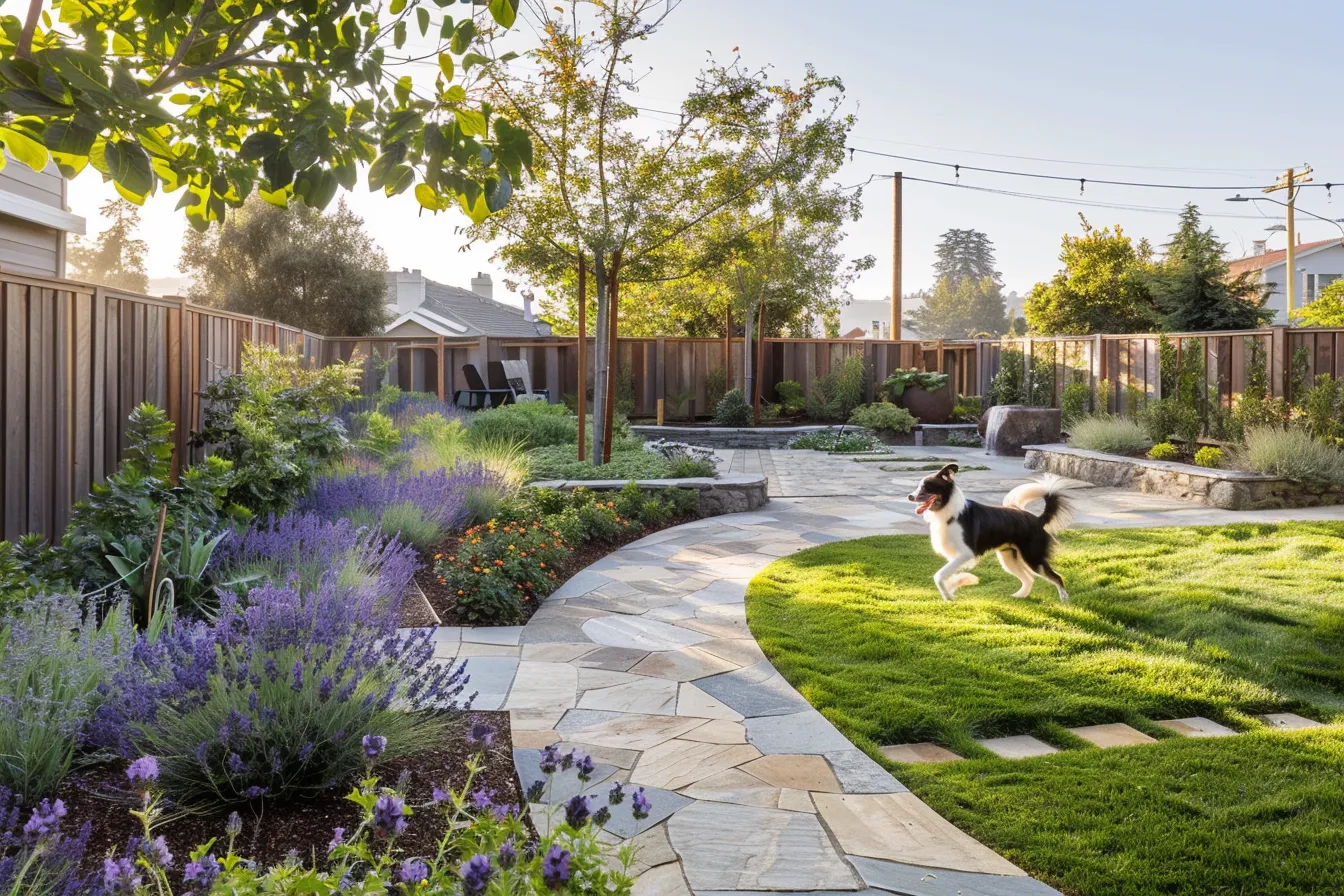
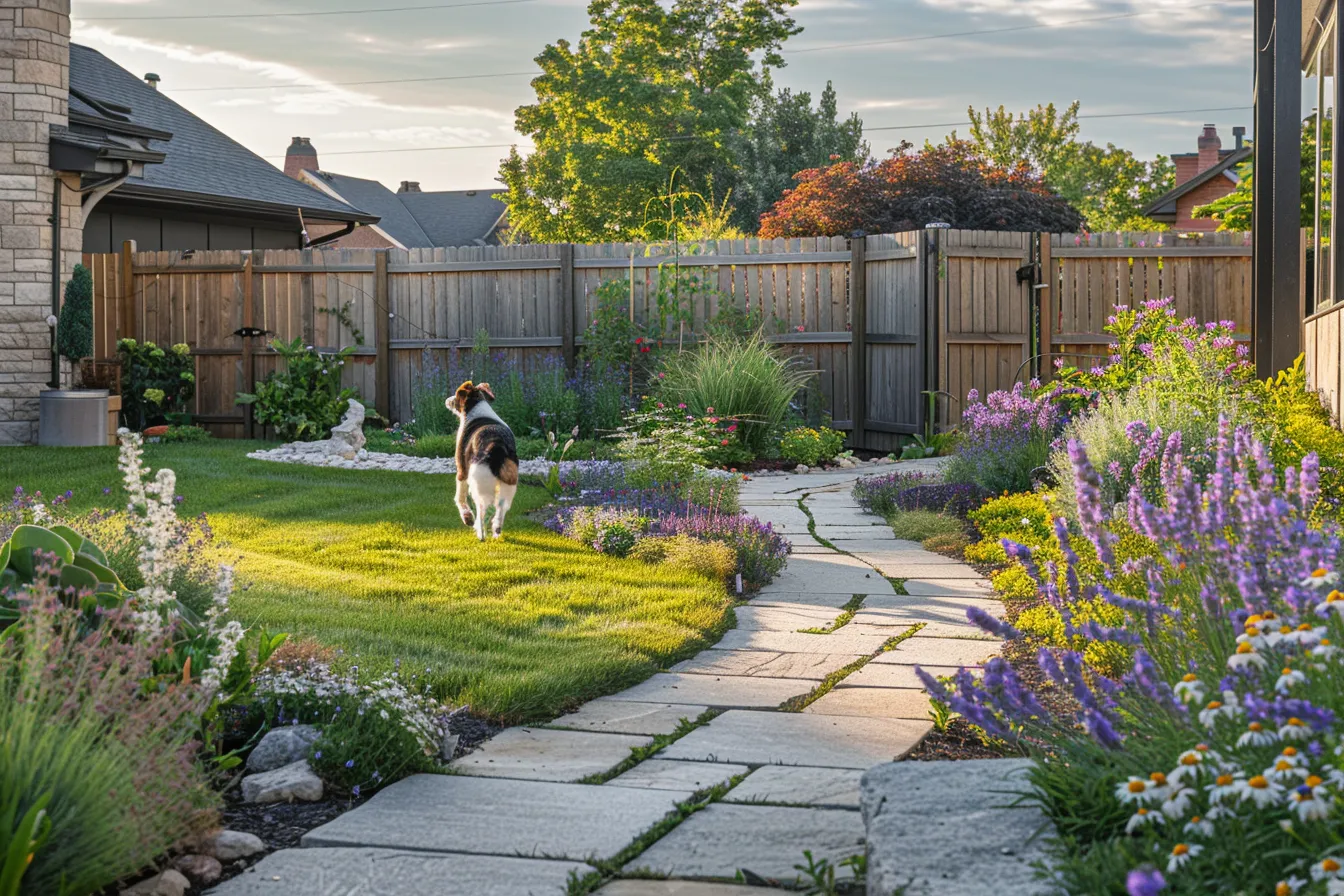
Pet-friendly design doesn’t stop at the back door. Outdoor spaces need as much thought as interiors — and the good news is that a pet-safe yard can also be one of the most beautiful, functional outdoor spaces you’ve ever had.
Key considerations for a pet-friendly outdoor space:
- Fencing: A solid, no-gap fence is non-negotiable for dogs. Height depends on breed — some dogs can clear 5 feet with ease. Bury the base several inches if you have a digger.
- Plant selection: Many common garden plants are toxic to pets — azaleas, foxglove, sago palm, and certain lilies among them. Choose pet-safe alternatives like lavender, marigolds, sunflowers, and rosemary.
- Ground cover: Grass holds up reasonably well with proper maintenance, but high-traffic dog paths often turn to mud. Consider pea gravel, rubber mulch, or decomposed granite for dedicated dog runs.
- Shade and water: A shaded area and a fresh water source are essential, especially in summer. A built-in water feature or even a simple spigot with a bowl mount elevates the yard while keeping pets hydrated.
- Hardscaping: Flagstone patios and concrete pavers are durable, easy to hose down, and don’t harbor pests the way deep mulch can.
Managing Air Quality and Odor in a Pet Friendly Home
One of the most honest things a home design guide can say: pets smell. Not in an unpleasant way if you stay ahead of it — but managing pet odor and dander is a genuine design and engineering challenge that too many guides skip over. A thoughtful pet-friendly home address this at the architecture level, not just the cleaning level.
The most effective strategies include:
- Upgraded HVAC filtration: MERV 11 or higher filters capture pet dander and hair before it circulates through your home. Change them more often than the manufacturer suggests — every 60 days rather than 90 if you have multiple pets.
- Ventilation in pet zones: Laundry rooms, mudrooms, and pet feeding areas benefit from dedicated exhaust fans to remove odor before it migrates.
- Hard surfaces over soft where possible: Fabric, carpet, and upholstered surfaces absorb and hold odors; hard surfaces don’t. The more hard flooring and washable surfaces you have, the fresher your home stays with less effort.
- Air purifiers with HEPA filters: A quality unit in the main living area makes a measurable difference. Some modern designs look intentional enough to sit on a shelf without apology.
- Dedicated wash areas: Regular bathing dramatically reduces the ambient pet smell in your home. Having a convenient wash station (whether a mudroom sink or a low shower) means you’ll actually use it.
Small Space Pet Friendly Home Design That Still Feels Open
Not everyone has a sprawling home to redesign. Apartment dwellers and condo owners face a specific challenge: creating a pet-friendly environment in compact spaces without the home feeling like it’s been taken over by animals. This is where design discipline really pays off.
The golden rule of small-space pet design is vertical thinking. Cats especially thrive when they have vertical territory — wall-mounted shelves, cat trees that reach the ceiling, and window perches give them a range of territory without consuming floor space. For dogs in apartments, the priority shifts to built-in storage for all the gear (leashes, food, toys, beds) so it doesn’t create visual clutter that makes a small space feel smaller.
Multi-functional furniture is your best friend here. An ottoman with interior storage holds blankets and toys. A bench at the front door doubles as shoe storage and a dog bag station. A console table behind the sofa can serve as a cat feeding station on one level and a charging station for you on another. For more compact living inspiration, take a look at our small apartment design ideas roundup, which includes a dedicated section on making tight spaces work beautifully with pets.
A Room by Room Checklist for Pet Friendly Home Design
Use this room-by-room checklist to audit your current home or plan a new one:
| Room | Priority Upgrades | Avoid |
|---|---|---|
| Living Room | Performance fabric sofa, LVP flooring, washable throw rugs, built-in toy storage | White upholstery, loop-pile carpet, open electrical cords |
| Kitchen | Pull-out feeding station, seamless backsplash, easy-wipe cabinet fronts | Low open shelving near food, toxic houseplants at floor level |
| Bedroom | Washable duvet covers, bed frame with solid base (no under-bed hide spots), HEPA air purifier | Silk bedding, cluttered nightstands at pet height |
| Bathroom | Non-slip mat inside and outside tub, secure toilet lid, cabinet locks | Open trash cans, exposed cleaning products |
| Mudroom / Entryway | Wash station, hook system for leashes, dedicated drying area, sealed concrete or tile floor | Carpet, light-colored paint at base height |
| Backyard | Solid fence, pet-safe plants, shaded seating area, hose access | Toxic mulch, unsecured fertilizers, open pool without ramp |
Designing for Multiple Pets in One Home
Multi-pet households add a layer of complexity that single-pet design doesn’t address. When you have both cats and dogs — or multiple dogs with different energy levels — zones, barriers, and vertical separation become structural needs rather than nice-to-haves.
Baby gates have evolved well beyond the clunky plastic panels of the 1990s. Modern pressure-mounted gates come in powder-coated steel and natural wood finishes that look like intentional architectural elements. Pocket doors and barn doors allow you to section off areas of the home quickly without permanent changes. Cat-only zones accessed via a small wall opening (fitted with a cat door at a specific height no dog can reach) give feline family members a guaranteed retreat from even the most well-meaning dog.
Food and feeding stations need to be separated in a multi-pet home — both for dietary reasons and to prevent resource guarding stress. Elevated cat feeding stations on a counter or built-in shelf keep cat food away from dogs, reduce the chance of food aggression, and give cats the security of eating above ground level.
If you’re navigating the specific behavioral dynamics of a home with both cats and dogs, our guide to setting up a home for cats and dogs living together covers territorial design, introduction zones, and how to structure space so both species feel safe and settled from day one.
Budget Planning for Your Pet Friendly Home Renovation
A full pet-friendly home renovation doesn’t have to happen all at once — and it certainly doesn’t require a designer budget. Prioritizing upgrades by impact-per-dollar spent makes the project manageable and ensures you’re solving the biggest problems first.
Here’s a rough framework for how to sequence your investments:
- Highest impact first: Flooring. If you still have carpet throughout a pet home, replacing the worst areas with LVP will transform both cleanliness and odor control immediately.
- Quick wins: Slipcovers on existing furniture, a new HVAC filter, washable rugs instead of fixed carpet, and a basic leash/gear station by the door cost very little and deliver immediate quality-of-life improvements.
- Medium-term investment: A mudroom wash station, built-in feeding station, or under-stair nook can often be done in a single contractor weekend for a few thousand dollars — and they last decades.
- Long-term planning: When you next replace a sofa, flooring section, or kitchen cabinetry, simply choose the pet-optimized version. The cost premium is usually modest, and you’re already spending the money.
For a deeper dive into material costs, contractor questions to ask, and which upgrades add resale value, see our home renovation budget guide for pet owners. It breaks down average costs by region and upgrade type so you can plan realistically.
The Bottom Line on Pet Friendly Home Design
A truly pet-friendly home isn’t one that looks like it belongs to pets — it’s one that’s been designed so carefully that pets fit naturally into a space that’s also beautiful, functional, and easy to maintain. The difference is intentionality. Every material choice, every furniture decision, and every spatial arrangement either works with your animals or against them.
Start with flooring. Get the upholstery right. Build or carve out at least one dedicated pet zone that your animal can call their own. Layer in better air filtration and smarter storage. And above all, stop treating pet-proofing as damage control and start treating it as good design — because when you do, the result is a home that works better for everyone who lives in it.