Falls on stairs cause over 1 million emergency room visits annually in North America, and the majority involve trips at the edge where the nosing—the lip extending past the riser—takes repeated impact. Stair nosing installation addresses this exact vulnerability by reinforcing edges and creating visual contrast that helps feet find the boundary. Beyond safety, proper nosing prevents tread splintering, moisture infiltration, and the accelerated wear that makes stairs feel unsafe years before their structural life ends.
Why edges fail without nosing protection
Wooden and laminate stairs without nosing degrade rapidly at the edge where foot traffic concentrates. The exposed edge splinters, darkens from moisture, and becomes slippery as the surface texture wears smooth.
Concrete and tile stairs present the opposite problem: hard edges can cause serious injury if you catch a toe, and grout lines at step boundaries trap moisture that causes cracking. Rubber and aluminum nosing fills these gaps and absorbs impact that would otherwise transfer directly to the substrate.
A common mistake is installing nosing only on primary stairs while leaving basement or secondary stairs bare. Users then trip on the unexpected edge transition, or the unprotected stairs deteriorate faster, creating an eyesore and eventual tripping hazard.
Quick Tips
- Measure stair width and tread depth before ordering—nosing comes in standard sizes but custom widths exist.
- Choose slip-resistant rubber or composite for wet areas; aluminum suits high-traffic dry stairs.
- Install nosing before refinishing stairs, not after—it’s easier to sand and finish around the nosing edge.
- Test fit each piece on the first three stairs to confirm angle and overhang before fastening the rest.
Material choices that define durability and appearance
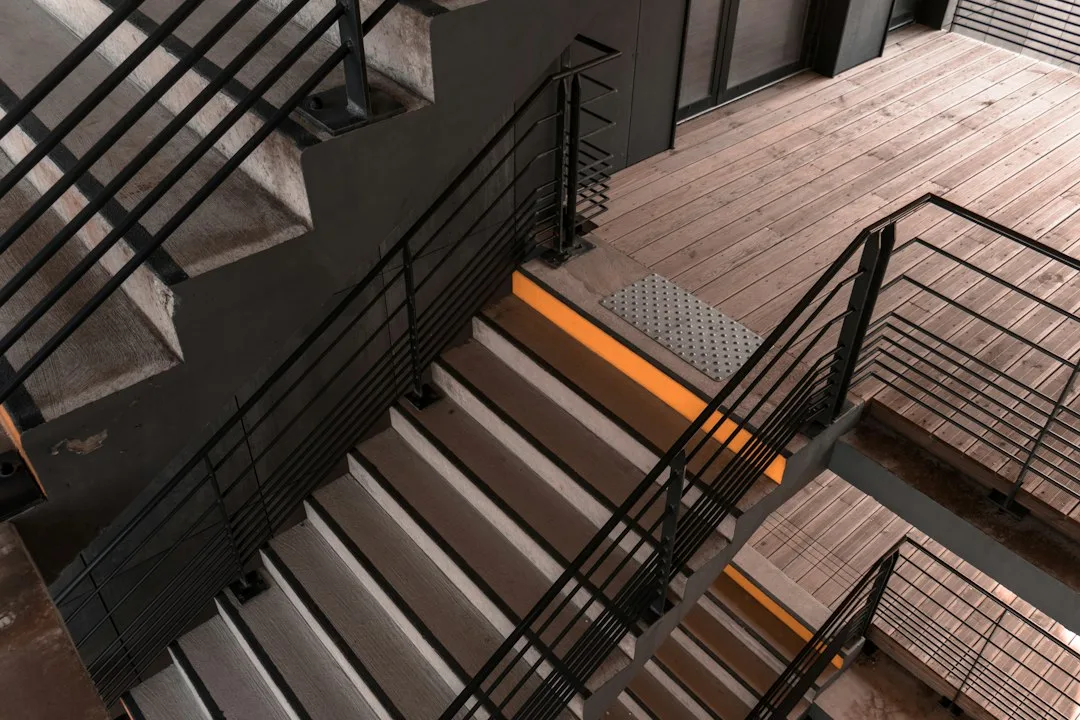
Schluter-RAMP, manufactured in Germany and distributed across North America, offers aluminum nosing in anodized finishes (champagne, bronze, graphite) that won’t corrode or discolor over time. The profile includes a sloped surface that sheds water and features anti-slip ceramic or rubber inserts for bathrooms and commercial applications.
Rubber nosing from manufacturers like Roppe comes in 1.5-inch to 2-inch widths and profiles that match different tread thicknesses—critical because a mismatched overhang creates a tripping surface rather than a protective edge. Rubber absorbs impact sound and stays flexible in cold basements where rigid materials crack.
| Material | Best For | Lifespan |
|---|---|---|
| Aluminum (anodized) | High-traffic, wet areas, modern aesthetic | 15–20 years |
| Rubber (solid or laminated) | Basements, commercial, sound dampening | 10–15 years |
| Hardwood (matching species) | Stained or finished wood stairs | 5–10 years (requires refinishing) |
| Vinyl (composite) | Budget-conscious renovations, laminate stairs | 7–10 years |
| Stainless steel | Industrial, coastal, corrosion-prone climates | 20+ years |
Installation methods that save labor and ensure longevity
Adhesive-backed nosing, such as peel-and-stick aluminum strips, requires only a clean, dry surface and 24 hours for cure. This works for renters or temporary solutions but fails if tread materials expand and contract seasonally—the bond breaks at corners first.
Fastener-based installation using stainless steel screws through pilot holes prevents separation and allows removal if needed. Pre-drilled profiles from Schluter and similar manufacturers guide fastener placement and ensure consistent spacing.
Mortise installation, where the nosing sits into a routed groove in the tread, is the most labor-intensive but offers flush, seamless results that integrate with refinished stairs. This requires routing machinery and professional skill but creates an appearance indistinguishable from engineered nosing.
Safety standards and building code compliance in 2026
The International Building Code (IBC) specifies that stair nosing overhang must not exceed 1.25 inches and must have a radius of no more than 0.125 inches—this prevents toe-catches. Most manufactured nosing meets this standard, but hardwood strips must be shaped to comply, or the installation violates code and voids homeowner insurance coverage.
Anti-slip ratings (ASTM F1679 COF—coefficient of friction) matter more in 2026 as litigation around slip-and-fall increases. Nosing with a minimum wet COF of 0.60 and dry COF of 0.80 is now standard in professional installations; lower ratings expose homeowners to liability.
When upgrading your home with improvement projects, stair nosing ranks high because it addresses both code compliance and accessibility. Raised nosing edges provide tactile warning for visually impaired users and satisfy ADA expectations even in residential settings.
Cost, ROI, and timing the upgrade correctly
Aluminum nosing costs in the $8–15-per-linear-foot range for mid-grade profiles; stainless steel runs $20–30. A typical 13-step staircase costs $150–300 in materials plus 4–6 hours of installation labor, which replaces years of progressive tread deterioration and potential repair bills from water damage beneath laminate or wood.
Installing nosing before refinishing stairs saves money because you avoid finishing around the profile twice—finish the stairs with nosing in place, and the edge integrates seamlessly. If you refinish stairs without nosing and add it later, you’ll need to touch-up stain and polyurethane around the fasteners.
Elevating your living space through architectural innovation often starts with protective details homeowners overlook; stair nosing installation is affordable enough to pair with any stair refresh but dramatic enough to signal professional-grade renovation. Plan this upgrade during new-construction phase or as part of a flooring project so labor costs merge rather than stack separately.