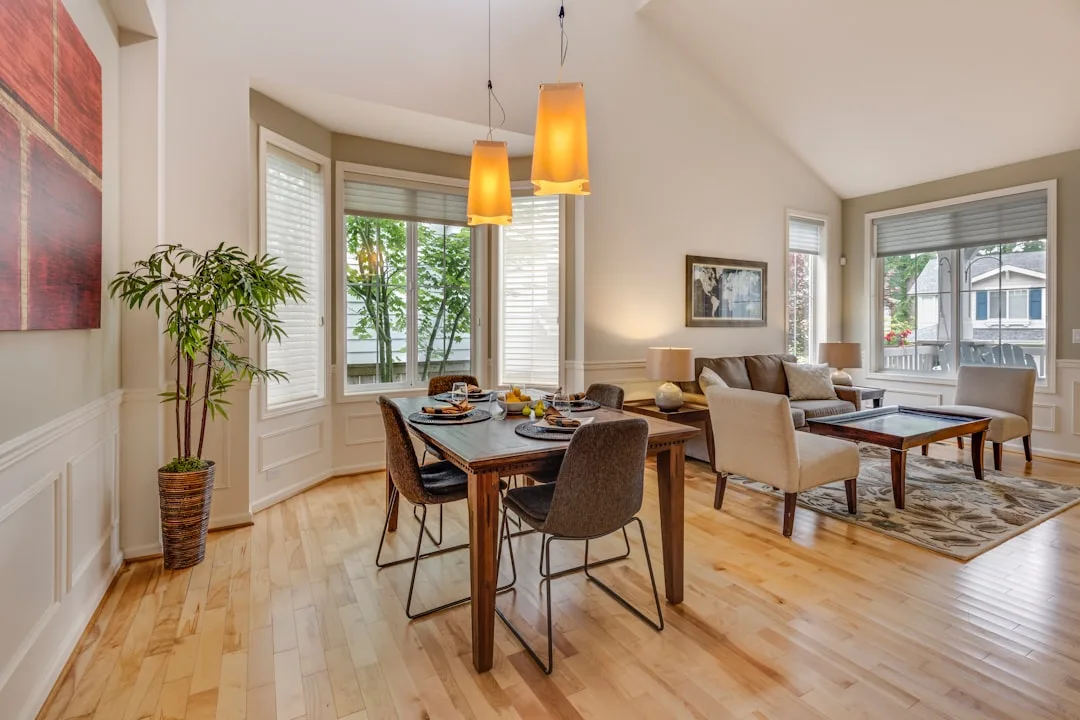
Sustainable wood flooring has shifted from niche eco-choice to mainstream material authority in 2026 interior design. Walk into any high-end residential project this fall, and you’ll find FSC-certified, reclaimed, or engineered options dominating specification sheets. The pivot reflects three converging forces: genuine environmental accountability, performance advantages over solid hardwood, and the fact that millennial and Gen Z homeowners now represent the majority of renovation budgets.
This isn’t about compromise or aesthetics taking a backseat to conscience. Sustainable wood flooring delivers superior durability, dimensional stability, and longevity compared to conventional solid hardwood, which contracts and expands with seasonal humidity swings. The warmth, grain character, and tactile presence remain identical—but the engineering and sourcing now align with how people actually want to build homes.
See also: How to Build a Beautiful Home with Stylish Interiors by Designing With a Purpose.
FSC-Certified Sources Anchor Supply Chain Transparency
Flooring brands like Carlisle Wide Plank have become fixtures in architect specification because their FSC (Forest Stewardship Council) certification tracks timber from responsibly managed forests with documented harvesting practices. A single plank can be traced back to its origin forest, verifying sustainable yield and reforestation commitment.
Carlisle’s Character Grade white oak, for instance, shows natural color variation and knot-grain character while maintaining structural integrity across 3-to-9-inch widths. This specificity matters because transparency has become non-negotiable for high-net-worth clients who want documented proof their $15,000 flooring investment doesn’t fund old-growth destruction.
Certification costs flooring producers 2-4% more than uncertified sourcing. That modest premium filters to retail at 8-15% above commodity hardwood. Most homeowners absorb this without resistance when they understand the direct trade-off: verified forest management replacing extraction.
Quick Tips
- Request FSC Chain of Custody documentation before purchase—it proves sourcing legitimacy
- Engineered wood with 3-4mm veneer over plywood performs identically to solid hardwood in climate-sensitive spaces
- Reclaimed or salvaged wood from barns and old homes eliminates new-growth impact entirely
- Wider planks (7-9 inches) show more grain character and require fewer boards per room, reducing installation waste
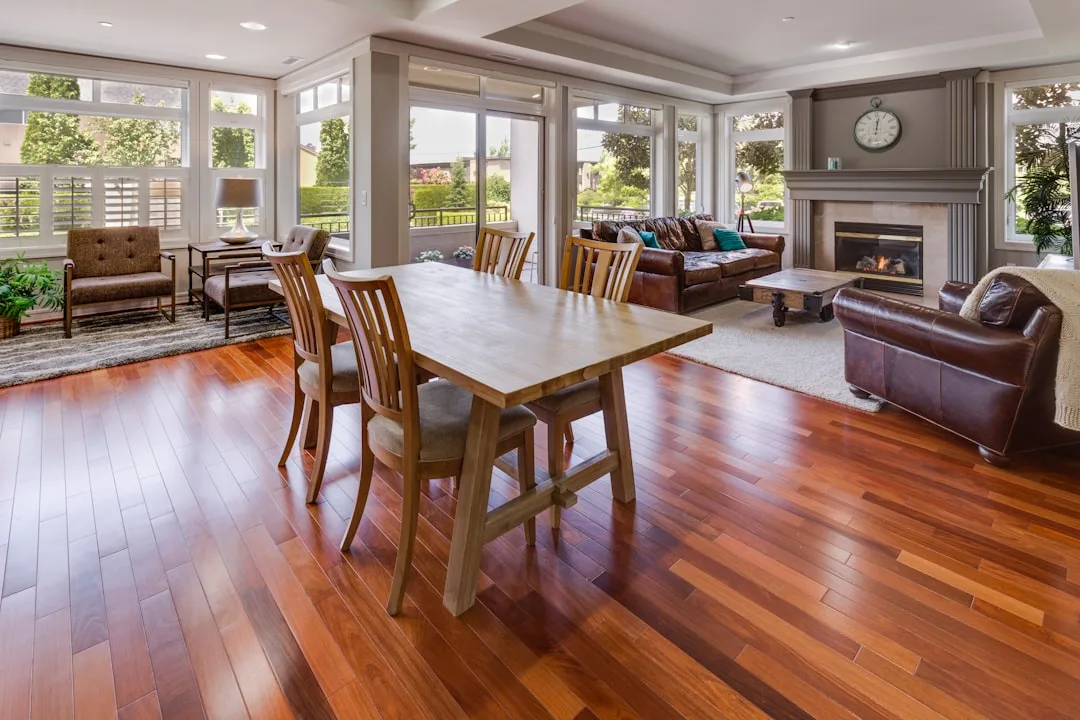
Engineered Wood Solves Moisture Instability in Real Homes
Engineered wood flooring—real hardwood veneer bonded to plywood or high-density fiberboard—has become the technical solution to a problem solid hardwood never adequately addressed: dimension stability in kitchens, bathrooms, and basements where moisture fluctuates year-round.
Solid 3/4-inch oak will cup, crown, or gap when humidity swings 30% between winter and summer. Engineered product with a 3-4mm veneer over cross-grain plywood core stays flat because the substrate resists moisture absorption at the speed solid wood cannot. This isn’t a minor detail—it’s why builders now specify engineered options in 70% of new construction above the East Coast.
| Product Type | Moisture Resistance | Lifespan |
|---|---|---|
| Solid 3/4″ Hardwood | Moderate—prone to cupping | 25-30 years with refinishing |
| Engineered 3/8″ on Plywood | High—dimension stable | 20-25 years, limited refinish |
| FSC Reclaimed Barn Wood | Moderate—already aged | 50+ years, character-marked |
| Hand-Scraped Engineered | High—hides variation | 20+ years, pre-distressed |
Tarkett and Mohawk both produce engineered lines with documentation of veneer thickness and substrate composition. Thicker veneers (4mm versus 2mm) allow one or two sandings over the product lifetime, but most engineered floors are best treated as non-refinishable.
The trade-off is worth it in moist climates. A kitchen over a vented crawlspace or a master bath with radiant heating no longer becomes a gamble.
The Reclaimed Market Now Drives Authenticity Demand
Reclaimed wood flooring—salvaged from deconstructed barns, factories, and century-old buildings—has matured from artisanal niche into a $400-500 million annual segment within U.S. flooring markets. Architectural Salvage in Pittsburgh and Elmwood Reclaimed Timber in upstate New York now operate industrial-scale recovery operations that process 200-400 tons of salvaged timbers monthly.
The material arrives pre-aged, often with hand-hewn marks, nail holes, and patina that solid hardwood cannot replicate. A single plank tells a story: this white oak came from a 1920s textile mill in Massachusetts; this chestnut traveled from an Ohio barn built in 1880.
Pricing ranges from $8-18 per square foot installed, depending on rarity and grain character. Heart pine costs less than chestnut; wormy chestnut with insect galleries costs substantially more because visual interest is irreplaceable.
Installation complexity increases because no two reclaimed planks match in width, thickness, or color. Installers must sort, plane, and fit each board individually—labor that adds 40-60% to labor costs versus engineered product. But the result is a floor no other home will replicate.
The Common Mistake: Ignoring Subfloor Preparation in Moisture-Prone Spaces
The single most frequent failure with sustainable wood flooring occurs before the first plank arrives on-site. Homeowners and contractors skip moisture testing of concrete subfloors or install over unvented crawlspaces without addressing relative humidity. Result: cupping, warping, and adhesive failure within 18-36 months, leaving the floor ruined and the warranty void.
Concrete subfloors must measure below 3% moisture content (tested with a calcium chloride or in-situ meter) before engineered product installation. If a basement or below-grade space tests above 4% humidity, you cannot install any wood floor—you need a moisture barrier, dehumidifier, or basement waterproofing system first. Installing wood anyway is the equivalent of building a wall without a vapour barrier in a damp climate; the premium material becomes destroyed by basic physics.
A verified moisture test costs $150-300 and takes two hours. Replacing a warped $12,000 floor costs $20,000-30,000 plus removal of cabinetry and appliances. The trade-off equation is brutally simple: test first, or fail later.
Finishes and Sealants Complete the Sustainable Story
Water-based polyurethane and hard-wax oil finishes have replaced solvent-based urethane as the 2026 standard for sustainable flooring. Products like Bona Hard-Surface Floor Finish and Osmo PolyX hard-wax oil cure to equivalent durability while eliminating VOC (volatile organic compound) emissions that solid and engineered wood both release during installation.
Hard-wax oil allows the wood grain to feel raw to the touch while providing protection against spills and foot traffic. It requires recoating every 3-5 years, extending maintenance responsibility but eliminating the plastic-film texture many homeowners reject. Polyurethane water-based products remain more popular in high-traffic commercial spaces because they cure harder and faster, but home renovations now split evenly between the two approaches.