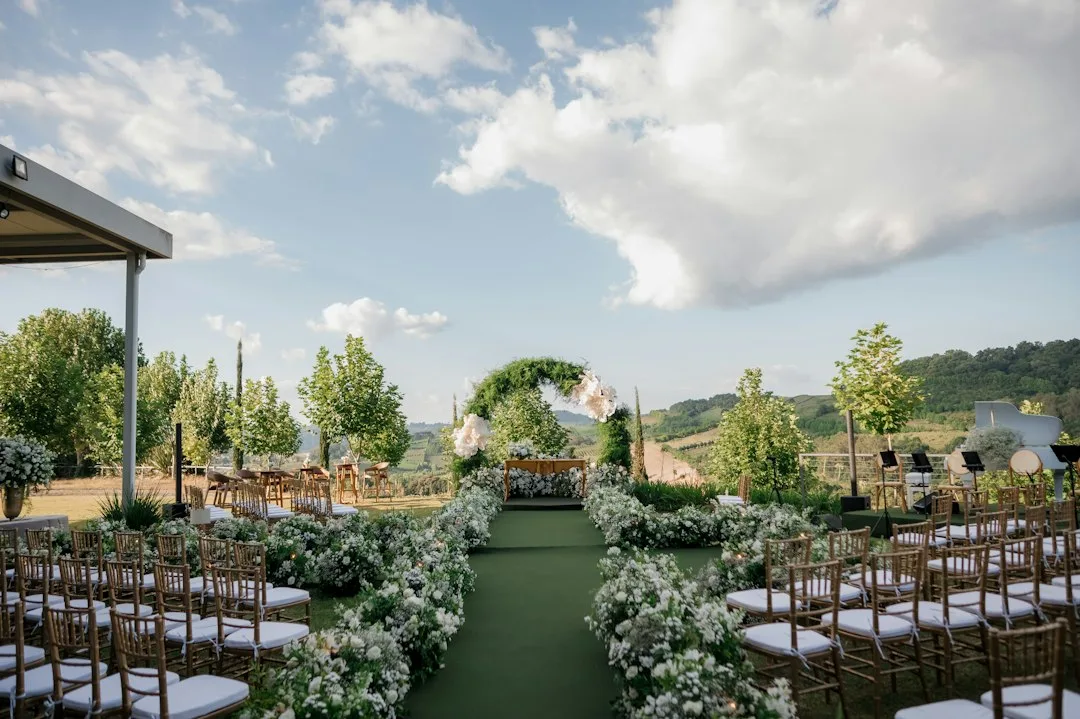
In September 2026, couples are investing an average of 8–12% of their entire wedding budget into ceremony backdrop design—a number that would have seemed excessive five years ago. Wedding ceremony backdrops have stopped being decorative afterthoughts and become the visual anchor that defines the entire event’s tone, photographs, and guest memory. This shift matters because a backdrop now carries narrative weight: it tells a story about who you are, how you move through the world, and what matters to you as a couple.
The reason wedding ceremony backdrops command such attention is practical and emotional. Every meaningful photograph from your ceremony—the first kiss, the processional, the vows—frames your backdrop as the canvas behind the moment. When guests share images on social platforms, your backdrop travels with those moments. More importantly, a thoughtfully designed backdrop signals intentionality to everyone in the room.
Layered Textures Replace Single-Material Installations
Arch & Frame Design Systems, a wedding architecture company based in Brooklyn, reports that 67% of their 2026 clients requested multi-material backdrops combining wood, brass, linen, and living elements. A single floral wall now reads as incomplete—couples are pairing delicate florals with raw wooden beams, woven panels, or sculptural metal frameworks. This layering creates visual depth and prevents the backdrop from flattening in photographs.
Tidewater Florals in Charleston popularized this approach by mounting garden roses and eucalyptus onto reclaimed barn wood frames instead of flat surfaces. The texture catches light differently at different times of ceremony, creating a living, changing focal point. Guests notice the craftsmanship immediately.
A layered backdrop also photographs better across phone cameras and professional rigs. The depth prevents blown-out backgrounds and gives the couple a sharper subject separation—they stand out from the backdrop rather than merging into it. This is why photographers now request backdrop designs during planning conversations.
Quick Tips
- Request fabric swatches before committing to drapery colors—digital samples don’t translate to real lighting.
- Visit your venue’s ceremony space at the same time of day as your planned ceremony to test how natural light hits the backdrop.
- Build the backdrop structure 2–3 weeks before the wedding, not the day-of—installation stress creates visible damage and uneven positioning.
- Choose a focal height that sits 6–8 feet behind the couple’s standing position so the backdrop doesn’t dwarf you in photos.
Architectural Framing Becomes Functional as Well as Visual
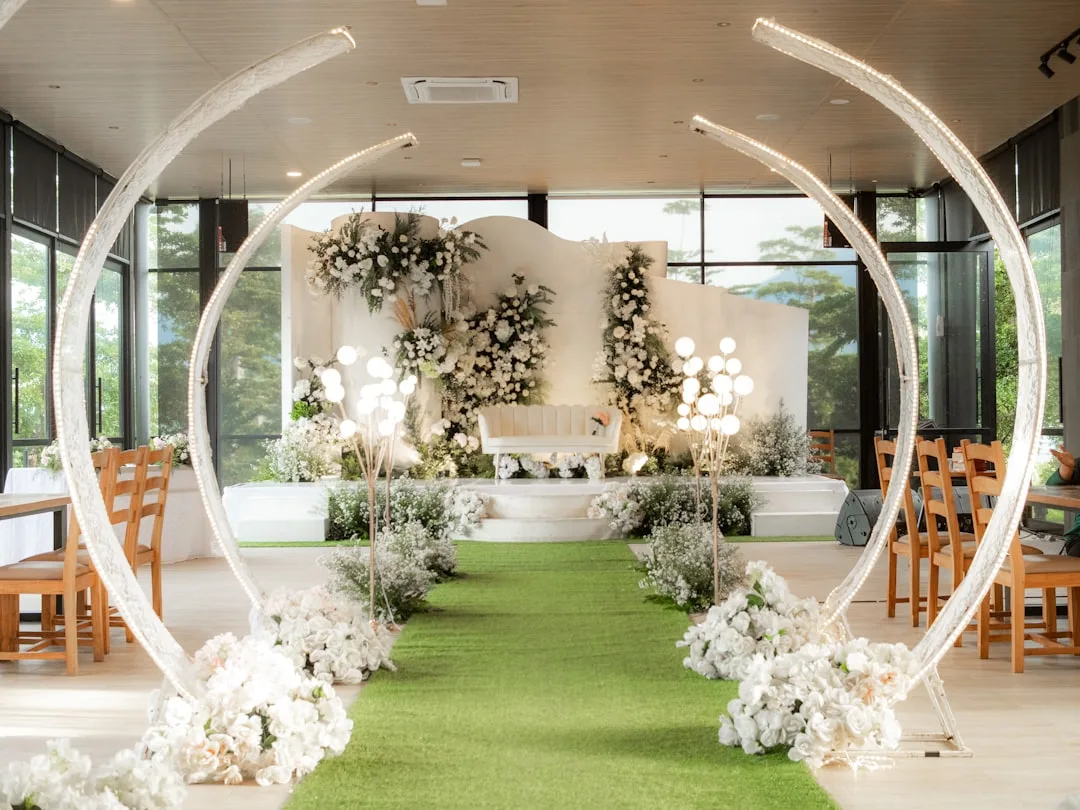
The shift from décor-only backdrops to structural frames is reshaping how couples think about ceremony space itself. Studio Flint, a wedding design studio in Portland, began integrating ceremony arches into the larger architectural narrative in 2024—a trend that accelerated dramatically through 2026. Instead of a standalone arch, couples now request frames that integrate lighting rigs, sound system positioning, and sightline management for all 60–200 guests.
This dual functionality saves money and prevents the awkward visual clutter of equipment scattered across a ceremony space. A brass-and-wood frame can hold uplighting on the interior, suspend a speaker system, and anchor the ceremony space in a single gesture. Rental companies like Cavin Design began offering modular frame systems priced in the $2,000–4,500 range that adapt to 15+ ceremony footprints.
Functional frames also improve sight lines for older guests and parents seated toward the back—the frame’s height and positioning ensure no one completely loses sightline to the couple during vows. Families with accessibility needs report that a thoughtfully positioned frame backdrop makes the entire ceremony more inclusive.
| Backdrop Type | Material Durability | Photography Performance |
|---|---|---|
| Single Floral Wall | 6–8 hours before wilting | Flat, limited depth |
| Wooden Frame + Fabric | Reusable for 50+ events | Strong texture, dimensional |
| Mixed Material (Wood/Metal/Florals) | Seasonal florals require refresh | Rich, magazine-quality depth |
| Drapery-Only Backdrop | Wrinkles, sagging by hour 3 | Depends entirely on fabric weight |
| Living Plant Wall | Needs daily watering on-site | Natural, evolving beauty |
The Common Mistake: Oversizing and Overdecorating
The number-one failure in wedding ceremony backdrop design happens when couples treat the backdrop as a blank canvas for every idea they’ve collected. A bride and groom book Instagram-inspired florals, request architectural metal framing, add string lights, drape fabric, and include hanging candles—all on one surface. The result is visual cacophony that reads as busy rather than beautiful.
The Knot reported in their 2026 wedding trends survey that 43% of couples redesigned their backdrops after initial consultations because the first version felt cluttered. A couple in San Francisco commissioned a 15-foot floral wall with integrated lighting, velvet draping, and suspended brass discs—and on wedding day, the design overwhelmed the space and made the ceremony feel enclosed rather than romantic. They ultimately requested their designer remove 40% of the planned elements two weeks before the event.
The lesson: every element on your backdrop should do one job beautifully instead of three jobs adequately. Choose a single hero material—florals, fabric, wood, or metal—and let it breathe. Limit yourself to two accent materials maximum. This restraint creates sophistication and prevents the backdrop from competing with the people standing in front of it.
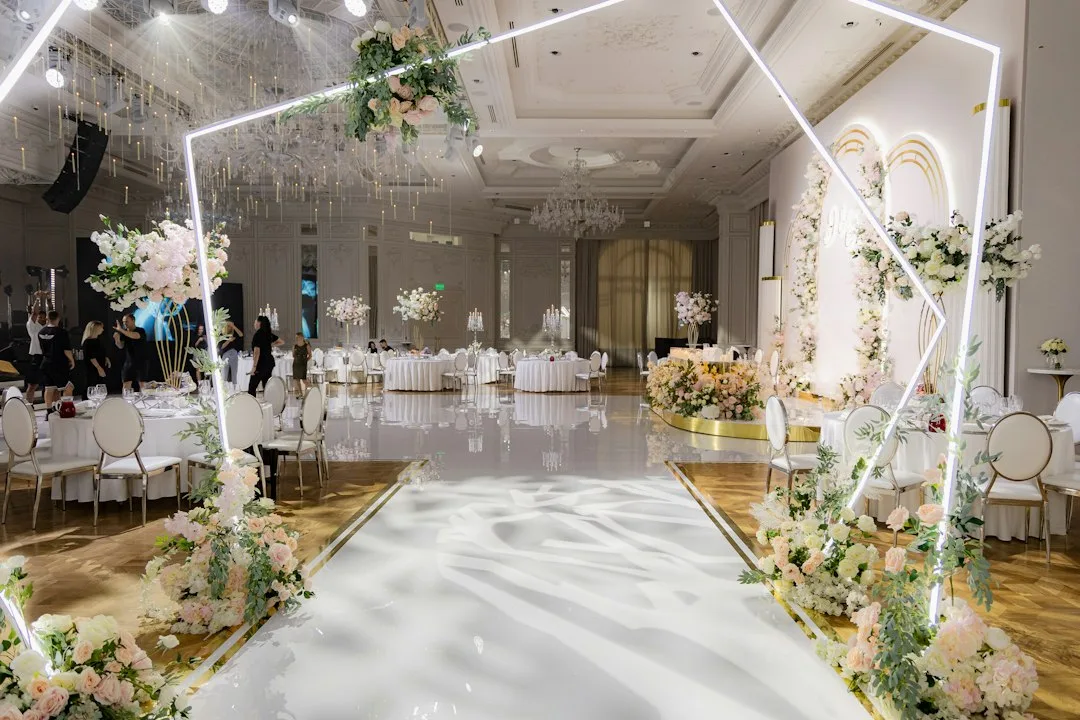
Lighting Design Transforms Static Backdrops Into Dynamic Focal Points
Ceremony backdrop lighting has evolved from uplighting (flat color wash from below) into layered illumination that changes the backdrop’s appearance across the timeline of the ceremony. Luminescence, a New York lighting design firm, began applying theatrical lighting principles to wedding backdrops in 2025, using front fill, side key lighting, and subtle color temperature shifts to enhance texture and dimension.
A wooden frame looks warm and intimate under 2700K color temperature lighting during the processional and first readings. As the ceremony progresses toward vows, the lighting can shift to 3000K for a slightly brighter, more energetic feel without changing the backdrop itself. This micro-adjustment costs nothing once the lighting rig is installed, but transforms emotional tone across the ceremony’s arc.
Couples who invest in smart lighting controls report that dynamic backdrop lighting extends the visual interest of static designs and prevents guest attention from flatting during longer ceremonies. The backdrop becomes an active player in the emotional narrative, not just a pretty frame.
Personalization Through Color, Material, and Storytelling
The most resonant wedding ceremony backdrops in 2026 connect directly to a couple’s origin story or aesthetic identity. Instead of generic elegant designs, couples are requesting backdrops that incorporate a specific place, material, or memory. A couple who met hiking now requests a backdrop featuring reclaimed wood from a trail meaningful to them. A couple with a coastal relationship gets a backdrop in driftwood and linen instead of traditional florals.
Terrain Events, a design studio, saw a 58% increase in custom material requests (leather, concrete, vintage metals) instead of floral-only backdrops. This reflects a broader shift toward authenticity in wedding design—guests now expect to see reflected in the ceremony design some truthful element of who the couple actually is. A backdrop that tells your story creates an immediate emotional connection for every guest sitting in the room.
Whether your backdrop references a shared passion, a cultural tradition, or a meaningful location, the intentionality reads immediately. Wedding Party Decorations with Elegant Minimalism explores how restraint and specificity create more impactful event design across all elements. You can also explore 3+ Boho Wedding Decor Trends You’ll Love if your ceremony aesthetic leans toward natural, textured materials.
Sustainability and Reusable Backdrop Systems
A growing number of couples are choosing reusable, modular backdrop systems instead of custom builds that end up in landfills after the ceremony. Rent-a-backdrop services began gaining traction in 2024 and now represent a small but rapidly expanding segment of the wedding design market. These modular systems use wood frames, steel brackets, and interchangeable fabric panels—you pay a rental fee and customize the panels for your wedding, then the company redeploys the frame and structure for the next couple.
This approach eliminates the guilt of building something beautiful just to dismantle it, and costs roughly 30–40% less than a custom build. A couple renting a modular frame system and paying for custom fabric panels spends significantly less than building from scratch and disposing of materials after the event. The environmental trade-off is substantial, especially for couples who already practice sustainable choices elsewhere in wedding planning.
The shift reflects broader wedding industry values: guests now notice and respect when couples make thoughtful environmental choices visible throughout their celebration.