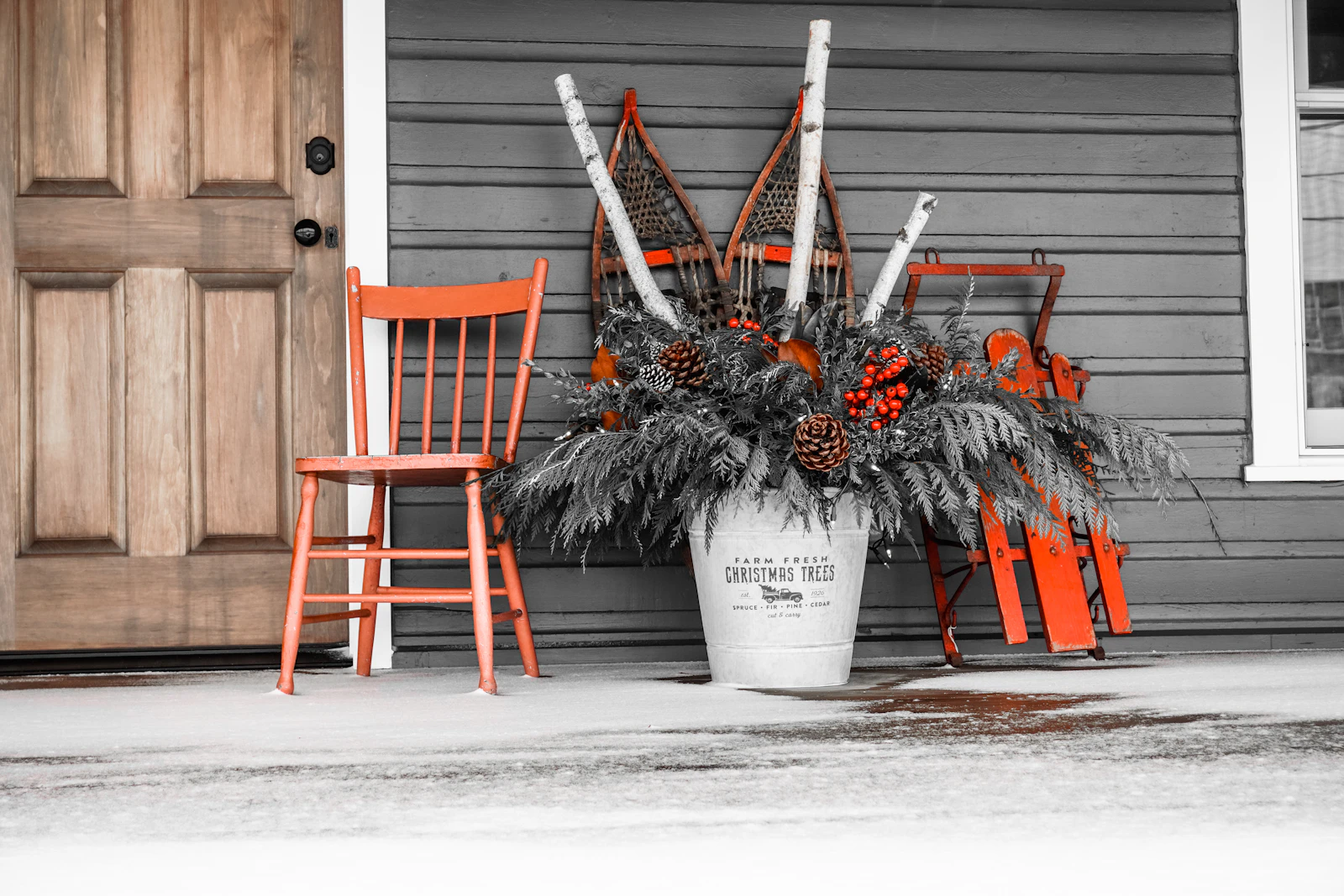
Winter porch pots are outdoor containers filled with cut evergreen boughs, bare branches, cones and berries instead of living summer flowers. To build one, start with a pot that can take freezing weather, push the stems firmly into potting mix, and water them in so the mix can freeze around them.
The method suits anyone who wants a green front entry without keeping plants alive through the cold. Penn State Extension’s advice on winter outdoor arrangements places this job in mid to late November, so late November is the moment to finish it, while the mix in many pots can still be worked. Once the mix freezes solid, stems are hard to add or move.
Pick a pot that can handle a freeze
Pots usually fail because of the water they hold. Water expands about 9 percent as it turns to ice, as This Old House explains, and wet mix presses against the walls. Repeated freezing and thawing can weaken a container until it breaks.
Quick Tips
- Store unglazed terracotta and thin ceramic indoors or in a dry shelter.
- Check that plastic, resin or metal pots have enough drainage holes.
- Gather more greenery than you think you need before you start.
- Build the arrangement before the potting mix freezes.
Fiberglass, composite, wood and suitable concrete are safer picks. Plastic and resin vary, so look for a frost-proof or cold-weather label. Concrete differs by mix and finish, and porous concrete may need a sealant. A generous pot also helps: This Old House suggests containers at least 12 inches across and deep for winter planting.
Choose greens that keep their needles
Penn State lists boxwood, false cypress, holly, red cedar, spruce, pine, yew and arborvitae among useful evergreens. It advises against short-needled types that shed quickly, especially eastern hemlock. Overgrown junipers and boxwood trimmings from your own yard can work too, and some Christmas tree farms may give away the lower boughs they prune off.
Cut with restraint. A large branch removed from a shrub will not grow back, and the gap may never fill in. Take small pieces from several plants, from places where the cut will not show. Leave any plant that is not yours alone unless the owner agrees.
Spruce tips are a popular upright choice. These are small trees or branches sold for containers, not the cut tops of large spruces. Mix them with softer pine, flat sprays of cedar or glossy broadleaf stems so the pot has more than one texture.
Build the arrangement from the center out
If the pot held summer annuals, cut their stems at soil level and leave the roots in place. The old root mass helps hold new stems upright under snow. For an empty pot, fill it with a dense potting mix, water thoroughly and let it settle before you add anything.
Designers often call this a thriller, filler and spiller layout: one focal element, a body of greenery and a few pieces that trail. For two pots beside a door, build them side by side. It is much easier to match height and weight when you can compare them directly.
Add color with branches, berries and pods
Winterberry holly, red twig dogwood, bayberry, beautyberry, pinecones and dried hydrangea heads give contrast against dark needles. Milkweed pods and false blue indigo pods add shape without bright color. If birds visit your entry, expect some of the real berries to disappear.
Avoid collecting berries or seed heads from invasive plants. Oriental bittersweet is a common example, because birds can spread its seeds from your arrangement. If you cannot identify a vine or shrub with confidence, leave it out.
Think about the wall and door behind the pots. Red berries and blue-green spruce read clearly against pale siding, while birch poles and golden foliage stand out on darker walls. If your facade is neutral, these warm beige and taupe exterior paint colors show the kind of backdrop that suits natural greens. Where the entry has strong exterior trim color around the openings, keep the accents to one or two shades.
Keep cut stems fresh through changing weather
Water the finished pot well. In freezing weather, the wet mix hardens, locking the stems in place and helping keep spruce tips from drying out. According to University of Minnesota Extension, a long spell above freezing calls for watering as you would summer flowers. Moving the pot into shade also helps, if it is light enough to move safely.
Greens do not all age at the same pace. The Minnesota advice notes that cedar and pine dry out faster than fraser fir or balsam, especially near indoor heat. Flocked branches dry more slowly, but rain or wet snow can wash the coating off outdoors. Replace any piece that turns brown or starts to shed once the mix has thawed enough to pull it out.
Avoid the mistake of building too late and too light
The main limitation of this method is timing. Michigan State University Extension notes that winter pot soil is usually frozen, which helps an arrangement hold through ice and snow and last well into March. The same frozen surface stops you from pushing in new stems later. If your mix is already hard, move the pot to a sheltered spot above freezing until it thaws, as long as you can lift it safely.
A second common mistake is using too little material. Three thin sprigs in a wide pot look sparse from the street, even when they look fine up close. Cover the mix and the rim first, then add height. Keep both the pot and trailing branches clear of the door swing, steps and handrail, so that guests have a safe path on icy days.
If you add string lights, choose a set labeled for outdoor use, plug it into a protected outdoor outlet and route the cord away from where people walk. When the holidays end, take out bows and ornaments. The greens, branches and cones can stay as a quieter winter display while they still look fresh.