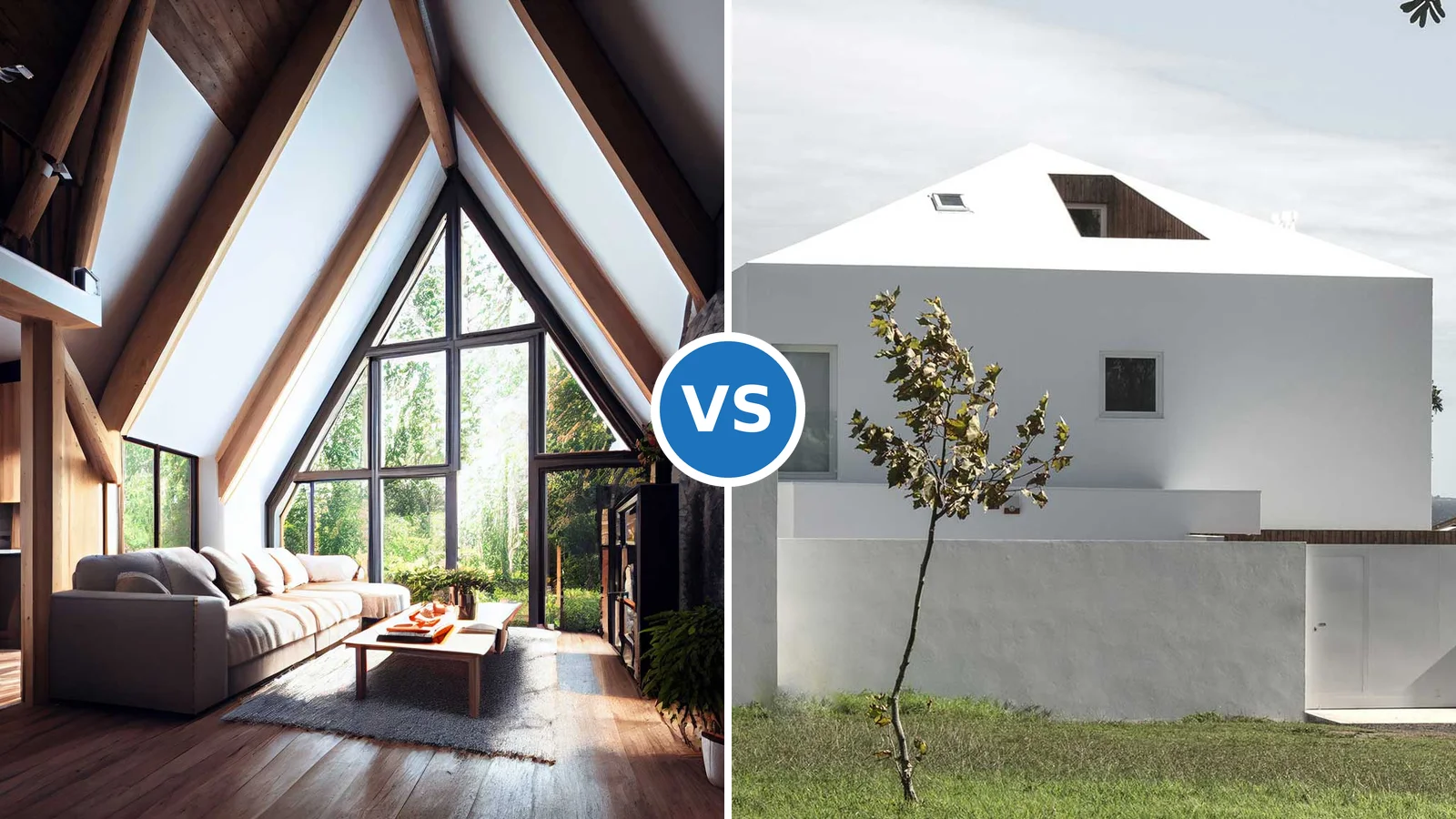
The choice of gable vs hip roof comes down to weather, attic use and budget: a gable roof is simpler, cheaper and gives more attic room, while a hip roof sheds high wind better. This article uses a standard two-slope gable and a pyramid hip roof with four equal sloping sides, so it is narrower than the general query; other hip shapes behave similarly but not identically.

What separates a gable roof from a pyramid hip roof
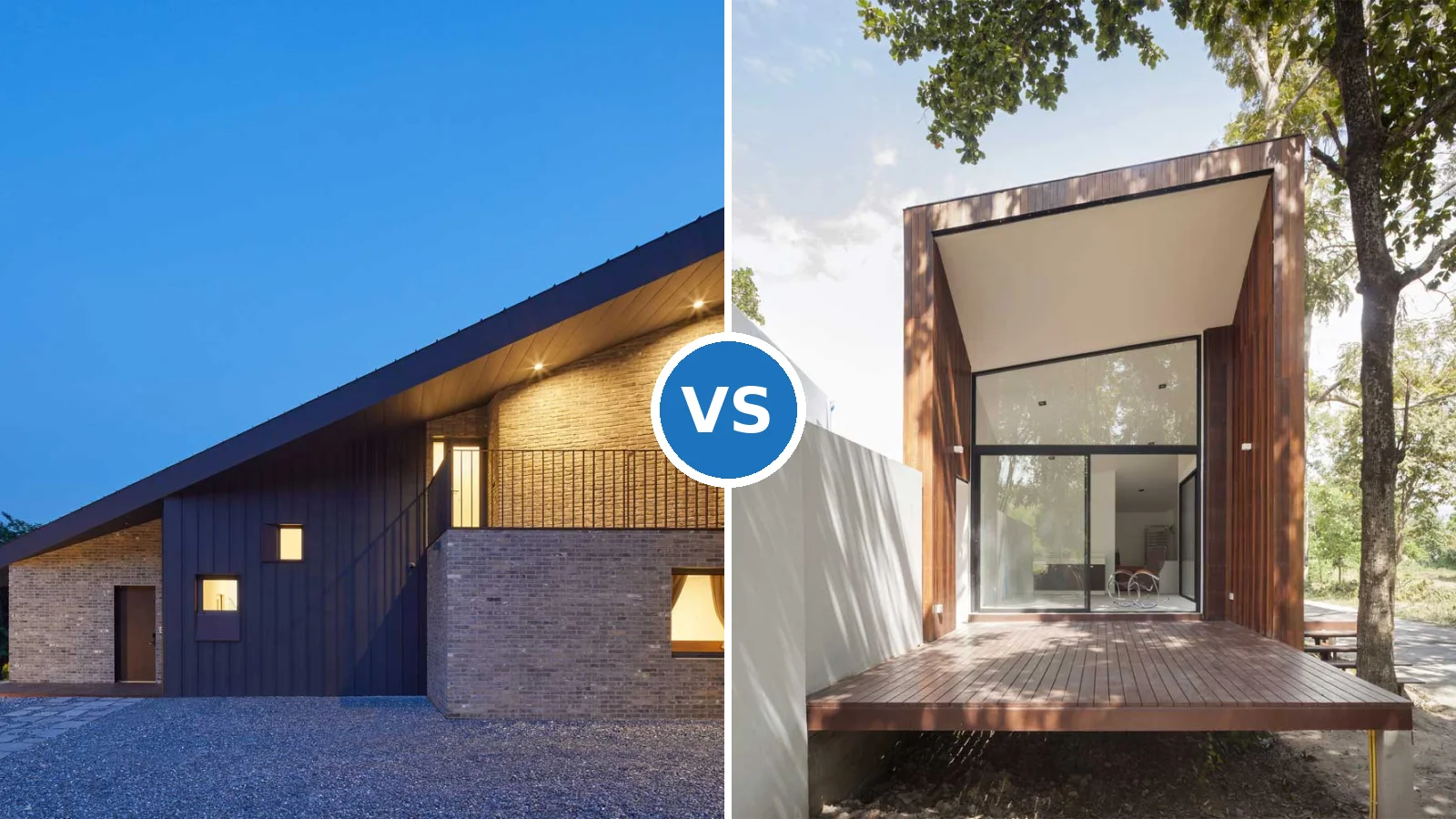
A gable roof has two sloping sides that meet at a ridge, leaving a triangular wall at each end. Our look at a gable roof with attic shows how that triangle can hold windows and turn the space under the slopes into a usable room.
A pyramid hip roof slopes on all four sides and rises to a single point, so it has no gable walls. The pyramid hip roof house example describes four symmetrical triangular slopes, a shape that suits square buildings.
Quick Verdict
- Choose a gable roof if you want the lower-cost, simpler build, extra attic space or easy venting through the end walls.
- Choose a pyramid hip roof if your house is square, you live where strong wind is common, or you like a roof that looks balanced from every side.
- Either works if your climate is mild and you plan no attic room.

Gable vs hip roof on the criteria that matter
Two independent sources agree on the main trade-offs: a Building America Solution Center comparison and an Angi roof comparison both rate hip roofs better in wind and gable roofs cheaper and better for attic space.
| Criteria | Gable roof | Pyramid hip roof |
|---|---|---|
| High wind | Gable end walls take more stress and need careful bracing | Four slopes brace each other and handle wind better |
| Heavy snow | Steeper slopes shed snow more easily | Can hold snow longer |
| Attic space | Larger, easier to convert into a room | Smaller; sloped on all four sides |
| Ventilation | Easy to vent through the gable walls | Often needs roof vents |
| Build cost | Lower, simpler framing | Higher, more complex framing |
| Gutters and eaves | Gutters on two sides | Eaves and gutters on all four sides |


Wind and snow performance
Wind is where the hip roof wins. Wind-tunnel studies cited by the Building America Solution Center found peak pressures on hip roofs up to about 50% lower than on gable roofs, and the usual weak point on a gable is the connection between the end wall and the roof. In hurricane or tornado regions this decides many choices.
Snow reverses the order. Angi notes that the steeper slopes of a typical gable shed snow more easily, while hip roofs can hold it longer. A house in a snowy, low-wind area leans toward a gable roof; a house in a windy, snow-free region leans toward a hip roof.

Attic space and ventilation
A gable roof leaves a tall triangular void under the ridge, which suits storage or an attic conversion with a window in the end wall. A hip roof has less of that room, though Angi points out it avoids steeply sloped ceilings in upper rooms.
Ventilation follows the same pattern. Gable walls can carry vents with no holes in the roof, while a hip roof usually relies on roof vents, each of which is another penetration to flash and maintain. The pyramid example also warns that supporting structures can reduce interior area, so plan room layouts with the roof framing in mind.

Cost and upkeep
Both sources say a gable roof costs less, because the framing is simpler and the gutters run along fewer edges. A pyramid hip roof can save some material and finishing work by having no gable ends, but the added hips and rafters generally make the overall job more complex and more expensive.
Upkeep differs by detail. Gable end walls weather more and need good water protection, while hip roofs with vents or valleys need checking where those parts meet the roof surface.


The most common mistake when choosing
The usual error is picking the look first and the weather second. A homeowner in a hurricane-prone area who chooses a gable roof for its attic window may later pay for extra bracing and connectors, while a homeowner in a heavy-snow area who picks a hip roof for its balanced shape may find snow lingers on the slopes.

Who should choose which
Choose a gable roof for a lower budget, a house you want to extend upward, and climates where snow is a bigger concern than wind. Choose a pyramid hip roof for a square plan, a windy region and a calm, symmetrical exterior. If wind and snow both matter, ask a local roofer or building official which risk your area sees more often.