Blue painted furniture lands differently than almost any other color choice — and navy painted furniture, in particular, does something the pastel alternatives never manage: it holds visual weight without heaviness. One well-placed navy dresser or bookshelf pulls an entire room into focus. The rest of the space suddenly looks intentional.
The GSC data behind this page shows that most people searching for blue painted furniture are split between two intentions: they want the saturated, dramatic effect of navy blue, or they want a lighter, coastal-inflected blue that reads as relaxed rather than bold. Both directions work. The decision is really about the room — a dim north-facing bedroom calls for the lighter tones; a bright living room with white walls can carry navy without feeling cave-like.
Annie Sloan’s Chalk Paint in Napoleonic Blue (a litre runs $30 and covers 140 sq ft) is the reference point most furniture painters reach for first — rich cobalt with just enough warmth that it avoids reading as cold. Oxford Navy, from the same range, skews darker and inkier. Below are four furniture types where blue consistently delivers, along with the paint, finish, and styling decisions that separate the results that look deliberate from the ones that look like an accident.
– Navy painted furniture reads boldest against white, cream, or warm-gray walls — not against other dark colors.
– Annie Sloan Chalk Paint (Napoleonic Blue, 1L / $30) covers 140 sq ft — enough for a dresser with paint left over.
– Chalk-painted indoor furniture sealed with wax lasts 10+ years; re-wax every 2 years in high-use areas.
– Distressed blue works on rustic and farmhouse pieces; matte navy works on modern and coastal silhouettes.
– Skip glossy topcoats on vintage furniture — they strip the texture that makes the piece interesting.
A Vintage Dresser Gets Its Color Back in Navy
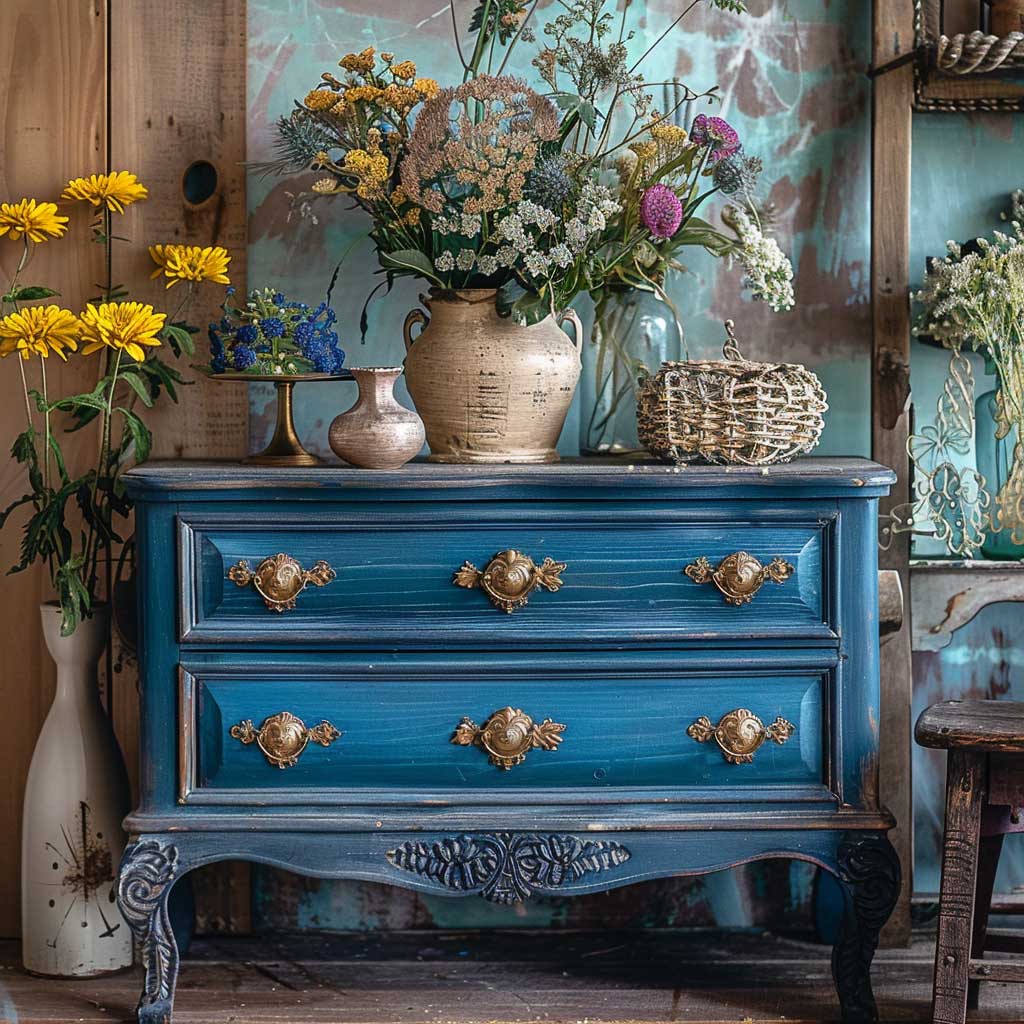
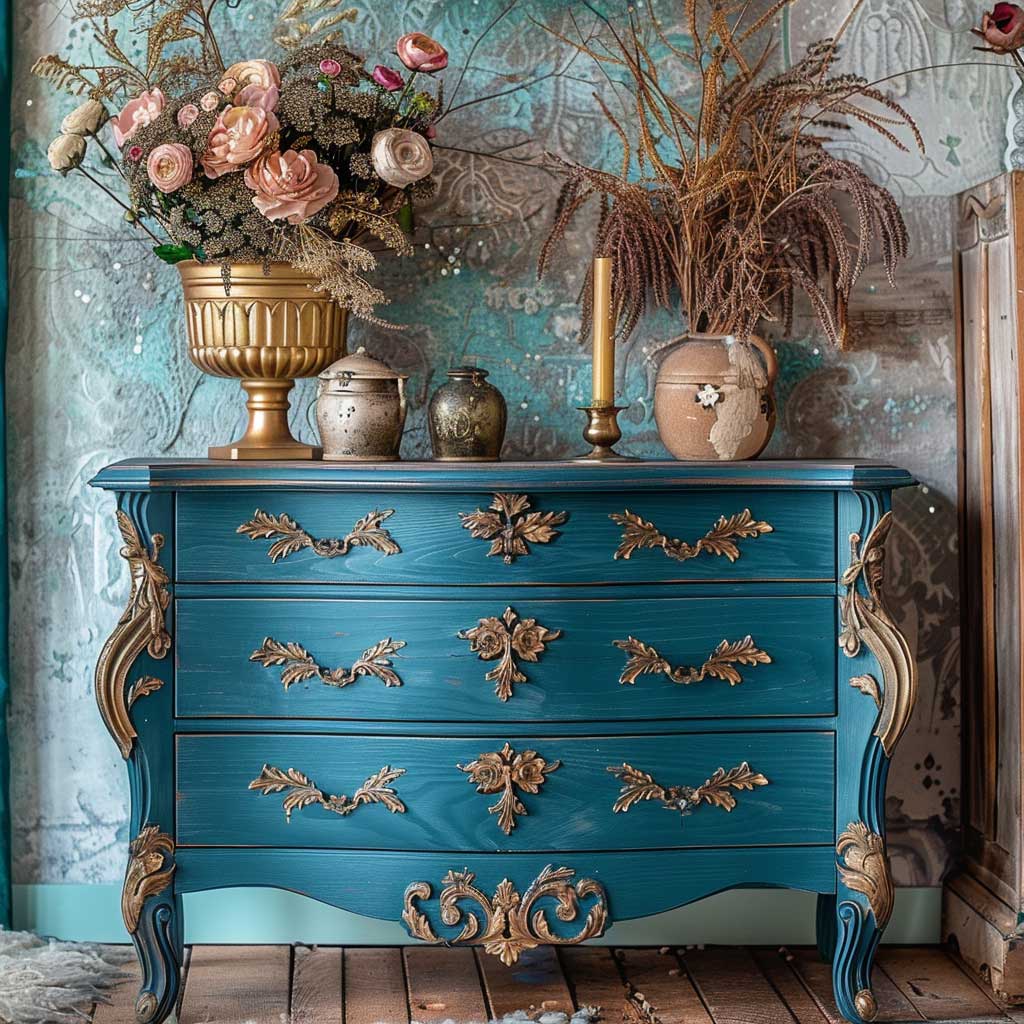
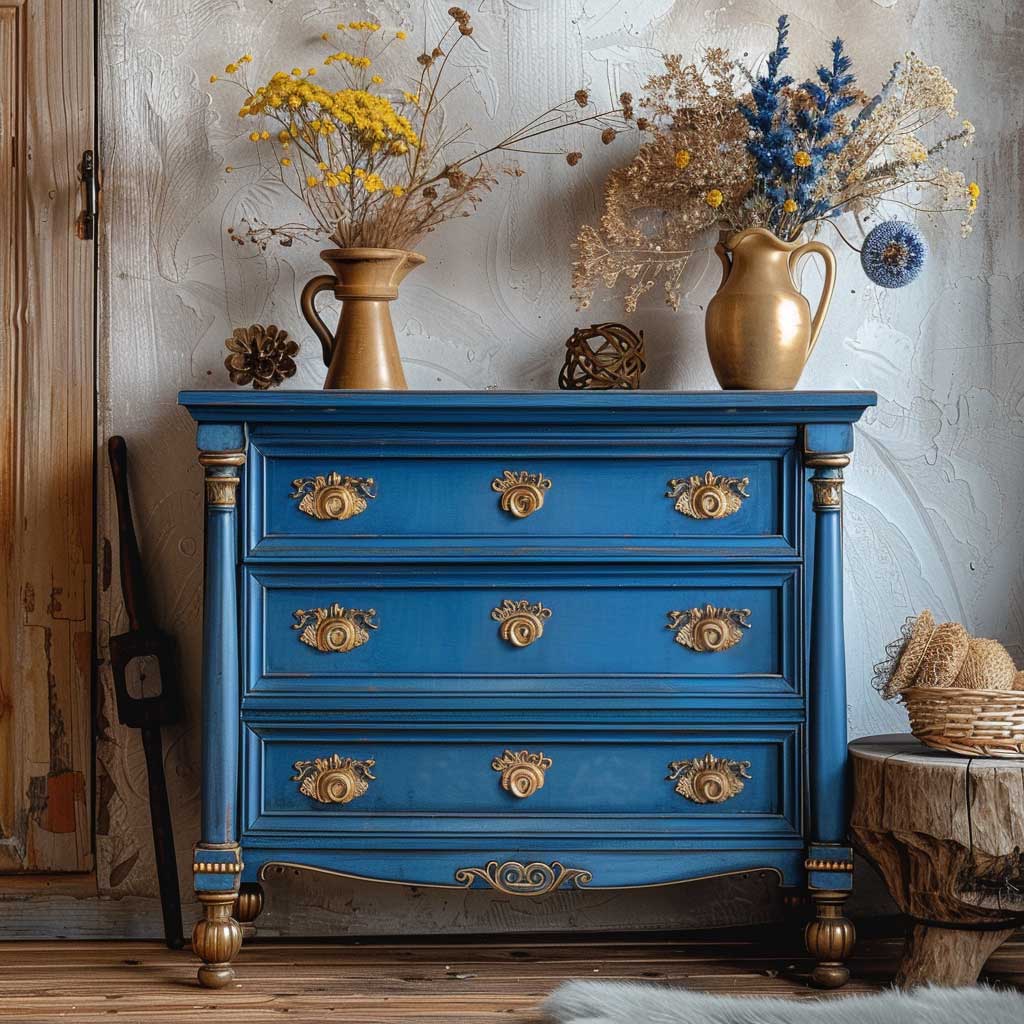
Blue painted furniture has no better canvas than an old dresser — the carvings, the slightly uneven edges, the worn-in hardware. What is the best blue for a vintage dresser? Stylists consistently point to a cobalt or deep navy with some warmth in the undertone: Napoleonic Blue from Annie Sloan sits right in that range. A litre covers the average 6-drawer dresser twice over, with paint left for touch-ups later. That matters more than it sounds — having the same batch for repairs keeps the color consistent across the piece for years.
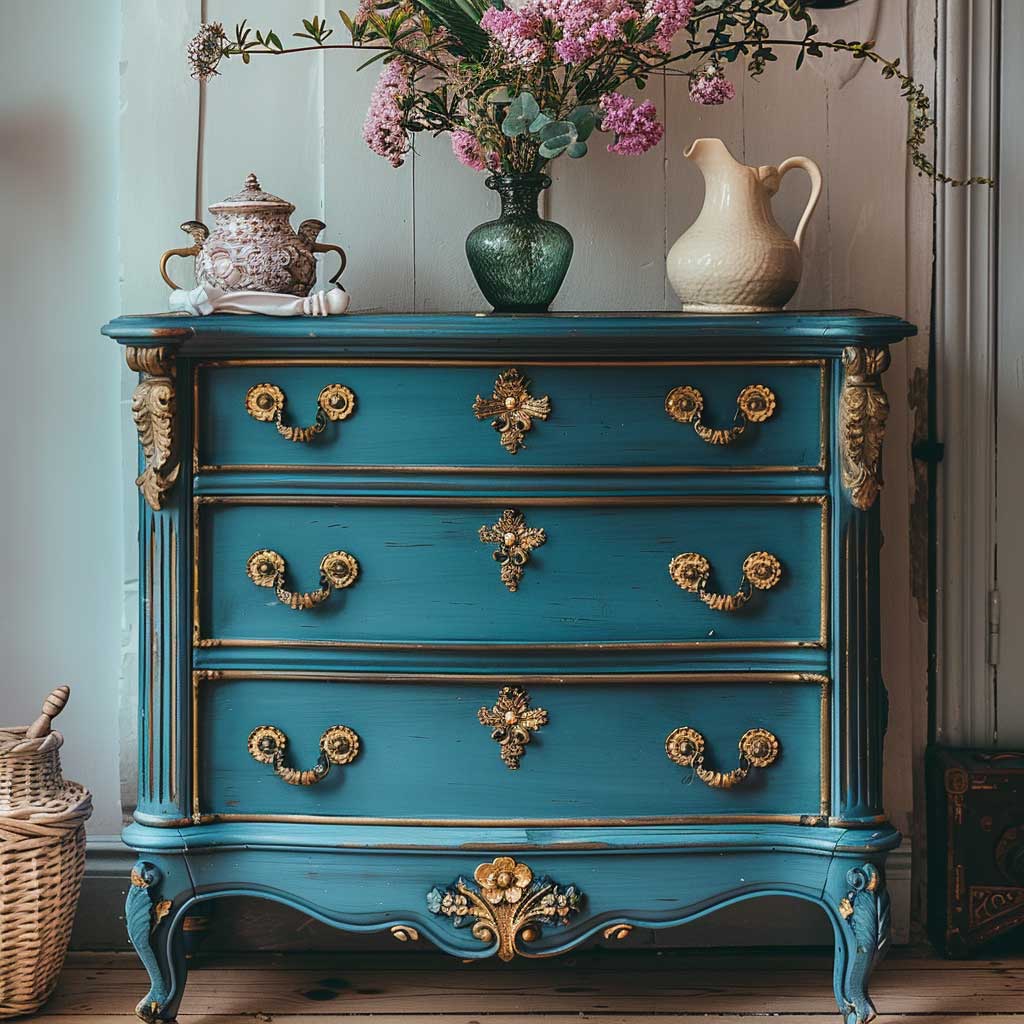
Sand first. Not aggressively — the goal is to scuff the surface so the paint grips, not to strip back to bare wood. Fine-grit sandpaper (220) handles the flat panels; a smaller piece wrapped around a fingertip gets into carved details without blunting them. Wipe the whole piece down before opening the tin. Chalk paint is forgiving about prep, but a dusty or greasy surface still produces adhesion problems.
Apply two thin coats, letting each dry for at least 30 minutes between applications. Think of it like mascara — thin layers build coverage evenly; thick layers clump and drag. The matte finish that chalk paint leaves is part of the point: it amplifies the carved details and the hardware rather than flattening them under a sheen. Finish with Annie Sloan Clear Wax, which cures fully within 2 weeks — use the piece carefully until then. Properly waxed indoor furniture holds its finish for 10+ years with a quick re-wax in high-contact areas every couple of years.
Don’t skip the hardware decision. Brass handles on a navy dresser is the classic combination for good reason — the contrast is immediate and reads as expensive. Chrome handles, on the other hand, turn the same dresser cold and clinical. If the original hardware is bent or corroded, replace it rather than working around it. A set of four brass cup pulls from most hardware stores runs under $20 and changes the whole register of the piece.
Applying chalk paint over waxed or oiled furniture without stripping first. Chalk paint’s ability to skip prep is real, but it has one weakness: an existing wax or oil barrier. Paint applied over a waxed surface peels within weeks. If the dresser you’re working with has been waxed previously — or if you’re unsure — wipe it down with mineral spirits first and let it dry completely before painting. This is the step most tutorials skip, and it’s the most common reason blue painted furniture ends up flaking at the edges six months later.
Navy Painted Furniture at Its Most Functional — the Bookshelf
Painting furniture navy blue turns a plain bookshelf — the kind that gets ignored — into the architectural feature it was always supposed to be. The trick is counterintuitive: items displayed against a dark navy backdrop pop harder than they do against white. Books with cream or ochre spines, terracotta pots, natural wood picture frames — all of them become more visible, not less, when the shelf behind them goes dark. The shelf disappears; the objects come forward.

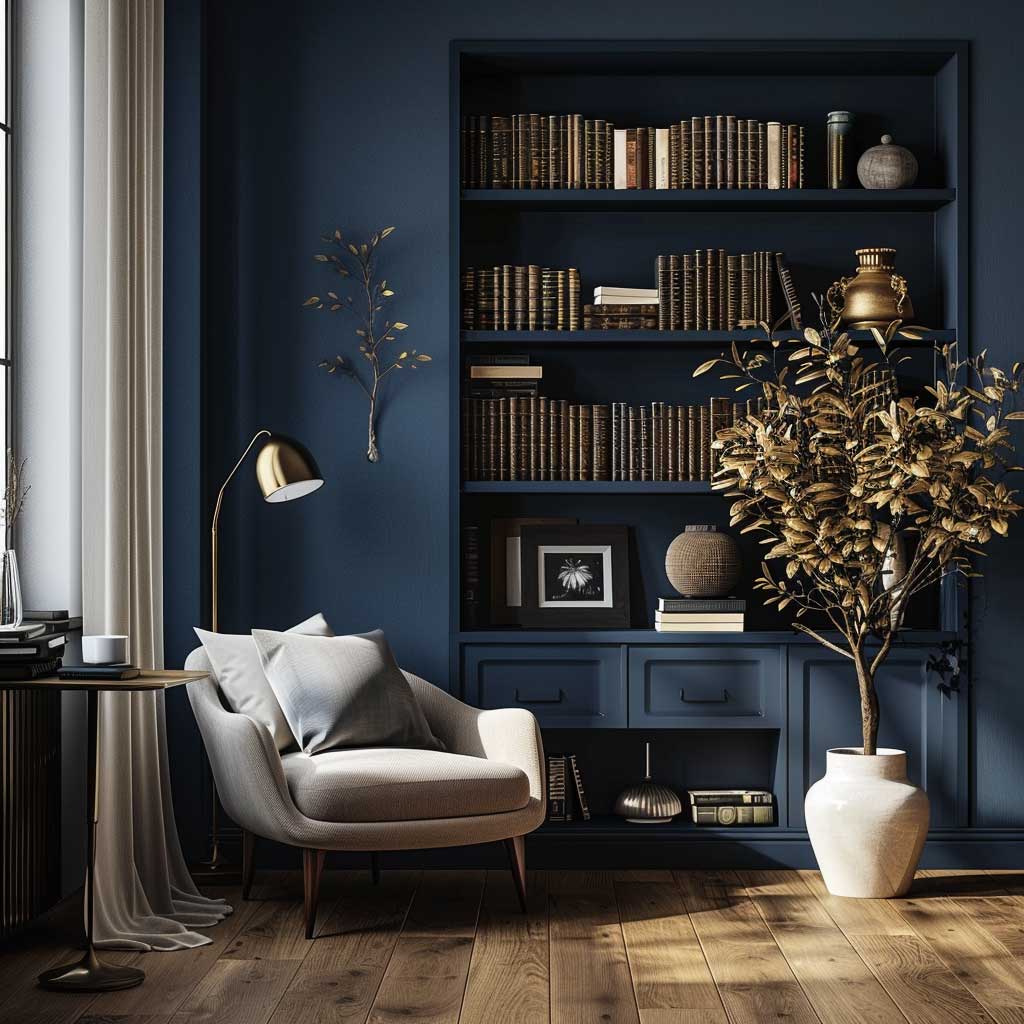


For a modern finish, Oxford Navy from Annie Sloan reads darker and more saturated than Napoleonic Blue — inky rather than cobalt. Apply a matte or satin finish and skip the wax on shelves that hold heavy items; a polyacrylic topcoat handles the load-bearing friction better than wax can. For a 500ml tin that covers 70 sq ft, you have more than enough for a standard five-shelf unit in two coats. For more navy furniture pairing options beyond the bookshelf, the white and navy blue office furniture ideas on ArtFasad show how the same color translates across different furniture forms.
Styling matters as much as the paint. The instinct after painting a bookshelf dark is to fill every shelf tightly — resist it. Leave one shelf with only two or three objects and some negative space. That breathing room is what makes the whole unit look styled rather than stuffed. Mix book orientations: some upright, a few stacked horizontally as risers for a plant or small sculpture. The variation in height prevents the whole thing from reading as a flat wall of spines.
Does navy make a room feel smaller? Not if the walls stay light. The bookshelf carries the color so the room doesn’t have to. A single navy piece in a white or pale-gray room functions like a statement painting — it gives the eye a destination without closing the space in.
Coastal Blue Coffee Table — the Lightest Read in the Room
A blue painted coffee table brings a different energy to a room than a navy bookshelf does — it sits lower, spreads wider, and lives at the center of the space where people actually interact with it. For this reason, the finish decision carries more weight here: a satin finish handles daily wear better than chalk-matte alone. The Rust-Oleum Coastal Blue Chalked All-in-One paint is a useful option at this scale — the built-in topcoat skips the separate sealing step, which matters for a piece that takes cups, remotes, and feet.
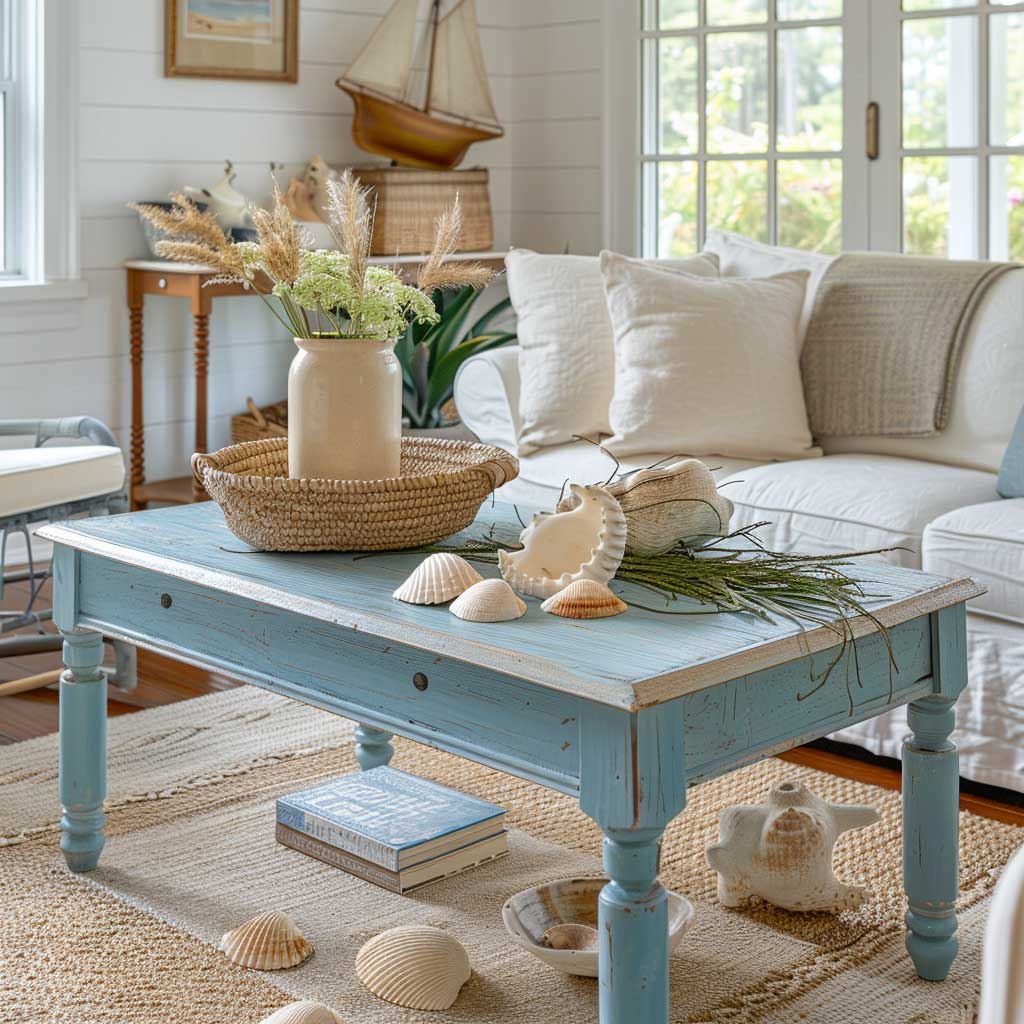
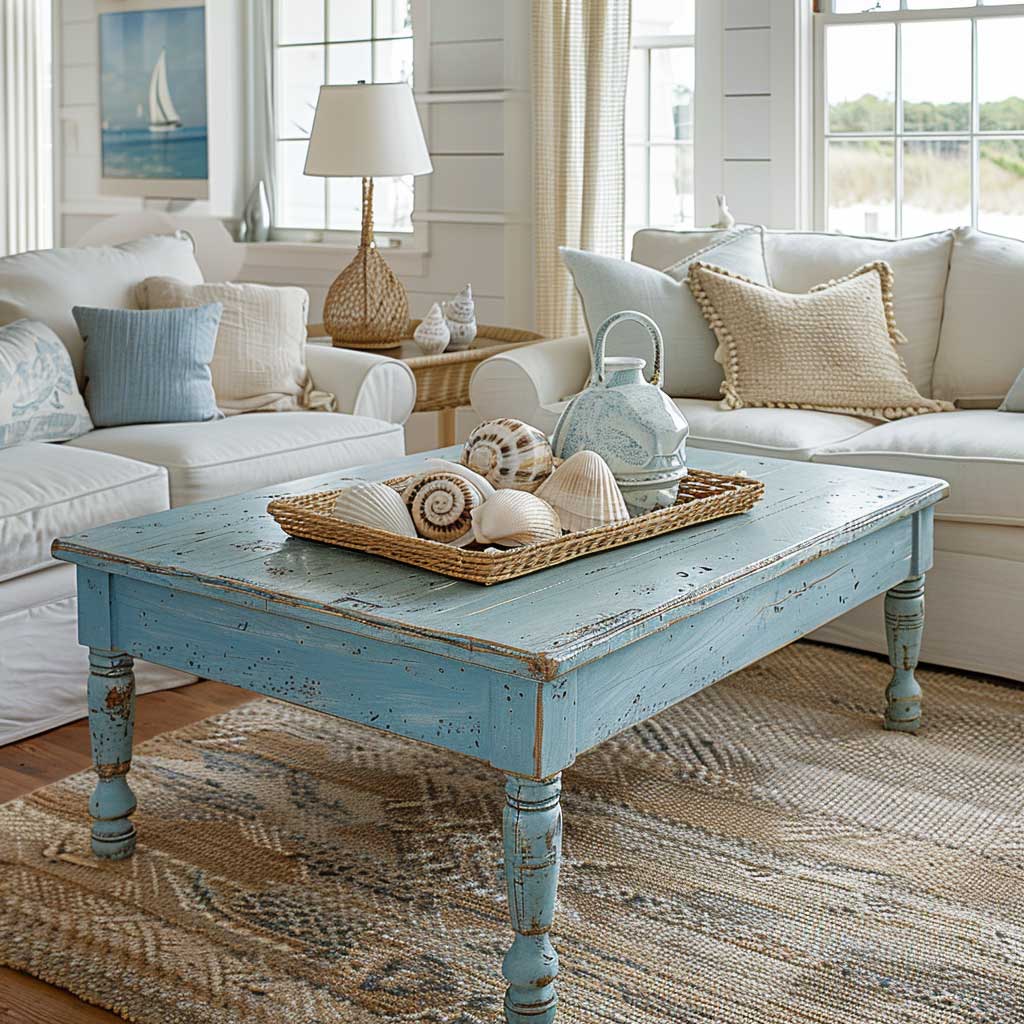
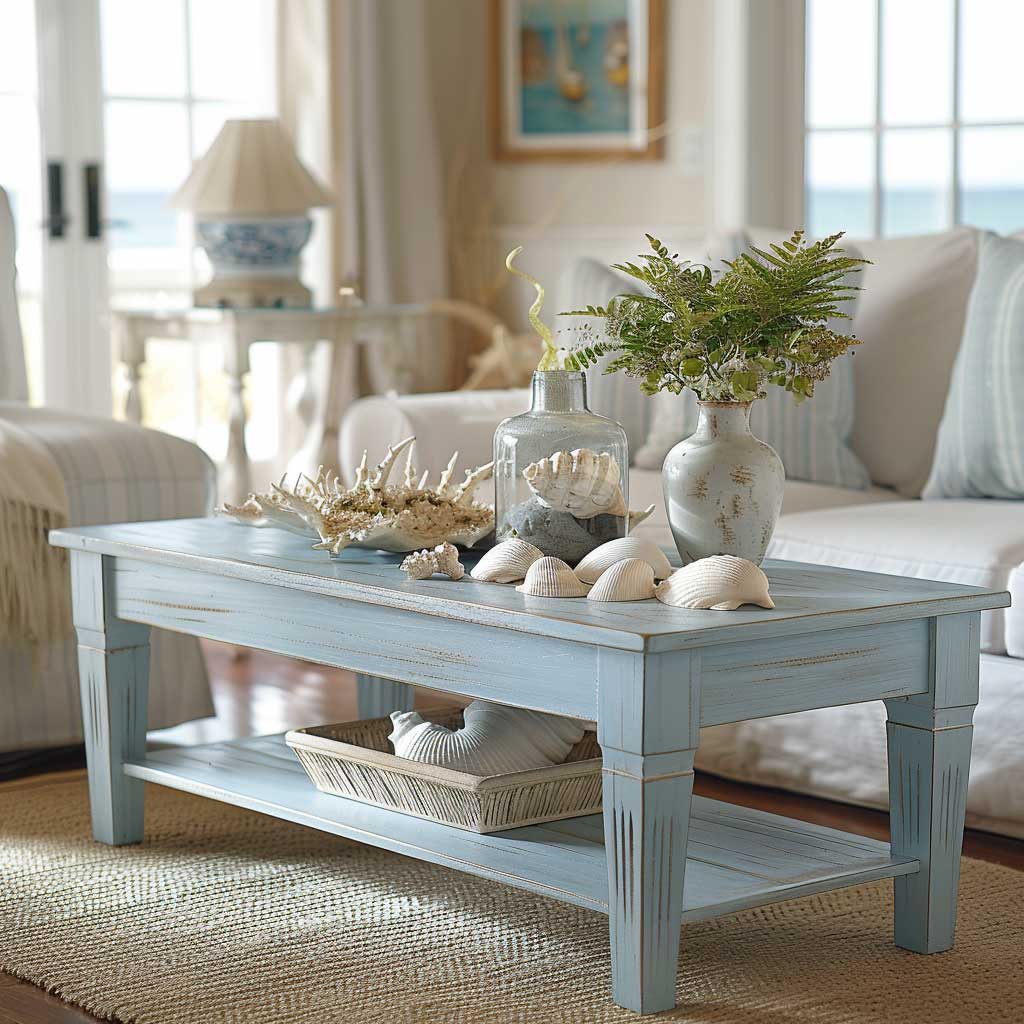
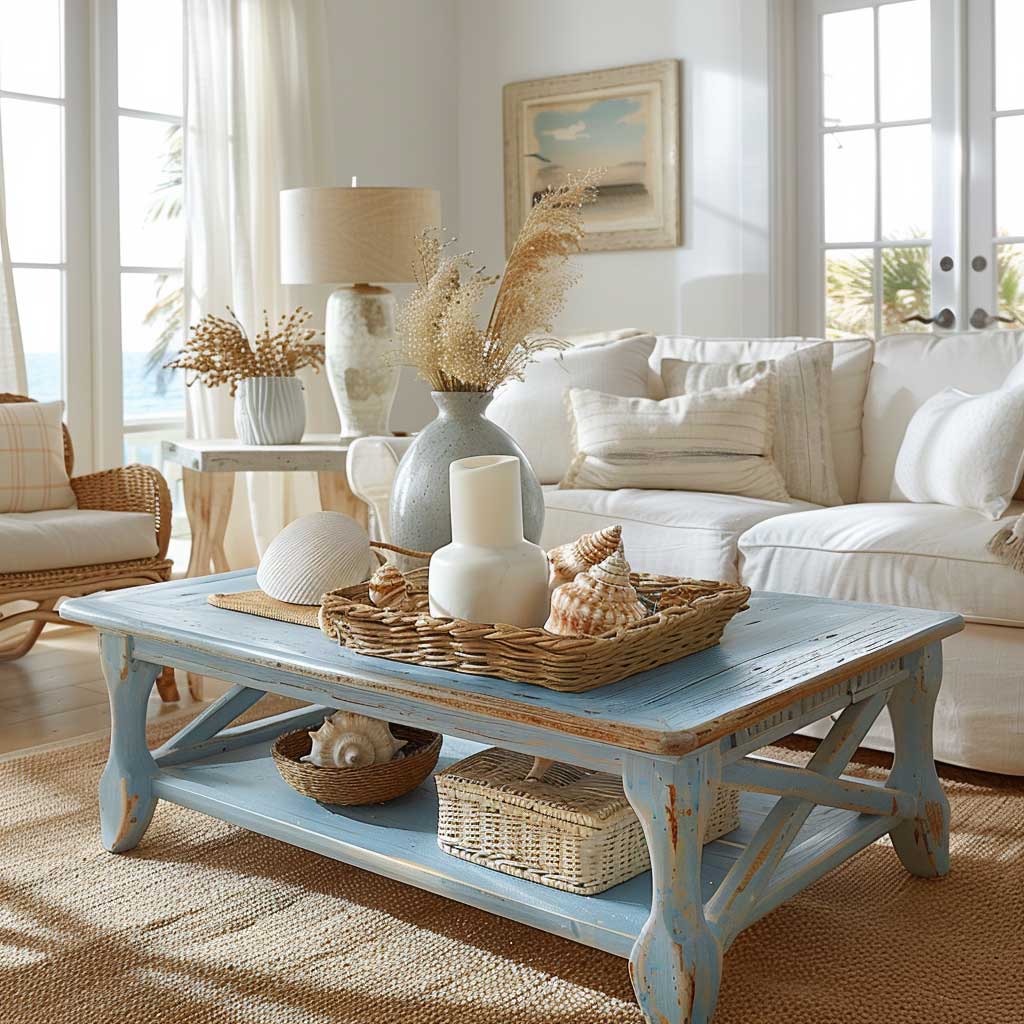
The color direction for a coastal coffee table should lean toward the lighter blue family — sky, powder, or duck-egg — rather than navy. Navy at floor level, surrounded by upholstered seating, tends to read as a dark hole in the room. A lighter coastal blue reflects some of the ambient light and maintains the relaxed register the style is trying to achieve. The trick is not to push the shade so pale it reads as gray — test the color in the actual room light before committing to a full coat.
What finishes the look is restraint on the tabletop. A coastal-styled coffee table does not need driftwood, shells, a rope coaster, and a nautical tray all at once. Pick one textural element — a natural fiber tray, a piece of washed driftwood, a low candle in a sand-colored vessel — and let the painted blue surface do the remaining work. The table is the statement; the accessories are the punctuation, not the sentence. According to Annie Sloan’s guidance, chalk-based paint surfaces should be re-waxed periodically to maintain protection — for a coffee table under daily use, that realistically means once a year.
Is a chalk-painted coffee table practical for families? Yes, if it’s properly sealed. Chalk paint itself is porous and will absorb moisture without a topcoat. With a good polyacrylic or wax seal, spills wipe clean and the color holds. The anti-answer here: a high-gloss oil-based paint on the same table will show every ring, chip, and fingerprint three times more clearly than a sealed matte finish will.
Distressed Blue Furniture on a Dining Table That Actually Gets Used
Distressed blue furniture — the kind where paint layers show through at the corners and the wood grain reads faintly beneath the color — works particularly well on dining tables because the wear becomes part of the story. A table is supposed to show use. A distressed blue finish just makes that visible from the start. The technique itself is straightforward: apply two coats of your chosen blue, let it dry fully, then use 80-grit sandpaper to sand back along the edges and in the spots a real table would naturally see wear — the corners, the apron, the legs where chairs drag against them.

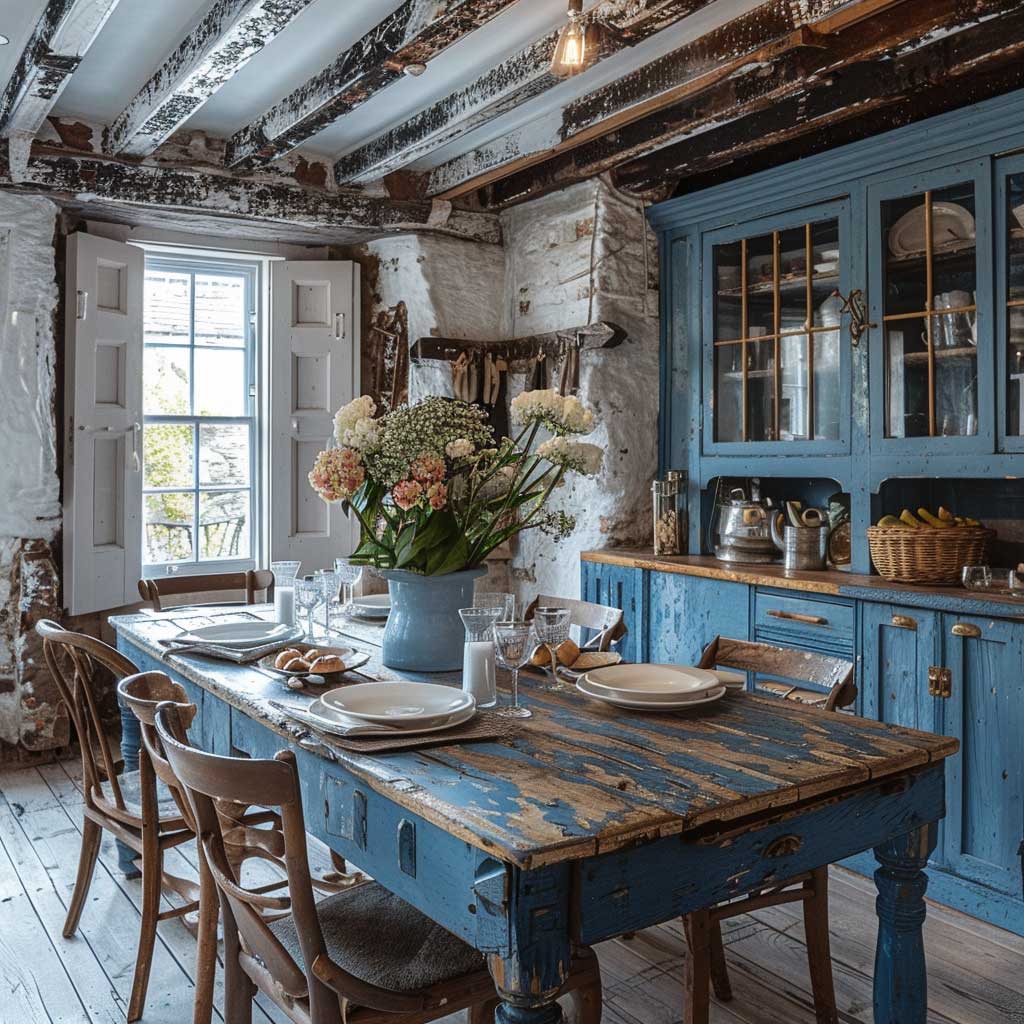

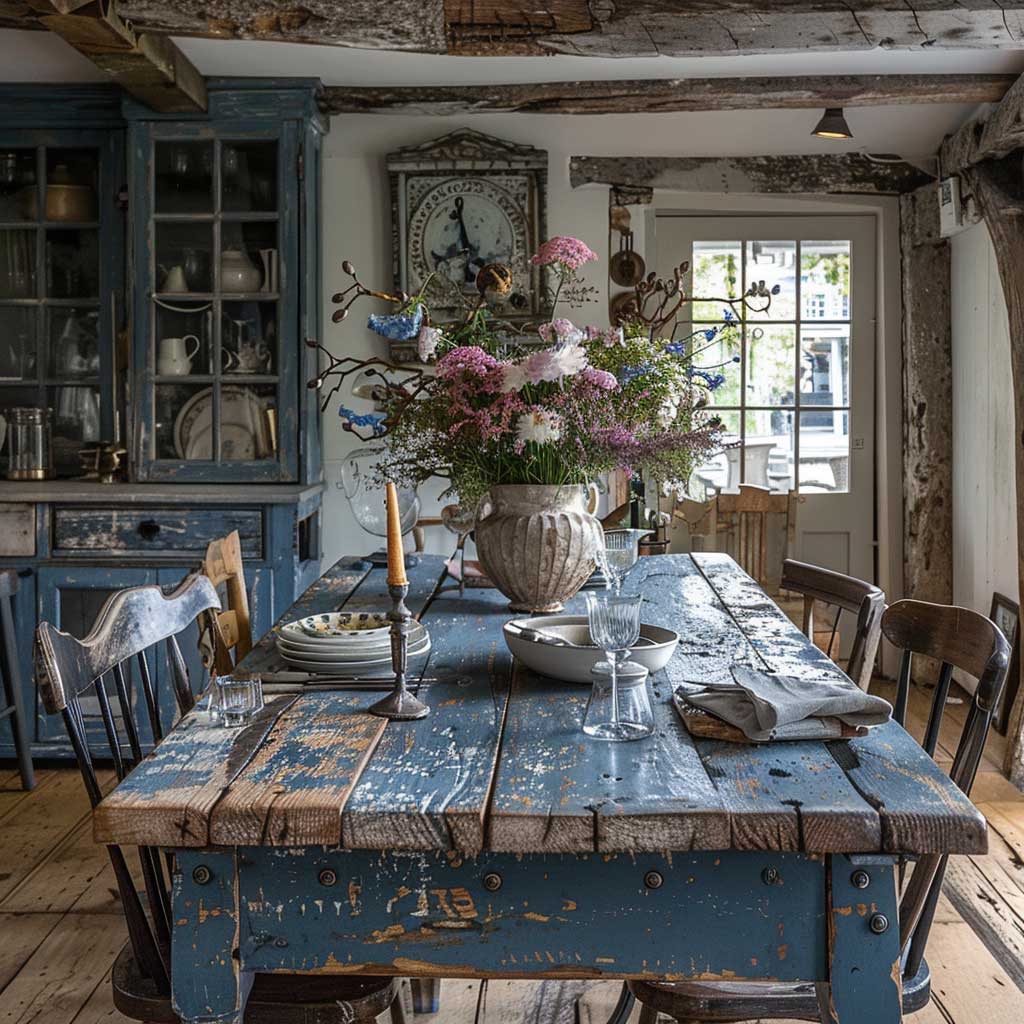
For a convincing distressed look on blue wooden furniture, the base color underneath matters. Paint the table in a warm off-white or raw wood first, let it dry, then apply the blue topcoat. When you sand back, you reveal the underlayer rather than bare wood — and the result reads as genuinely aged rather than newly sanded. The Vaseline resist method speeds this up: apply petroleum jelly in small amounts along any edge where you want the distress to appear, then paint over it. The wax prevents adhesion, so the blue lifts off cleanly in exactly those spots when wiped with a cloth.
For a dining table specifically, the topcoat is non-negotiable. Wax alone won’t protect a horizontal surface under plates, glasses, and daily cleaning. Chalk Paint Lacquer from Annie Sloan — a water-based polyacrylic — is the right call here, applied in two thin coats over the distressed finish. It preserves the matte look without the vulnerability. Wax is fine for the legs and apron; the tabletop needs harder protection. Pair the table with mismatched wooden chairs in natural or stained finishes rather than matching blue chairs — the contrast grounds the piece and prevents the dining room from feeling like a set piece rather than a room. For contrast with other approaches to painted furniture, bold black painted furniture ideas show how the same DIY methods read in a completely different color register.
How often does a distressed blue dining table need re-painting? A properly sealed table should hold its finish for several years even with daily use. The distressed areas are actually more forgiving than a pristine painted surface: new wear blends into the existing texture rather than standing out as damage. The one area that reliably needs attention sooner is the center of the tabletop — keep a small amount of leftover paint stored in a sealed jar for spot touch-ups.
| Style | Best Piece | Finish | Key Risk |
|---|---|---|---|
| Vintage / Cobalt Blue | Dresser, sideboard | Chalk matte + clear wax | Peeling over waxed existing surface |
| Modern / Navy | Bookshelf, cabinet | Matte or satin + polyacrylic | Too much staging on shelves kills the effect |
| Coastal / Light Blue | Coffee table, bench | Satin all-in-one | Too pale reads as gray under some lighting |
| Rustic / Distressed Blue | Dining table, farm bench | Chalk paint + lacquer topcoat | Skipping lacquer on the tabletop |
The full technical details and coverage data for Napoleonic Blue Chalk Paint on the Annie Sloan US site are worth bookmarking before you buy — the paint calculator there helps size your project against the 140 sq ft per litre coverage figure so you don’t order short.
The Bottom Line
Navy and blue painted furniture works because the color commits — pick your shade, match your topcoat to the piece’s actual use, and don’t over-style what surrounds it.
For vintage dressers and sideboards, cobalt or Napoleonic Blue in chalk paint with a clear wax seal is the reliable standard. For modern bookshelves and cabinets, a darker Oxford Navy with a polyacrylic topcoat handles daily load better. For dining tables, distressed blue with a lacquer topcoat over the surface survives real use.
The one mistake that cuts across all four furniture types: applying any blue — however carefully chosen — over an existing waxed or oiled surface without stripping it first. The paint looks fine for weeks, then starts lifting at every edge. Strip it, wipe it down, start clean.
Save this post before you buy your paint so the color guide and coverage numbers are where you can find them.