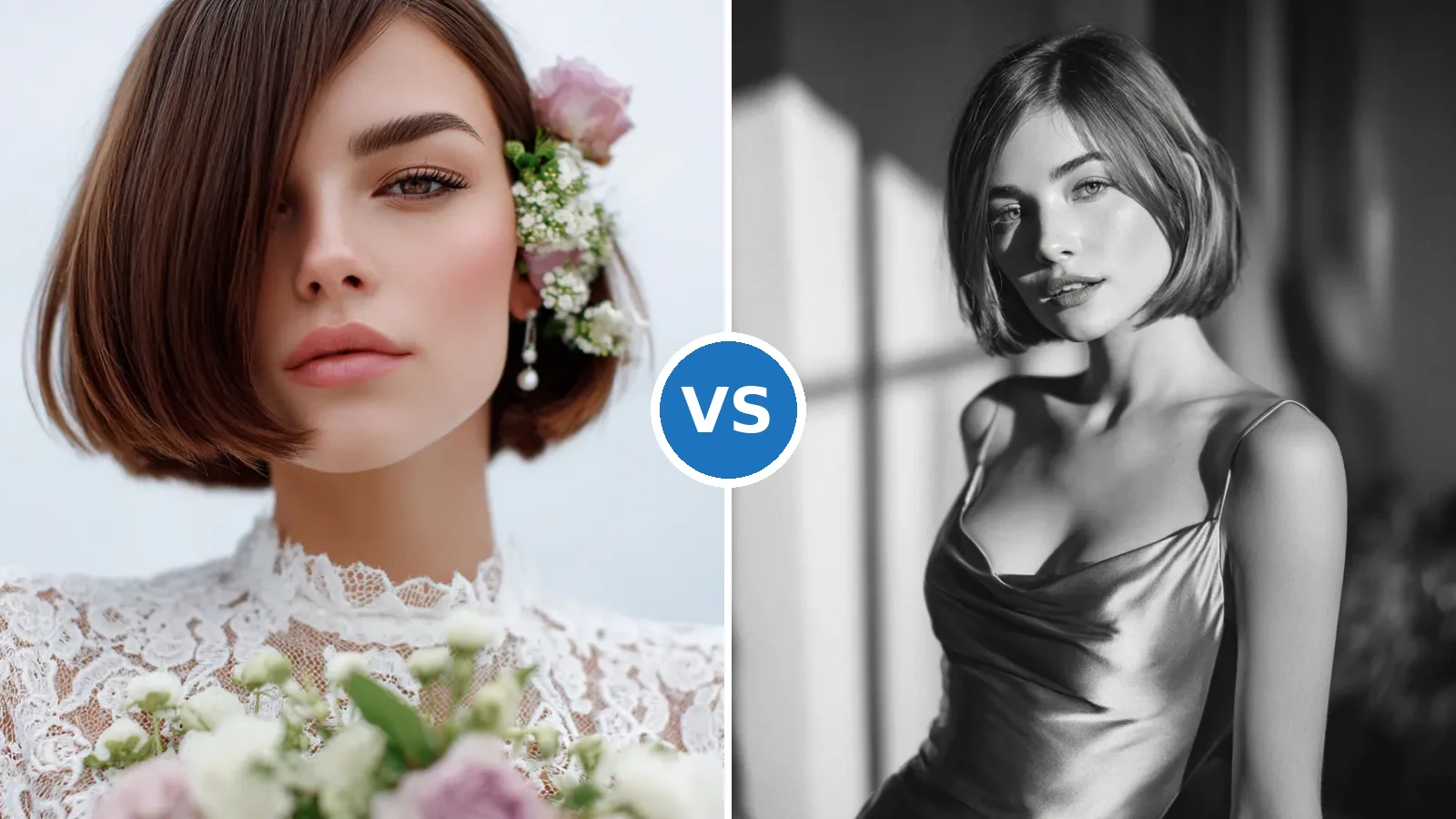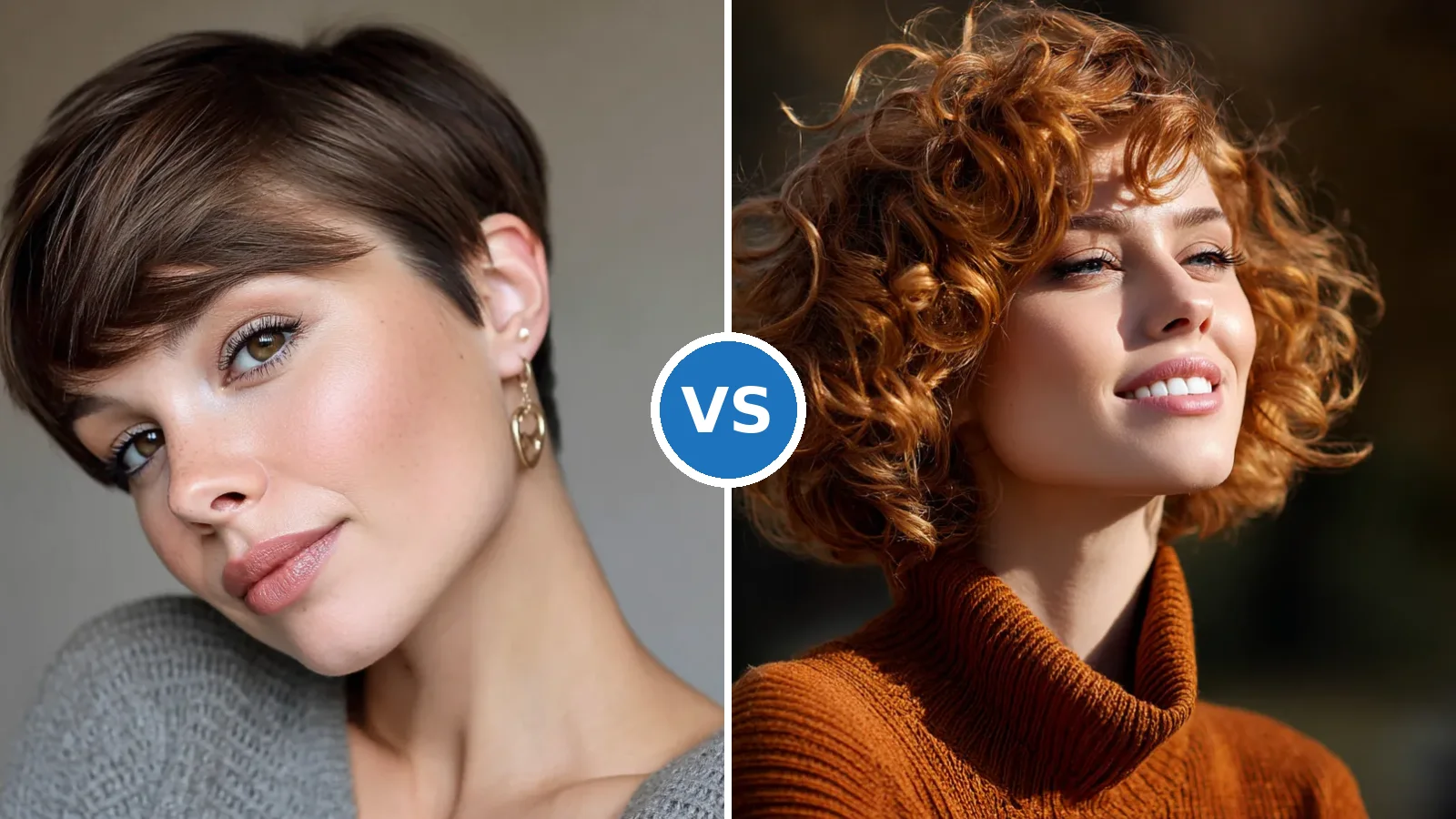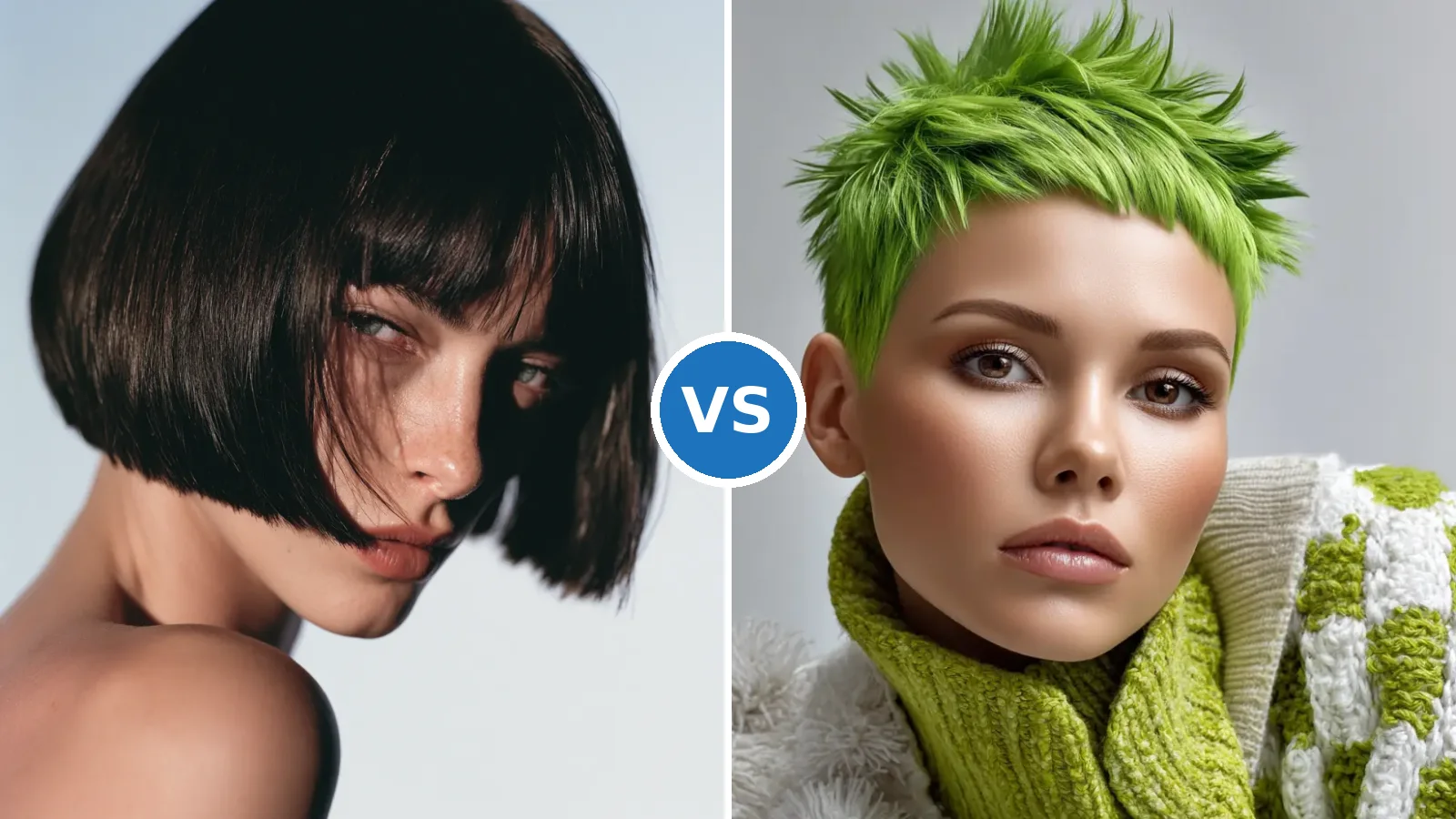
A blunt bob haircut with a middle part is one of those rare combinations where two geometric decisions create something far more striking than either does alone. The center divide splits the face into equal halves, amplifying the horizontal weight of the blunt cut’s baseline — the result reads as architectural, intentional, and quietly confident. I’ve seen this pairing work on fine hair, thick hair, naturally wavy hair, and everything in between, and it rarely disappoints.
What surprises most people is how much the middle part changes the character of the cut. You’d expect a blunt bob to feel rigid — it’s a precise shape, after all — but the center part softens it into something balanced and wearable. The symmetry frames the face without trying too hard. Whether you’re considering a shoulder-grazing medium blunt bob or a sharp jaw-length version, the middle part is the styling decision that does half the work for you.
These variations span tucked ends, natural waves, sleek straight finishes, and flicked tips — each one a different answer to the same question: what happens when clean geometry meets a deliberate center line. Pick the version that matches your texture, your maintenance tolerance, and the way you actually want to leave the house in the morning.
- A blunt bob haircut with a middle part works across all hair textures — straight, wavy, and coily.
- The center part amplifies the cut’s horizontal geometry, making the baseline appear stronger and more defined.
- Tucked ends add softness without sacrificing structure; flicked ends add lift without going full retro.
- Medium blunt bobs (chin to collarbone) need a trim every 4–6 weeks to keep the baseline sharp.
- Single-tone color — espresso, cool blonde, soft copper — amplifies the sculptural quality of the middle part.
- Side part blunt bobs create a completely different face-framing effect and suit those who want asymmetry over strict symmetry.





Blunt Bob Haircut with Tucked Ends and a Clean Center Part
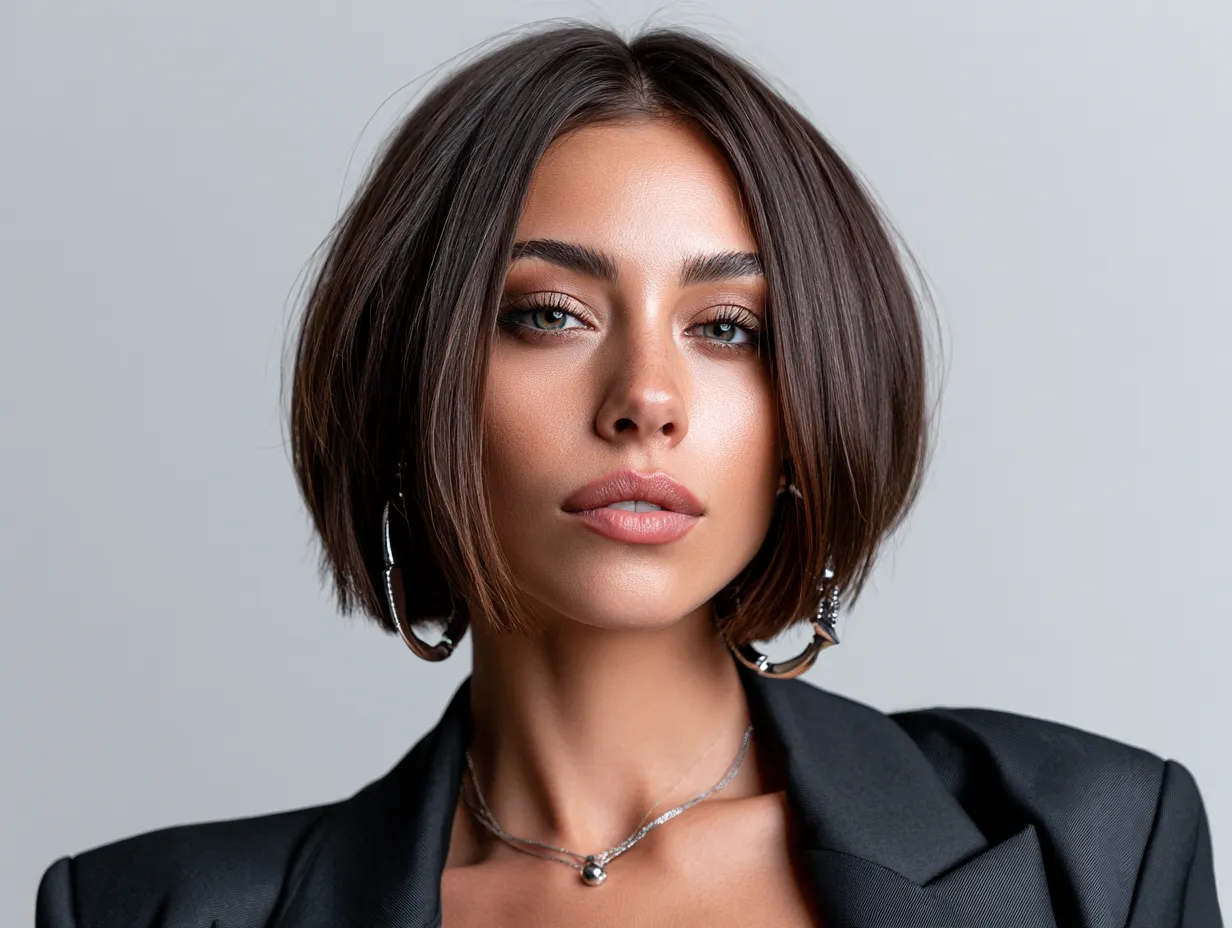
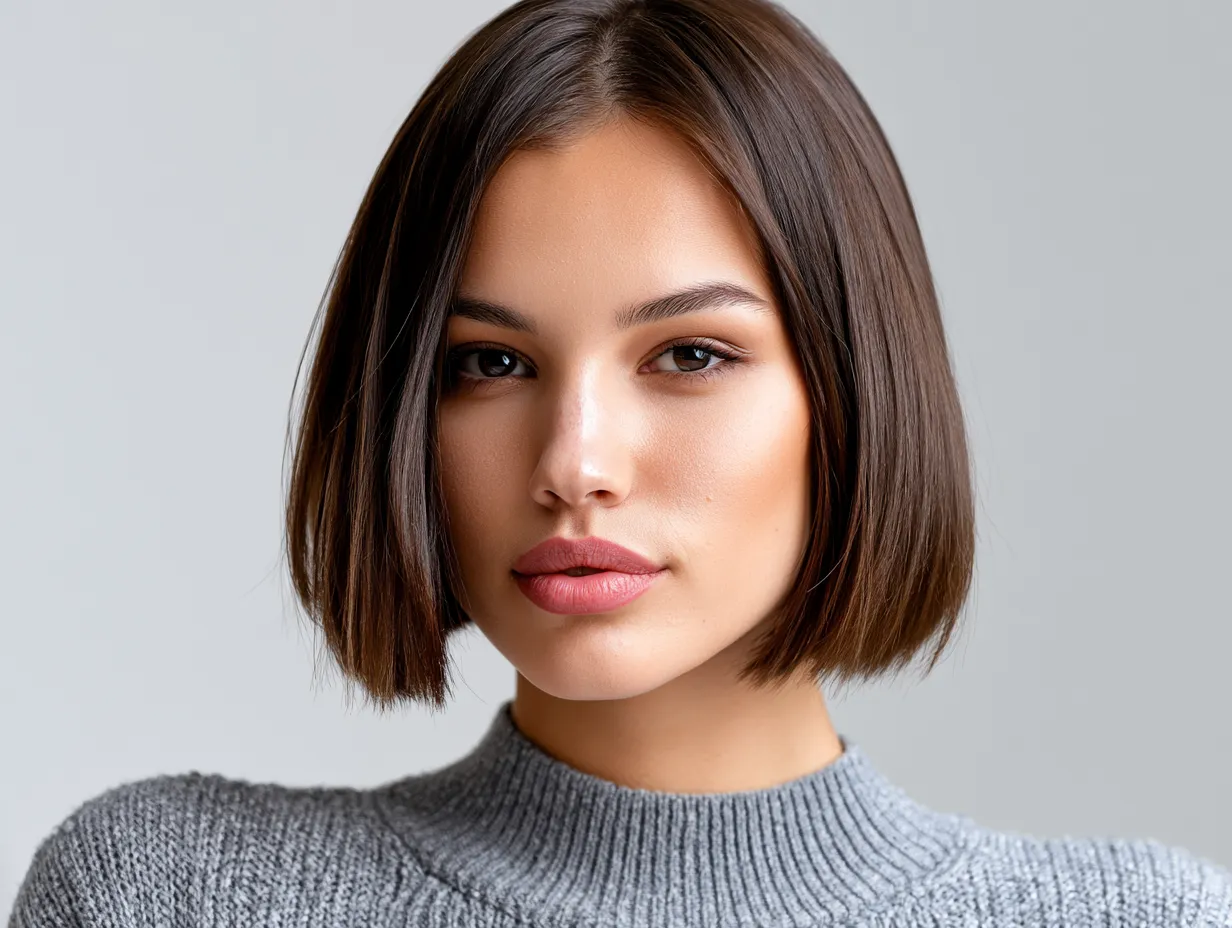
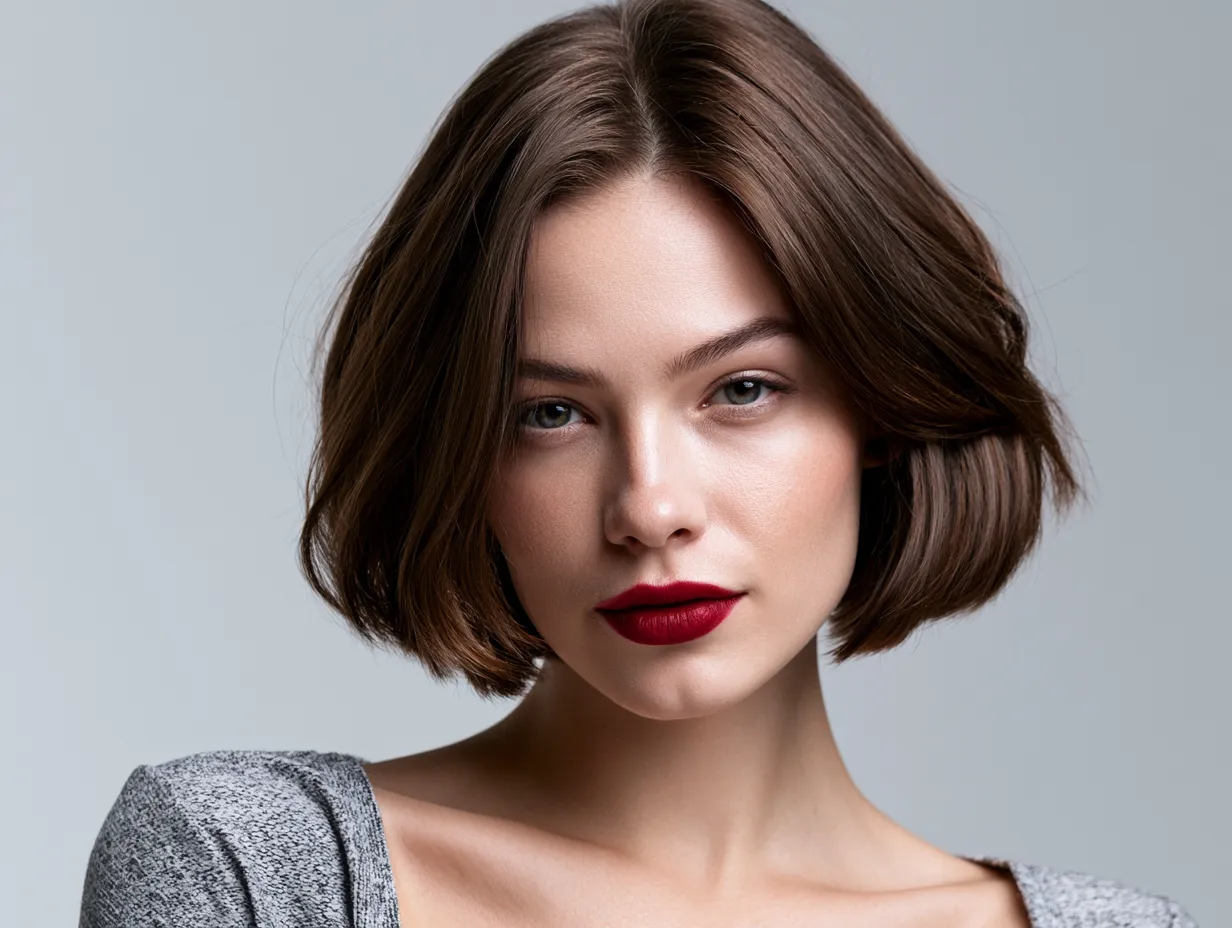
A blunt bob haircut with a center part and softly tucked ends is one of the most underrated precision looks in a short hairstyle lineup. The tuck draws the ends gently inward toward the jaw, creating a refined contour that sharpens the face framing without adding any layers or drama. Paired with a perfectly placed middle part, the result feels symmetrical in the way that a good suit feels tailored — you notice the fit before you notice the effort.



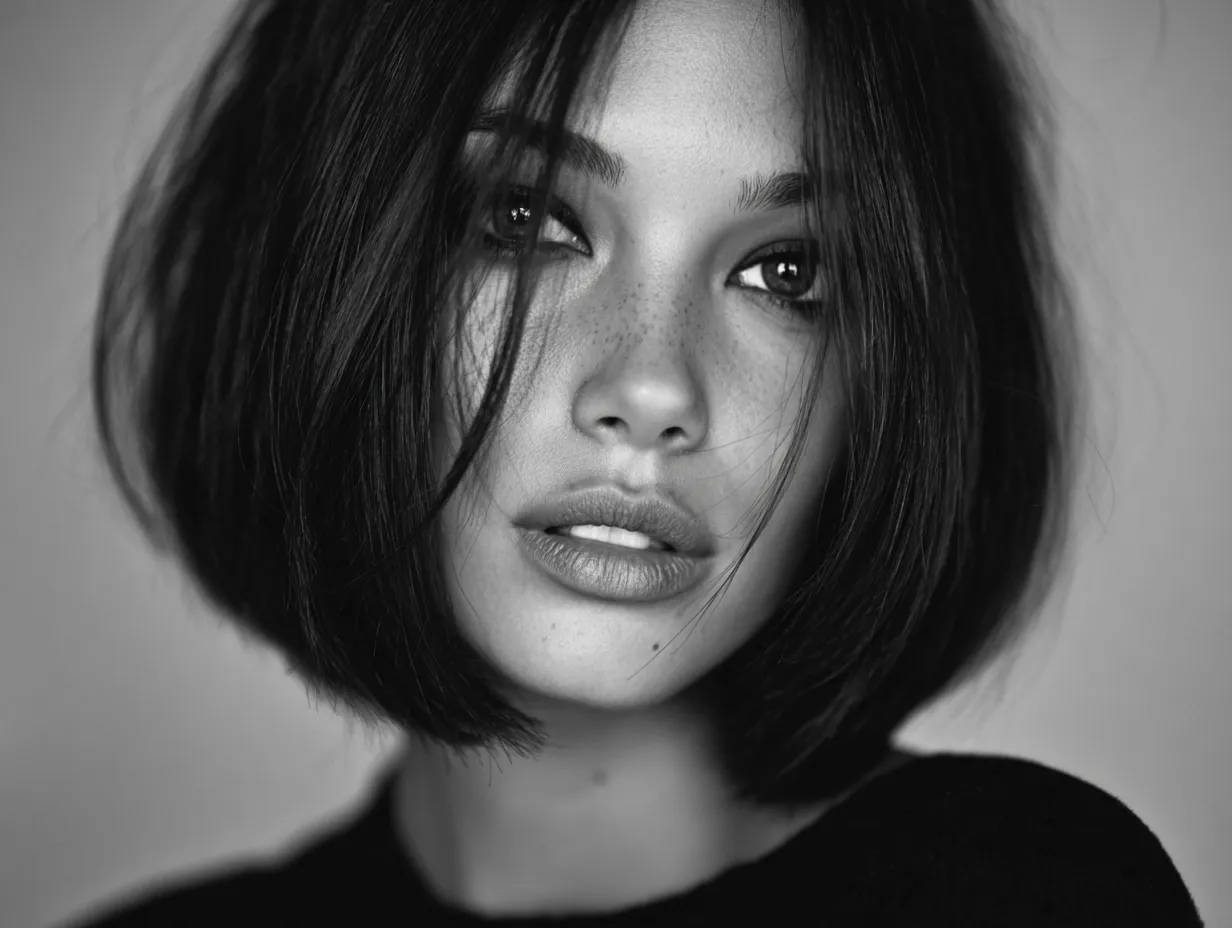

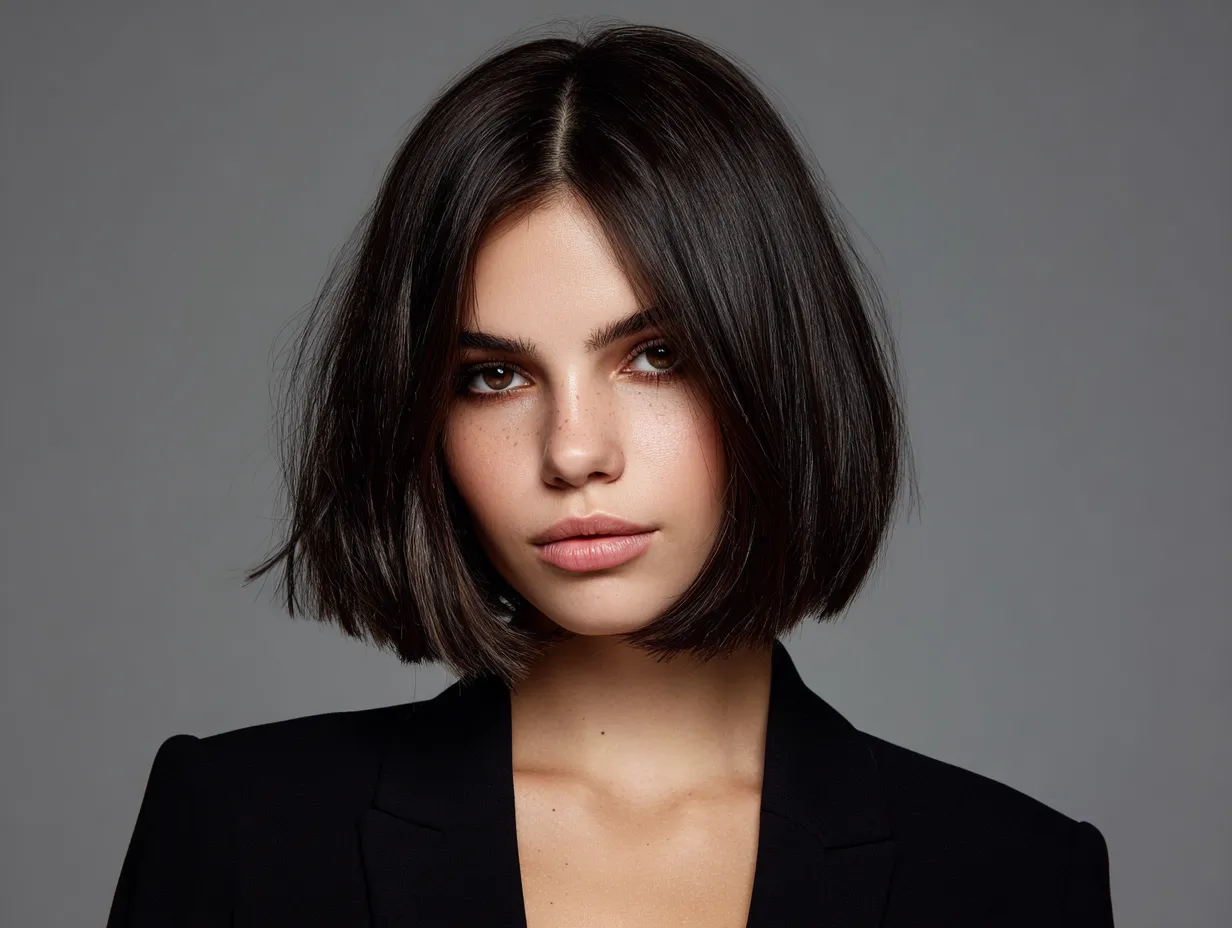




The mechanics of this look are straightforward. The blunt bob haircut already establishes a strong horizontal baseline; the middle part reinforces that geometry by introducing an equally deliberate vertical line. Tucking the ends — naturally or with a round brush on low heat — adds a gentle inward curve without disrupting the cut’s clean perimeter. Think of it the way a good tailor uses a seam: the tuck isn’t decoration, it’s structure. My go-to for maintaining this shape at home is the Dyson Airwrap’s round barrel on dry hair, which shapes the ends in under two minutes without the flat-iron rigidity.
Color choices matter more here than people expect. You’ll notice that single-tone shades — rich espresso around $85–$120 at a mid-range salon, cool platinum blonde, deep burgundy — sharpen the cut’s symmetry by preventing the eye from wandering. Balayage can work, but keep the transition subtle near the baseline; broken color near the ends dilutes the blunt effect. For a softer, more French-inspired finish, air-dry the hair and let the ends find their own inward curve — no heat required, and the result looks genuinely undone rather than styled-to-look-undone.
Does this tuck work on all lengths? I’ve found it most effective on blunt bobs sitting between the chin and collarbone — what most stylists call the medium blunt bob range. Any shorter and the tuck has no room to register; any longer and the weight of the hair overrides the curl. Regular trims every 4–6 weeks are non-negotiable here: the moment the baseline grows uneven, the tuck loses its contoured quality and just looks like hair that couldn’t decide what to do. That $60–$85 trim appointment is doing more work than most people realize.
This version is my first recommendation for anyone who wants a low-maintenance workday look that also photographs well. The symmetry holds whether you’re in a meeting or a mirror selfie. Pair it with minimal jewelry — a single gold ear cuff is enough — and let the geometry do the talking.
Blunt Bob Haircut with Natural Waves and a Precise Middle Part
A blunt bob haircut with natural waves and a center part is where organic texture meets sharp architecture — and the tension between those two things is exactly what makes it work. The waves introduce movement and personality; the blunt baseline and middle part keep the whole thing from reading as unstyled. You get a look that feels genuinely lived-in, not one that’s performing “effortless” from a script. I’ve styled my own mid-length blunt bob this way on every wash day for the past year, and it’s the version that gets the most comments.

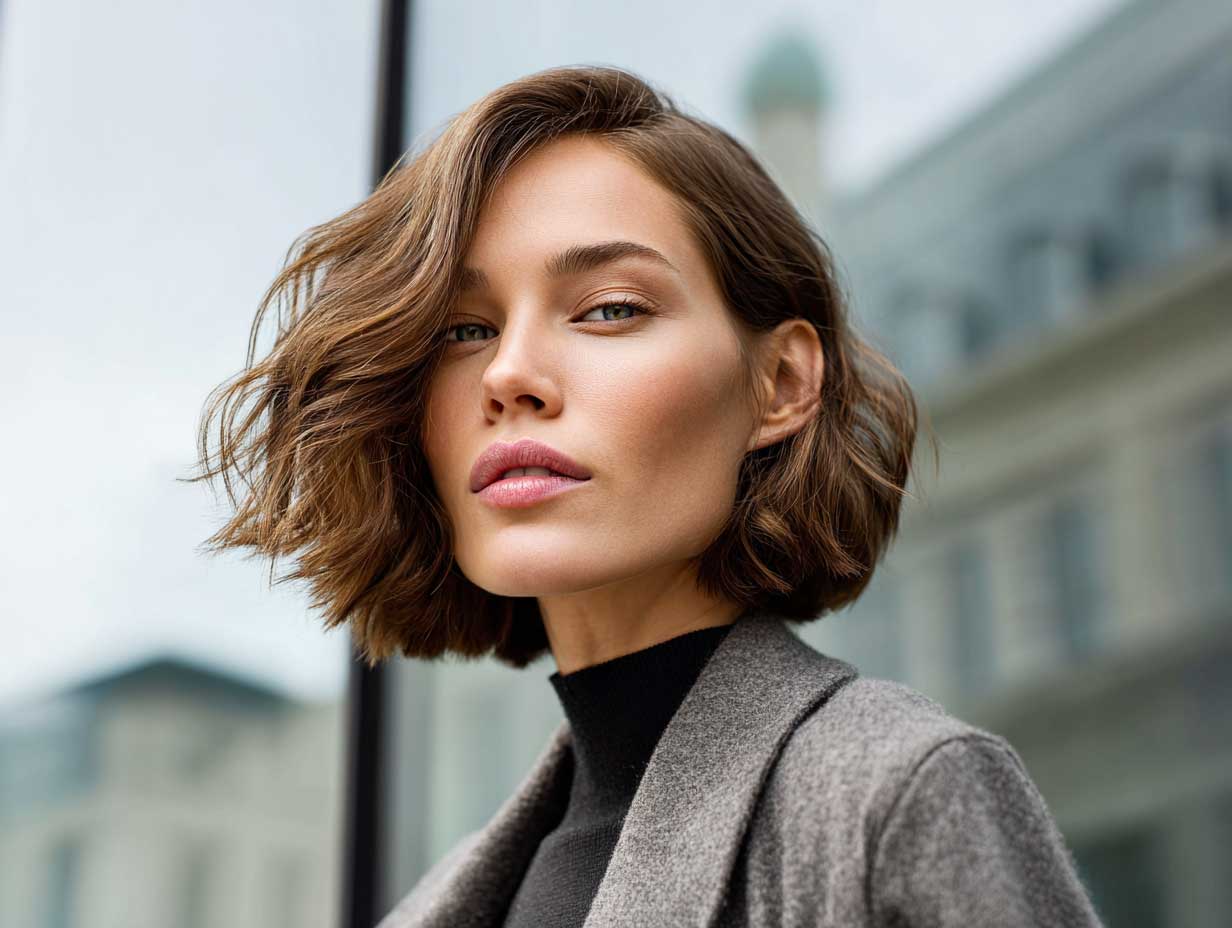


The center part opens the face symmetrically on both sides, which works especially well for round or heart-shaped features — the even split draws the eye vertically rather than across the widest point of the face. Contrast that with a side part, which creates asymmetry and works better for square jaw structures. For waves specifically, the middle part ensures the movement reads as intentional: both sides wave in matching arcs, which looks deliberate rather than accidental. I stole this trick from a session stylist who always used a fine-tooth tail comb to set the part on damp hair before any product, locking in the line before the waves formed.
Product selection for this look is narrower than most people think. A lightweight curl cream — Ouai Wave Spray at around $30, or Moroccanoil Curl Defining Cream at $34 — applied to damp hair and left to air-dry delivers the most natural result. Avoid heavy mousses, which tend to make the blunt baseline look stiff rather than clean. A diffuser on low heat can add volume if you need it, but the real secret is restraint: the less you touch the hair as it dries, the better the wave pattern sets. Finishing with a small amount of argan oil on the ends (not the roots) adds sheen without flattening the texture.
The blunt ends are what keep this version from veering into messy territory. Without that defined baseline, natural waves on a bob can look like a haircut that’s growing out rather than a style that’s been chosen. The clean line at the bottom is the anchor — it signals that the texture above it is intentional. Color blends show particularly well here; the way light catches moving waves creates natural-looking depth even from a single-process color. Soft balayage near the face, starting around $150–$200 at a quality colorist, makes the center part read even more pronounced by framing it with lighter tones.
For anyone considering a blunt cut bob for a specific face shape, the wavy middle-part version is one of the most adaptable options across face shapes — it doesn’t require symmetrical bone structure to look balanced. Trim every 5–6 weeks to keep the perimeter intact while the wave pattern naturally softens the overall silhouette between cuts.
Sleek Straight Blunt Bob with a Razor-Sharp Middle Part
A blunt bob haircut worn flat-straight with a razor-sharp center part is high-impact minimalism — no curl, no texture, no softening. This is the version that relies entirely on geometry to deliver its effect, and it delivers without hesitation. The horizontal line of the blunt cut and the vertical line of the center part form a right angle that reads as editorial even on a Tuesday. I own two flat irons — a GHD Platinum+ at $249 and a BaBylissPRO Nano Titanium at $109 — and for this look, both outperform anything cheaper by a significant margin.
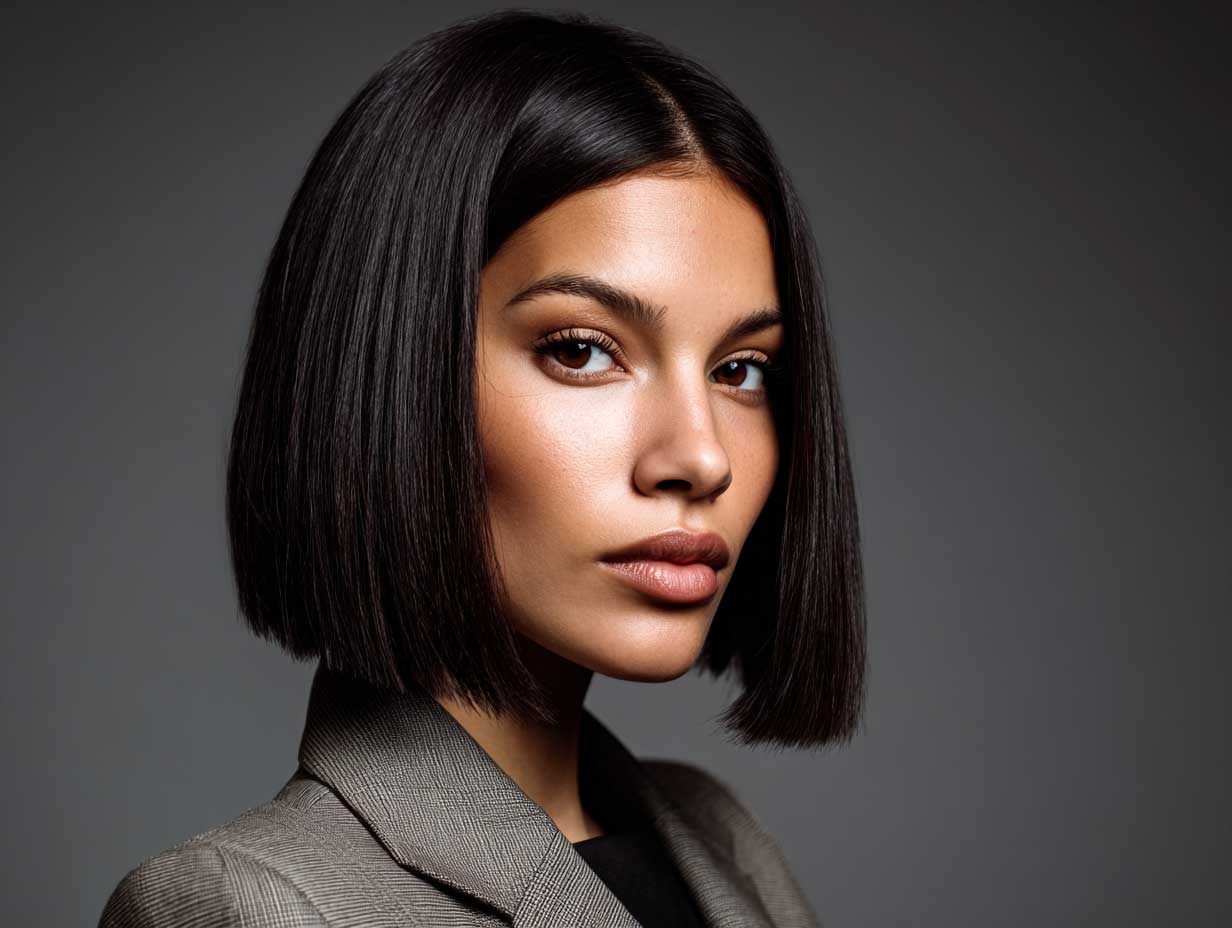
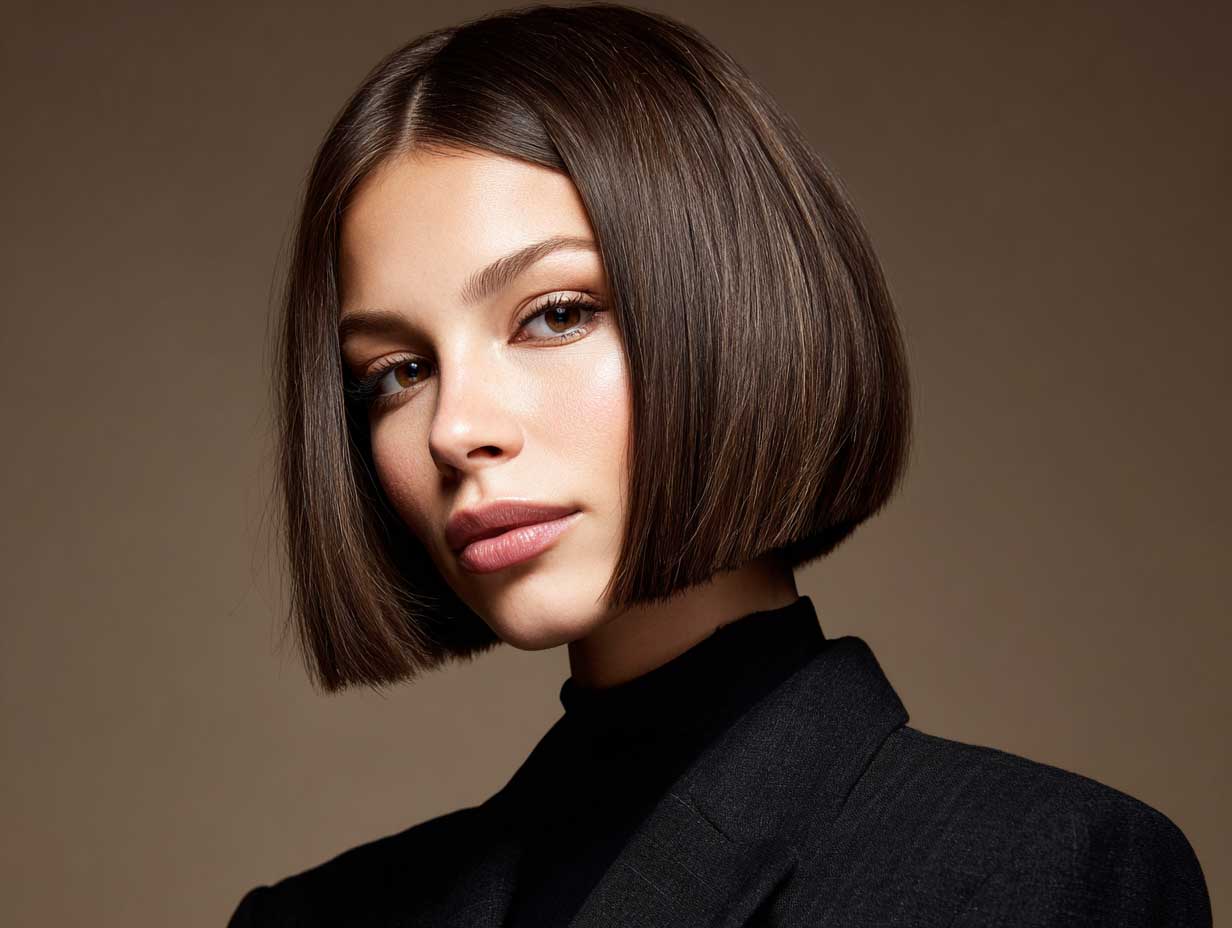
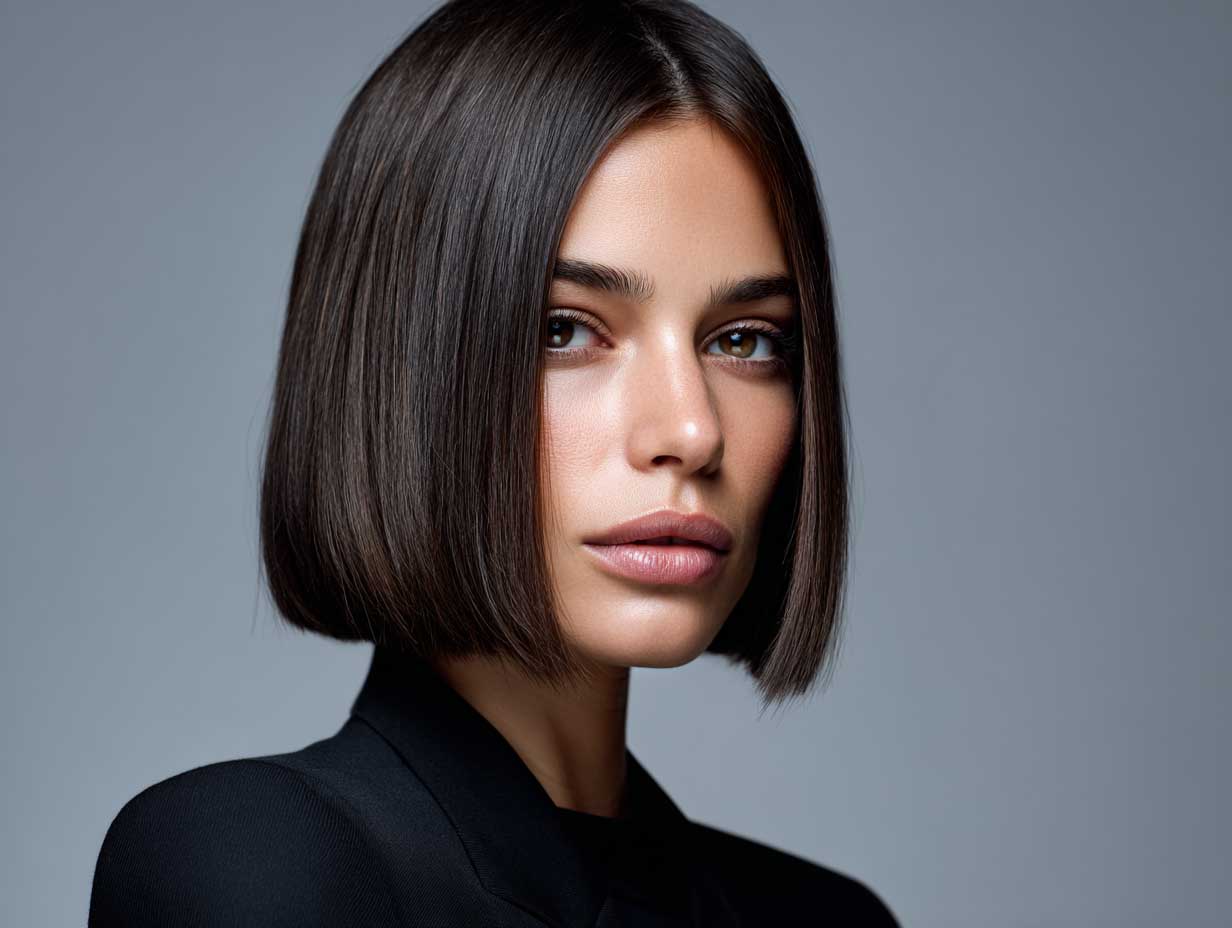

Styling this version correctly takes about 12 minutes total if your hair is cooperating. Start with a heat protectant — I use Redken Iron Shape 11 at $22 — and a smoothing serum like Kérastase Sérum Thérapiste applied through the mid-lengths before blow-drying. Flat iron in small sections, pulling from root to end in a single slow pass rather than multiple fast ones; multiple passes add heat without adding smoothness. The middle part should be set with a rat-tail comb before any heat touches the hair. Once set, the sleek version of this cut effectively becomes the outfit — it pairs most naturally with clean tailoring or monochrome looks, where the hair’s graphic quality can land properly.
What doesn’t work with this version: adding highlights or balayage that creates visible color breaks near the baseline. The sleek blunt bob with a center part draws attention to the ends more than any other variation, so uneven or faded color at the tips will be obvious. Solid shades — espresso, cool onyx, ashwood blonde — amplify the structure. Subtle lowlights in the same tonal family can add dimension without disrupting the graphic effect. Avoid any color that creates high contrast at the perimeter, because the clean line you’re relying on will disappear into the variation.
Is this version high-maintenance? More than the wavy option, yes. The sleek finish shows every millimeter of grow-out, which means the 4-week trim cycle is real and not optional. But the daily styling time is short once you have the technique down. You need two products, one tool, and a comb — that’s the entire kit. Tucking one side behind the ear is the one permissible styling variation; it shifts the profile subtly without breaking the symmetry of the middle part when viewed from the front.
Don’t attempt the sleek straight blunt bob without heat protection on fine or color-treated hair — the repeated flat-iron passes required to achieve the glassy finish will cause visible breakage along the baseline within weeks, and a damaged blunt cut loses its entire point. Also avoid applying finishing serum directly to the roots or the part line: it flattens the scalp area and makes the center part look greasy rather than polished. Apply only from the mid-shaft down, and use no more than two drops. Finally, skip the dry shampoo on the part line for this version — the powder residue shows on a sleek straight finish far more than it does on a textured style, and it reads as buildup, not volume.
For anyone curious about how the blunt bob haircut adapts to different natural textures, the sleek straight version sits at the opposite end of the texture spectrum — maximum control, maximum geometry. Pair it with a clean complexion, a bold lip, and nothing fussy around the neck, and it reads as completely finished without a single accessory.
Blunt Bob Haircut with Side Part — and Why It Flatters Differently
A blunt cut bob with a side part is the less-discussed sibling of the center part version, and it solves a specific problem the middle part creates: strict facial symmetry. Not every face is equally balanced, and a perfectly centered part will highlight asymmetries — a slightly uneven brow, a jawline that sits differently on each side — in ways a side part quietly absorbs. My go-to recommendation for clients with square jaw structures or strong cheekbones is always the side part blunt cut bob, because the diagonal line softens the angularity that the blunt baseline sharpens.
The mechanics differ from the center part in one important way: the side part creates unequal curtains of hair, which means one side has more visual weight than the other. This asymmetry is what does the face-framing work. The heavier side falls toward the fuller cheek or the stronger jaw angle, softening it. What doesn’t work is a deep side part taken too far back — past the arch of the brow, the part reads as severe rather than intentional, and it conflicts with the horizontal geometry of the blunt cut’s baseline. Keep the side part within about an inch and a half of center for the right proportion.
For natural hair specifically, a blunt cut bob with a side part on coily or 4C-textured hair creates a silhouette with serious presence — the elevated rounded edge of the cut combined with the side-parted volume reads as sculptural. This is one of those combinations where the side part genuinely outperforms the center part because the natural volume distribution is already asymmetric, and working with it rather than against it produces a more consistent shape throughout the day. Trim dry, not wet, to account for shrinkage — most quality natural hair stylists charge $65–$95 for a dry blunt cut trim, and it’s worth every cent.
Styling the side part version for a shoulder-length blunt cut specifically: set the part while hair is damp using a tail comb and a clip to hold the heavier section in place as it dries. This prevents the part from drifting as volume builds. Does the side part work for everyday use the way the center part does? Yes, but it requires a slightly sharper product choice — anything too lightweight and the part migrates by noon. A medium-hold cream like Aveda Be Curly Style-Prep at $28 or a pomade-cream hybrid gives the part enough memory to last without looking crunchy.
Blunt Bob Haircut with Flicked Tips and a Balanced Center Divide
A blunt bob haircut with slightly flicked-out ends and a middle part takes the familiar geometry and adds exactly one degree of rebellion — a whisper of outward lift at the tips that changes the whole energy without changing the cut. The flick is the difference between a hairstyle that stays still and one that looks like it’s about to do something. Framed by a center part, the movement appears on both sides equally, which keeps the whole thing from tipping into vintage territory and landing firmly in contemporary.
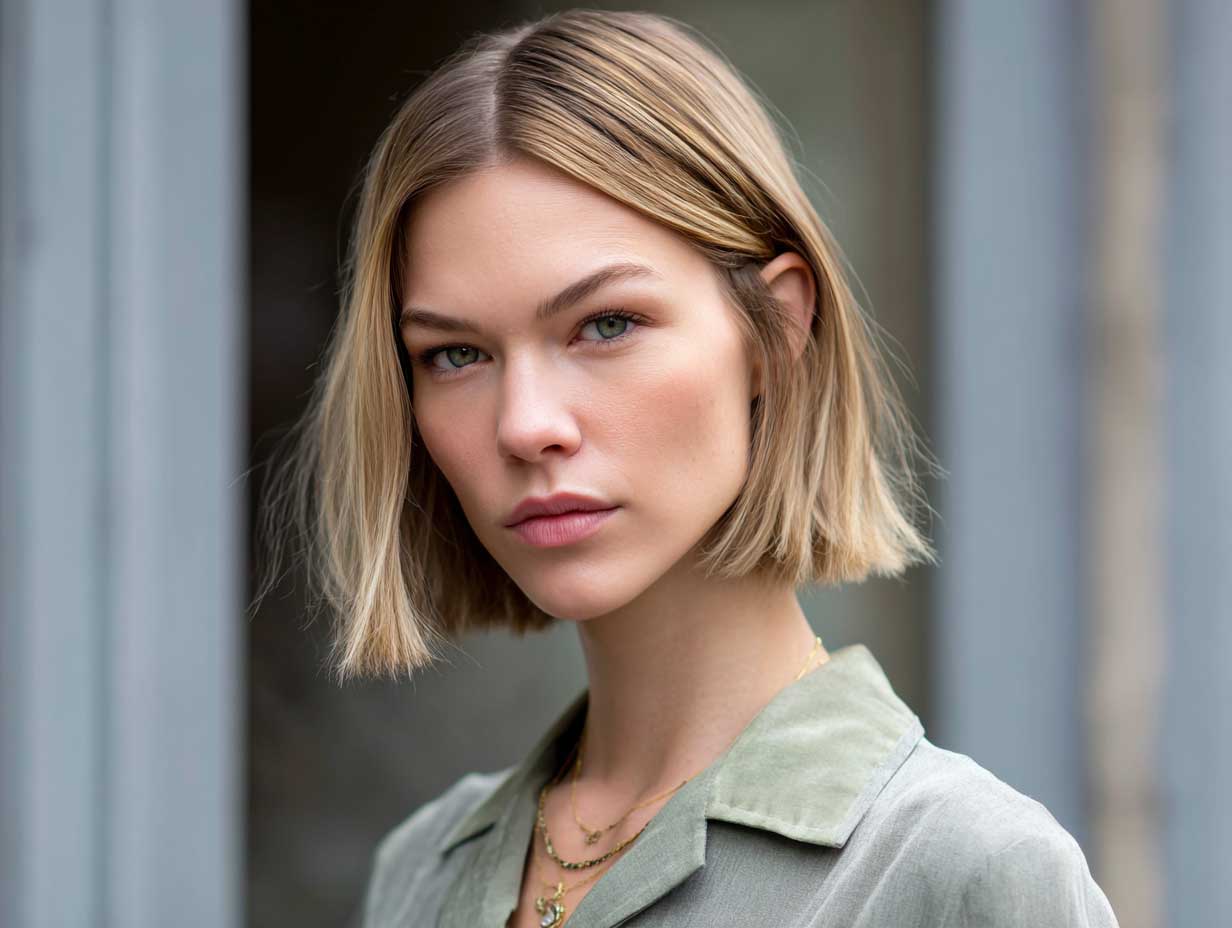


Creating the flick is a flat-iron technique, not a curling iron one — and that distinction matters. A flat iron curled outward at the last two inches of each section produces a cleaner, tighter flick that stays closer to the blunt baseline. A round brush on a blow-dryer creates a softer, more diffused lift that reads as more casual. I use a GHD Gold flat iron — around $189 — flicked outward with a quick wrist rotation rather than a full wrap, which gives just enough curve to register without making it look retro. The key word is subtle: I’ve seen this go wrong when stylists add too much outward curl and the whole thing tips into a 1960s shag-adjacent territory that feels costumed rather than current.
Does this version work for a medium blunt bob specifically? The flick is most effective at shoulder-grazing or collarbone lengths where the ends have enough weight to hold the shape throughout the day. Jaw-length cuts can do it, but the flick needs a holding product — a light thermal spray like Kenra Platinum Silkening Mist at $23 before styling, and a small amount of light-hold wax like Bumble and bumble Sumotech at $31 on the ends after — to avoid the tips dropping flat within an hour. Define the center part with a tail comb before any heat styling; once the flick is set, the part shouldn’t need to be touched again.
Color reads differently with flicked ends than with any other version of this cut. Light catches the tips as they lift away from the neck, which means any lightness or highlight near the baseline becomes more visible. This is actually an advantage: a subtle face-frame highlight starting around $80–$120 at a mid-tier salon makes the center part and the outward movement read as more dimensional without requiring a full color service. Avoid color that creates a harsh contrast at the very tips — the flick draws the eye there, and anything too sharp will look like an unintended two-tone rather than a crafted gradient.
Trim every six to eight weeks for this version. An uneven baseline makes the flick asymmetric, and once that happens, the balanced center-part effect collapses. A single millimeter of difference between the two sides is visible on a blunt cut in a way it simply isn’t on a layered cut — which is the trade-off you accept when you choose the precision of this style over something more forgiving. It’s clean, it has personality, and it keeps the middle part from feeling static. Worth the maintenance if the effect is what you’re after. For more on choosing a blunt cut bob that complements your face shape, the flicked-end version works particularly well on heart and oval face types.
Final Word
The Middle Part Isn’t a Trend — It’s a Decision the Cut Has Been Waiting For
A blunt bob haircut with a center part outperforms the same cut with a side part in one specific way: it forces the face framing to be equal on both sides, which makes the horizontal baseline of the cut read as more intentional. For most face shapes, that symmetry is flattering. For square jawlines and strong bone structures, a side part blunt bob distributes weight more strategically.
Medium blunt bobs — chin to collarbone — give you the most styling range: tucked ends, natural waves, sleek straight, or flicked tips all work at this length. Shorter bobs narrow your options; longer ones dilute the blunt effect. The $60–$85 trim every 4–6 weeks is the real cost of this cut, not the initial appointment.
Save this post before your next salon visit — it’s the reference your stylist will actually be glad you brought in.
Related Topics
FAQ
What is a blunt bob haircut with middle part?
How often should I trim a blunt cut bob to keep the middle part looking sharp?
Does a blunt bob middle part work for medium length hair?
What is the difference between a center part bob and a side part blunt cut bob?
What products work best for a middle part blunt bob with natural waves?
Can a blunt bob with middle part work for natural or coily hair?
Complete guide
Every Bob Haircut Worth Knowing About Right Now
Blunt, layered, choppy, angled, pixie bob — every cut by length, face shape and texture in one place