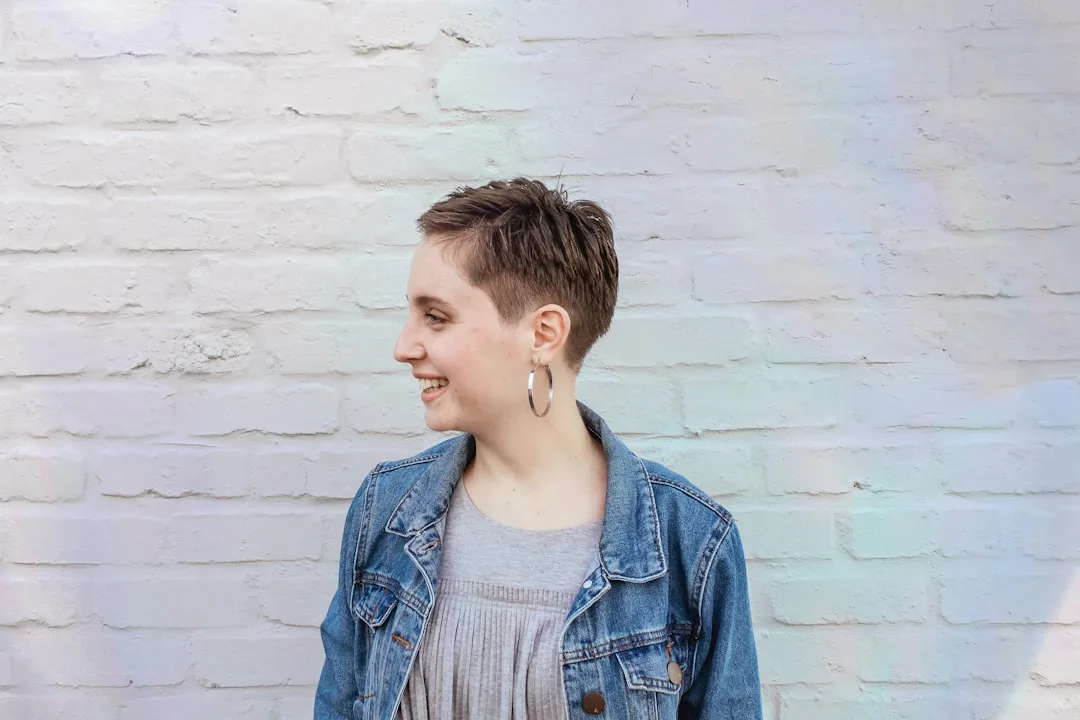
Shag haircuts for women with a diamond face solve a specific structural problem — you need volume at the forehead and jaw without piling texture onto already-prominent cheekbones. I’ve sat in enough salon chairs to know that most stylists default to “layers” without understanding where those layers need to land. For a diamond face shape, the answer is always below the cheekbone line, never at it.
Diamond faces carry their widest point at the cheekbones, with a narrower forehead and a pointed chin sitting on either side. That geometry is genuinely striking — think Jennifer Lopez, Halle Berry — but it also means that the wrong cut makes you look like you’re all cheekbone and nothing else. Shag haircuts for women correct this by flooding the lower half of the face with movement and building soft weight at the crown.
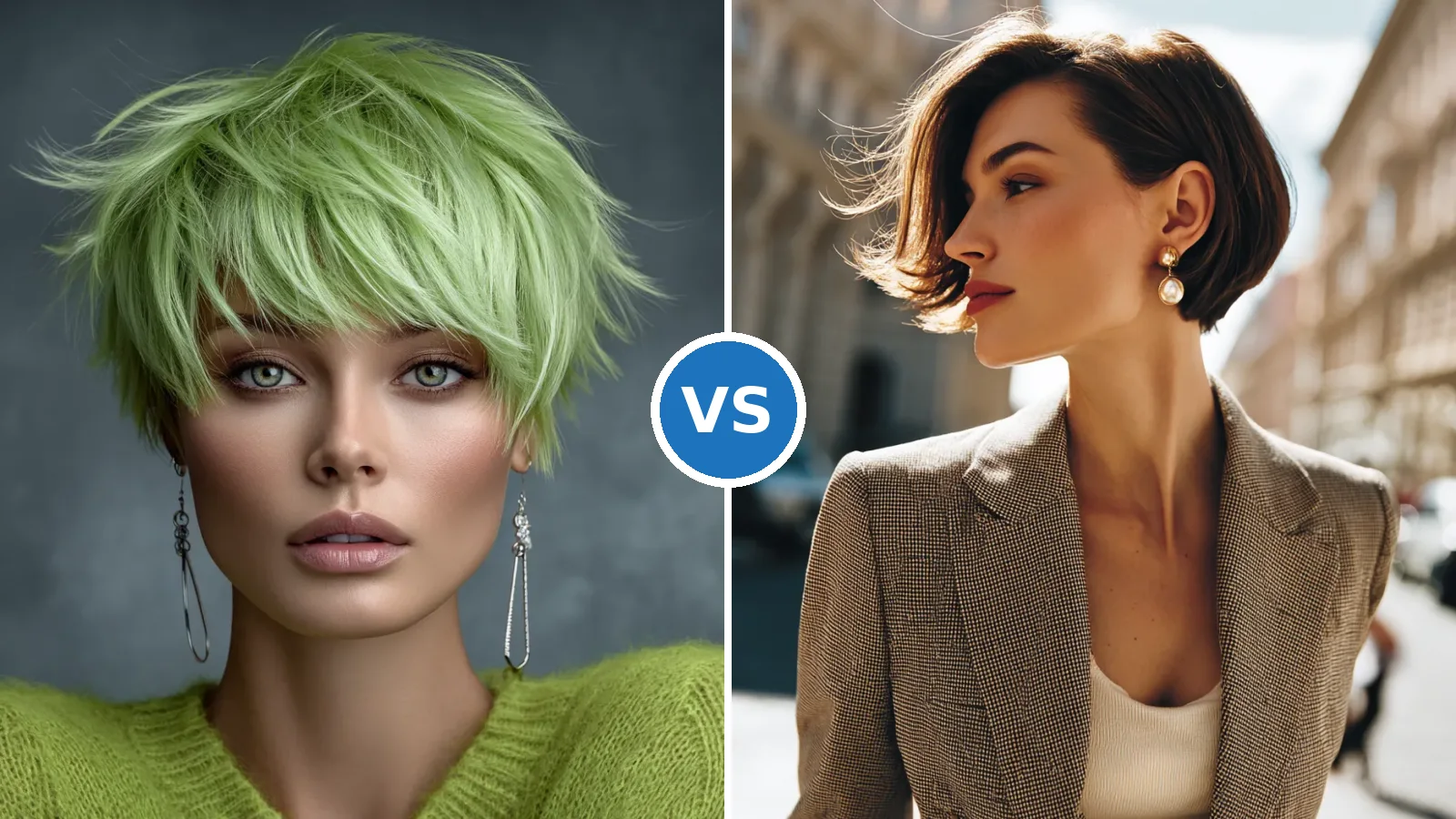
You’ll notice in the looks below that color plays a real role in how each cut reads on camera. Cobalt blue pulls the eye along the length of the style, neon yellow reads as playful and wide, and pastel green softens everything. But color is secondary — the layer architecture is what actually flatters the face. Get the placement wrong and no color in the world saves it.
- Razored shag layers work best when they fall below the cheekbones on a diamond face — not at them.
- Chin-length shags add width at the jaw and balance a pointed chin — the most structurally corrective length for this face shape.
- Long messy shags (collarbone and beyond) create an airy, feathered silhouette that prevents the cheekbones from reading as the face’s widest point.
- Bold color choices here — cobalt blue, neon yellow, pastel green — are editorial styling decisions, not requirements. The cuts work equally well in natural tones.
- Avoid blunt, one-length cuts at cheekbone height. They frame the widest part of the face and make the forehead and chin look even narrower.
Cobalt Blue Razored Shoulder-Length Shag Haircuts for Women with a Diamond Face
Shag haircuts for women built with a razor — not scissors — change the weight distribution of the entire cut. I switched to requesting razor work about three years ago and the difference on my fine hair was immediate. The blade shreds the ends instead of blunting them, which means each layer tapers to a wispy point rather than landing as a thick shelf. On a diamond face, that matters because thick shelving at cheekbone height is exactly the mistake you’re trying to avoid. Joico sells a great texturizing spray called Body Shake ($20) that keeps razored layers separated without going crunchy.


This cut sits just below the shoulder — the layer sections begin at the crown and cascade down in staggered lengths, which means the hair at cheekbone level stays flat and soft, not rounded. Ask your stylist specifically for “point cutting through the face-framing pieces” — it’s not the same request as a standard shag. The cobalt color in this version deepens the visual weight toward the ends, so your eye reads down toward the jaw rather than across the face at its widest point.
Styling takes about four minutes with a diffuser and a product like R+Co Dallas Thickening Spray ($30). Flip your head upside down, spray roots, then diffuse on low heat. Scrunch the lengths as you go. The goal is volume at the crown, piecey separation mid-length, and wispy ends. Avoid round-brushing this cut straight — you’ll eliminate the texture that makes the whole thing work. Women with natural curl can skip the diffuser entirely and just air-dry with a small amount of curl cream.
Does cobalt blue suit every skin tone? Not automatically. Cool-toned and olive complexions carry it with zero effort; warm golden undertones clash unless you balance it with a warmer lowlight underneath. If cobalt feels too aggressive for you, the same razored cut in a deep teal or navy lands almost as dramatically without the contrast issue. The structure of the cut is identical — just ask your colorist about tone before you commit.
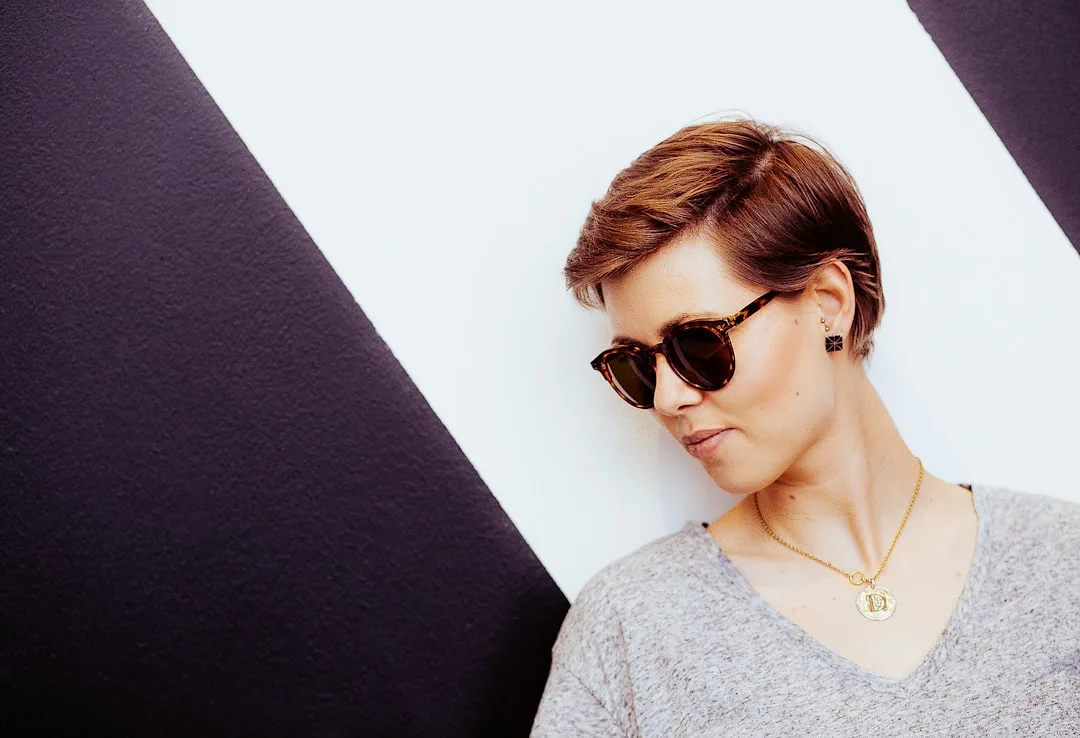
Neon Yellow Chin-Length Shag Haircuts for Women with a Diamond Face
Chin-length shag haircuts for women are the single most structurally useful cut for a diamond face, and I say that having tried nearly every length on my own narrow-chinned face over the years. When the ends land at or just below the chin, they create actual visual width at the jaw — the narrowest part of a diamond face — which is exactly what you need to bring the face into balance. The pointed chin reads as less extreme when there’s hair moving outward at that height. The neon yellow in this version amplifies that effect because brightness reads wide, not tall.




The choppy layers in this cut are not accidental — they prevent the hair from clinging to the face. A smooth, straight chin-length cut would sit flat against the cheeks, which makes the cheekbones look even wider. The shag version deliberately moves the hair outward and slightly away from the face at the ends. That outward flick is the mechanical fix. Notice that the layers through the crown are stacked shorter to build lift at the top, which adds the forehead width a diamond face needs. I’d describe it like a bird’s wings in flight — narrow through the middle, open at the edges.
Mousse is your product here, not paste. Something like L’Oréal Paris EverPure Volume Mousse ($8) applied to damp hair, then scrunched and air-dried, gives the bounce without weight. If you have straight hair, twist small sections as they dry and let them fall open — you get a soft wave without heat. Whatever you do, don’t blow-dry this length straight without immediately re-adding texture, or the whole point of the shag disappears.
- Volume at the cheekbones. Blowdrying the middle section of a shag outward at cheekbone height is the most common mistake. It widens the face right where it’s already widest.
- One-length blunt cuts at chin level. A blunt bob terminating at the chin without layers flattens against the face and frames the cheekbones as the widest point.
- Heavy product through the lengths. Pomade or paste on a shag weighs the layers down and eliminates the movement that does the actual structural work.
- Skipping root lift. Without volume at the crown, a diamond face reads bottom-heavy. Always lift the roots — with a diffuser, dry shampoo, or a teasing comb at the scalp.
For a deeper look at how shag cuts interact with other face shapes — especially if you’re helping a friend pick a style — this piece on shag haircuts for square faces breaks down the layer placement logic for strong jawlines, which is a useful contrast to the diamond face approach.
Pastel Green Long Messy Shag Haircuts for Women with a Diamond Face
Long messy shag haircuts for women take the diamond face balance problem and solve it at a different length. Instead of adding width at the jaw through cut length, the feathered layers create so much vertical movement that the cheekbones stop being the visual anchor of the face. Think of it like a waterfall: your eye follows the fall of the hair downward rather than stopping at the widest point. I wore a version of this cut for two years and got more compliments on my “bone structure” during that time than at any other length — because the cut was doing the framing work quietly, without calling attention to itself.


The layering in this version begins at the collarbone and runs all the way to the ends. That starting point matters — if feathering starts too high (above the collarbone), the hair thins at cheekbone height and makes the face look wider. Ask for “collarbone-entry layers” specifically. The texture in the finished look reads almost cloud-like — individual pieces catch air and light differently, creating dimension that a single-length style simply cannot replicate. Pastel green fades fast in this context, so budget for a toning gloss ($35-$60 at most salons) every six to eight weeks.
What product actually gives the messy result without feeling sticky? My go-to is IGK Beach Club Texture Spray ($29) on damp hair, followed by scrunching and air-drying with zero manipulation after that. You can add a light pass with a curling wand afterward on the mid-lengths only — skipping the roots and ends — for a beachier finish. Sea salt spray is the popular choice but it’s genuinely drying over time; the IGK version has conditioning agents that keep the hair from going straw-like with daily use.
If you’re considering a bob-length option on a diamond face shape, there’s a completely different layer architecture that applies — lighter, more face-framing construction. This piece on short layered bob haircuts for diamond faces is worth reading back to back with this one, because the two cuts solve the same structural problem from opposite length directions. Celebrity stylist Hayley Heckmann (who’s worked with Sofia Richie Grainge) puts it plainly: layers that start below the cheekbones with volume at the crown create lift and softness without making the cheekbones look too wide — which is exactly the logic that runs through every version of the shag cut on this page.
The verdict
Shag haircuts for a diamond face are architecture, not just texture.
The layer entry point is everything. Chin-length adds jaw width, shoulder-length balances cheekbones, and long feathered layers create downward movement that removes the face’s widest point from focus entirely.
Razor work outperforms scissors on fine-to-medium hair. It creates tapered ends that move independently — the opposite of a blunt shelf sitting at cheekbone height.
Save this post — the next time your stylist defaults to “just some layers,” you’ll know exactly which layers to ask for.