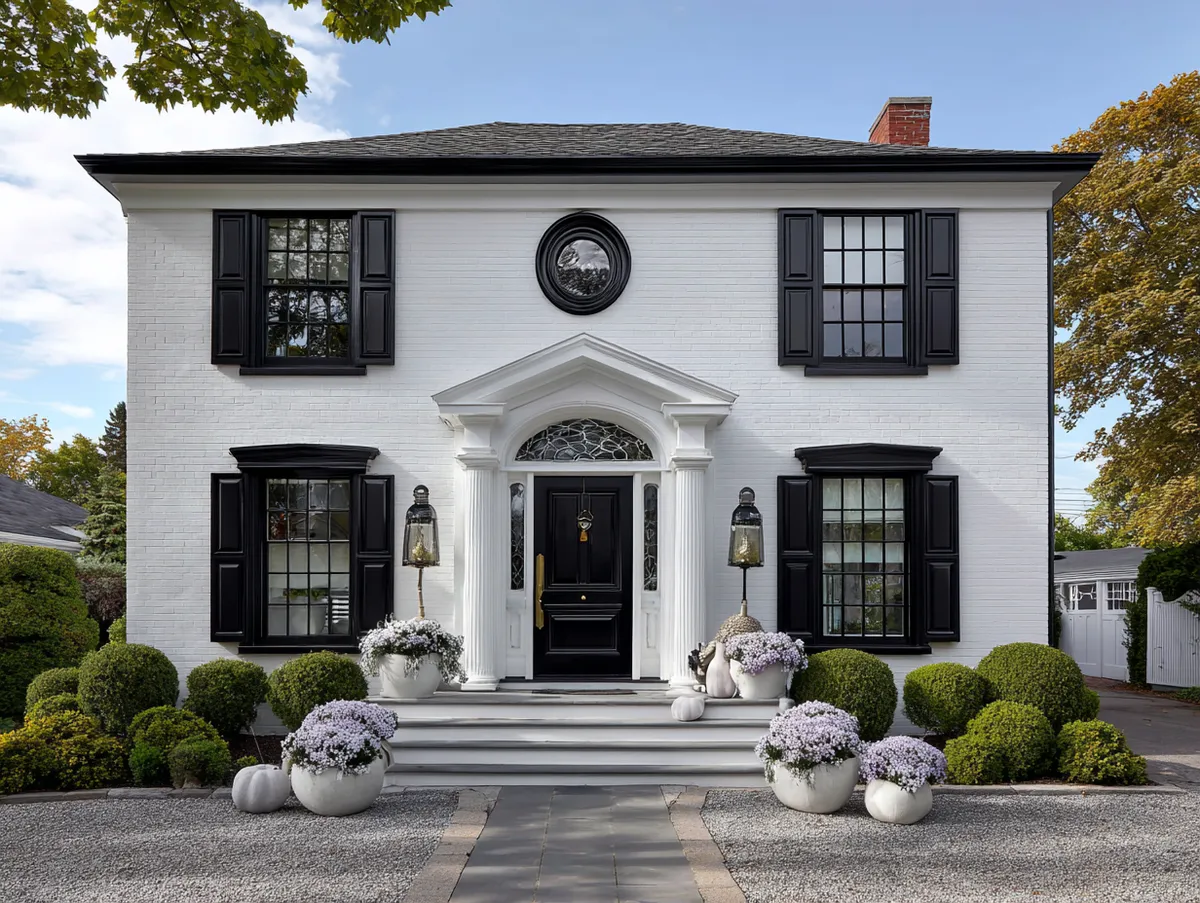
A white and green house exterior holds up decade after decade precisely because neither color fights the other — white reflects, green grounds, and the combination reads as effortless rather than designed. Choosing where the green lands (shutters, door, trim, window frames) changes the entire personality of the facade, which is why the decision deserves more thought than most homeowners give it.
The shade of green matters more than most paint chips suggest. Benjamin Moore Black Forest Green HC-187, Sherwin-Williams Dried Thyme, and classic Hunter Green 2041-10 all read very differently on a sun-blasted south wall versus a shaded north facade. The LRV (light reflectance value) of dark greens typically falls between 4 and 12, which means they absorb far more heat and UV than the white siding beside them — and fade faster on west-facing surfaces without UV-resistant formulations.
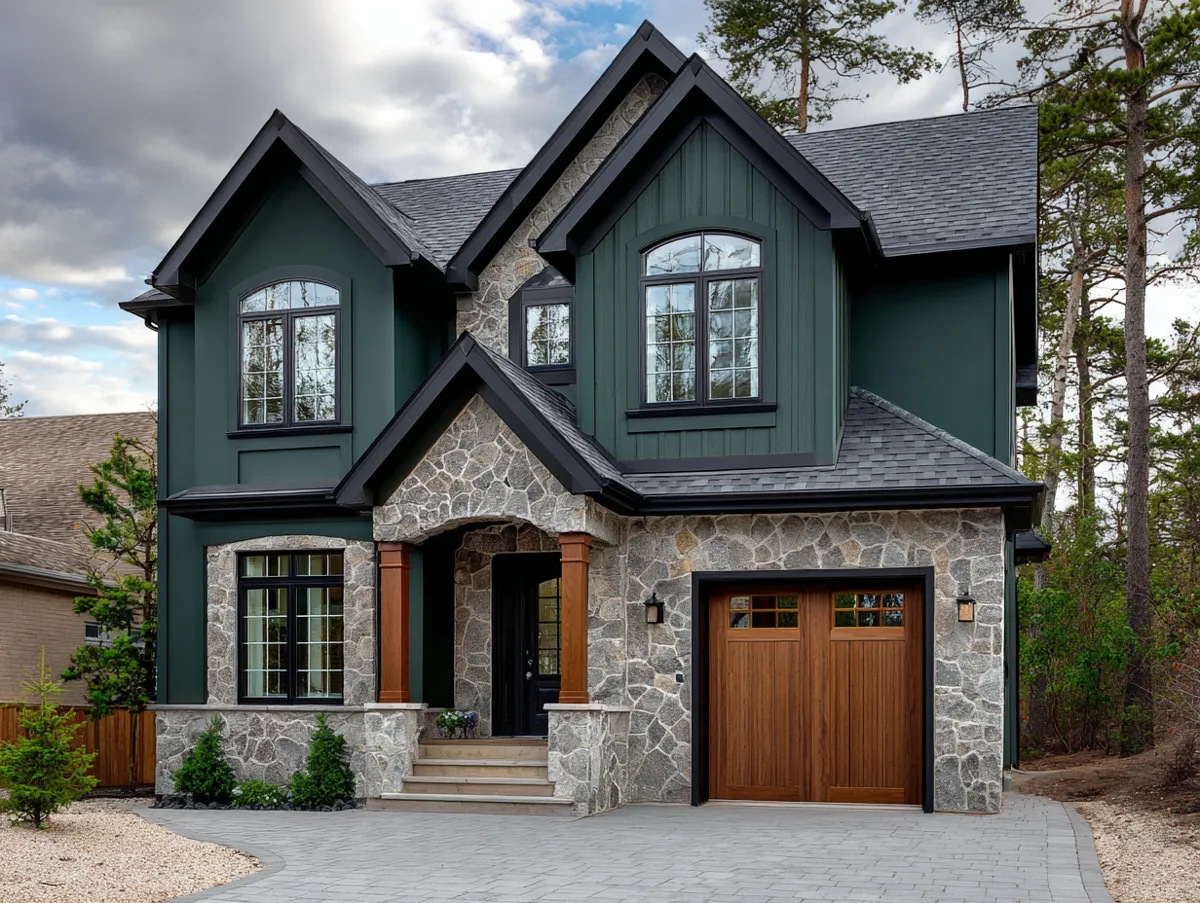
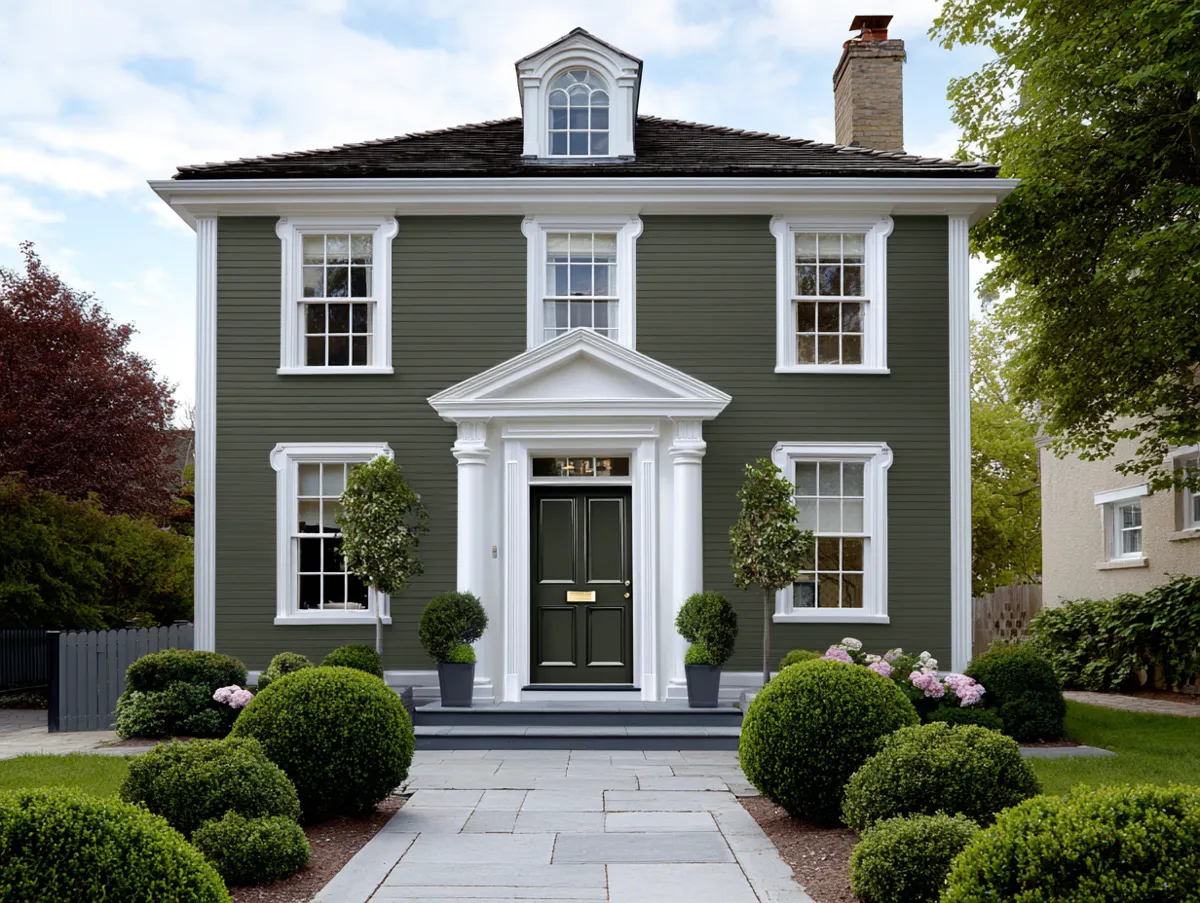
The images below show three specific approaches: green shutters, a green front door, and green window frames/trim. Each works differently depending on the home’s architecture. A colonial with symmetrical windows demands shutters sized exactly to the opening; a cottage with a single dominant entry can get everything it needs from one green door; a modern build with minimal ornament uses trim and frame color as its only textural tool.
– Green shutters on white walls work best when each panel is sized to half the window width — undersized shutters look decorative in the wrong way.
– A deep green front door (Hunter Green, Essex Green, Black Forest Green) reads as a heritage investment; sage green reads younger and more relaxed.
– Green window trim costs $1–$3 per linear foot to repaint every 3–5 years — budget for maintenance before committing to dark colors on high-detail millwork.
– Wood accents pair naturally with green: cedar siding, a stained front door, or wood porch columns warm up the white-and-green palette without adding a third paint color.
– Benjamin Moore Aura Exterior and Sherwin-Williams Duration are the two lines designers specify most for dark green accents that need UV durability.
White House Green Shutters — Where Shade and Scale Decide Everything
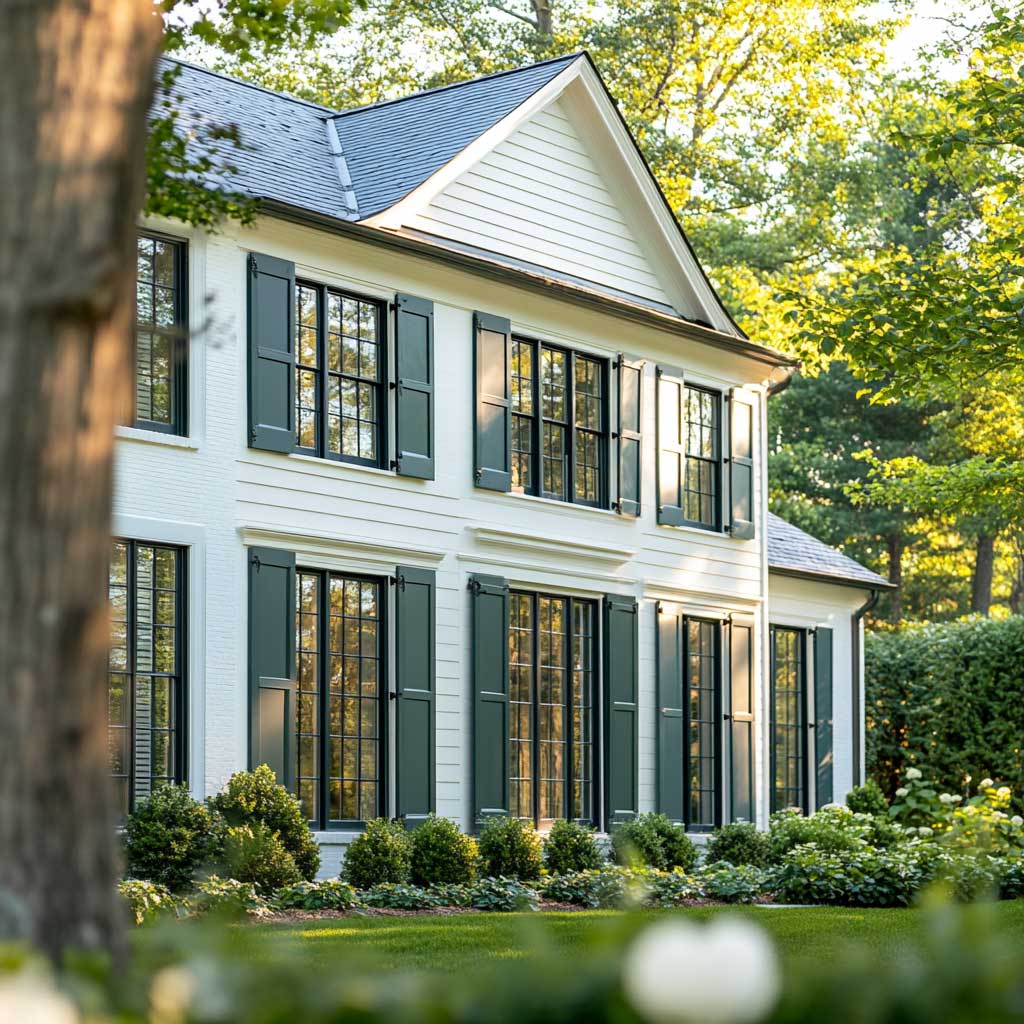
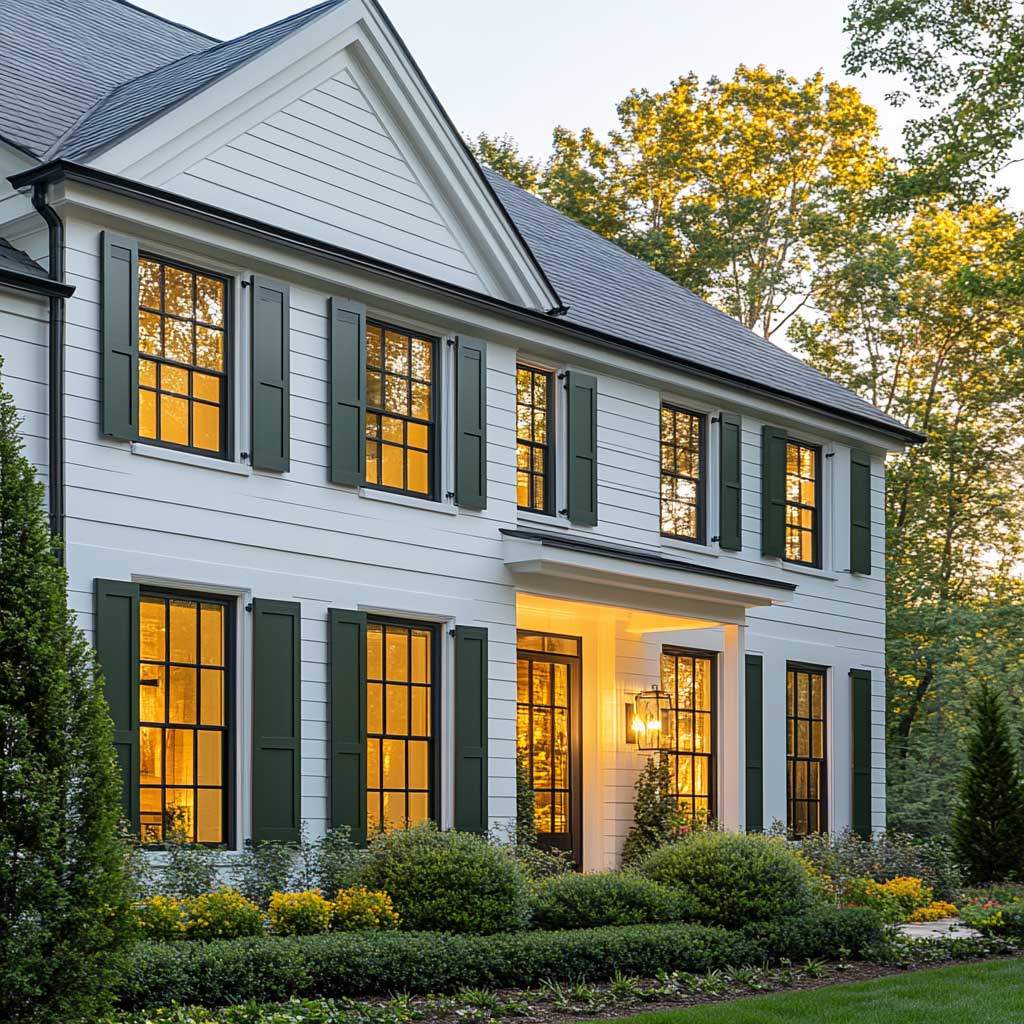

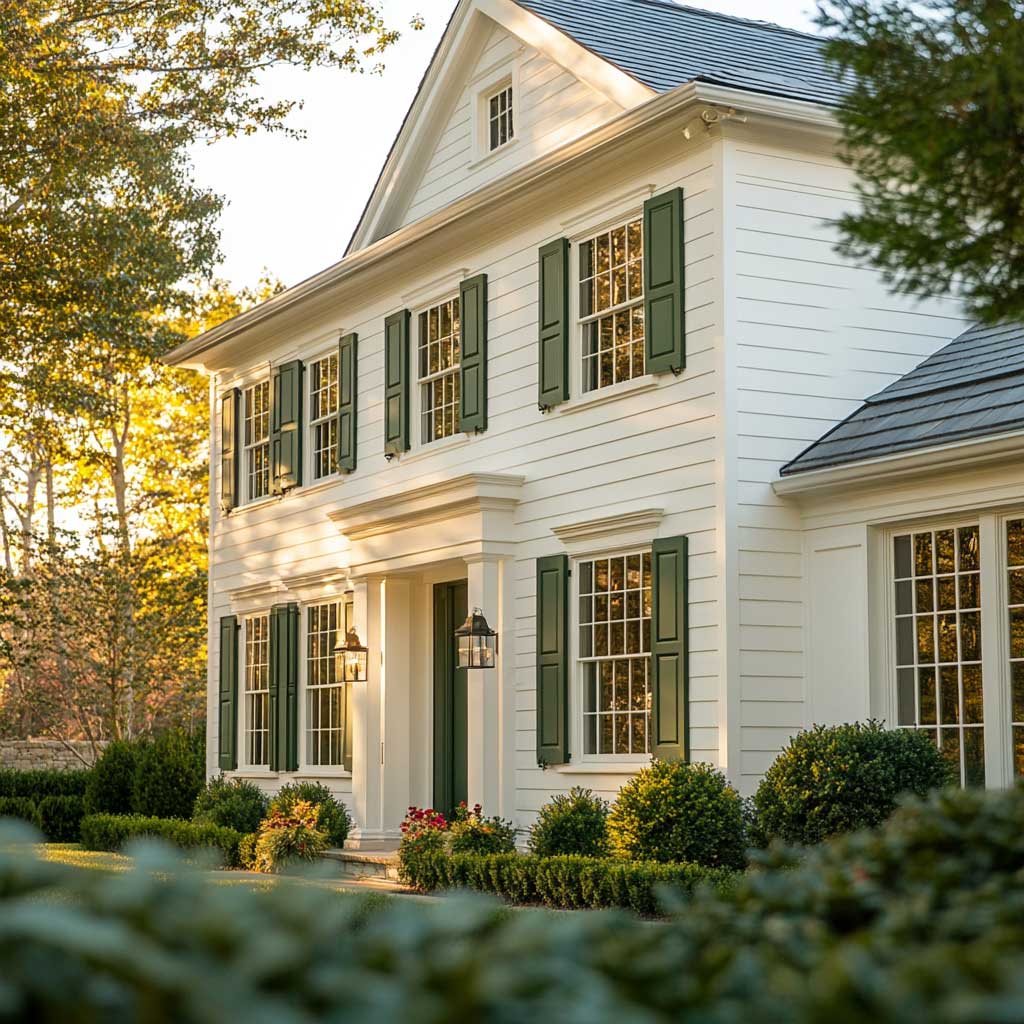
Green shutters on a white house are the single most reversible way to introduce color to an exterior — the shutters come off, get repainted, and go back up without touching the walls. What most homeowners skip is the scale check: each panel should be exactly half the width of the window it flanks, so the pair would visually close over the glass. Shutters that are too narrow signal “decorative afterthought” immediately. This proportion rule holds whether the shutter style is louvered, raised-panel, or board-and-batten.
Forest green and hunter green are the traditional picks for historic architecture — they read anchored, almost institutional, in the best possible sense. Darker greens have LRVs between 4 and 10, so they need a semi-gloss finish to stay readable against bright white walls rather than disappearing into shadow. Vinyl shutters in heritage green from manufacturers like Perfect Shutters run around $97 per pair for a standard 15×71-inch panel — wood shutters in the same size cost roughly twice that before painting. What doesn’t work: painting shutters olive or yellow-green on a cool-white house — the undertones clash, and the facade ends up looking muddy rather than curated.
The surrounding landscape does a lot of work in this palette. Does the green of your shutters match the lawn or fight it? Forest green next to deep green hedges creates a monochromatic band across the middle of the facade that flattens the whole elevation. The trick is to choose a shutter green with a slightly different temperature than the dominant foliage — bluer greens against yellow-green lawns, warmer bottle greens against blue-gray conifers. Ask yourself: would the shutters disappear if placed against the garden? If so, go one shade darker or cooler.
Maintenance on wood shutters in dark greens runs $1–$3 per linear foot for repainting every three to five years according to HomeAdvisor’s 2026 cost data. South- and west-facing shutters fade noticeably faster due to UV load — those should be repainted closer to the three-year mark, or treated with a UV-resistant topcoat at an additional $15–$20 per gallon above base paint cost.
Don’t paint shutters that are the wrong proportion and call it done. Shutters narrower than half the window width signal non-functional decoration from the street — it’s the exterior equivalent of a button-down shirt with no buttons. Size them correctly or skip shutters entirely and use trim color instead. Also avoid matching shutter green exactly to lawn or hedge color: the colors merge into each other visually and the architectural detail disappears.
A Green Front Door on a White House — Color Psychology Earns Its Fee Here
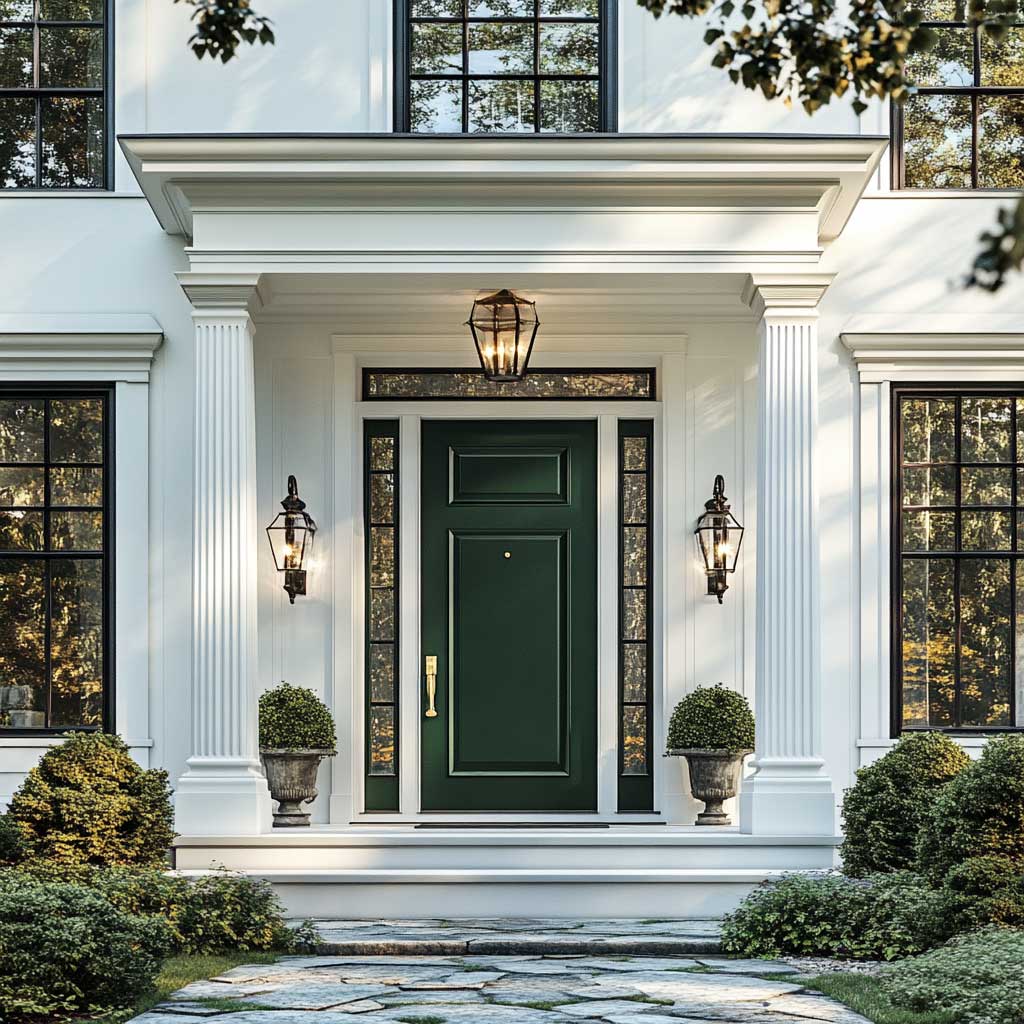
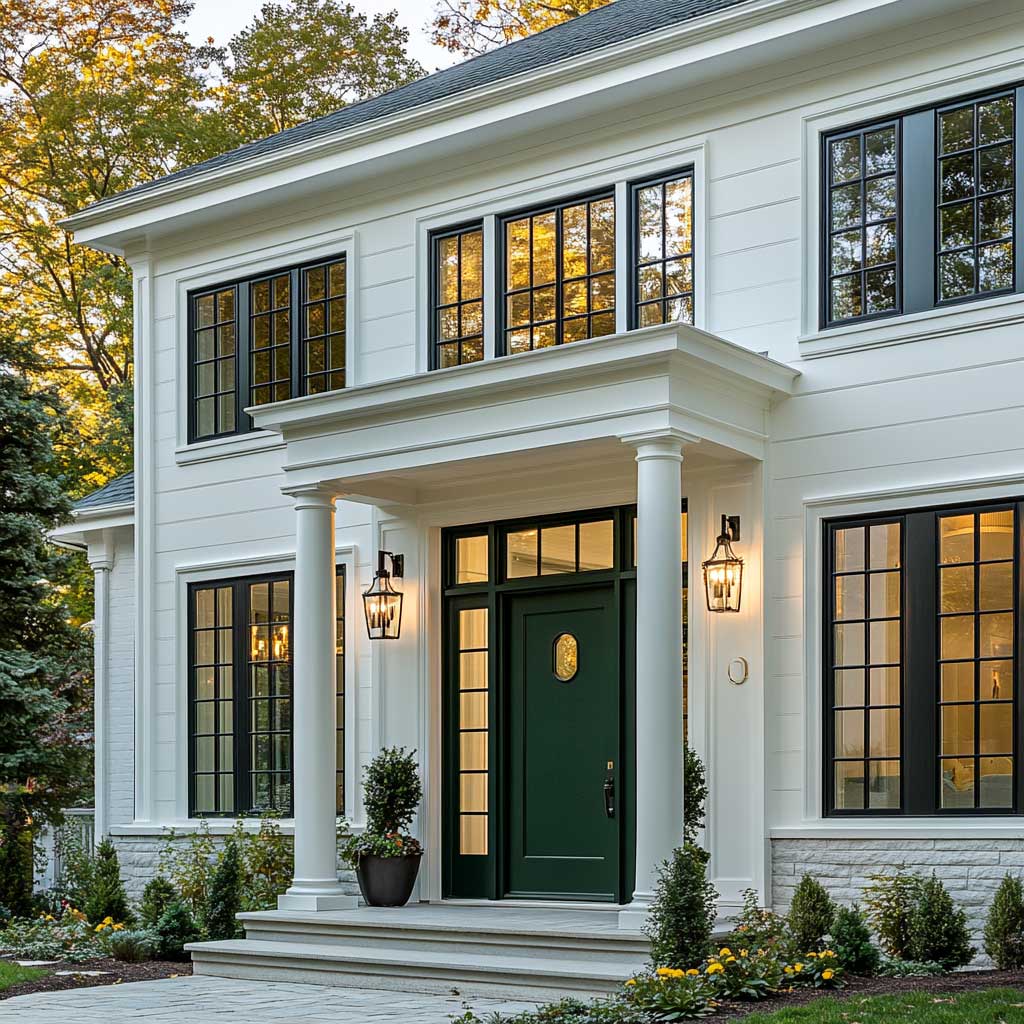
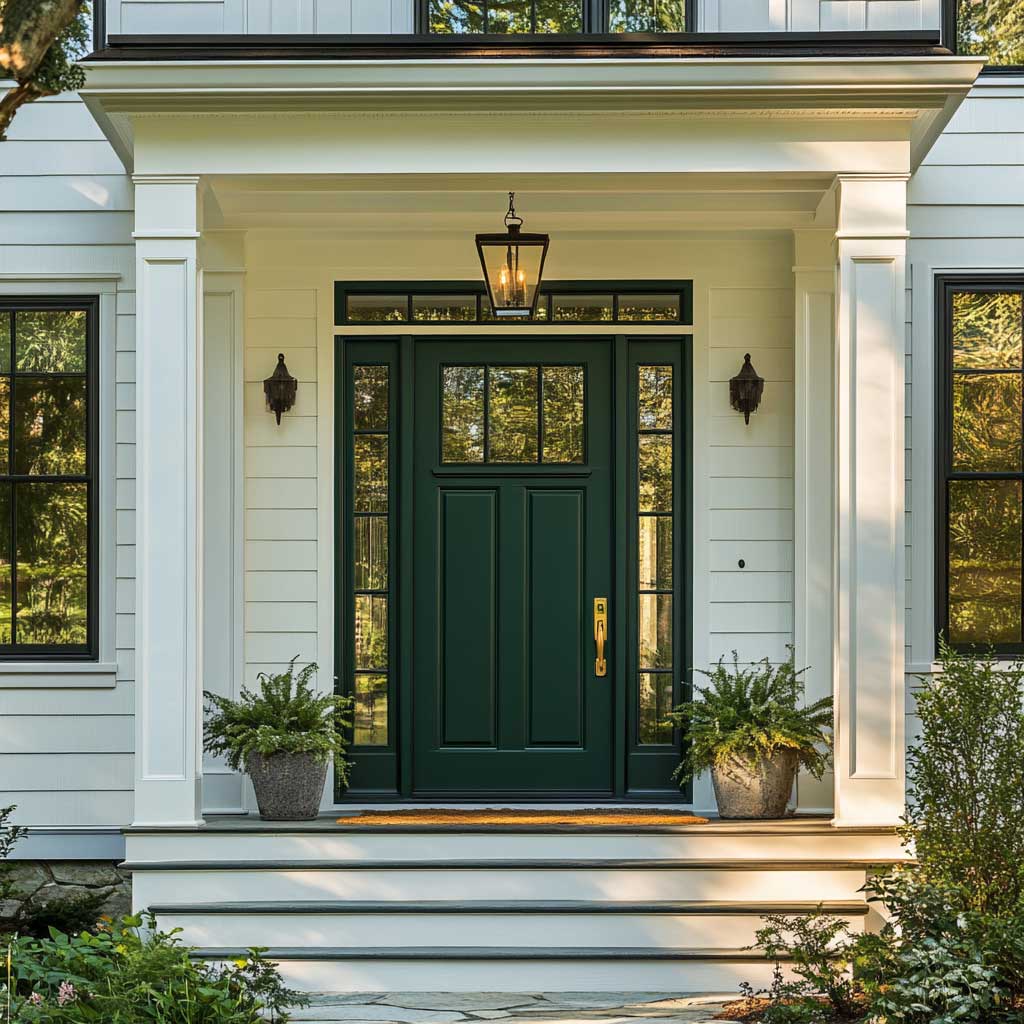
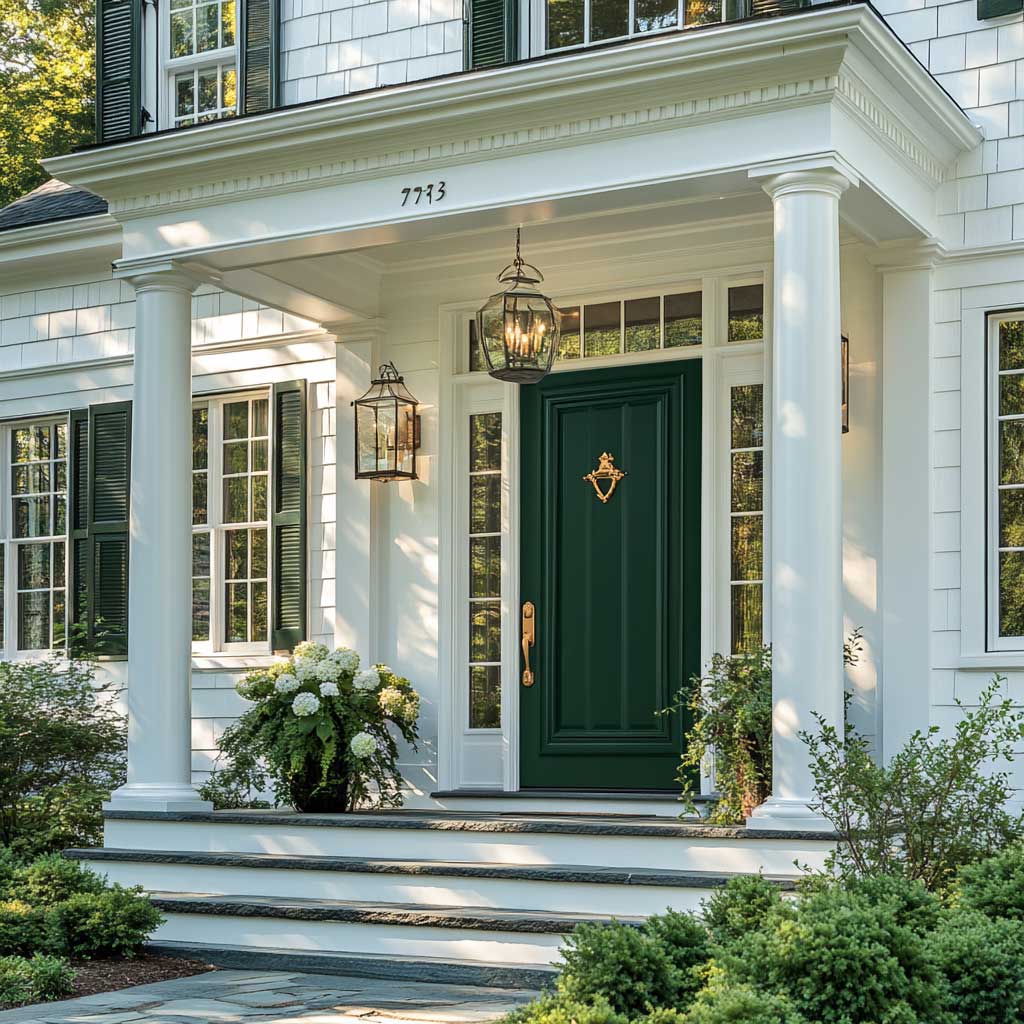
A green front door on a white house is the choice interior designers describe as a “heritage investment” — it signals permanence, intention, and a willingness to commit to something beyond trend. Benjamin Moore’s Essex Green and Hunter Green 2041-10 are the two shades cited most by working designers for white house doors, specifically because they carry a cool blue-gray undertone that keeps them from reading as simply dark rather than distinctly green. A gallon of Benjamin Moore Aura Exterior in either shade runs $75–$85, and the front door uses less than one quart — making this the lowest-cost, highest-impact exterior color decision available.
Farrow & Ball’s Carriage Green is another frequently specified option, particularly for homes where the architecture has Georgian or Federal detailing — the paint has a matte depth that reads as period-correct in a way glossy hardware-store greens don’t. On a white stucco facade specifically, Benjamin Moore recommends pairing dark green doors with creamy off-whites like White Chocolate OC-127 rather than optical white; pure bright whites next to very dark greens create a contrast that photographs dramatically but reads as harsh in person, especially in direct noon sun. The question to ask before choosing: does the door color look like a decision the house always had, or like something added recently? The right green disappears into the architecture — in the best possible way.
Matching the door color to the window frames ties the facade together and creates what designers call a “secondary palette” — the white does the heavy lifting, while the green creates a through-line that connects entry, windows, and trim into a single intentional system. Where this goes wrong: applying a green door to a house where the rest of the accents are black or charcoal. Mixed accent colors on a white exterior read as unresolved, like the house couldn’t decide what it wanted to be. Pick one accent color and use it consistently on shutters, window frames, and door — or limit the green to the door alone and keep everything else white.
For more ideas on how white exteriors pair with contrasting accent colors across different architectural styles, the white and navy blue house exterior design roundup covers the same decision logic applied to a different accent color — useful for seeing how the proportion and placement principles transfer.
Where White House Green Trim Outperforms Every Other Accent Placement
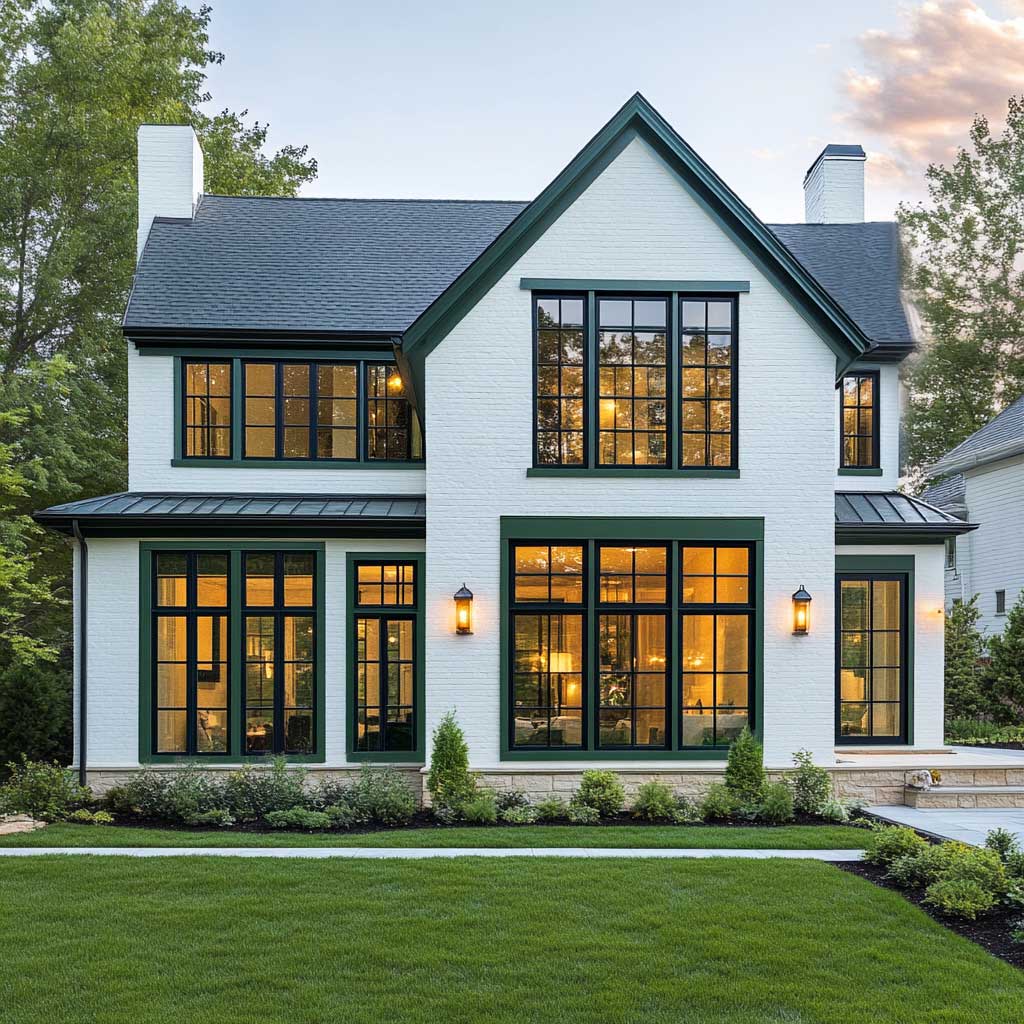
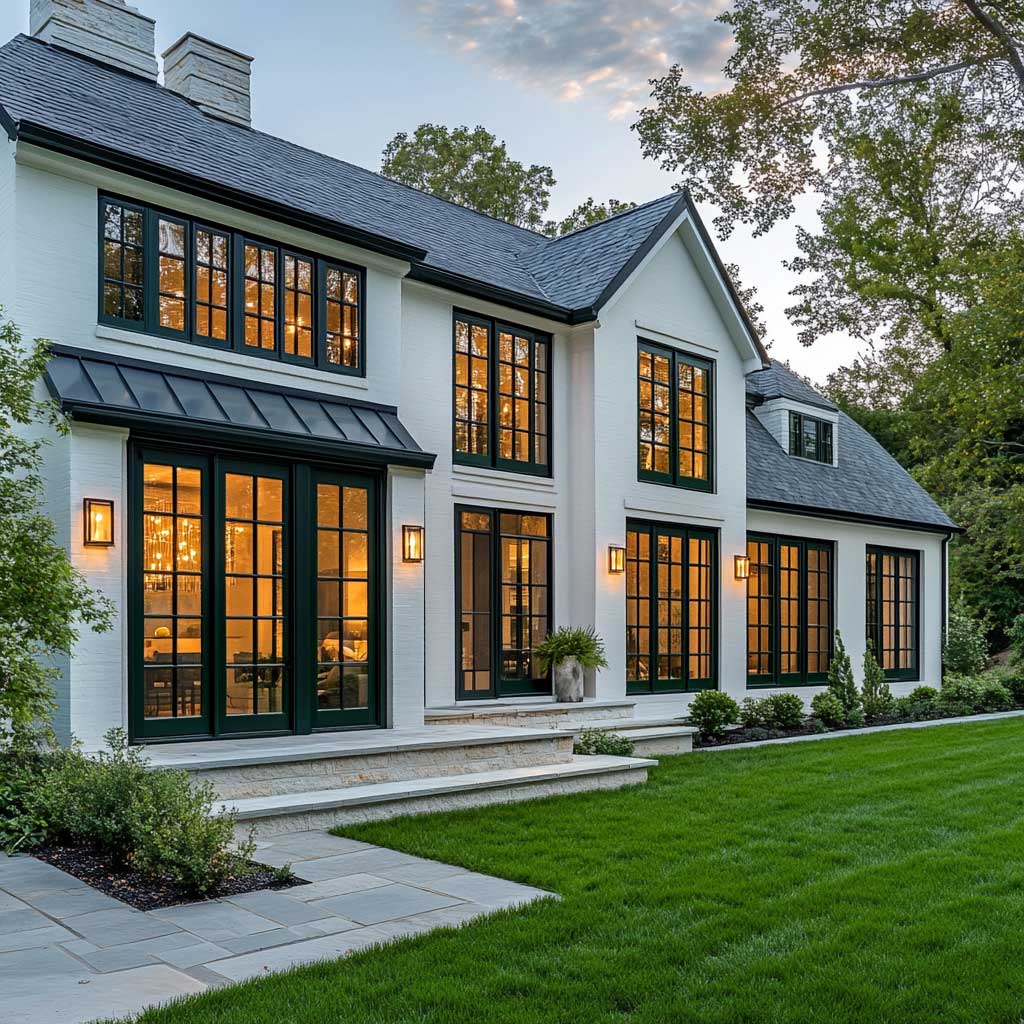
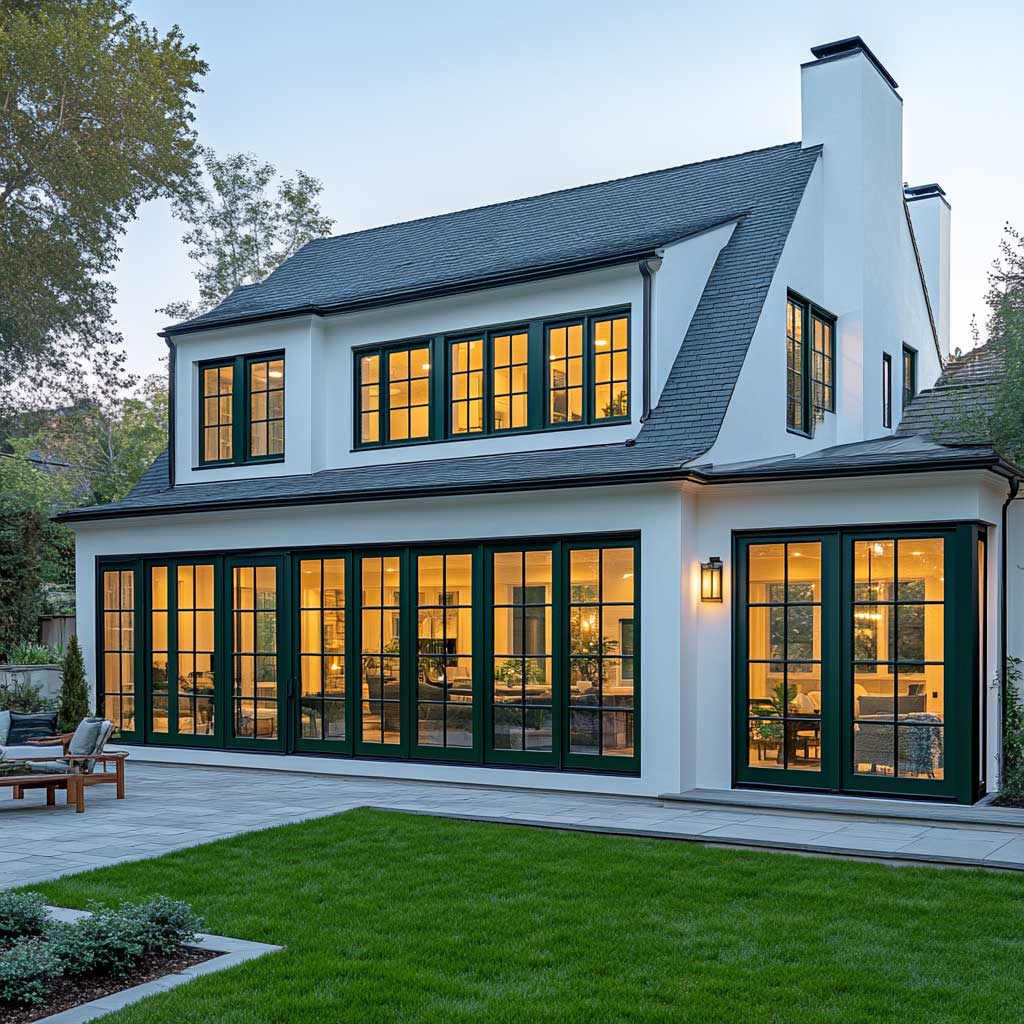
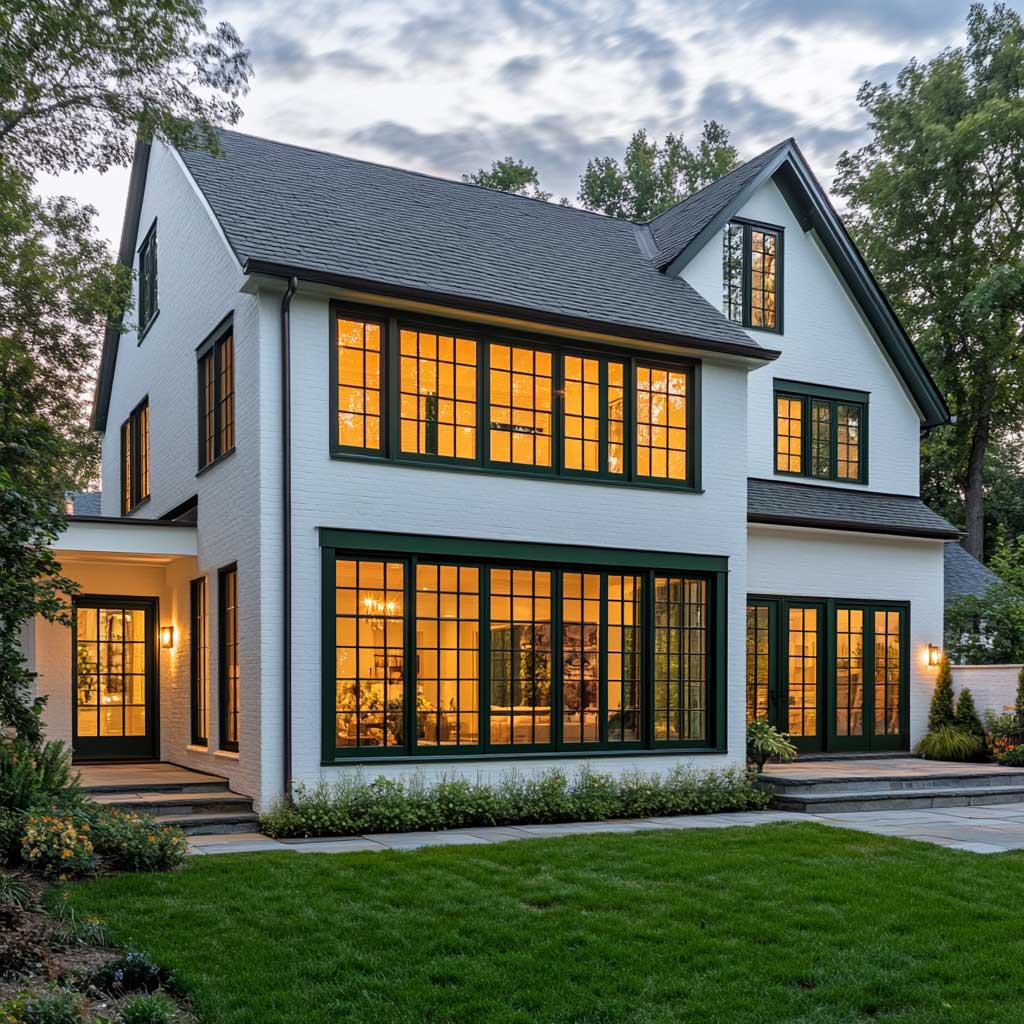
White house green trim — specifically on window frames and the roofline — gives the same visual benefit as shutters without the proportion constraint, because trim follows the architecture rather than fighting it. The paint cost is the same ($45–$110 per gallon for quality exterior paint according to 2026 pricing data), but professional painters charge $2.55–$5.21 per linear foot for trim-only work, meaning a full window trim repaint on an average home runs $1,000–$2,500 and lasts 5–10 years with quality paint. That per-year cost is genuinely low for the amount of curb appeal it buys.
Grid-style windows in dark green frames are the sharpest version of this look — the grid lines subdivide each opening into smaller rectangles, and the dark color makes each line read as a drawn element rather than a structural one. Sherwin-Williams Dried Thyme and Benjamin Moore Black Forest Green HC-187 are the two shades Brick & Batten designers recommend most frequently for this application on white houses. Both have enough warmth to avoid reading as black in shade while staying clearly green in direct sun — the test that eliminates most other candidates. What fails here: using the same green on trim as on a large adjacent surface like vinyl siding. The colors compete rather than one supporting the other.
Carry the trim color to the roofline edge and the soffit fascia board, and the house reads as a resolved design object rather than a collection of painted surfaces. This is the move most homeowners skip because fascia boards aren’t visible from the street at ground level — but they are visible from any upward angle, and they create a frame for the whole elevation. The roofline and window trim working in the same green creates a vertical rhythm that the eye reads as intentional even before analyzing any specific detail. For the same concept applied to a different accent color, the white house with charcoal gray trim ideas show exactly how this trim-to-roofline approach performs with a cooler palette.
Wood accents — a cedar door, stained porch columns, or natural wood window boxes — work with green trim in a way they don’t with black or navy, because wood and green share an organic reference point. Sherwin-Williams’ Dried Thyme alongside unstained cedar reads as an intentional nod to the natural palette rather than an accidental color conflict. The practical note: paint exterior trim wood every 3–5 years and re-caulk at the same time; skipping caulk maintenance on painted trim joints allows water infiltration that damages the substrate faster than UV exposure does.
| Accent Placement | Best For | Maintenance Interval | Key Risk |
|---|---|---|---|
| Green shutters | Colonial, cape cod, traditional | 3–5 years (paint) | Wrong proportion — too narrow |
| Green front door | All styles, maximum impact | 5–7 years (quality paint) | Mismatched accent colors elsewhere |
| Green window trim | Modern, craftsman, farmhouse | 3–5 years (paint + caulk) | Color reads black in shade if too dark |
| Green wood accents | Farmhouse, Tudor, cottage | Stain every 3–4 years | Clashes with yellow-green foliage |
Benjamin Moore’s exterior color resource at benjaminmoore.com covers green shades matched to specific white siding options — particularly useful when deciding between a cool optical white and a warmer off-white as the base for any dark green accent palette.
The Bottom Line
White and green holds because it never has to try — pick the right placement and the right shade, and the house does the rest.
Dark green accents on white last longest on north- and east-facing surfaces; budget for more frequent repainting on south and west walls where UV exposure is highest.
Shutters require correct sizing — half the window width per panel — or the detail reads as decorative clutter rather than architectural weight.
Green trim extended to the roofline fascia ties the whole facade into a single composition; skipping the fascia leaves the look unresolved regardless of how good the door or shutters look. Save this post before you buy a single sample pot.
Related Topics
FAQ
What color green shutters look best on a white house?
What are the best accent colors for a white house exterior?
Does dark green trim look good on a white house?
What shade of green is best for a white house with green windows?
How often do you need to repaint green shutters or trim on a white house?
Can a white house have a green roof?
Complete guide
White Color in Home Design: Every Room, Every Style, Every Shade
Kitchens, bathrooms, living rooms, exteriors, palettes — all in one place
Complete guide
Green Home Color Ideas for Every Room and Every Shade
Sage, emerald, olive, mint — interiors, exteriors, gardens — all in one place