A dusty blue wedding theme is the rare color choice that reads quiet in person and rich on camera — which is exactly why photographers keep pushing it. I’ve attended three dusty blue weddings in the last two years, and every single time the floral shots looked like they came from a magazine while the venue itself felt calm, almost meditative. That combination is hard to pull off with saturated colors.
You need more than the color, though. Dusty blue without the right florals, linens, and bridal silhouette is just a dull palette with no anchor. The three sections below break down exactly where the motif earns its keep — arrangements, table settings, and attire — and where most couples quietly get it wrong.
My go-to recommendation for any couple asking about a dusty blue wedding motif is to commit to contrast. Silver reads cold and washes the hue out. Ivory, warm white, and muted sage are the pairings that let dusty blue do what it actually does well: photograph like a whisper and feel like a full sentence.
– Dusty blue wedding theme works best with ivory linens and warm white florals — silver hardware kills the palette
– Peonies, hydrangeas, and garden roses are the three flowers that hold the color at scale; delphinium is a cost-effective filler
– Candlelight over overhead lighting at the reception — warm light makes dusty blue glow; cool fluorescent makes it look grey
– Bridesmaid dresses in dusty blue chiffon photograph at $130–$175 from Azazie; satin reads richer indoors but requires more precise styling
– A dusty blue gown for the bride is a real option — Vera Wang’s “Something Blue” collection and Essense of Australia both produce styles in this specific hue starting around $1,800
Dusty Blue Wedding Theme Floral Arrangements


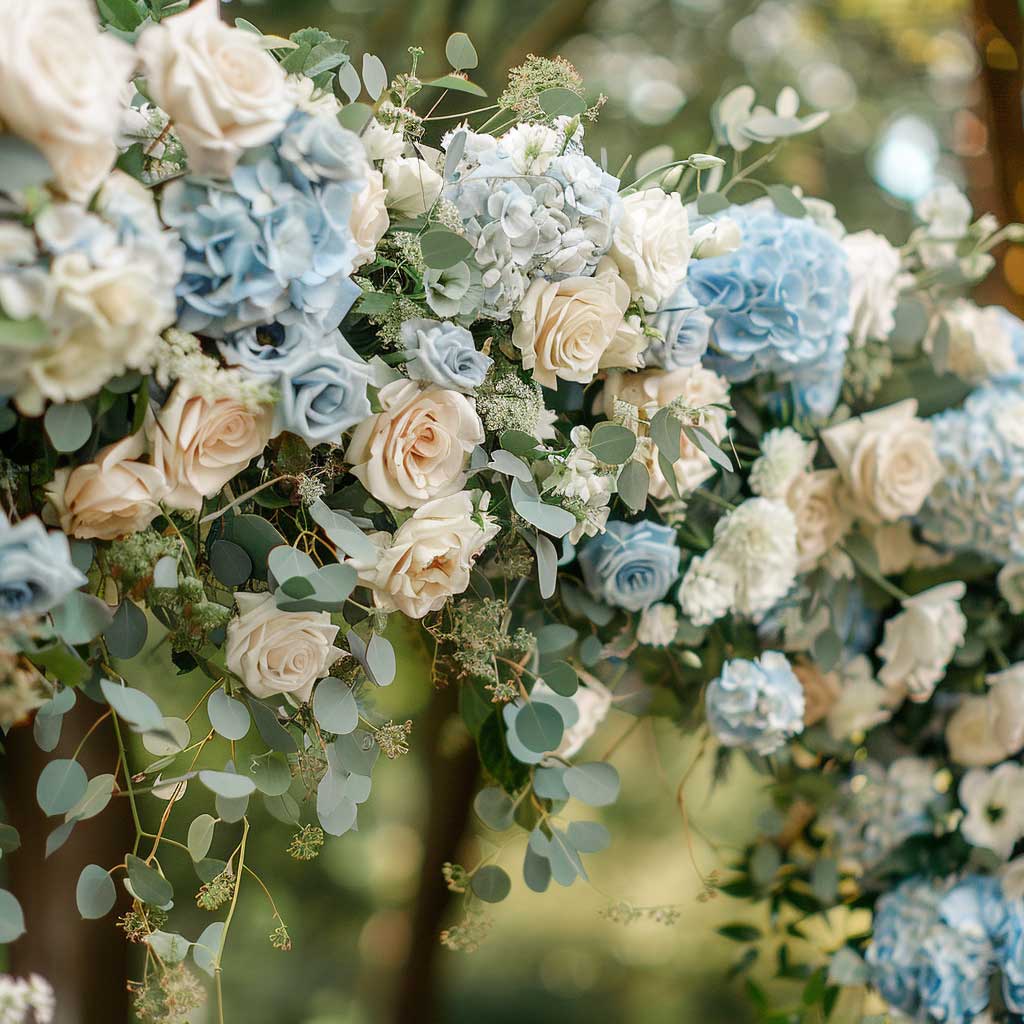
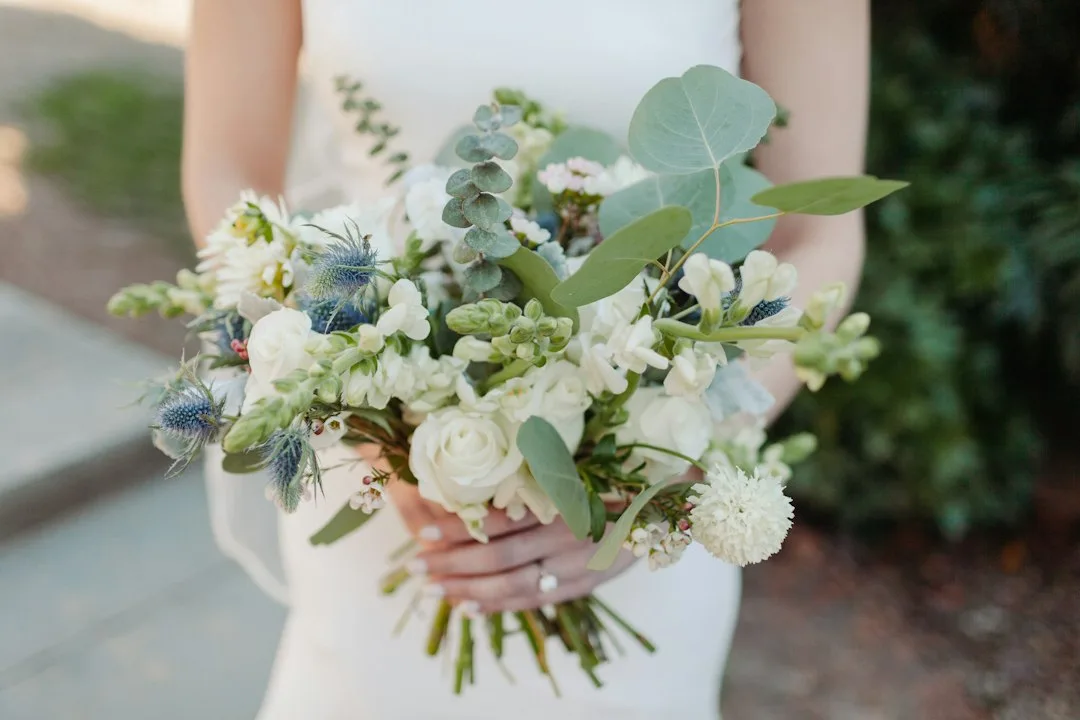
Dusty blue wedding theme florals live or die on the foliage backbone. Peonies, hydrangeas, and garden roses in dusty blue carry the saturation you need, but silver dollar eucalyptus is the foliage that holds the whole palette together — its grey-green tone doesn’t fight the blue, it cools it down in a way that feels intentional rather than accidental. I’ve watched florists substitute pale filler ferns for eucalyptus to cut costs, and the arrangement loses its depth every time.
What flower combination actually works? For the bridal bouquet, my go-to build is three to four peonies as the anchor, hydrangea clusters for volume, and a dozen garden roses scattered through the form. Delphinium is an underrated addition — it’s genuinely blue rather than blue-tinted, and a florist can source it for roughly $3–$5 per stem. White wax flower as filler reads far better than baby’s breath, which pulls the palette pastel. Total florist cost for a hand-tied bridal bouquet in this spec runs $200–$350 depending on your market.
Ceremony arch arrangements in the dusty blue motif should be asymmetric and dense. You need the dark foliage to carry the weight — eucalyptus, dark ivy, and trailing smilax as the base, then blooms concentrated at the peak rather than distributed evenly. Compact and top-heavy reads dramatic in photos. Spread thin and even reads like a grocery store display. A 6-foot arch in this spec runs $800–$1,400 from a professional florist; for venues with high ceilings, a suspended greenery cloud above the dance floor achieves a similar effect at roughly 30 percent lower material cost. If you want to see how the same foliage logic applies across a different color entirely, the emerald green wedding theme breakdown here covers the architecture of arrangements in detail.
Adding blue-dyed white flowers to stretch a dusty blue arrangement is the most common mistake I see at mid-budget weddings. Dyed flowers look saturated and artificial next to naturally hued blooms, and they bleed color onto petals and linens when wet. Stick to naturally blue varieties — delphinium, hydrangea, and scabiosa — or use ivory and white blooms as contrast. Never use dyed blue roses in a dusty blue palette. They photograph as purple under warm reception lighting and look nothing like the mood board.
Dusty Blue Wedding Theme Table Settings
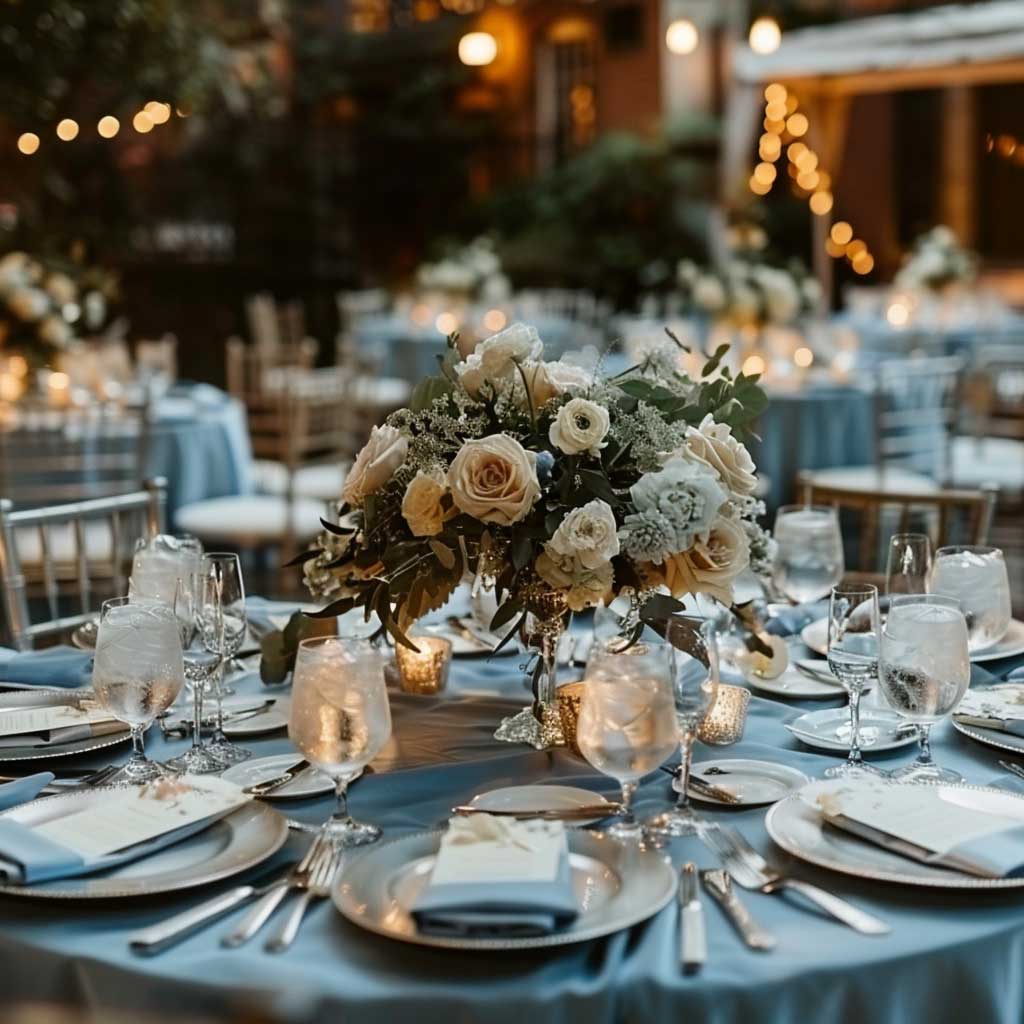
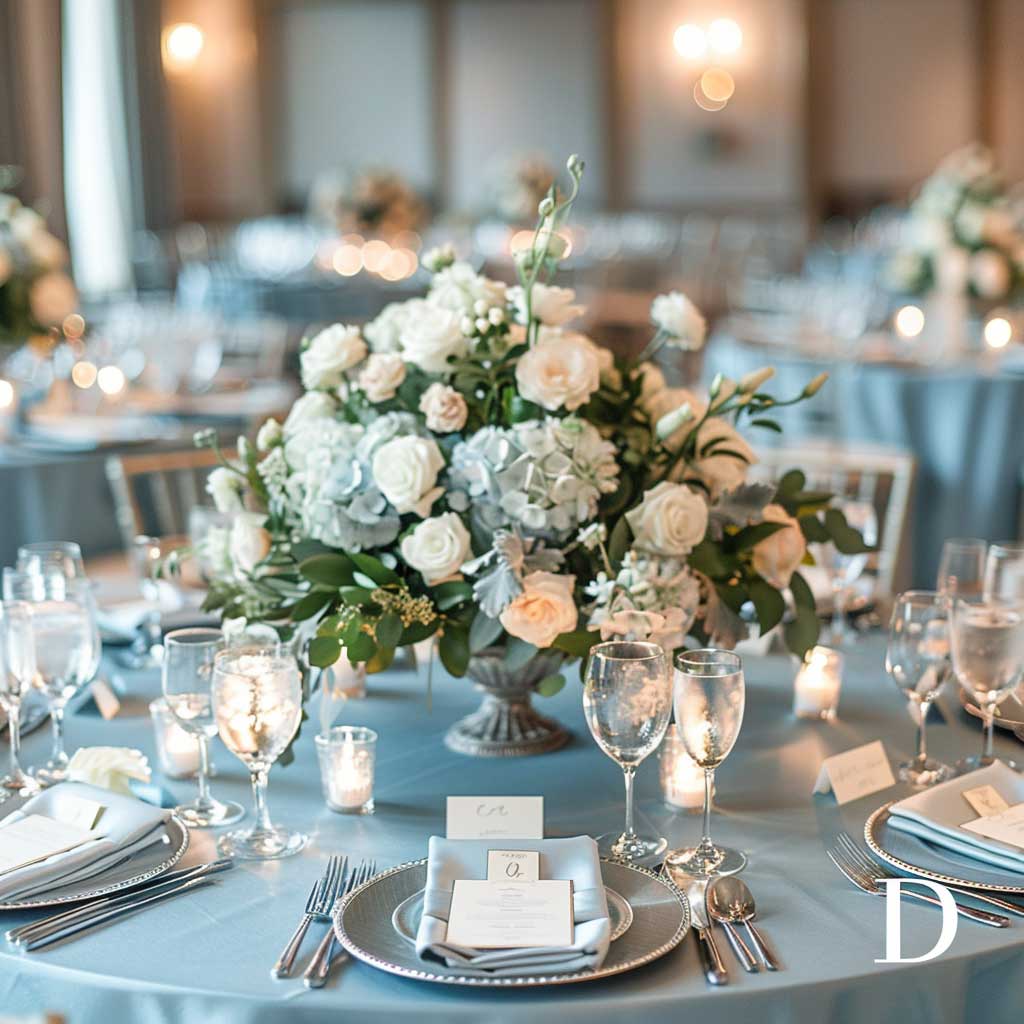
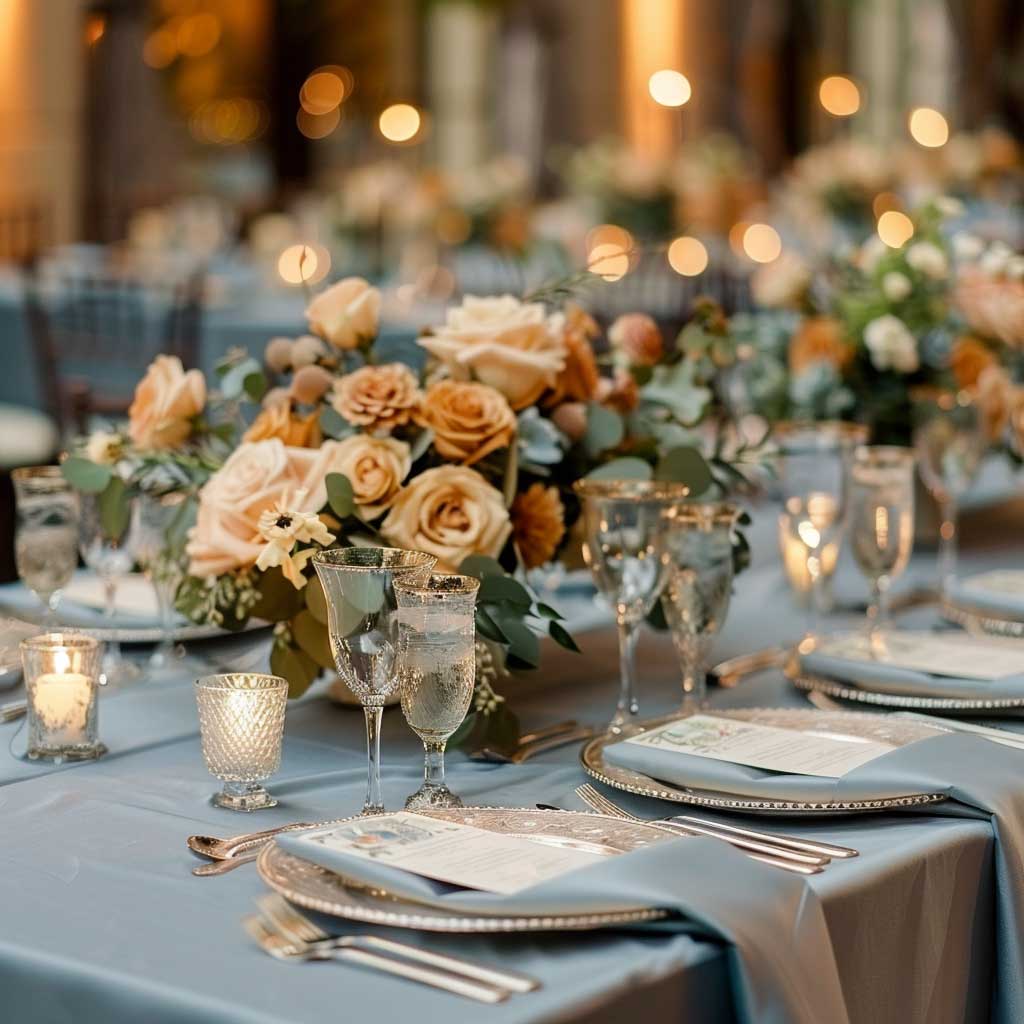
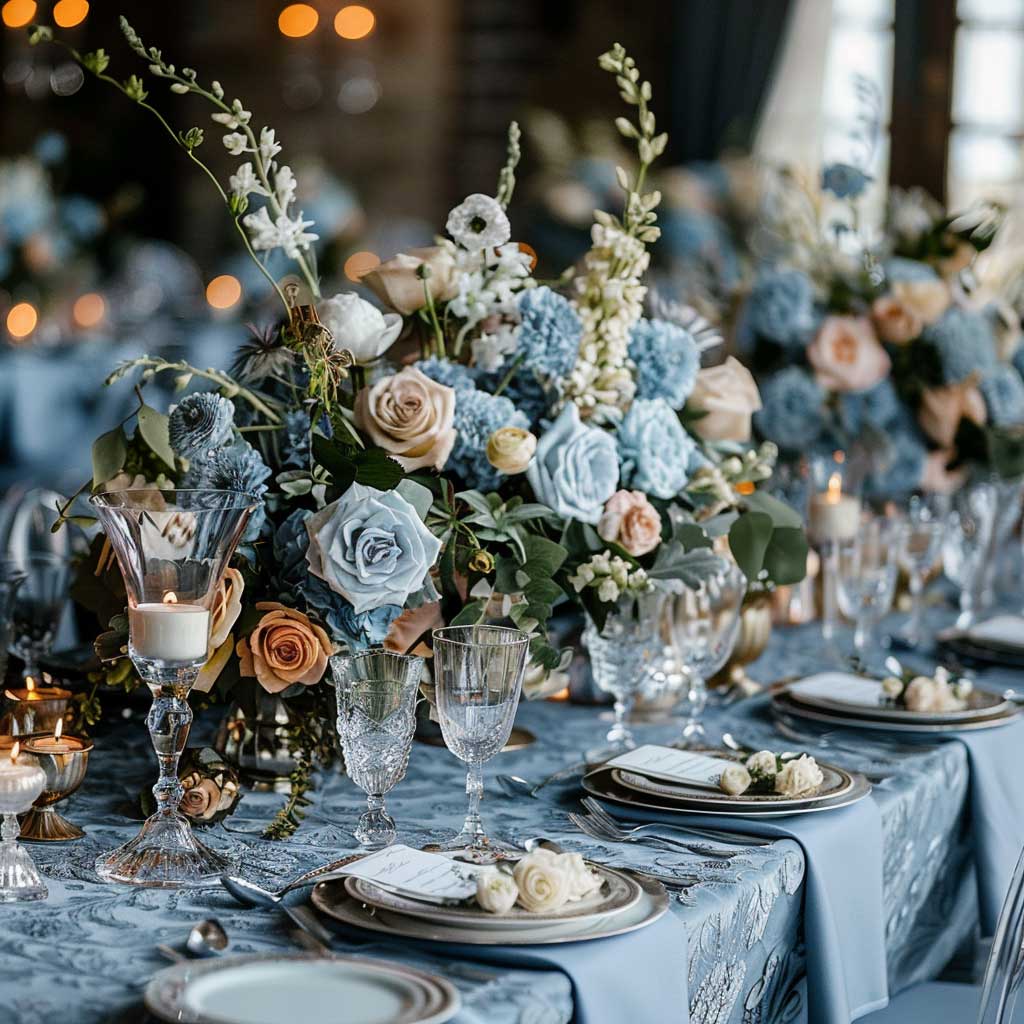
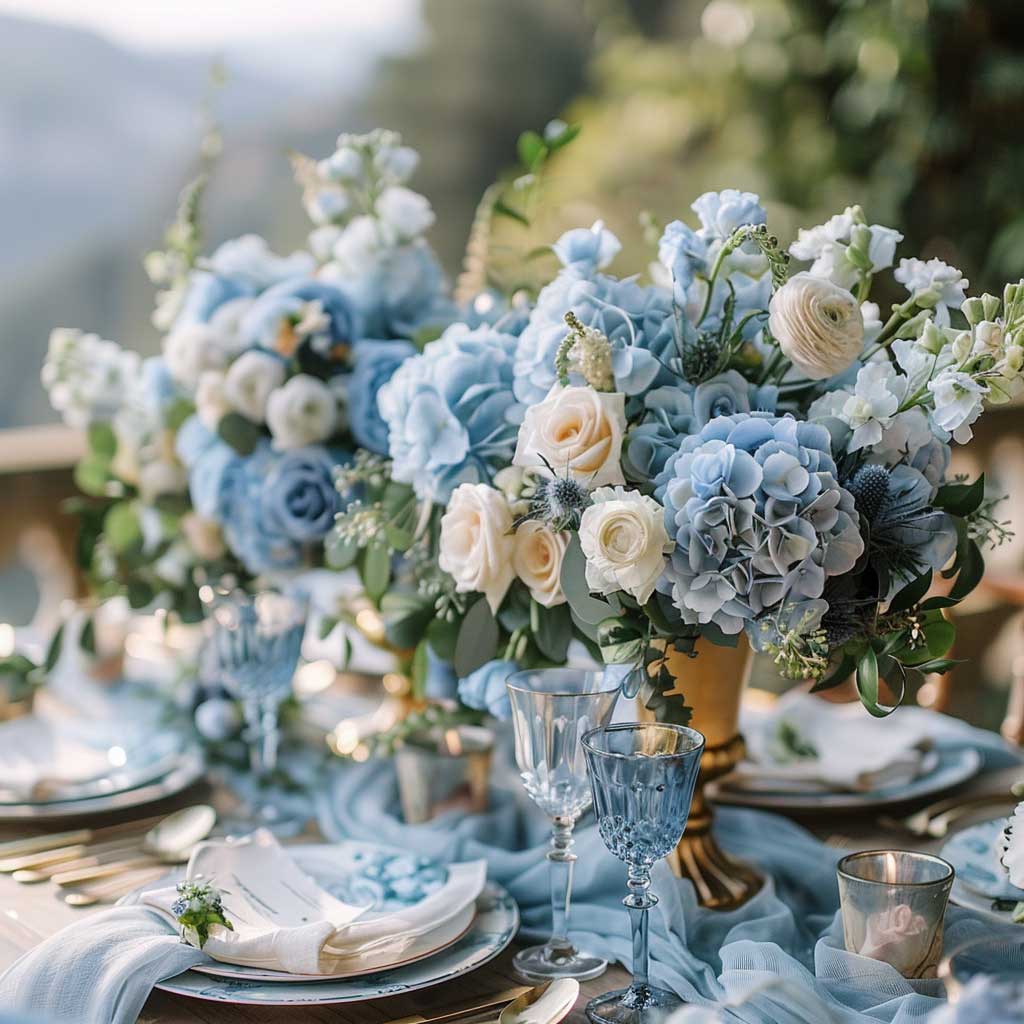
Dusty blue wedding theme table settings start with the linens — get this wrong and no amount of florals recovers the look. A dusty blue velvet table runner over an ivory or warm white base tablecloth is the combination I keep returning to: the runner carries the color without drowning the table in it, and the ivory base warms the hue rather than cooling it toward grey. Avoid crisp bright white — it fights the muted register of dusty blue and makes the whole table feel like a contrast exercise instead of a palette.
Charger plates: matte gold or brushed gold, not shiny silver. This isn’t aesthetic preference — it’s a photography fact. Silver charger plates under warm reception lighting create cold highlights that desaturate the blue linens around them. You’ll notice it immediately in the wedding photos even if you didn’t notice it in person. Gold chargers from Pier One Imports or rentable through most event companies run $2–$4 per setting. Set them on ivory dinner plates with a simple rim and the table locks in. Crystal glassware catches candlelight and makes the whole setting feel alive without adding another color decision.
Centerpiece height is the detail couples consistently overlook. Low centerpieces — 10 to 14 inches — let guests see and talk to each other across the table. Tall arrangements look impressive in the overhead shots but create a wall at the table for six hours of dinner conversation. My rule for a dusty blue wedding motif: cluster three white pillar candles in gold mercury glass holders at different heights, ring them with a tight band of eucalyptus and two to three peony heads, and call it done. That configuration in DIY materials runs $45–$65 per table. A florist executing the same design bills $120–$200. For comparison on how blue wedding palettes translate to table settings across a different shade, the blue and purple wedding theme breakdown covers the same linen-and-charger logic in detail.
Lighting at the reception matters more than most couples budget for. Candlelight and warm-toned Edison bulbs make dusty blue linens and florals glow. Overhead fluorescent or cool-white LED — the default in many hotel ballrooms — turns dusty blue grey and flat. Ask your venue about uplighting in a warm amber tone before the event. Pipe-and-drape with fabric in ivory or warm white reflects the candlelight back down onto the tables, and the effect in photos is dramatically different from bare venue walls. For real-wedding color reference and additional shade pairings, The Knot’s blue wedding color reference has side-by-side comparisons worth showing your florist.
Dusty Blue Wedding Theme Bridal Attire
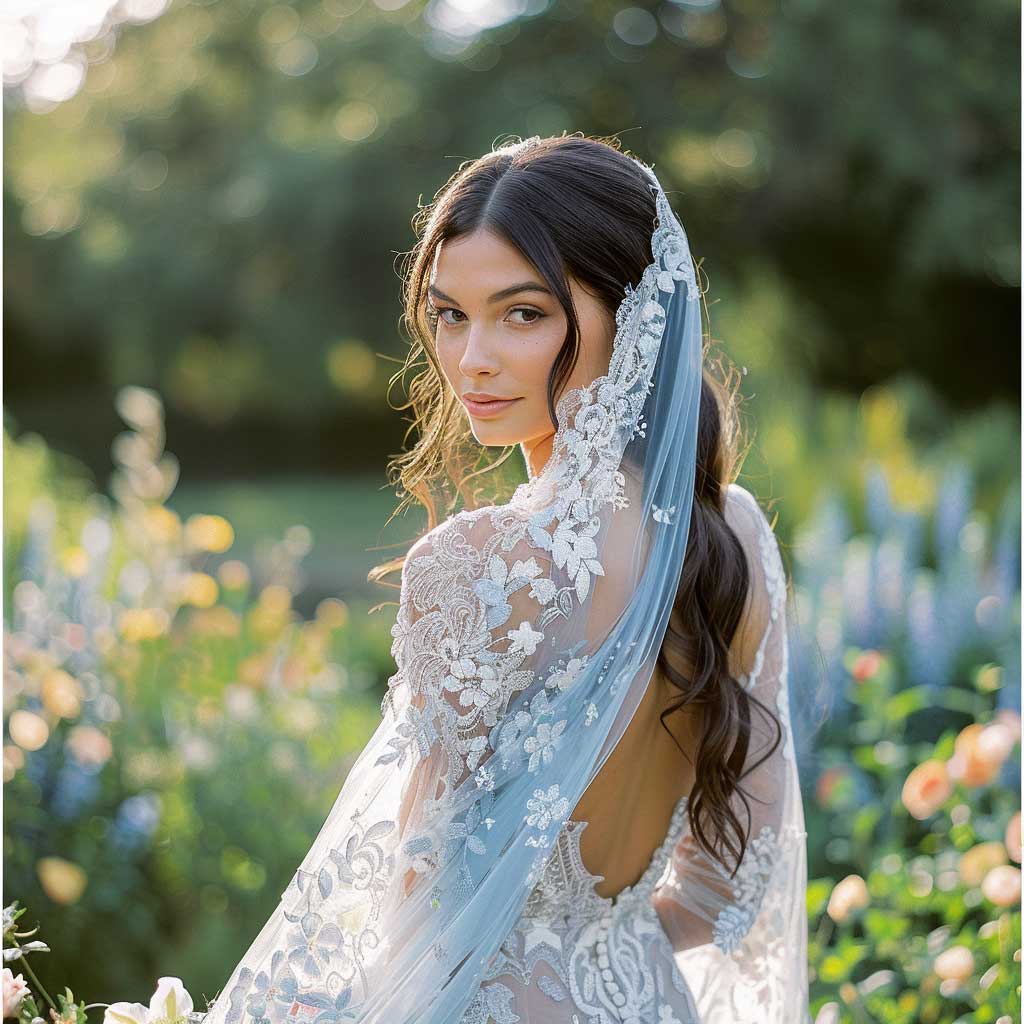

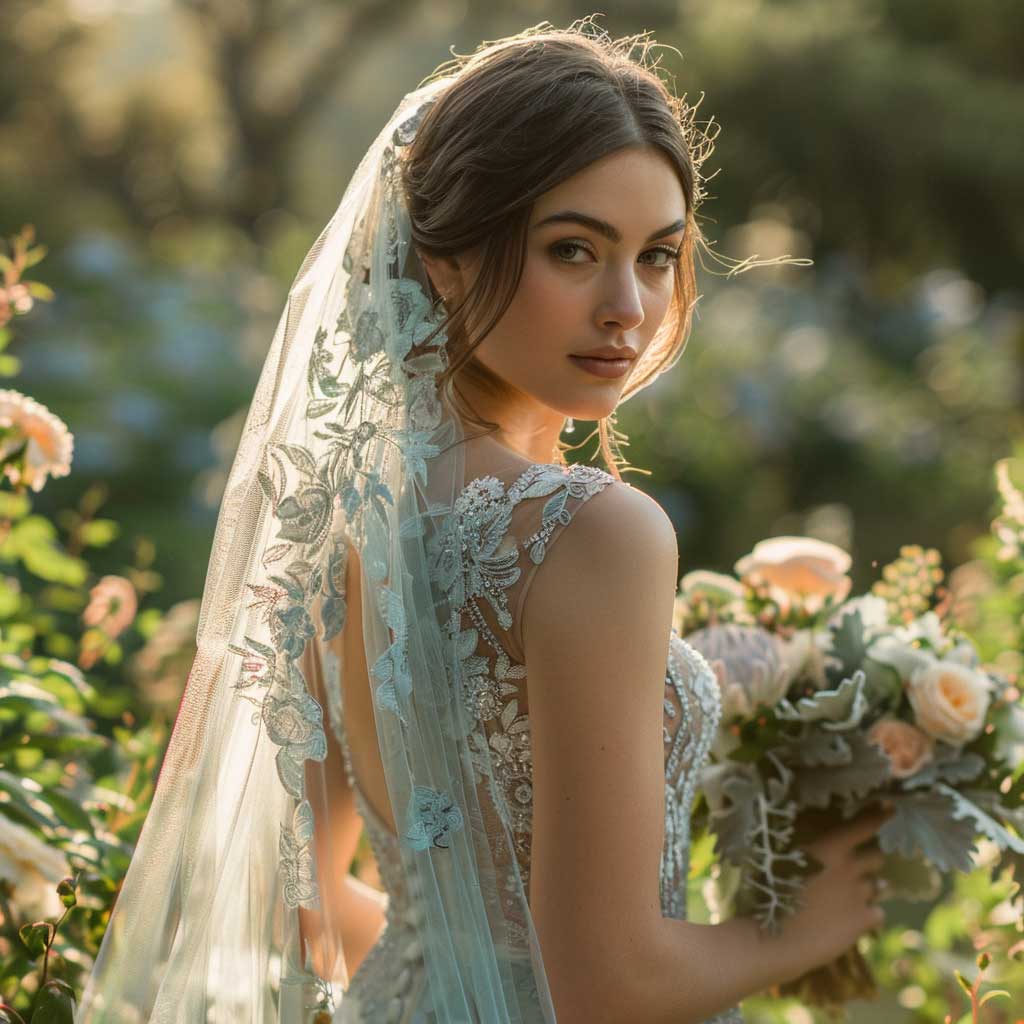
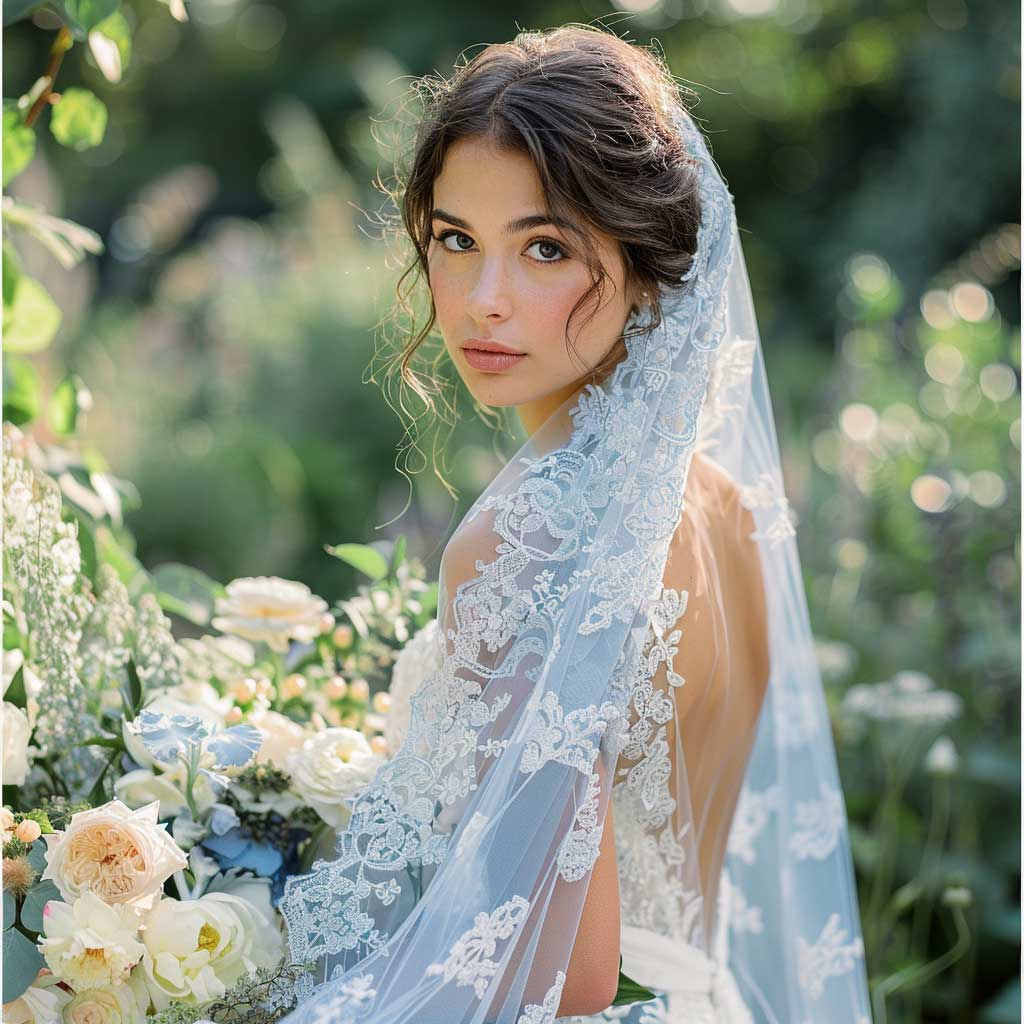
Dusty blue bridal attire divides into two real camps: a white or ivory gown with dusty blue accessories, or a full dusty blue dress as the statement. Both work. The ivory gown approach is safer for photography across different venue and lighting conditions — you know what white photographs as, and you can control the blue through the bouquet, sash, and shoes. The dusty blue gown is more striking and more cohesive with the overall motif, but it demands good natural light or warm artificial light to read correctly. Under cool overhead lighting it shifts grey, which is exactly the opposite of what you want on the day.
Vera Wang’s “Something Blue” collection and Essense of Australia both produce dusty blue bridal gowns with starting prices around $1,800 and $2,200 respectively — I’ve seen both in person, and the Essense lace overlay at the $2,200 price point photographs particularly well outdoors. For the ivory route, a dusty blue sash at $45–$80 from Etsy bridal shops, shoes dyed to match (most cobbler services run $65–$120), and a bouquet in the full dusty blue palette closes the visual loop without committing the whole gown to the color. Does a dusty blue shoe dyed from ivory ivory hold its color through a full reception? In my experience, yes — order them two months out to allow for re-dyeing if the first result misses the tone.
Bridesmaid dresses in the dusty blue motif: chiffon is the right fabric and floor-length is the right silhouette. Chiffon in dusty blue moves and photographs with dimension; midi-length in the same color reads cocktail-party rather than bridal. Azazie carries a verified dusty blue chiffon style in the $130–$175 range — order swatches before committing, because the same shade can look significantly lighter or more saturated depending on the dye lot. Bridal gown pearl accessories over gold or silver — silver reads colder against dusty blue, gold reads warm, pearl reads timeless. I own two sets of freshwater pearl drop earrings specifically because they work across every cool-toned wedding palette I’ve encountered.
Photography setting matters as much as the gown itself. Position the bridal party against dark foliage, warm brick, or weathered wood rather than white walls — white backgrounds wash out dusty blue in direct sunlight and make the palette look flat. A shaded garden with dappled light is the ideal backdrop for a dusty blue wedding motif, because the color gains depth without direct sun bleaching it toward pale sky blue. Ask your photographer specifically about their experience shooting muted color palettes before booking.
FINAL WORD
Dusty Blue Rewards Restraint and Punishes Shortcuts
The palette is self-editing — too many competing colors and it disappears. Ivory, warm white, and muted sage are the only safe pairings. Silver hardware and bright white linens both drain the hue on camera.
Candlelight is not optional at a dusty blue reception. Warm ambient light is what makes the color read as romantic rather than institutional grey.
Order bridesmaid dress swatches from two dye lots before committing. Dusty blue is one of the most dye-lot-sensitive shades in the chiffon category. Save this post before your first florist or dress appointment.