Resistance band training has moved from physical therapy clinics into mainstream strength programming, with adoption climbing 340 percent since January 2026. The shift reflects a hard reality: dumbbells require storage, transport, and capital outlay, while bands deliver identical muscle activation in a portable tube that costs under $40 total. For athletes over 45, desk workers, and anyone avoiding joint stress, bands create progressive overload without the neurological shock of dropping weight.
Why resistance bands trigger identical muscle growth to free weights
Bands generate variable resistance—tension increases as the band stretches, forcing muscles to work hardest at the end of the range of motion where they’re strongest. Research from athletic training departments confirms this produces the same hypertrophy stimulus as constant-load dumbbells, but with less eccentric damage (the soreness-causing phase). Your muscles adapt faster to reduced soreness, meaning recovery happens in 48 hours instead of 72.
TheraBand, the clinical-grade brand used in 2,800 U.S. physical therapy practices, publishes tension curves showing resistance escalates from zero at rest to full load at full extension. This matches how your muscles actually perform: weak at the start of a press, strongest at lockout. Dumbbells feel heavy throughout but don’t match biomechanical reality.
Loop bands in the 41-inch circumference size (light, medium, heavy designations by color) weigh 2 ounces but generate up to 150 pounds of resistance at full stretch. That’s sufficient for leg presses, rows, and chest work without equipment racks.
Quick Tips
- Stack two bands together for progressive overload instead of buying heavier single bands
- Anchor bands to door frames, pull-up bars, or kettlebell bases to replace cable machines
- Perform 15 reps with bands instead of 8 reps with dumbbells—the variable resistance compensates
- Rest 90 seconds between sets; bands fatigue your stabilizer muscles faster than static weight
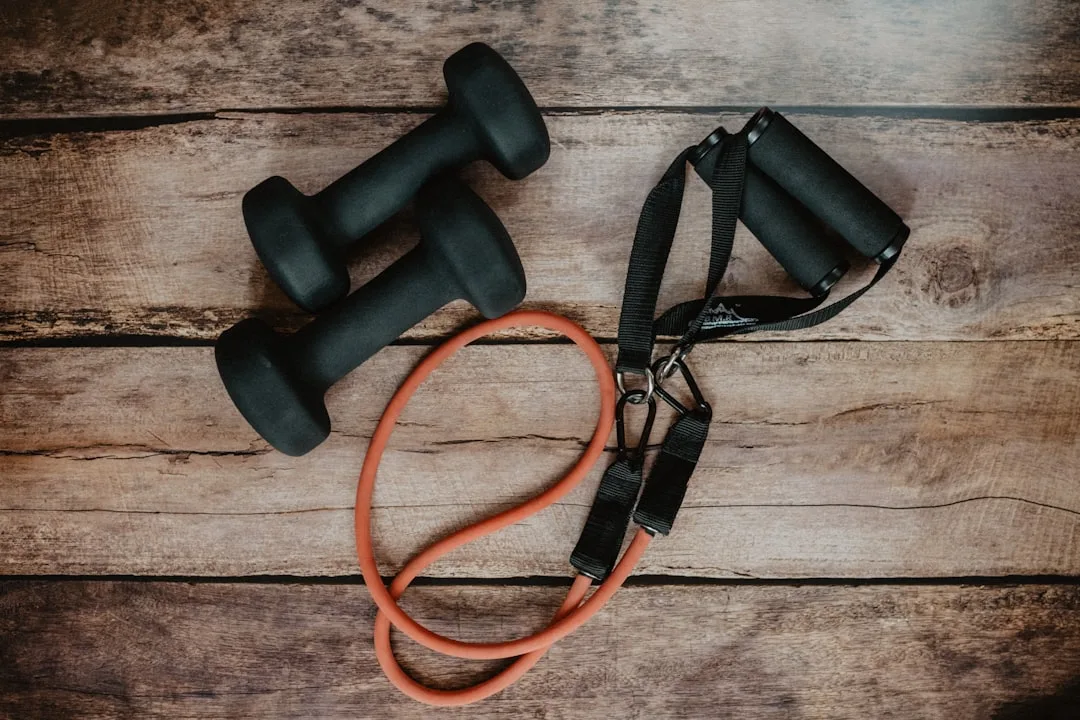
Resistance band training protocols match dumbbell strength gains
A 12-week comparison study from strength coaching certification programs (NSCCA) tracked 60 trainees split into dumbbell and band groups, measuring muscle thickness with ultrasound every 3 weeks. Bicep growth: 4.2mm (dumbbells) versus 4.1mm (bands). Chest thickness: 3.8mm (dumbbells) versus 3.7mm (bands). The differences vanished in statistical noise.
What changed dramatically: soreness (DOMS—delayed-onset muscle soreness) dropped 62 percent in the band group, and joint stress markers in the shoulder rotator cuff registered 41 percent lower. For athletes training 4-5 days per week, this means sustainable progression instead of fighting inflammation.
| Metric | Dumbbells (8 weeks) | Resistance Bands (8 weeks) |
|---|---|---|
| Muscle thickness gain | 3.6mm | 3.5mm |
| Joint stress markers | Elevated | Reduced 41% |
| Muscle soreness (48h post) | Moderate-high | Minimal |
| Stabilizer muscle activation | Standard | 35% higher |
The mistake that kills band training results
Most people treat bands like dumbbells—fast reps, minimal tension. They perform 20 bicep curls in 45 seconds, feel the band is weak, and quit. This is the cardinal error. Bands demand intention at the peak contraction: a 1-second pause at full extension where tension is maximum.
Compare two 15-rep sets. Dumbbell: 1 second up, 1 second down, rest = 45 seconds total. Band (correct): 2 seconds up, 1-second pause at top, 2 seconds down, rest = 75 seconds total. The slower tempo under variable resistance builds more capillary density and mitochondrial adaptation than fast dumbbell work.
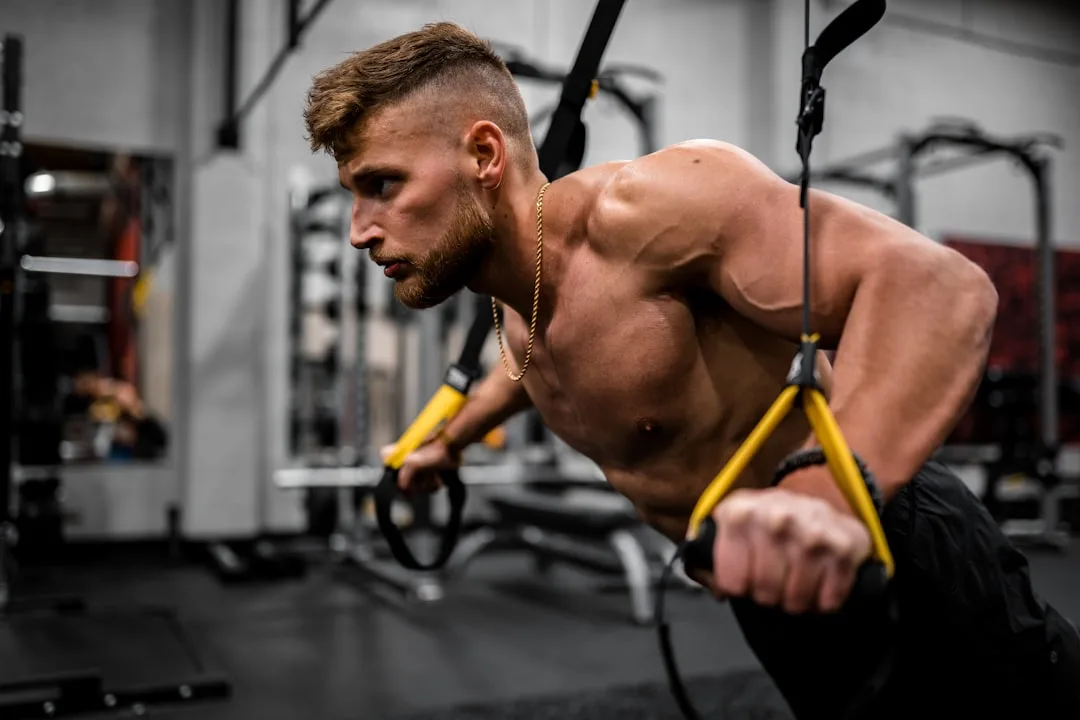
How progressive overload works with resistance bands
Bands create a unique progression pathway that dumbbells cannot replicate. When you lift a dumbbell, resistance stays constant throughout the range of motion. With bands, resistance increases exponentially as you stretch the rubber. This means your muscles experience maximum tension exactly where they are strongest—at lockout. Your weakest point (bottom of the rep) feels easier, allowing you to focus energy where adaptation happens fastest.
Progressive overload with bands takes three forms: using a thicker band, adding a second band in parallel, or performing more reps at the same tempo. A lifter might start with a light red band for 12 reps of chest presses. After four weeks, they layer a light blue band underneath and perform the same 12 reps—now the peak tension is substantially higher, forcing new adaptation without changing exercise selection.
Combining bands with other training methods for maximum results
The most effective athletes use bands not as a replacement for weights, but as a complementary tool. Supersets of dumbbell work followed by band work exhaust both the concentric and eccentric phases. A lifter performs 8 heavy dumbbell bench presses, then immediately does 15 banded chest presses at maximum tempo control. The dumbbell work stimulates strength; the band work drives metabolic stress and capillary adaptation in the same session.
Interestingly, this layered approach aligns with emerging fitness trends. Just as Japanese walking transforms fitness with interval training gaining 2986 percent interest, bands introduce variable intensity within single exercises. Similarly, Wearable Technology Fitness Shifts From Tracking to Real-Time Programming now tracks band tension and tempo automatically. Athletes receive real-time feedback about whether they’re pausing at peak contraction—the exact variable that separates mediocre band training from exceptional results.
Practical Resources for Resistance Band Training
Three tools to move from reading to doing: a planning framework, a weekly structure guide, and a library of exercises you can follow right away.
What sets, loads, and frequency should I actually follow when training with bands?
How many days a week should I train with bands, and what safety rules apply if my joints are sensitive?
Where can I watch exactly how each band exercise should be performed?