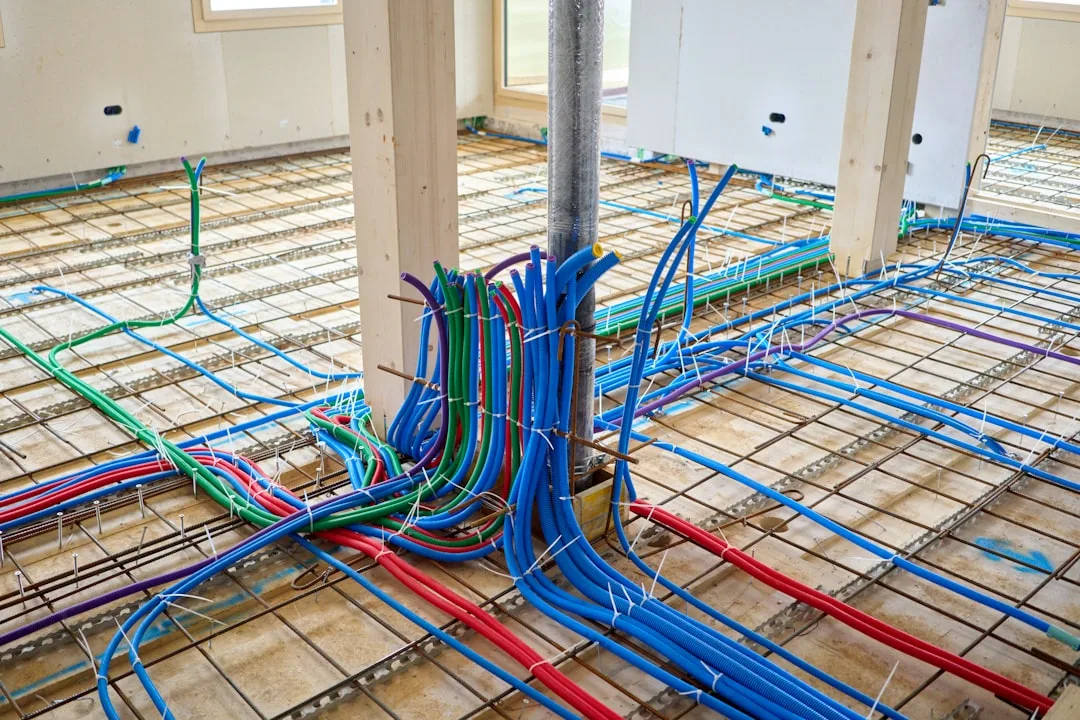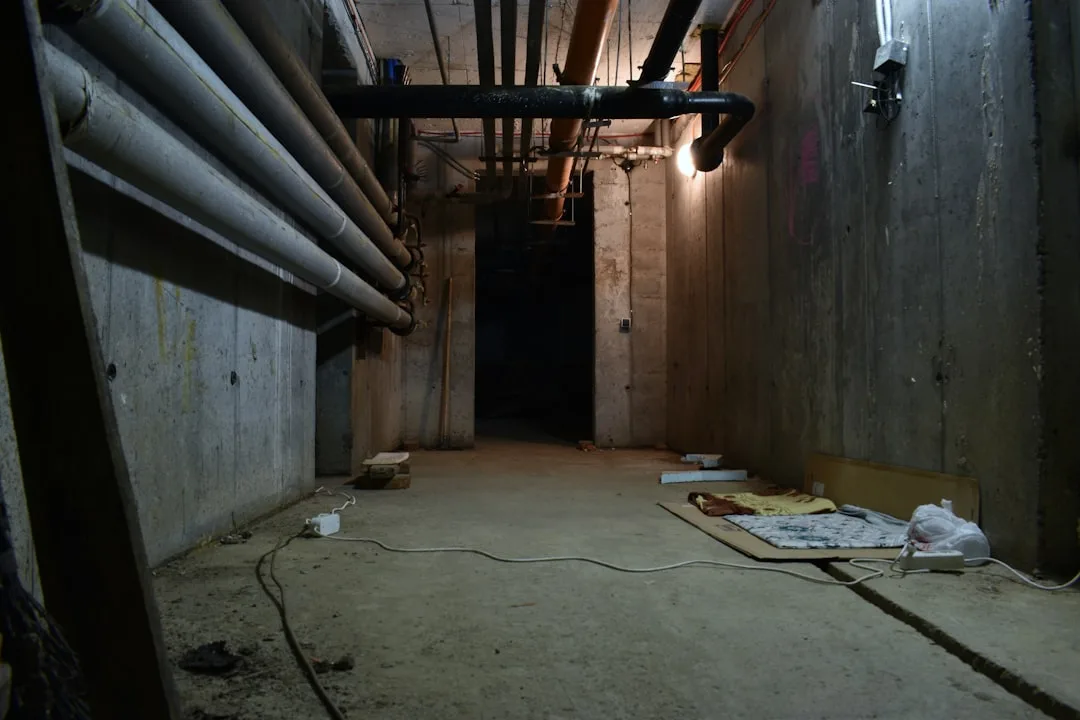
Moisture rises from below. A finished basement ceiling peels paint. The corner smells musty even after opening windows. Most homeowners wait until visible mold appears to address basement humidity, but basement dehumidification systems work to prevent that moment entirely. The difference between a thriving finished space and a moldy liability often comes down to one decision made before the drywall goes up.
Why Basement Humidity Becomes Critical in Summer Heat
August heat creates temperature differentials that pull moisture upward through concrete. When warm air outside meets cool basement walls, condensation forms on surfaces and inside wall cavities where you cannot see it. This hidden moisture fuels mold growth that spreads through insulation and drywall before anyone notices.
Professional humidity readings in uncontrolled basements during summer regularly exceed 70% relative humidity—well above the 50-60% threshold where mold spores begin germinating. Crawl spaces and lower basements hit these levels even in dry climates. The warmer the outdoor air, the more moisture basement concrete absorbs and releases indoors.
Aprilaire, a leading manufacturer of indoor air quality systems, builds whole-home dehumidifiers that integrate with existing HVAC ductwork and handle basement moisture as part of total-home climate control. Their systems use refrigerant-based dehumidification to remove moisture at the source rather than waiting for problems to emerge.
Quick Tips
- Install basement dehumidification before finishing walls—retrofitting costs 40% more
- Pair dehumidifiers with sump pump discharge lines to handle condensate automatically
- Set systems to maintain 45-50% relative humidity year-round, not just summer
- Use continuous-duty models rated for basement temperatures (50-65°F), not consumer units designed for living spaces
- Check ducting annually—blocked return air reduces dehumidification efficiency by half
Portable Units Versus Whole-Home Basement Dehumidification Systems
| System Type | Coverage & Capacity | Installation Complexity |
|---|---|---|
| Portable Tank Dehumidifier | 1,500 sq ft max; 50 pints/day; requires daily emptying | Plug-and-play; takes 10 minutes |
| Portable Ducted Dehumidifier | 2,000 sq ft; 65 pints/day; drains to pump/foundation drain | Requires basic ductwork; 2–4 hours |
| Whole-Home Integrated System | Entire basement + crawl; 90+ pints/day; integrates with HVAC | HVAC professional install; 8–16 hours |
| Crawl Space-Specific Encapsulation + Dehumidifier | Crawl spaces only; 50–80 pints/day; sealed environment | Full encapsulation first; 3–5 days labor |
Portable units fail because homeowners forget to empty tanks or lines clog. Whole-home systems integrate directly into existing furnace ductwork, treating basement air as part of total-home humidity management. The condensate drains automatically to your sump pump or foundation drain line—no tanks, no maintenance surprises.
Santa Fe dehumidifiers specialize in whole-home systems designed for below-grade spaces. Their models include continuous-duty compressors rated for the cool, stable temperatures basements maintain year-round, unlike consumer-grade units that lose efficiency below 60°F.
The Basement Dehumidification Mistake That Costs Homeowners Thousands
One wrong move undermines everything: choosing dehumidifier capacity based on basement square footage alone, ignoring moisture load. A 1,200 sq ft basement in a humid climate with poor grading and a high water table generates far more moisture than the same space in an arid region with excellent drainage.
A homeowner in New Jersey finished a 1,500 sq ft basement using online sizing calculators that recommended a 50-pint portable dehumidifier. The unit ran continuously but could not keep pace with groundwater seepage and summer condensation. Within two years, drywall soft spots appeared near the floor. The entire wall assembly required replacement at a cost five times higher than installing an oversized 80-pint whole-home system from the start.
Oversizing is cheap insurance. A system rated for 90 pints per day in a space requiring 60 operates at lower capacity, consuming less energy while providing safety margin during peak moisture events.
Integration with Sump Pumps and Foundation Drainage
Dehumidifiers and sump systems work in concert. The dehumidifier handles air moisture; the sump pump handles liquid water. Each solves one half of the basement moisture problem, and both fail if either is missing.
Modern dehumidifiers feed condensate into dedicated lines that terminate at the sump pit. This means standing water never accumulates, and microbial growth stays minimal. The condensate is clean enough to allow gradual discharge into foundation drains or perimeter channels without clogging risk.
Zoeller, a manufacturer of submersible sump pumps, designs systems that integrate condensate intake with primary groundwater discharge. Their vertical intake ports accept garden-hose-diameter lines from dehumidifier drain pans, eliminating separate floor drains or standing water tanks.
Energy Costs and Year-Round Operation Strategy
Running a dehumidifier costs less than replacing moldy framing or refinishing a water-damaged basement. A whole-home system priced in the $2,500–$4,500 range for installation typically adds $15–$30 per month to electricity bills during humid seasons. Over ten years, that totals $1,800–$3,600 in operating cost against potential water damage repair bills exceeding $10,000.
Smart humidity controls now allow seasonal adjustment. During winter months when outdoor air is dry, systems reduce cycle frequency or run only when humidity spikes above your set threshold. This extends equipment life and minimizes wasted energy.
The key insight: basement dehumidification is not maintenance—it is prevention. It stops mold before professional remediation becomes necessary, preserves insulation R-value, and keeps finished spaces livable year-round. A whole-home approach to basement climate control treats humidity as a structural and health issue, not a seasonal annoyance.
Choosing Between Professional Installation and Portable Options
Professional installation matters for whole-home systems. HVAC technicians size equipment based on actual moisture load, existing ductwork capacity, and condensate drainage paths. They ensure new dehumidifiers do not overload your furnace or create negative pressure that draws radon into living spaces.
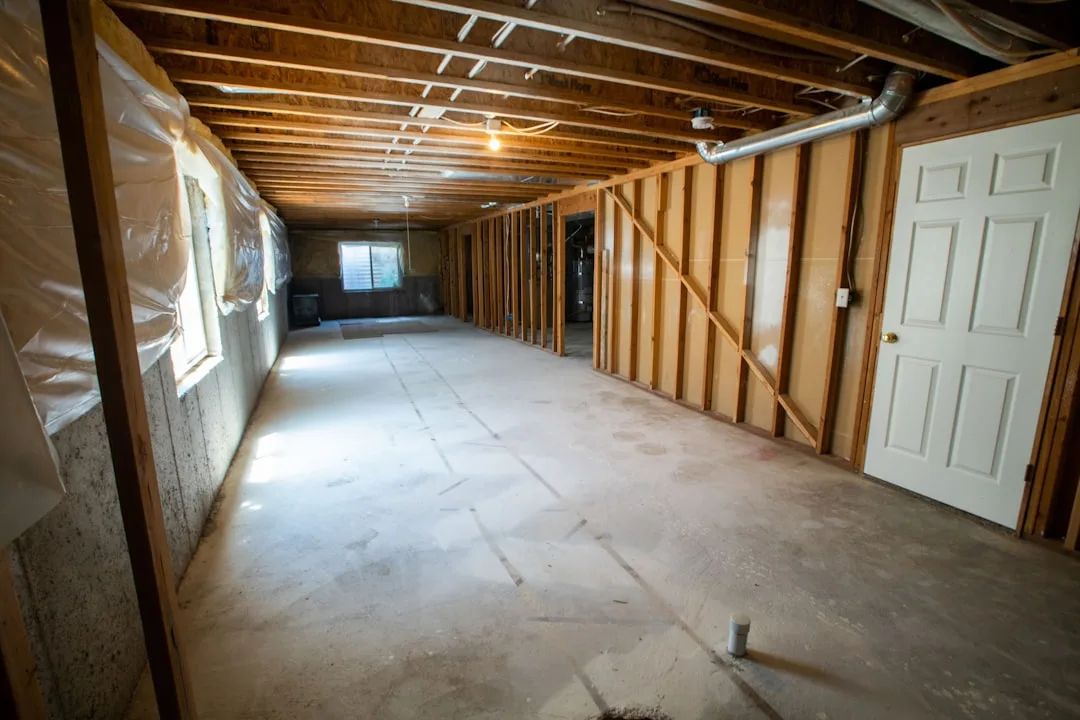
Portable units work for temporary moisture spikes or supplemental coverage in problem corners, but they cannot replace integrated systems for long-term basement finishing. If you plan to occupy your basement regularly, invest in capacity that operates passively in the background. Strategic upgrades like basement dehumidification fit into larger renovation sequences and should be prioritized before drywall, flooring, or electrical finish work begins.
August 2026 brings baseline humidity expectations that earlier decades did not anticipate. Finished basements now demand active climate control as standard, not luxury. The difference is knowing why—and acting before mold decides for you.
Tools & Guides for Basement Moisture Control
These resources help you take the next practical step — whether you’ve spotted mold, need to size a dehumidifier, or are comparing whole-home units before buying.
I found mold patches in my basement — what do I do first?
How do I figure out the right dehumidifier capacity for my basement size and conditions?
Where can I compare basement-rated dehumidifier models side by side before I buy?