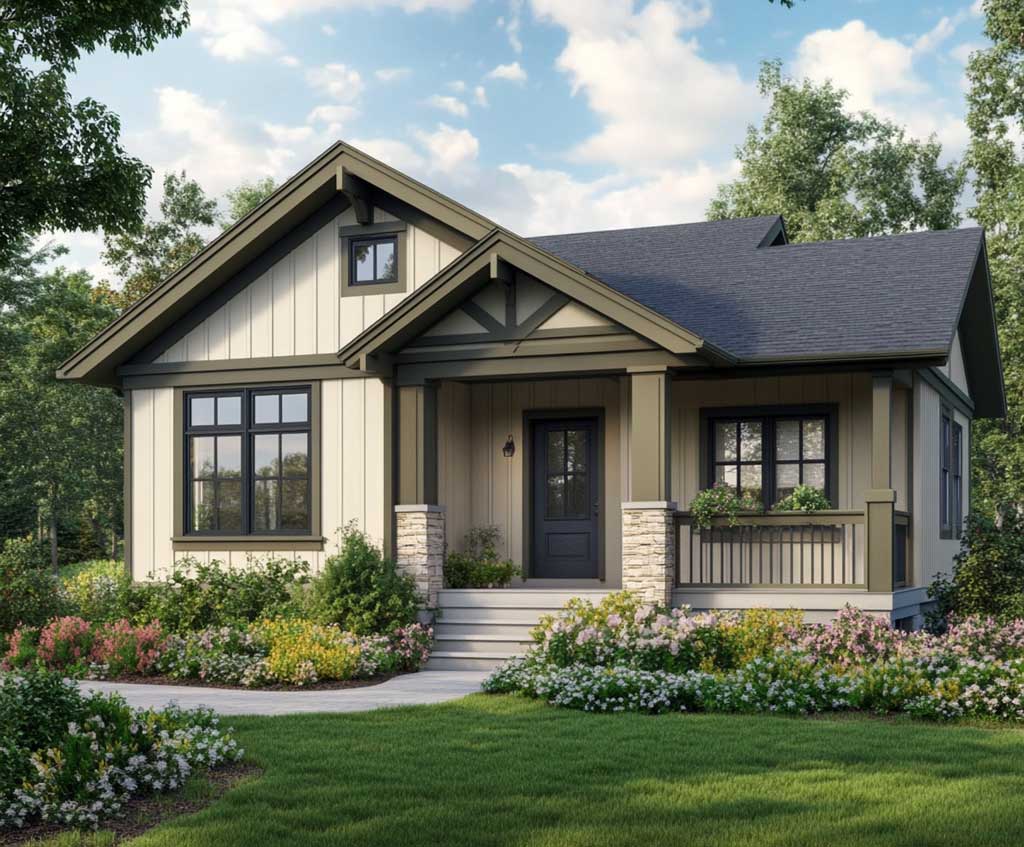
Green exterior house paint colors are having a moment — and not just on Pinterest boards. Sage, mint, olive, and forest green each bring a different character to a modern facade, and picking the wrong shade is a $4,000 mistake that follows the house for a decade. The shift toward earthy, nature-connected palettes has been building since 2022, and according to a 2026 Houzz Home Design Trends report, green-family exterior paints saw a 34% increase in project saves compared to 2024, outpacing every other color family including warm neutrals.
The four palettes below — sage, mint, olive, and forest green — are not interchangeable. Each one has a different LRV range, a different ideal trim partner, and a different maintenance demand. Choosing by shade alone, without understanding how the color behaves in afternoon shadow or against a warm-toned roof, is where most repaints go sideways.
Sherwin-Williams exterior paints range from around $49 to $86 per gallon depending on the product line, and a full exterior repaint on a 1,500–2,500 sq ft home runs $3,200 to $9,500 in labor and materials. That investment deserves more than a gut feeling about a color chip seen under store fluorescents. The breakdown below covers what each shade delivers, what it costs you in maintenance, and what wrecks it on the wrong house.
– Sage green (LRV ~30–41) is the safest full-body choice — holds under shade and direct sun, clears most HOA palettes
– Mint green works on modern flat facades but reads very differently on south-facing walls in direct summer sun
– Olive green anchors a house to warm stone and wood; avoid it next to cool-toned flagstone
– Forest green (LRV under 15) absorbs heat — south-facing walls may show fading within a year with budget paint
– All four: satin sheen only on the body, semi-gloss on trim — flat sheen on dark green is a mildew trap
– Plan for 350 sq ft per gallon coverage, not the 400 the label often claims, for dark-toned greens
Sage Green Exterior Paint — Why Contractors Recommend It First

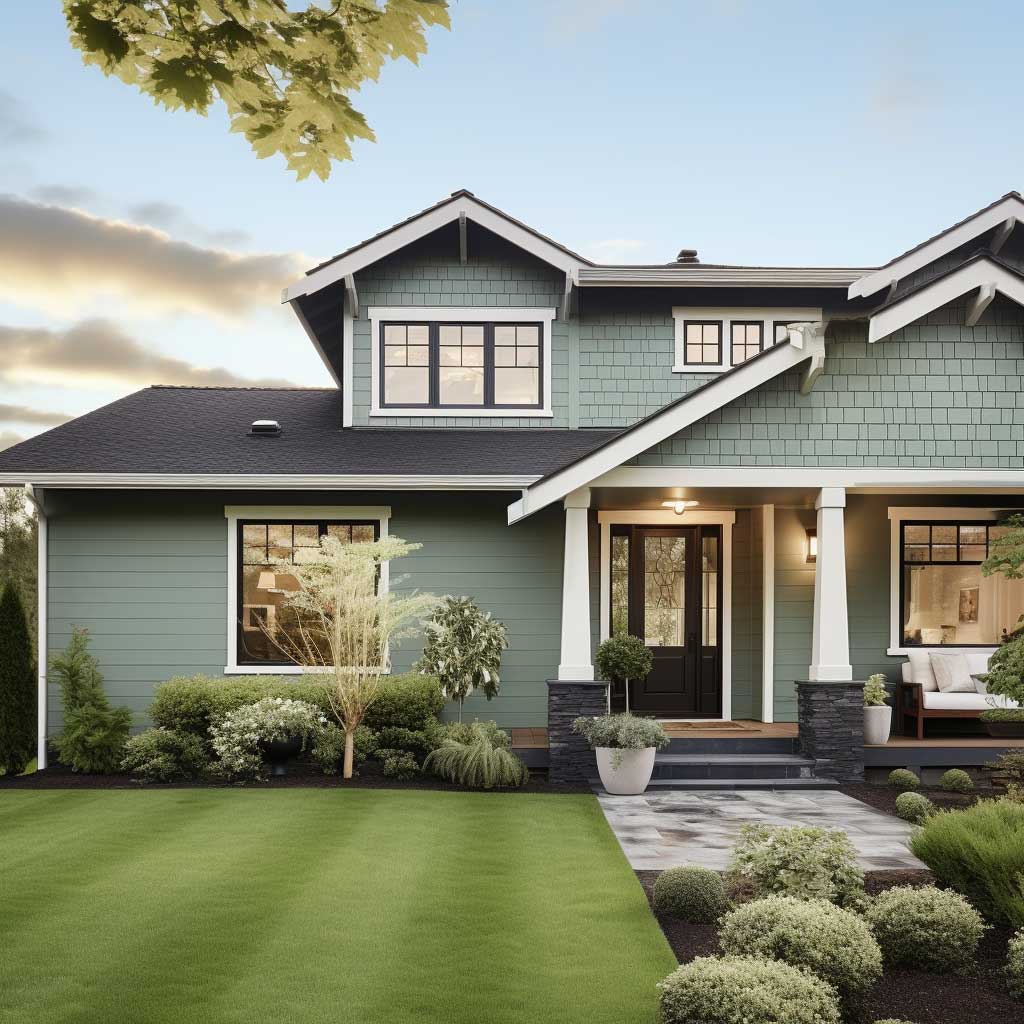
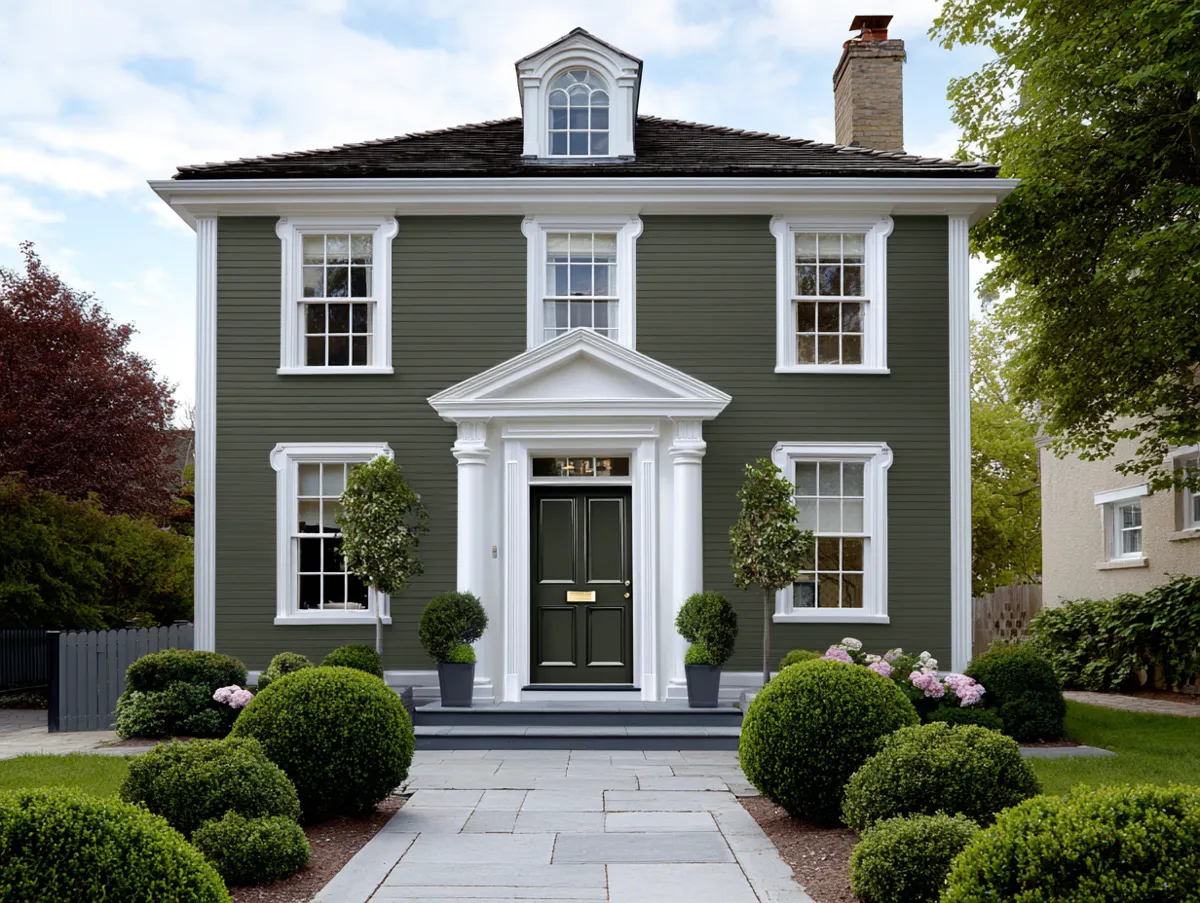
Sage green exterior paint is the most-requested exterior color among painting contractors in 2026 — that frequency isn’t random. Its gray undertone keeps it from reading as a loud statement color while still looking like a deliberate design decision. Sherwin-Williams Evergreen Fog (SW 9130) sits at an LRV of 30, which means it reads true to color across most lighting conditions — not flattened in deep shade, not washed out in noon sun. Benjamin Moore Gloucester Sage HC-100 runs slightly warmer at LRV 41 and favors Colonial and traditional homes where the brick or clapboard needs the extra warmth.
The trim question matters more with sage than with any other green. Reach for warm whites — Sherwin-Williams Alabaster or Benjamin Moore Simply White — instead of cool-toned bright white. Pure bright white against a warm sage reads as stark and cheap, like a rental property refresh. The contrast is still present, but warm white does the work without the visual clash. For modern homes with flat facades and minimal trim detail, charcoal or matte black accents on the door and shutters sharpen the palette considerably.
What doesn’t work: choosing sage for its muted character and then applying it in flat sheen to “keep it soft.” Flat exterior paint on a mid-to-dark green collects mildew in humid climates within a single wet season. Satin is the standard for a reason — it sheds water, cleans with a hose, and still reads as matte from the curb. Sage green in premium exterior paint like Sherwin-Williams Duration ($80.99/gal) or Benjamin Moore Aura Exterior ($85–$90/gal) maintains color for 10–15 years when applied correctly over two coats with a tinted primer. Skip the tinted primer and the previous wall color can bleed through within two years, especially if covering a dark beige or tan.
Does sage green photograph well for real estate listings? Yes — and that’s a practical reason to consider it beyond aesthetics. A house painted in a well-chosen sage green pulls more clicks on listing sites because it stands out among the sea of gray and greige facades. Curb appeal impacts perceived value before a buyer ever steps inside. Try it before committing: tape 12-inch peel-and-stick swatches from Sherwin-Williams or Benjamin Moore (around $8 each) to the actual siding on every elevation and observe them for five days — north wall in morning shade will show a completely different color than south wall at 2 PM.
Mint Green House Exterior — Where It Wins and Where It Fades
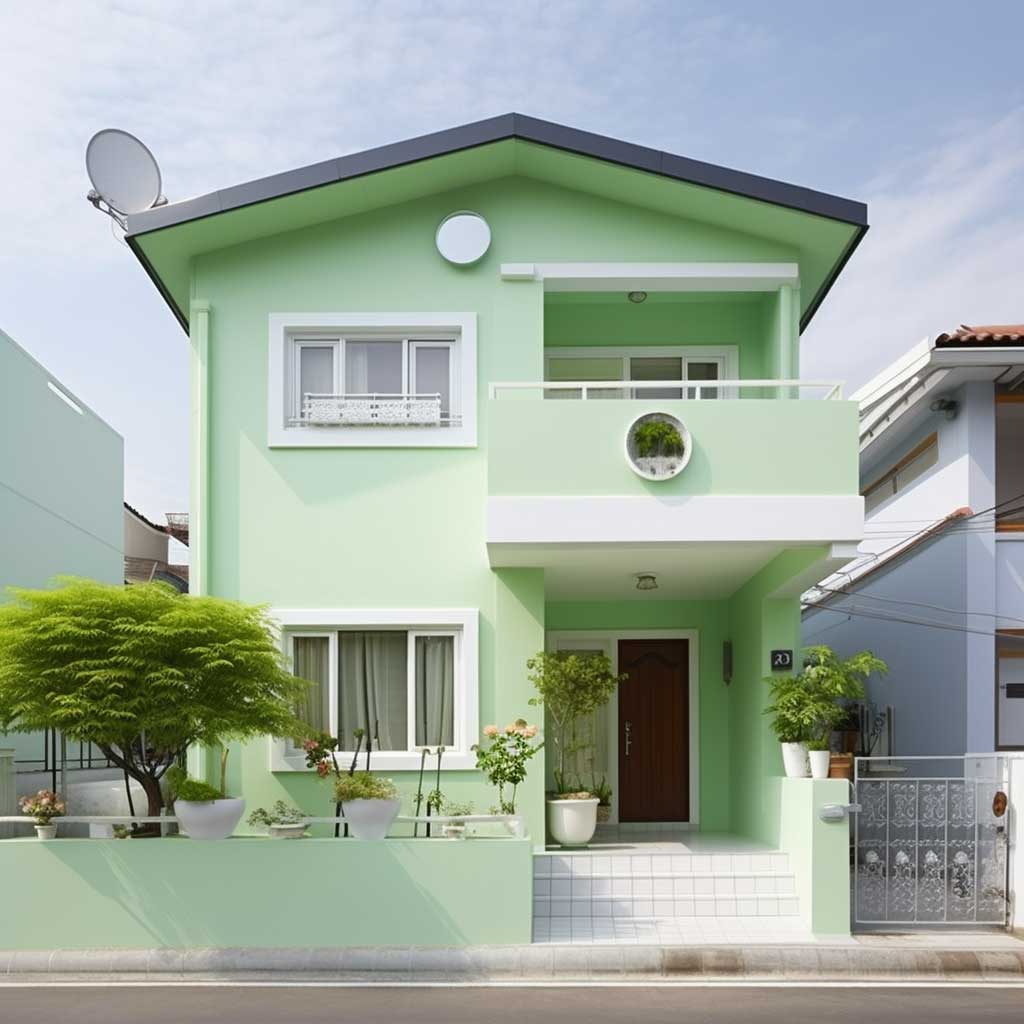


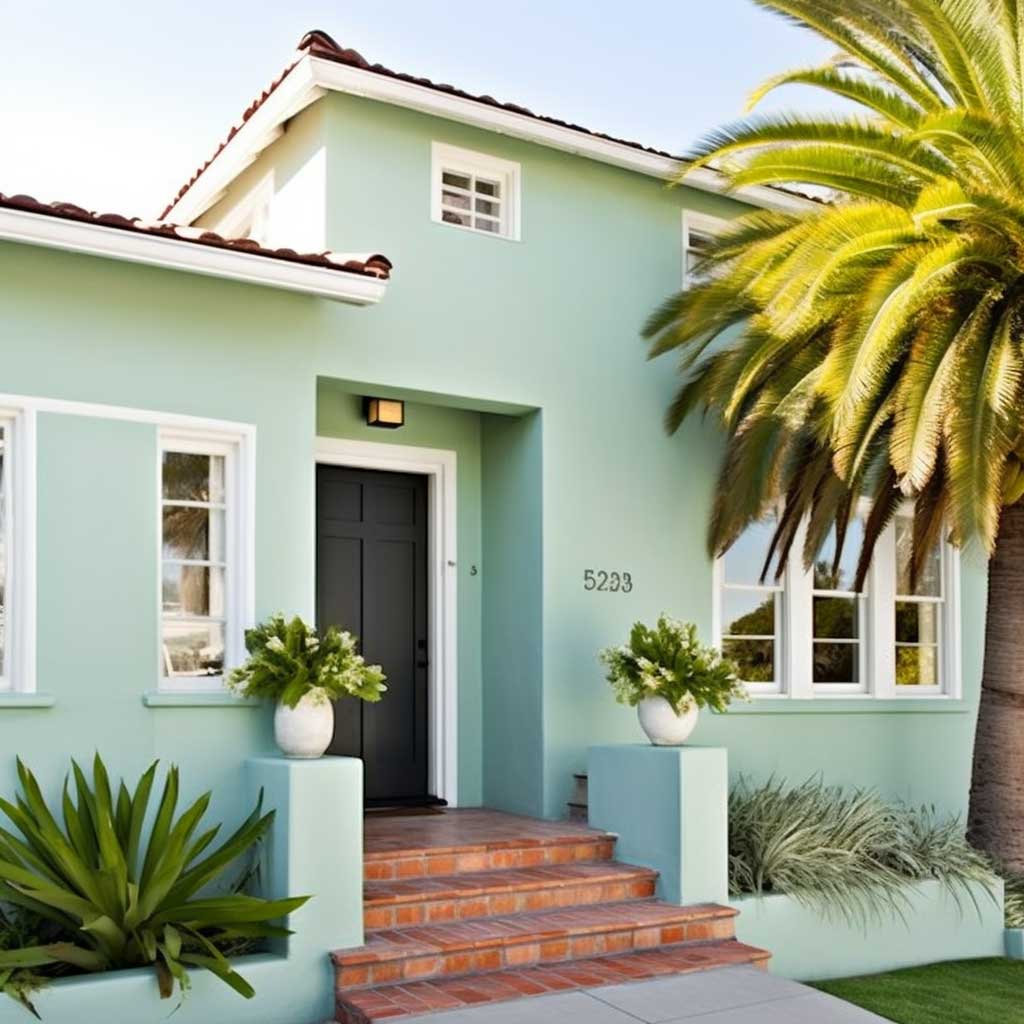
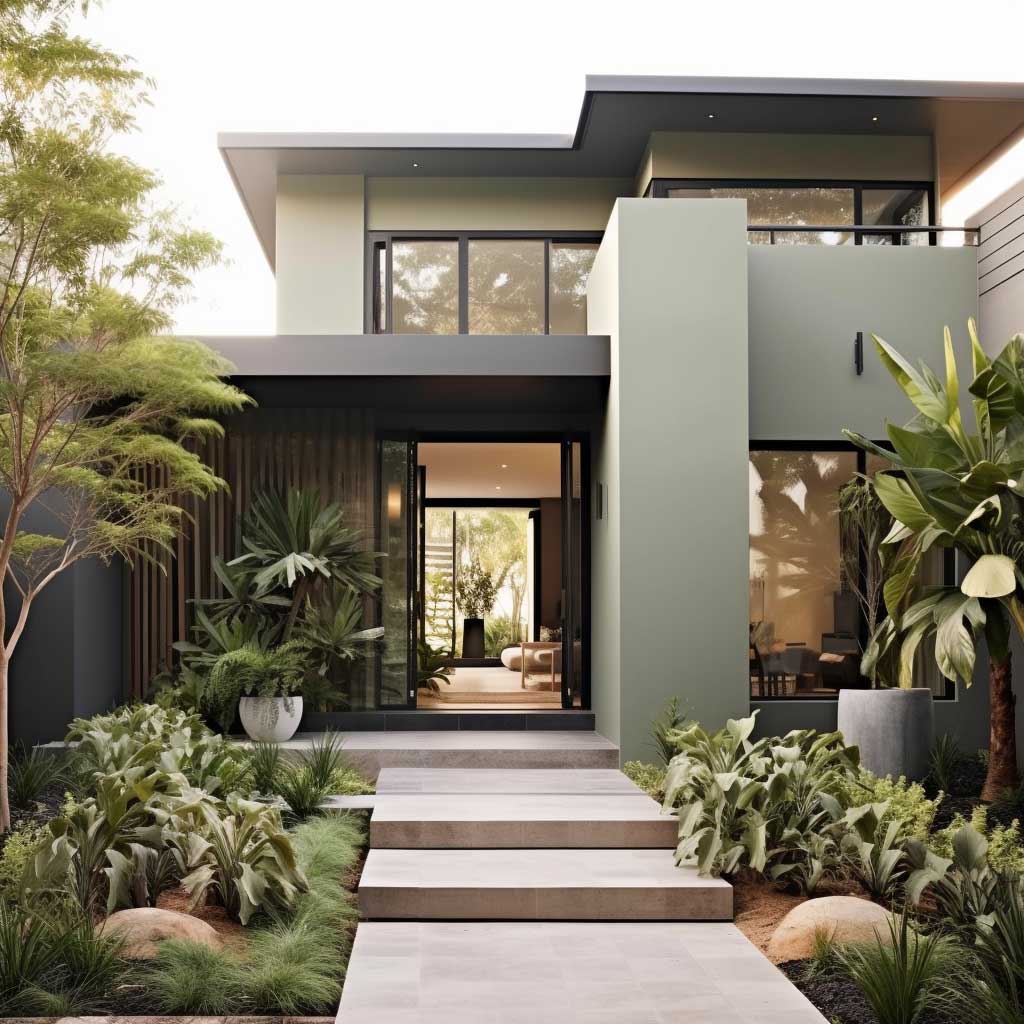
Mint green on a modern exterior is one of those choices that either looks sharp or looks like a 1970s bathroom — and the difference comes down almost entirely to architecture. Mint works on flat-roofed contemporary homes, board-and-batten siding, and facades with crisp geometric cutouts. Benjamin Moore Minty Green 2042-70 has an LRV of 83.41, which means it reflects enormous amounts of light — a practical advantage on south-facing walls in warm climates where heat absorption is a concern. On a north-facing wall in a shaded lot, that same high LRV reads pale and washed out. The directional behavior of mint green is the main thing stylists flag when someone asks why their color looks nothing like the inspiration photo.
Mint pairs best with white trim when the goal is a clean, contemporary read — but the pairing is unforgiving of poor prep. Any lap marks, roller texture variation, or patchy coverage stand out against the light-reflective base. A trim painted in semi-gloss or gloss sheen helps the edges define the facade the way a sharp line defines a sketch. Skip matte or eggshell on trim — it dissolves the contrast that makes mint worth choosing in the first place. Budget-grade exterior paint in a mint green also tends to drift chalky within three to five years in strong UV climates; a gallon of Glidden exterior mint paint sells for around $43 at Walmart but won’t deliver the longevity of a professional-grade product applied in two full coats.
What kind of homeowner reaches for mint? The person who sees their house as a design statement rather than a background. Mint green on a facade is a conversation starter in any neighborhood — it photographs well in spring and summer light, and it holds its own against winter gray in a way that many pastels don’t. The mistake is choosing a mint with blue undertones for a house surrounded by warm-toned landscaping, stone, or wood. Blue-leaning mint next to warm sandstone looks disjointed, like two projects that never spoke to each other. Look for mint greens with yellow undertones — they read as fresh without fighting the earth tones around the foundation. Exterior repainting on a typical home should happen every 5–10 years, but mint on sun-exposed walls may need attention toward the five-year mark if a lower-grade paint was used initially.
Don’t choose mint green for a house with traditional architecture — Victorian, Colonial, or brick-heavy Craftsman. The color reads as playful and contemporary; on an ornate facade it looks like a costume rather than a design decision.
Don’t paint over mint green with a single coat of a darker green without priming. High-LRV colors have significant pigment and will resist coverage. Two full coats plus a tinted primer are the minimum if you ever want to cover mint with sage or olive.
Don’t assume that a mint that looks right on a 4-inch chip will look right on 2,000 square feet of siding. Light-reflective colors shift dramatically at scale — always test a 3×3-foot patch on the actual siding before committing.
Olive Green Exterior Paint and the Trim Colors That Don’t Ruin It
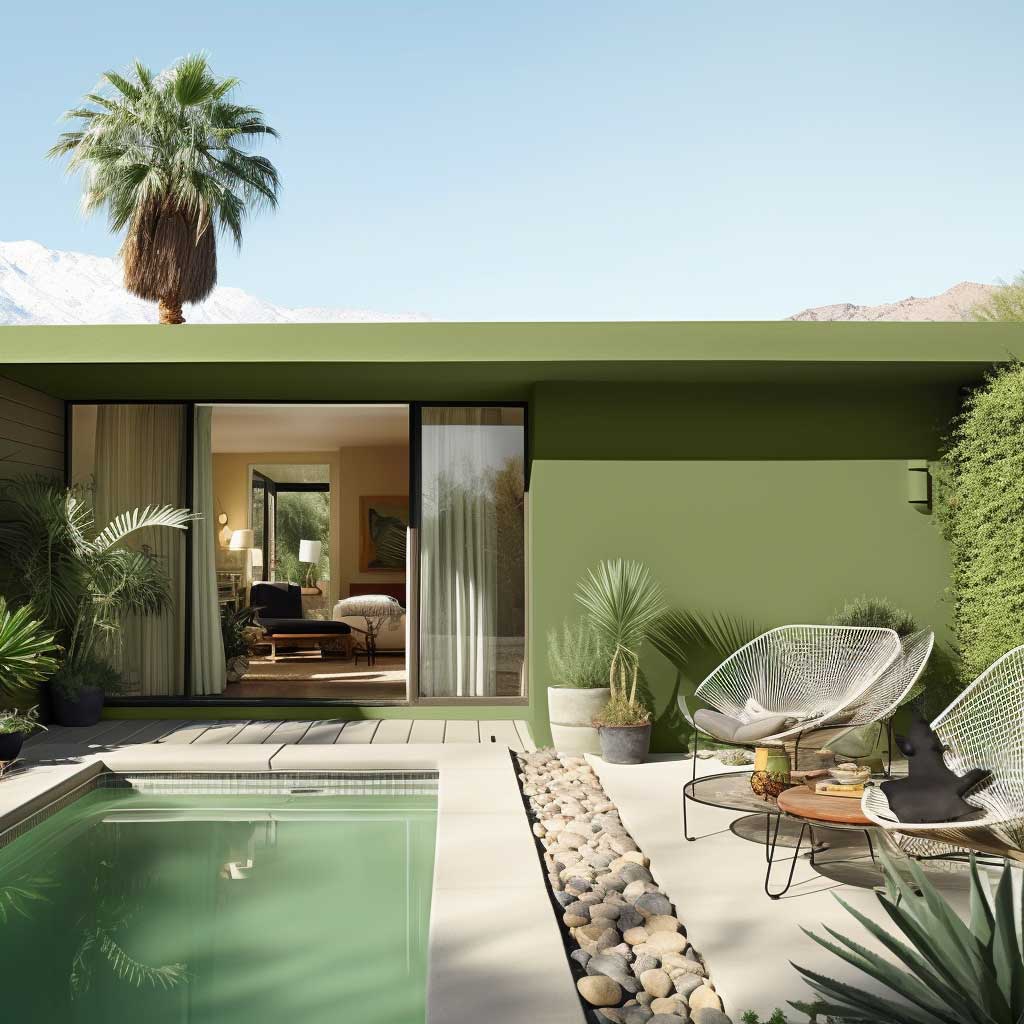
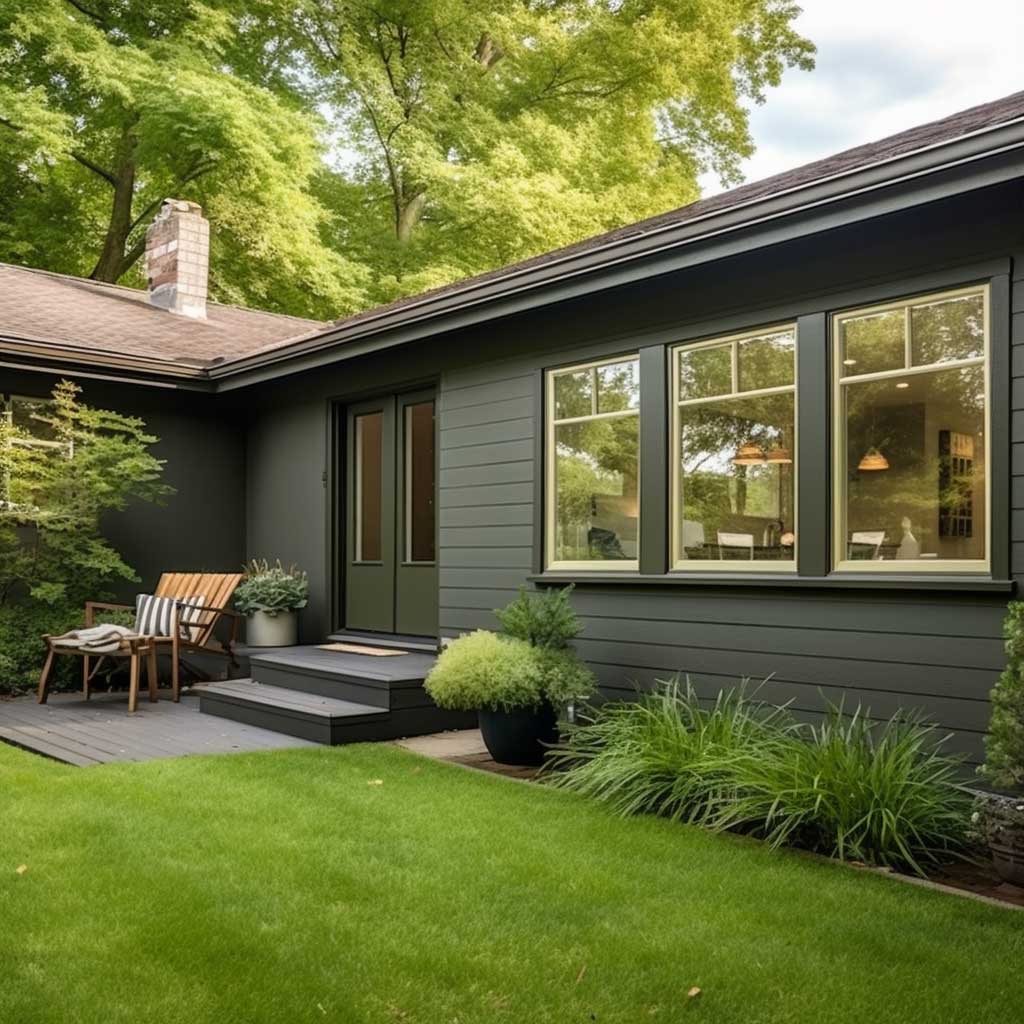
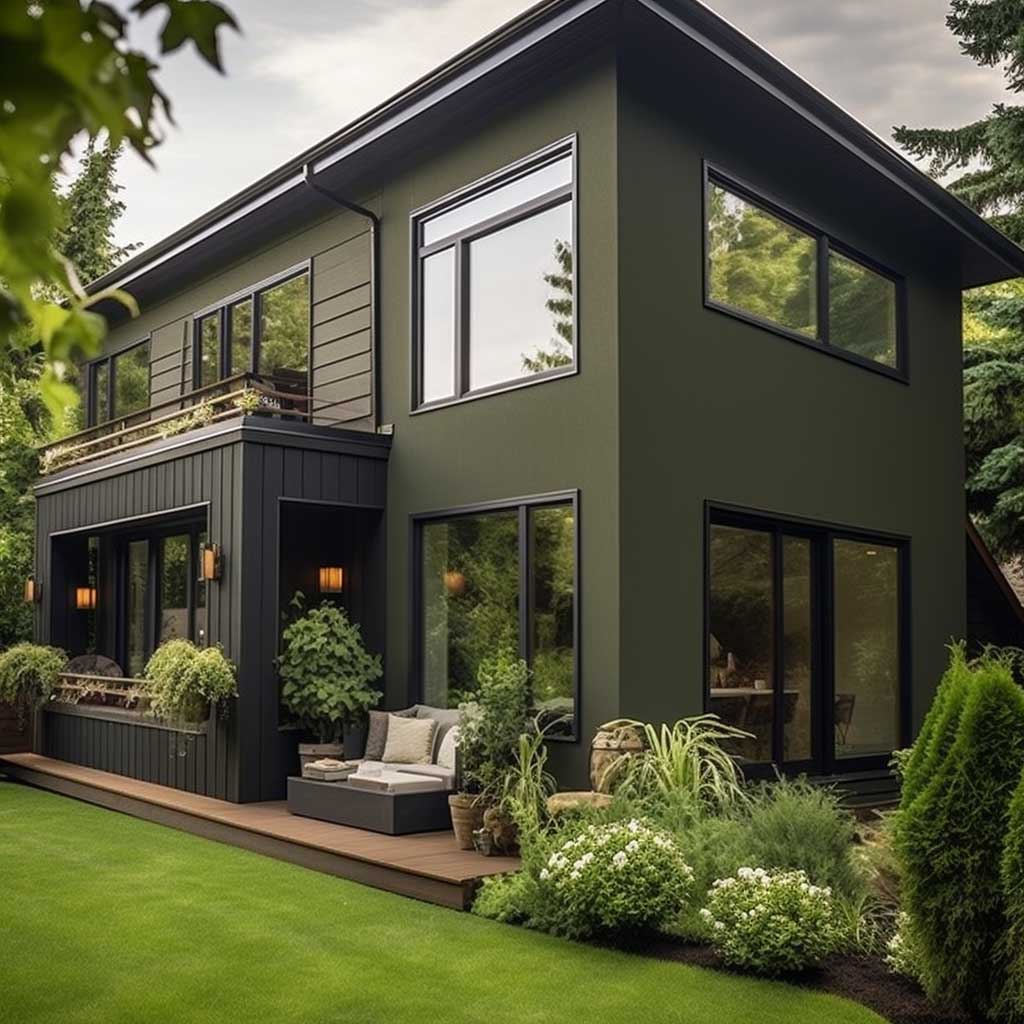

Olive green exterior paint is the choice that ages the most gracefully — it’s a warm-based green with yellow undertones that connects a house to the landscape rather than contrasting against it. Warm neutral exterior home colors like olive align well with what design forecasters are calling 2025 and 2026’s dominant palette: earthy tones that blend with the surrounding environment rather than stand apart from it. Glidden One Coat exterior paint in olive green runs about $62 per gallon at standard retail and covers up to 400 square feet per gallon, though on textured siding, plan for 350 square feet to be safe.
The trim pairing question with olive green is where decisions get expensive fast. Olive with white trim in a warm shade — Sherwin-Williams Alabaster, Benjamin Moore White Dove — produces the classic curb-appeal combination that holds resale value across architectural styles. Olive with bright cool white trim reads as jarring and tends to make the green feel military rather than sophisticated. For homeowners who want to try something less conventional, a walnut-stained front door against an olive body with cream trim brings a warmth that makes the whole facade look intentional rather than inherited.
One thing stylists recommend checking before committing to olive: the color temperature of any existing stone or masonry on the property. Cool gray limestone against warm olive reads as intentionally composed — the contrast is crisp. Warm-toned flagstone with orange or rust veining next to olive creates a muddy visual clash where neither element reads clearly. If the existing stone is warm, a slightly cooler olive or a move to sage becomes the more reliable choice. For more on how earthy green exterior paint ideas work across different architectural styles, the patterns hold consistently: warm undertone, correct trim temperature, satin sheen.
What trips people up is choosing olive for a heavily shaded lot expecting it to stay warm. Olive in deep shade shifts noticeably toward a murky brown-green, losing the warmth that made it attractive in the first place. The trick here is to move one LRV value lighter — not enough to change the shade family, but enough to keep the color alive in low-light conditions. Ask the paint counter to show you how the olive chip looks under a cool-toned light before mixing a full batch.
Get the Green Exterior House Paint Colors Right for Forest Green
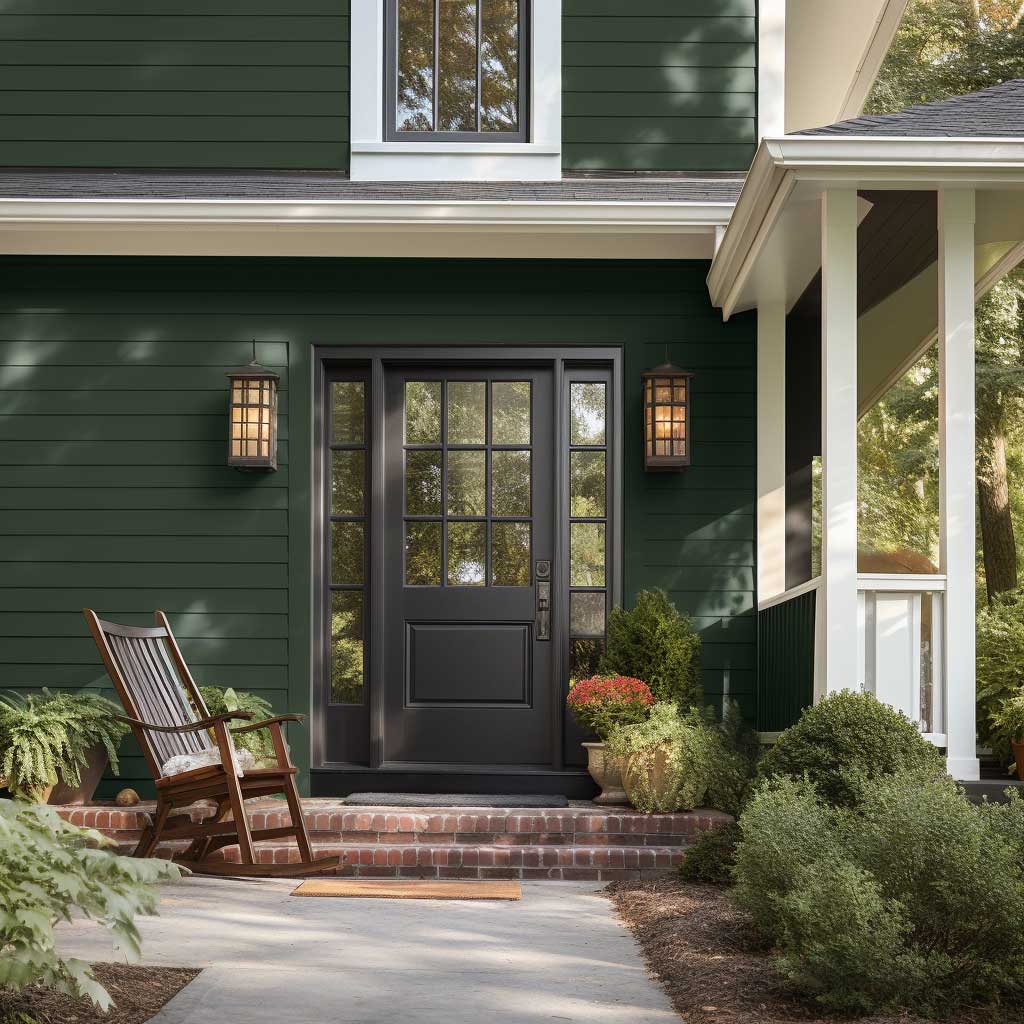


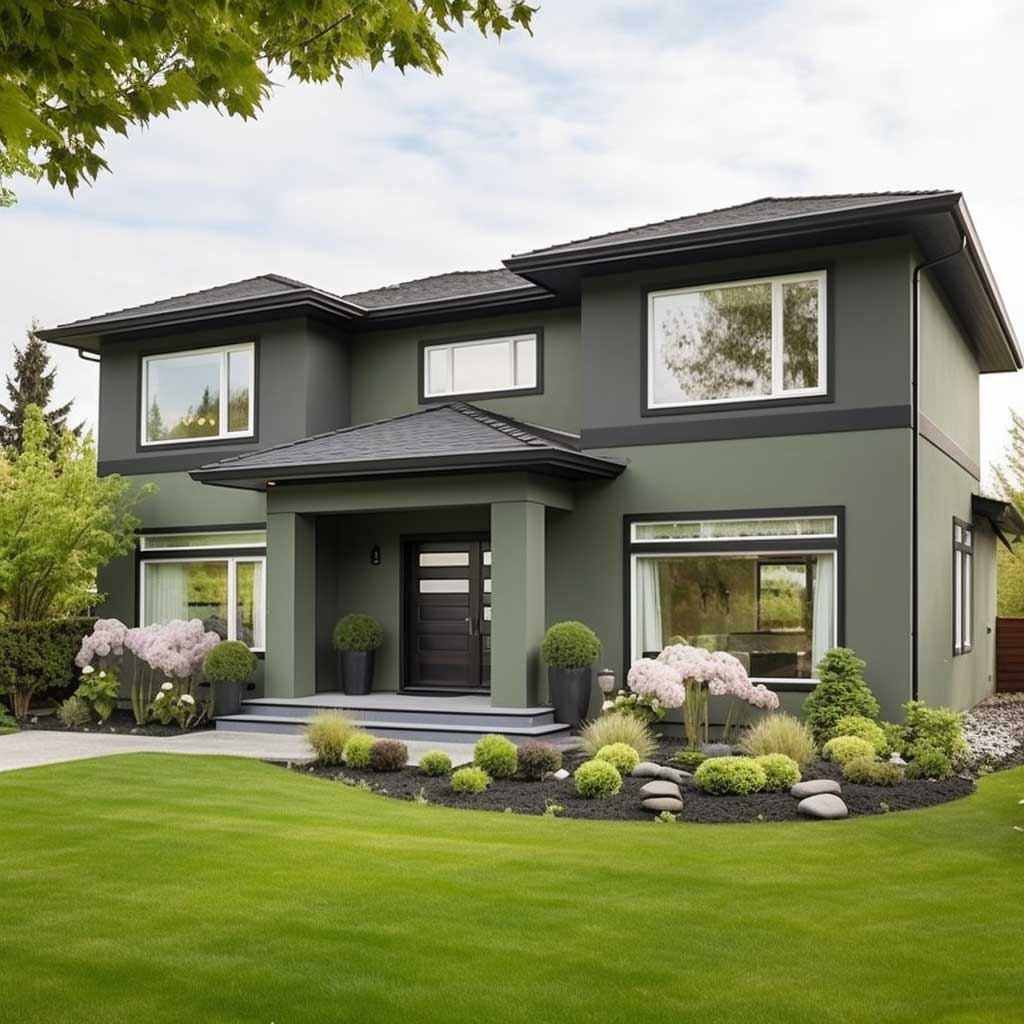
Getting the green exterior house paint colors right matters most when choosing forest green — the darkest of the four palettes and the one with the least margin for error. Benjamin Moore Essex Green HC-188 has an LRV of 5.13, which means it absorbs roughly 95% of incoming light energy. Dark colors at that LRV range can raise siding surface temperatures to two or even two-and-a-half times the outdoor air temperature on south-facing walls in direct sun. That thermal stress is what causes vinyl siding to warp, wood to cup, and caulk to deteriorate ahead of schedule. On north- or east-facing facades with mature tree cover, those same heat risks are minimal and forest green performs beautifully for years. On a south-facing stucco wall in a hot climate, dark green without IR-reflective pigments in the paint formula is a recipe for repainting within five years.
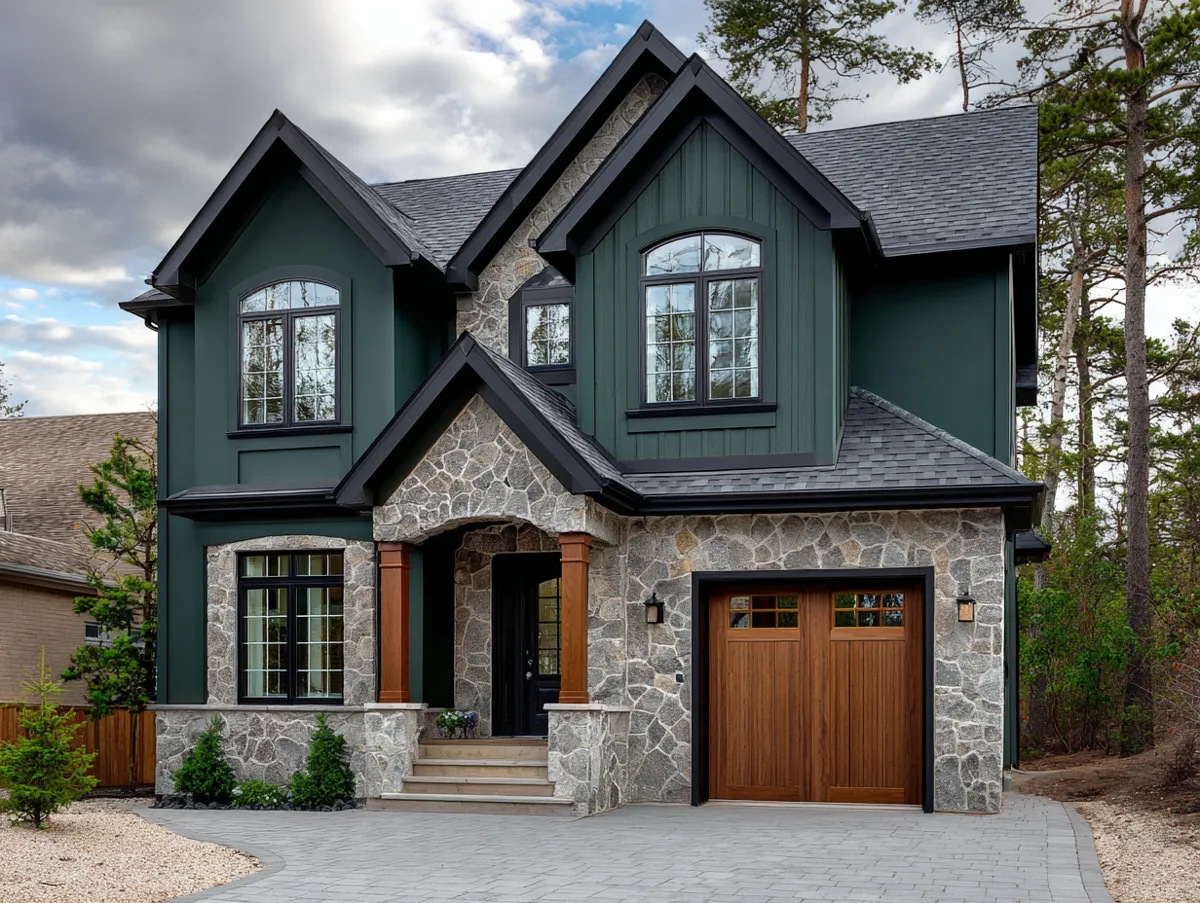
The architectural pairing that works consistently with forest green is crisp white trim — not warm white, but the cooler-leaning whites like Benjamin Moore Chantilly Lace or Sherwin-Williams Extra White. The high contrast sharpens every architectural line: eaves, window casings, corner boards. It’s the same visual logic as a navy blazer with white shirt — the contrast does the work. Adding natural cedar or walnut-stained wood accents alongside the white trim creates the Pacific Northwest or mountain-modern aesthetic that is the most-pinned green exterior category on design platforms in 2026.
Dark forest green also absorbs light in a way that makes the facade feel more three-dimensional. Shadow areas on window reveals and under roof overhangs read as deeper and more defined, which is why the color is so effective at highlighting architectural details that a lighter color would flatten. This works as an asset on homes with projecting bays, deep eaves, or layered facade elements. On a flat, plain box with no relief, forest green reads as heavy without any payoff. The trick here is to ask: does this house have shadow depth to amplify? If not, olive or sage delivers similar gravitas without the thermal risk. For a full comparison of how dark green exterior house paint colors behave across different trim and material combinations, the patterns across olive, forest, and hunter green make the right choice clearer.
What wrecks a forest green exterior faster than anything else? Flat sheen on the body combined with no primer. Dark greens need a tinted primer matched to approximately 50% of the final color formula — without it, the underlying wall color telegraphs through within two seasons. And flat sheen on a dark exterior traps moisture and shows mildew growth within one humid summer. Satin sheen with a tinted primer on two full coats is the baseline for forest green to perform as designed. Premium Sherwin-Williams Emerald exterior runs about $86 per gallon — it’s the right product for a color this demanding.
| Shade | LRV Range | Best Trim Pairing | Key Risk |
|---|---|---|---|
| Sage Green | 30–41 | Warm white (Alabaster, White Dove) | Looks gray in heavy shade if too cool |
| Mint Green | 80–84 | Crisp white, gloss or semi-gloss trim | Washes out on south-facing walls at high LRV |
| Olive Green | 20–35 | Warm white or walnut-stained wood | Turns muddy brown-green in deep shade |
| Forest Green | 5–15 | Cool crisp white or natural cedar | Heat absorption on south-facing vinyl siding |
For color verification tools and current shade guides for all four of these green exterior palettes, FacadeColorizer’s exterior paint guide covers undertone comparisons and LRV data across major brands. You can preview any shade on your actual house photo using their free AI visualizer before buying a single can — a useful step before committing to a color at $60–$90 per gallon. Green exterior paint colors for 2026 are organized by undertone with current pricing across Sherwin-Williams, Benjamin Moore, Behr, and Valspar.
Bottom Line
Green exterior house paint colors reward preparation more than any other color family.
Sage is the safest full-body choice — LRV 30–41, works on most architectural styles, clears most HOA palettes, and resists fading for 10–15 years with premium paint. Mint suits modern flat facades but demands careful shade selection by wall orientation. Olive anchors warm stone and wood but shifts toward muddy green in deep shade without an LRV adjustment. Forest green delivers the most dramatic architectural contrast but requires IR-reflective pigments and satin sheen on any south-facing wall.
All four shades need a tinted primer, two full coats, and satin sheen on the body. Budget 350 sq ft per gallon for coverage, not 400. Test swatches outdoors for five days before mixing a full batch.
Save this post before your next hardware store run — the LRV numbers and trim pairings above will stop a lot of expensive rework.
Related Topics
FAQ
What is the most popular green exterior house paint color right now?
What trim color goes with green exterior house paint?
How long does green exterior house paint last?
Does forest green exterior paint cause heat damage to siding?
How much does it cost to paint a house exterior green?
What green color combination works on a modern house exterior?
Complete guide
Green Home Color Ideas for Every Room and Every Shade
Sage, emerald, olive, mint — interiors, exteriors, gardens — all in one place