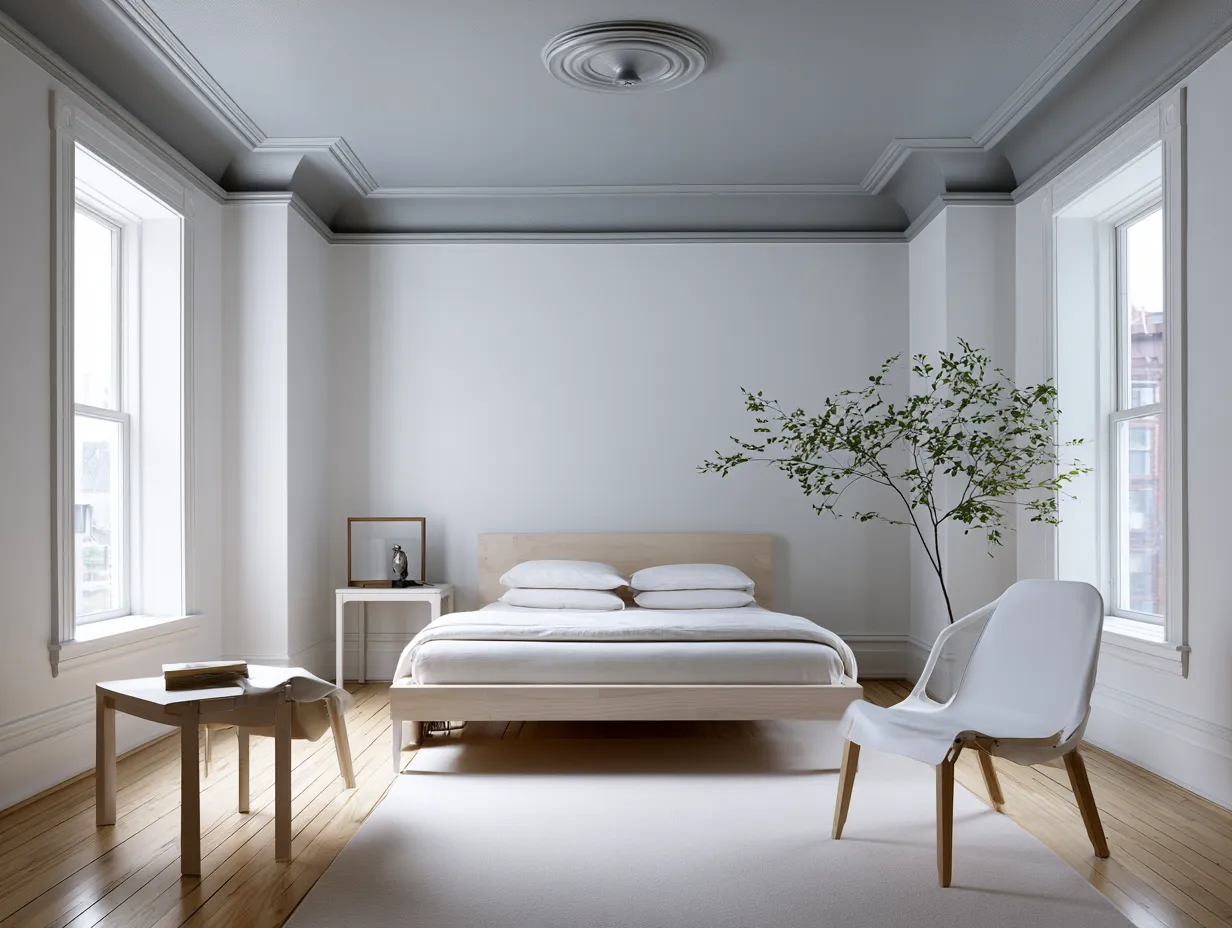
Small apartment furniture ideas only work when every piece earns its footprint — and I learned that the hard way after buying a 94-inch sectional for a 320-square-foot studio. Minimalist spaces demand furniture with clean lines, low profiles, and at least two functions per square foot of floor space. You’ll notice immediately that the rooms that look effortless on Pinterest share one trait: nothing is oversized, nothing is decorative-only, and nothing is pushed flush against every wall.
My go-to benchmark for any piece I consider is a simple question — does it make the room feel bigger or smaller at 9 AM with morning light coming in? Soft neutrals, slim legs, and wall-mounted storage consistently pass that test. Heavy frames, dark upholstery, and matching furniture sets in six pieces almost always fail it.
Below, I’ve broken down every zone of a small apartment — living room, bedroom, dining corner, home office, shelving wall, and flexible seating — with the specific furniture types, brand names, and layout logic that actually move the needle in spaces under 600 square feet.
- A low-profile sofa (under 32″ tall) visually doubles ceiling height in rooms under 9 feet
- Bed frames with built-in drawers eliminate the need for a separate dresser — recovering 12–18 sq ft of floor space
- Round dining tables seat four in the footprint of a square two-person table
- Wall-mounted shelving from IKEA BESTÅ starts at $65 and frees the entire floor plane
- Modular sectionals like the IKEA SÖDERHAMN ($599) reconfigure in under 10 minutes
- A slim desk under 48″ wide placed perpendicular to a wall — not against it — creates a dedicated work zone without eating the room
Low-Profile Sofa Choices for Small Apartment Living Rooms
Small apartment furniture ideas live or die by sofa height, and most people pick wrong. The IKEA LANDSKRONA ($699, 29″ tall) and the West Elm Andes Sofa ($1,299, 30″ tall) are my two benchmarks — both stay under 32 inches high, which keeps sightlines clear across the room and makes a 12-by-14 living room feel like it has breathing room. I’ve sat on both; the LANDSKRONA wins on price-per-comfort, the Andes wins on fabric longevity.
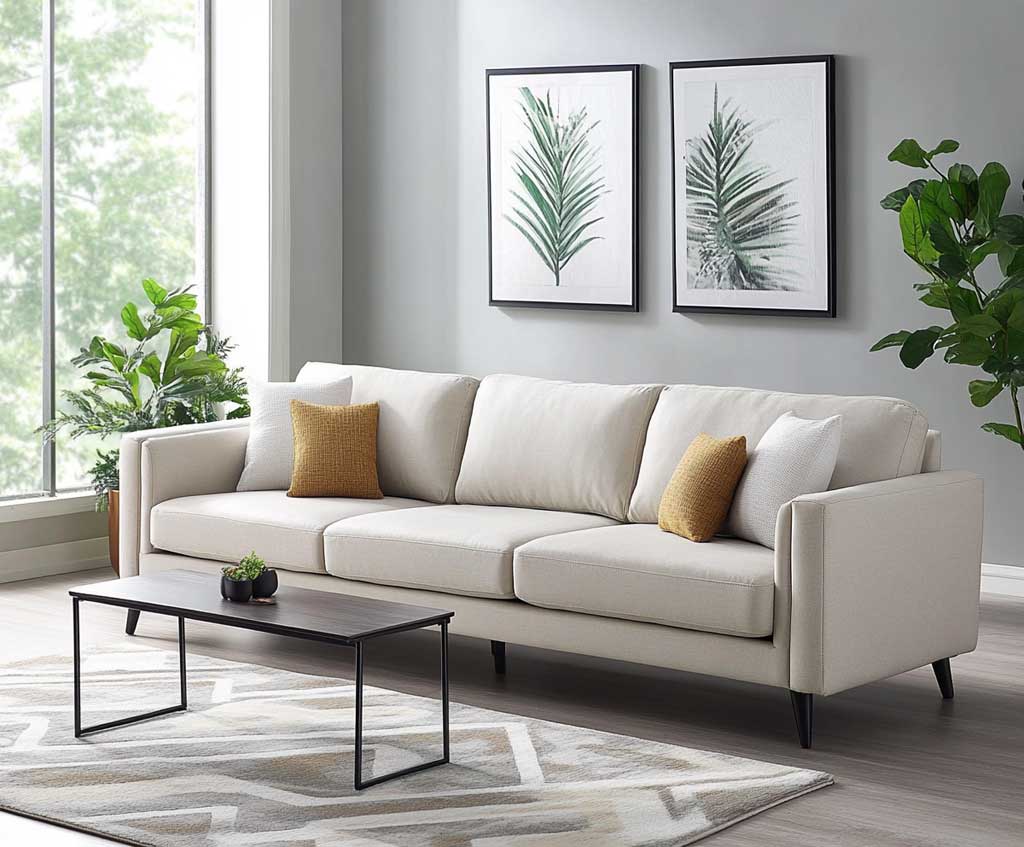
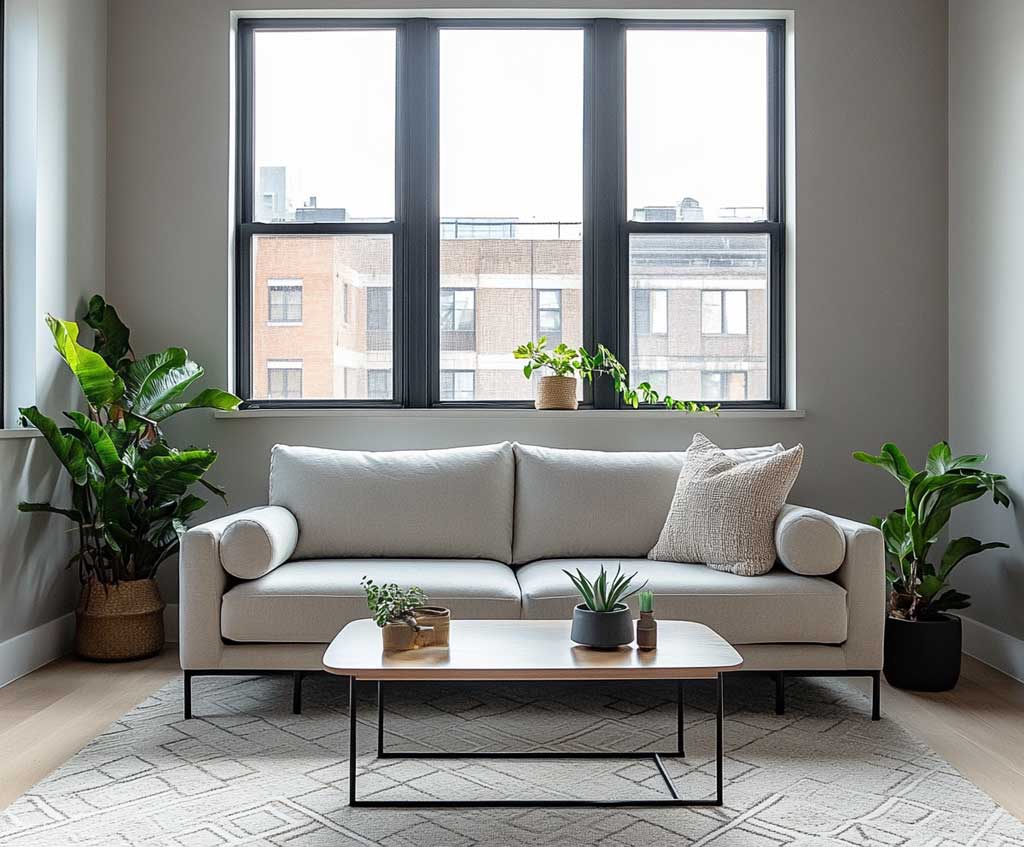
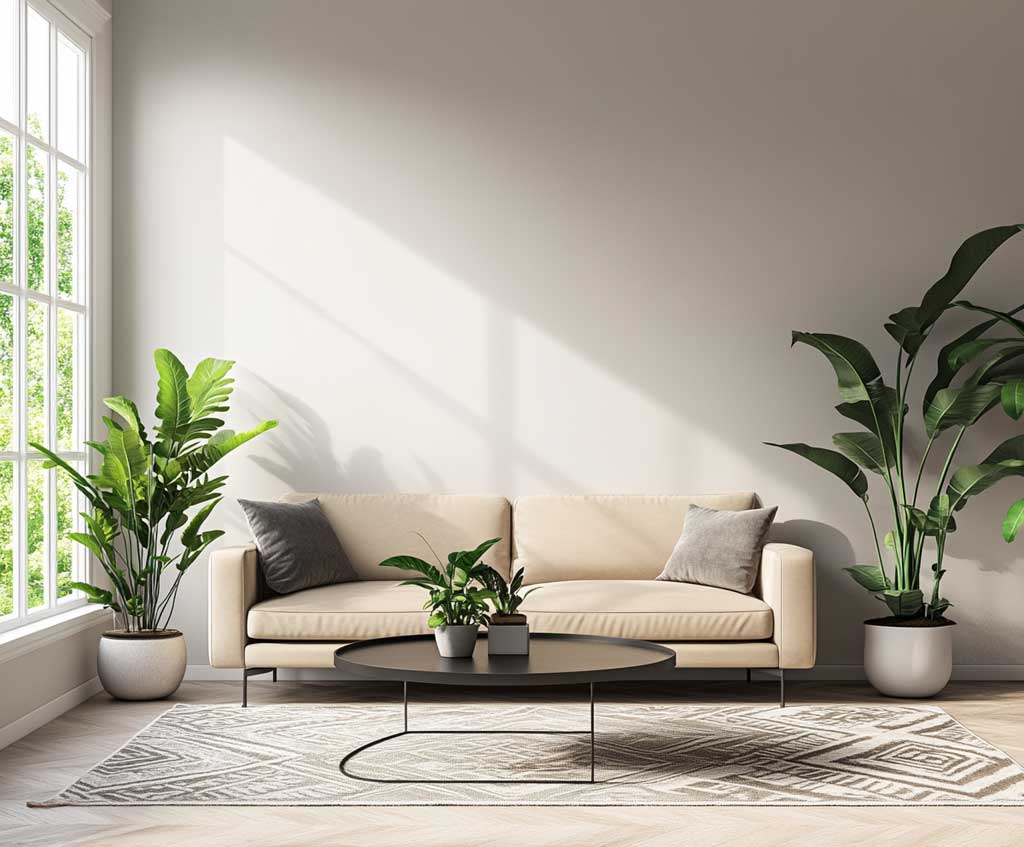
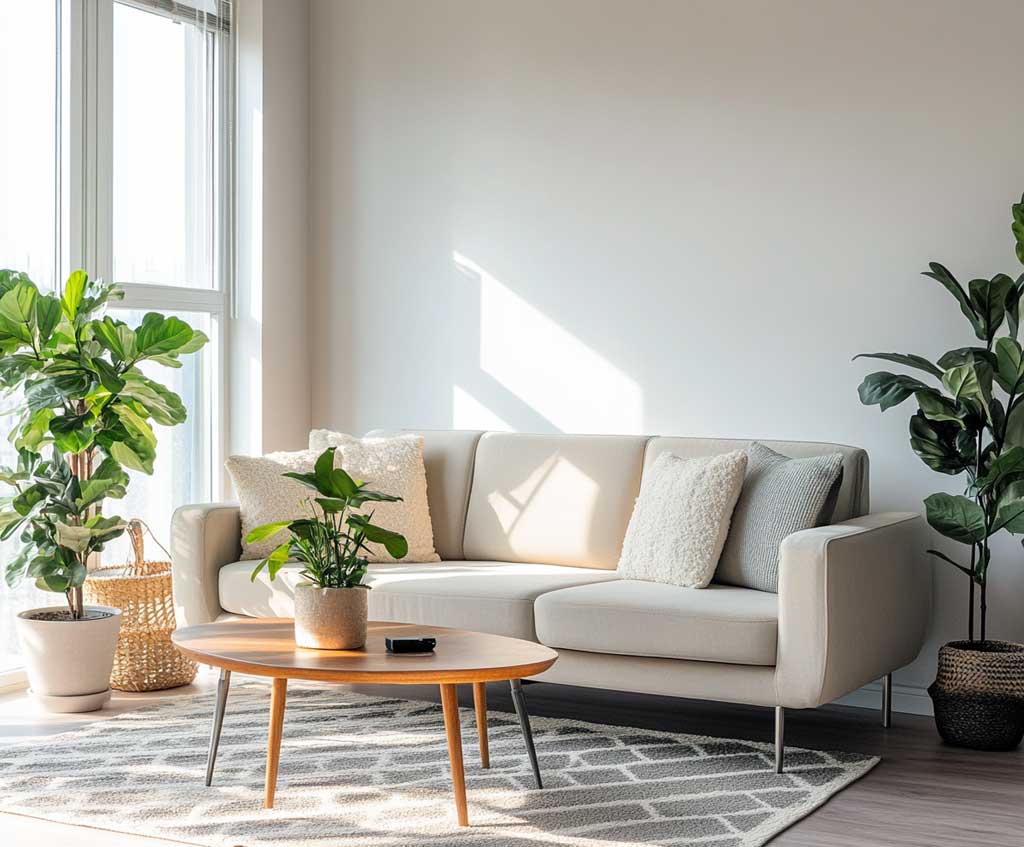
Color is where most small living rooms go wrong — I’ve seen people pick a charcoal sofa for a north-facing room and wonder why it feels like a cave. You need light grays, warm oatmeal, or a greige like Benjamin Moore Revere Pewter for upholstery if your windows face north or east. Darker tones work only when you have at least one south-facing window and ceilings above 9 feet.
Pair the sofa with a coffee table on hairpin legs — CB2’s Peekaboo Acrylic table ($179) is essentially invisible in the room, which is the point. Skip the matching sofa-and-loveseat set entirely. That furniture arrangement strategy belongs in a 1,200-square-foot living room, not a 300-square-foot apartment. One sofa, one accent chair, one table. Full stop. See how furniture arrangement affects perceived space in this small living room layout breakdown.
Storage Beds and Multi-Functional Bedroom Furniture
Multi-functional small apartment furniture ideas for bedrooms start with the bed frame, because it occupies 60–70% of the floor in most compact bedrooms. IKEA’s MALM bed with four storage drawers ($329 for a queen) hides roughly 18 cubic feet of folded clothing, bedding, or out-of-season gear — that’s the equivalent of a full 3-drawer dresser underneath where you already sleep. I own two of these across different apartments and neither has ever looked cluttered because nothing extra lives on the floor.
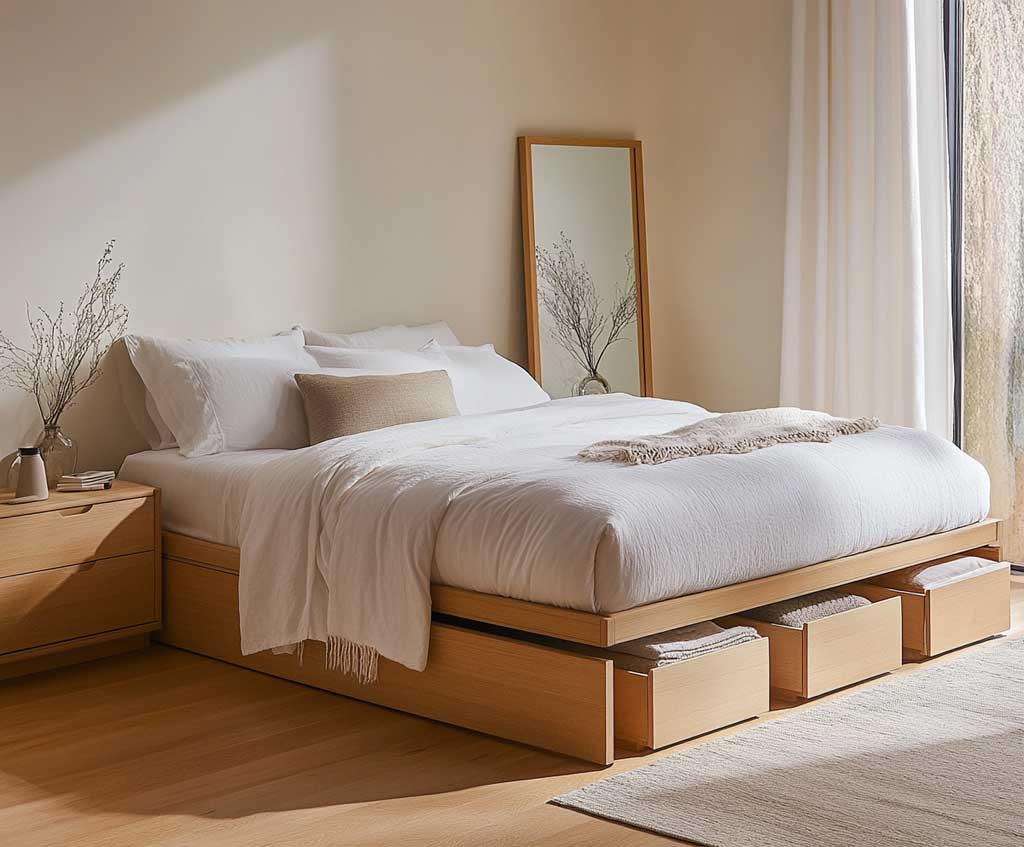
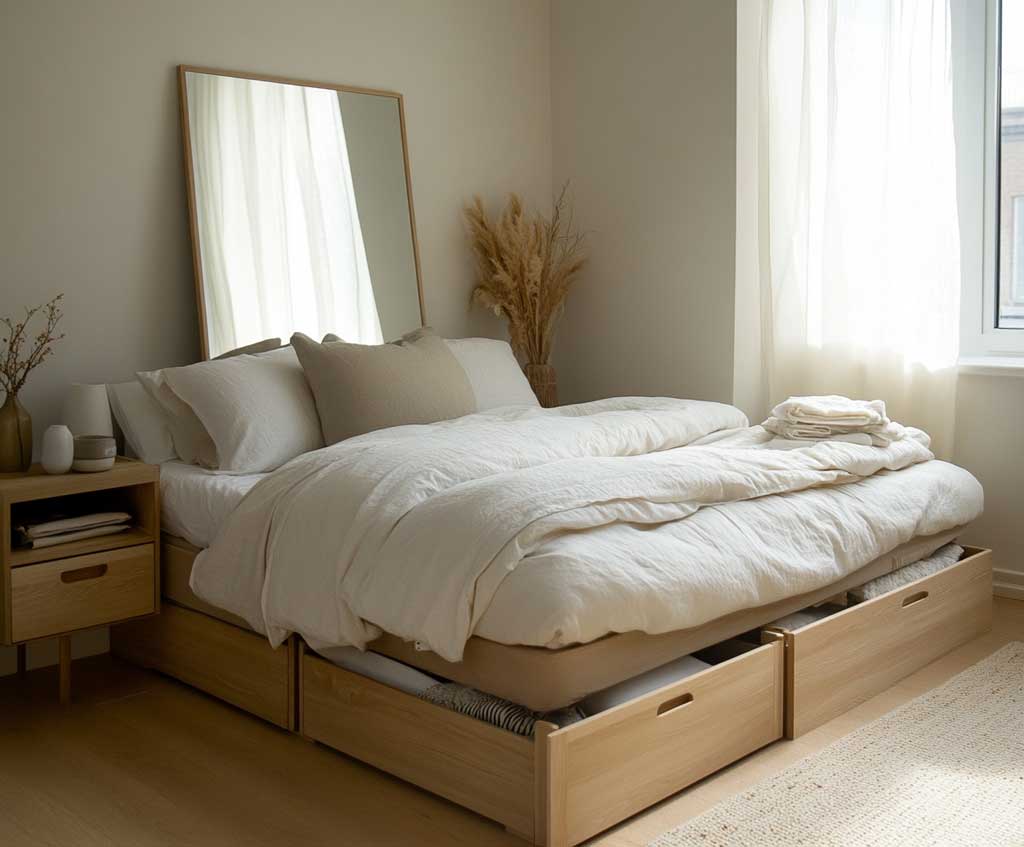
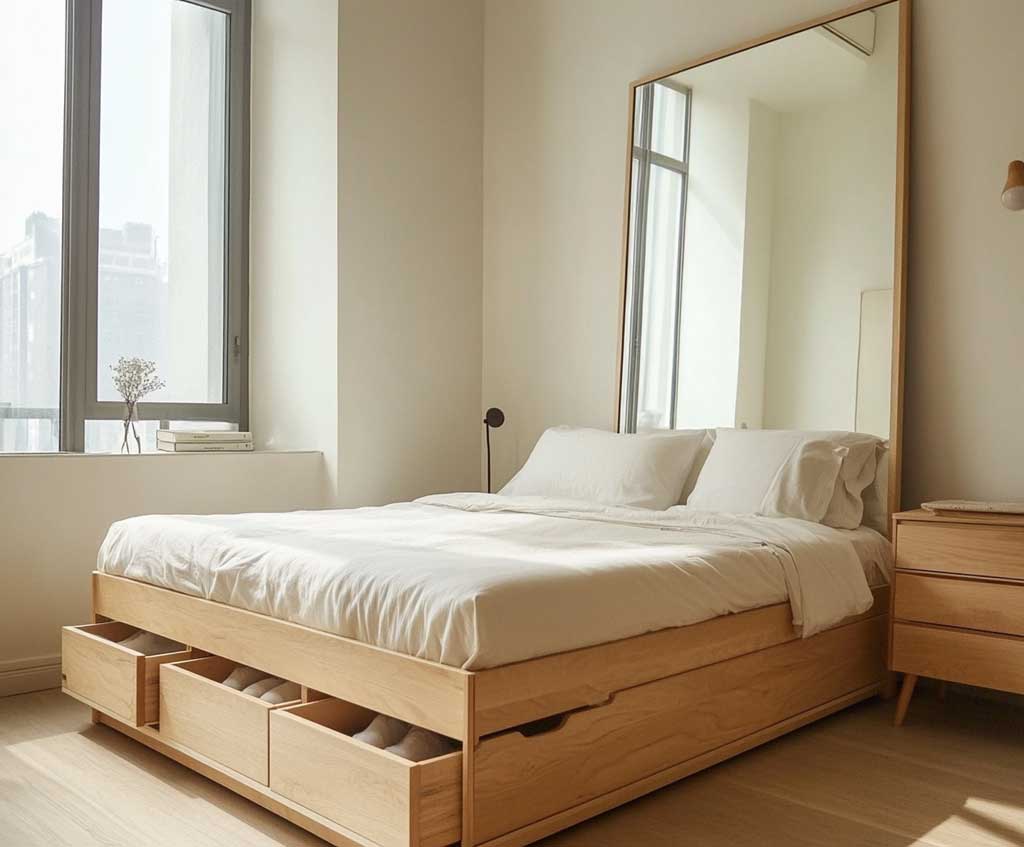
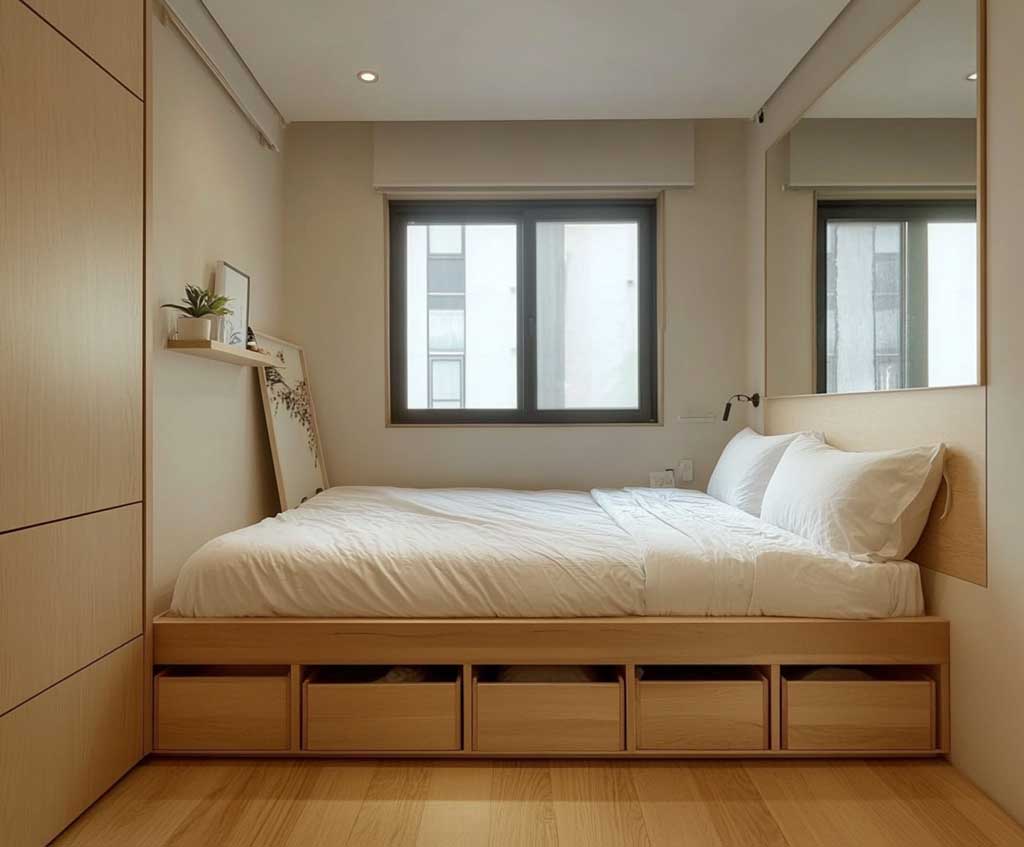
What kills small bedrooms faster than anything else? Floating nightstands mounted too high, and mirrors hung directly across from the door. A mirror positioned 18–24 inches to the side of the window — not opposite it — bounces light across the room instead of reflecting the door back at you. I stole this trick from a Scandinavian interior designer who charges $350/hour for consultations, and it cost me nothing to implement. The HEMNES mirror from IKEA ($79) in white does this perfectly.
Bedding deserves a budget of its own. Neutral-tone bedding — Brooklinen’s Classic Core Set runs $109 for a full/queen — holds a minimalist aesthetic better than patterned sets. You’ll notice that the rooms that photograph well for Pinterest almost universally use white, ivory, or warm gray linens. That’s not a coincidence; solid colors add visual square footage the same way white paint does. For more creative storage configurations in compact apartments, this photo roundup covers solutions you won’t find at IKEA.
- Don’t buy a tall 6-drawer dresser — it eats floor space and adds visual weight at eye level
- Don’t place the bed in the center of the room “for symmetry” — in spaces under 150 sq ft, this blocks all circulation paths
- Don’t hang artwork above the bed lower than 8 inches from the top of the headboard — it compresses the ceiling visually
- Don’t mix more than two wood tones — three or more makes a small room look like a furniture showroom clearance section
Round Dining Tables and Compact Kitchen Seating
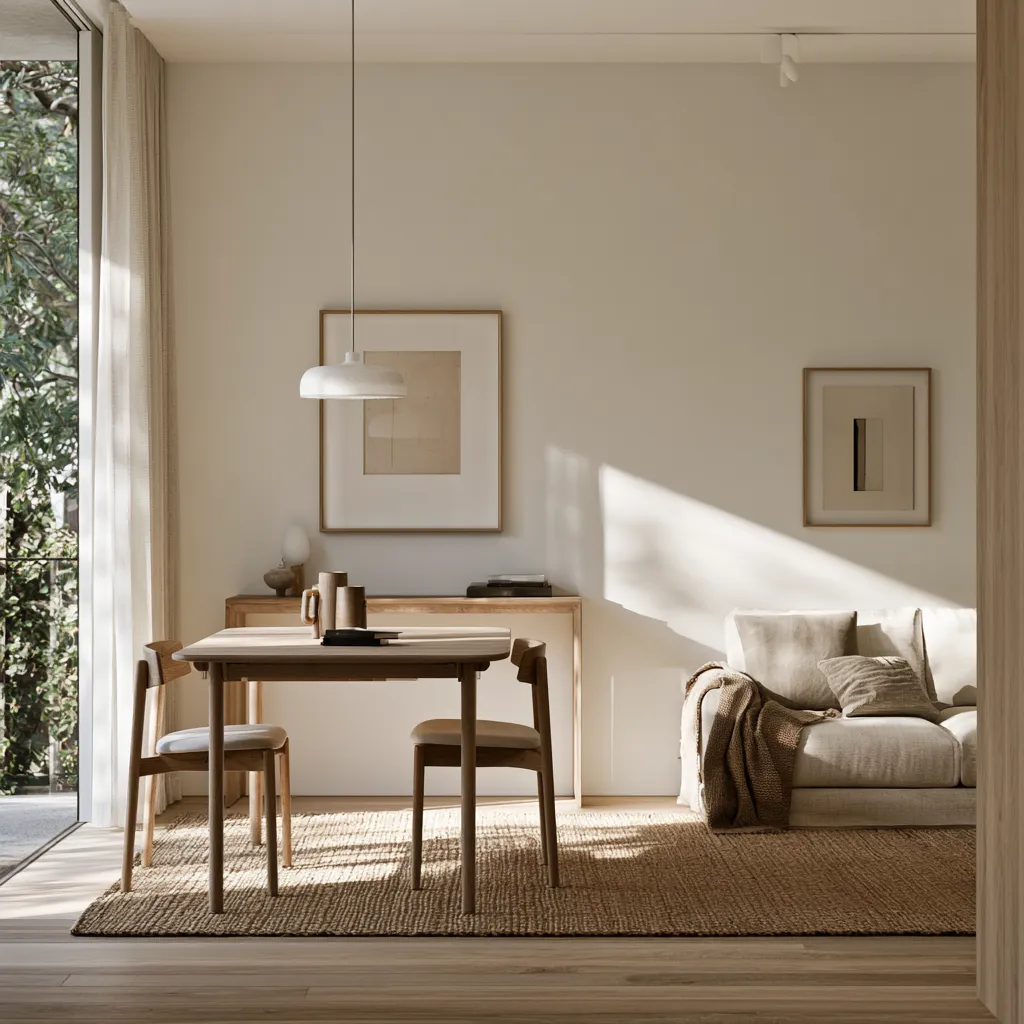
Compact dining furniture for small apartments solves a geometry problem: a 36-inch round table seats four people in the same footprint as a 24-by-36-inch rectangular table that seats two. Article’s Seno Dining Table ($299, available in oak and walnut) is my recommendation here — 35.5 inches in diameter, solid rubberwood, and slim enough legs that the table reads as almost floating. You need 36 inches of clearance on each side of the table for chair pull-out; that’s your hard minimum before shopping.
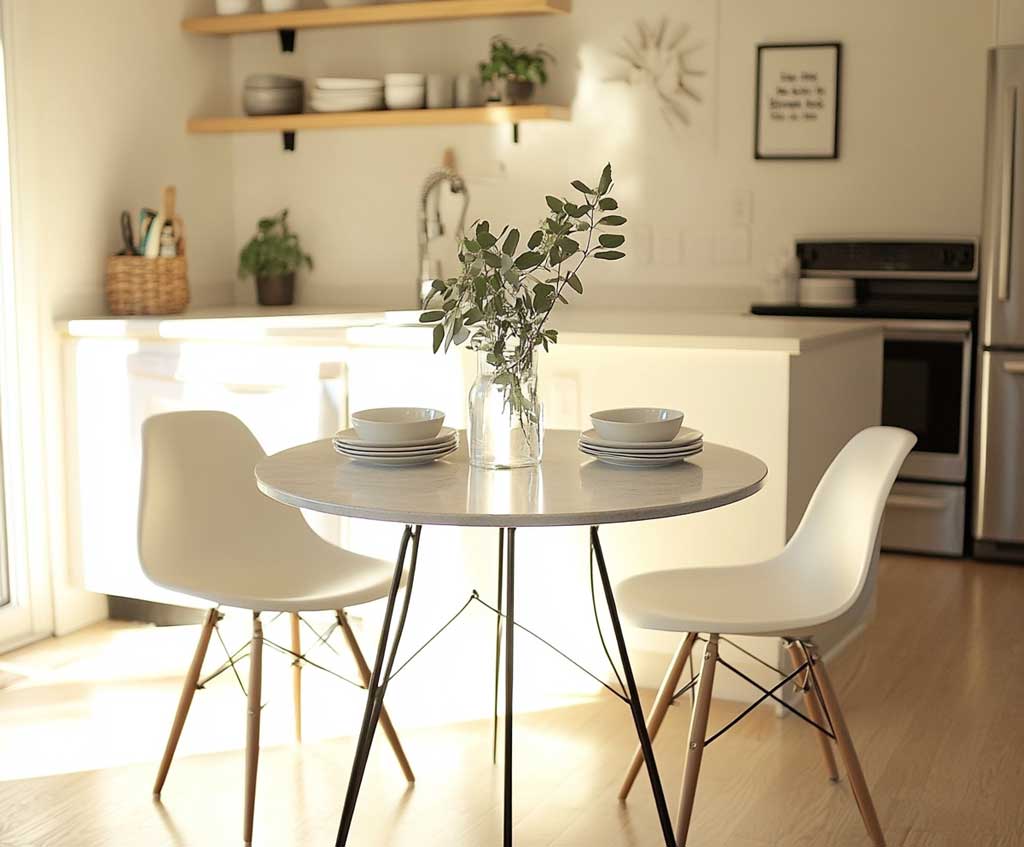
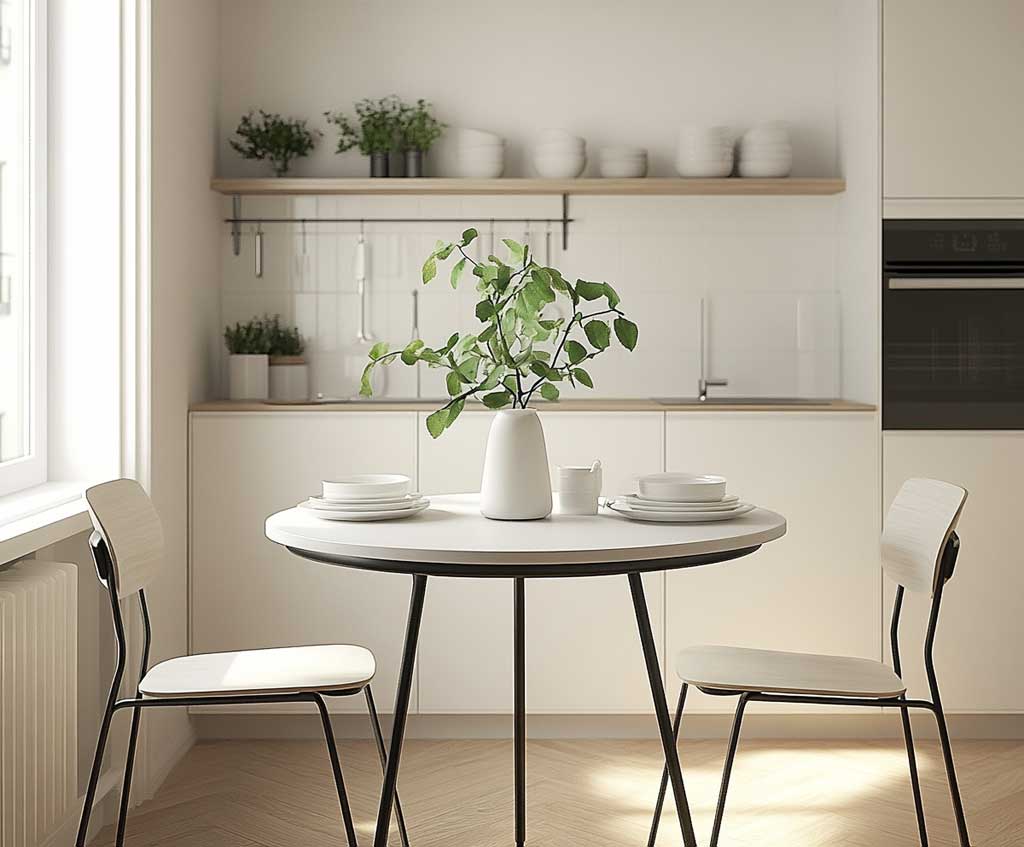
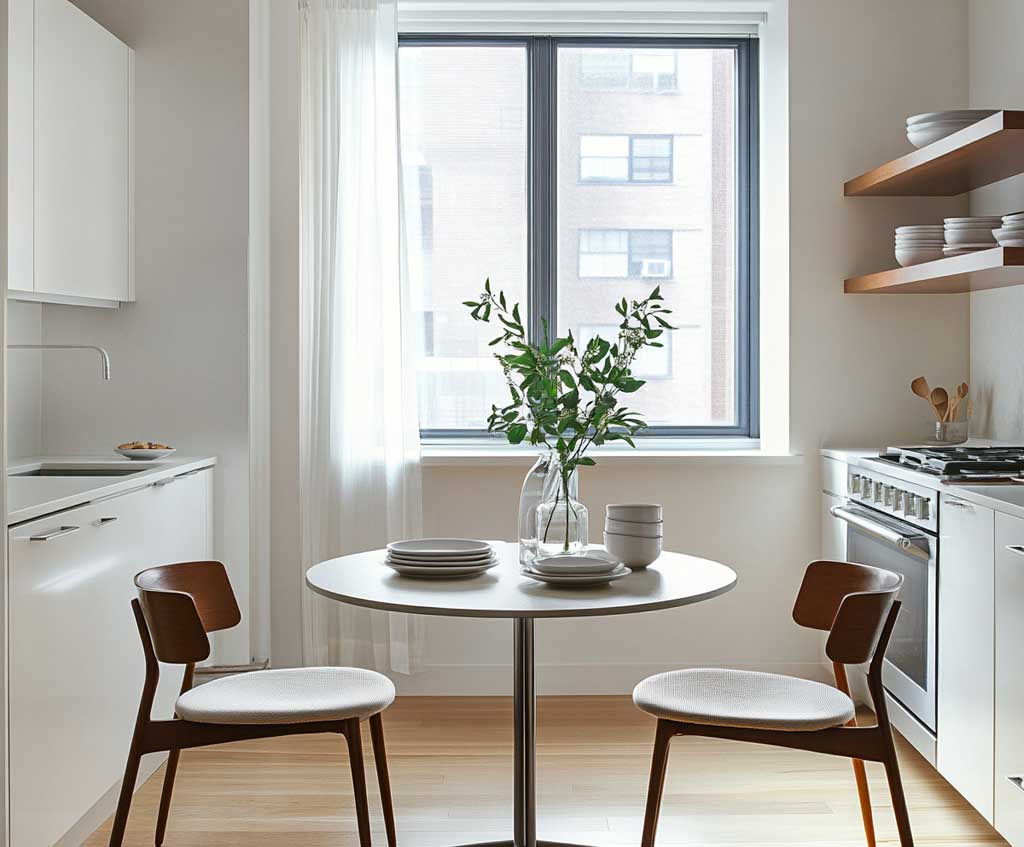
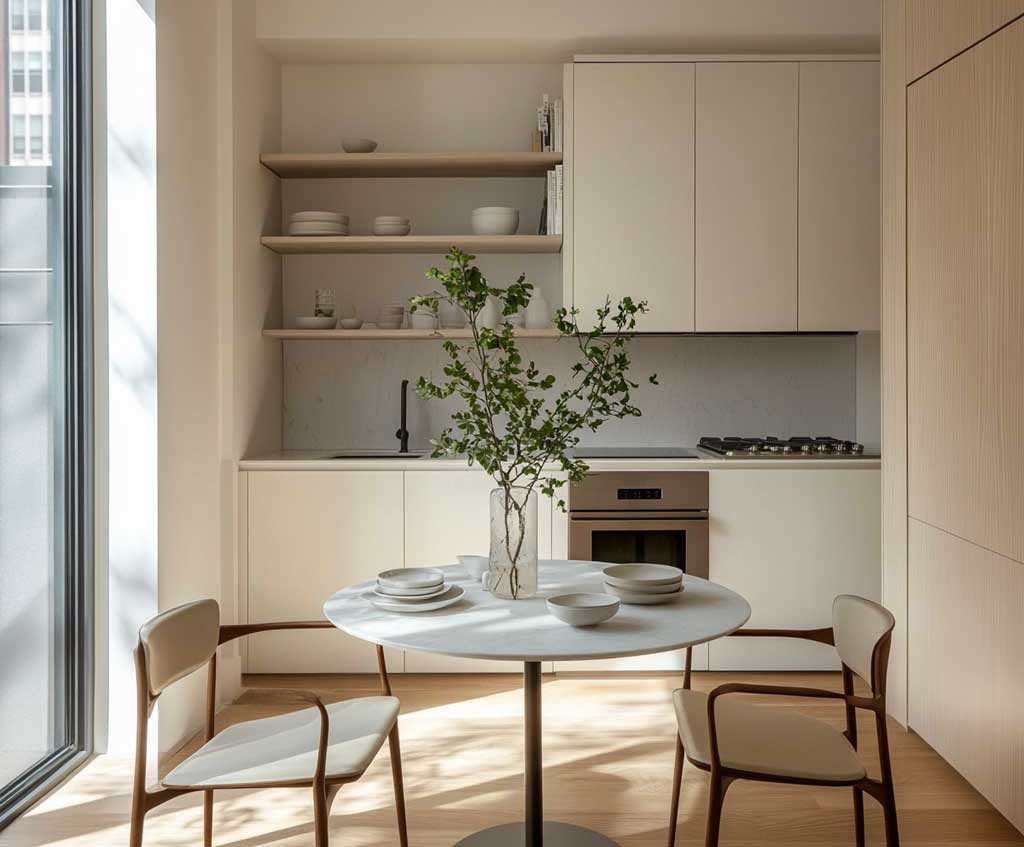
Chair choice matters more than people realize. Tolix-style metal chairs like the HAY About a Chair AAC22 ($169 each) stack flat against the wall when not in use, recovering 18 inches of floor depth per chair. The transparent Kartell Louis Ghost chair ($280) reads as negative space, making the dining zone feel almost empty even when four people are seated. Avoid upholstered dining chairs in small apartments — they’re impossible to pull close to the table without the fabric catching, and cleaning them in a kitchen context is a slow nightmare.
Can you do dining and living in the same open zone? Yes, but only if you define them with a rug, not a dividing furniture piece. A 5×8-foot rug under the dining table creates a zone without a wall, and it costs $120–$300 at Ruggable. What doesn’t work: a sideboard or console table used as a room divider — it eats 18 inches of depth from both zones and makes the whole floor plan feel like a hallway.
Slim Desks and Home Office Furniture for Apartment Corners
Small apartment furniture ideas for home offices require accepting one rule: the desk gets a corner or a wall alcove, and that’s non-negotiable. IKEA’s MICKE desk ($119, available in white and black-brown) measures 41 inches wide and 19 inches deep — narrow enough to sit flush in a hallway alcove without blocking foot traffic. I’ve used it in three different apartments, and the built-in cable management on the right side actually keeps the surface clean without any effort.
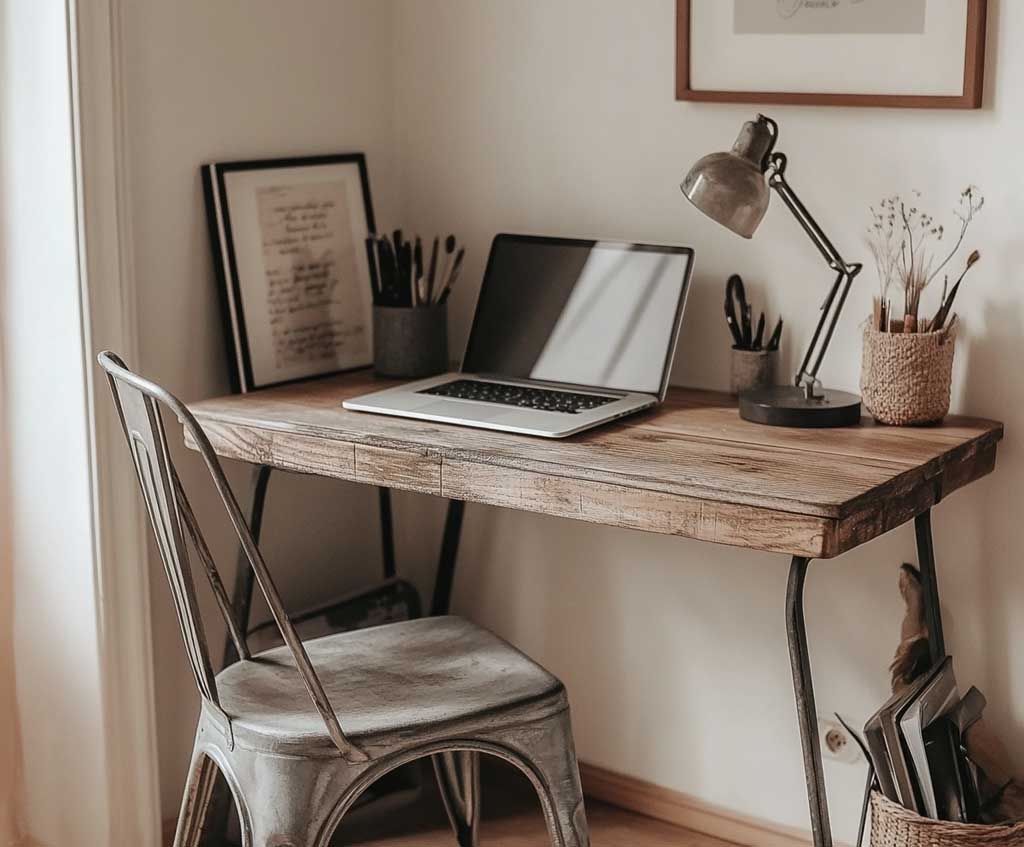
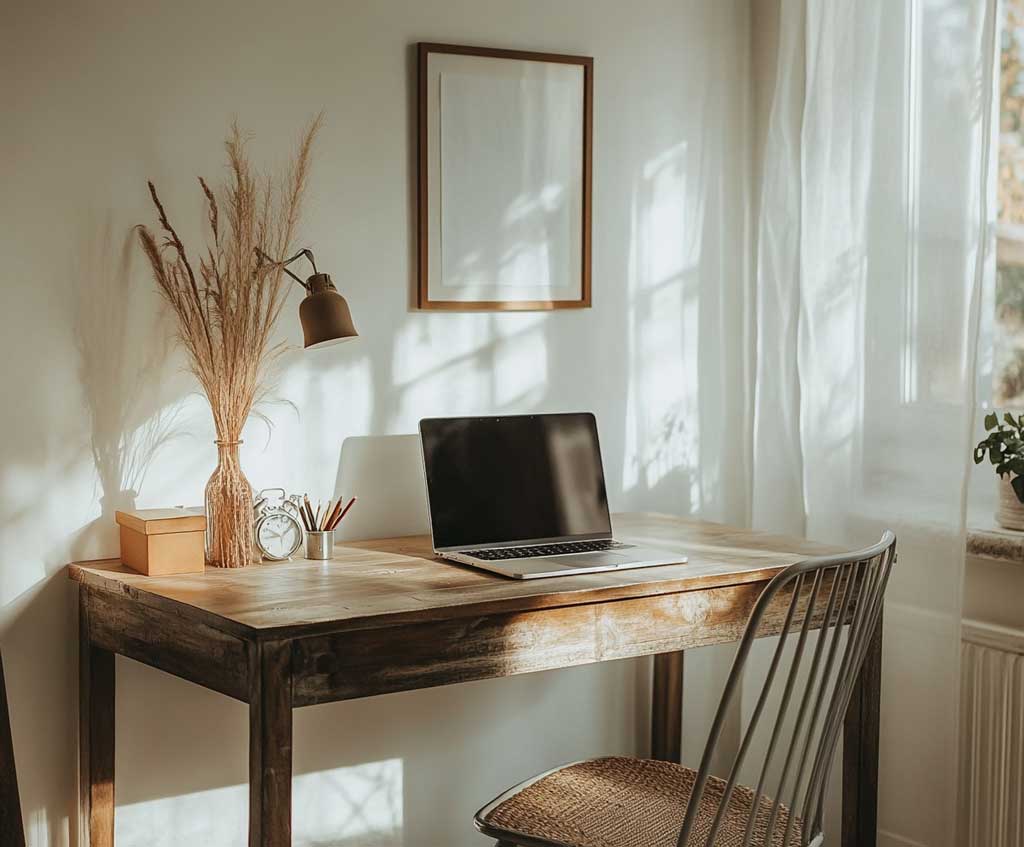

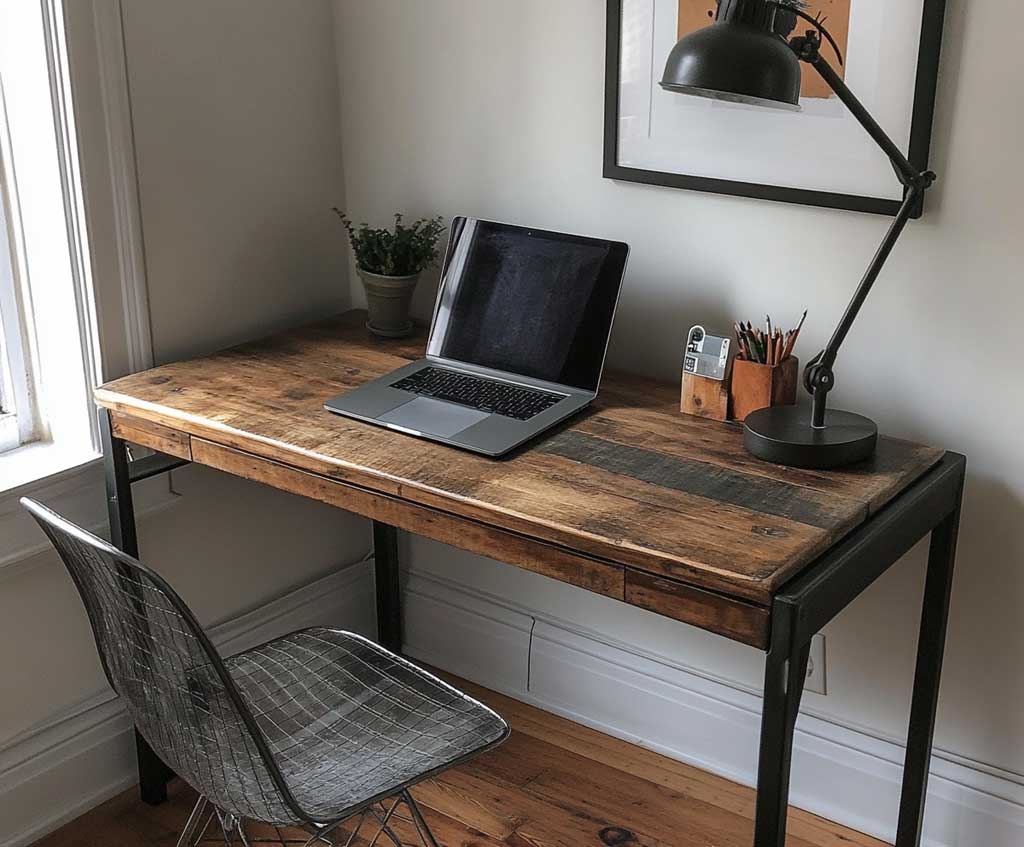
Positioning matters more than the desk itself. A desk placed perpendicular to a window — not directly in front of it — gives you natural side-lighting across the keyboard, eliminates glare on the monitor, and frames the window as a background element rather than a blinding rectangle behind your screen. You’ll notice the difference in your focus within the first hour. Desk chairs in a small apartment should be task chairs without armrests — the Autonomous ErgoChair Lite ($249) tucks completely under the desk when not in use, recovering 22 inches of walking space.
Skip the L-shaped desk in any apartment under 700 square feet. It seems like more workspace, but it consumes two walls and makes a corner feel like a cubicle. One clean 42-inch surface, a wall-mounted floating shelf above it for reference items, and a single desk lamp with a weighted base — that’s the entire setup. My current desk lamp is the BenQ ScreenBar ($109), which clips to the monitor and casts zero shadow on the surface, which means I never reach for overhead lighting at the desk.
Wall-Mounted Shelving as Furniture for Small Apartment Walls
Wall-mounted shelving is not decoration — it’s recovered floor space measured in square feet. IKEA’s BESTÅ wall cabinet units start at $65 and mount cleanly at any height, which means you decide the visual weight: mounted at 72 inches up, they read as art; mounted at 48 inches, they function as a sideboard without touching the floor. I’ve run this in my own 480-square-foot apartment and gained the equivalent of two freestanding bookshelves worth of storage without occupying a single inch of floor.
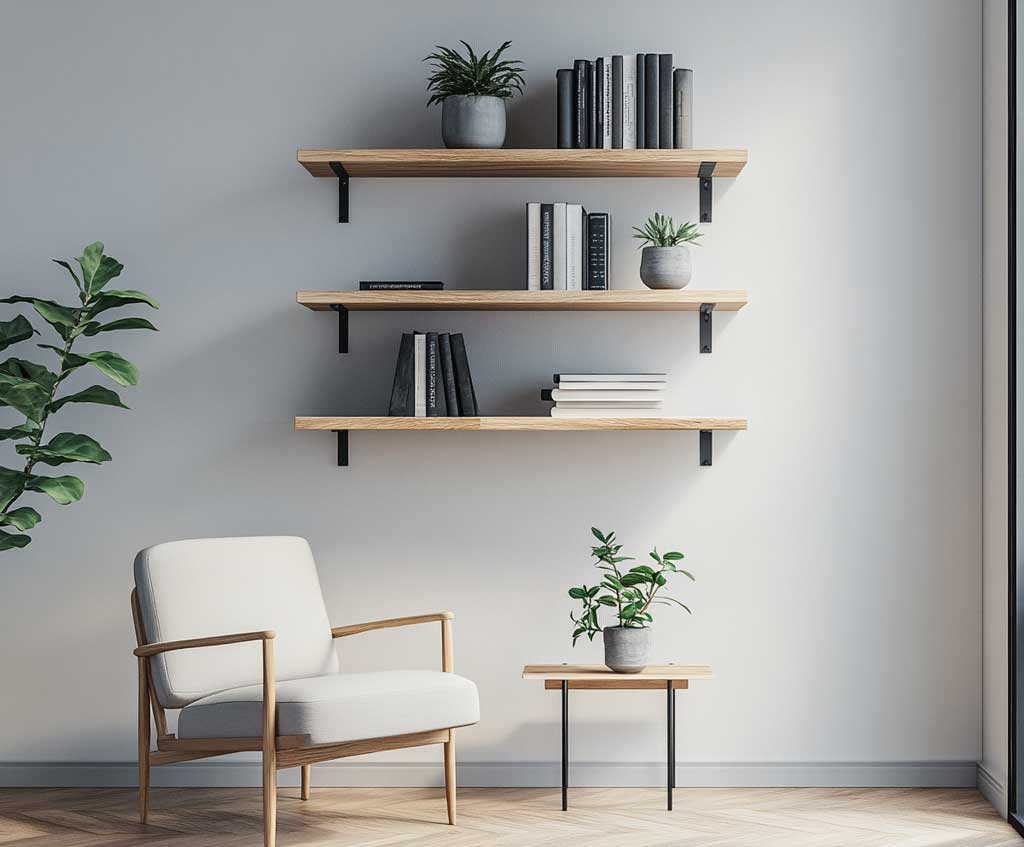
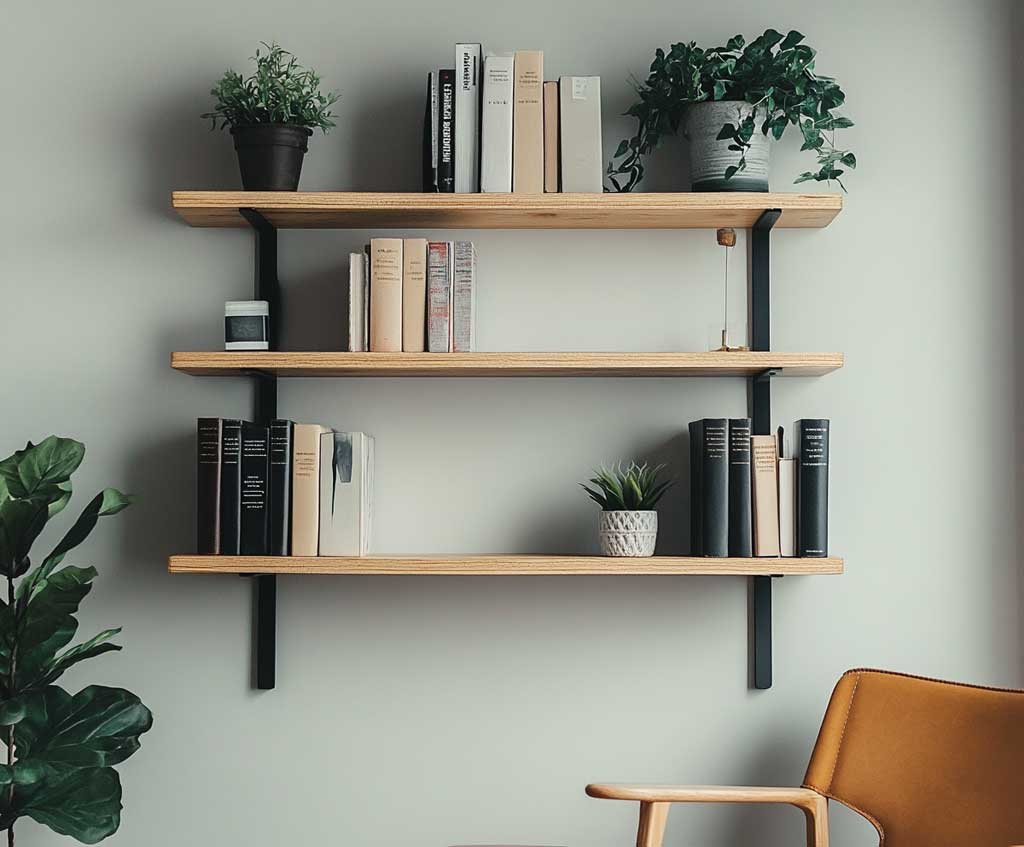
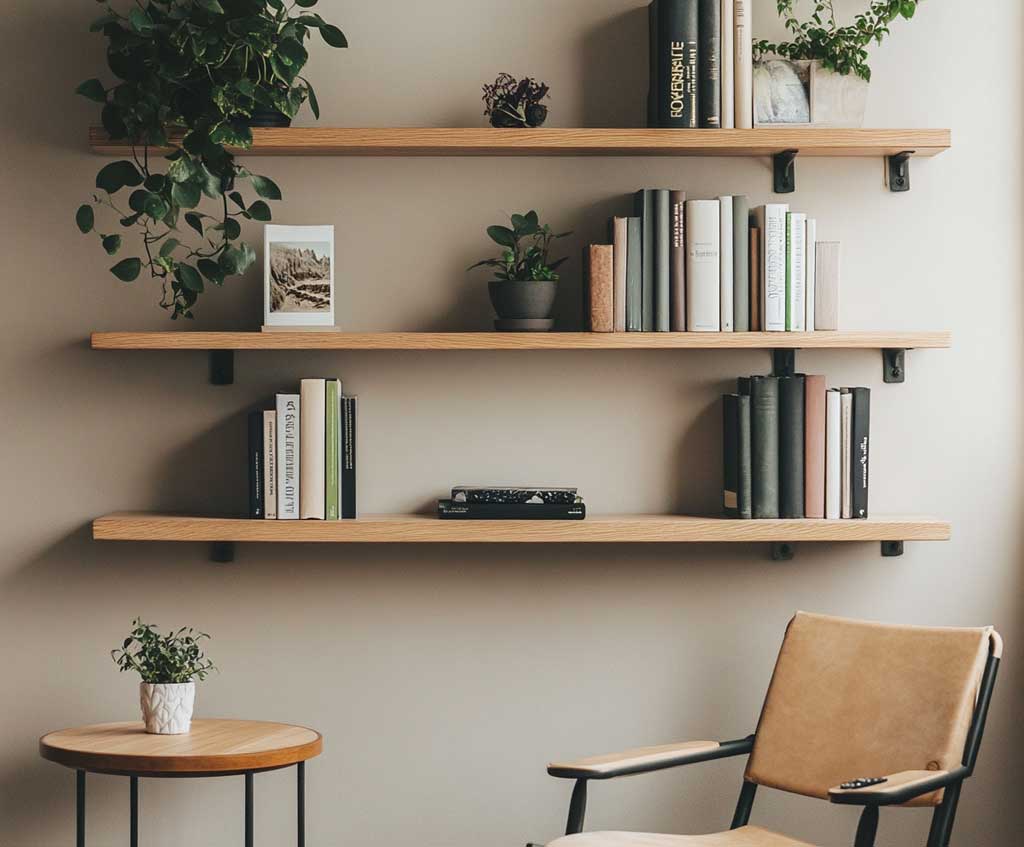
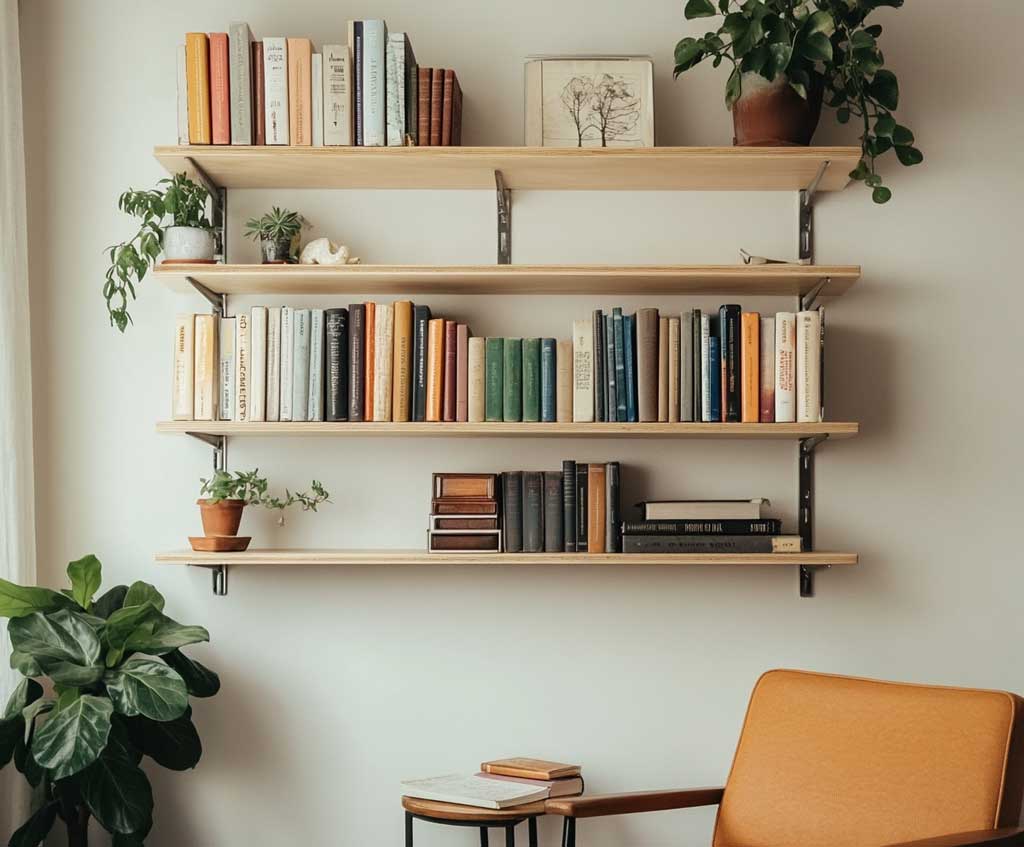
The rule I follow for what goes on open shelves: one-third books, one-third plants or ceramics, one-third empty space. That last third is the expensive part psychologically — it requires resisting the urge to fill every inch. Muuto’s Folded Shelf ($89, available in oak and ash) is the shelf I’d buy first because the angled design means items lean naturally without falling, and the profile is only 9.5 inches deep, which keeps it from jutting into the room. Avoid deep shelves (over 12 inches) on small apartment walls — they read like cabinets, not shelving, and compress the room.
Ceramic and wooden objects in a single palette — cream, warm white, natural wood — photograph better and hold a visual coherence that mixed materials destroy. You need fewer than 12 objects across an entire shelving wall to achieve that styled look. More than 15 and it reads as clutter regardless of how carefully each piece was chosen. For apartments working with a black and white palette, these furniture ideas show how to keep shelving from looking stark.
Modular Seating Layouts for Small Apartment Living Rooms
Modular seating for small apartments solves the problem that fixed sofas create: a layout that works for two people watching TV doesn’t work for six people at a dinner party. The IKEA SÖDERHAMN system ($599 for a three-seat configuration) consists of individual modules you can pull apart, push together, or face different directions within about 10 minutes. I rearranged mine three times in the first month before landing on the configuration that made the room feel biggest — and that configuration was only discoverable through physical experimentation, not planning on paper.
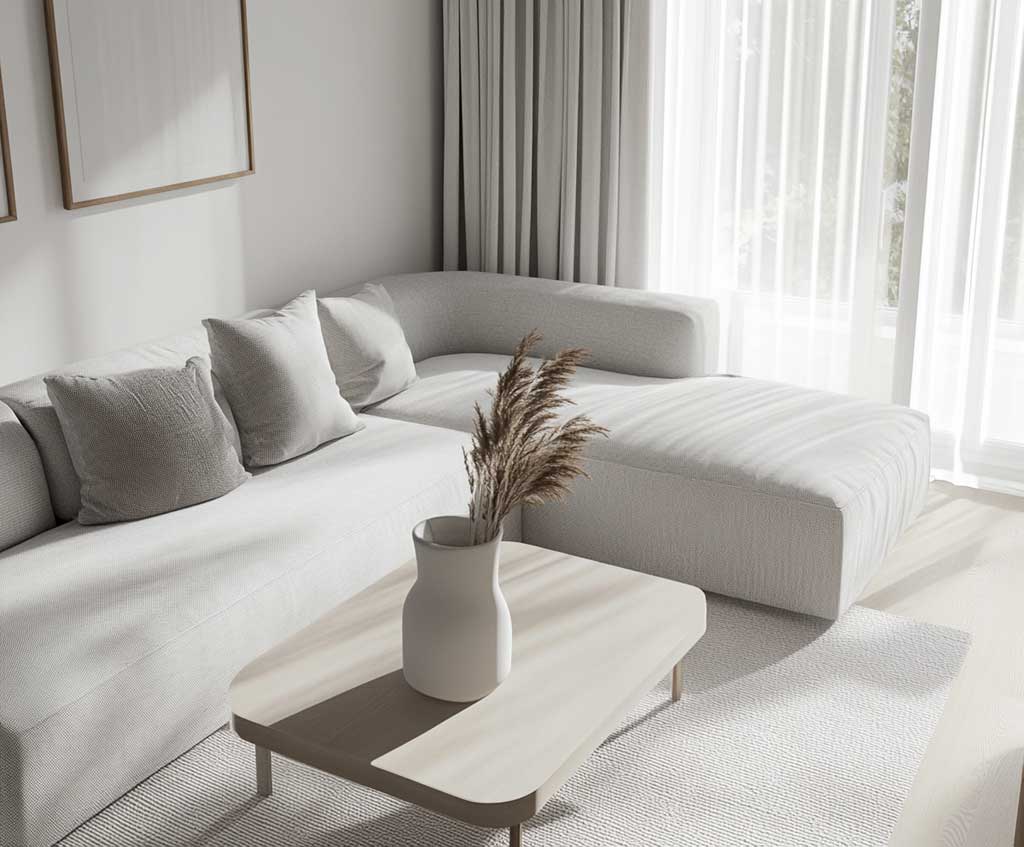
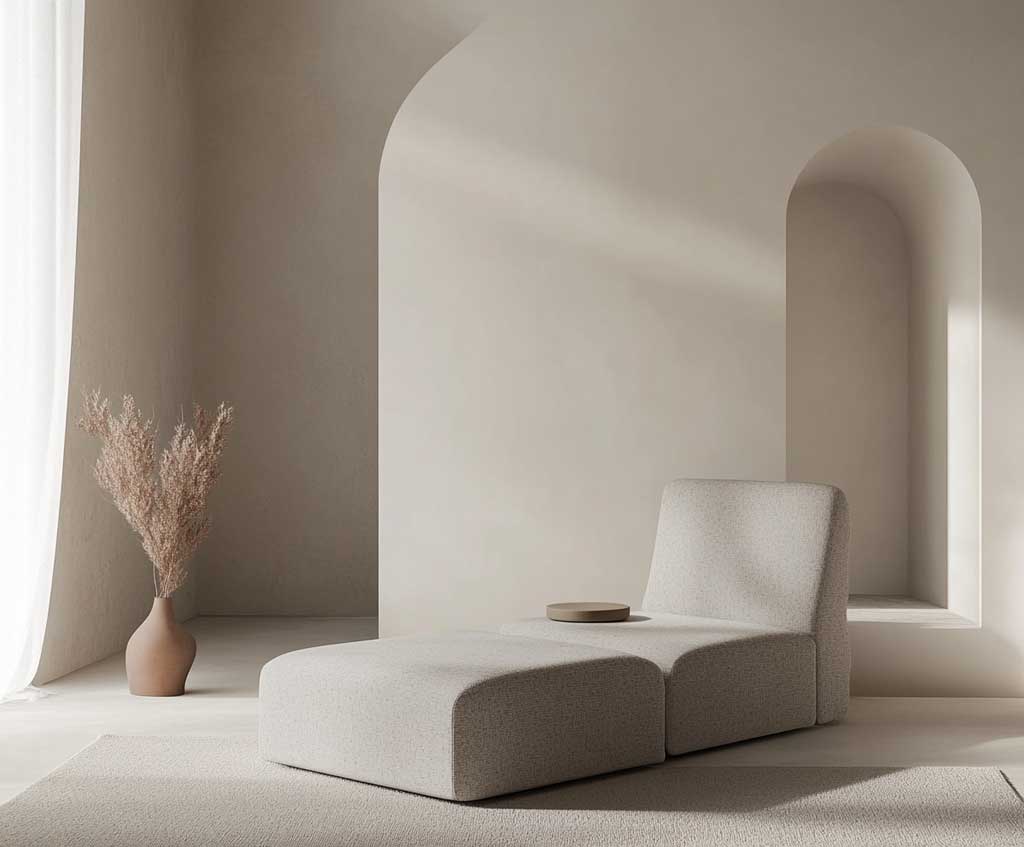
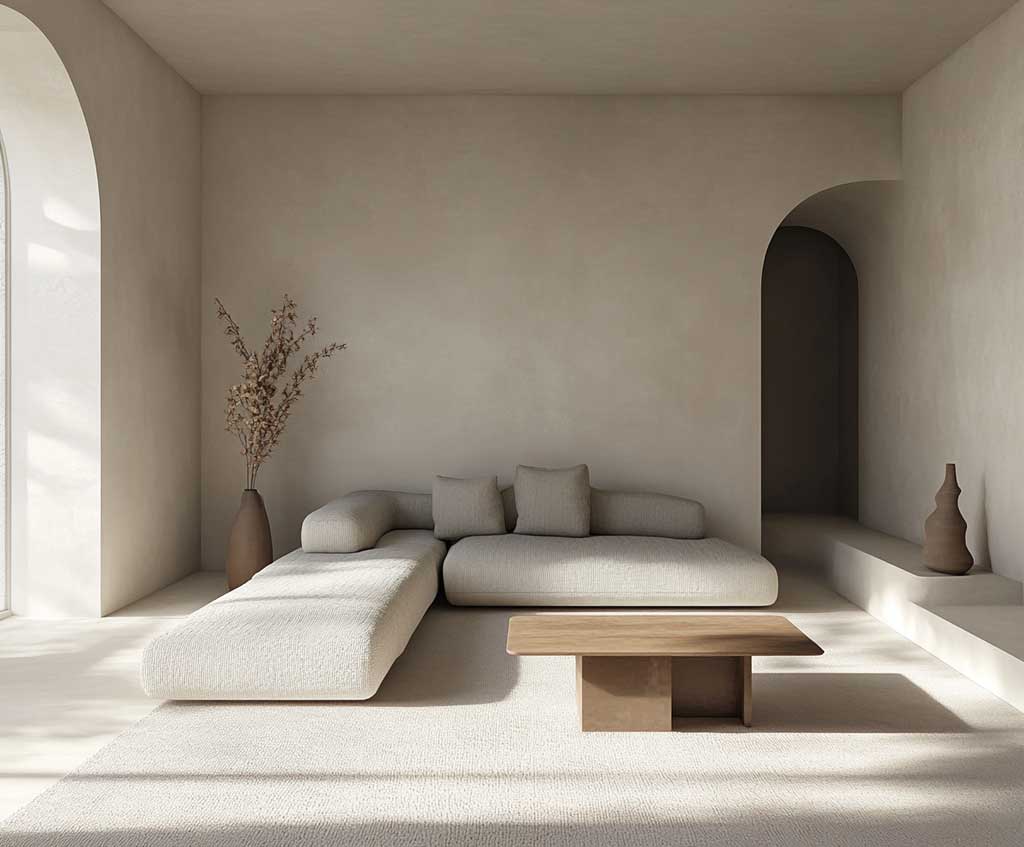
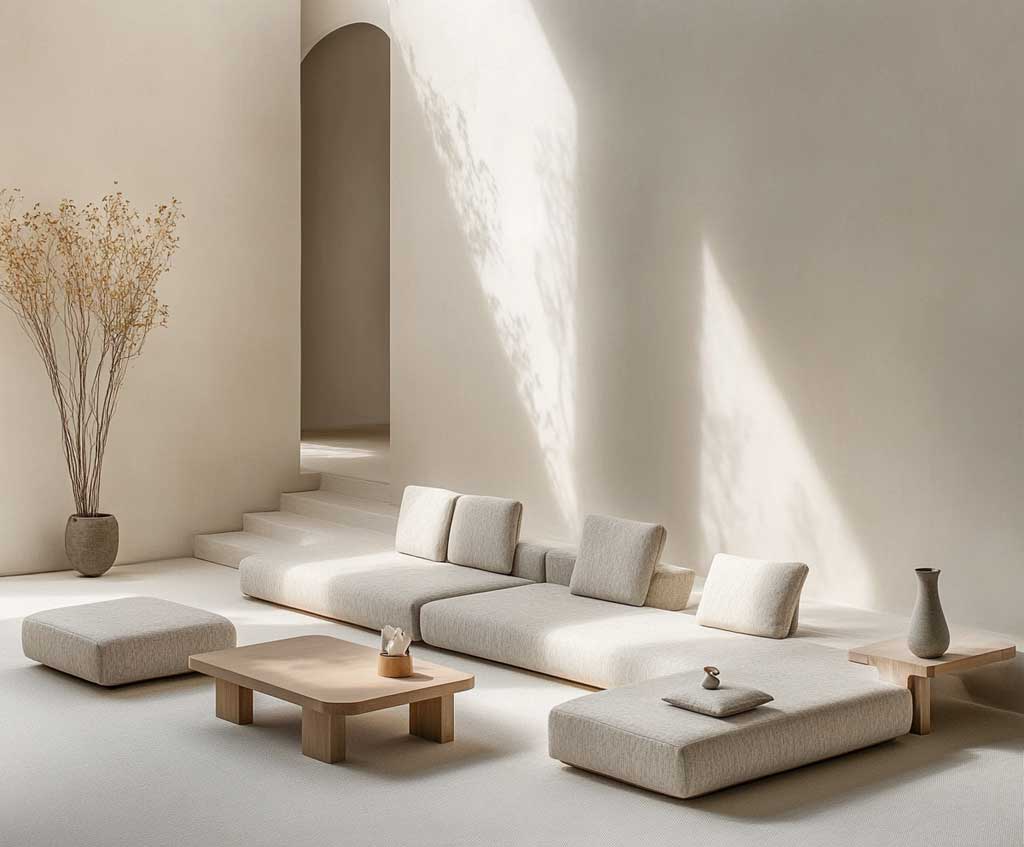
The trap with modular seating is buying too many modules on day one. Start with three sections — a left end, a center, and a right end — and live with them for 60 days before deciding if you need a chaise or armless extension. Adding a fourth module to a 300-square-foot living room typically blocks the main sightline to the window, which makes the room feel 30% smaller even though the seating is technically more comfortable. More furniture, smaller room — that’s the counterintuitive reality of compact spaces.
Accessory discipline matters here as much as the sofa itself. Two throw pillows, maximum. One throw blanket draped over an arm. A rug that extends 18 inches beyond the sofa front edge on all sides — that’s the Apartment Therapy rule of thumb that I’ve verified works in every layout I’ve tried. A 5×8 rug placed too small under a modular sofa makes the whole seating zone look like it’s floating in the wrong direction, like furniture pushed to the side of a room mid-move.
Neutral tones — light gray, warm sand, oatmeal — keep a modular sofa from becoming the visual anchor of the room. You want the window or a single piece of art to hold that role. A bold-colored modular sofa in a small apartment works only if every other surface is white or near-white; otherwise the eye has nowhere to rest and the room reads as busy regardless of how minimal the furniture count is.
Final Word
Small apartment furniture ideas work when the room stops looking like it’s full of furniture
Low-profile sofas under 32″ tall, storage beds with built-in drawers, round dining tables, and wall-mounted shelving consistently outperform bigger, heavier alternatives in spaces under 600 square feet.
IKEA MALM ($329), Article Seno Table ($299), and BESTÅ wall units ($65+) are the three purchases that move the needle most per dollar spent in a compact apartment.
The most expensive mistake in small-space decorating isn’t buying cheap furniture — it’s buying too much furniture and discovering the room can’t absorb it. Save this post before your next furniture shopping trip.
FAQ
What furniture is best for a small apartment?
How do I furnish a small apartment on a budget?
What is the best furniture layout for a small apartment?
How do I make a small apartment look minimalist?
What size dining table works in a small apartment?
Is modular furniture worth it for small spaces?
Complete guide
Furniture Decor Ideas for Every Room in Your Home
Living room, bedroom, dining, kitchen, outdoor — all in one place
Complete guide
The Minimalist Style Guide That Covers Every Room, Surface and Outfit
Interiors, exteriors, kitchens, bedrooms, fashion, hair — all in one place
Complete guide
Small House Design Ideas That Make Every Square Foot Feel Intentional
Exteriors, layouts, kitchens, bedrooms, bathrooms, outdoor — all in one place