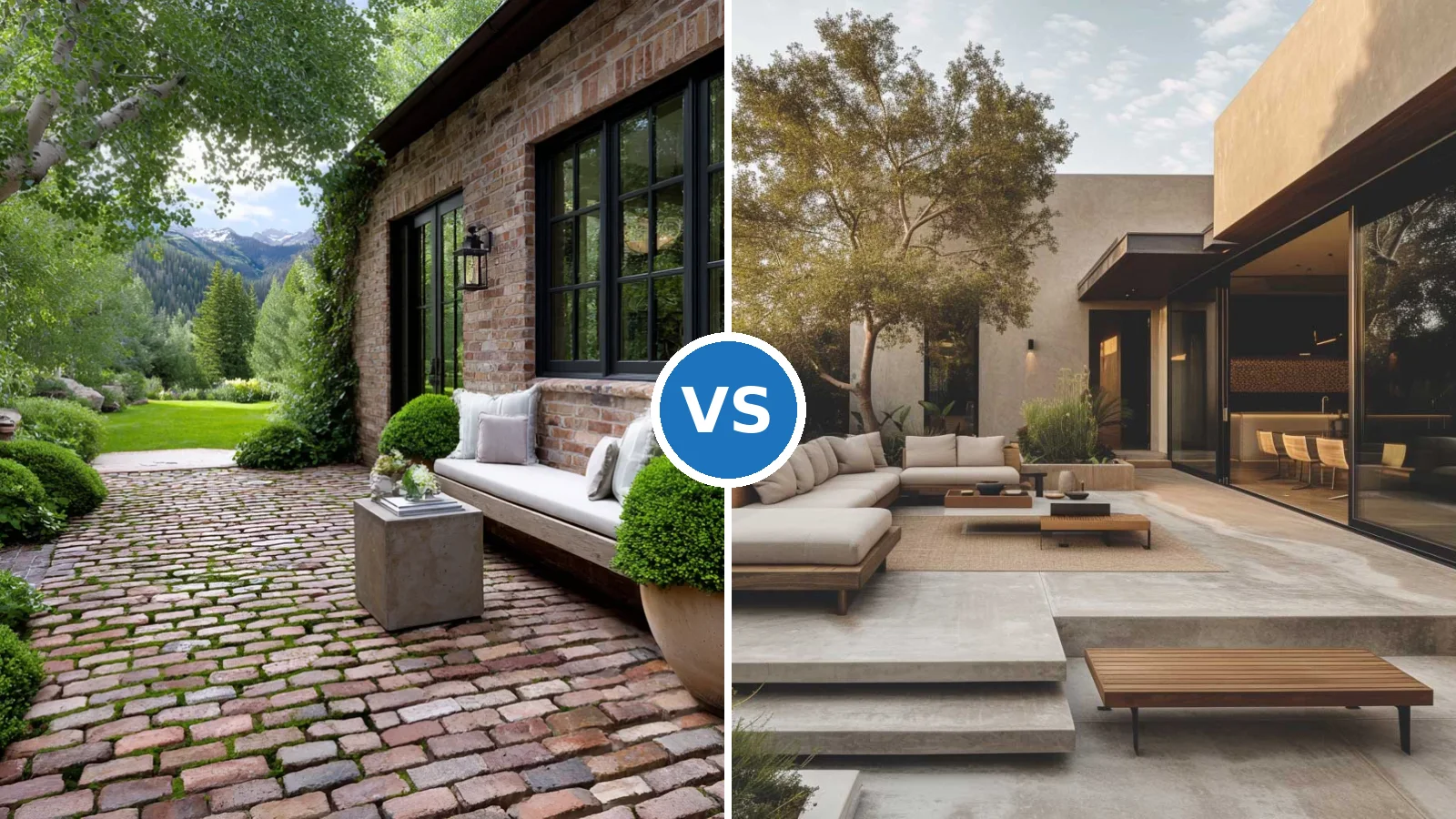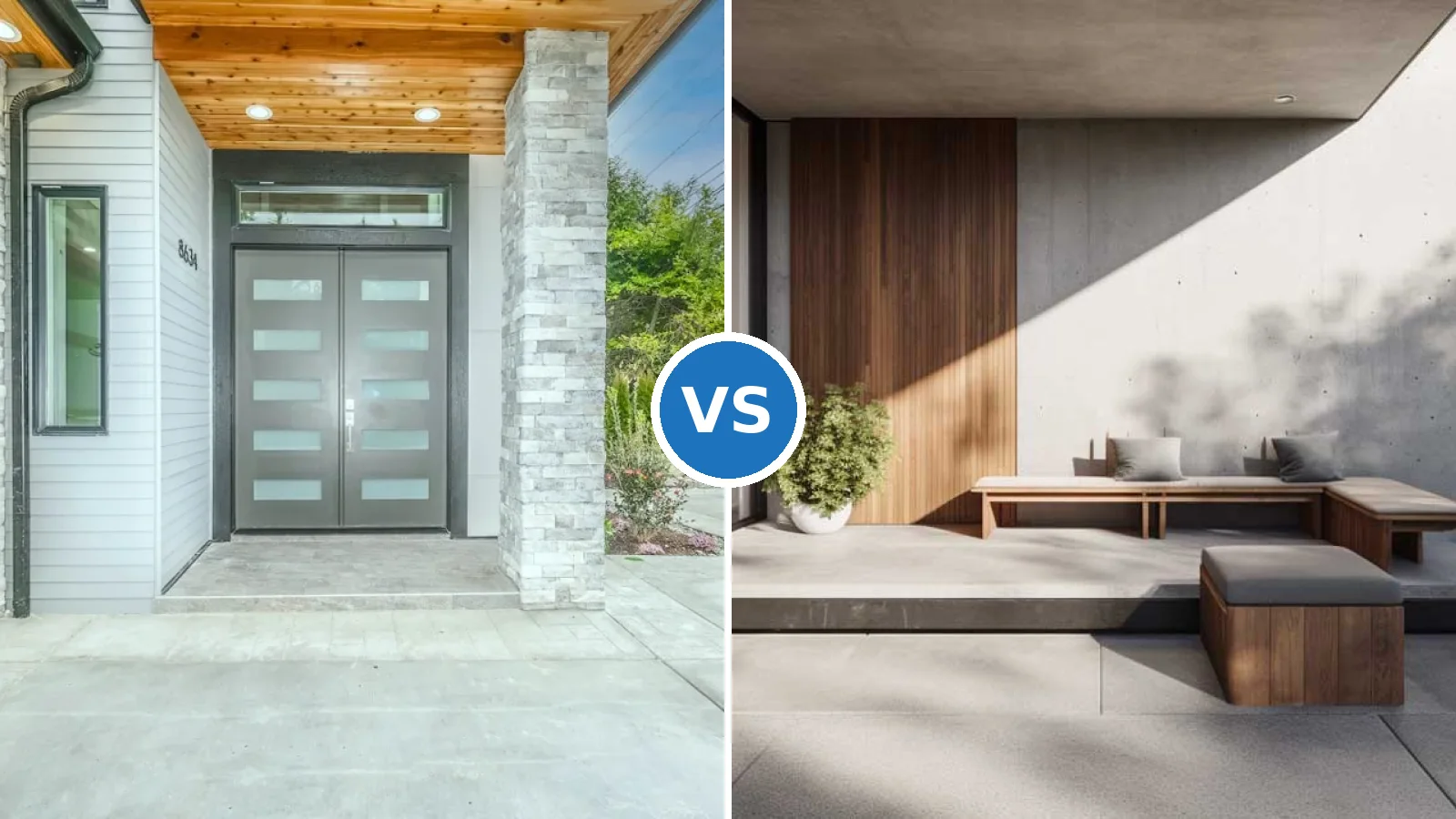
Rain pools on your porch after every storm, and the quote in your hand offers two routes: pour a fresh slab or lay a drainage-friendly paver floor. That is the real choice behind permeable pavers vs concrete. You trade a lower upfront bill for a surface that handles water on its own. Permeable pavers suit homeowners fighting pooling or drainage rules, while a concrete porch suits anyone who wants a smooth, budget-friendly slab with a clean modern finish.
What each porch floor actually is
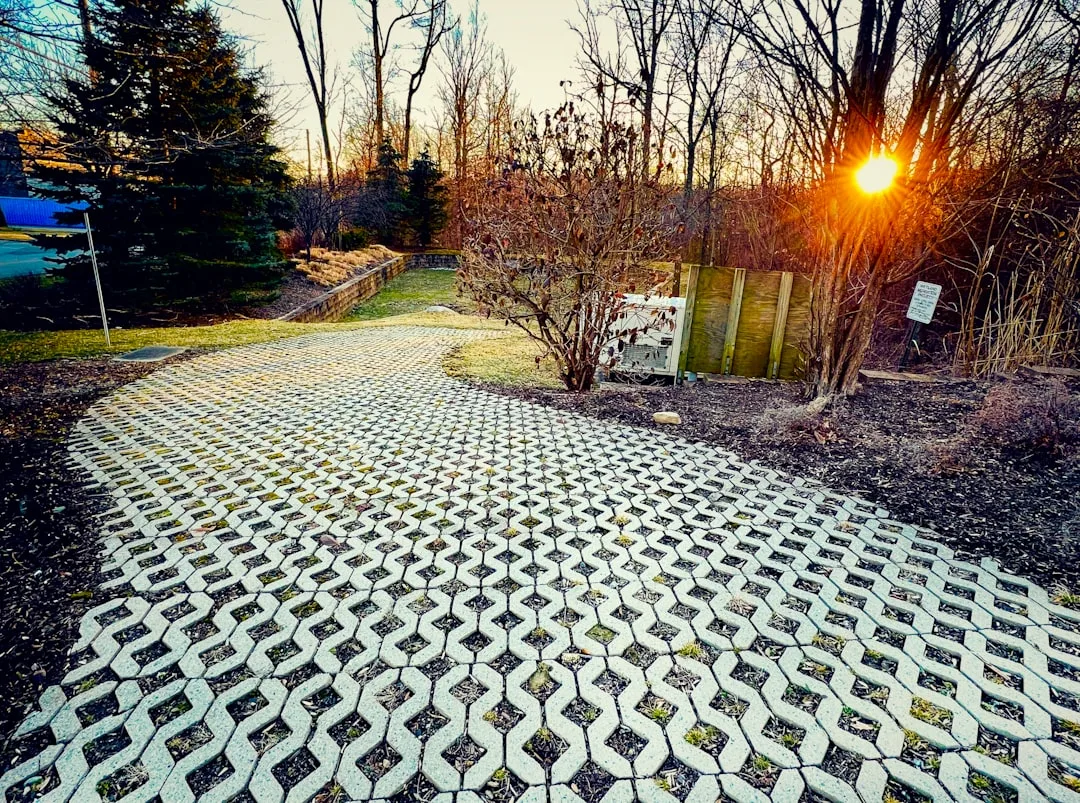
Permeable pavers are individual units set over layers of compacted stone and a geotextile membrane. Rain slips through the joints and drains into the base instead of sheeting across the surface. Jointing sand fills the gaps.
A concrete porch is a single poured slab. The finish decides everything: broom-finish for grip, polished for a smooth modern look, or stamped to imitate stone. Our concrete porch ideas article covers those finishes in detail.
Quick Verdict
- Choose permeable pavers if water pools on your porch, local rules push drainage, or you want to fix one damaged unit instead of patching a whole slab.
- Choose concrete if upfront cost leads your decision and you want a smooth polished or stamped surface.
- Expect to pay more for pavers, while concrete has the lighter routine upkeep, which mostly needs a yearly sealer.
- Either floor fails early when the installer cuts corners on prep.


Permeable pavers vs concrete on the criteria that matter
Drainage, price, upkeep, and looks separate these two floors most clearly. Cold-climate behavior and repair options matter too. The table below shows where they split.
| Criteria | Permeable pavers | Concrete porch |
|---|---|---|
| Drainage | Water passes through joints into the base | Water runs off the surface and can pool |
| Upfront cost | Higher; roughly $10–$20 per sq ft for the units alone | Lower; plain broom-finish roughly $6–$13 per sq ft |
| Routine upkeep | Gentle washing plus jointing sand top-ups | Mostly one penetrating sealer job each year |
| Repairs | Swap individual units | Cracks mean patching or resurfacing |
| Look | Many colors, herringbone or running-bond patterns | Smooth slab, polished, stamped, or integral color |
| Cold climates | Needs a rated base and salt-tolerant joint material | Handles freeze-thaw well when sealed |
| Installation risk | Skipped base layers cause sinking and gaps | Wrong finish or missing expansion joints are hard to undo |

Where permeable pavers win
Drainage is the clear win. A properly built paver porch drains rain through the joints, so water is much less likely to stain the surface or leave a slick film. Concrete can’t match that without regrading.
Repairs are the second win. When one unit cracks or stains, you lift it and drop in a spare, which is why buying extra pavers at the start pays off. A cracked slab means a patch that rarely matches.
Pavers also win on design range. Some lines come in a dozen colors and let you lay herringbone for motion or running-bond for a calm, horizontal look. Herringbone adds labor because of the extra cuts, so budget for it.
Pick chamfered or beveled edges if you can. They create shadow lines that add depth, while flat-edge units look duller over time.
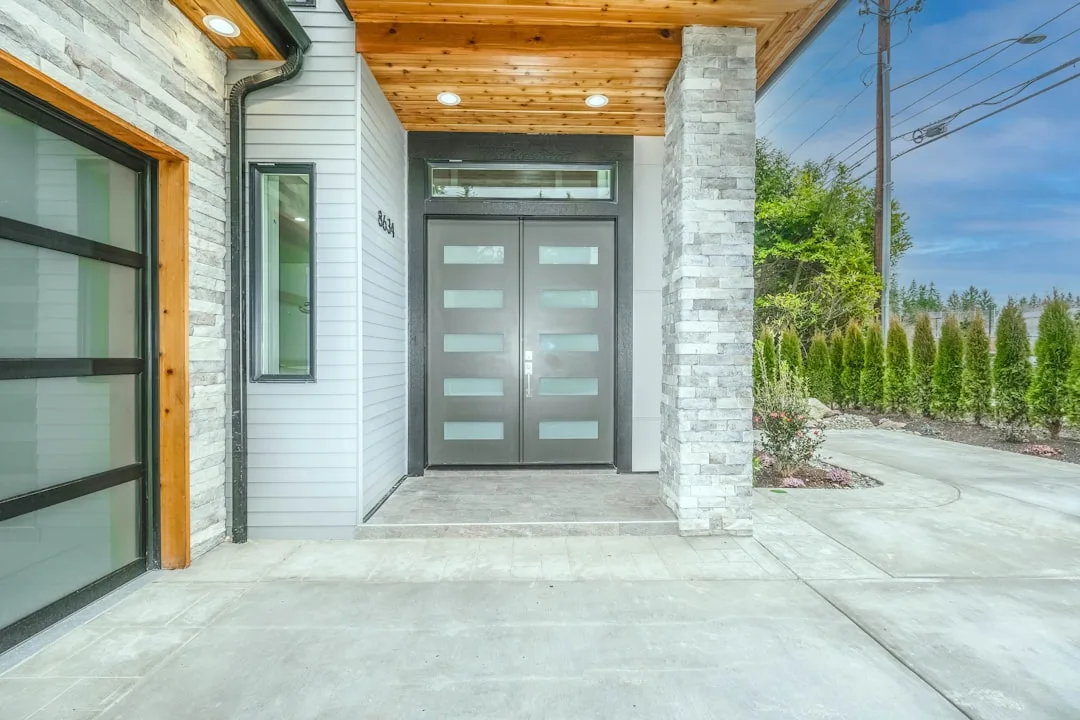


Where a concrete porch wins
Upfront cost goes to concrete. A plain slab runs well below a paver installation, and even stamped work is competitive on the low end. On a roughly 150-square-foot porch, the installed gap is real money.
Concrete also wins on the smooth, modern look. A polished slab with warm gray integral color reads as quiet luxury, and strangers may ask if it’s limestone. Pavers can’t give you one unbroken surface.
Routine upkeep is simpler too. Apply a penetrating sealer every year and you’ve handled most of it. Skip that step and surface failures follow.
Finish choice matters for safety. Polished concrete looks sharp, but a wet or shaded porch wants a light broom texture for traction. Built-in planters cast into the slab cost less than adding them later.

The mistake that sinks both porch floors
The costly error is choosing on the lowest quote and letting the crew shortcut the prep. One Portland contractor laid pavers over sand with no geotextile membrane, finished in a day for about $1,200, and left a 2-inch frost-heave gap six months later. The correct build adds a compacted stone base and geotextile, which costs more up front but avoids the failure.
Concrete has its own version. Homeowners skip the sealer, leave out expansion joints, or pick the wrong finish, then pay to fix a slab that has already set. One homeowner spent roughly $4,000 resurfacing a porch that a correctly stamped pour would have covered for about $3,200.
Whichever you choose, ask what is under the surface or inside the pour. Pavers need a compacted stone base and membrane, and concrete needs joints and a sealing plan. Hire a crew certified for permeable work if you go with pavers.

Final verdict on which porch floor to choose
Choose permeable pavers if your porch collects water, your region leans on drainage rules, or you want repairs that stay small. Accept the higher price and the washing and sand upkeep. Budget for a proper base, especially in cold zones.
Choose concrete if cost matters most, you like the clean modern look, or you want a stamped pattern on a front porch. Plan for annual sealing and choose a broom finish where traction matters.
Neither beats the other outright. Pavers win on drainage, repairs, and pattern variety, while concrete wins on price, smooth style, and simpler routine care. Match the floor to your biggest problem and hire for prep.