Black porch furniture does something no other color does at the entrance of a home: it sharpens every surrounding element by contrast. Beige siding reads as cream. Red brick looks richer. White trim snaps into focus. The porch stops being an afterthought and starts reading as a deliberate room — and that shift costs less than most people assume.
The four approaches here — seating, planters, railings, and a striped awning — can each stand alone or combine into a unified black-forward scheme. None of them requires repainting the house. What they do require is resisting the urge to mix in too many accent colors at once; the monochrome palette only works when you commit to it.
A black and white front porch, in particular, has become the most pinned exterior palette on the platform — not because it’s trendy, but because it photographs well in every light condition and looks equally sharp against craftsman bungalows and new-build colonials. The contrast does the decorating for you.
– Black powder-coated aluminum furniture is the fastest visual upgrade — a 4-piece set starts around $400–$600 and handles all weather.
– Black planters in fiber clay or fiberstone weigh less than ceramic and start around $35–$60 each, making them easy to reposition seasonally.
– Galvanized black iron railings cost $65–$135 per linear foot installed — the permanent upgrade that anchors every other element.
– A black and white striped retractable awning (12×10 ft) runs around $348 at major home improvement retailers and protects seating from sun and rain.
– The common mistake: mixing warm black (near-brown) with cool charcoal — they clash under natural light.
What Black Porch Furniture Actually Does to a Facade
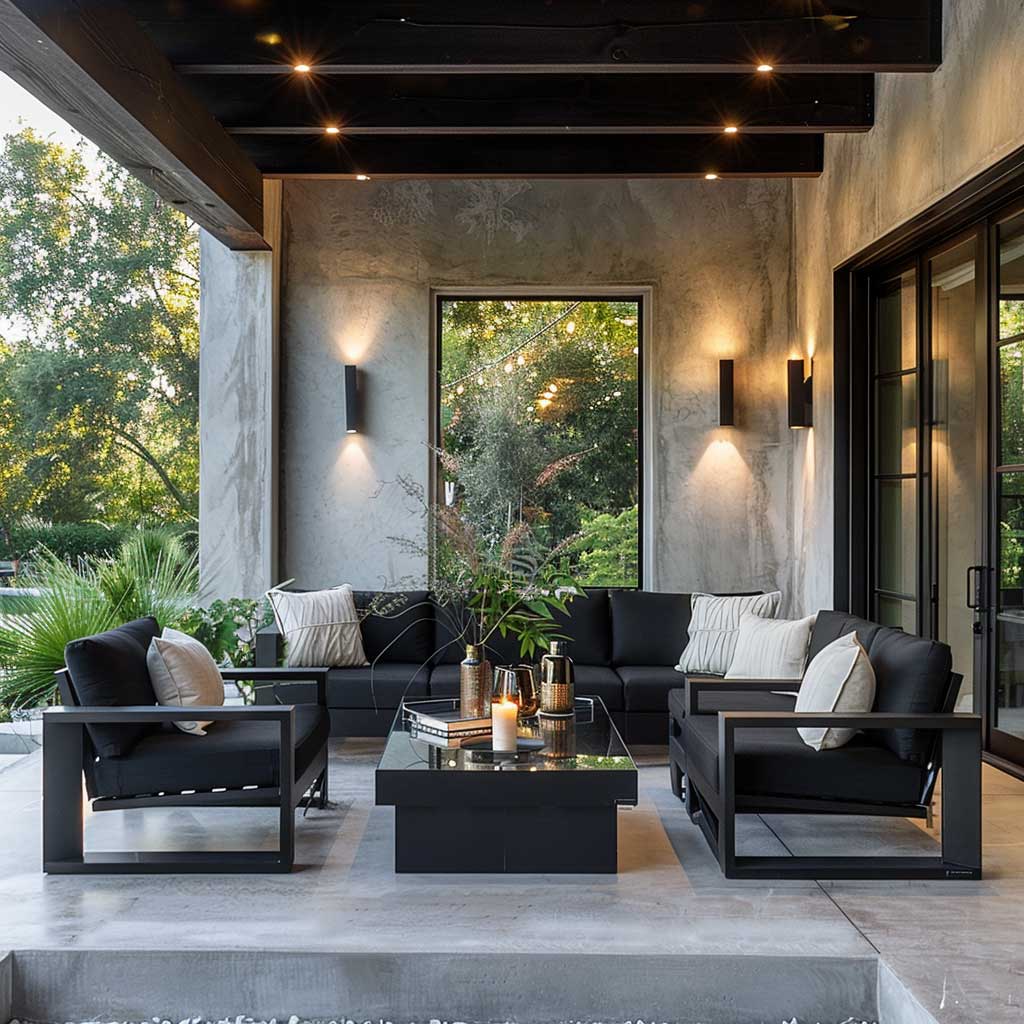
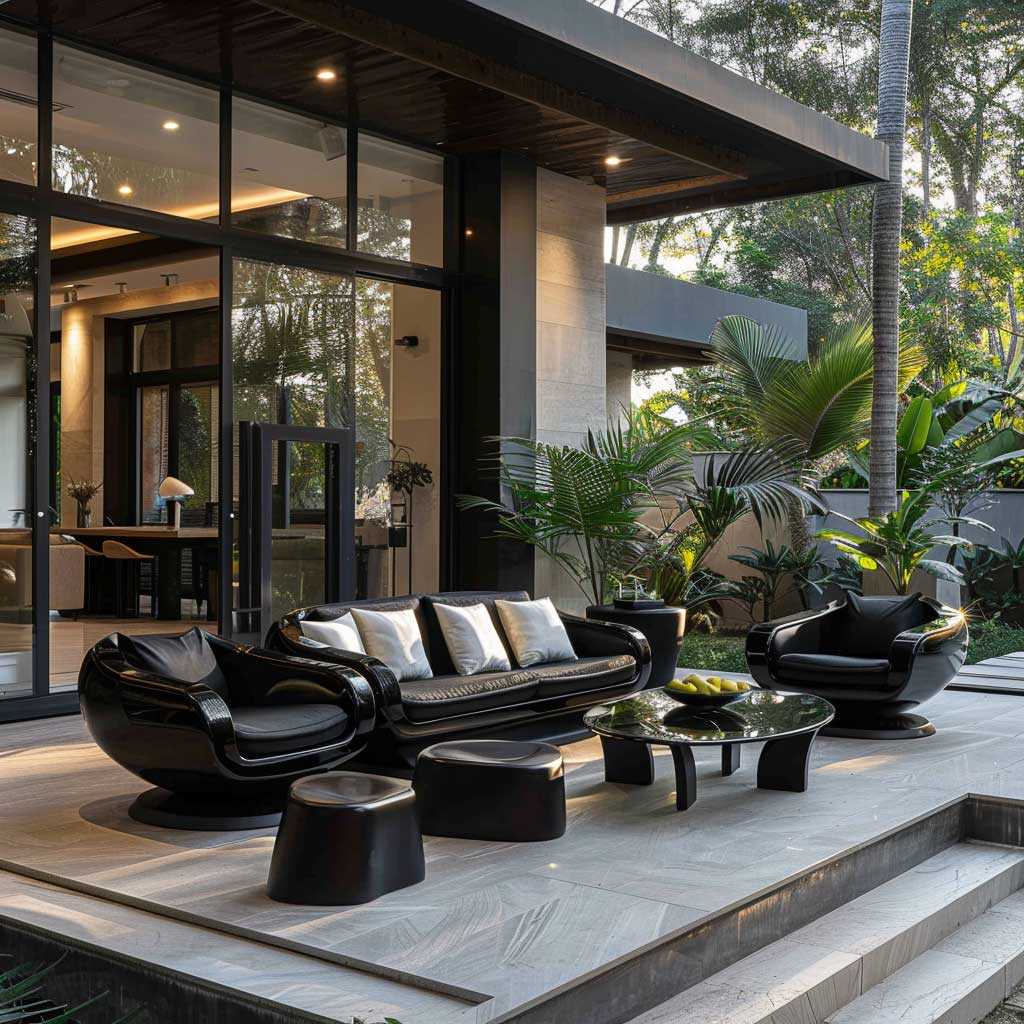
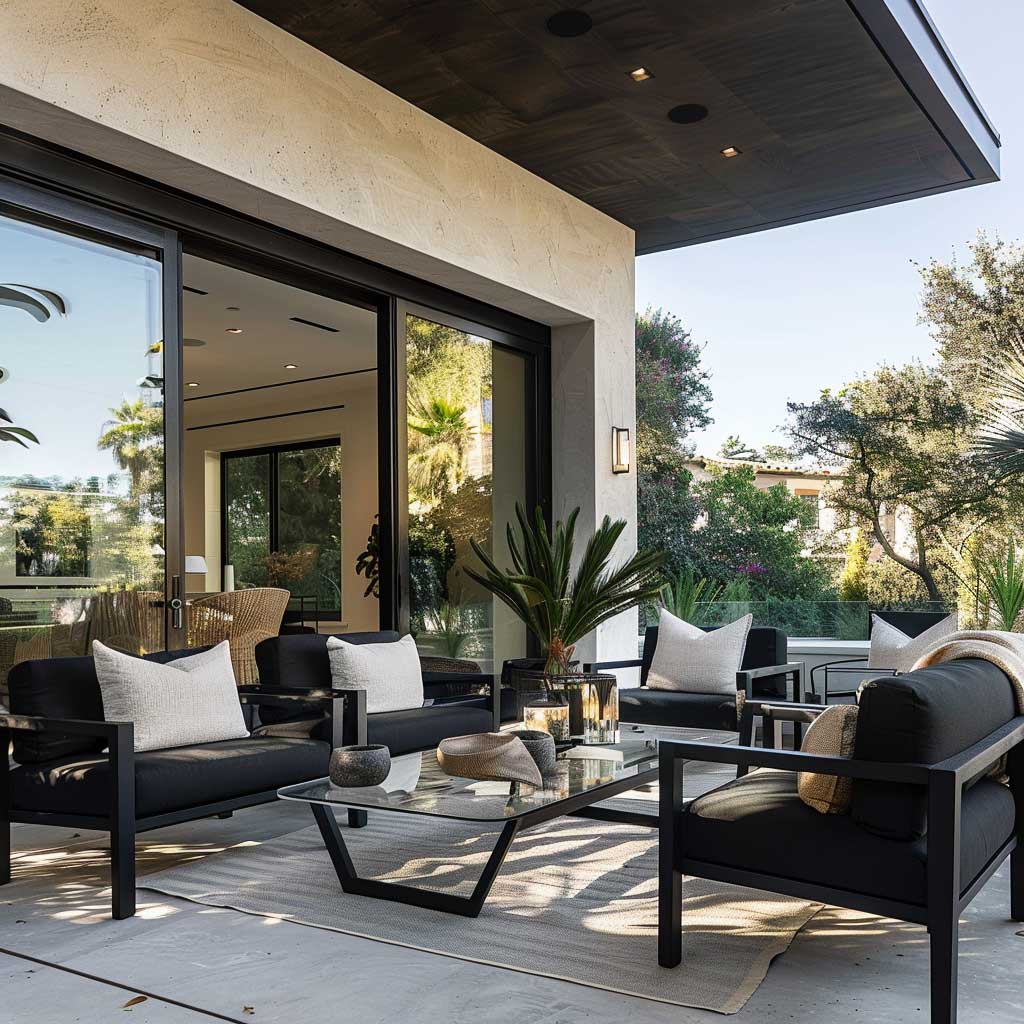
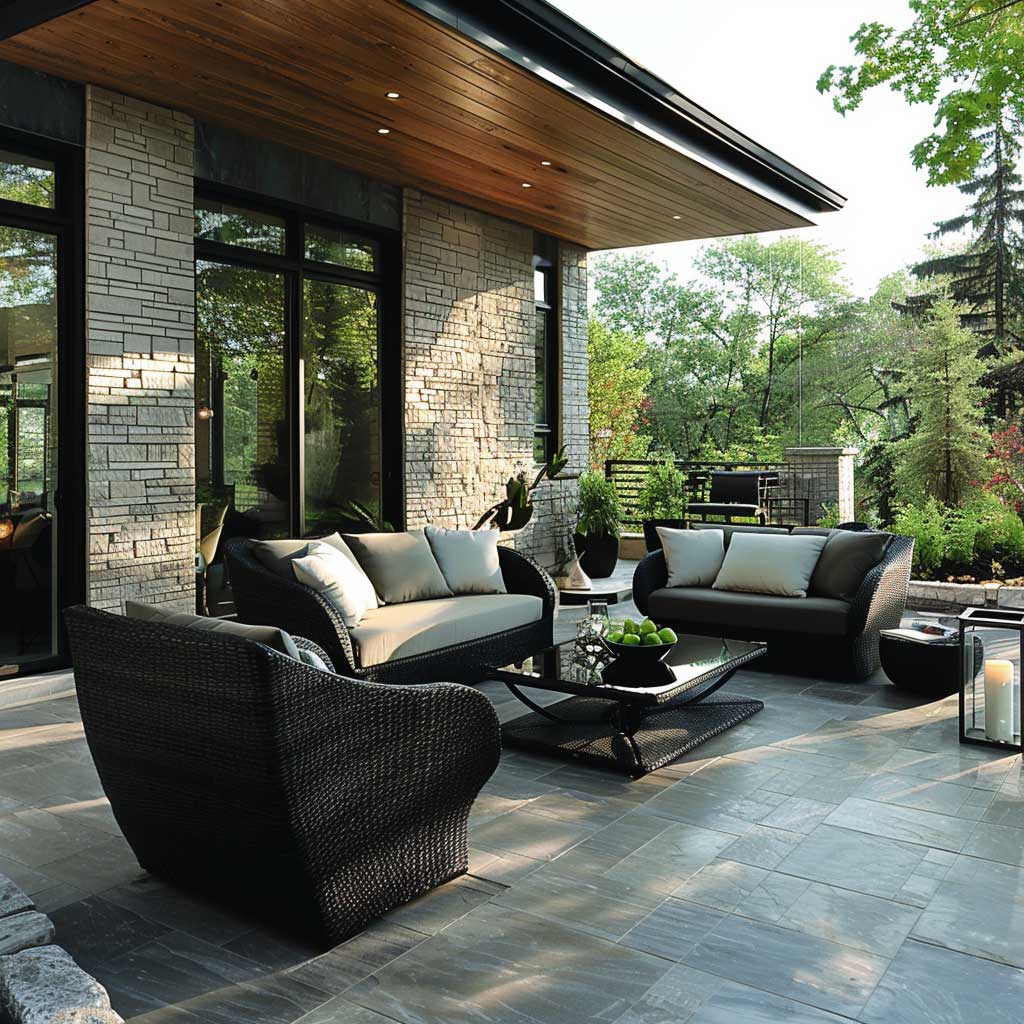
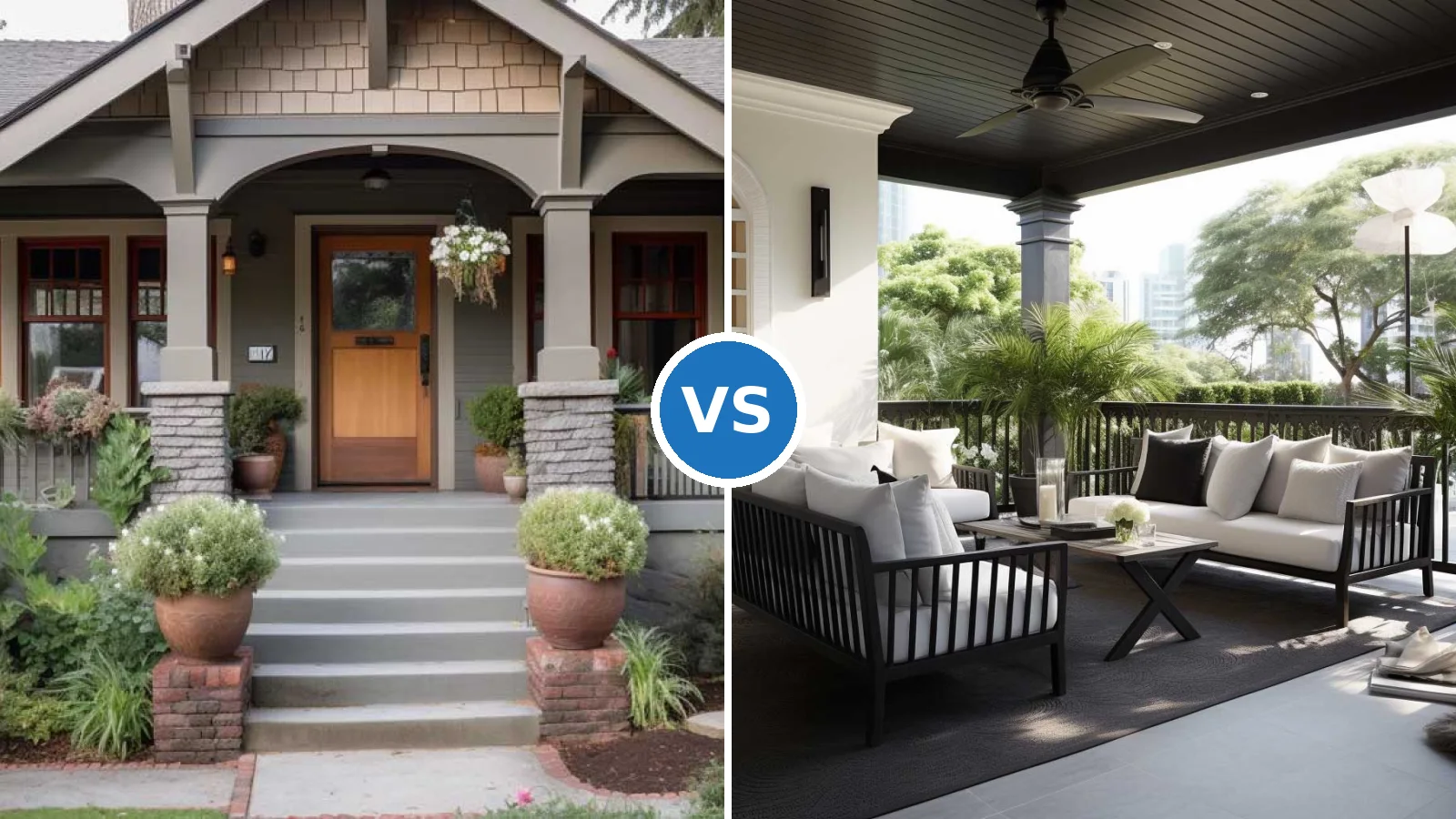
Black porch furniture works like a frame around a painting — it defines the edges of the space and makes the house itself look more intentional. Powder-coated aluminum is the practical choice here: it doesn’t rust, doesn’t require seasonal storage in most climates, and holds a matte or satin black finish for years without fading under UV. A 4-piece set (sofa, two chairs, coffee table) starts around $400–$600 at retailers like AllModern or Walmart, putting this upgrade within reach of most budgets. The SERWALL folding Adirondack set in black, for comparison, runs about $160 for two chairs on Walmart.
White cushions are the standard pairing, and for good reason — the contrast reads clearly from the street at 30 feet, which is where curb appeal actually happens. Sunbrella-grade fabrics hold white without yellowing for multiple seasons and can be wiped clean rather than laundered. What doesn’t work: mixing ivory and bright white cushions on the same seating group. They look like a mistake rather than a palette. Commit to one white tone and use it across every textile.
A glass-top coffee table keeps the weight of the arrangement from getting too heavy visually. Is this a space that feels like a showroom or a real porch? The answer depends on the plants — a few trailing pothos or structured boxwoods in separate containers break up the hard lines and signal that someone actually uses the space. String lights or a wall-mounted sconce add warmth after dark; for specific fixture options across all price points, the front porch lighting ideas roundup covers what survives winter and what doesn’t.
Black Planters and Green Foliage — the Contrast That Stays Fresh All Season
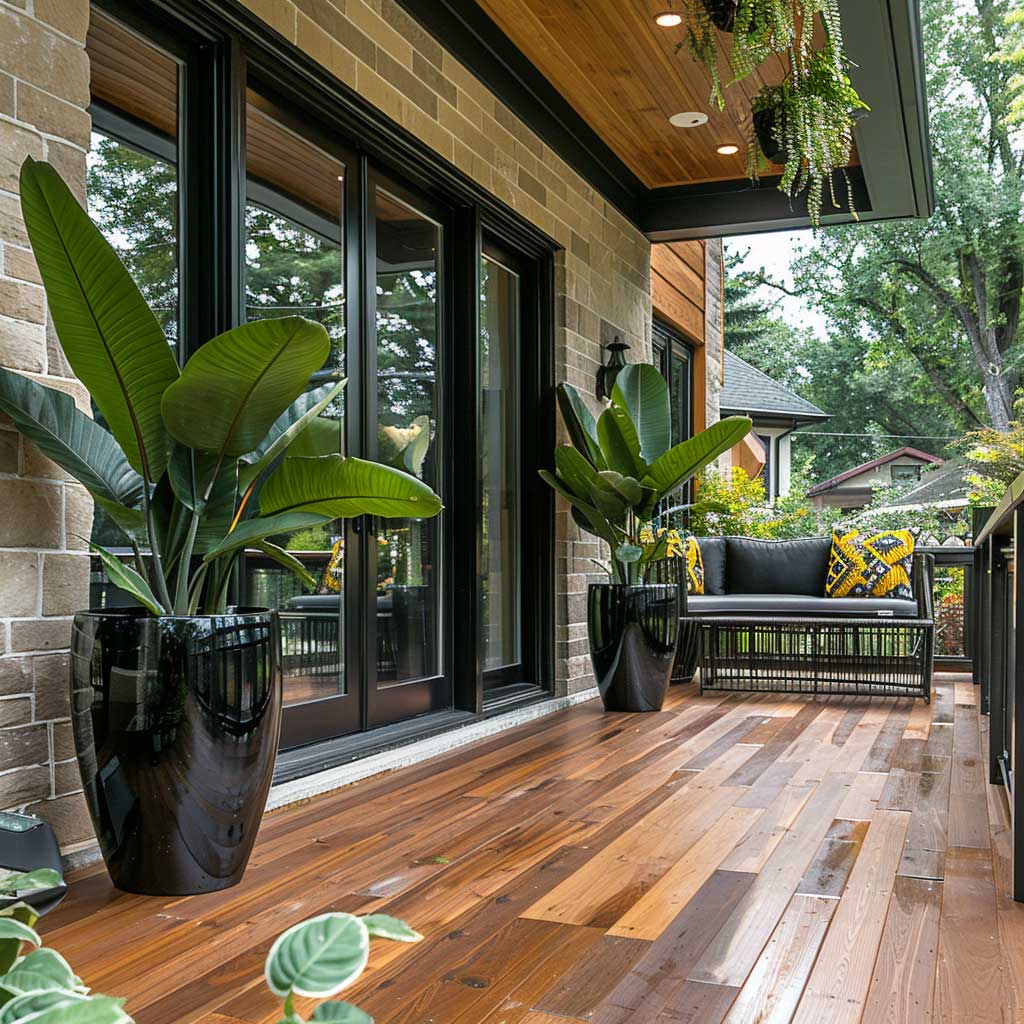
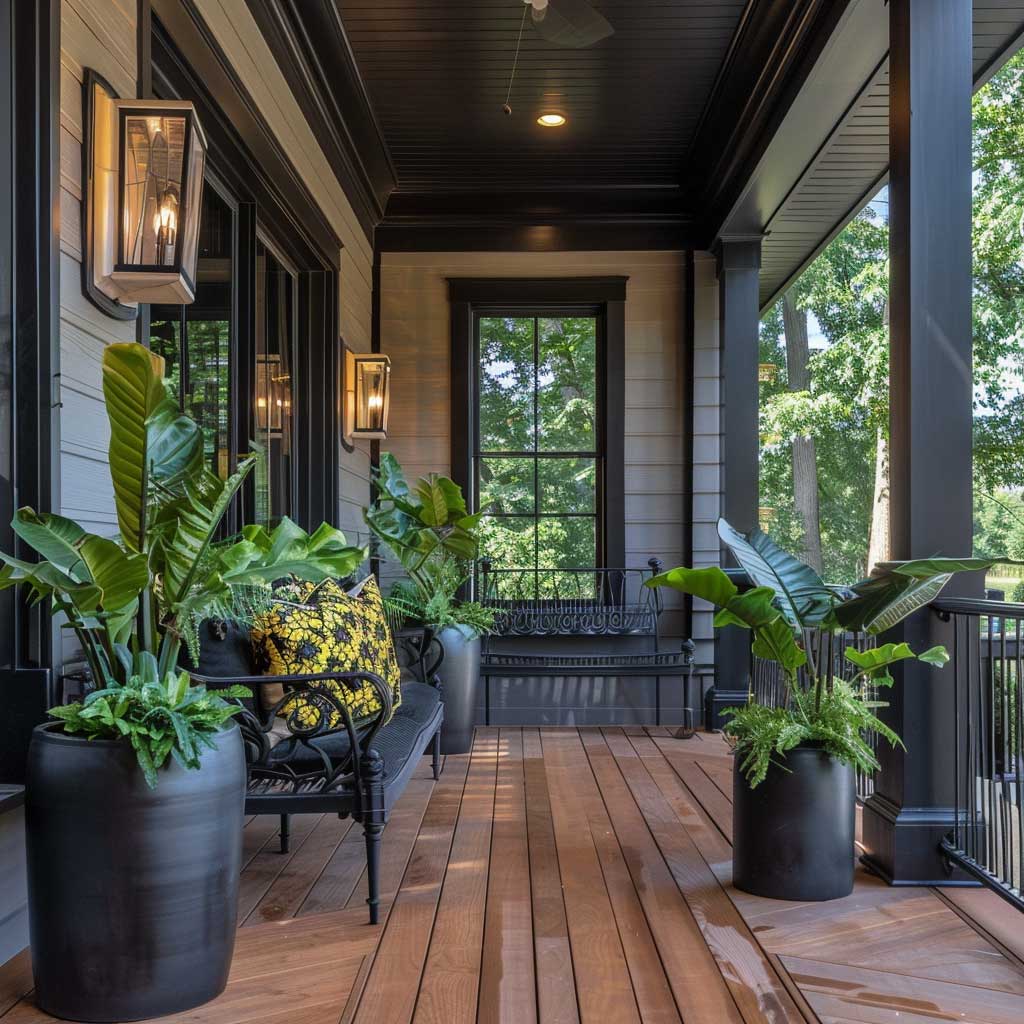
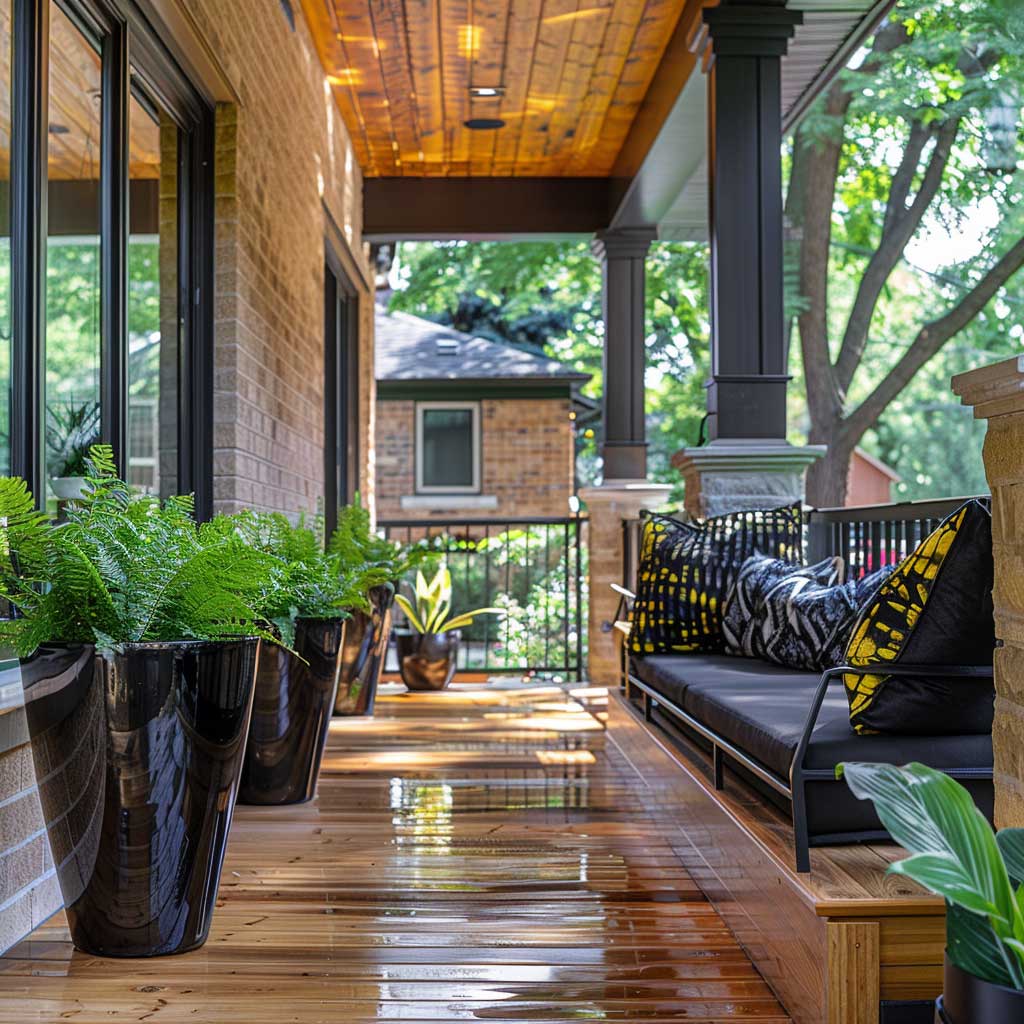
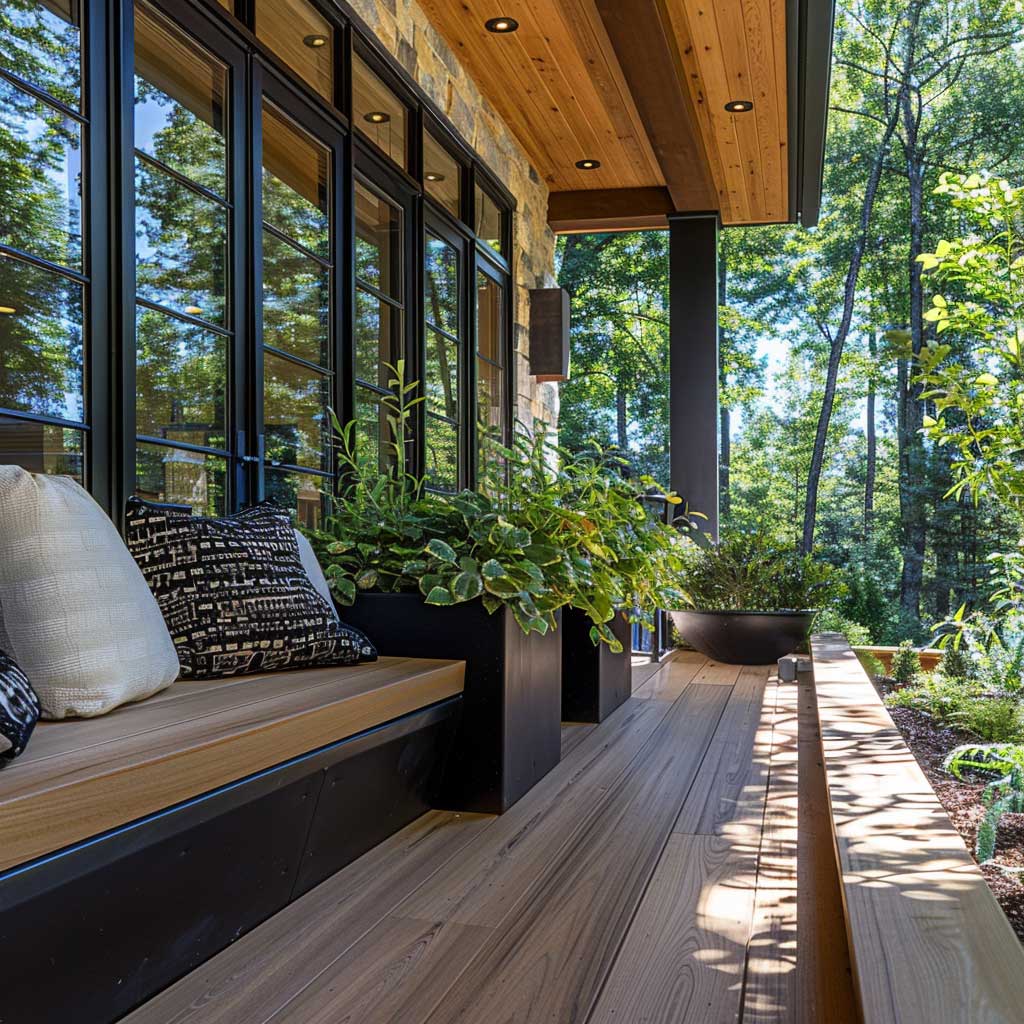
Large black planters with green foliage are the single most cost-effective way to shift a porch’s personality without touching the architecture. A pair of 18-inch fiberstone planters from Joss & Main starts at around $60 each — fiberstone looks like ceramic but weighs roughly 60% less, which matters when you’re moving them for seasonal replanting or porch cleaning. Fiber clay options from the same retailers land in the $35–$60 range per pot. Genuine ceramic at that scale runs heavier and pricier, and it cracks in freeze-thaw cycles, so skip it for outdoor use in cold climates.
Plant selection matters more than most porch decorating advice acknowledges. Hostas work in shade and have architectural leaf shapes that read well against black. Ornamental grasses add movement — the way a plume sways in wind introduces life to what is otherwise a static composition. Ferns fill vertical space without competing with the planter’s geometry. What to avoid: small, fussy annuals crammed into a large planter. The scale mismatch makes both the plant and the pot look cheap.
The positioning logic is borrowed from retail merchandising: pair planters symmetrically to frame the doorway, not pushed against the side wall where they disappear. Think of them as the parentheses around the front door — everything they bracket gets elevated by association. A black metal bench tucked between them ties the grouping together and gives the arrangement a third point of visual weight that keeps the eye moving across the porch rather than stopping at the door.
Avoid mixing matte black planters with glossy black furniture on the same porch — the finish discrepancy looks unintentional at close range and reads as mismatched rather than layered. Pick one finish and stay with it across every black element in the space. Also, resist planting tall grasses in planters positioned directly beside a walkway where guests brush past them — the fronds catch and tear, and the plant looks ragged within a season.
Black Porch Railings — the Permanent Upgrade with a 50-Year Return
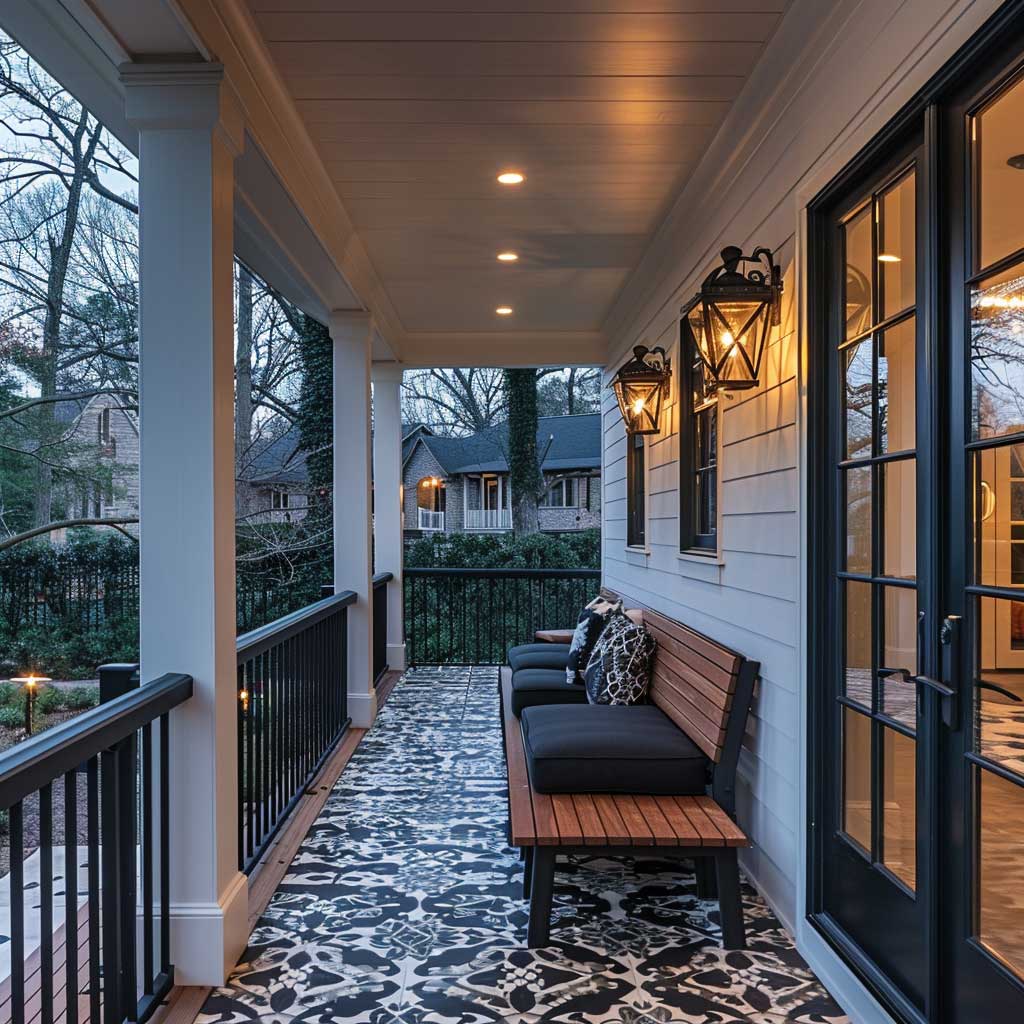

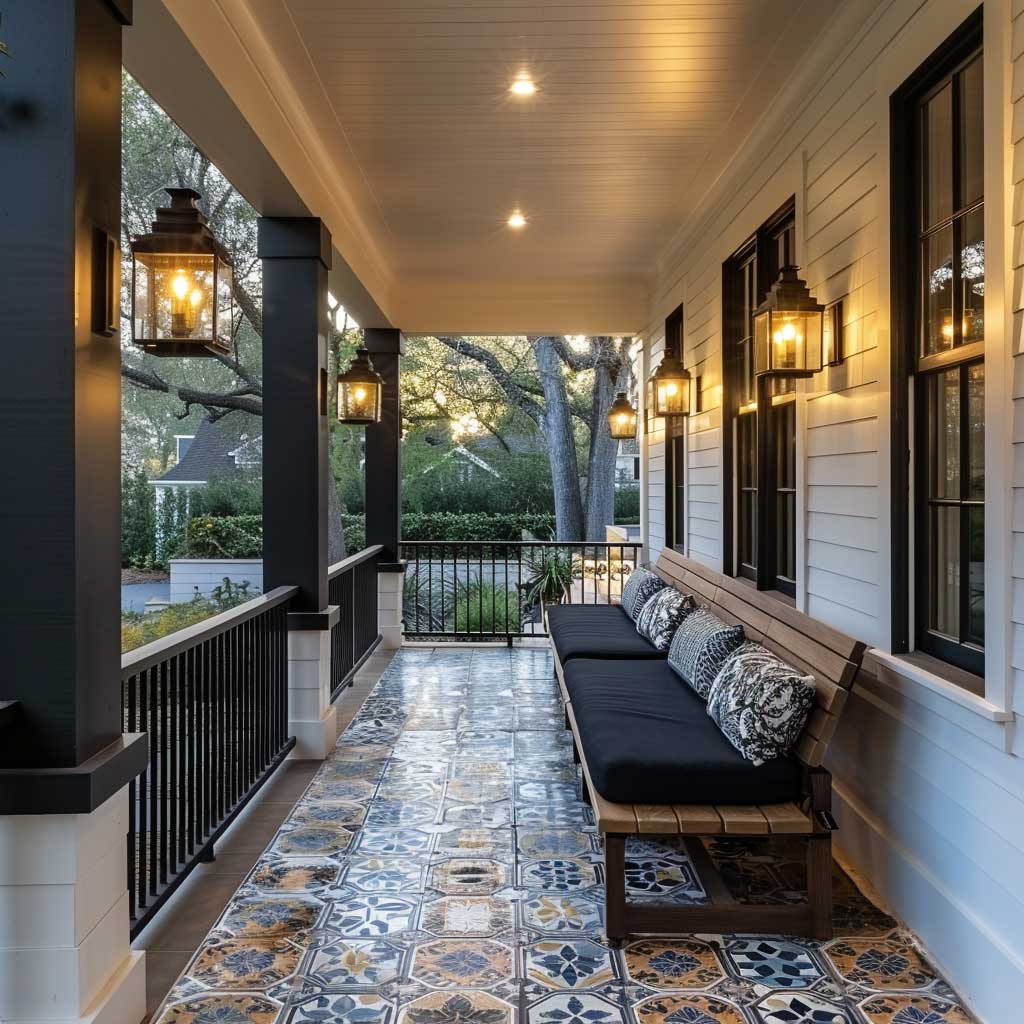
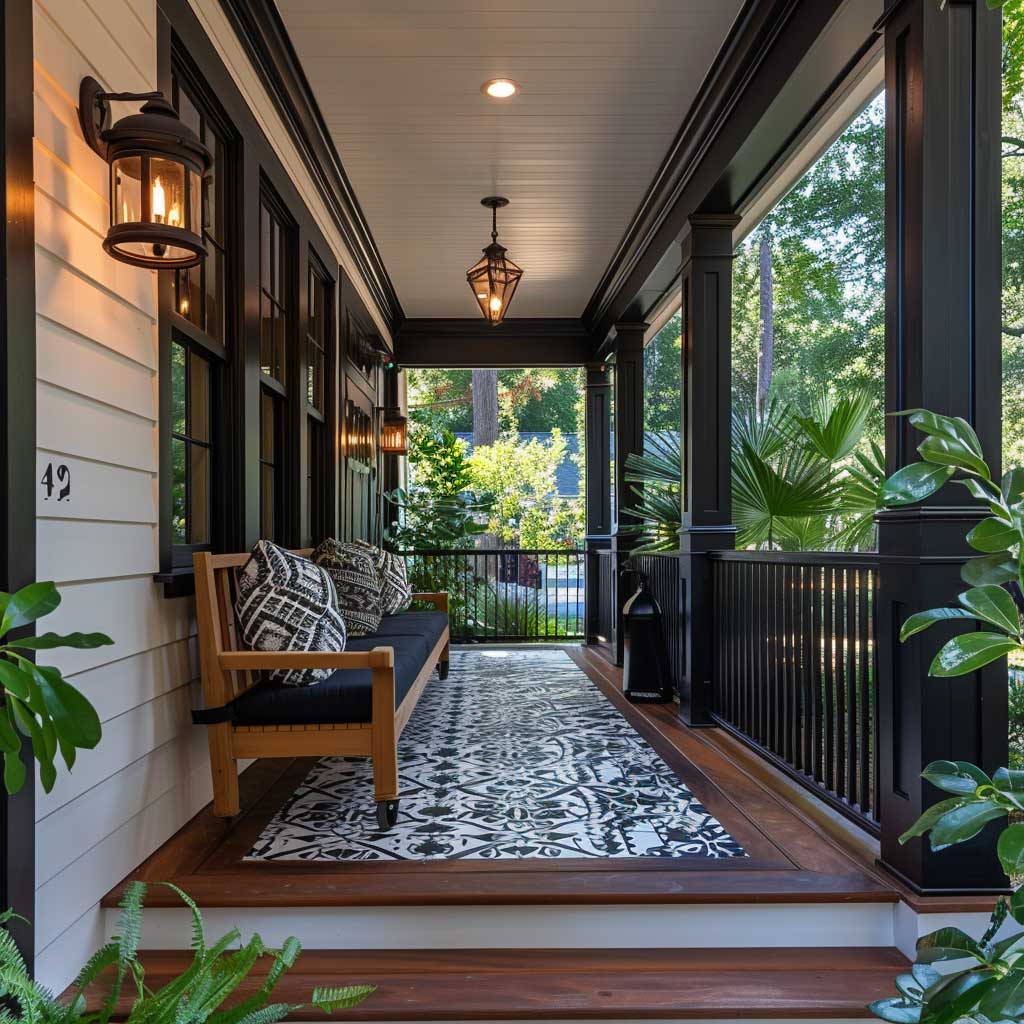
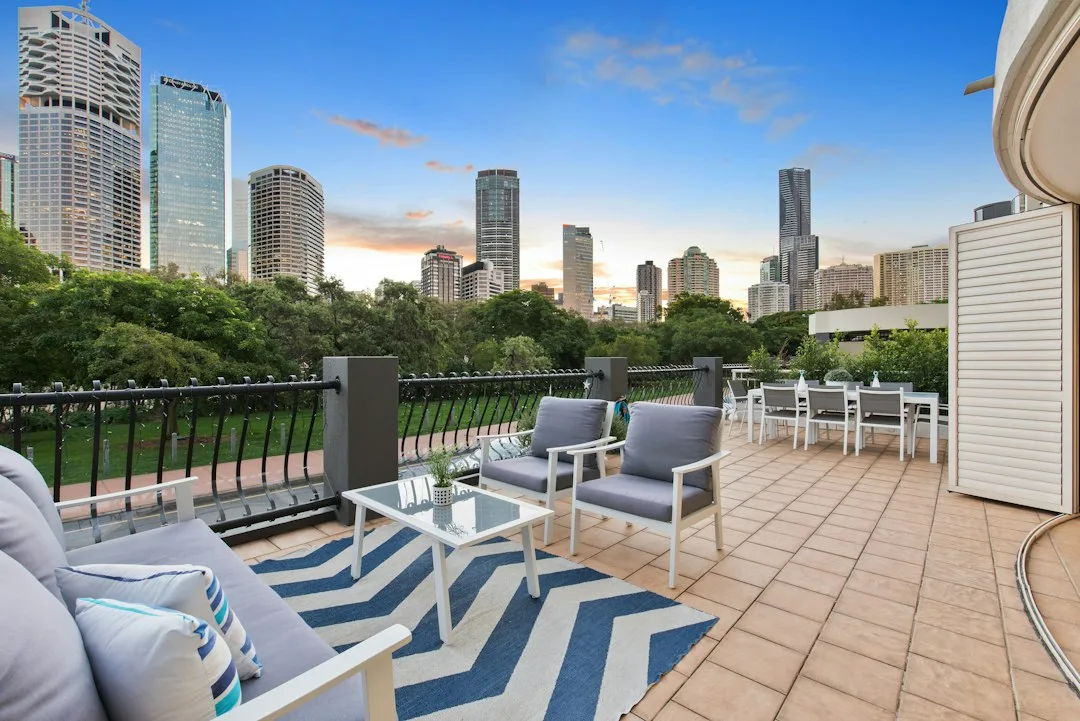
Black front porch railings are the upgrade that changes the structure of how the house reads from the street — not just the decoration. According to HomeGuide, galvanized black iron railings run $65–$135 per linear foot installed, with a national average project cost of around $2,600 for a standard 25-foot run. Powder-coated wrought iron with a good galvanized undercoat lasts 50 years or more; it’s the one porch element where spending more upfront actually reduces lifetime cost. For an in-depth look at railing materials and styles before committing to a specific design, the front porch railing ideas article covers everything from glass panels to ornamental iron in detail.
The design detail that separates a sharp black railing from a generic one is baluster spacing. Tighter spacing (under 4 inches, required by most building codes anyway) creates a denser, more intentional look — it reads as a deliberate design choice rather than a safety minimum. Horizontal rail designs are gaining ground over traditional vertical balusters; they reference mid-century modern architecture and photograph exceptionally well. Does your house suit horizontal lines? If the siding runs horizontal, yes — the railing echoes it. If the siding is board-and-batten or vertical shiplap, stick with vertical balusters.
Black wall sconces mounted flanking the front door complete the railing upgrade without adding another contractor line item. The trick is matching the metal finish — a matte black sconce beside a satin-black railing creates a visible inconsistency that draws the wrong kind of attention. Order sample swatches or bring a railing section to the fixture store before committing. A patterned tile floor — geometric or herringbone — in a neutral cream or gray works alongside black railings without competing for the eye’s attention.
For context on external railing cost data, HomeGuide’s wrought iron railing cost breakdown covers material types, labor ranges, and maintenance expectations in detail.
Where Black and White Front Porch Ideas Peak — the Striped Awning Setup


A black and white front porch built around a striped awning is where the monochrome palette reaches its most theatrical expression — and it’s one of the more functional upgrades available, not just a decorative one. The ALEKO 12×10 ft manual retractable awning in a black and white stripe retails for around $348 at Home Depot, covering up to 120 square feet of porch with a powder-coated steel frame and UV-resistant acrylic fabric. That’s meaningful shade in summer — the difference between a porch that gets used in July and one that sits empty. Motorized versions from the same brand step up to $479–$639 depending on width.
Black wicker chairs are the natural pairing under a striped awning — the woven texture contrasts with the graphic stripe above it, preventing the whole setup from reading as two-dimensional. White cushions keep the palette anchored. What to avoid: adding a patterned cushion under a striped awning. Two competing patterns at the same scale create visual noise. If you want texture in the cushion, use a tone-on-tone weave in white or cream, not a separate print.
The floor material underneath anchors everything. Natural stone — bluestone, limestone, or tumbled travertine — introduces warmth that prevents the black-and-white scheme from reading as cold. The irregular tone variation in natural stone does what a solid-color concrete floor can’t: it breaks the grid. A round black table works better than a rectangular one in this setup because it softens the angular lines of the awning frame and chairs. Potted flowering plants in vibrant colors — coral, yellow, fuchsia — give the eye a single point of contrast to land on, which makes the monochrome surround feel intentional rather than stark.
| Element | Best Pairing | Approx. Cost | Key Pitfall |
|---|---|---|---|
| Black porch furniture | White Sunbrella cushions, glass table | $400–$600 (4-piece set) | Mixing warm black and cool charcoal |
| Black planters | Hostas, ornamental grasses, trailing ferns | $35–$60 each (fiberstone) | Matte planters + glossy furniture mismatch |
| Black iron railings | Matching matte sconces, neutral tile | $65–$135/linear ft installed | Mismatched black finishes (matte vs. satin) |
| Black & white striped awning | Black wicker, stone floor, single-color cushions | $348–$639 (12×10 ft) | Patterned cushions competing with stripe |
The Takeaway
Black Makes Every Other Material Look More Expensive
The contrast effect is real: black furniture makes beige siding look intentional. Black planters make ordinary hostas look architectural. Black railings make a basic porch look custom-built. The common thread is that black borrows visual authority from everything around it.
Start with furniture if you rent or want flexibility. Move to planters if you want instant seasonal impact. Commit to railings when you’re ready for the permanent upgrade that pays back over 50 years.
Save this post before you start shopping — the finish consistency rule alone will save you from the most common and most expensive mistake.