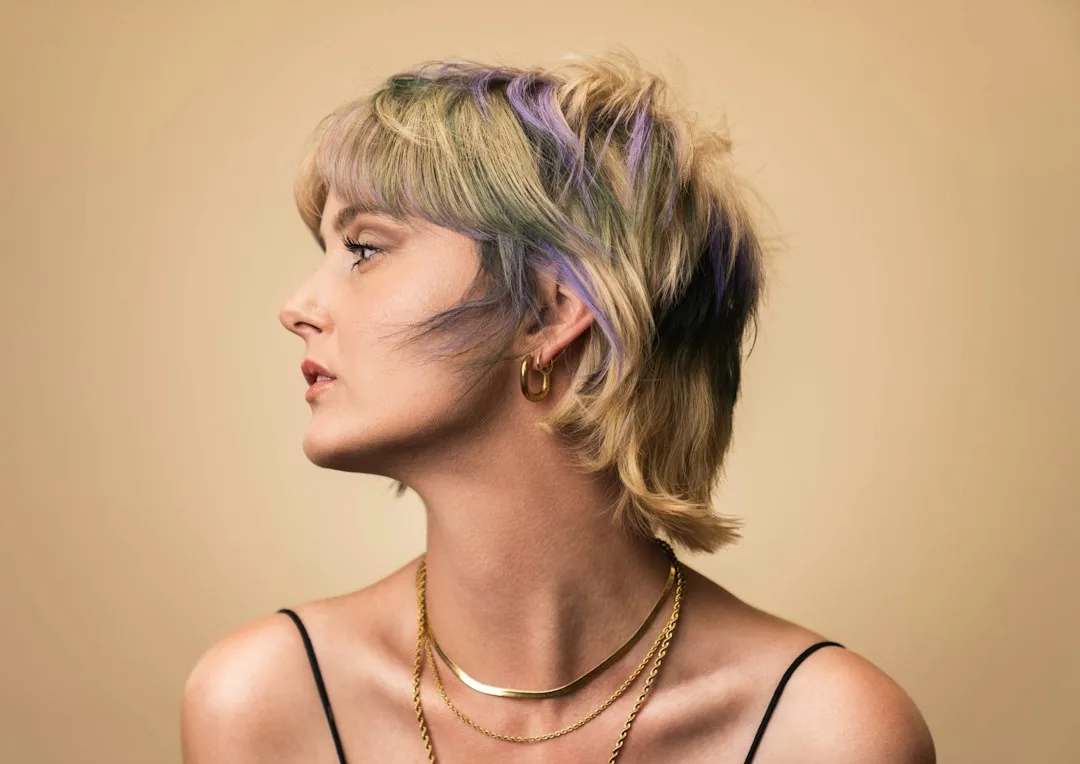
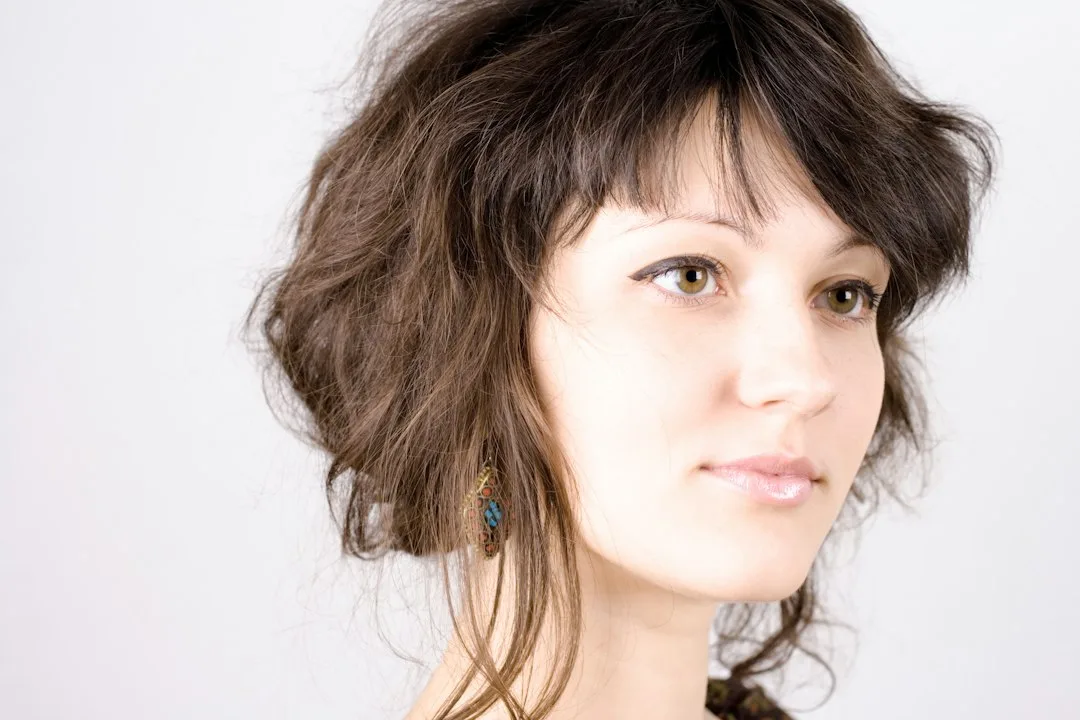
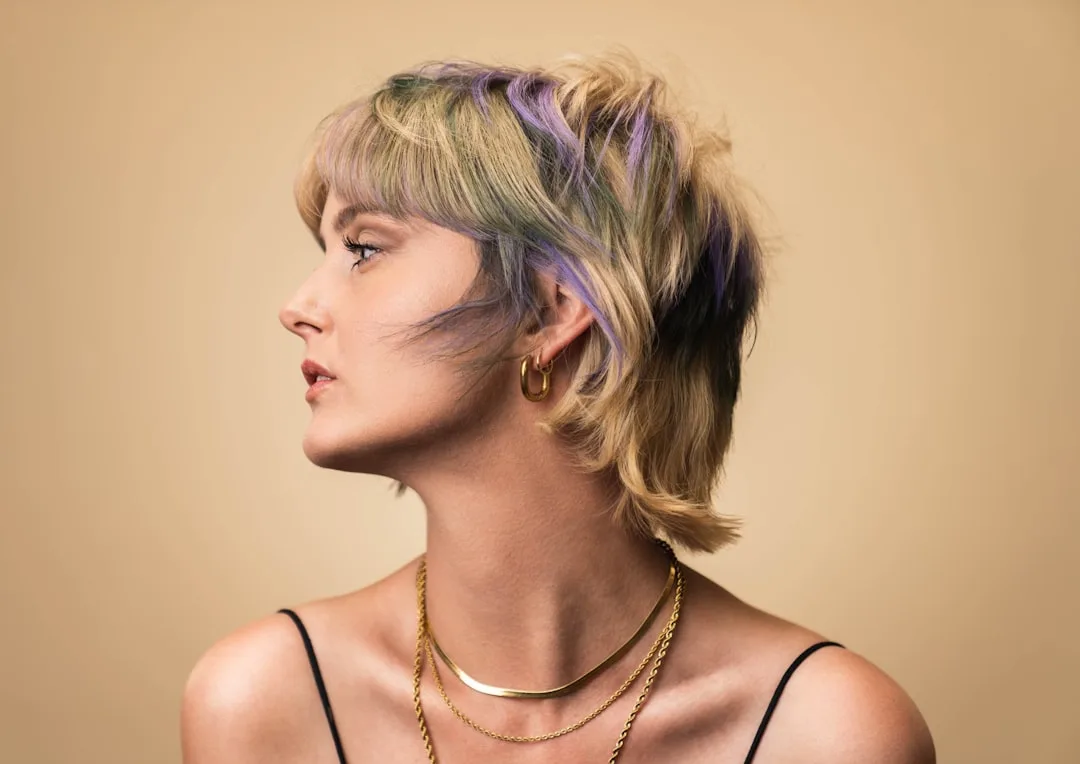
Blonde feathered hairstyles do something most office-party looks can’t — they move. Where a blunt blowout looks stiff under fluorescent light and loses its shape by the third round of drinks, feathered layers stay airy, hold their texture, and photograph well without looking overdone. That specific combination of lightness and structure is exactly what makes the cut so useful for an evening that starts in the boardroom and ends at the bar.
The technique itself is straightforward: layers are razor-tapered toward the ends, so the hair thins out rather than stopping abruptly. The result reads as natural volume rather than intentional styling — which at a professional gathering is the more credible version of dressed up. Three color directions are covered below, from warm golden blonde to rich auburn to soft chestnut, each with different maintenance commitments and different effects under event lighting.
Plan for a trim every 6–8 weeks to keep feathered layers from collapsing into blunt ends — that’s the one non-negotiable in maintaining the shape. Beyond that, the styling is genuinely low effort once the cut is right.
- Golden blonde feathered layers catch light in layers, creating dimension that reads as professional polish in warm event lighting.
- Deep auburn feathered layers need a root refresh every 4–6 weeks but reward the upkeep with multi-directional color depth no single-process brown achieves.
- Chestnut feathered layers are the lowest-maintenance option — balayage placement means regrowth lines stay soft and a full refresh runs $100–$300 depending on length.
- All three styles benefit from a round brush blow-dry that flips feathered ends outward — inward-facing tips narrow the silhouette in an unflattering way.
- A standalone gloss treatment ($40–$90) can refresh any of these colors between full color appointments.
What Golden Blonde Feathered Layers Deliver That Flat Color Cannot
Blonde feathered hairstyles in a warm golden tone work the way good art direction works — the eye follows the movement before it registers the intention. Feathered layers in golden blonde catch light along each individual strand, so the color appears multidimensional even when it’s technically a single tone. That play of light makes the hair look like it was styled by someone who spent money on it, without requiring much effort to maintain the illusion.


For medium-length hair, feathered layers fall around the shoulders and create what stylists call a “bounce point” — the hair moves with the body rather than swinging independently. On longer hair, the layers extend further down and produce a cascade effect where each length catches the light at a different angle. Both versions work for an office context because neither reads as effort-heavy; the style looks like it belongs to the person rather than being worn for the occasion. Ask for a round brush blow-dry that curls feathered ends outward at the final pass — ends flipping inward flatten the silhouette and push volume where it doesn’t belong.
A color gloss treatment ($40–$90 as a standalone service) is the most cost-efficient way to maintain golden blonde between full color appointments. It deposits translucent pigment, closes the cuticle, and makes each feathered layer reflect light cleanly — which is the specific effect that makes this style read as expensive at an evening event. The mistake most people make is over-applying shine products to the roots: keep serum to the mid-lengths and ends only, or the feathered layers collapse into a heavy, helmet-like shape. Does the shine serum actually matter? Yes — the difference between a feathered cut that reads as polished and one that reads as “needs a trim” is almost entirely a product question.
Golden blonde works across a wider range of skin undertones than most people assume. Warm undertones pair with deeper golden shades, neutral undertones can go either direction, and cooler undertones benefit from golden blonde with a slight honey variation rather than pure warm gold — the warmth creates contrast without washing out the complexion. Paired with simple jewelry and a single-color top, the feathered layers are enough visual information on their own; adding pattern or excessive accessories competes with the movement of the cut and cancels out its primary advantage.
Avoid applying heavy oil or balm to the lengths of feathered hair — even a pea-sized amount too close to the roots weighs down the layers and converts the feathered texture into a flat, greasy-looking overhang. The same applies to dry shampoo used in excess: it absorbs oils but also muffles the movement of individual layers. If your feathered hairstyle stopped moving, check your product routine before blaming the cut.
Deep Auburn Feathered Layers and the Office Party Problem They Solve
Auburn feathered hairstyles solve a specific office-party problem — the look that’s polished enough for a professional context but distinctive enough to hold up alongside people who clearly spent time on their appearance. The richness of auburn tones creates color depth that catches warm event lighting from multiple angles, so the feathered layers don’t just create movement, they create a color display that reads differently depending on where the light hits.


Feathered layers brushed back from the face work particularly well with auburn because the motion of flipping the hair back exposes the color from a new angle — what was a warm medium brown from the front suddenly shows copper underneath as it moves. This is the mechanical logic of why auburn and feathering work together: the technique shows more of the color surface area than a blunt cut does. Auburn root maintenance runs every 4–6 weeks to prevent noticeable regrowth lines, which is the most demanding upkeep schedule of the three color options covered here. Whether that’s worth it is a simple comparison: a standard single-process color averages $70–$150 at a mid-range salon, and the auburn depth it produces is not replicable with a gloss treatment alone.
The styling approach that tends to fail with auburn feathered layers is over-curling the sections — tight curls pull the feathered ends inward and make the hair look shorter and stiffer than it is. A large-barrel iron creating a loose wave is the right scale; the wave should be wide enough that the feathered tips still have room to follow their natural direction outward from the face. What’s the actual goal? Controlled movement, not volume for its own sake. Jet black feathered hairstyles follow a similar principle — the wave should amplify the color’s own depth rather than override it. A texturizing spray applied to the mid-lengths before the iron pass helps the layers hold their shape through an evening without re-styling.
For a sophisticated office gathering, deep auburn feathered layers are the choice when the goal is to read as someone who maintains their appearance with real intention rather than reactive effort. The color is unmistakably chosen, not default, and the feathered structure signals awareness of how layering works — two signals that, together, communicate the same thing as a well-fitted jacket. Pair with understated jewelry and muted fabric; the color already carries the evening.
Chestnut Feathered Layers Hold Their Shape Longer Than Any Blonde
Chestnut feathered hairstyles earn their reputation as the most practical color-cut combination for a professional context because the grow-out is nearly undetectable. Chestnut balayage — the version that adds dimension without all-over color — starts the lighter tones a few centimeters down the strand, so there’s no harsh root line at 8 weeks. A full balayage refresh on shoulder-length chestnut hair runs $100–$300 at most salons, and the payoff is a color that looks intentional for 12–16 weeks without a corrective appointment.


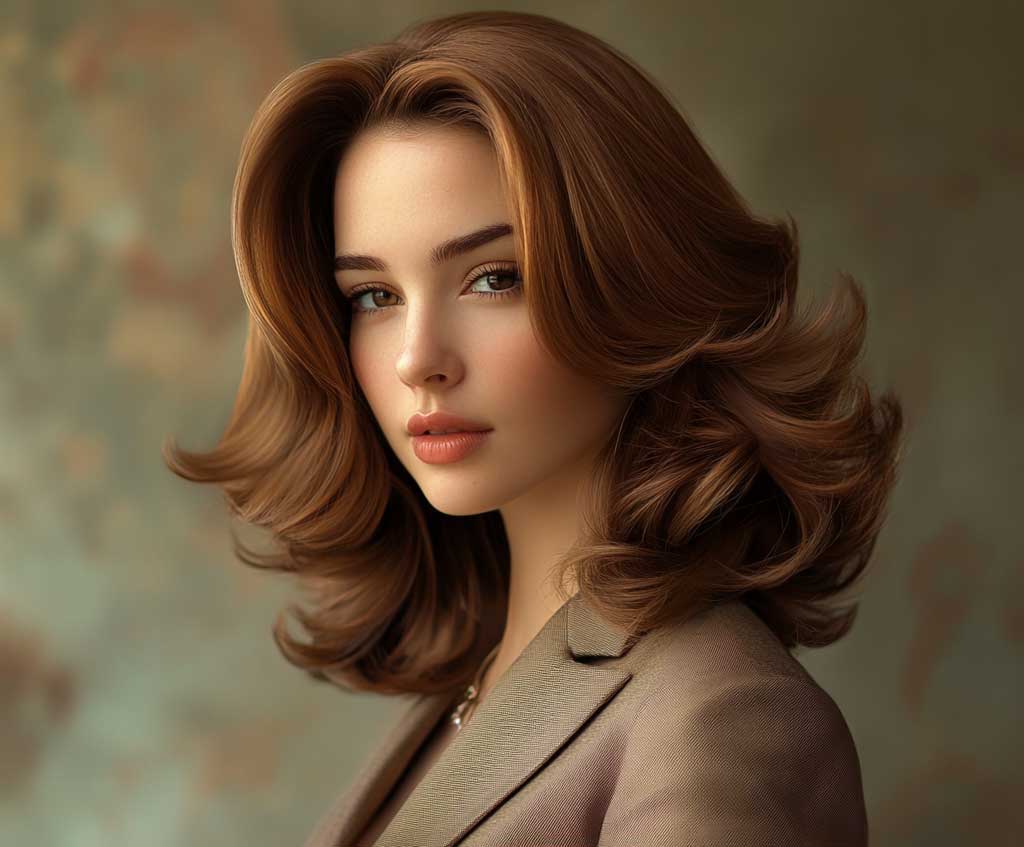
The warm brown tones of chestnut amplify the feathered structure in a different way than blonde or auburn. Where blonde catches surface light and auburn creates color contrast, chestnut absorbs and reflects simultaneously — each feathered layer reads as a slightly different tone depending on the angle, giving the hair a natural depth that doesn’t require backcombing or volumizing product to appear full. For shoulder-length and longer hair, this is the version stylists tend to recommend most, because the layers have enough length to create a true cascade effect rather than just framing movement at the face. Ask specifically for feathering that starts at the jawline, not at the crown — layers cut too high create bulk at the top and taper at the wrong point for an office setting.
Styling chestnut feathered layers for an event is a two-product task: a shine serum worked through the mid-lengths and ends to bring out the color’s natural warmth, and a light-hold hairspray to maintain the feathered ends’ direction. Think of the serum as a color-enhancement decision, not a styling one — chestnut without shine serum looks flat and matte under warm indoor lighting, which reduces the layered effect to something that could pass for an unfinished blowout. For a quick additional read on short feathered hairstyles for round faces, the same principle applies: product and cut are in conversation with each other, not independent decisions.
Chestnut feathered layers also handle formal outfits better than blonde does — darker tones don’t compete with patterns or strong fabric colors the way warm golden blonde can. Paired with a structured blazer or a tailored wrap dress, the chestnut base gives the overall look enough color temperature without pulling attention toward the hair specifically. That’s what makes it the choice when the outfit is doing significant work and the hair’s job is to support rather than lead.
| Color | Maintenance Interval | Typical Cost | Office Party Advantage |
|---|---|---|---|
| Golden Blonde | Color gloss every 4–8 weeks; full color $70–$150 | Gloss $40–$90 standalone | Multi-directional light play in warm event lighting |
| Deep Auburn | Root refresh every 4–6 weeks | Single-process $70–$150 | Dramatic color depth; distinctive in a professional crowd |
| Classic Chestnut | Balayage refresh every 12–16 weeks | Balayage $100–$300 | Lowest maintenance; pairs with any outfit color |
Hair.com’s L’Oréal professional team notes that regardless of which feathered haircut you choose, a trim every 6–10 weeks keeps layers shaped and free of split ends — slightly more frequent than for long, one-length cuts, because the feathered tips are the first to lose their definition as the cut grows out.
The Verdict
Feathered layers work at an office party because they read as polished without looking rehearsed
Golden blonde feathered layers are the highest-impact choice under warm event lighting — the color and technique amplify each other. Auburn demands more upkeep but rewards it with a color depth that looks like investment. Chestnut is the lowest-maintenance version with the most flexibility against different outfit choices.
Plan trims every 6–8 weeks for any feathered cut. Use a gloss ($40–$90) between full color appointments to keep the light-catching quality that makes the style work. The round brush blow-dry with outward-flipped ends is non-negotiable — inward tips narrow the silhouette in the wrong direction.
Save this post before your next salon appointment.