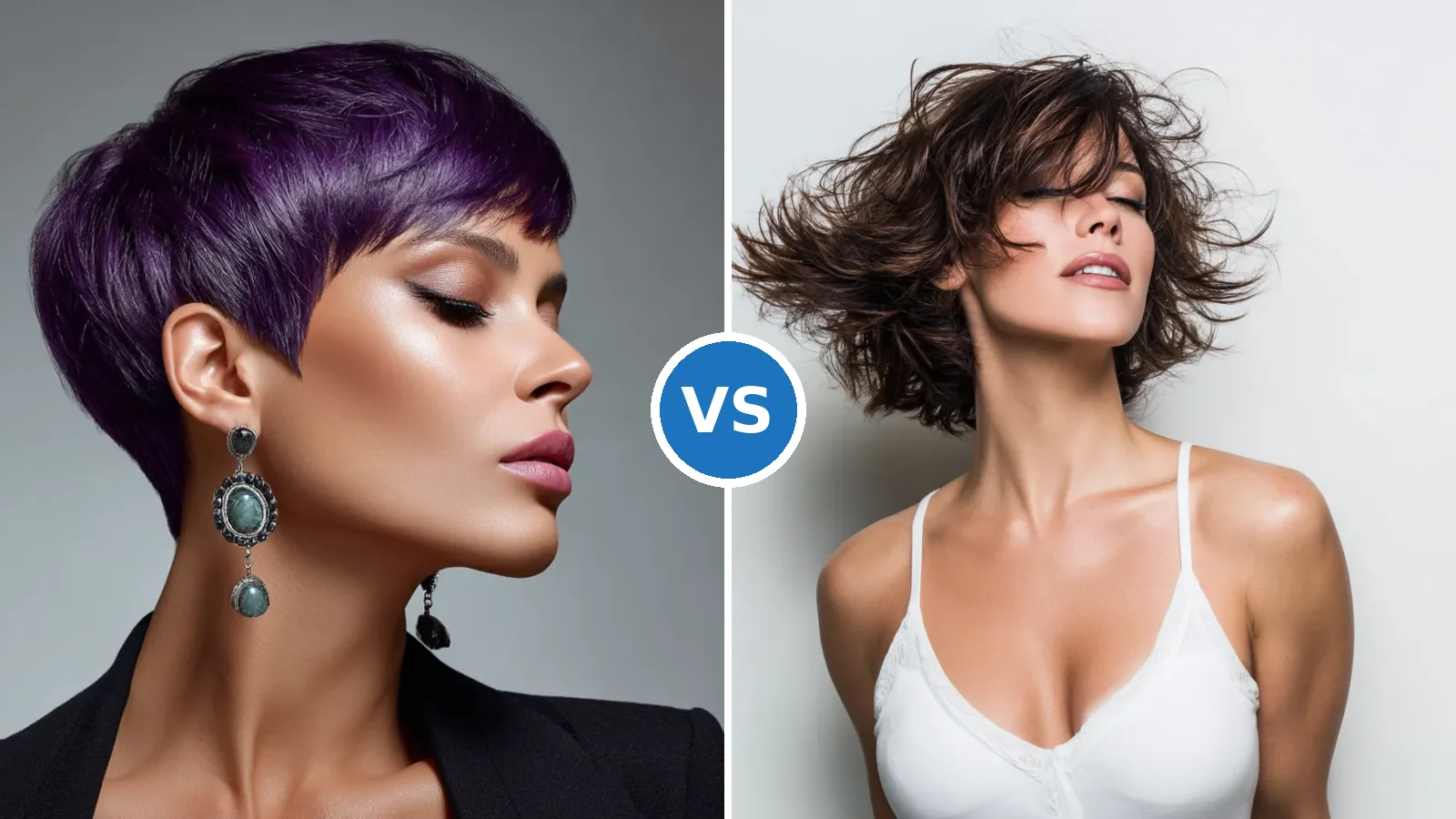
A spiky crop is one of the safest bets for an oval face, because balanced proportions let short spikes add height without stretching or widening the features. Does it work on every oval face? Almost always, as long as the sides stay tight and the top carries most of the length. Short styles lose their shape fast, so plan on a trim every 4–6 weeks, or every 2–3 weeks if the sides are faded close to the skin. Book the next cut before you leave the chair.
Color decides how much work the cut asks for. Red starts to fade after roughly 2 weeks, platinum needs a root retouch every 4–6 weeks, and dark permanent dye on brown or black hair typically holds at least 6 weeks before it dulls. The haircut is identical in all three cases, yet the upkeep differs like a bicycle, a scooter and a sports car. Pick the shade whose calendar matches yours, not the one that looks loudest in photos.
Quick Scan
- Oval faces handle extra height on top without looking longer, unlike long or rectangular face shapes.
- Short cuts need a trim every 4–6 weeks; skin-faded sides need one every 2–3 weeks.
- Red dye begins to fade after about 2 weeks and typically lasts 4–6 weeks.
- Platinum roots need a retouch every 4–6 weeks, with salon retouches starting around $150–200.
- Dark permanent color on brown or black hair holds 6+ weeks before dulling.
- Black is the lowest-effort shade, platinum the most demanding, red sits between them.
Why a Spiky Hairstyle for an Oval Face Works So Well
A spiky hairstyle for an oval face works because the face is already balanced, so the cut only has to add texture rather than correct proportions. Round faces need height to look longer, and long faces need width to look shorter, while an oval can take either without trouble. Think of a well-proportioned picture frame, where almost any mat looks right. Keep the spikes between the crown and the front hairline, where they lift the face instead of crowding it.
How short should the sides go? Most barbers taper them well below the top length, and that contrast is what makes the spikes read as deliberate. Short sides blur quickly, which is why typical guidance puts side trims every 2–4 weeks, and every 2–3 weeks for a skin fade. Skip the temptation to stretch appointments past a month, because an overgrown crop starts to look like a different haircut.
Color changes the picture more on short hair than on long hair, since every spike tip catches light. A short cut also costs less to color, as this breakdown of hair colors for short hair and what each one costs shows. Soft brown spikes read casual, while saturated red or icy blonde turns the same cut into a statement. Decide on the mood first and let the shade follow.
- Sides tapered close and refreshed every 2–4 weeks.
- Enough length on top to lift and twist into separate points.
- Matte paste or wax for a dry, piecey finish versus gel for a wet, sharp one.
- No heavy gel on fine hair, since it clumps the spikes into a few thick points.
Fiery Red Spikes Give a Spiky Crop Real Heat
Red short spiky haircuts give an oval face the most heat of any shade, because warm pigment lights up every textured tip. The color pulls the eye toward cheekbones and brows, much like a red cover on a shelf of gray spines. Upward, slightly messy spikes suit red best, since uneven tips show several tones of the same shade. Ask for texturizing on top so the color has edges to catch.


Red is also the shade that leaves fastest. Its dye molecules are larger than those of other colors, so they sit near the surface and rinse out with water. Typical figures put the first visible fade at about 2 weeks and the full life of the color at 4–6 weeks, depending on formula and washing. Why does a crop make this easier? A short cut needs far less product per refresh than shoulder-length hair, so plan a quick gloss halfway between trims.
Sulfate-free shampoo and cool rinses slow the drift toward orange and pink, and this explainer on why red hair dye fades so quickly covers the chemistry behind it. Don’t wash red spikes daily with a clarifying shampoo, since that strips pigment faster than sun or styling. A strong-hold wax keeps the shape all day without the crunchy shell some gels leave. Wash every second or third day and restyle with a small dab of product in between.
Platinum Blonde Spikes With a Clean, Icy Finish
Platinum blonde short spiky haircuts look sharp on an oval face because the pale tone reflects light along every point and edge. Compared with red, the effect is cooler and more polished, closer to brushed steel than a bonfire. Slightly curved tips soften the look enough for office settings, while straight vertical spikes push it toward edgy. Choose curved tips if the cut has to work on Monday morning and Saturday night.


Platinum is the most demanding of the three shades. Salon menus typically schedule a platinum root retouch every 4–6 weeks, and many cap regrowth at about 3/4 to 1.5 inches before switching clients to a longer, pricier service. Retouches commonly start around $150–200 and take about 3 hours, compared with roughly 45 minutes for a plain short haircut. Book retouches on the same cycle as trims so roots and shape never fall out of step.
Does natural hair color change the schedule? Yes, because hair lifted from a dark natural base shows a visible stripe sooner, and colorists often rebook those clients every 4–6 weeks versus 7–9 weeks for naturally light hair. A toner keeps yellow away, and a quick gloss service can run about $60 at many salons. Avoid purple shampoo right after a fresh toner, since it can pull the new tone off. Use it once a week starting from the second week.
Midnight Black Short Spiky Haircuts Built for Low Upkeep
Black short spiky haircuts give an oval face drama with the least maintenance of the three shades. The dark tone contrasts with sharp, choppy tips and pulls attention to the jawline and cheekbones. Longer strands at the crown blending into shorter sides create a clean silhouette, like the outline of a well-cut suit. Ask for extra length at the crown if you want spikes with real height.


Dark pigment molecules are small and settle deep into the hair, so a dark permanent dye on naturally brown or black hair typically holds at least 6 weeks before dulling. Most people refresh permanent color every 6–8 weeks, once new growth shows at the root. That makes black roughly three times as patient as red, which can start fading after 2 weeks. Choose black if salon visits need to stay at one per cycle.
Is black boring on a short cut? Not when the cut does the talking, since varied spike lengths keep the surface from reading flat. A few fine highlights or an asymmetrical fringe add movement without adding a monthly color appointment. Don’t choose jet black over very fair skin and light brows without a strand test, because the contrast can look harsh. Try a soft black or deep espresso first if your coloring is light.
Red, Platinum and Black on a Spiky Crop Side by Side
Comparing the three shades on one spiky crop shows that the real cost sits in the refresh cycle, not the first appointment. The figures below reflect typical salon menus and manufacturer data. The cut itself stays on a 4–6 week trim cycle in every case. Read the refresh column before the price column.
| Shade | Fade or regrowth clock | Refresh rhythm | Typical salon cost | Time per visit | Upkeep level |
|---|---|---|---|---|---|
| Fiery red | Fading starts at about 2 weeks, color lasts 4–6 weeks | Gloss between trims, recolor every 4–6 weeks | Gloss about $60 | About 10 minutes for a gloss | High |
| Platinum blonde | Roots visible within 4–6 weeks | Retouch every 4–6 weeks, sooner on dark bases | Retouch from about $150–200 | About 3 hours | Very high |
| Midnight black | Holds 6+ weeks before dulling | Root touch-up every 6–8 weeks | Root retouch from about $95 | About 2 hours | Low |
Which shade costs least over a year? Black asks for the fewest visits, while platinum asks for the most hours in the chair, roughly 3 hours every 4–6 weeks. Red sits between them, cheap to gloss but quick to fade, like a sports car that sips premium fuel. If red tempts you but the steady fade sounds tiring, this comparison of copper and auburn upkeep covers two warmer reds with different salon rhythms. Match the row to your schedule before you match it to your wardrobe.
Don’t Do This
- Stretching a skin-faded crop past 3 weeks, when the fade starts to blur.
- Washing red spikes daily with clarifying shampoo, which cuts into the usual 4–6 weeks of color.
- Booking a standard platinum retouch with more than 1.5 inches of regrowth.
- Loading fine hair with wet gel instead of matte paste, which clumps spikes together.
- Going jet black over fair skin and light brows without a strand test.
Black Wins on Effort, Red Wins on Impact
A spiky crop suits an oval face in all three shades, yet black needs a color visit only every 6–8 weeks while platinum needs one every 4–6 weeks. The cut stays the same, and only the calendar changes. Start with the shade your schedule can actually carry.
Choose red when impact matters more than longevity and a gloss every 2–3 weeks feels like a small price. Sulfate-free shampoo and washing every second or third day keep it closer to the 6-week end of its range.
Choose platinum only if 3-hour retouches starting around $150–200 fit your budget every month or so. Pair each retouch with a trim so roots and shape refresh together.
Whatever the shade, keep the trim on a 4–6 week cycle, or 2–3 weeks for skin-faded sides. A crisp outline does more for an oval face than any color choice.