The best yard sweeper is the one sized to your lot: a push model with a hopper of roughly 6 cubic feet suits a small yard with a few trees, while a tow-behind unit with 12 to 26 cubic feet suits larger properties and needs a mower or tractor to pull it. Late November is when this choice matters, because leaves are down and the lawn still needs clearing before snow or hard frost.
A sweeper rolls a set of brushes that flick leaves, pine cones and small twigs into a hopper as you move. It does not replace every other tool, so the real question is whether your yard needs one at all, and which style fits if it does.
Push or tow-behind: which fits your yard
Push sweepers suit small properties without many trees. Bob Vila’s testing lists typical sweeping paths of 21 to 26 inches for push and powered models, and a 26-inch push unit in that comparison holds about 6.2 cubic feet. They are quiet, easy to store and need little upkeep, according to Lowe’s buying advice on sweepers and baggers.
Tow-behind sweepers attach to a riding mower, garden tractor or ATV. Some reach a path of more than 50 inches, and hoppers in the same comparison run from 12 to 26 cubic feet. They cover ground quickly, but they only make sense if you already own something to pull them.
Quick Tips
- Measure your garden gate first; a sweeper under 36 inches wide fits through most gates.
- Wait for a dry day, since wet leaves clog brushes and make the hopper heavy.
- Set the brush tips so they touch only the top half inch of the grass.
- Empty the hopper after every session.
Hopper size and sweeping width in plain numbers
Two numbers decide how often you stop to empty the machine. A wider path means fewer passes, and a bigger hopper means fewer trips to the compost pile. A hopper is the sweeper’s fuel tank, as Bob Vila puts it, but a larger one also makes the machine heavier to push or tow.
| Type | Sweeping path | Hopper | Best for |
|---|---|---|---|
| Push | About 21 to 26 inches | About 6 cu ft | Small lawns, few trees |
| Tow-behind, compact | About 42 inches | 12 cu ft | Medium lots with a lawn tractor |
| Tow-behind, large | 44 to 50 inches | 25 to 26 cu ft | Large, multi-tree properties |
When a mower does the job instead
Not every yard needs a sweeper. Turfgrass specialists at Purdue University advise that a moderate leaf cover can simply be mowed back into the lawn, where the chopped pieces filter down into the turf. Their cited research found that mulching oak and maple leaves did not raise thatch or disease or change soil pH.
The point to rake or sweep is when leaves are so thick you cannot see the grass beneath them, because a heavy layer can shade out and smother turf. Dry leaves also mulch more easily than wet ones, so timing matters as much as the tool.
Prices, upkeep and storage
In the Bob Vila comparison, the tested models fall between about $200 and $800, with tow-behind units at the higher end. Upkeep is short: empty the bag after each use to prevent mold, clear the chute, and spray the drive wheel and moving parts with a lubricant about once a season.
Brush height is the setting people forget. If the brushes ride too low they scrape the soil, and if they sit too high they skip leaves. Aim for brush tips within the top half inch of the grass, and lower or raise the deck on models that allow it for deep cleaning or heavy leaf loads.
Mistakes that clog or stall a sweeper
The most common mistake is sweeping wet material. In testing, a 26-inch push sweeper became too heavy to push uphill once it was about half full of wet clippings, and a tow-behind hopper did the same behind a 22-horsepower mower. Tow-behind units can also rut or get stuck on ground that holds water, so skip soggy areas.
Sweepers are also the wrong tool for sticks, rocks and nuts. Acorns and walnuts are better handled with a nut-gathering roller, and branches need a rake or loppers first.
Using a sweeper around patios and paths
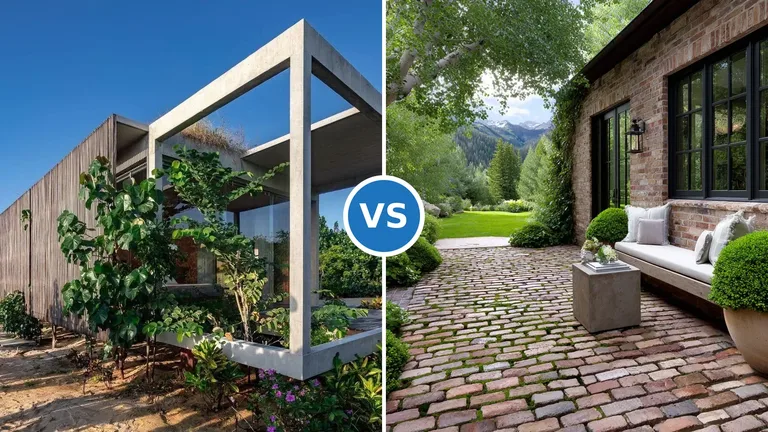
Hard surfaces collect leaves too, and a push sweeper’s narrow path works well along walkways and edges. If your patio is brick, the joints can trap debris, which is one reason to compare it with a smooth surface; see our look at brick patio vs concrete for a backyard that suits your budget. Sweep the lawn first, then the hard surfaces, so leaves are not carried back onto cleared areas.