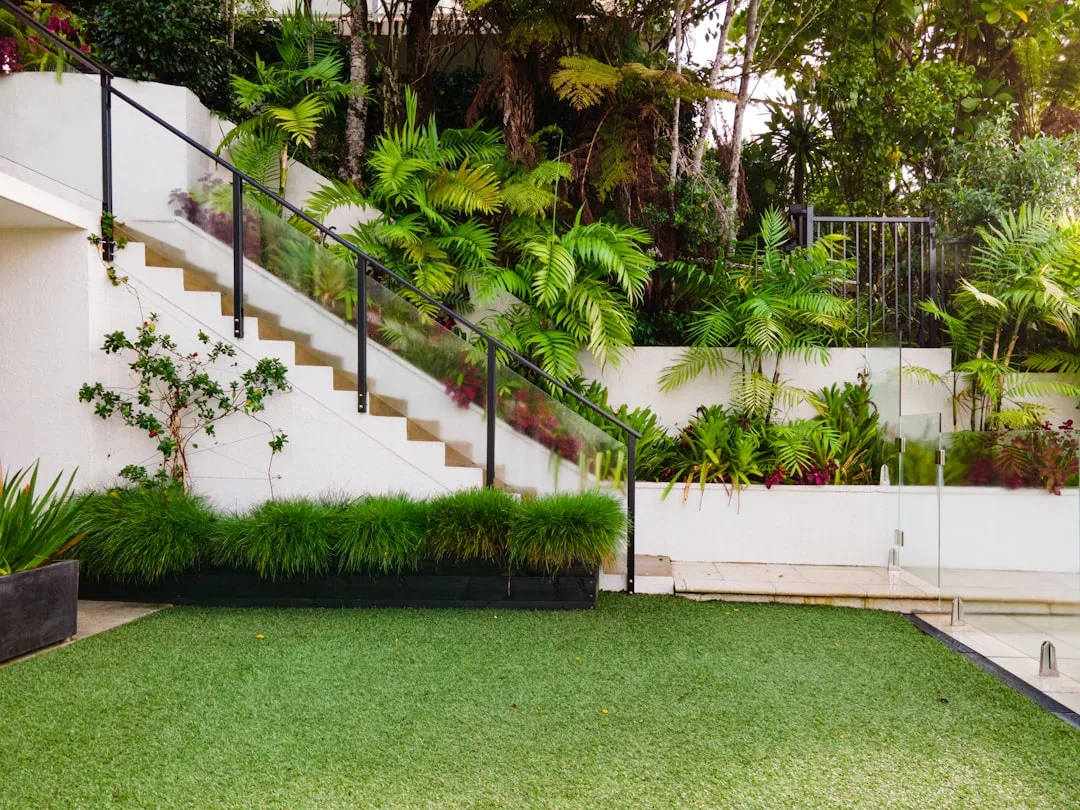
Picture a patio where you want overhead structure but still want to see the garden beyond it, and the arbor vs pergola decision shapes how that space feels. Arbors frame views with a narrow footprint, while pergolas build a covered room big enough for a dining table. An arbor suits a reader who wants a gateway or garden marker, and a pergola suits someone who wants real shade and a place to linger.

What each option actually is
Quick Verdict
- Choose arbor if you want to frame a view, mark a path, or keep sightlines open with a small footprint.
- Choose pergola if you need real shade, a dining zone, or a covered room you can use in a rain-prone climate.
- Choose arbor if entry cost and seasonal light from deciduous vines matter more than full cover.
- Choose pergola if you plan to add string lights or louvers and want a structure that anchors a whole seating area.
An arbor is a three-dimensional gateway, as explored in our backyard arbor structures article. It frames views, separates zones, and anchors a gathering spot without covering the area beneath it. Think of it as a doorway you walk through rather than a roof you sit under.
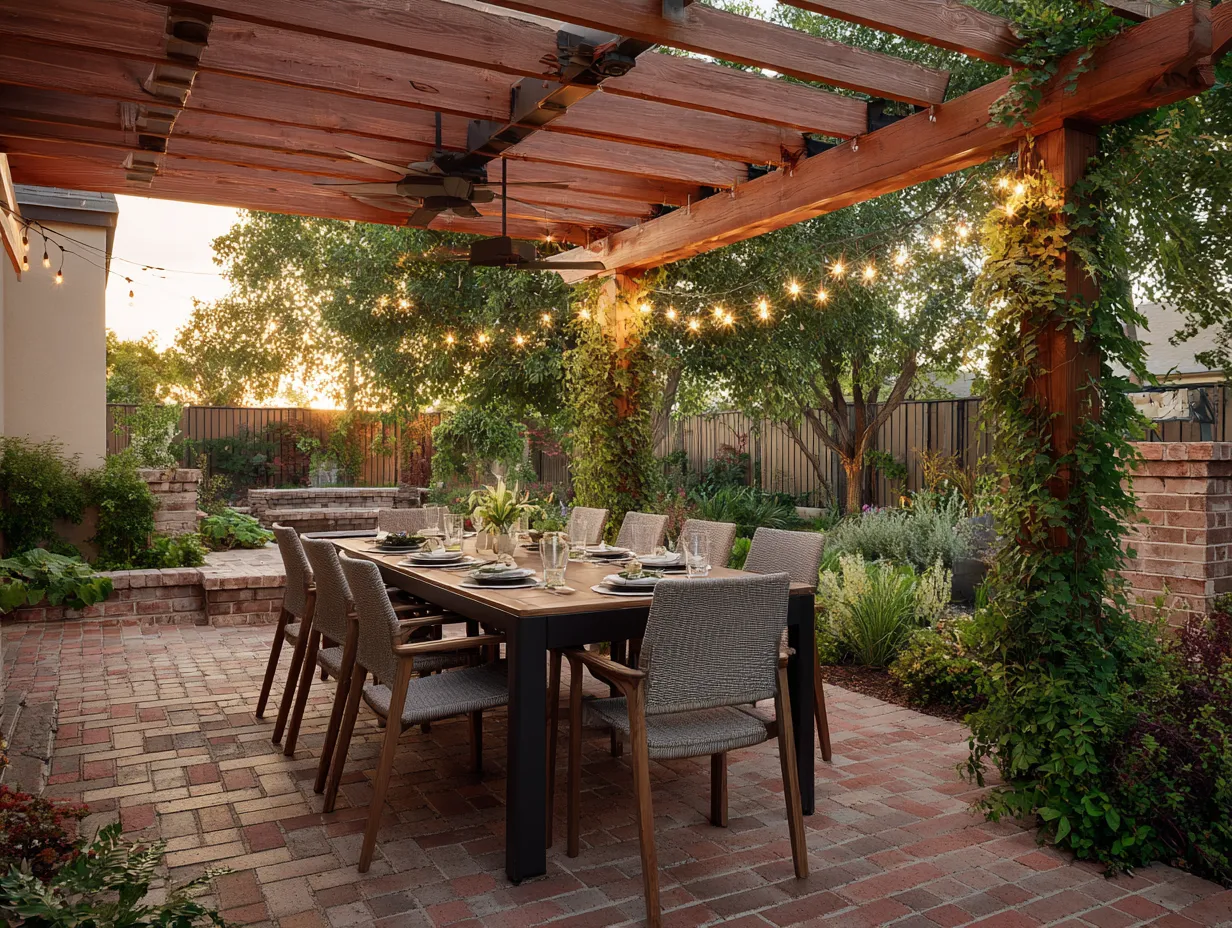
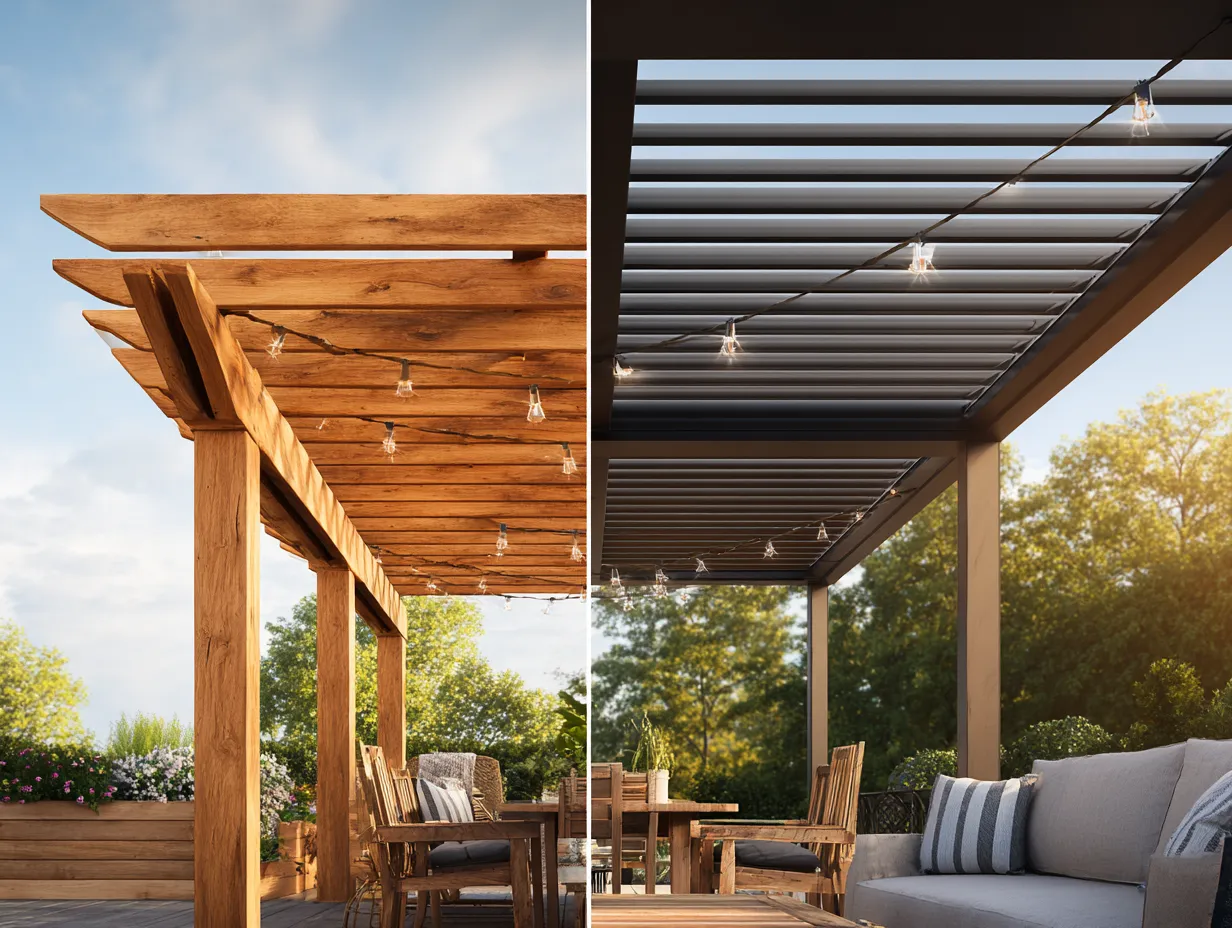
A pergola is a horizontal frame of posts and beams that provides overhead shade and defines an outdoor room. Our pergola ideas for backyard spaces piece covers the material and layout choices that shape how one feels. Its real job is to make a patio feel like a room rather than a slab.
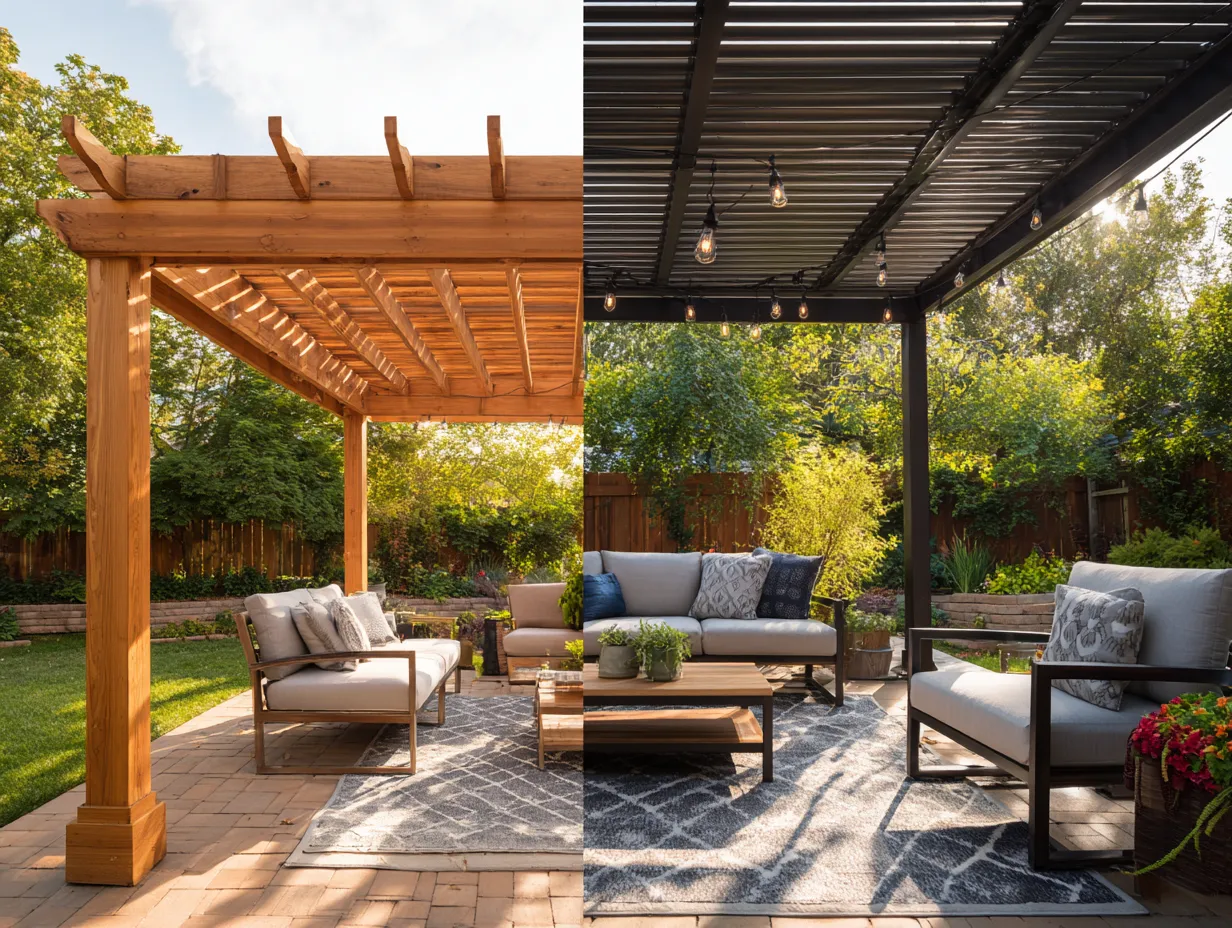
Arbor vs pergola side by side on footprint, shade and upkeep
| Criteria | Arbor | Pergola |
|---|---|---|
| Main job | Frames views and marks a path or entrance | Builds a covered outdoor room |
| Footprint | Light, with depth of 6–8 feet at minimum | Needs room for furniture, such as a dining table with chairs |
| Shade | Relies on vine growth, which changes with the season | Overhead cover across most of the living area |
| Upkeep | Composite frames need little care | Aluminum holds up well, while cedar needs annual sealing |
| Entry cost | Lower for a single frame | A 10×10 cedar kit starts in the low thousands |
| Rain use | Little rain cover | Better for rain, especially louvered models in wet climates |
| Light in fall | Deciduous vines return light to the seat | Fixed roofs stay shaded all year |
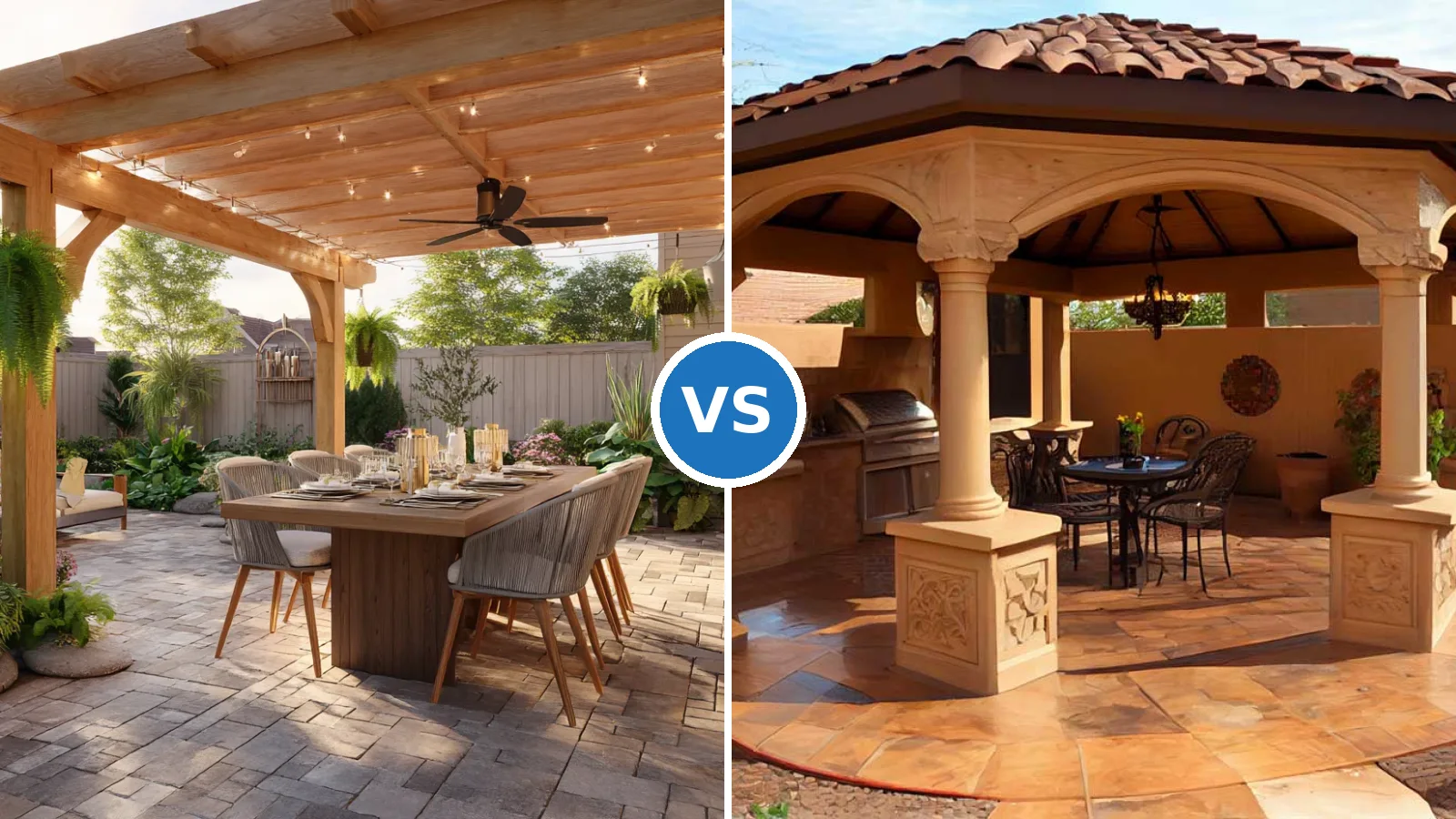
Look is where the two diverge most. An arbor reads as a light, open frame, while a pergola reads as a defined room with a roof of beams. Neither is wrong, but the look you want should decide the structure first.
Upkeep is closer than many people expect. Composite arbor frames avoid rot and staining, and aluminum pergolas hold up well with little attention. Cedar pergolas, by contrast, need annual sealing to hold up against wet winters.
Cost follows material and size. A steel arbor typically runs noticeably more than composite, so material is the biggest lever. On a pergola, in-ground footings can add $200–$400 to a DIY build, and a roof or louvers push the total higher still.

Where arbors win
An arbor keeps sightlines and airflow open, which matters when the view beyond the structure is the reason to build it. It works well in narrow yards because it marks a zone without blocking the rest of the garden.
Placement is the arbor’s real strength. Setting one about 10 feet from seating creates a transition rather than congestion, and a second frame farther ahead can mark a garden room. Modular frames can also join into a longer tunnel along a path.
Seasonal light is another win. Deciduous vines such as native hops drop their leaves in autumn, returning light to the seating area during fall and winter gatherings.

Where pergolas win
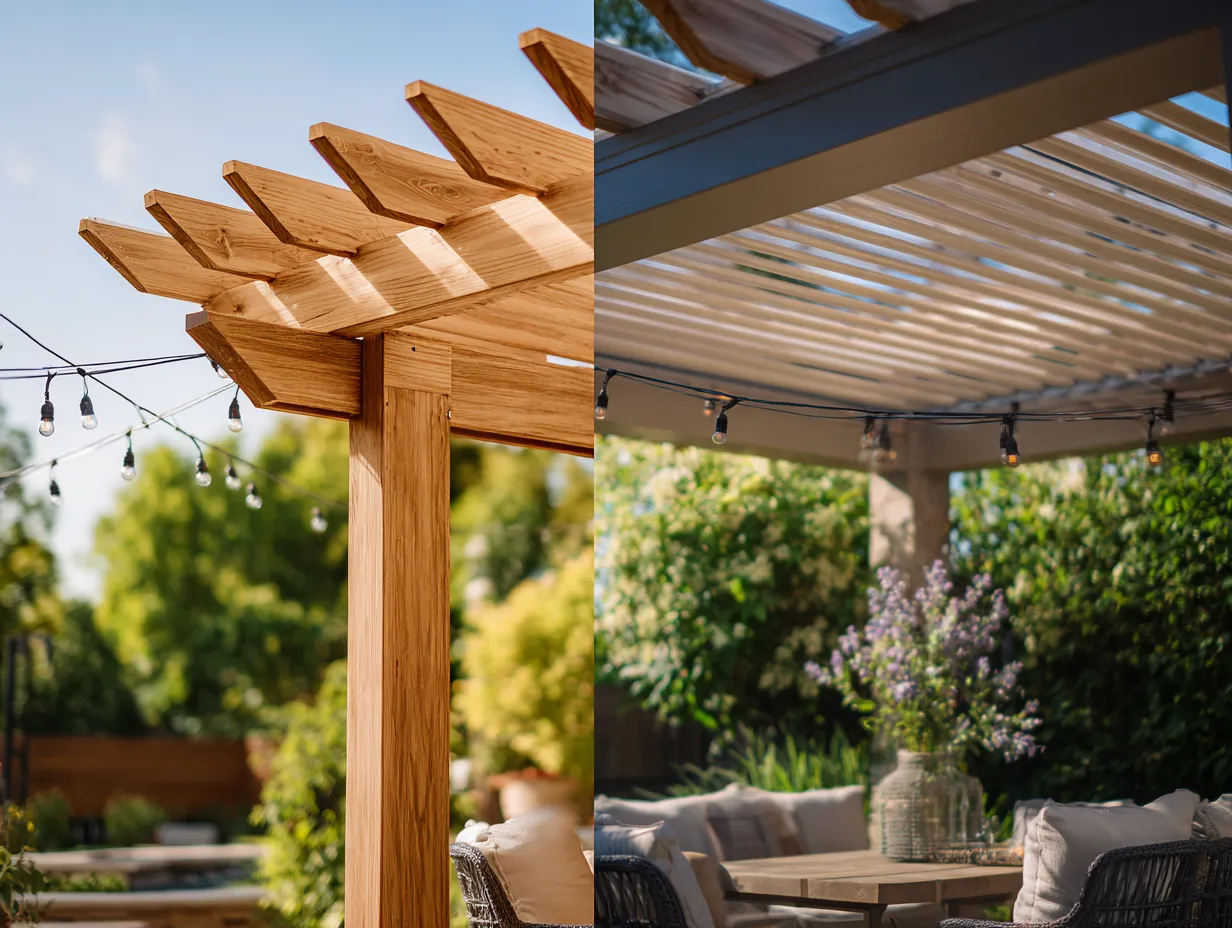
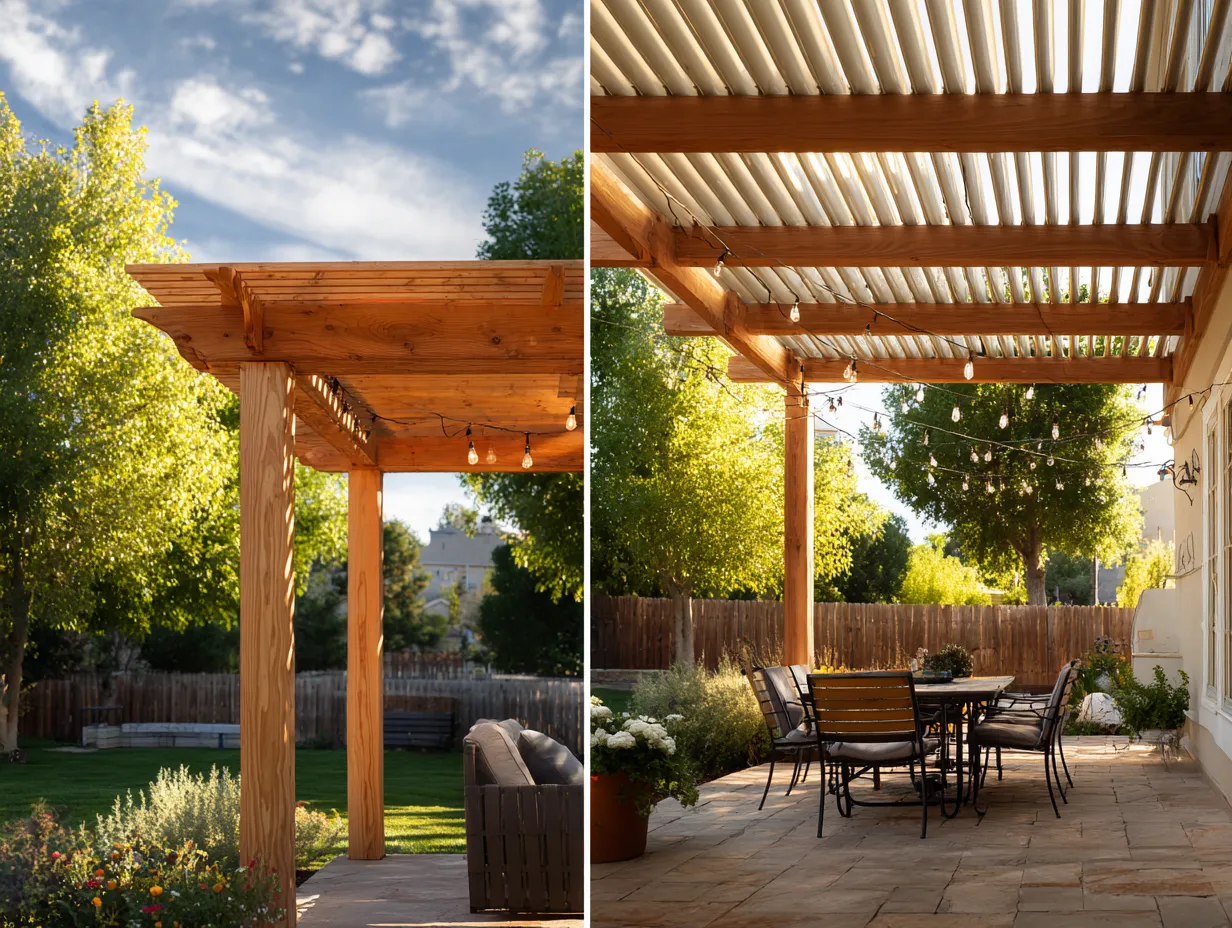
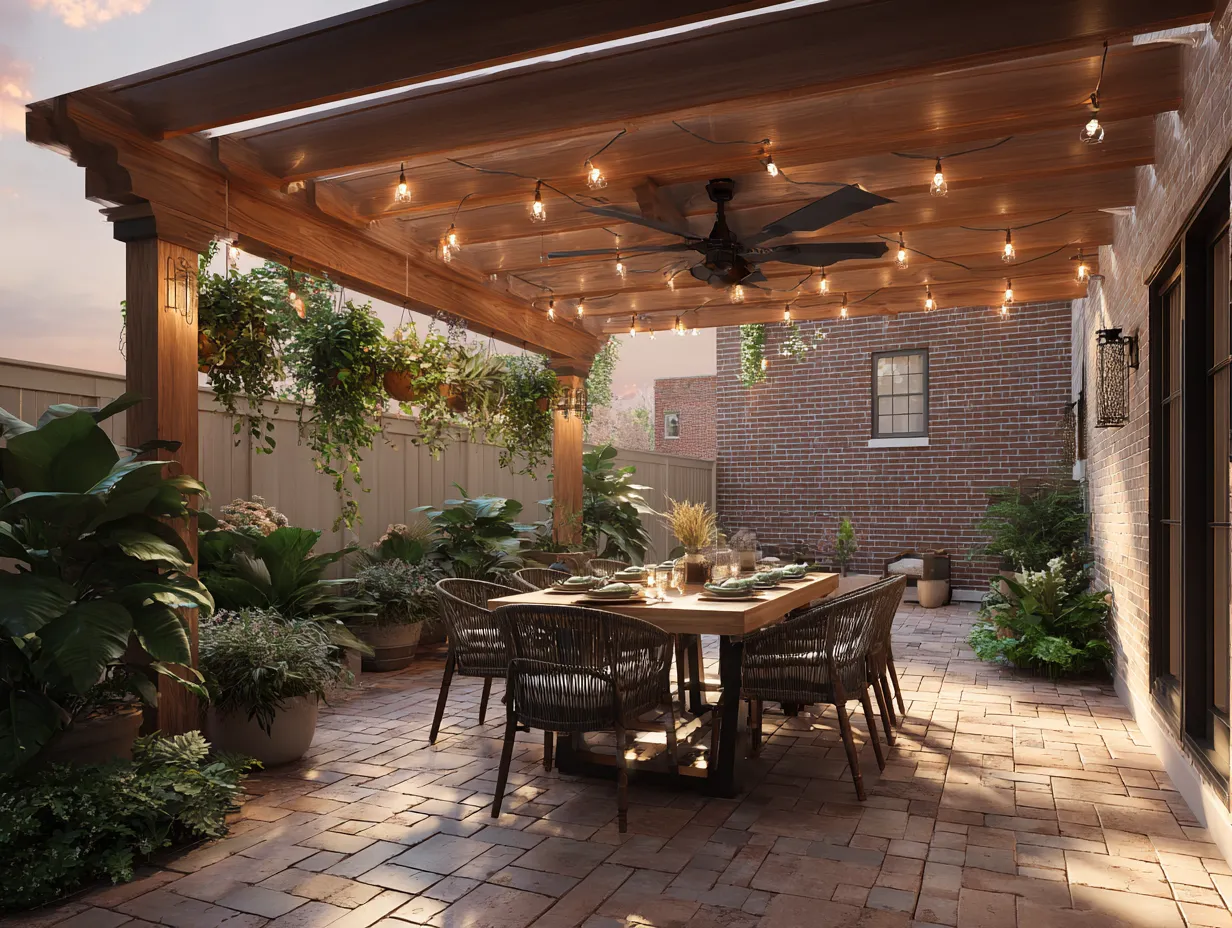
A pergola is the better shade structure, because its beams and roof cover a large share of the seating area. The 60-30 rule pairs a largely covered area with an open area to sky, which keeps the room from feeling enclosed.
For dining, the footprint needs room for a table with chairs pulled out on every side. An arbor rarely gives that kind of covered dining room because its frame stays open overhead.
Pergolas also handle rain and lighting better. Louvered motorized models make sense in rain-prone climates, and string lights mounted to structural beams look architectural rather than temporary.
The mistake that costs the most when choosing
The costliest error is buying an arbor expecting it to deliver pergola-style shade. Picture a slim arbor over a sun-baked patio, planted with a fast clematis that fills the frame quickly. Its dense foliage may shade the top, but the seat underneath can turn dark and damp over the season. That is the trap.
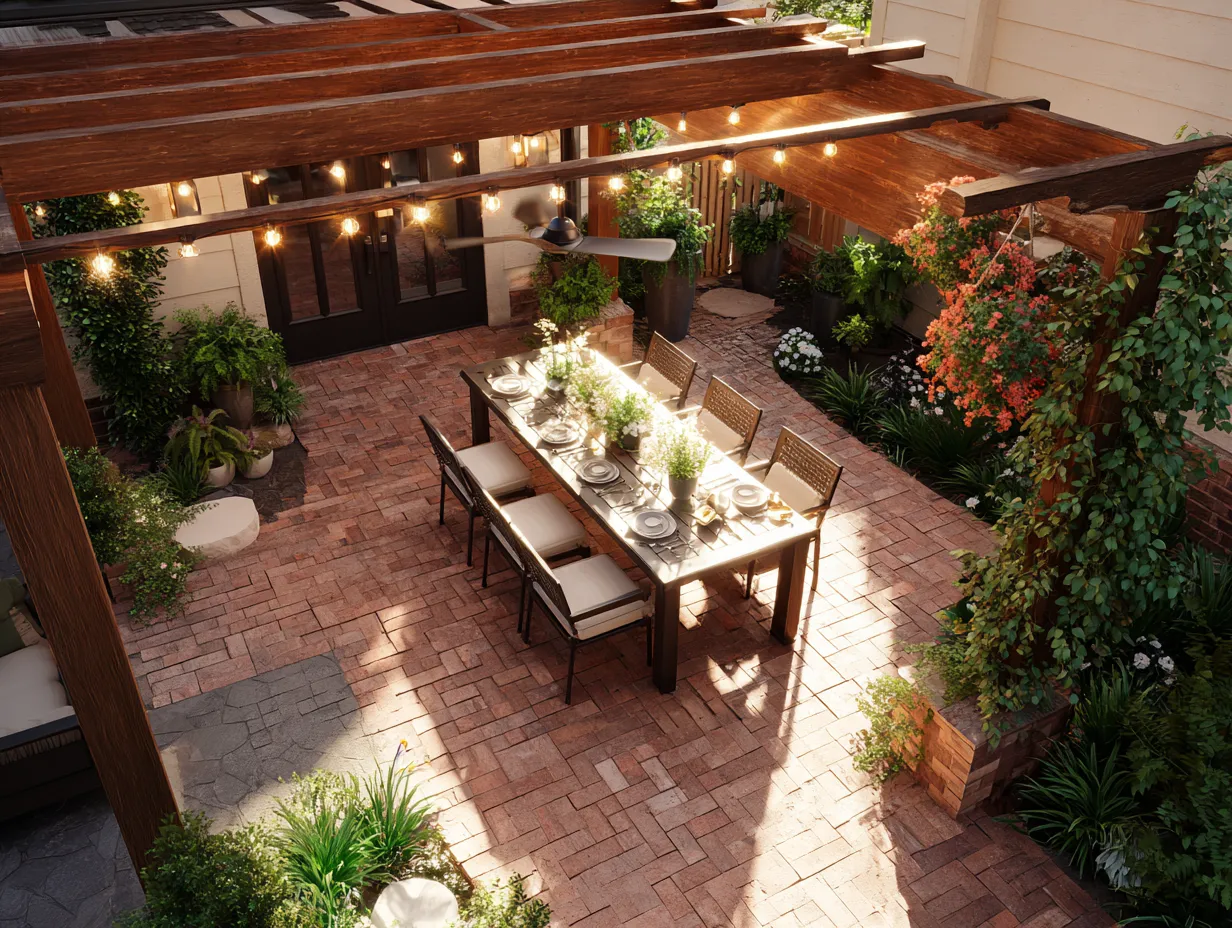
Instead, match the structure to the job before you buy. Choose a pergola when the goal is shade and a dining room, and choose an arbor when the goal is a frame, a view, or a path marker. Mixing the two works well too, with an arbor as an entrance ahead of a pergola seating zone.
Final verdict on which one fits your yard
Pick an arbor if your yard needs a focal point, a view worth framing, or a light entry on a path. It also suits a small yard where you want structure without the weight of a roof.
Pick a pergola if you need reliable shade, a dining zone, or a covered area you can use in rain. Upkeep is a tie when you choose composite or aluminum, so the job should drive the decision.
Many yards benefit from both, and an arbor placed ahead of a pergola combines framing with shade. Start with what you need to do under the structure, then choose the frame that does that job.