A new cut hair style changes what every other wedding decision rests on. Before the veil, before the accessories, before the updo pins go in — the cut determines whether soft waves fall with intention or just fall. Bridal stylists book out months ahead specifically because the right foundation makes every styling technique work harder.
Three hair colors dominate elegant wedding looks right now: ebony black for dramatic polish, ash brown for cool romanticism, and platinum blonde for luminous statement. Each behaves differently under the same cut — the layers that create flow in dark hair create a different kind of shimmer in platinum. Knowing which cut works for your color is the first real decision.
According to Zola’s 2026 Wedding Cost Index, couples spend an average of $982 on bridal hair and makeup combined — with hair alone ranging from $150 for a blowout to $600 for complex braided styles. That’s a meaningful investment, and it starts with the cut you walk in wearing weeks before the wedding date.
– A blunt cut on ebony black hair needs a salon trim every 4–6 weeks to hold its signature sharpness.
– Face-framing layers on ash brown hair need refreshing every 6–8 weeks — the exact same interval works whether the layers are for a wedding or everyday wear.
– Platinum blonde is high-maintenance before and after the wedding: bleach-and-tone services run $150–$350+ depending on starting color.
– Classic updo styling at a salon runs $300–$450 for the bride — the cut you arrive with determines how long that updo holds.
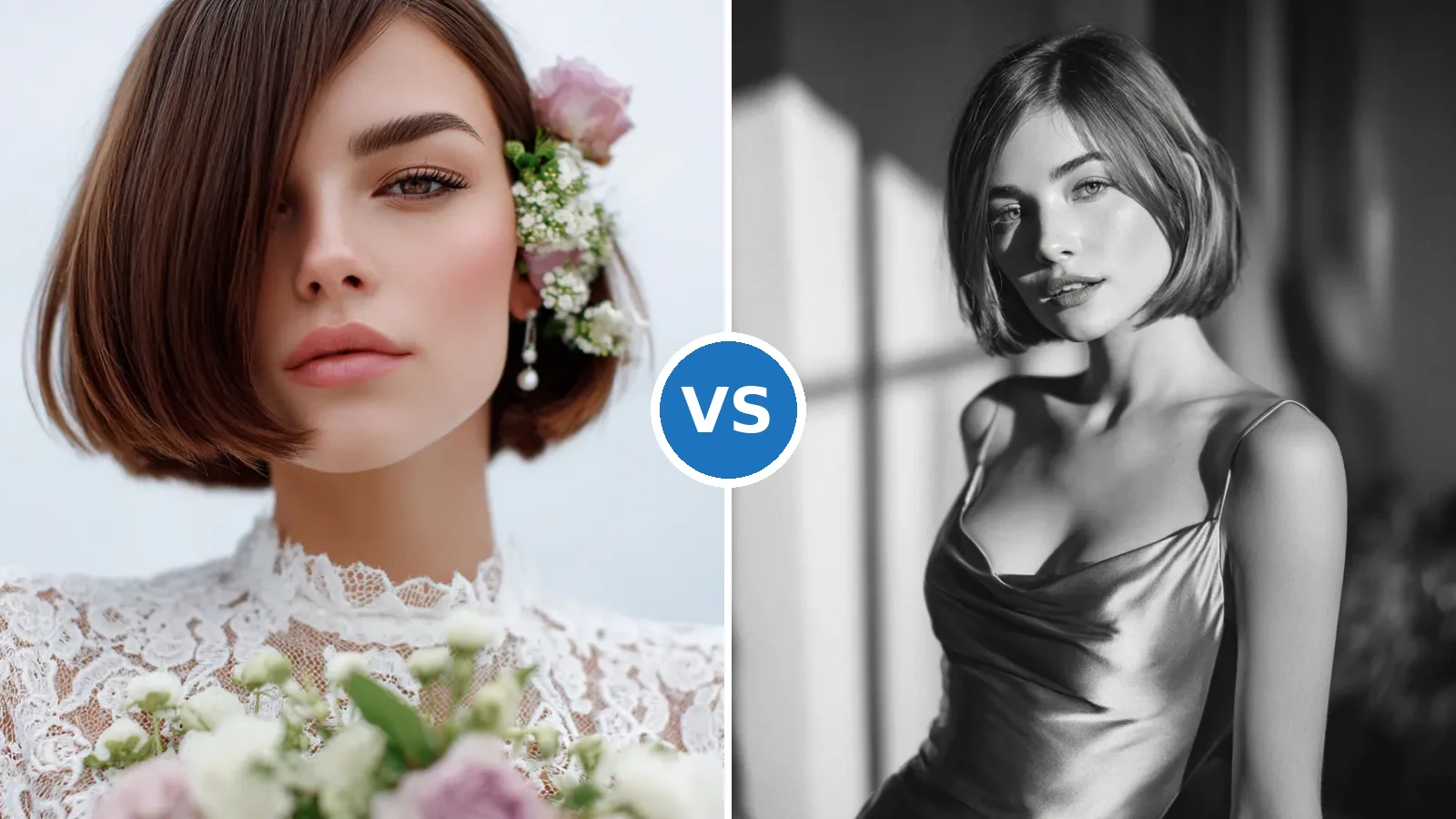
– The bob is among the most requested wedding cuts for 2025, worn in soft curls, sleek blunt form, or baroque texture.
Ebony Black Hair Holds Its Shape Longest in a Blunt New Cut Hair Style
Precision is the whole point of a blunt cut on deep ebony hair. The clean horizontal edge at the ends creates a silhouette that reads as intentional from across a ceremony hall — no soft blur, no fraying, nothing that needs to be explained. Stylists recommend scheduling a trim every 4–6 weeks to keep that edge sharp, which means booking the salon 4–6 weeks before the wedding date, not the week of.


Against lace or silk, dark hair creates contrast that lighter shades cannot replicate. The fabric appears more delicate beside a deep, high-shine blunt cut — the same effect that makes ebony hair photograph well under bridal lighting conditions. What makes a blunt cut on dark hair work at a wedding is exactly what makes it tricky daily: any unevenness at the ends shows immediately. This is a haircut that rewards precision, not improvisation.

Pearl pins and crystal clips work well here — but the mistake most guests make is adding too many. One or two strategically placed near the temple lets the cut speak. Stacking a dozen accessories across a blunt cut reads as filler, not styling. The cut already has its own architecture; the accessories are there to punctuate it, not cover it.

Skip the last-minute trim before the wedding. A blunt cut that hasn’t been touched in 10–12 weeks will have visibly fuzzy ends — the split ends catch ceremony light in the worst possible way, and no amount of serum fully hides a cut that’s grown past its shape. Book the trim at the 4–6 week mark, not the day before.
Ebony black hair processed with a smoothing treatment the week before the wedding holds its shine through a full reception — that flat-iron polish stays intact because the blunt cut removes the fragile ends that would otherwise frizz first. A layered cut on the same hair color would need more touch-up product throughout the day, not less.
Why Ash Brown Face-Framing Layers Make a Romantic Haircut Wedding Stylists Keep Recommending
Face-framing layers on ash brown hair work because of what the cool undertone does to light. Unlike warm brown, the ashy version of the color reflects a lower contrast — which means the layers show movement without the whole look reading as heavy or dramatic. That’s exactly the tone most brides want: present, but not competing with the gown. Layers on this shade need refreshing every 6–8 weeks, which aligns neatly with a wedding prep timeline if planned in advance.


What does a face-framing layer actually do that a full layered cut doesn’t? The pieces closest to the face catch light at a different angle than the rest of the hair — they create a kind of soft brightness around the cheeks and jawline without adding hair color or highlights. Think of it as a structural highlighter built into the cut itself. For ash brown hair specifically, those pieces tend to read as slightly lighter than the rest of the hair in photographs, which is a useful side effect.

Half-up styling works well with this cut because the layers have somewhere to go. When the top section is pinned back and the layers fall loose from the mid-ear down, the face-framing pieces stay visible — they don’t disappear into a gathered section the way long blunt hair often does. Pair this with a bohemian gown or a dress with a detailed back and the layers frame everything without overshadowing it. The one adjustment worth making: ask the stylist to cut the shortest face-framing piece no shorter than the cheekbone. Anything shorter loses the flowing effect and reads closer to a fringe than a layer.

For more styling options across medium-length wedding hair — braided crowns, half-up waves, twisted updos — the wedding hairstyles for medium hair roundup on ArtFasad covers the full range with notes on which dress types each one suits.
Platinum Blonde Hair Costs More to Maintain — and Looks Like Nothing Else on a Wedding Day
Getting platinum blonde hair ready for a wedding isn’t just a cut decision — it’s a color commitment. Professional bleach-and-tone services run $150–$350 from a natural light base, and $250–$600 or more if the starting color is dark brown or black, according to 2024–2025 U.S. salon pricing data. That’s the investment before a single styling tool is picked up. But what platinum delivers in return is a light-reflective quality that no other shade matches under ceremony photography conditions.


Feathered layers on platinum hair create movement that a blunt cut on the same color cannot. The razored or point-cut ends catch light at multiple angles instead of one uniform edge — the effect is closer to shimmer than shine. In outdoor ceremony lighting, this becomes particularly visible. Under indoor chandeliers, it reads as an almost luminous aura around the head. The trade-off is that feathered ends on platinum require bonding treatments or regular conditioning to prevent the lightened strands from becoming brittle at the tips.

Veils work differently with platinum than with other colors. Because the hair is already so light, a classic white or ivory veil can disappear into the hair rather than contrasting with it — which some brides love and others find frustrating. A blush or champagne veil creates more definition. Alternatively, styled without a veil, platinum hair carries accessories well: small crystal pins scattered through loose curls maintain visibility against the pale backdrop in a way that pearl pins on dark hair cannot.

For anyone considering platinum shags or feathered medium cuts outside the wedding context, the medium shag haircuts in platinum feathered ends article covers the styling mechanics of this specific combination in detail — including how different layer placements change the shape under various lighting conditions.
One number worth knowing: according to Hair.com by L’Oréal, blunt-end cuts require a salon visit every 4–6 weeks, while feathered styles on long to medium lengths can stretch to 8–10 weeks. For platinum hair especially, waiting longer means the ends show both the growth and the damage simultaneously — two things that are very visible on an icy base.
| Cut | Best For | Maintenance Interval | Key Risk |
|---|---|---|---|
| Blunt cut | Ebony black, thick straight hair | 4–6 weeks | Visible split ends if skipped |
| Face-framing layers | Ash brown, medium length | 6–8 weeks | Layers lose definition without shaping |
| Feathered cut | Platinum blonde, shag styles | 8–10 weeks | Brittle ends on bleached hair |
According to Zola’s 2026 wedding beauty data, a classic bridal updo runs $300–$450 and a half-up style runs $200–$350. Brides who arrive at their styling appointment with a fresh, well-maintained cut spend less time in the chair and walk out with a result that holds longer — the math on that 4–6 week trim pays off by the reception.
The Cut Decides Everything
Choose the new cut hair style first — the styling follows.
A blunt cut on ebony hair reads polished from every angle of the ceremony. A face-framed layer cut on ash brown creates movement that generic updos cannot produce. Platinum with feathered ends delivers the light-catching quality that no other color achieves under wedding photography conditions.
Bridal updo styling costs $300–$450 professionally. The cut you maintain leading up to it is what makes that investment hold all day. Arrive with a fresh trim within the 4–6 week window and the stylist has something to work with.
Save this post before booking your next salon appointment.
Related Topics
FAQ
What is a new romantic haircut for a wedding?
What is an elegant hair cut for wedding guests?
How much does bridal hair styling cost?
How often should I trim my hair before the wedding?
Does the haircut type change how well a bridal updo holds?
Can a haircut work for both the wedding day and everyday wear afterward?
Complete guide
Wedding Hairstyles for Every Length Role and Vision
Brides, bridesmaids, guests, mothers of the bride — all in one place
Complete guide
Wedding Ideas That Turn Every Detail Into Something Worth Remembering
Ceremony, décor, themes, guest outfits, hairstyles, cakes, stationery — all in one place