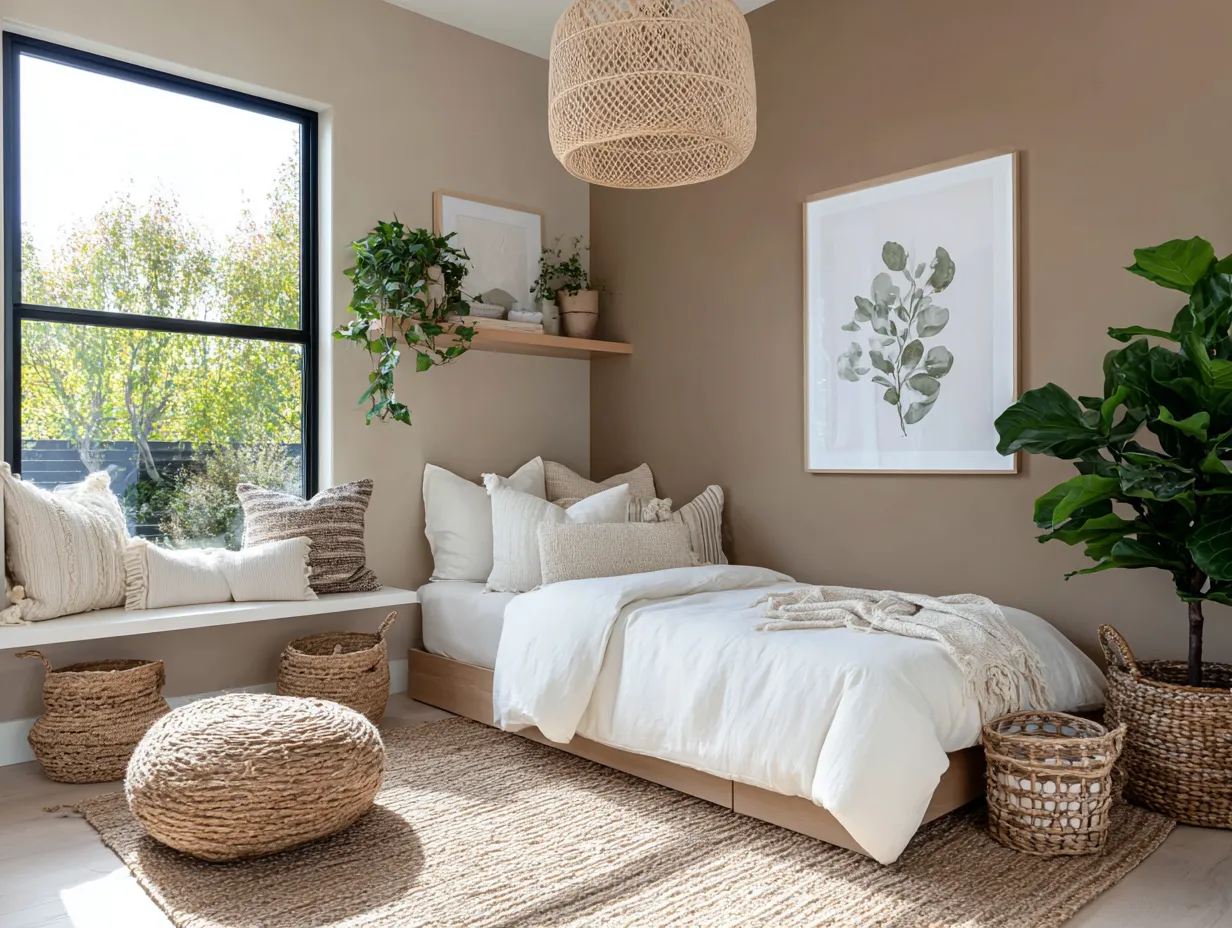
A blue and green color combination works because the two hues sit side by side on the color wheel, so they read as relatives rather than rivals. Yes, they go together in a room, and the trick is to let one shade lead while the other plays support. Think of a lake meeting a pine forest: the edges blend instead of clash.
The safest recipe is a muted blue-green on the walls, a warm neutral on the biggest furniture, and one deeper accent for texture. Paint with a light reflectance value (LRV) near 57–59 keeps a room open, while shades near 20 add depth. Pick one lead color per room and test it on the wall for two days before buying a full can.
Below you will find which colors pair with blue and green, how to sort the shades, and how the palette behaves in a living room, bedroom, kitchen and bathroom. Every section leans on real paint numbers, so the choices are not guesswork. Start with the Quick Scan box if you only have a minute.
Quick Scan
- Blue and green are neighbors on the color wheel, so they blend easily.
- Warm neutrals such as cream, sand and oak stop the palette from turning icy.
- Light shades near LRV 57–59 suit small rooms; shades near LRV 20 need strong lighting.
- Let one color lead in each room and use the other for support.
- Plan at least 40 lumens per square foot when painting in deep shades.
- Check every swatch at two different times of day.
Neutrals and Accents That Work With Blue and Green
Colors that go with blue and green are mostly warm neutrals: cream, sand, greige and pale wood. Do they need a third hue? Not at all, because a neutral acts like the white margin around a painting and lets two cool tones breathe. For trim and ceilings, Sherwin-Williams Nebulous White carries an LRV of 74 according to paint databases, bright enough to bounce light back into a cool room. Keep the neutral warm rather than stark so the blues do not turn icy.
Skip cold gray sofas beside a blue-green wall. Gray sits too close to the blue undertone, and the room slides toward hospital territory. Add one warm touch instead, such as oak, brass or linen, and let it break the chill. Textiles and lamp placement shape the mood as much as paint does, and this guide to practical ways to make a home more comfortable covers both.
- Cream or ivory for ceilings and trim
- Sand or oatmeal for large sofas and rugs
- Natural oak or walnut for tables and shelving
- Brushed brass or nickel for handles and lamps
Shades of Blue and Green That Sit Well Together
Shades of blue and green that go together share the same undertone, so choose a family rather than mixing random swatches. Think of a choir: voices in one key sound calm, while a warm lime beside a cold navy sounds like tuning up. Light options such as Watery (LRV 57) and Rainwashed (LRV 59) reflect a little over half the light that hits them, which suits small or north-facing rooms. Match the undertone first and the saturation second.
Deeper shades change the mood entirely. Studio Blue Green sits at roughly LRV 20 and Surf Green near 21, so both read noticeably darker as daylight fades. What happens when a dark shade meets a dim room? It turns cave-like, which is why anything below LRV 25 needs strong lighting. A common guideline is at least 40 lumens per square foot for rooms painted in deep tones.
Living Room Walls That Carry a Blue and Green Color Scheme
A blue and green color scheme in a living room starts with the walls, because they cover more area than any sofa or rug. Paint them a soft sea-glass tone such as Rainwashed, listed at LRV 59, and the room keeps a light, airy base. Is one accent wall enough? It works only when the other three stay pale, otherwise the space feels split in two. Sample two large swatches and check them at 9 a.m. and 7 p.m.


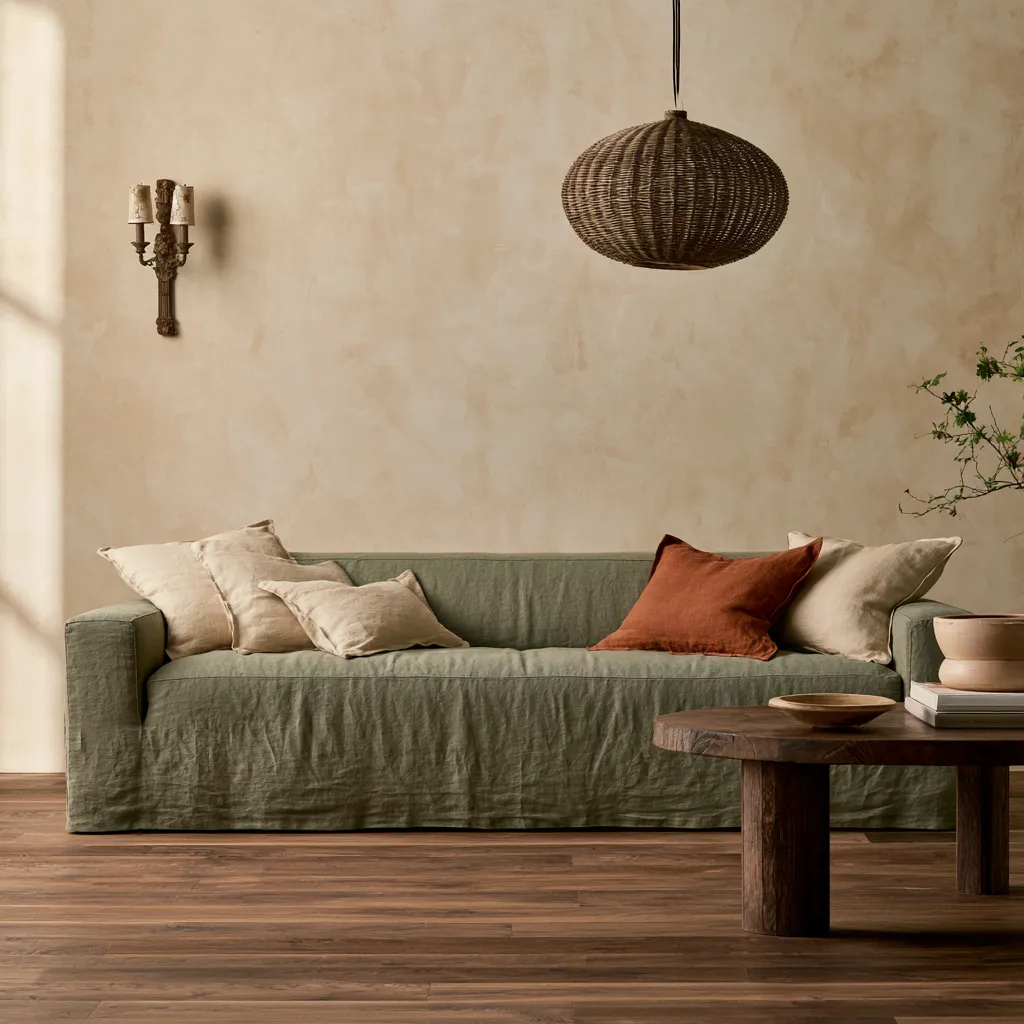
Furniture should stay quiet. A beige or oatmeal sofa works like sand under clear water, calm and grounded, and blue-green cushions in two depths then read as gentle waves instead of noise. Add one armchair in a darker teal to anchor the seating zone. Keep large upholstery neutral and put the color in pillows, which cost far less to swap.
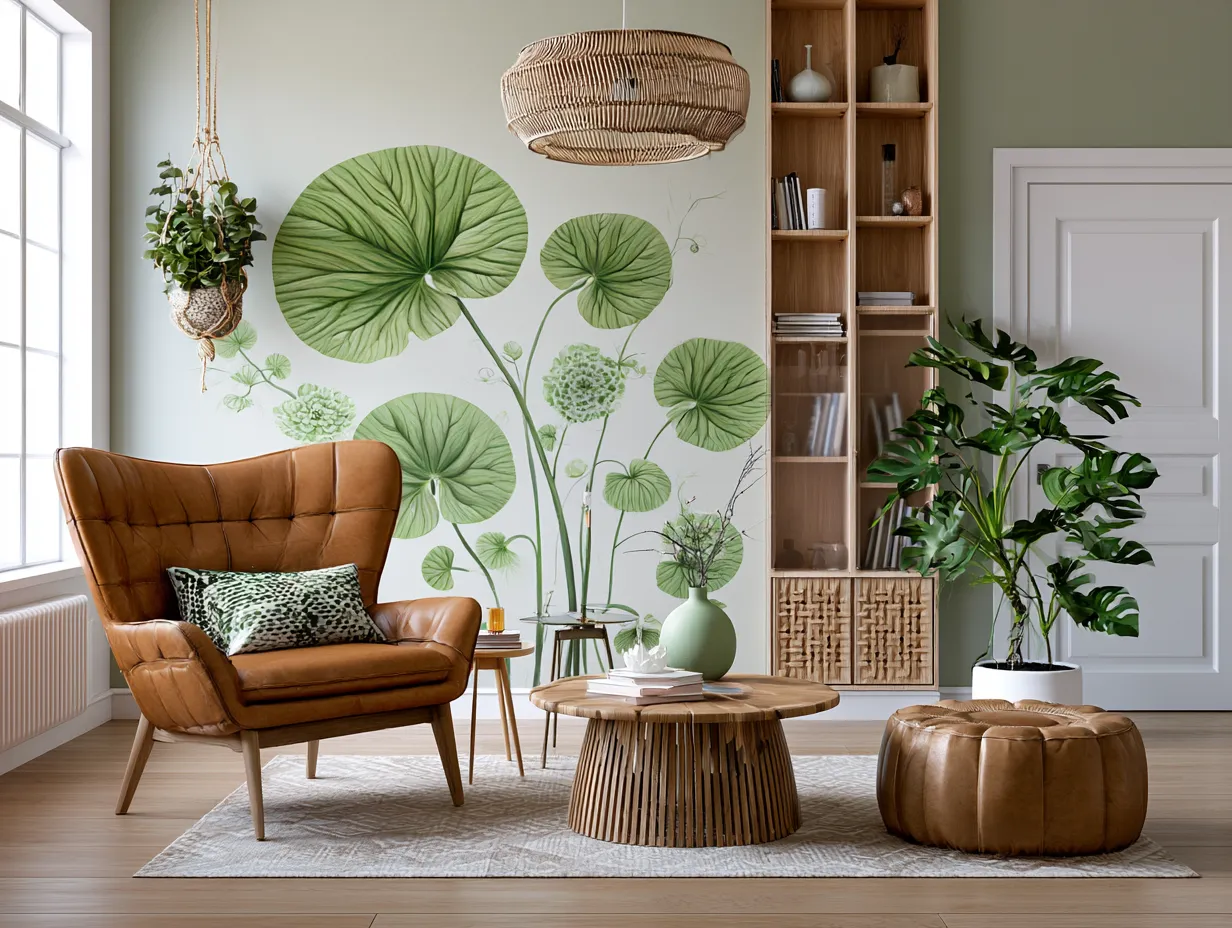
Plants and lighting finish the look. Succulents and ferns bring blue-green foliage that echoes the walls, while floor and table lamps give the soft glow that a single ceiling fixture flattens. A woven basket and a wool throw add texture without introducing another color. Choose warm-white bulbs so the cool palette does not feel clinical.
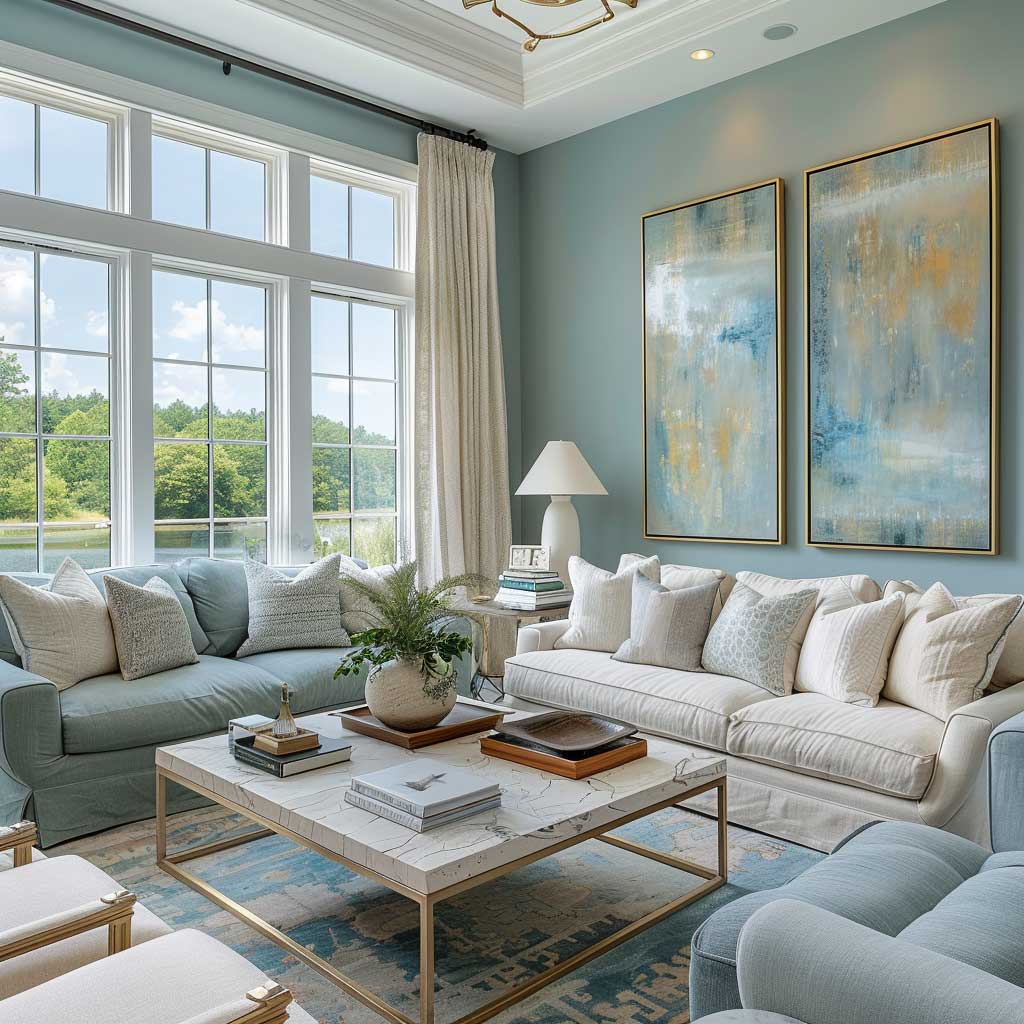
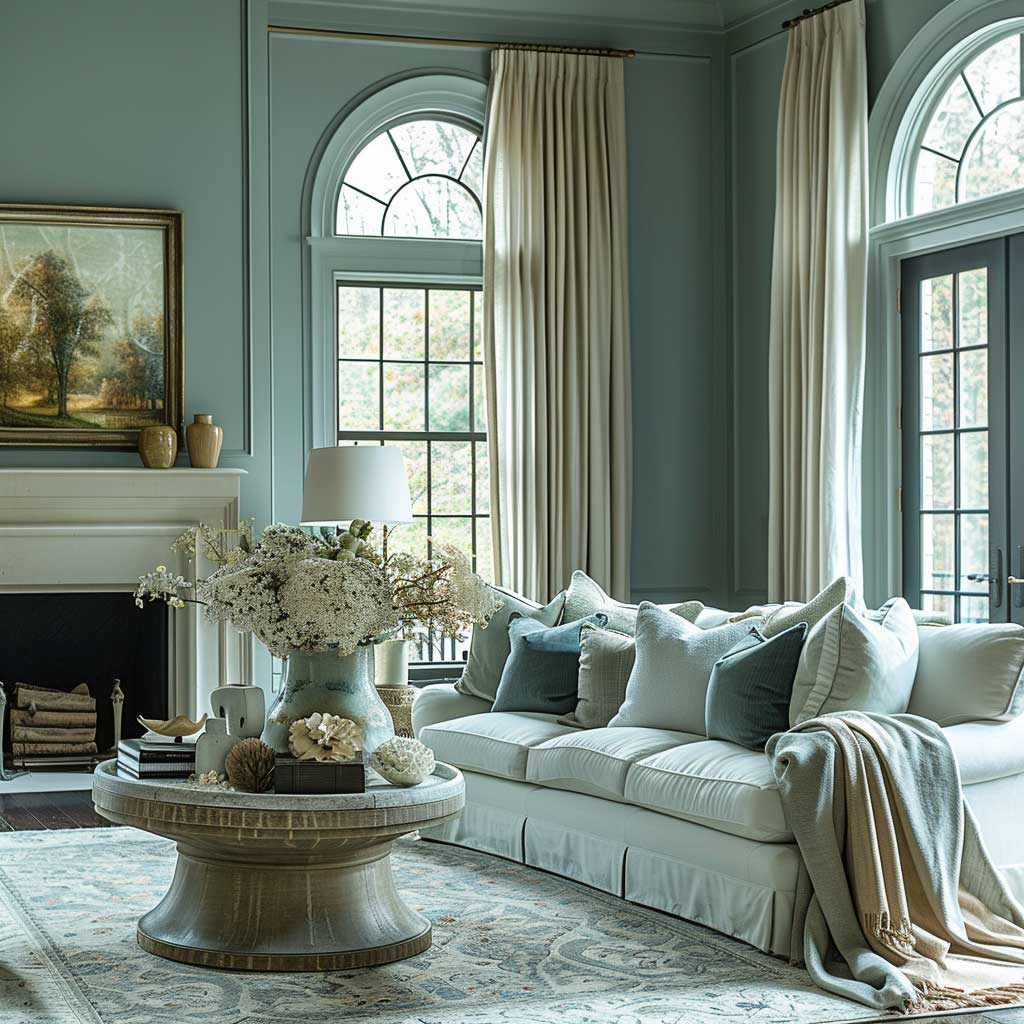
Avoid the matching-set trap. A rug, curtains and sofa in one identical shade look like a hotel lobby, not a home. Vary the depths and mix in wood and metal so the room feels collected over time. The goal is a quiet shoreline, not a paint chip.
Bedroom Retreats Built on a Blue and Green Colour Combination
The blue and green colour combination suits bedrooms because cool tones slow a room down visually. Watery, a soft Sherwin-Williams blue-green, has an LRV of 57 and drifts between blue and green as daylight changes, which keeps walls from feeling flat. In a room with mostly north light it can read slightly washed out, so warm bedding helps. Paint a test patch beside the headboard wall before committing.
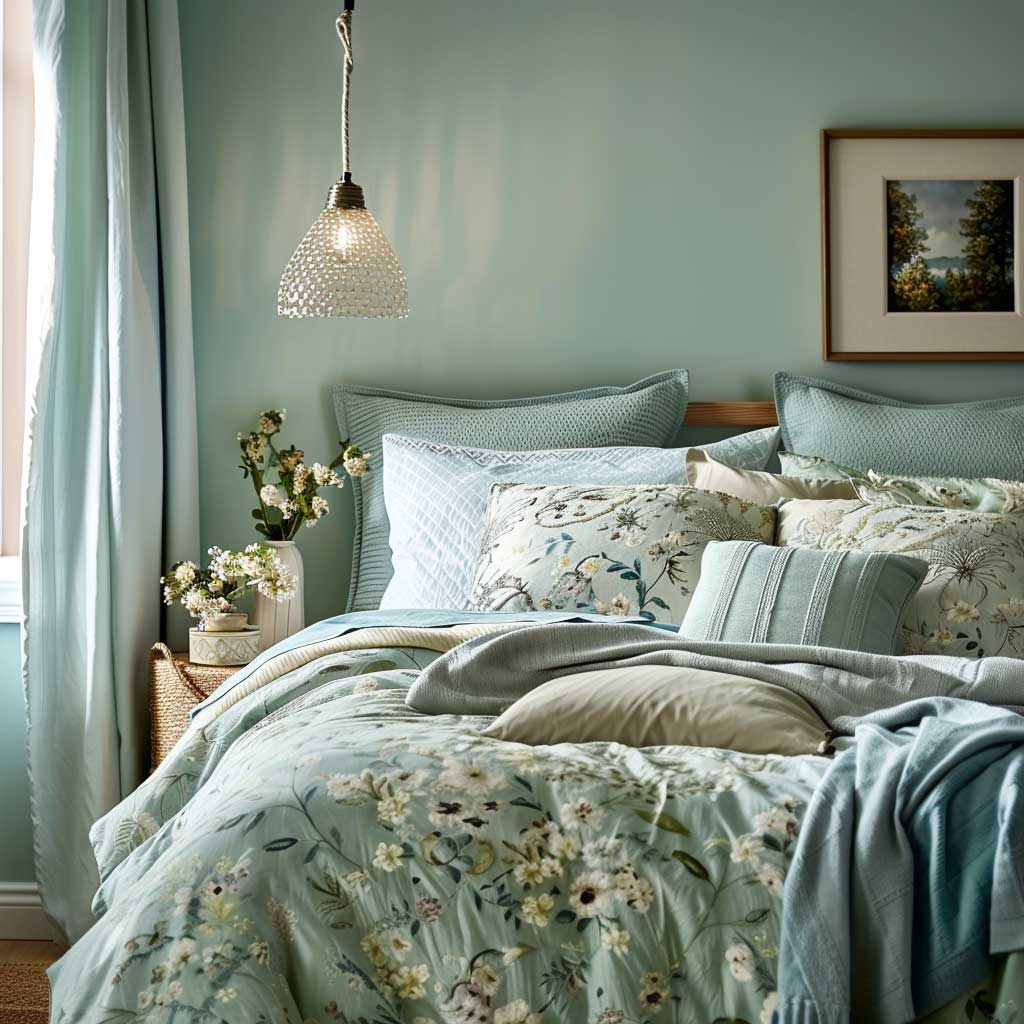

Layer the bedding in a light-to-dark ladder. A pale blue-green duvet with deeper pillows and a throw creates depth the way water does near a shoreline. Is white bedding too stark? Not when it has a warm cream tint, and it lets the walls carry the color. Limit patterns to one item on the bed.
Choose furniture in white or light wood so the walls stay the star. Nightstands can sit a shade darker than the paint for gentle contrast, and sheer curtains diffuse daylight into a soft glow. Skip heavy dark-teal blackout drapes, which make morning feel like midnight. Put a warm lamp or sconce beside the bed for reading light.
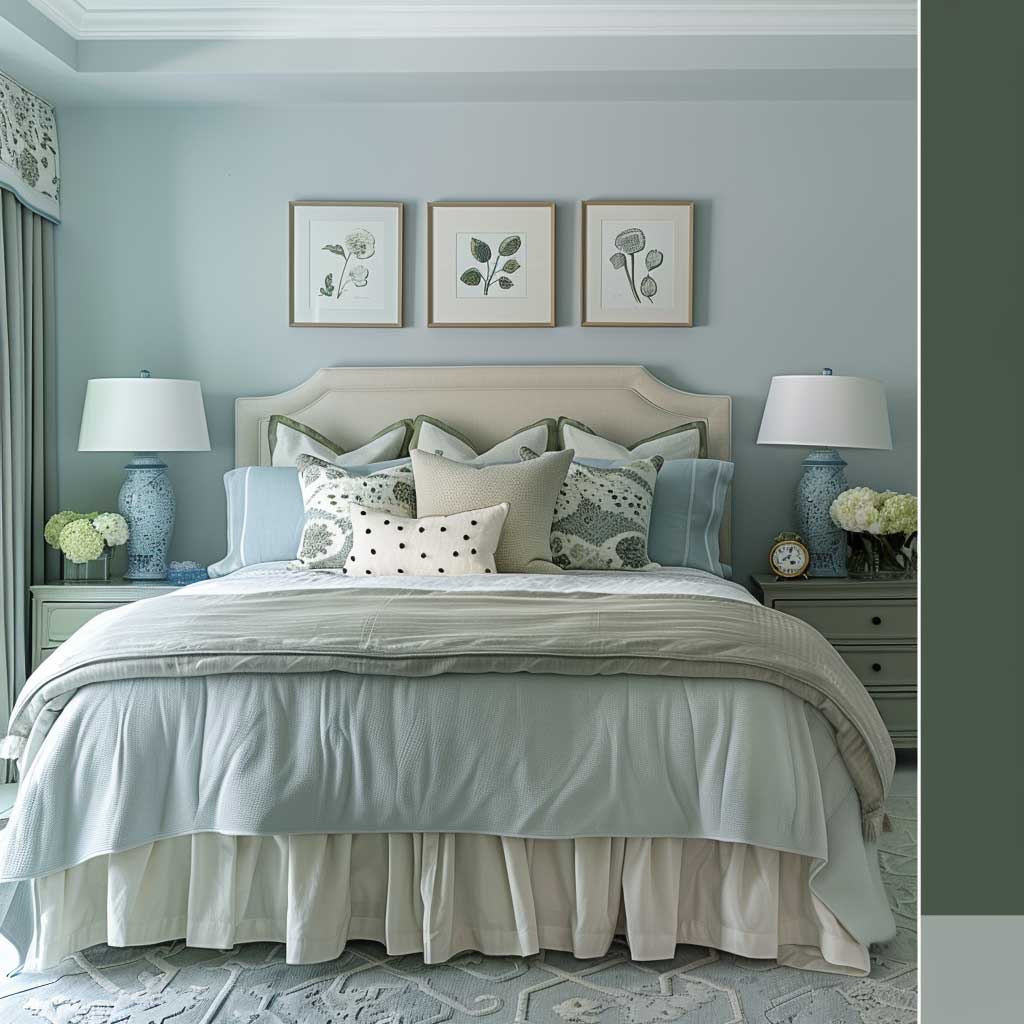
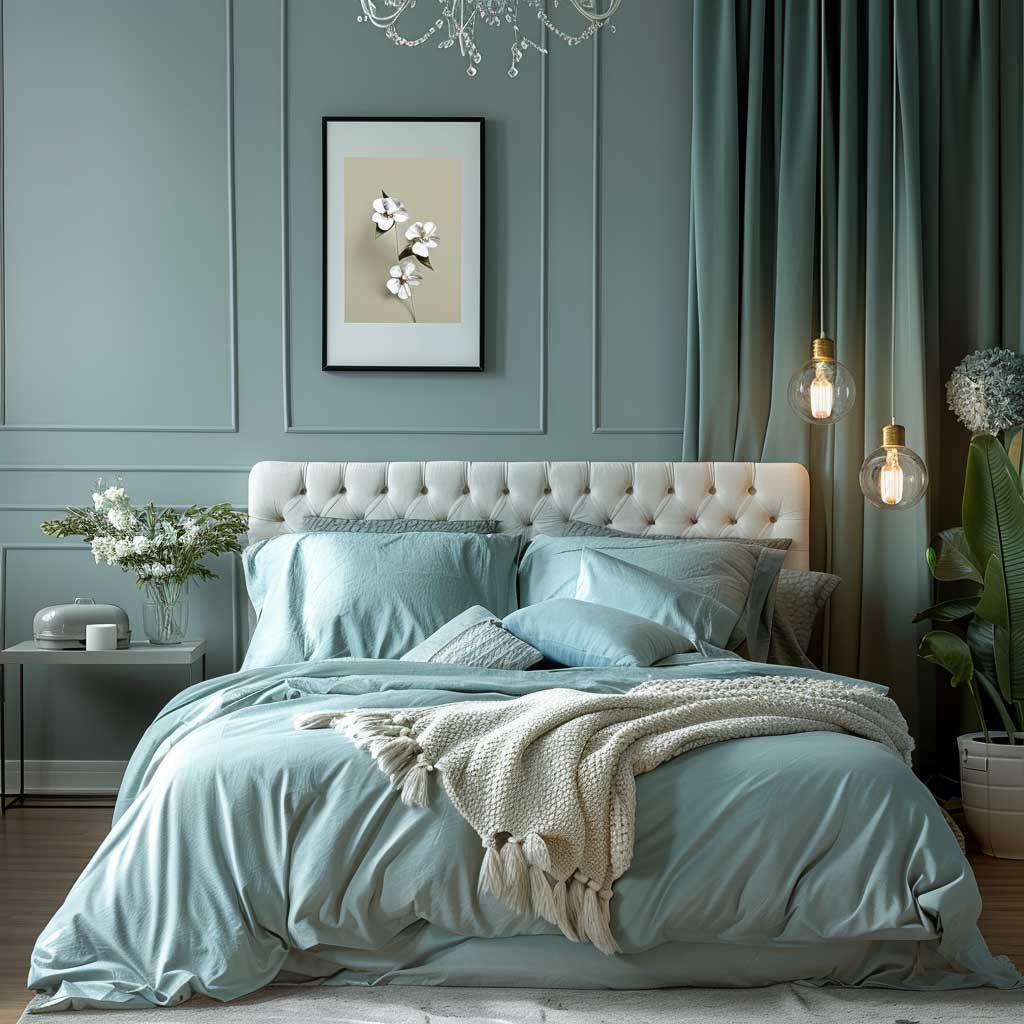
Finish with restraint. One landscape print, a ceramic vase and a knit throw are enough, and every extra blue-green object nudges the room toward a showroom. Edit until each piece earns its place on the shelf.
Kitchen Cabinets and Backsplashes in Blue-Green Shades
Blue green shades work best in kitchens on cabinetry, where the color is large enough to feel deliberate. Studio Blue Green, with an LRV near 20, appears in real kitchen cabinet photos and delivers a grounded, muted depth. Pair it with white or light gray countertops so the cabinets take the spotlight. Choose a satin or semi-gloss finish, since kitchen doors need to be scrubbable.
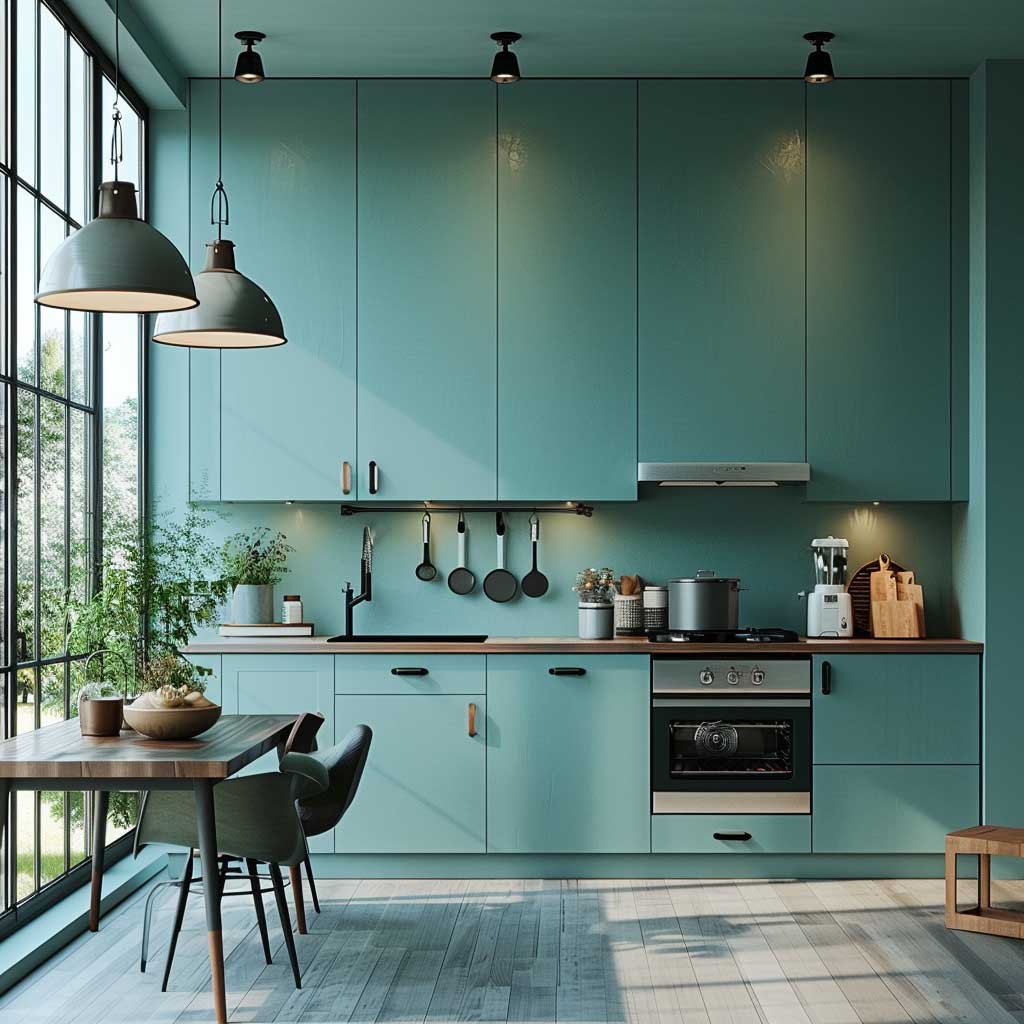
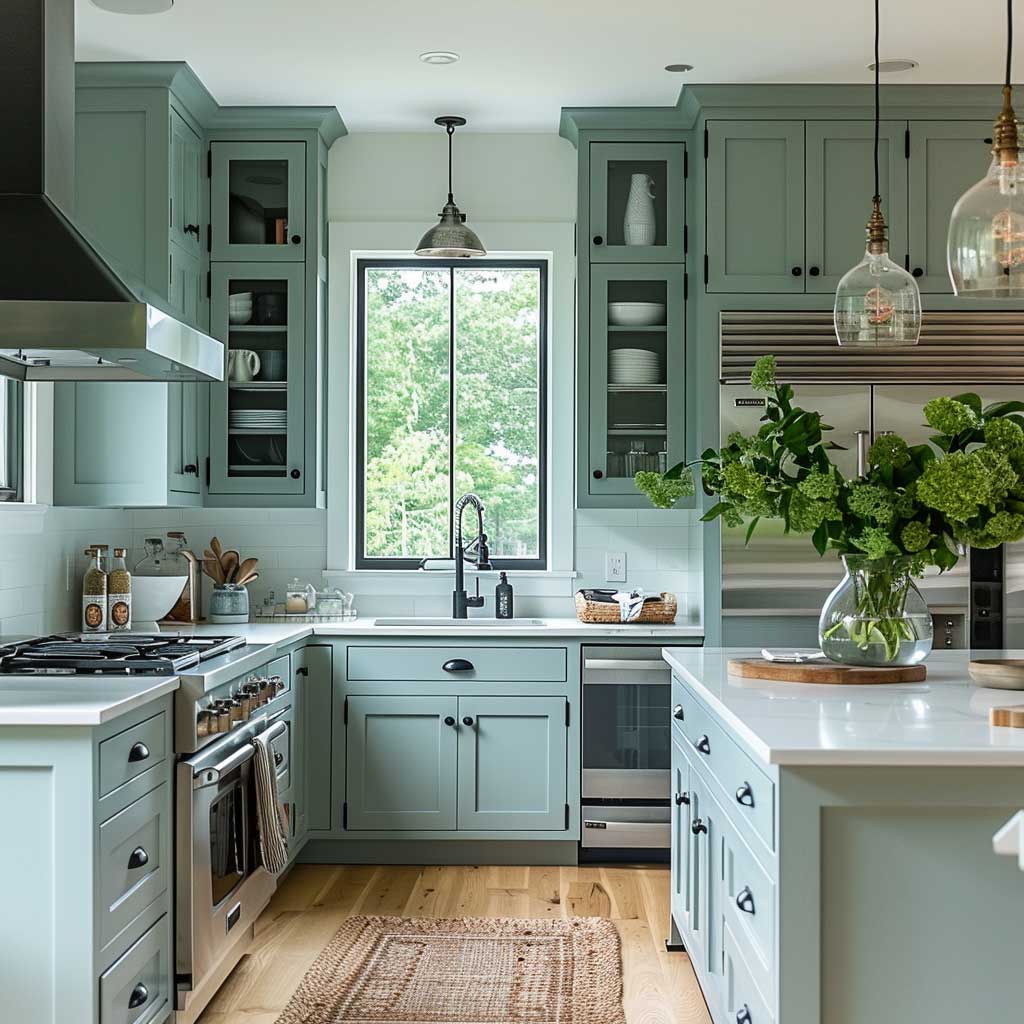
Stainless steel appliances and brushed nickel handles cool the palette, while brass hardware warms it. Should the backsplash match the cabinets? A slightly lighter tile creates a gentle step, like sky above water. Avoid identical shades on both surfaces, which flatten the room into one block. Hold a tile sample against a cabinet door before ordering.
Light matters more here than in any other room. Large windows and bright white fixtures keep a mid-dark blue-green from feeling heavy. With cabinets near LRV 20, plan for at least 40 lumens per square foot so prep zones stay clear. Add under-cabinet strips to lift shadowed counters.
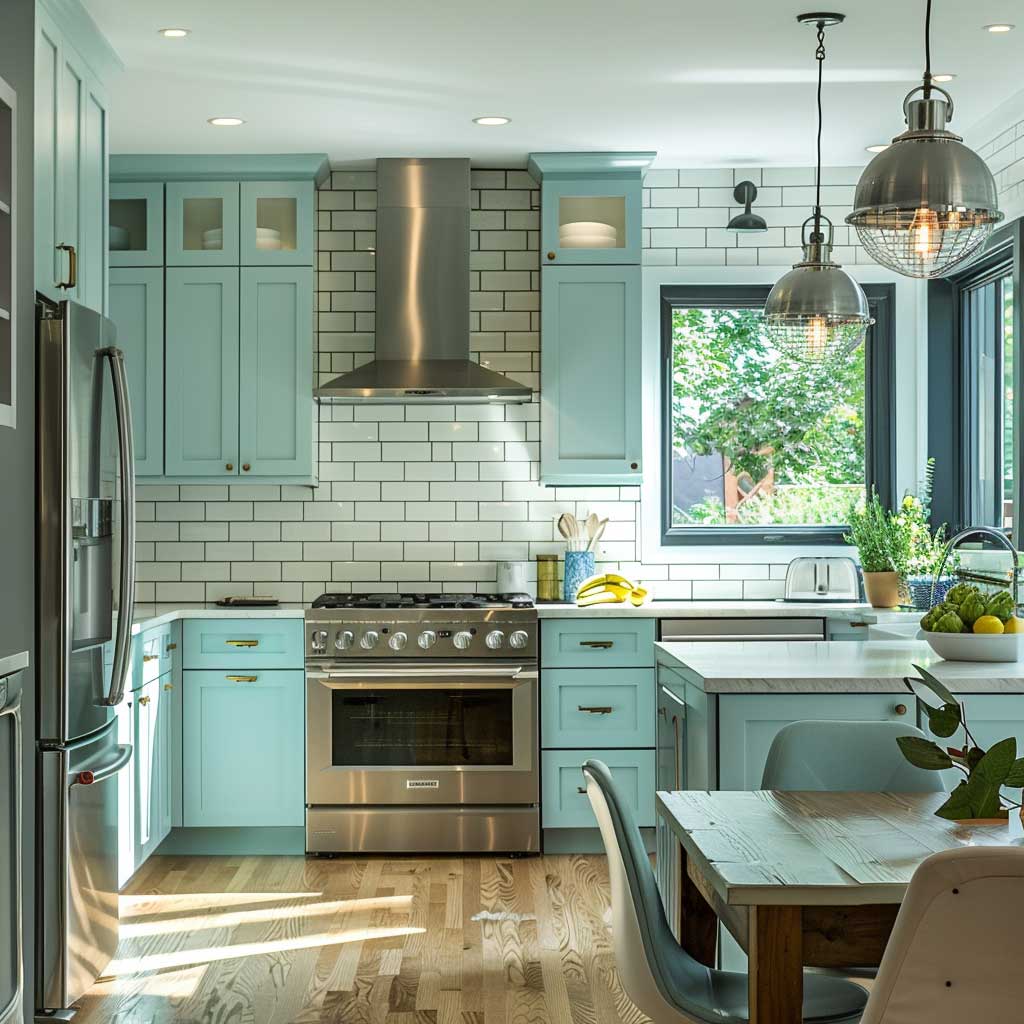
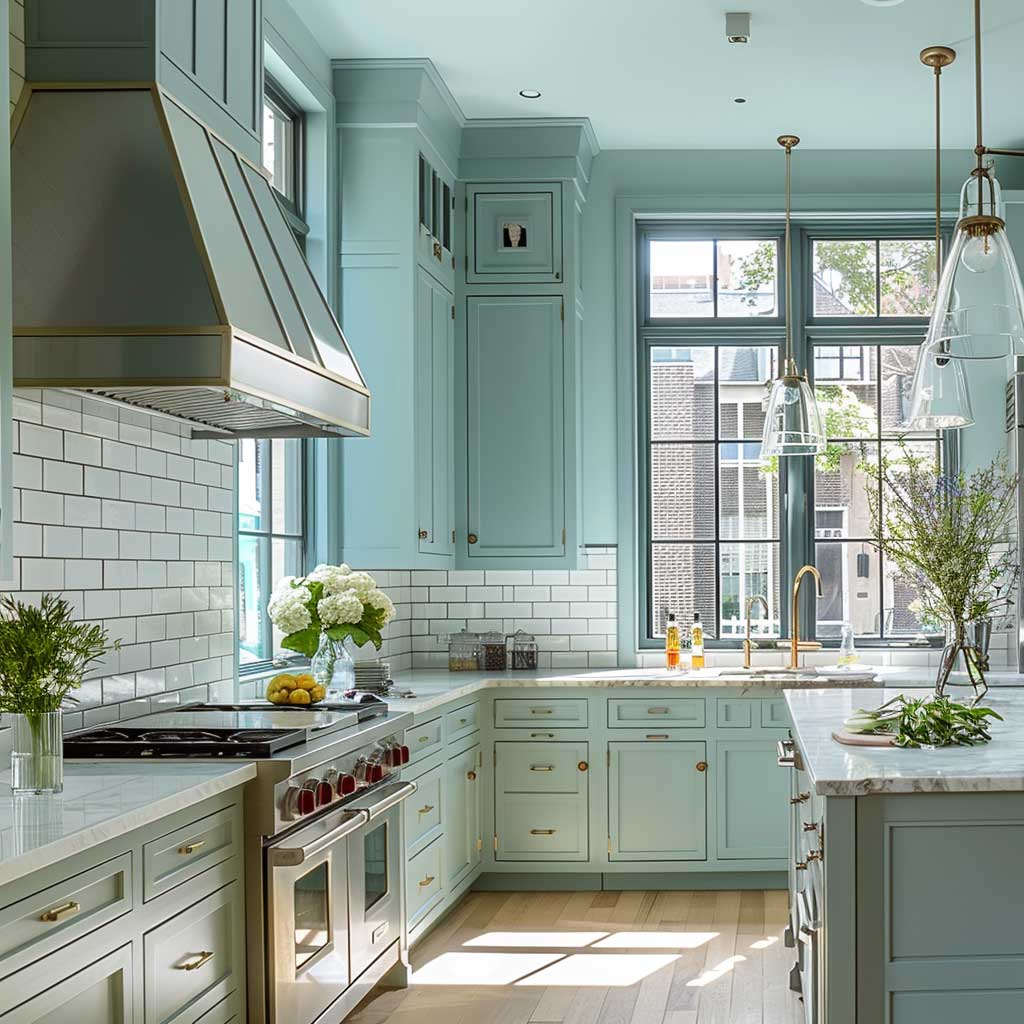
Small touches pull the room together: a runner rug, plants in glazed pots and dishware in matching hues. Keep them to three items so the kitchen stays about cooking, not a theme. A wooden cutting board adds instant warmth.
Bathroom Spa Effects From a Blue Green Interior Palette
A blue green interior palette turns a bathroom into a spa because the colors mirror water and steam. Rainwashed, listed at LRV 59, has been used on bathroom walls, where it stays crisp even under bright light. White or gray tile keeps the room clean, and a teal vanity or tub becomes the focal point. Choose one large blue-green element instead of three small ones.
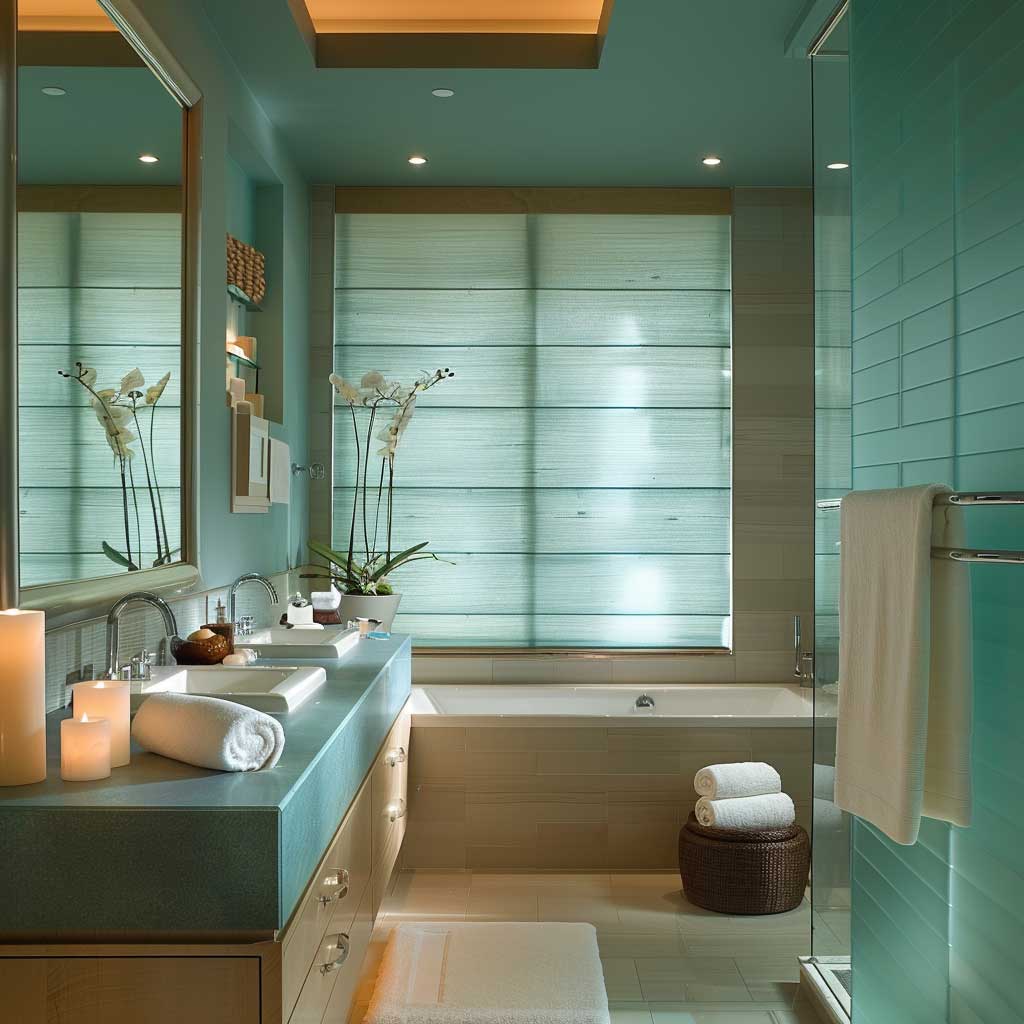
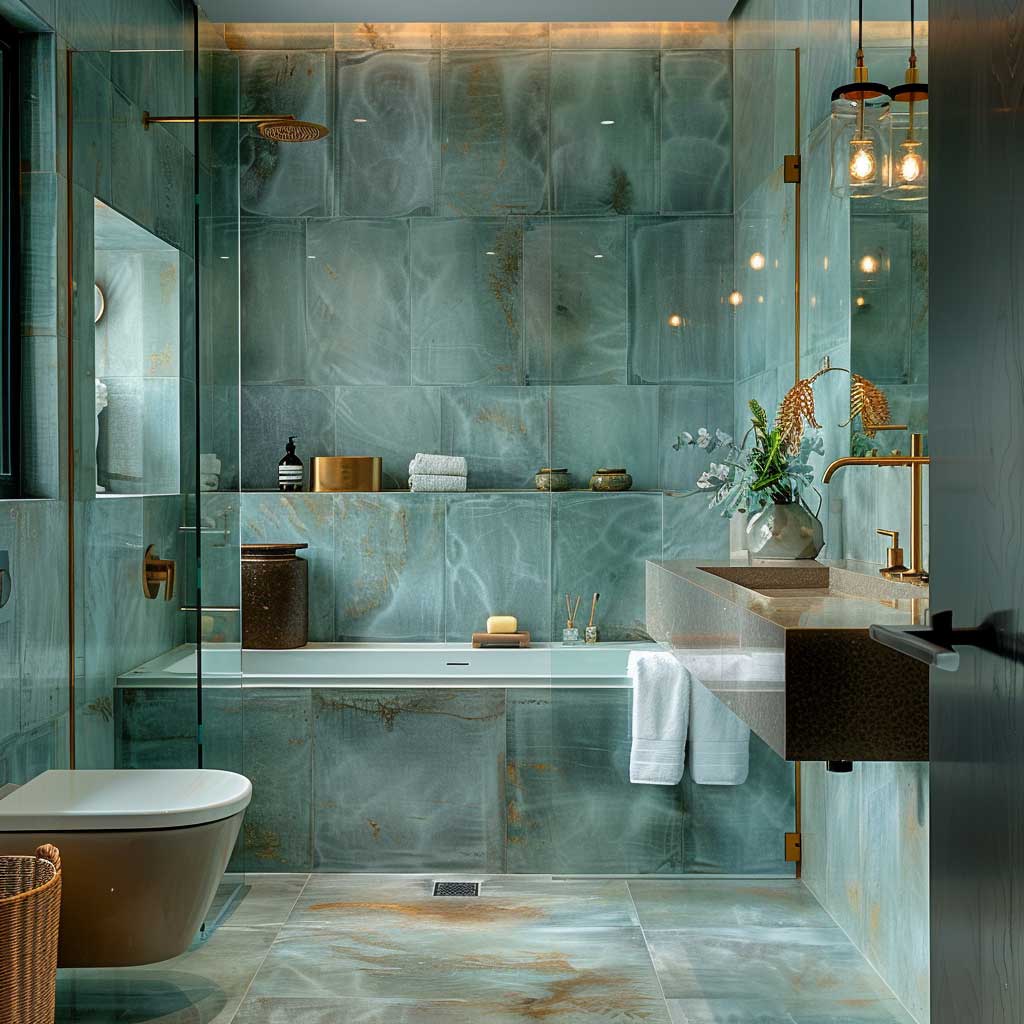
Lighting decides whether the room feels serene or dim. A very dark teal such as Blue Peacock has an LRV under 6, so it demands bright fixtures, and the usual guideline is at least 40 lumens per square foot. Can a windowless bathroom handle deep color? Yes, with wall sconces and a well-lit mirror. Use soft white bulbs so skin tones stay natural.
Surfaces matter as much as paint. A joint-free waterproof finish such as tadelakt plaster for wet rooms gives walls a soft sheen that flatters blue-green tints and resists mold. Textured tile or a patterned shower curtain adds depth without a new color. Skip glossy plastic accessories in matching teal, which cheapen the look.
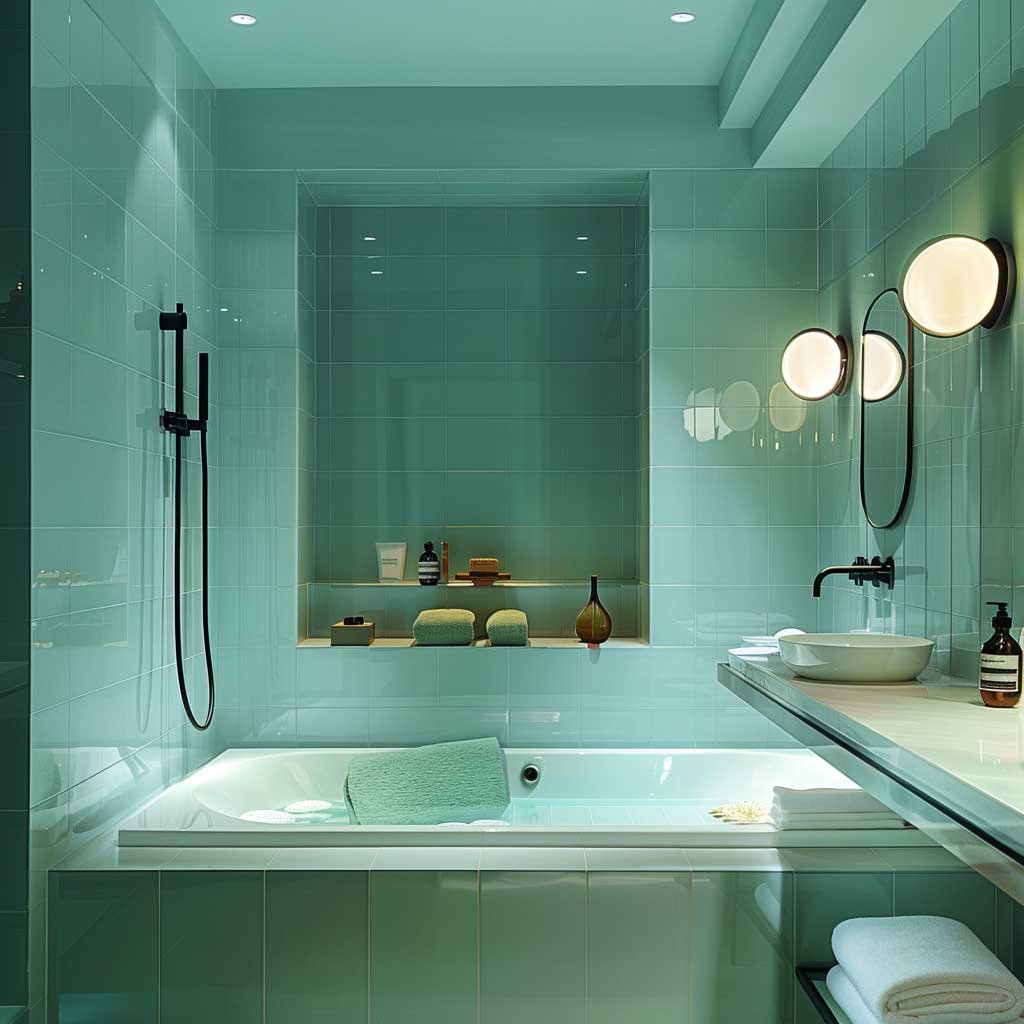
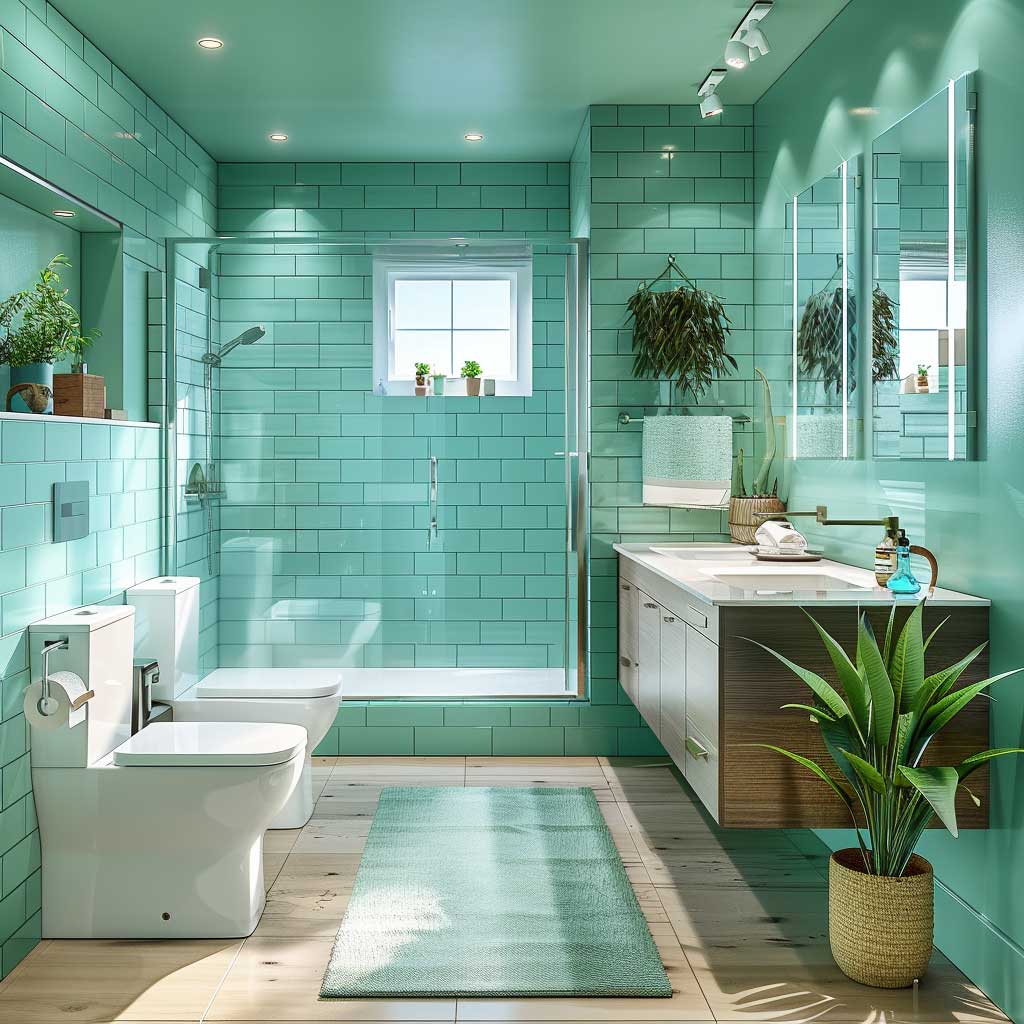
Bring in natural warmth with a wooden bath tray, a bamboo soap dish and a plant with blue-green leaves. They contrast with cool walls the way driftwood sits against the sea. Fold towels in two shades and stop there.
Blue-Green Paint Shades Compared Side by Side
The table lines up five popular Sherwin-Williams blue-greens by light reflectance value, a 0–100 scale where higher means brighter. Figures come from paint databases and can shift slightly with surface and finish. Use it to match a shade to the light in your room.
| Shade | LRV | Feel | Suits |
|---|---|---|---|
| Rainwashed | 59 | Soft, organic sea glass | Bathrooms, coastal living rooms |
| Watery | 57 | Light, shifts between blue and green | Bedrooms, bathrooms |
| Surf Green | 21.4 | Cool, mid-depth | Statement walls |
| Studio Blue Green | ≈20 | Muted, grayed | Kitchen cabinets, bathrooms, living rooms |
| Blue Peacock | 5.8 | Deep, dramatic teal | Dining rooms, powder rooms, built-ins |
Don’t Do This
- Don’t paint dark teal in a dim room without extra lighting.
- Don’t match rug, curtains and sofa in one identical shade.
- Don’t pair blue-green walls with cold gray upholstery.
- Don’t skip the two-times-of-day swatch test.
Designers push the same palette much darker in colour-drenched rooms. RIBA Journal’s feature on blue and green paint for sumptuous interiors shows how a full-bodied teal pairs with a pale ceiling in cooler, north-facing light.
The Bottom Line
Blue and green belong together, and the winning move is choosing one lead shade per room.
Use light shades near LRV 57–59 in small or north-facing rooms, and save deeper tones near LRV 20 or lower for spaces with strong lighting.
Anchor the palette with warm neutrals and natural wood, and keep matching sets out of the room.
Start with one room and one shade, then expand once the light has proven you right.