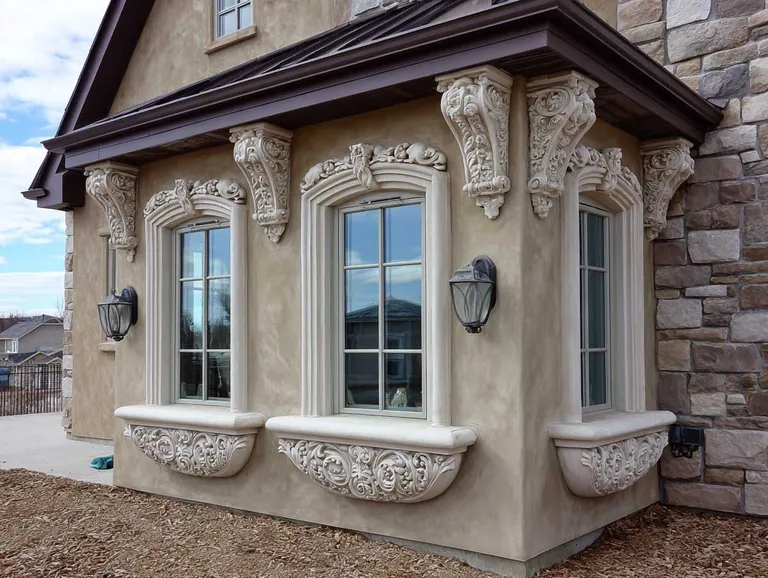

Decorative exterior mouldings are shaped strips fixed to the outside of a house to frame openings, finish corners and add detail along the roofline. The main choice is material: wood is traditional, cellular PVC resists moisture, fiber cement is durable but heavy, and polyurethane suits ornate pieces such as brackets and dentils.
Exterior moulding (also written molding) protects joints from water as well as decorating them, so details such as sealed cut ends and flashing clearance matter as much as the profile you pick.
Quick scan
- Typical spots: window and door surrounds, corner boards, frieze, fascia, soffits, brackets and garage-door trim.
- Wood looks traditional but needs primed faces and ends; cellular PVC handles wet spots.
- PVC expands and contracts more than wood, so leave movement gaps on long runs.
- Seal and caulk every joint; water in a joint causes most failures.
- Judge price by material and warranty, not by profile alone.
What decorative exterior mouldings are
Mouldings are not cladding; they sit on top of or beside it. Siding covers the wall surface, and mouldings finish the edges and openings. Where cladding choices decide the main look, see these exterior cladding ideas, then add mouldings to tie corners, windows and eaves together.

Moulding, trim and profile explained
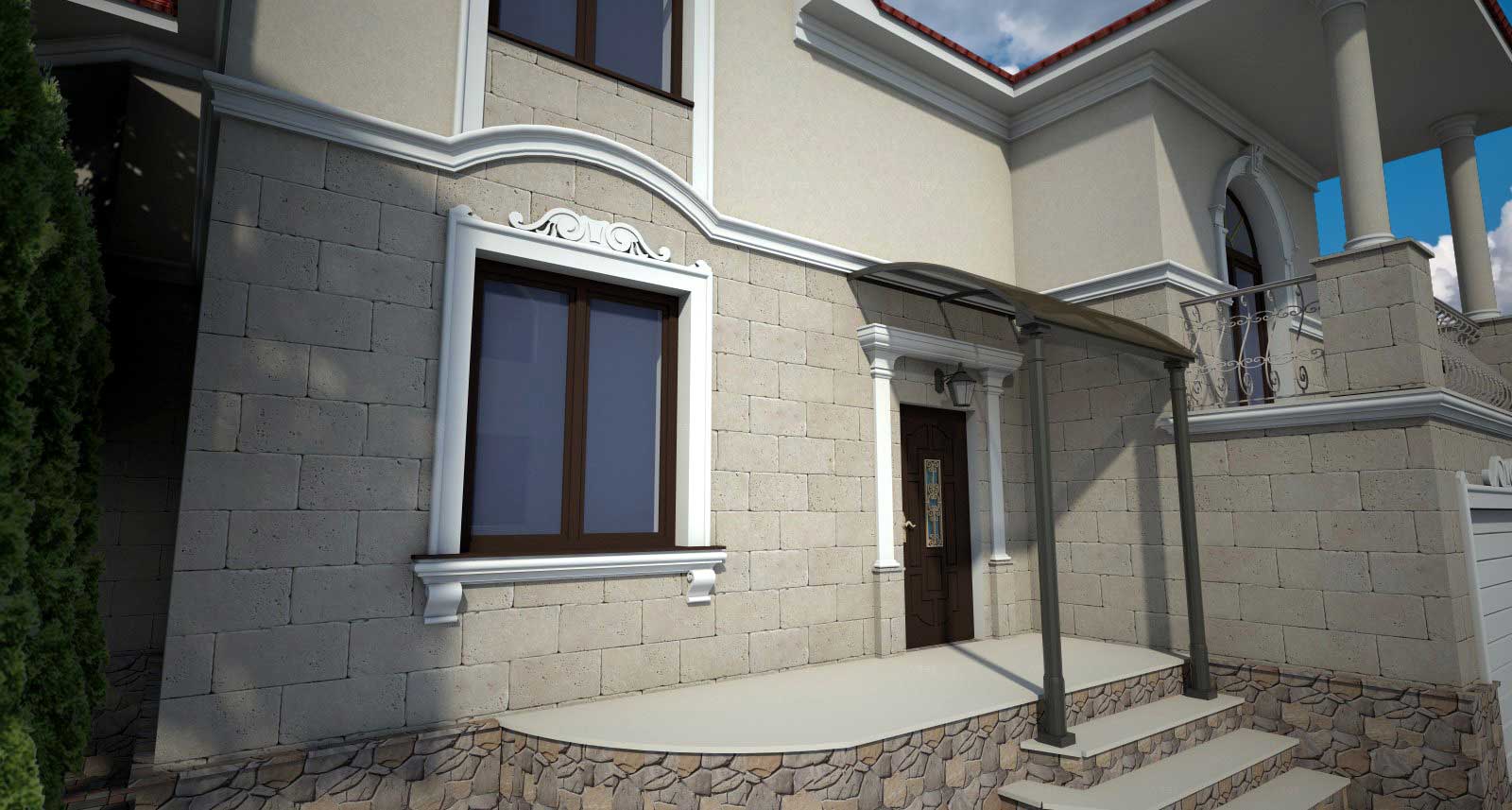
Trim is the flat or lightly shaped board that covers the joint between a surface and an opening, such as a window casing or door frame. Moulding is a shaped version used for decoration, such as a cornice or crown. Profile is the cross-section shape, such as flat, rounded or stepped.
In practice the words overlap, so check the profile drawing and the material when you compare products. For how the choice plays out around windows, read about molding vs trim around exterior windows.
Materials for exterior mouldings compared
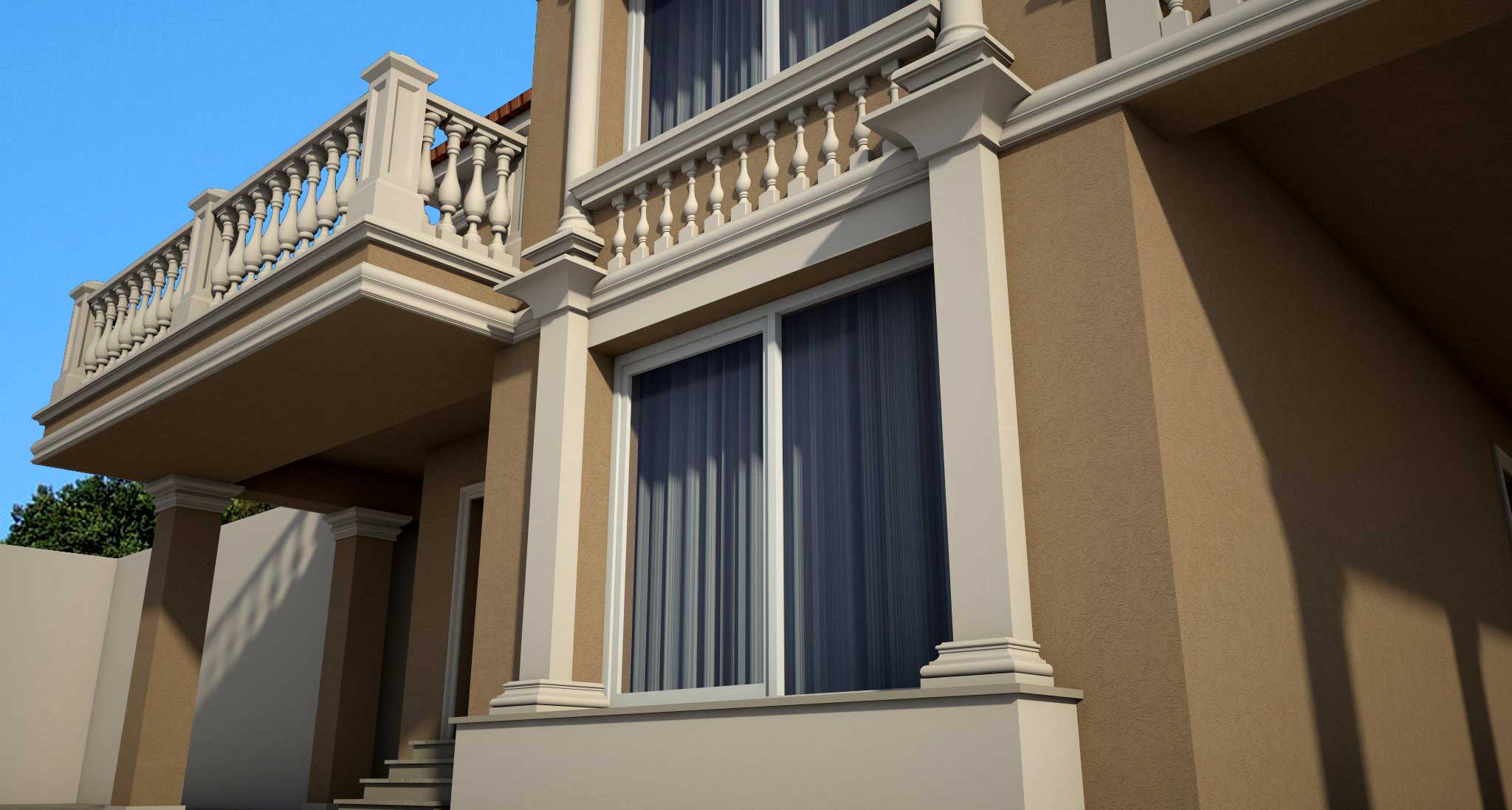
Each material fails differently. Wood absorbs moisture, PVC moves with temperature, fiber cement is heavy and polyurethane is costly. The table summarises findings from InspectApedia’s exterior trim overview and Fine Homebuilding’s comparison of wood-trim alternatives.
| Material | Strength | Limit |
|---|---|---|
| Solid wood | Best for tight miters and visible trim; vertical-grain cedar or redwood holds paint best | Needs primer on all faces and cut ends; can decay |
| Cellular PVC | Impervious to moisture and insects; works like wood; suits wet spots | Expands and contracts more than wood; avoid dark paint |
| Fiber cement | As durable as fiber-cement siding; resists rot and fire | Heavy, dusty to cut, needs solid backing and primed edges |
| Polyurethane | Good for ornate dentils, pediments and brackets | About four times the cost of premium softwood; paint soon after install |
Where decorative mouldings go on a house
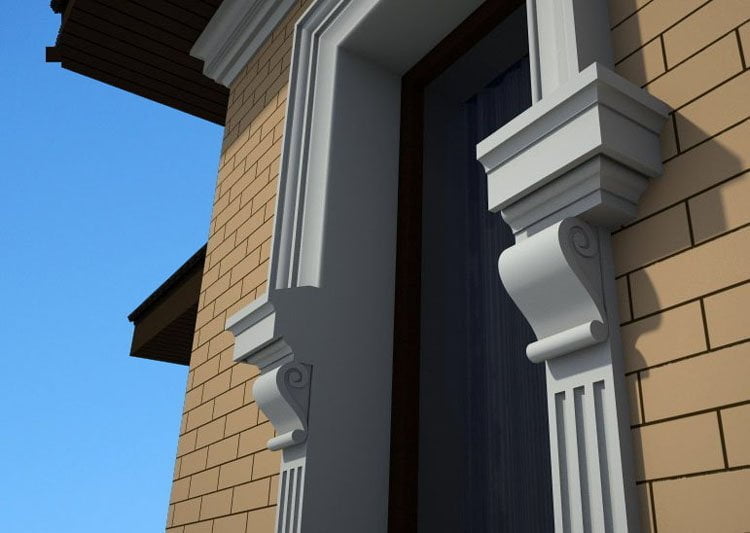
The most common positions are corner boards, window and door surrounds, the frieze under the eaves, fascia, soffits and garage-door trim. Ornate pieces such as dentils, pediments and brackets add detail at the entrance or roofline. For the whole facade, the choice of home’s exterior style should lead.
Keep wood trim at least a short distance from flashings and any surface where water can collect, as InspectApedia advises, and use PVC where the trim meets masonry or ground, because cellular PVC is approved for that contact.
Pros and cons of decorative exterior mouldings
- Pro: they add visual detail and define the style of the house, from traditional to modern.
- Pro: well-sealed trim protects joints around windows, doors and corners.
- Pro: they can improve curb appeal, though the effect on resale value varies by market.
- Con: they need regular repainting or inspection; wood trim is the most demanding.
- Con: ornate profiles and polyurethane parts cost more than plain boards.
- Con: poor detailing at joints lets water in and causes rot or paint failure.
How to install exterior mouldings on siding or cladding
Start by measuring each run and choosing the material. Cut with the right blade for the material, since fiber cement needs special blades and shears while wood and PVC cut with ordinary woodworking tools. Prime or paint all cut ends on wood and fiber cement before fixing.
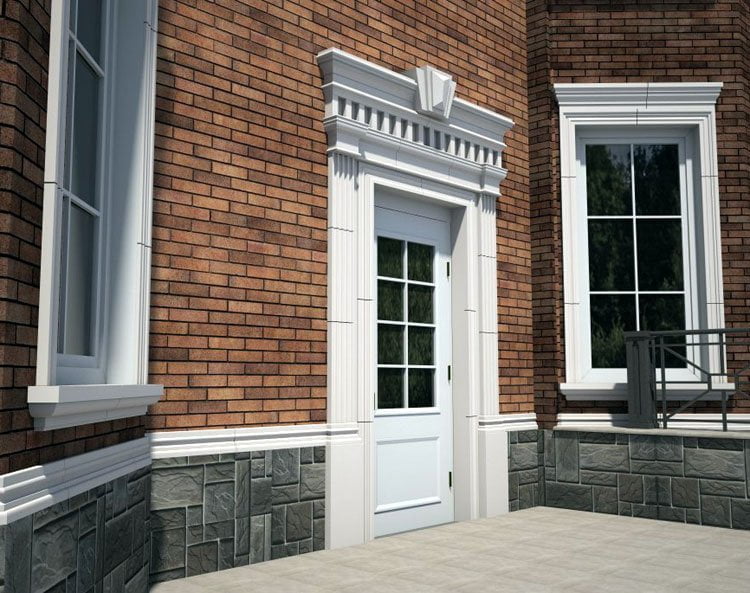
Fasten with exterior-grade nails, caulk the joints and paint. With cellular PVC, plan for movement: InspectApedia reports a manufacturer figure of 1/8 inch of allowance for every 18 feet of length, and advises scarf joints on long runs such as fascia. Install in moderate weather so joints do not open in the cold.
Quality versus price of exterior mouldings
Compare the whole package: material, factory priming, warranty and how easy the product is to detail. Per InspectApedia, cellular PVC is priced similarly to premium wood and carries long warranties, fiber cement trim is priced close to mid-grade softwood, and polyurethane runs far higher, so reserve it for decorative accents.
Choosing exterior mouldings for your home
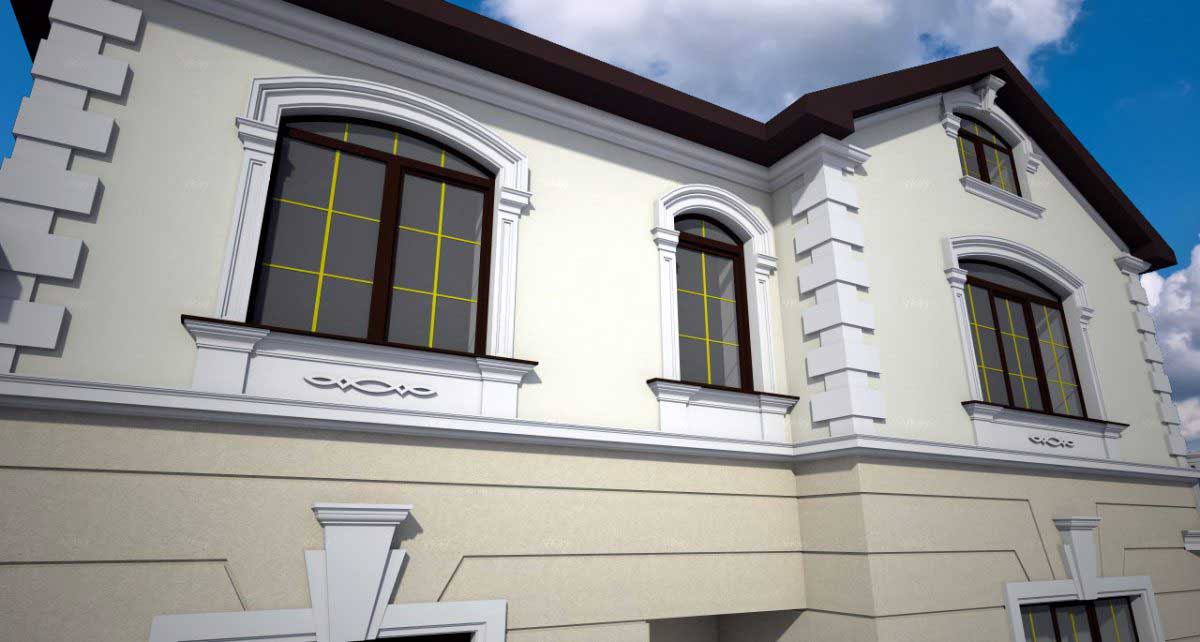
Match the material to the exposure: PVC or fiber cement for wet or ground-contact spots, wood where tight miters and a traditional finish matter, and polyurethane for a few decorative accents. Keep profiles in proportion to the house and the windows.
Whatever you choose, seal cut ends, leave expansion gaps where the material needs them, and caulk every joint. Details at the joints decide how long mouldings last.