
Dinner tables are making a comeback in 2026, but not in the way nostalgia suggests. Family meal routines are trending because parents have finally quantified what they suspected: eating together without screens rewires how children regulate stress, builds vocabulary faster, and creates measurable drops in anxiety. This isn’t sentiment—it’s neuroscience meeting dinner plates.
The shift started small. Parents noticed kids who ate with their families reported higher grades and lower behavioral incidents than peers who ate alone or in front of tablets.
What makes family meal routines different from the “family dinner” trend of past decades is the specificity. It’s not about fancy cooking or aspirational plating. It’s about consistency, phones off, and conversation that happens nowhere else in a child’s week.
How Neural Regulation Happens at the Table
When children eat with parents across multiple senses—tasting, seeing facial expressions, hearing voice tone shifts—their vagus nerve activates in ways that solo eating doesn’t trigger. The vagus nerve is the brain’s direct line to the nervous system, and repeated activation during calm, connected moments literally rewires how kids manage stress later.
Research from institutions like Stanford shows that children in families eating together three or more times weekly demonstrate measurably better impulse control and emotional labeling than peers who eat alone. This isn’t because of the food itself.
It’s because the brain learns safety through repetition. When a child sits across from a parent’s calm face while eating, that pairing—food, safety, belonging—gets encoded. Repeat that 150 times a year, and you’re building a different baseline for how a child’s nervous system responds to conflict.
Quick Tips
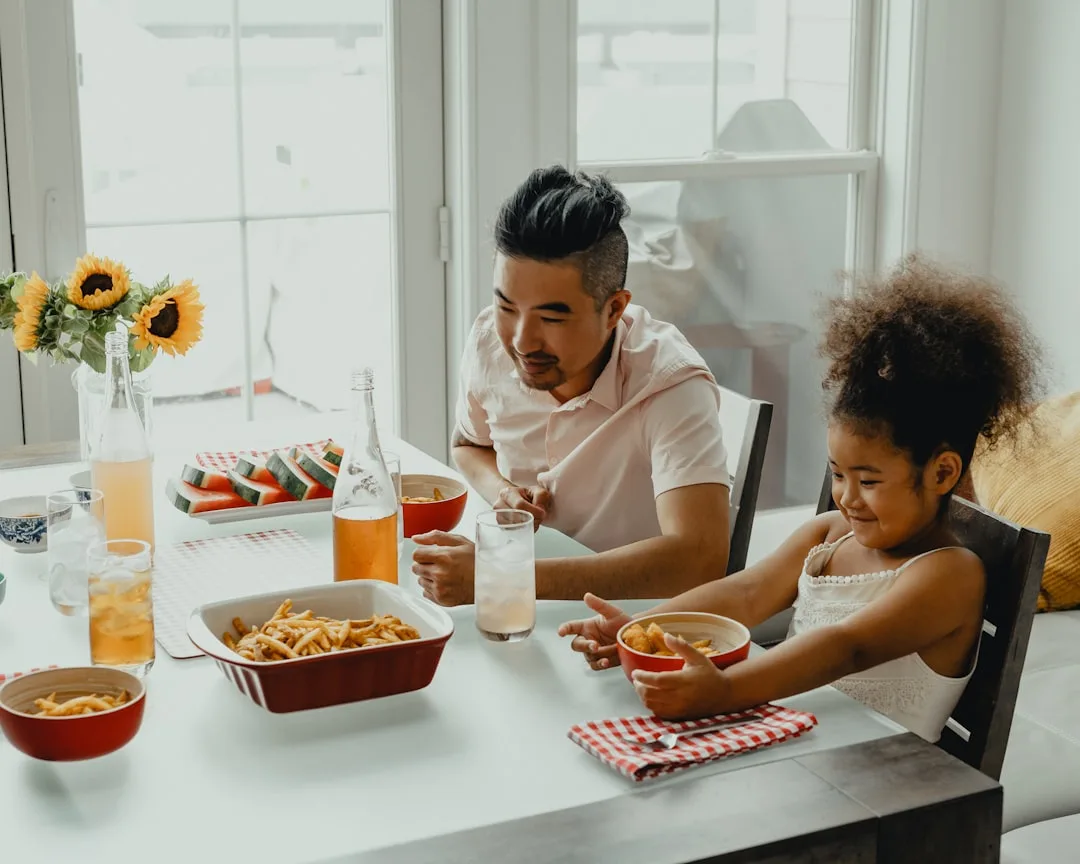
How Family Meals Rewire Stress Response in Children
The nervous system doesn’t distinguish between types of threat. A child whose family rarely eats together learns that mealtimes are optional, scattered, transactional. The body registers unpredictability. When unpredictability becomes normal, the nervous system stays slightly activated—ready for disruption.
Regular family meals reverse this pattern. The predictability of sitting together, the rhythm of passing dishes, the presence of calm adult faces—these create what neuroscience calls “co-regulation.” The child’s developing brain literally syncs with the parent’s calmer state. Over months, this becomes internalized. The child develops a lower baseline for anxiety.
This is particularly valuable in separated families where children move between two homes. Consistent mealtime rituals in each household, even when parenting approaches differ slightly, give the child’s nervous system anchor points. If you’re navigating this, Why Co-parenting Communication Tools Build Stronger Separated Family Networks offers practical strategies for aligning routines without requiring perfect agreement on parenting philosophy.
The Difference Between Rushed Meals and Intentional Eating
Not all meals together are equal. A family sitting in silence while watching television is physically present but neurologically absent. The child still experiences the adult proximity, but the quality of attention—which is what actually builds safety—never happens.
Intentional eating means conversation, eye contact, and genuine presence. It means putting away devices that fragment attention. Research in family psychology consistently shows that device-free meals create measurably different family dynamics than those with screens present. The shift from “eating together” to “meals together” is the difference between occupying the same space and actually connecting.
For families struggling with screen habits at the table, understanding broader digital patterns helps. Children whose daily Screen Time Limits for Children 2026 — Why Chronometric Parenting Replaces Unrestricted Digital Access include protected mealtime hours develop healthier attention spans during family interaction, which improves conversation quality.
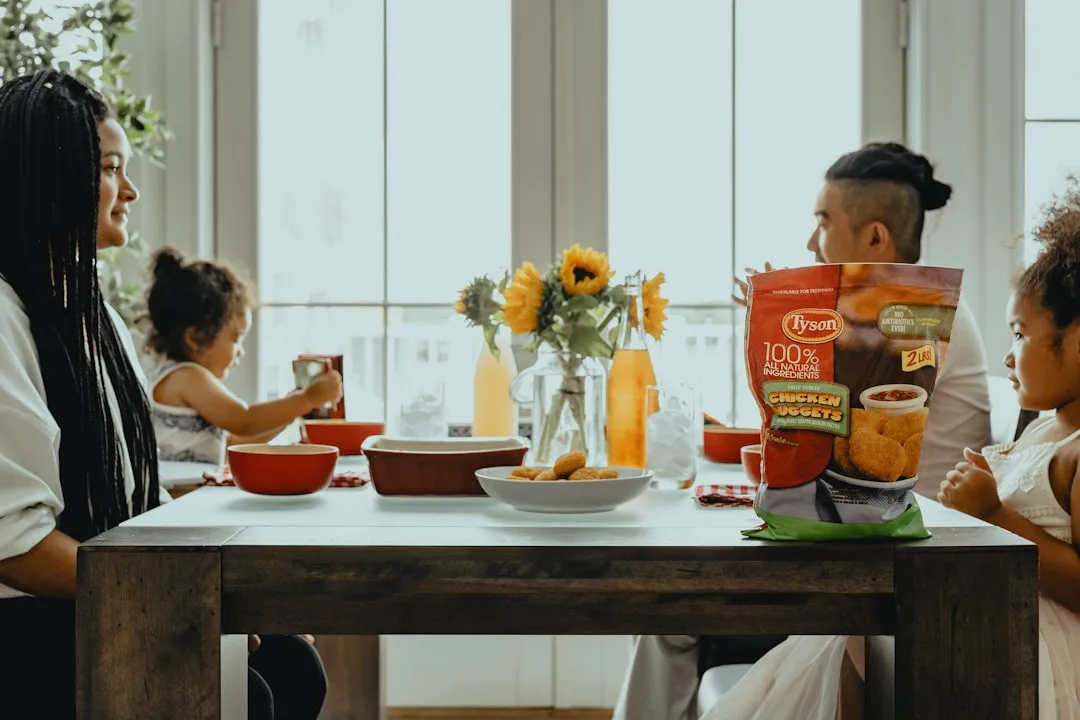
Building Family Meals When Time Feels Impossible
The barrier most parents face isn’t philosophical disagreement with family meals—it’s logistics. Work schedules, sports practices, uneven custody, financial pressure to work multiple jobs. The guilt of not managing this feels real because the constraints are real.
But the research on consistency applies to intention, not perfection. A family that manages two intentional meals per week will see neurological and relational benefits over time. The quality of those two meals matters more than the absence of five others. Starting with breakfast once weekly, or a weekend dinner ritual, or even a 20-minute lunch together three times per week—these irregular-but-consistent patterns still create the repetition the nervous system needs.
The practical move is choosing one meal that fits your life, committing to it for three months, then potentially adding another. This removes the all-or-nothing thinking that makes family meals feel unattainable for real families with real constraints.
What Happens When Family Meals Stop
The inverse pattern shows up quickly. When a family stops eating together—whether due to divorce, work changes, or gradual drift into individual schedules—children often show increased anxiety and behavioral shifts within weeks. Not because the food changed, but because the neurological anchor disappeared.
This is especially visible in children whose family structure has changed. The loss of the mealtime ritual compounds the loss of the family structure itself. Rebuilding this ritual, even in a new configuration (a single parent and child, or an alternating custody arrangement), becomes a way of signaling “we are still a unit, we still belong together.” The meal itself is almost incidental. The ritual is what rebuilds safety.
Practical Resources for Starting Family Meal Routines
These five tools and guides help you move from understanding why family meals matter to actually building a sustainable routine — from planning your first weekly meal to keeping conversation flowing at the table.
What do pediatricians actually recommend for making family meals work?
How do I plan a full week of family dinners without spending hours on it?
What do we actually talk about once we sit down together?
How can I get my toddler or preschooler involved in cooking without a safety worry?
Where can I find quick, budget-friendly recipes that fit balanced-plate guidelines?