Front yard art works best as one deliberate focal point, such as a statue, a boulder grouping or a sculptural fountain, placed where the eye lands first from the street. Does it actually pay off? A single well-lit piece usually does more for curb appeal than a dozen scattered ornaments, and a small 1–2 ft statue typically costs $300 to $2,800 depending on material. Think of it like a framed painting in an entry hall: one strong piece reads as intent, while ten small ones read as clutter. Start with one anchor and build the planting around it.
Material decides most of the budget and nearly all of the maintenance. Resin pieces ship in a few weeks and cost a fraction of bronze, while custom bronze can take several months and climb past $15,000 for larger work. Natural stone sits in between, with landscape boulders averaging around $250 per ton and needing almost no care. Choose the material that suits your climate and your patience before you choose the shape.
Lighting finishes the job. A single spotlight runs $100 to $400 installed, and LED lamps are rated for 25,000 to 40,000 hours, so a sculpture keeps working after dark for years without bulb swaps. Plan the cable from day one rather than trenching through finished beds later.
Quick Scan
- One focal piece beats many: a 3–5 stone cluster reads stronger than 12 scattered rocks.
- Small statues (1–2 ft) typically cost $300–$2,800, while 3–6 ft pieces start near $2,000.
- Resin ships in weeks vs several months for custom bronze.
- Landscape boulders run about $150–$350 per ton and need almost zero upkeep.
- A sculptural fountain averages about $2,700 to install and needs cleaning every 1–3 months.
- Spotlights add $100–$400 per fixture and keep a piece visible after sunset.
- Set aside 1–3% of a statue’s price each year for cleaning and sealing.
Statement Statues That Anchor Front Yard Art
Front yard sculpture ideas start with one question: where does a visitor’s eye land first? In most yards that spot sits at the end of the walk or at the corner of the main bed, and that is where a single garden statue earns its price. A statue on a plinth there works like a full stop at the end of a sentence, giving the whole layout a finish. Skip the instinct to buy two matching pieces for symmetry unless the house itself is strictly symmetrical.
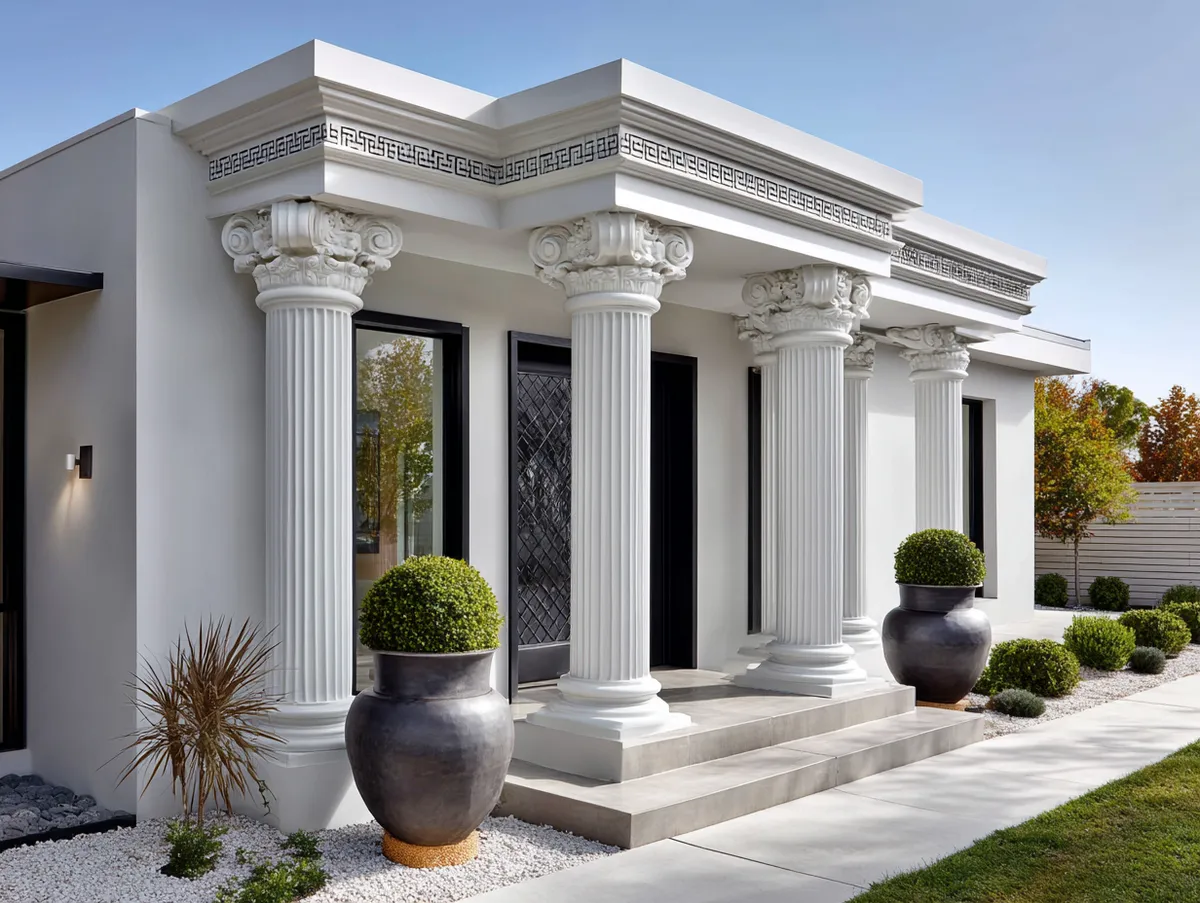
Marble and carved stone suit classical and traditional facades, bronze reads as permanent and slightly formal, and resin can mimic both at a fraction of the cost. Typical prices for a 1–2 ft piece run $300 to $2,800, while a 3–6 ft statue usually lands between $2,000 and $20,000. Is resin a false economy? Not for a covered entry or a mild climate, but in hard frost and strong sun a cast stone or bronze piece will look better for longer. When buying bronze, ask whether it is solid or a hollow casting, since that changes both weight and the base you need.
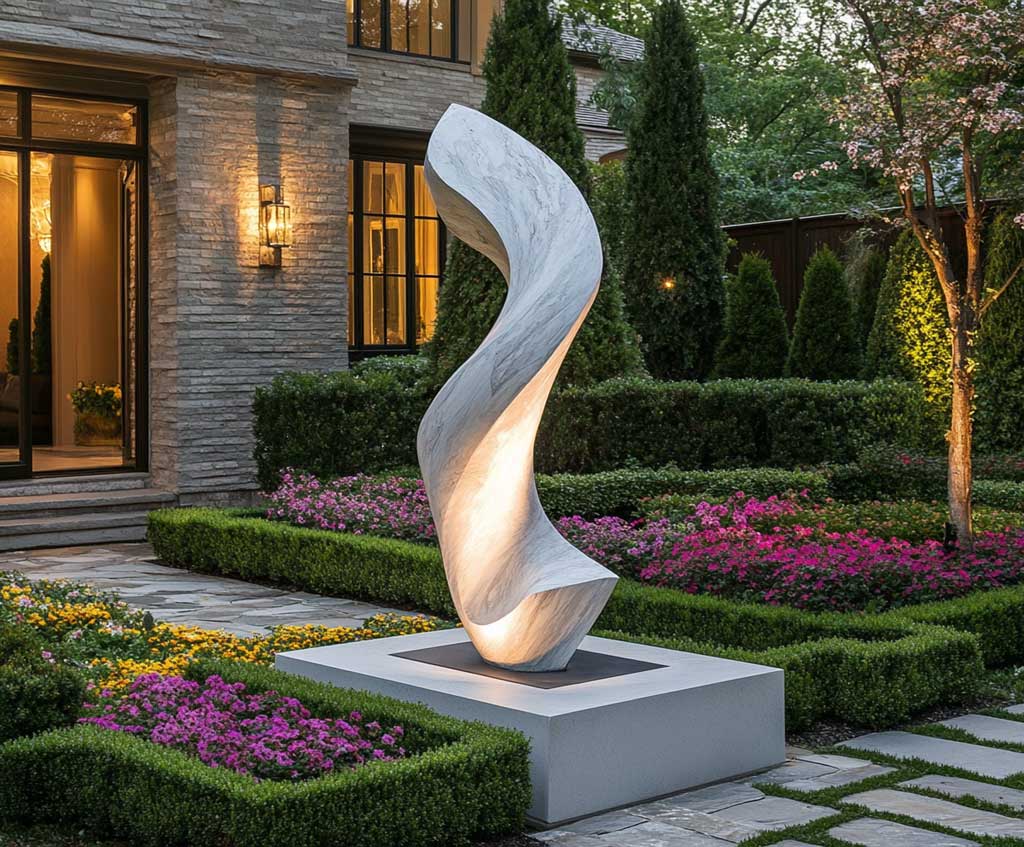
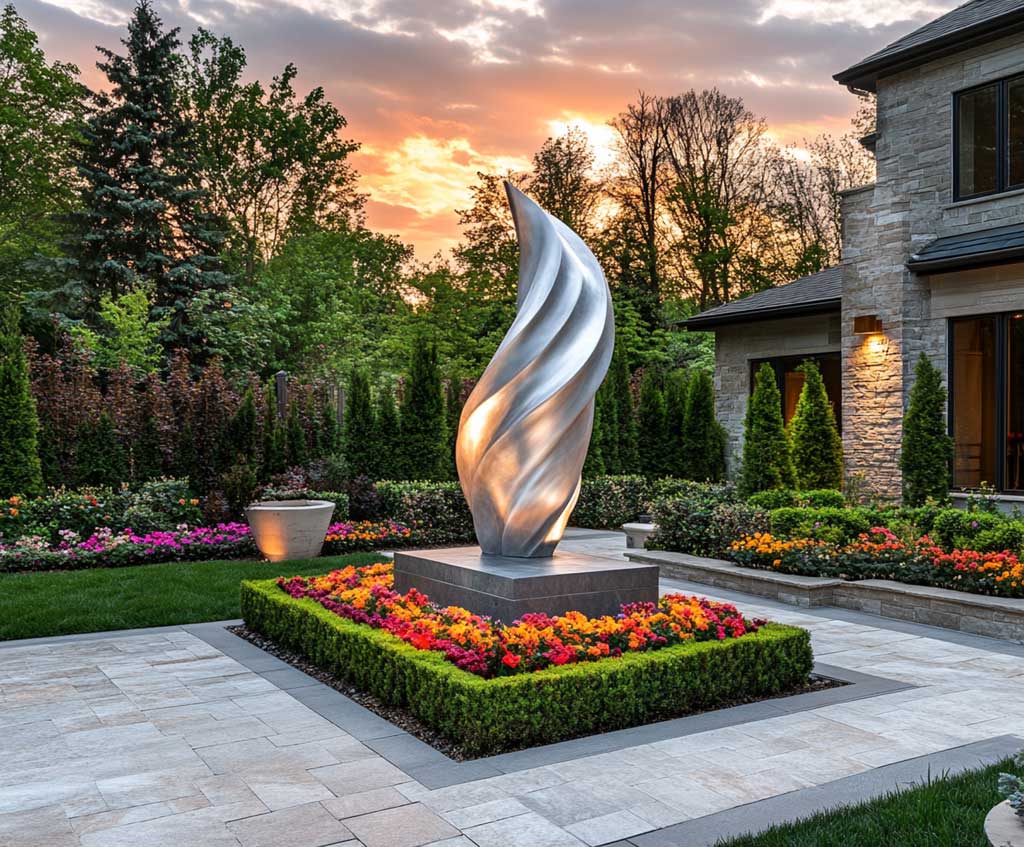
Scale matters as much as finish. A tall figure squeezed into a narrow bed looks crowded, while a modest piece set against generous planting looks intentional. Frame it with low evergreens such as boxwood or a ring of lavender, so the plants act like a mat around a photo rather than competing with it. For planting palettes that suit contemporary homes, see these front garden planting ideas for modern house facades.

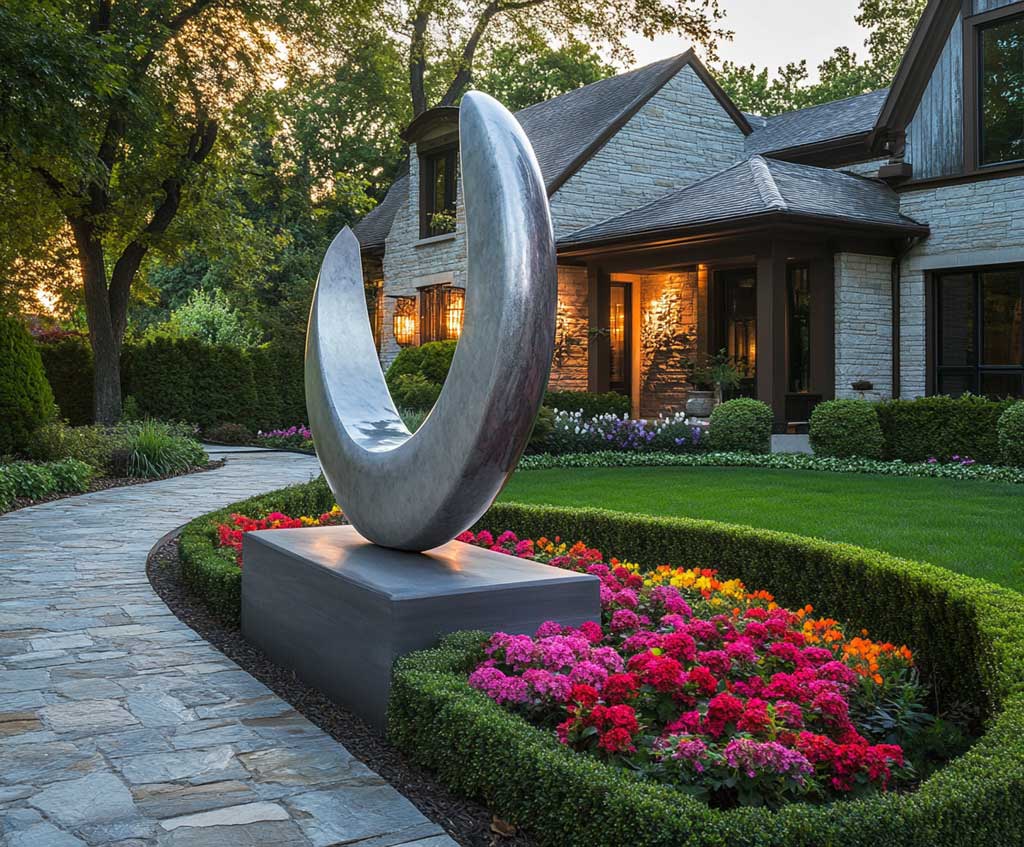
Lighting turns a daytime ornament into an evening landmark. A single spotlight typically costs $100 to $400 installed, and low-voltage fixtures run on 12 volts, which makes them safer to place in planted beds. Aim the beam slightly from the side rather than straight on, because flat frontal light erases carved detail. Budget 1–3% of the statue’s price each year for care, roughly $50 to $150 for a $5,000 piece.
Abstract Installations as Sculptural Landscape Features
Sculptural landscape features in steel, glass or recycled metal give a front yard a gallery mood that figurative statues cannot match. Abstract forms leave interpretation open, so the same piece can read as a wave, a seed pod or a flame depending on the angle and the hour. That ambiguity is the point, because the piece keeps rewarding a second look. Avoid placing an abstract work beside a figurative statue, since the two visual languages cancel each other out.
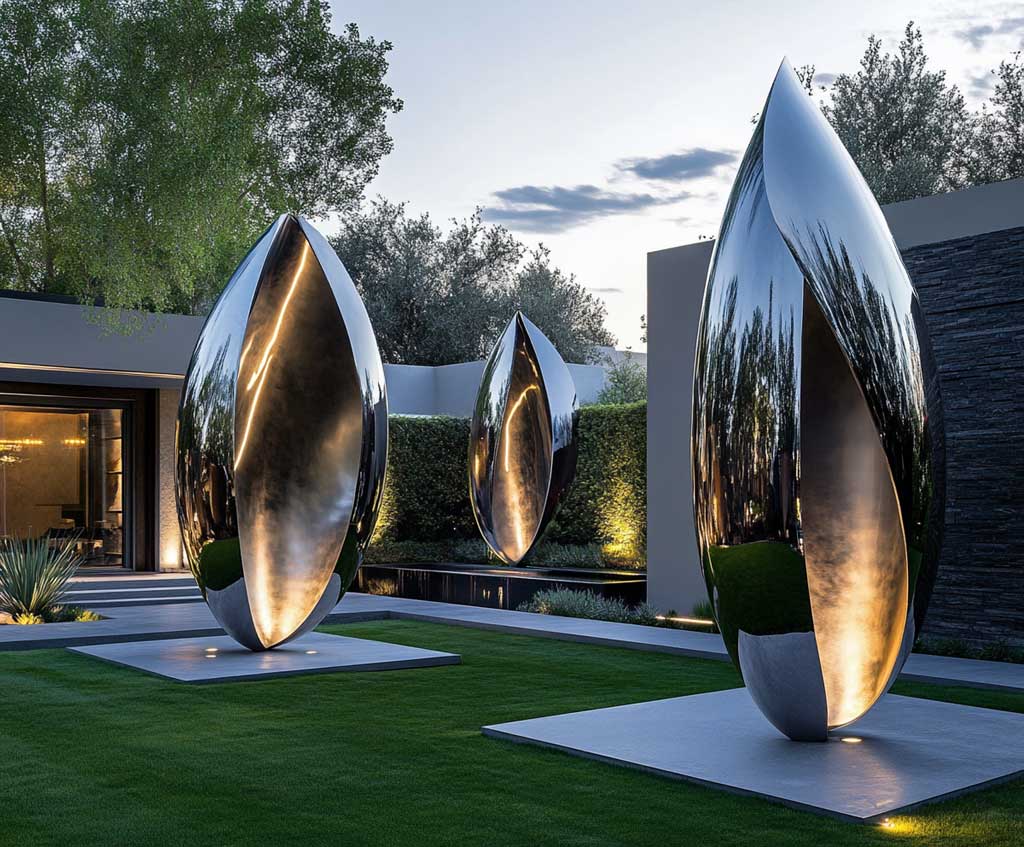
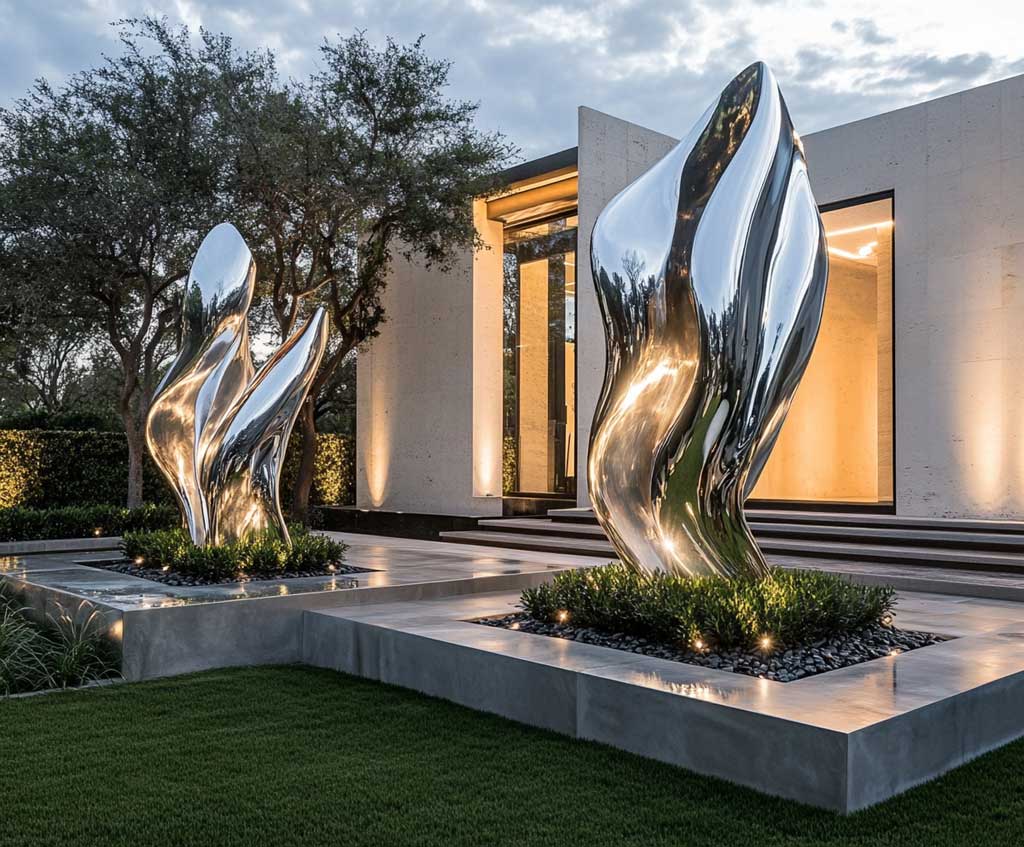
Cost depends more on fabrication than on raw material. Smaller resin or composite abstract works often sell for $1,000 to $5,000, while custom pieces in bronze or stone can pass $15,000 once a base and installation are added. A pedestal alone ranges from $500 to $8,000 depending on height and material. Aluminum is lighter and cheaper per pound than bronze, but it usually needs a protective coating to last outdoors.
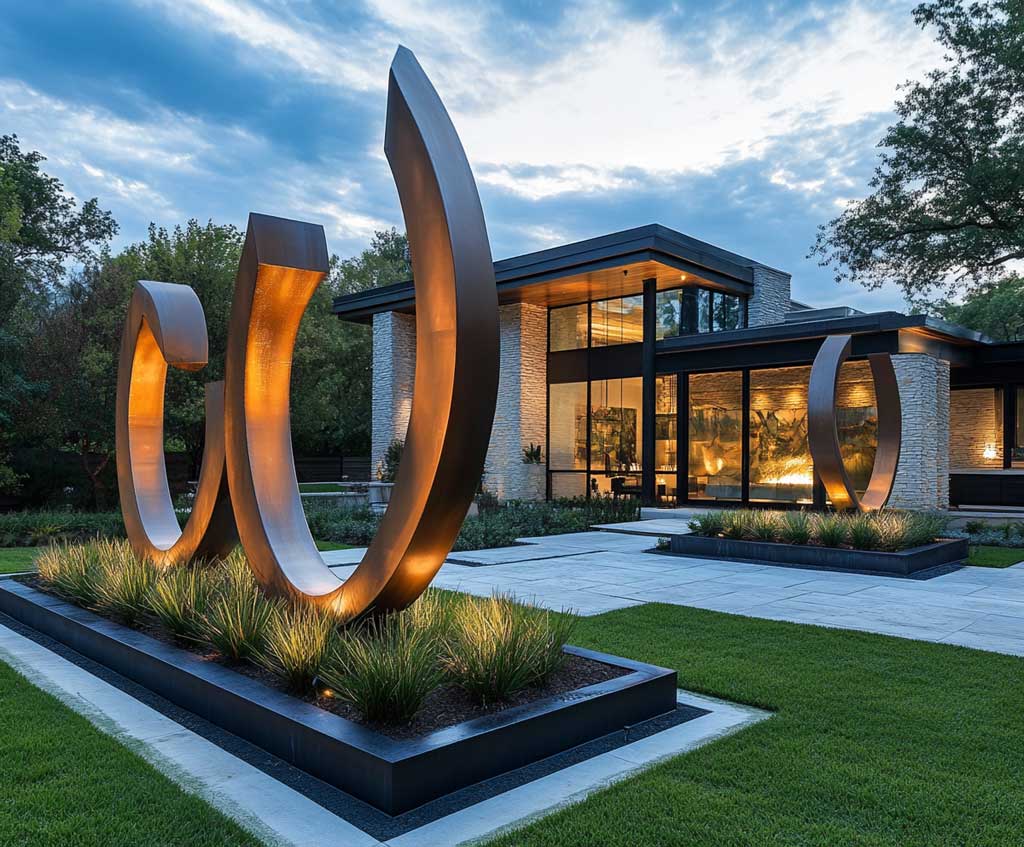
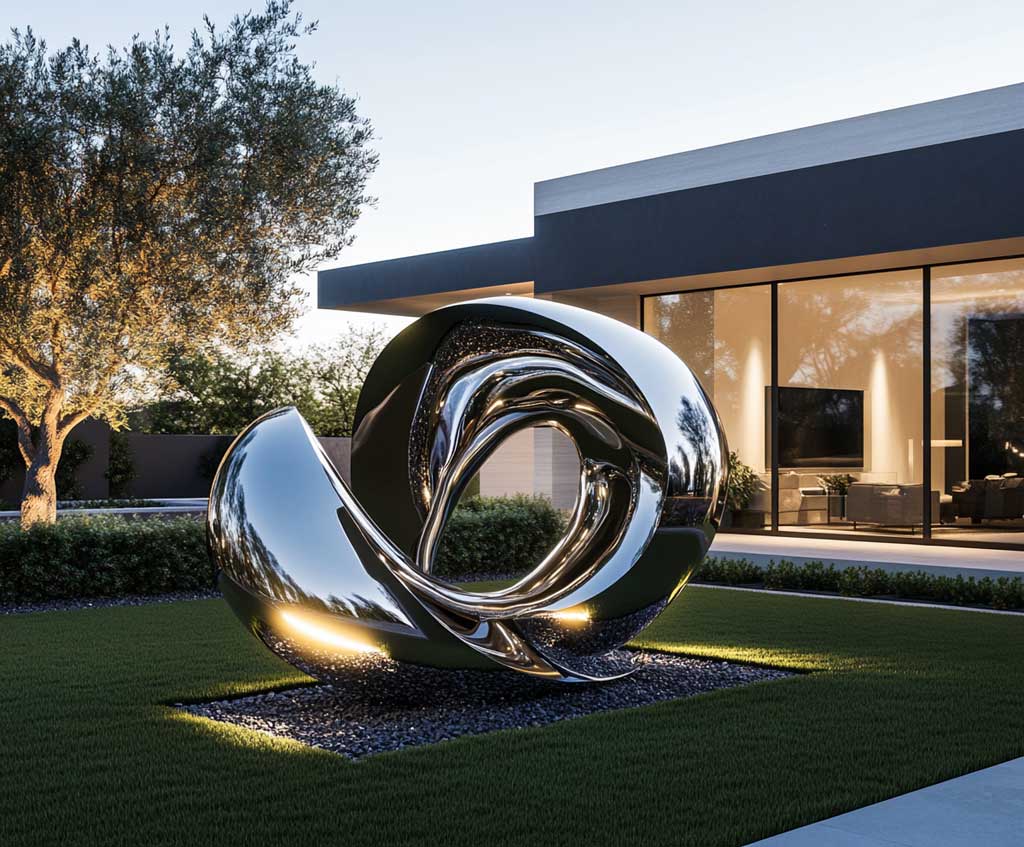
Where should an abstract piece go? Open lawn or a gravel court beats a crowded border, because bold shapes need empty space the way a single word on a poster needs white margins. In-ground uplights cost about $85 to $250 per fixture installed and can make steel or glass appear to hover after dark. Surround the base with low groundcover, gravel or a shallow water rill instead of tall perennials that hide the silhouette.
Sculptural Pathways That Lead the Eye
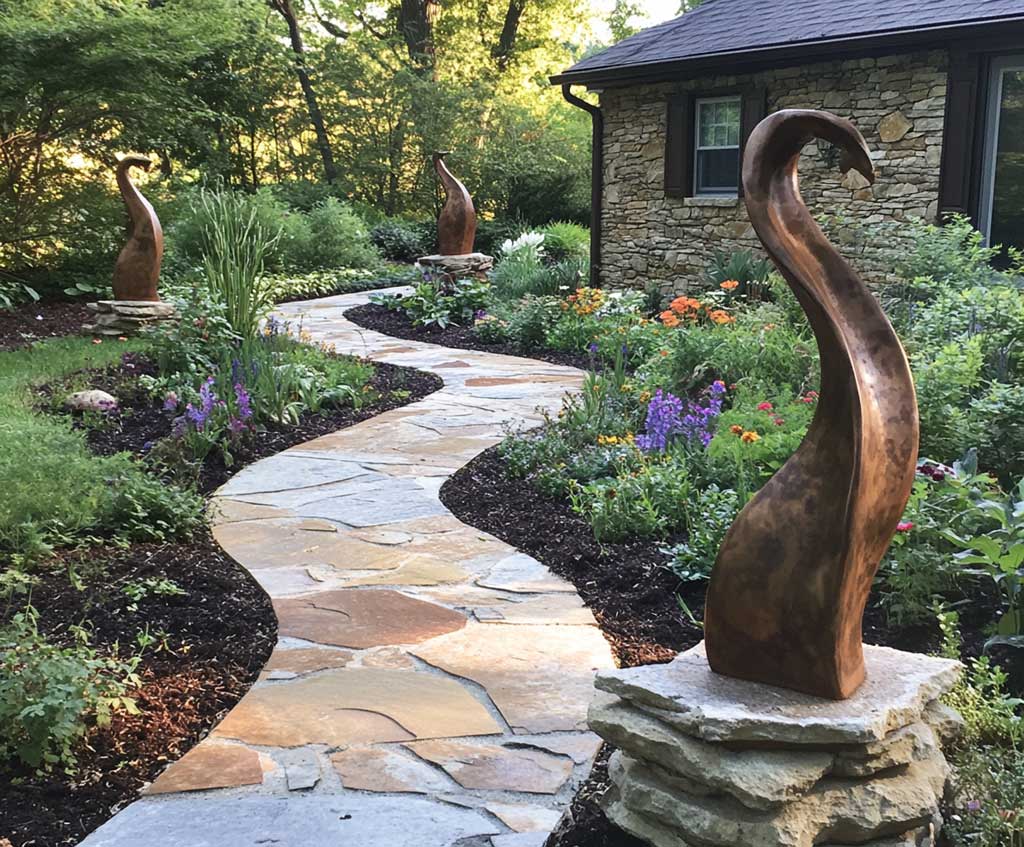
A sculptural pathway turns the walk to the front door into a short outdoor gallery, with small pieces revealed one at a time. A curving route works better than a straight line here, because each bend hides the next piece and gives visitors a reason to keep walking. Picture a museum corridor where every turn frames a new object. Keep the sculptures roughly knee to hip height so they guide rather than block.
Path material sets both the mood and the budget. Gravel installs for about $1 to $4 per square foot, stepping stones run $2 to $20, and a mortared flagstone walk usually costs $15 to $30 per square foot installed. Gravel vs flagstone comes down to traffic: gravel suits a side route used weekly, while flagstone handles daily foot traffic and delivery carts. Either way, a quiet natural surface lets metal or carved accents stand out.
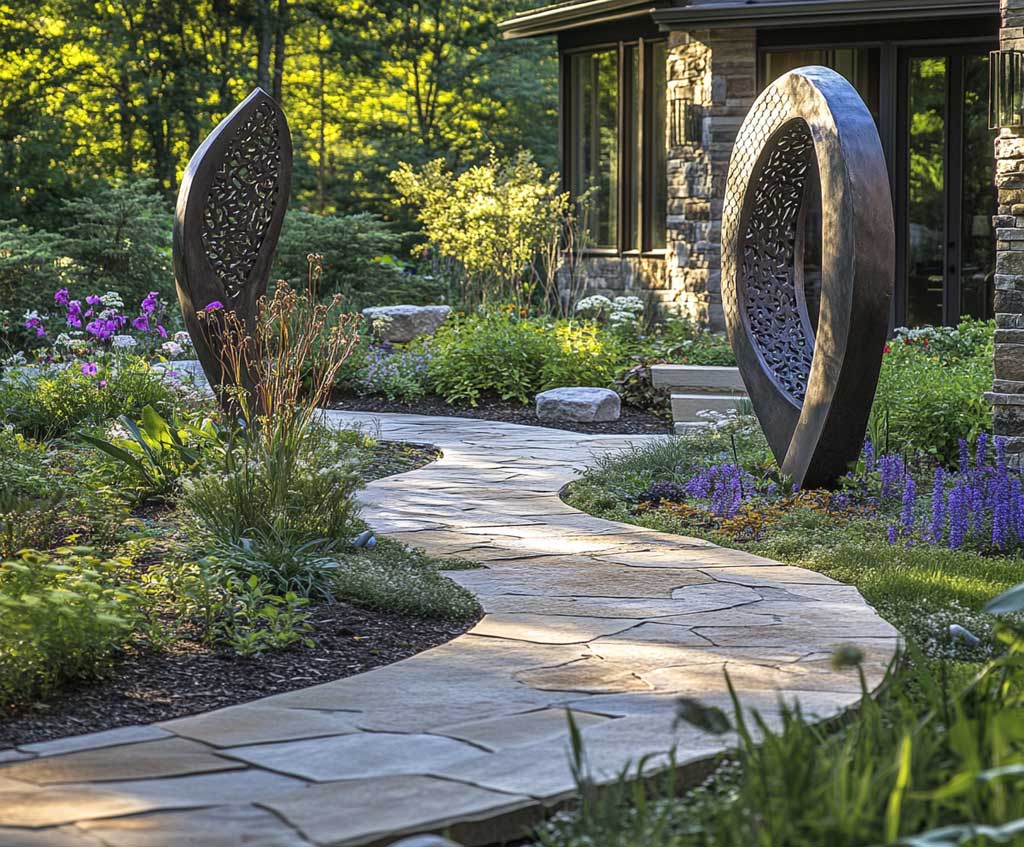
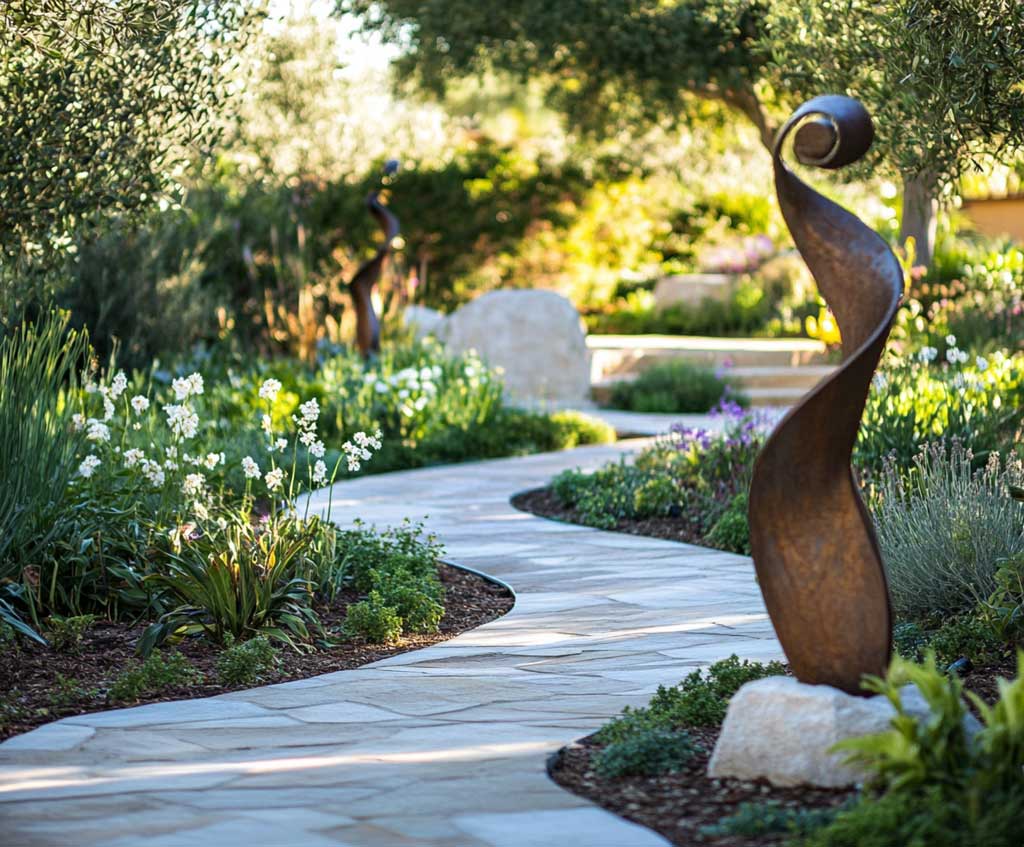
- Space accents so only one piece is fully visible from any point on the walk.
- Alternate sides of the path; don’t line pieces up like fence posts.
- Scale each piece to the plants beside it, since a 2 ft sculpture disappears next to 3 ft grasses.
- Set heavier pieces on compacted gravel, not straight onto soil.
- Repeat one material, such as weathered steel or granite, at least 3 times along the route.
Nature-inspired motifs such as leaves, herons or seed heads blend into planting, while geometric pieces stand out against it. Which reads better? In a dense cottage border, abstract shapes supply needed contrast, while in a sparse modern bed organic forms soften the lines. Path lights cost $50 to $150 per installed fixture, and spacing them 6 to 8 feet apart gives each sculpture its own pool of light. The landscape lighting cost breakdown by fixture type puts a typical professional system at $2,000 to $4,500.
Modern Metal Pieces for Minimalist Front Yard Art
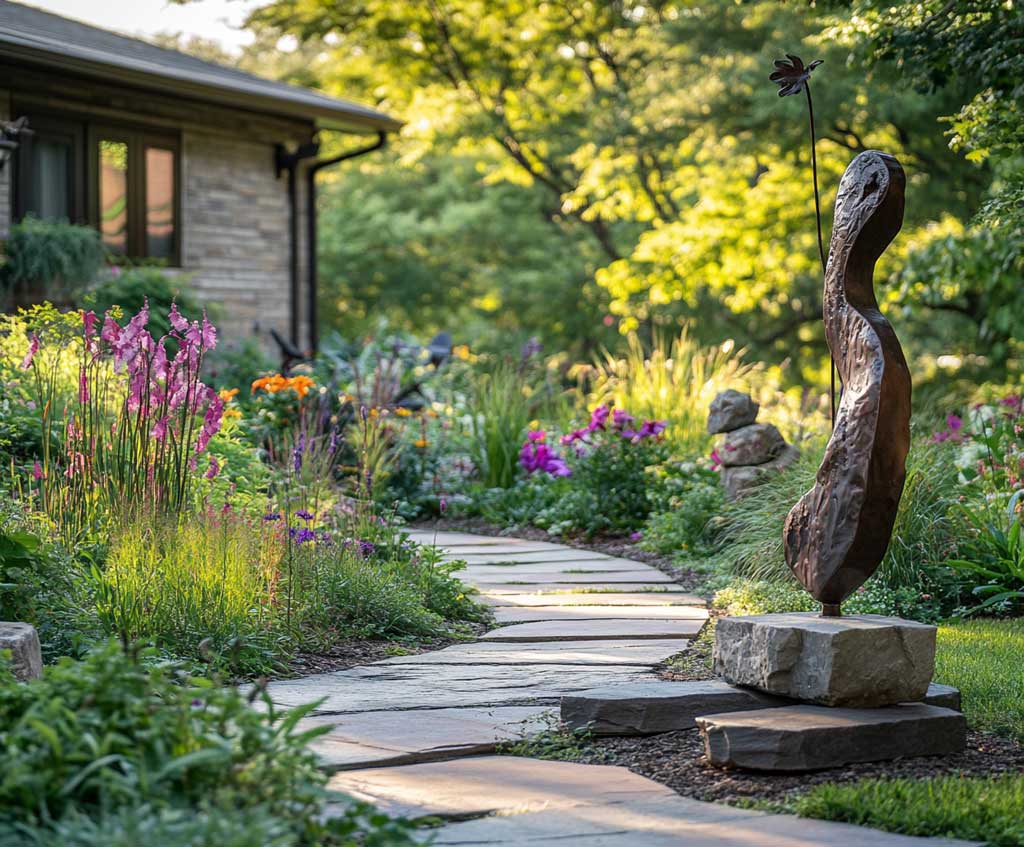
Modern front yard art in chrome, stainless steel, glass or acrylic brings clean lines that contrast sharply with organic planting. The look depends on restraint, with one or two metal pieces set against clipped hedges and monochrome groundcover rather than five competing shapes. Think of a well-tailored suit, where one sharp accessory carries more weight than a pile of jewelry. Resist ringing the base with colorful annuals, because bright flowers fight the graphic outline.
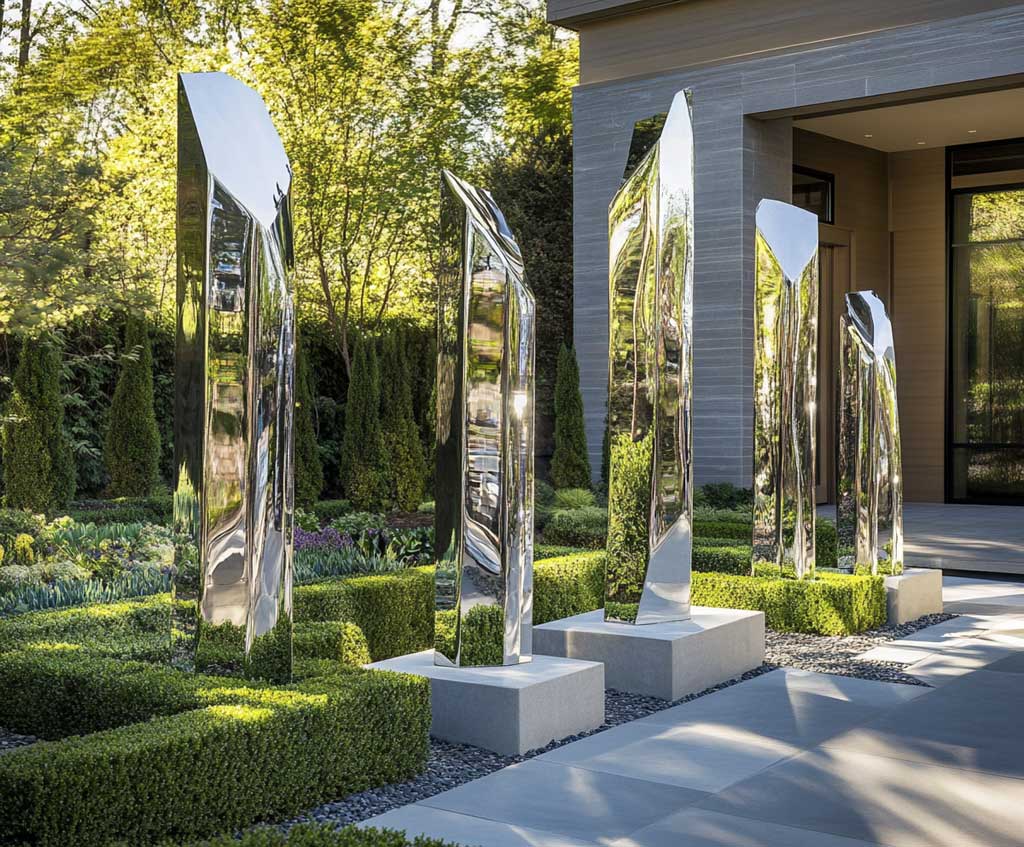
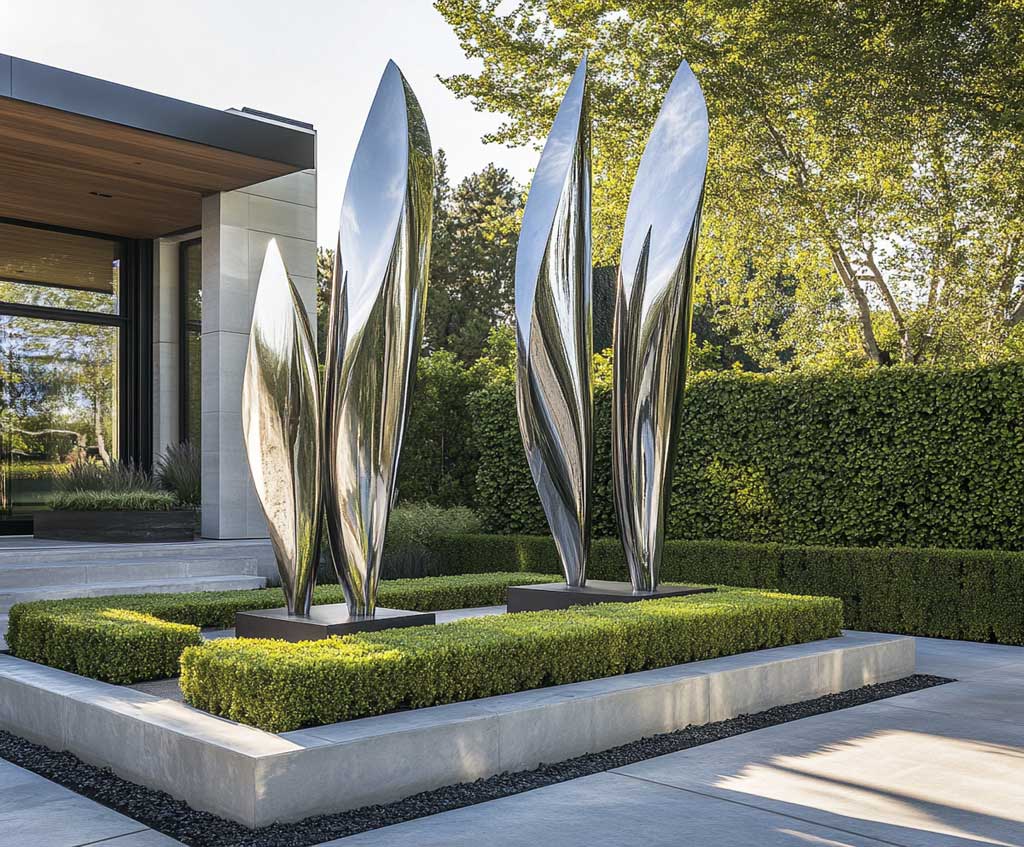
Metal ages very differently depending on the alloy. Polished stainless and chrome hold their shine with occasional washing, corten steel turns a rusty orange-brown, and bronze slowly darkens toward brown and green. Raw bronze alone costs about $4.50 to $9.50 per pound before casting, which is why even a modest 24–28 inch bronze figure quickly reaches four figures. Is shine or patina the better choice? Shine suits a crisp white or gray facade, while patina suits wood cladding and warm brick.


Light changes how metal reads at night. Uplights at $100 to $400 per installed fixture can graze a brushed surface from below, and LED lamps rated for 25,000 to 40,000 hours keep that effect running for years. Keep the beam narrow on reflective chrome, since a wide flood throws glare toward the street. Pair the piece with straight-edged beds, gravel and one evergreen species repeated in odd numbers for a calm frame.
Stone Art Landscaping With Boulders and Carvings
Stone art landscaping relies on weight and texture rather than polish, so it suits yards that aim for calm over drama. Large weathered boulders, a single monolith or a few hand-carved basins bring the feel of earth art landscaping onto a residential lot. Landscape boulders typically cost $150 to $350 per ton, with an average near $250, though rare colors and shapes push single stones much higher. Avoid buying bagged rock for a feature like this, since small stones never carry the weight a focal point needs.

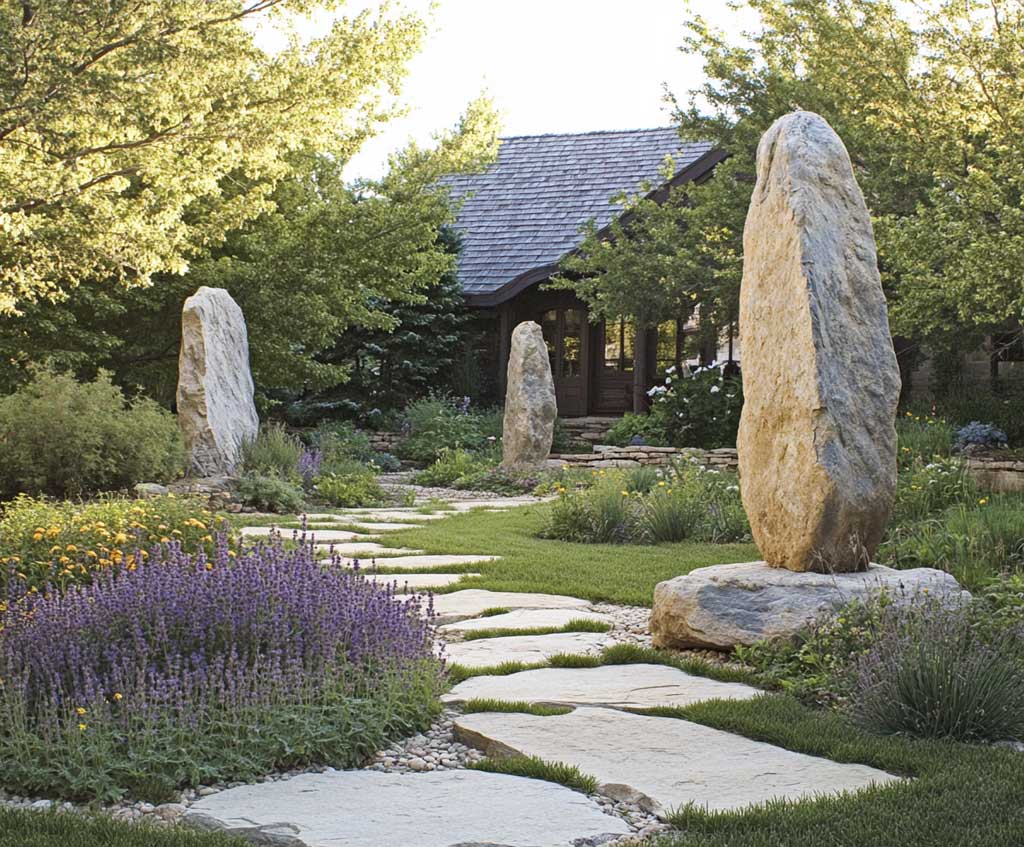
Weight shapes the installation as much as the look. Sandstone weighs roughly 150 pounds per cubic foot, while granite and limestone average about 175, so a granite piece of the same size needs heavier equipment and a firmer base. Placing a single 1–3 ft boulder typically costs $300 to $1,200, and a 3–5 stone layout usually takes a crew 4 to 8 hours. Why does grouping matter? Odd-numbered clusters look like a natural outcrop, while evenly spaced stones look like they rolled off a truck.
Don’t Do This
Don’t scatter a dozen small rocks evenly across a bed like spilled marbles. A 3–5 stone cluster with one dominant boulder reads as deliberate, needs a single 4–8 hour install instead of fiddly placement, and gives you one spot to light instead of twelve. Don’t set a heavy stone straight onto lawn either, because without a compacted gravel base it can tilt after the first freeze-thaw season.


Rough stone contrasts best with soft planting. Ornamental grasses, creeping thyme and native perennials around the base act like fabric draped over a plinth, softening the edges without hiding the mass. Moss and lichen will settle on porous stone over time, which most designers treat as a bonus rather than a flaw. Leave the surface unsealed and unpainted so weathering can do its slow work.
Water Features Paired With Sculptural Accents
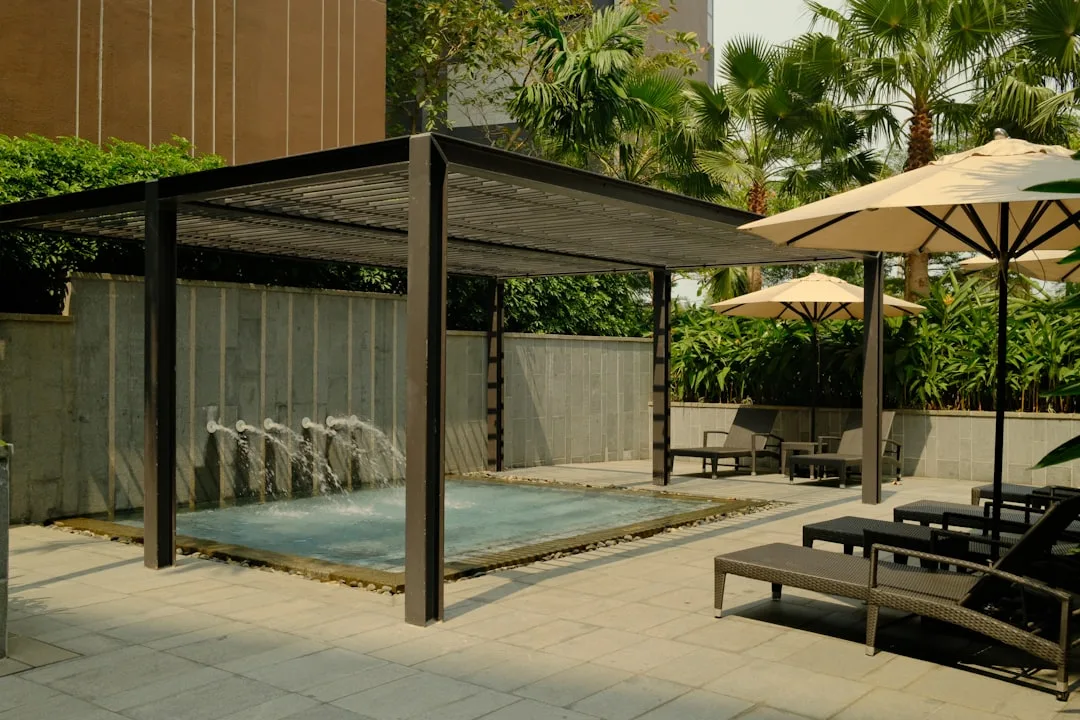
Water features with sculptural accents add sound and movement, two things a static statue cannot offer. A small fountain beside a stone or metal piece works like background music in a café, barely noticed yet making the whole space feel calmer. Installing an outdoor fountain averages around $2,700, with a typical range of $150 to $10,650 depending on size and site access. Don’t place a fountain far from a power source without pricing the trenching first, since electrical work is often the surprise line on the invoice.

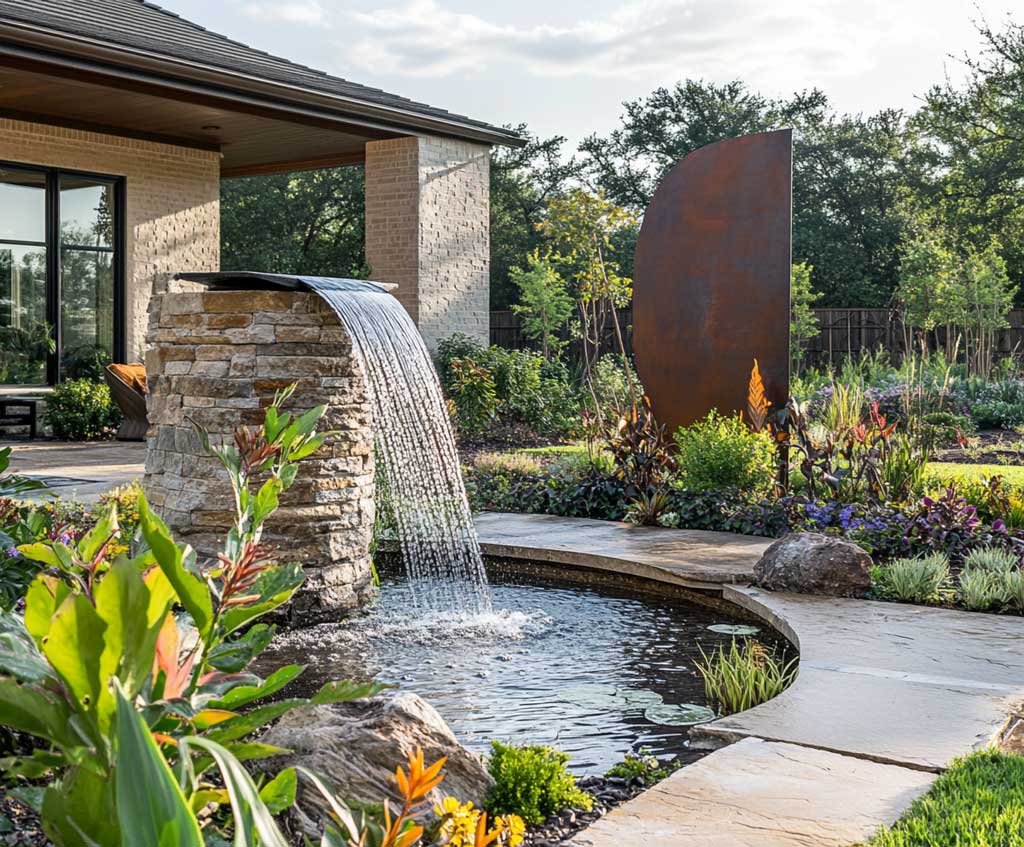
Self-contained vs in-ground is the first decision. Self-contained fountains recirculate water inside the unit and usually cost $50 to $5,000, while setups with ponds and waterfalls often start around $450 and can pass $10,000. Birdbath-style fountains, priced roughly $40 to $1,100, suit small yards where a full pond would swallow the space. For more fountain, stream and wetland options, see these garden water features that go beyond ponds.

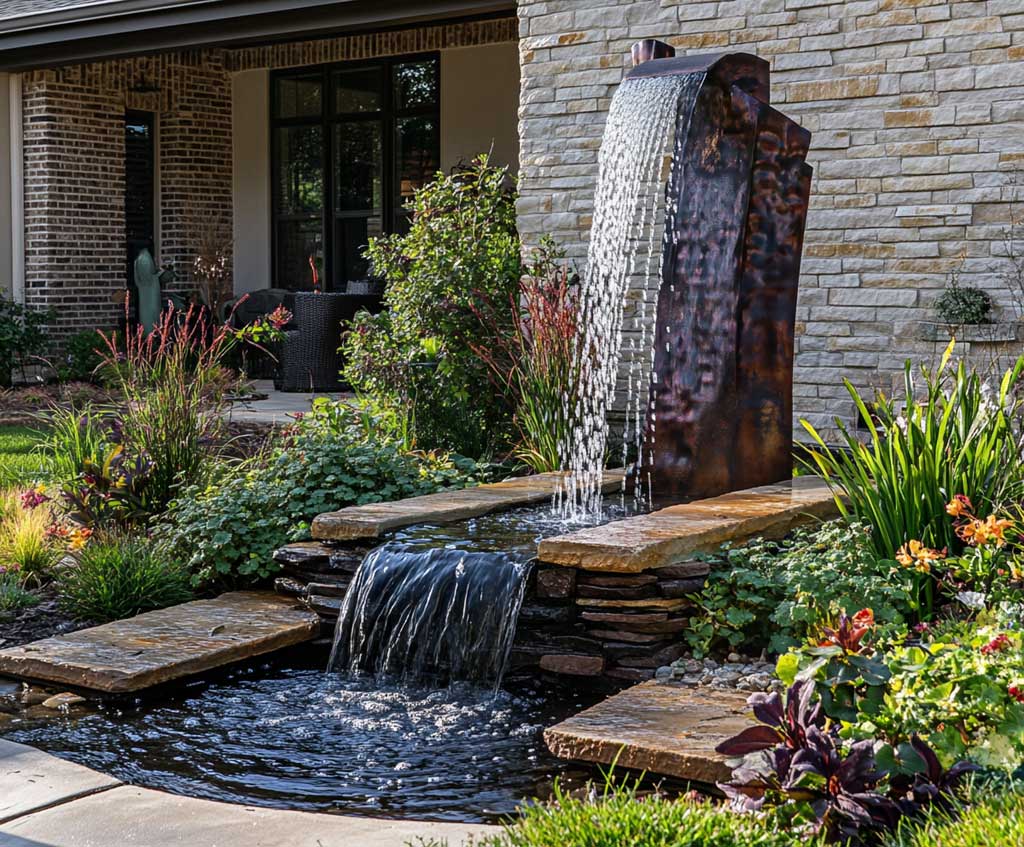
Maintenance decides whether the feature stays a pleasure or becomes a chore. Plan to drain and clean the basin, pump and tubing every one to three months, or budget about $50 to $150 a month for a professional service. Does a solar pump make sense? It suits small bowls and trims the power bill, but larger tiered fountains usually need a wired pump to keep a full cascade. Soften the basin edge with ferns, ornamental grasses or low sedges so the sculpture sits in a planted frame rather than on a bare concrete ring.
Comparing Front Yard Art Materials and Costs
Budgets for sculpture and stone swing widely, so it helps to see the main options side by side. The ranges below reflect typical retail and installed prices from contractor cost guides. Read the upkeep column as carefully as the price column, because a cheap piece that needs monthly attention can cost more in time than a pricier one that needs none.
| Option | Typical cost | Lead time or install | Yearly upkeep | Best match |
|---|---|---|---|---|
| Resin statue (1–2 ft) | $300–$1,200 | Ships in a few weeks | 1–3% of price | Budget beds, mild climates |
| Bronze statue (3–6 ft) | $2,000–$20,000 | Several months if custom | 1–3% of price plus patina care | Formal and traditional entries |
| Landscape boulders | $150–$350 per ton | 4–8 hours for 3–5 stones | Near zero | Naturalistic and dry gardens |
| Flagstone sculpture path | $15–$30 per sq ft | Multi-day install | $10–$50 per cleaning session | Daily-use entry walks |
| Sculptural fountain | About $2,700 installed | 1–2 days for basic setups | Clean every 1–3 months | Quiet, sheltered yards |
The Short Verdict
One focal piece, lit and framed by planting, beats a yard full of ornaments every time. A small resin statue from around $300 plus a $100 to $400 spotlight gives most front yards a clear anchor. That pairing costs far less than a new walkway and changes the street view just as much.
Match the material to your climate and facade. Bronze and natural stone justify their price where winters are harsh and the architecture is traditional, while resin and aluminum fit mild climates and tighter budgets. Boulders at $150 to $350 per ton remain the lowest-upkeep option of all.
Add water only if you will maintain it. A fountain averaging about $2,700 installed needs cleaning every one to three months, so a dry sculpture is the smarter pick for weekend-only gardeners. A small self-contained bowl is a low-risk test before committing to a larger feature.
Plan lighting with the piece, not after it. LED lamps rated for 25,000 to 40,000 hours and professional systems that last up to 15 years make night lighting a one-time decision. Cable laid before planting costs far less than trenching through finished beds.