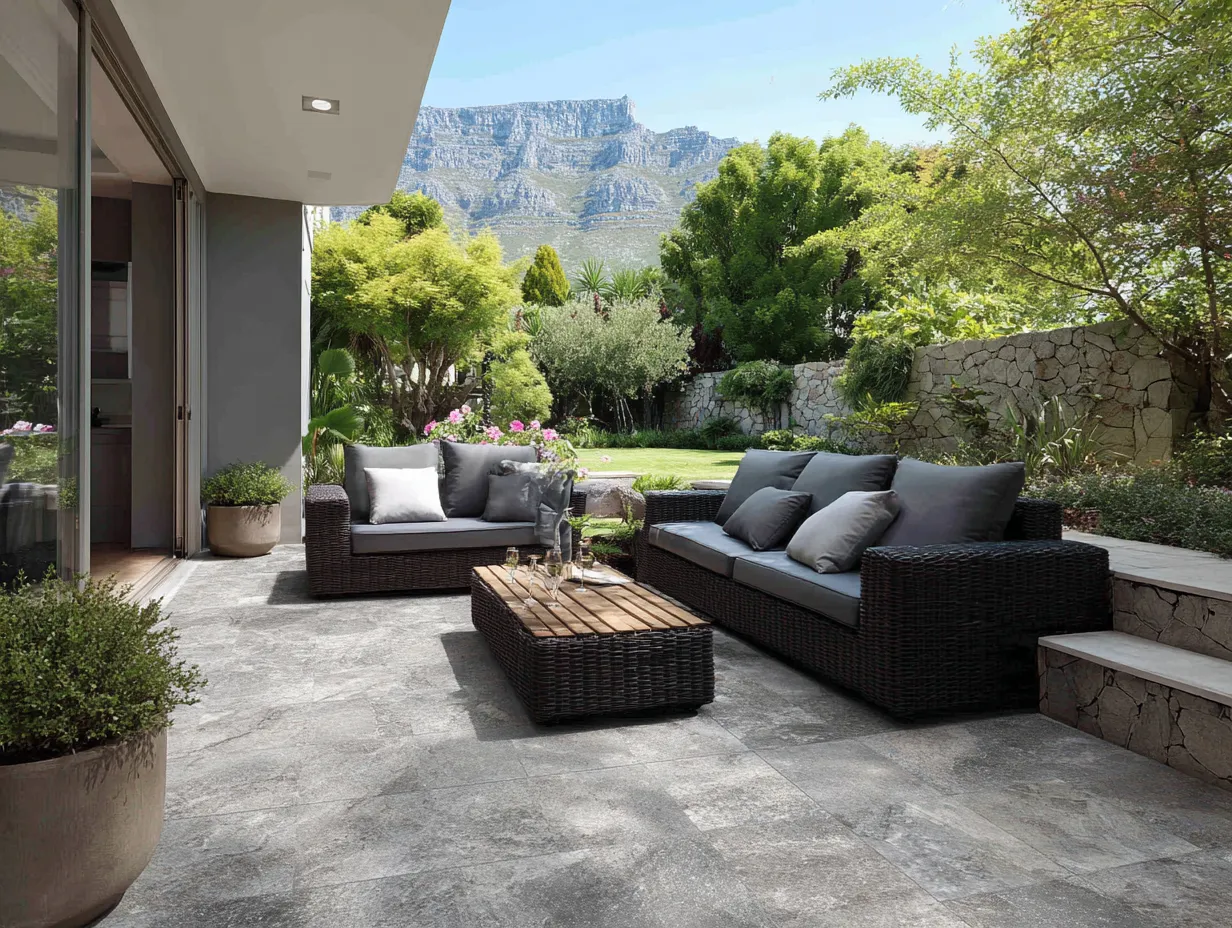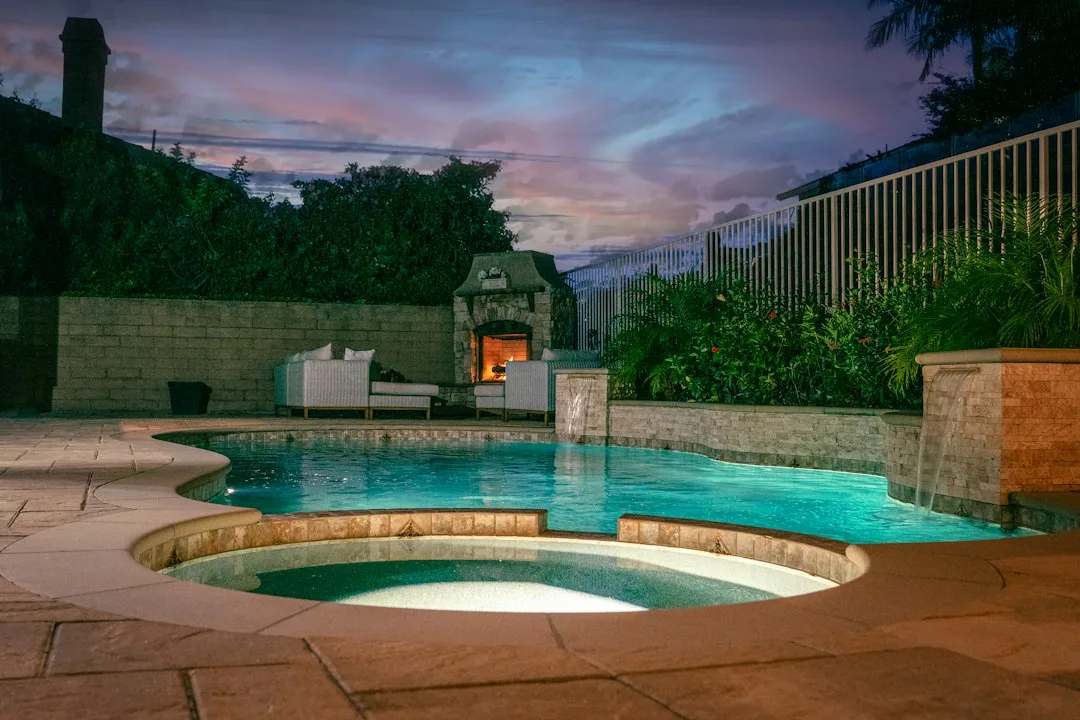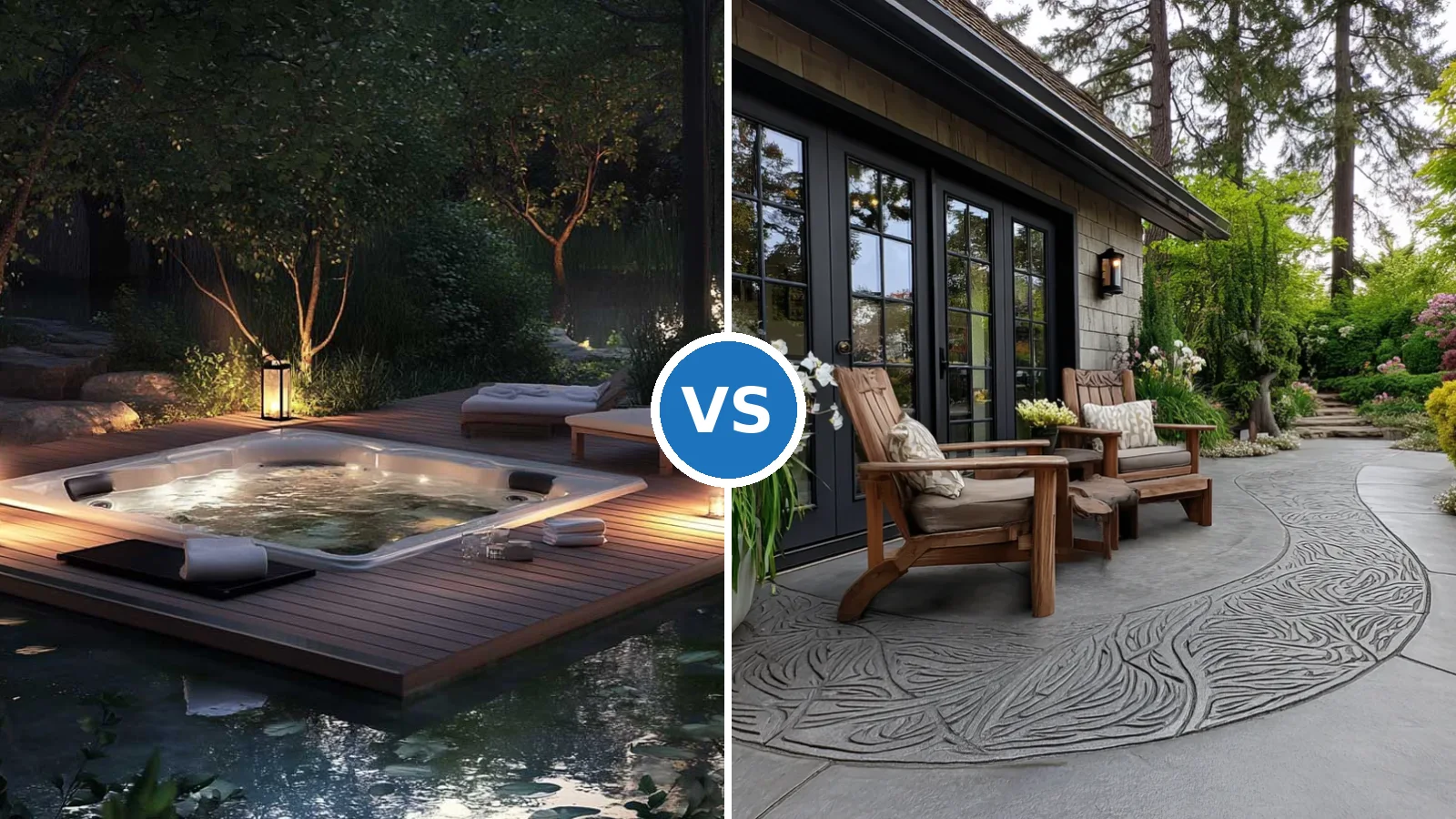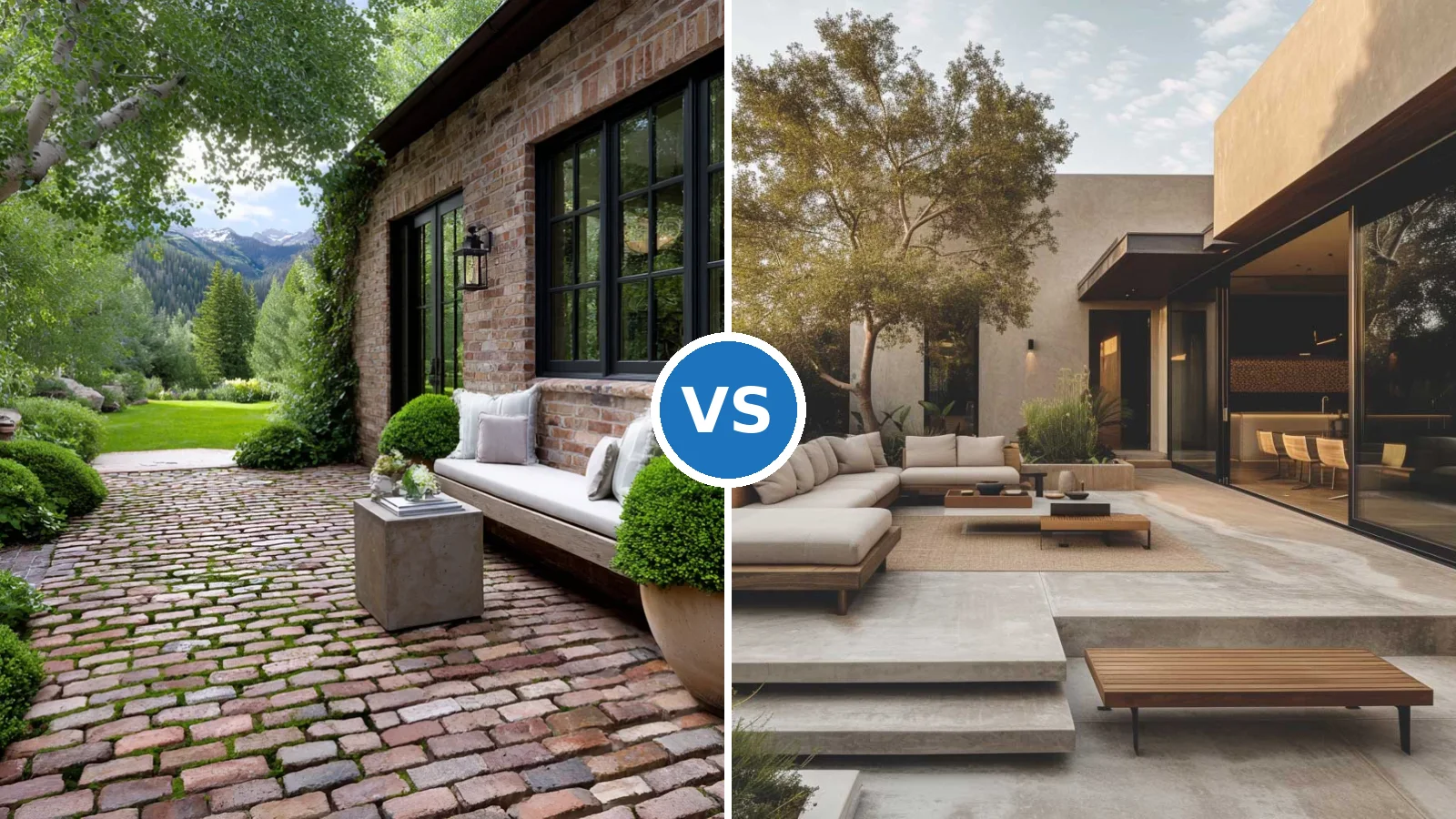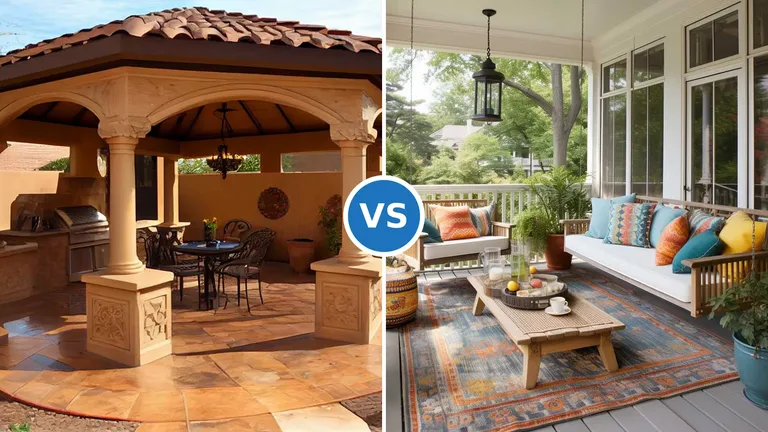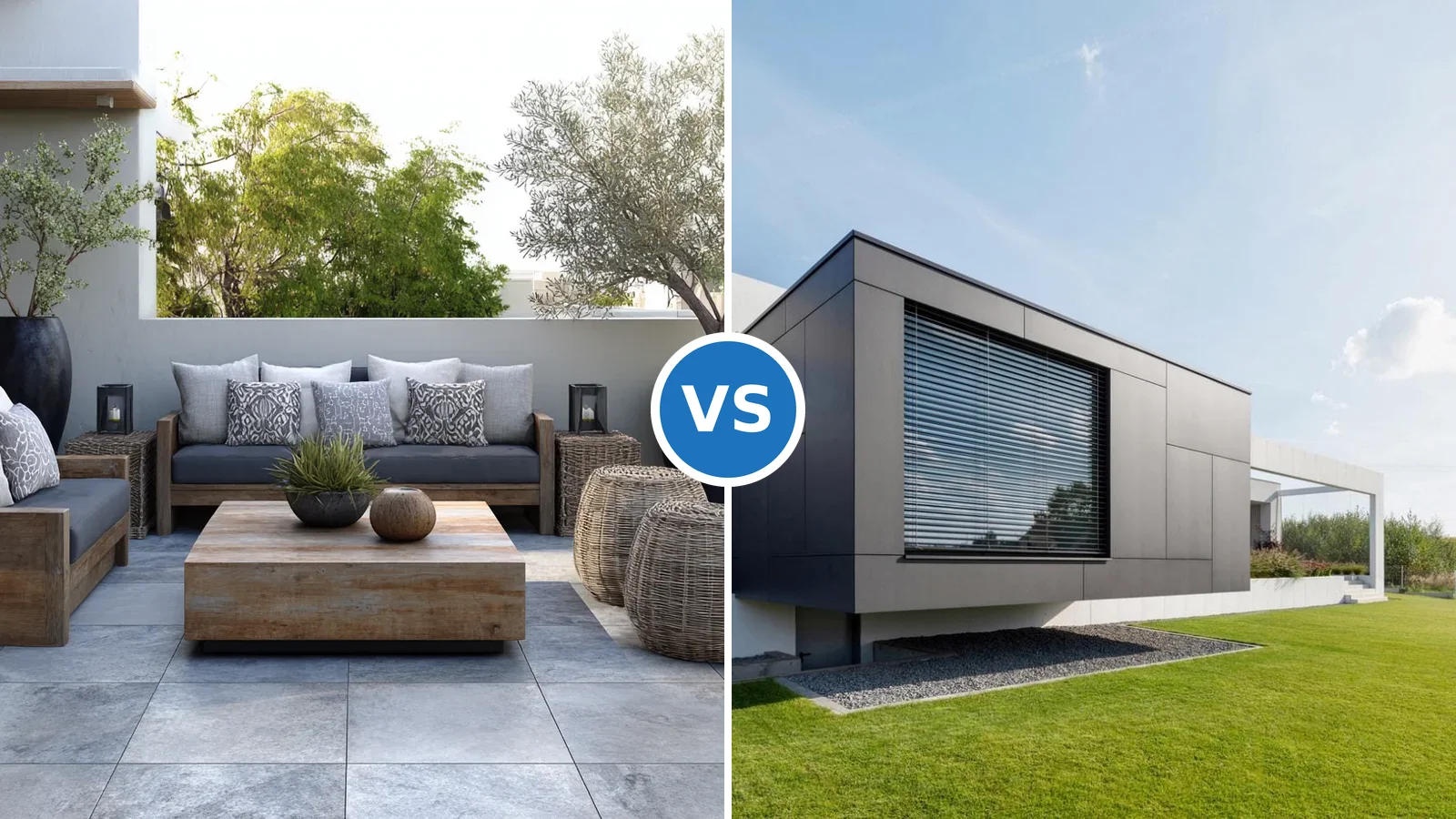
Outdoor tile vs concrete is really a choice between a patio surface you assemble piece by piece and one you pour as a single slab. Tile suits people who want a specific look and the option to replace one damaged piece later; a poured concrete patio suits people who want a quick, simple installation and a clean, continuous surface. Here, the question is read as comparing tile and concrete as patio surfaces, since the search phrase itself does not say which kind of tile or finish.
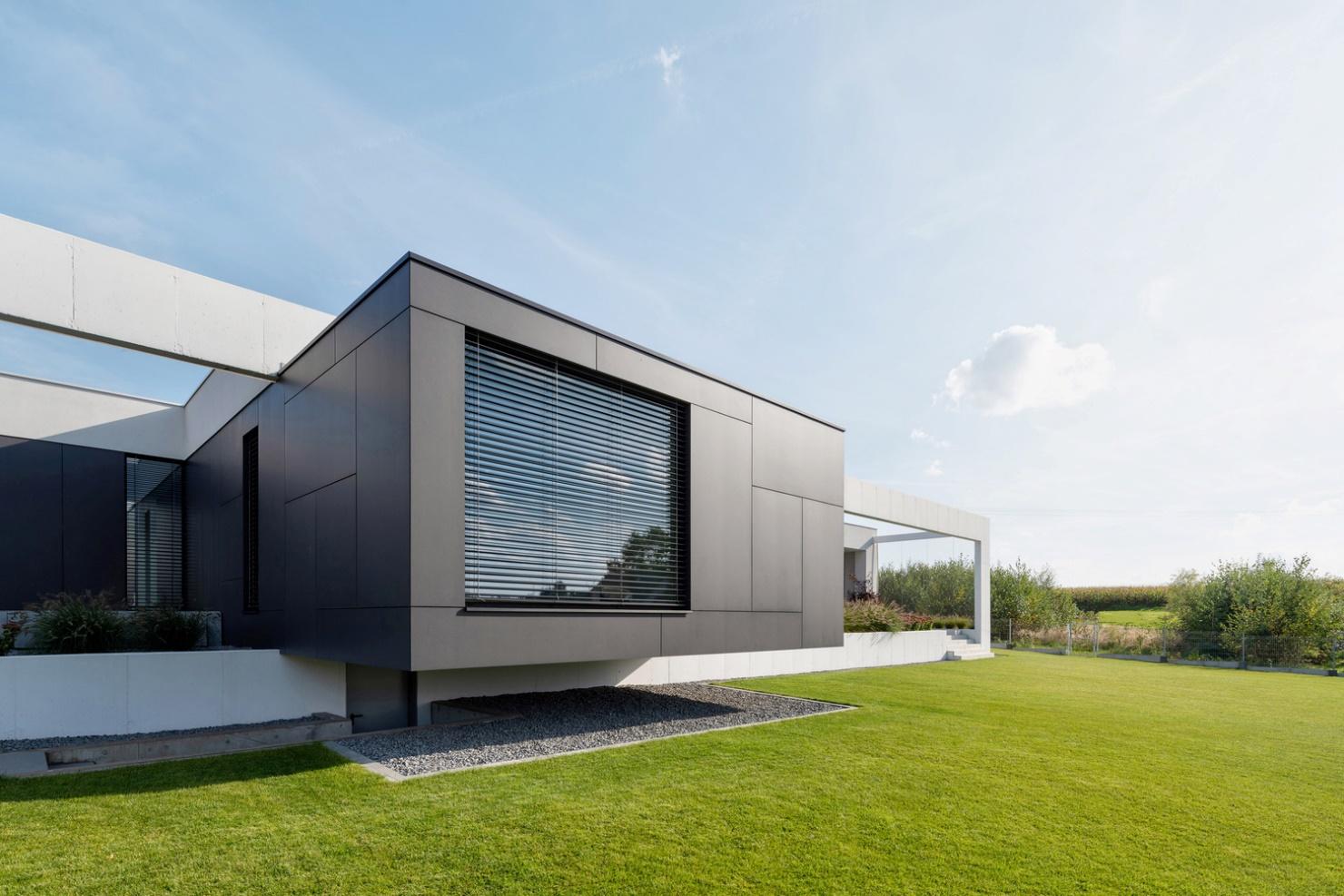
Both can last for years when they are chosen and installed for the local climate, so the decision usually comes down to look, installation effort and what happens when something goes wrong. Our article on gray outdoor tile ideas covers the tile side in detail, while this minimalist concrete house shows how concrete looks when it is used as a design material.
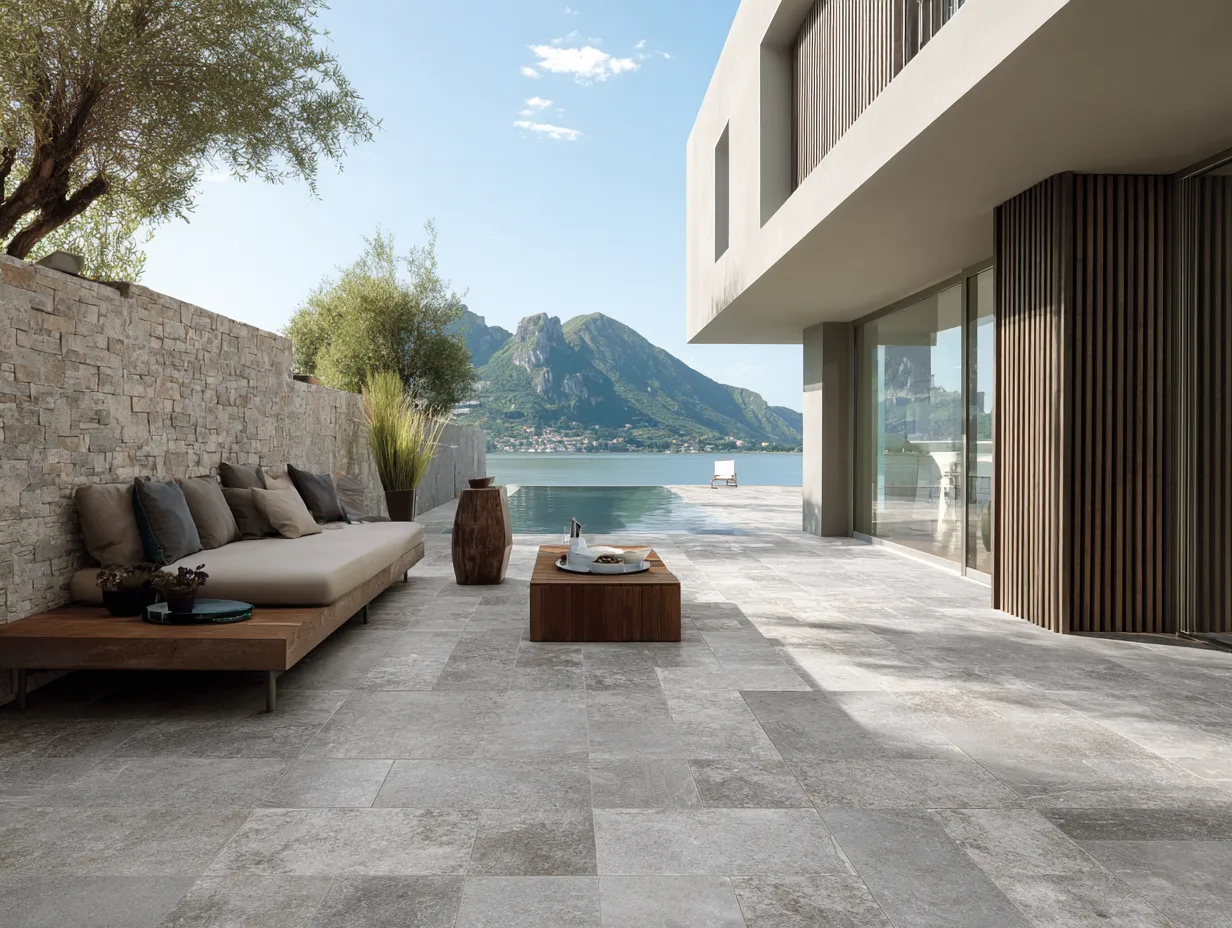
What outdoor tile and a concrete patio are
Outdoor tile for a patio is usually porcelain or natural stone, laid in individual pieces with grout lines between them. Porcelain is the budget-friendly route, and natural stone such as slate or bluestone costs more and behaves differently in freeze-thaw climates. Concrete is poured on site, finished while wet, and left to cure as one continuous surface, which can be left plain or stamped, stained or sealed.
Quick Verdict
- Choose outdoor tile if you want a particular pattern, color or stone look and want to be able to replace a single damaged piece.
- Choose a concrete patio if you want the fastest installation and a smooth surface with no grout lines to maintain.
- Choose either one only after checking it suits your winters: tile needs a real frost rating, and concrete needs to be sealed and kept in good repair.
Outdoor tile vs concrete on the points that matter
The table below summarizes where each surface comes out ahead. Every row shows a real difference rather than a tie, and the sections after it explain the reasoning.
| Criteria | Outdoor tile | Concrete patio |
|---|---|---|
| Starting cost | Light gray porcelain tile material starts around $3 to $5 per sq ft, before labor | A basic poured surface can start at about $4 per sq ft; stamped and stained finishes cost more |
| Installation | Slower and more labor-intensive, with grout to apply and seal | Faster: a crew can pour it in a few hours, plus curing time |
| Appearance | Wide choice of colors, sizes, stone looks and patterns | Cleaner, continuous surface; patterns depend on stamping or staining |
| Repairs | Replace the damaged tile alone | Harder to repair once it cracks |
| Upkeep | Grout lines need sealing, and darker grout hides dirt better | Surface is resealed every 1 to 3 years |
Cost and installation time
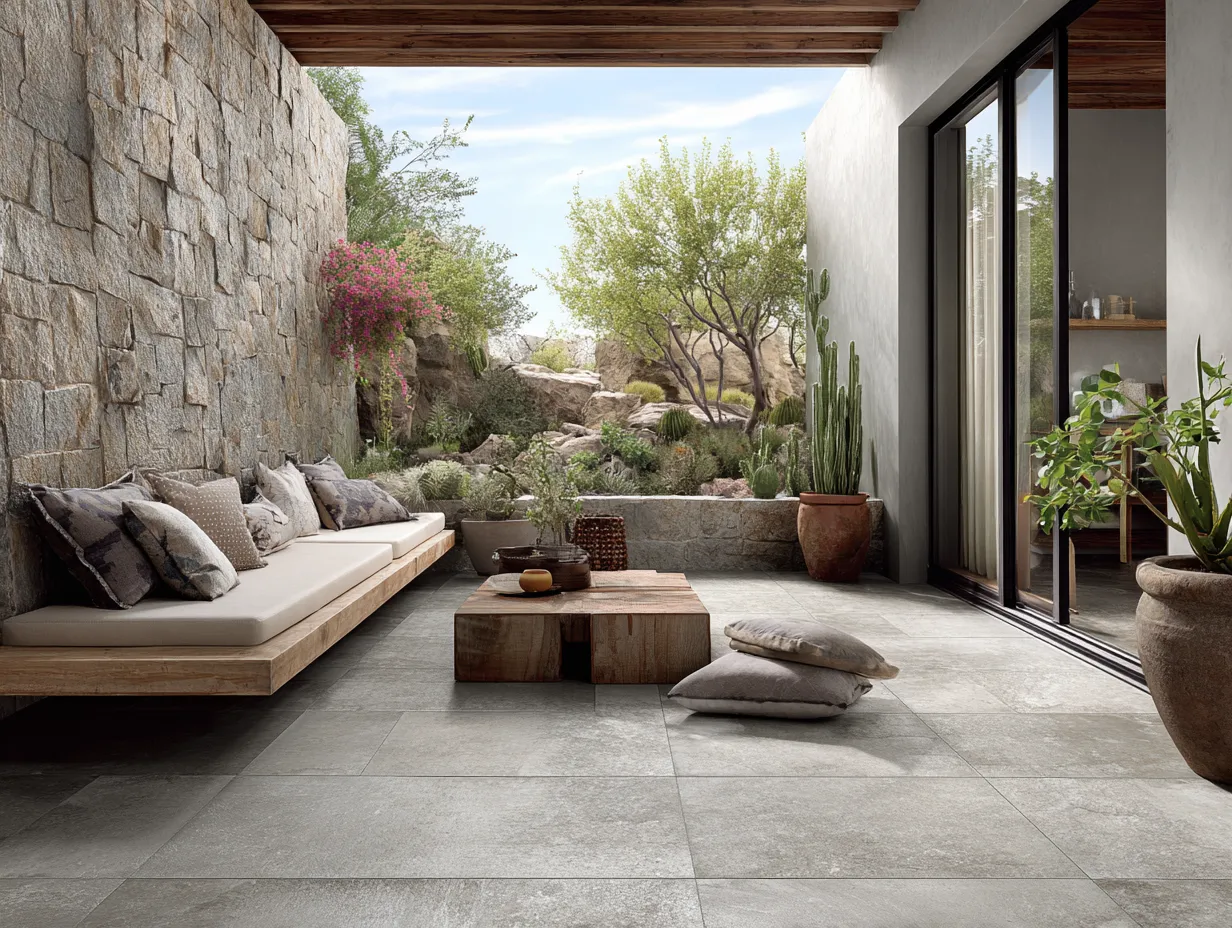
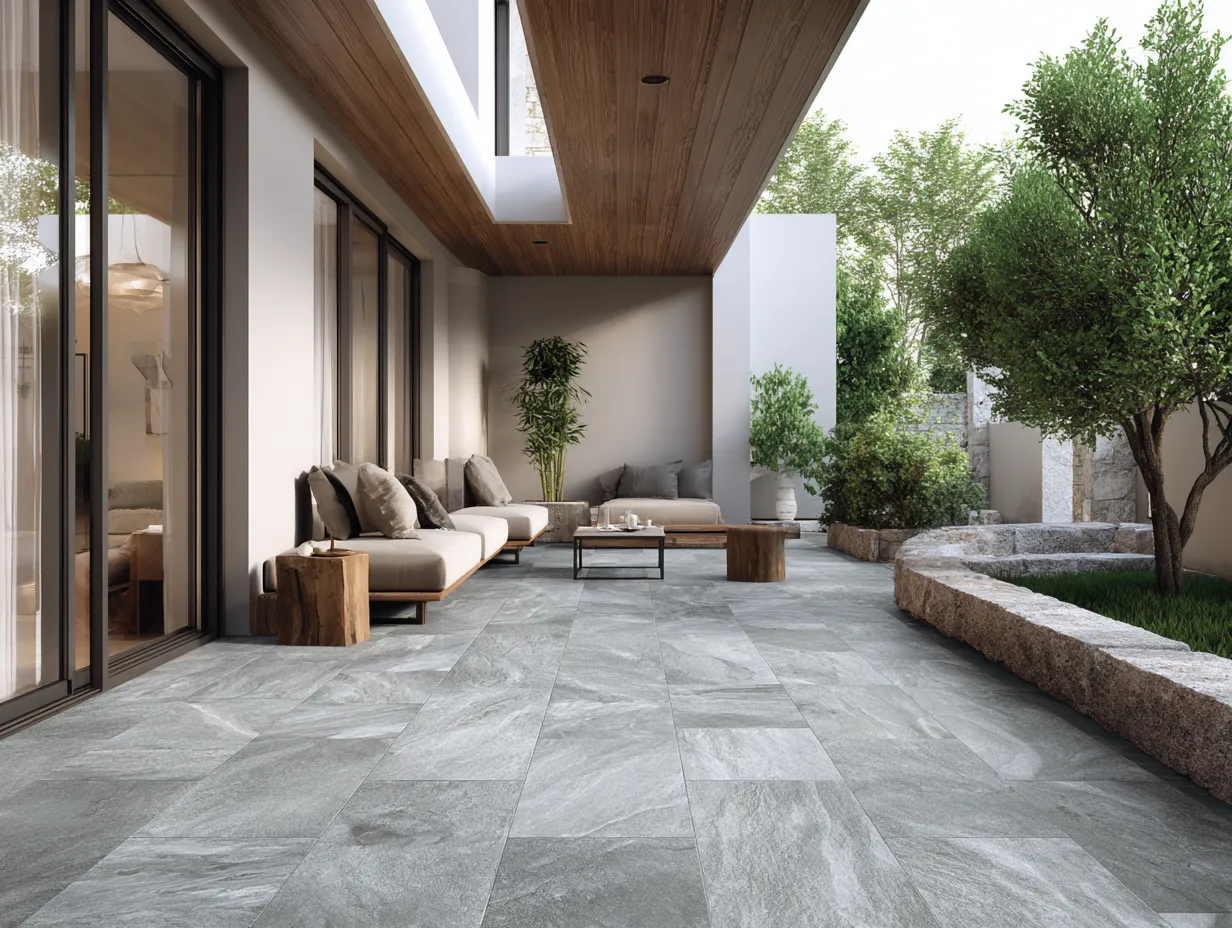
At the low end, the two start in similar territory. Our source on gray tile puts light gray porcelain at about $3 to $5 per square foot for the material, with natural stone higher, while Bob Vila says a basic poured concrete surface can start at about $4 per square foot, with stamped finishes starting around $5 and stained ones from $5 upward. The tile figure excludes labor, so a direct comparison needs an installed quote for each.
Installation time is where concrete clearly leads. Angi notes that a local concrete company can handle a patio pour in just a few hours, not including drying time, while unit surfaces take longer to lay. Tile adds grout and sealing on top of the laying itself.
Durability, cracking and repairs
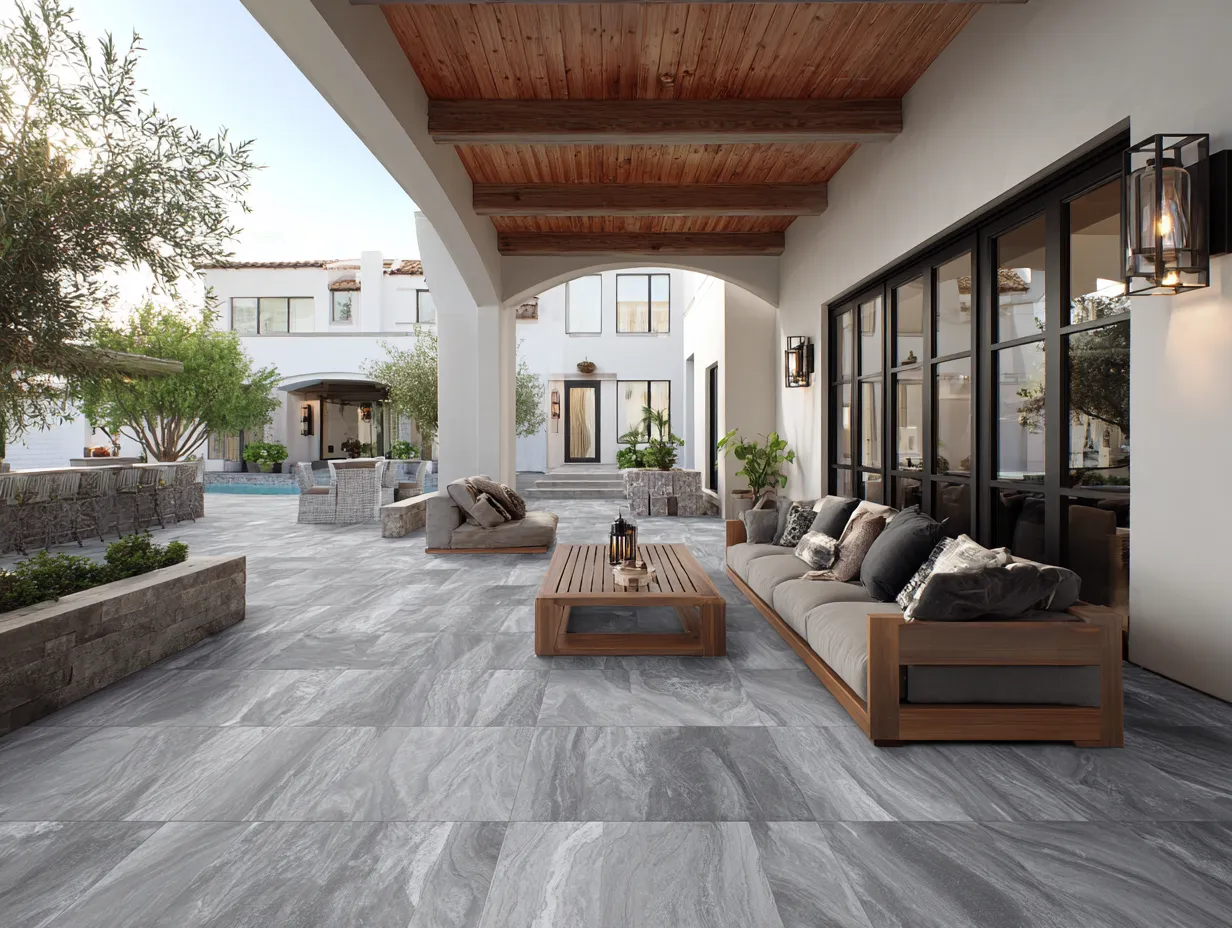
Concrete is a single rigid slab, and Angi points out that it has little give when the ground underneath shifts or settles, which is how cracks appear. Tile is made of many small pieces, so one failure stays local: a cracked piece can be lifted out and replaced instead of patching a slab. That repair advantage is one of the strongest arguments for tile.
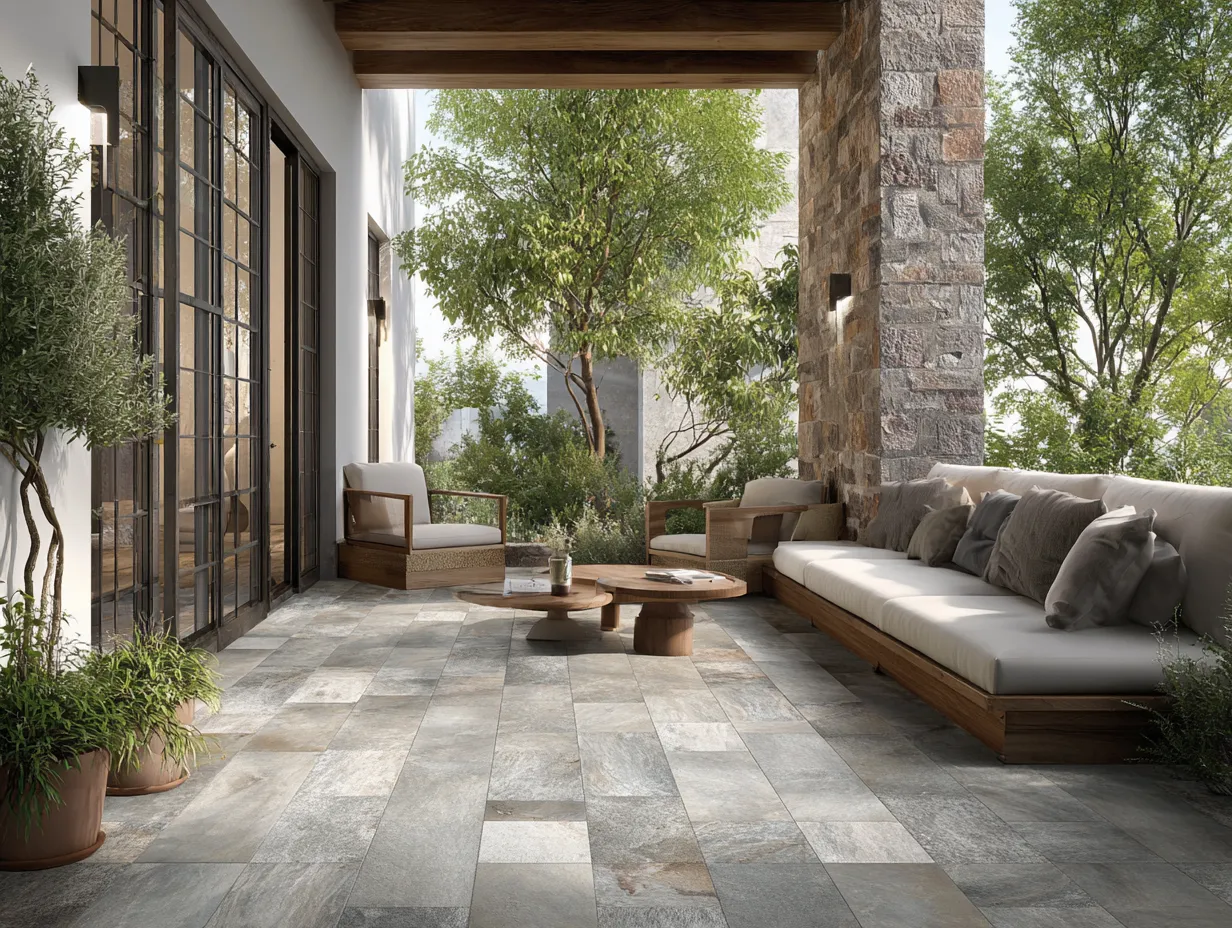
Tile has its own durability condition. The gray tile article advises a water absorption rate under 0.5% and a real frost-resistance rating in freeze-thaw climates, because tile that is only labeled indoor/outdoor can crack after a winter. Concrete does not have that labeling problem, but it still needs sealing and upkeep to stay in good shape.
Grip, grout and upkeep
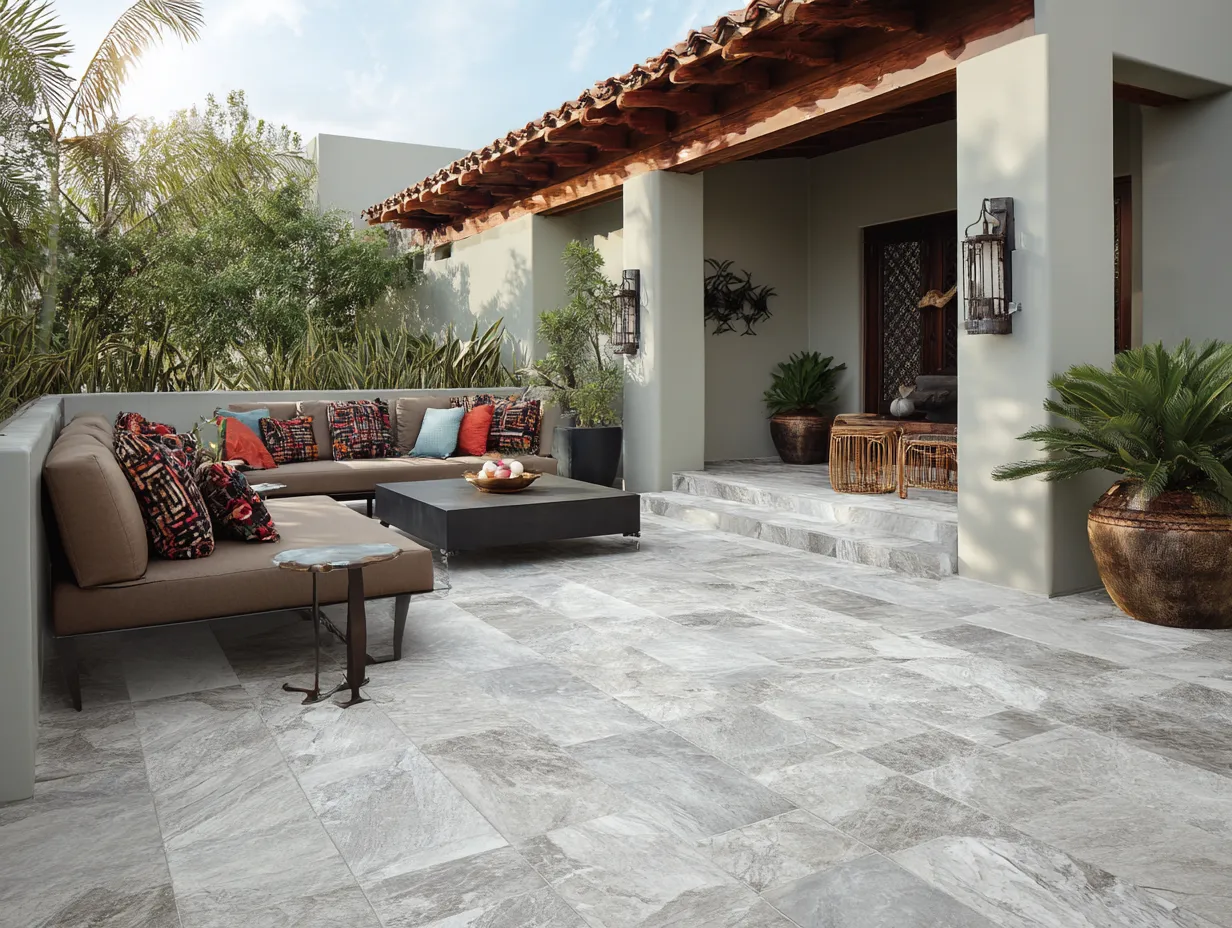
For wet areas such as a pool surround, our tile source recommends a slip coefficient (COF) above 0.6, which is worth checking on the product data sheet rather than assuming. Grout choice also affects maintenance: going one shade darker than the tile and sealing it helps it stay clean, while white grout on light gray tile can stain quickly.
Concrete skips grout entirely, which makes day-to-day cleaning simpler, but Angi says it should still be resealed every 1 to 3 years. Neither surface is maintenance-free; they simply ask for different chores.
The most common mistake when choosing
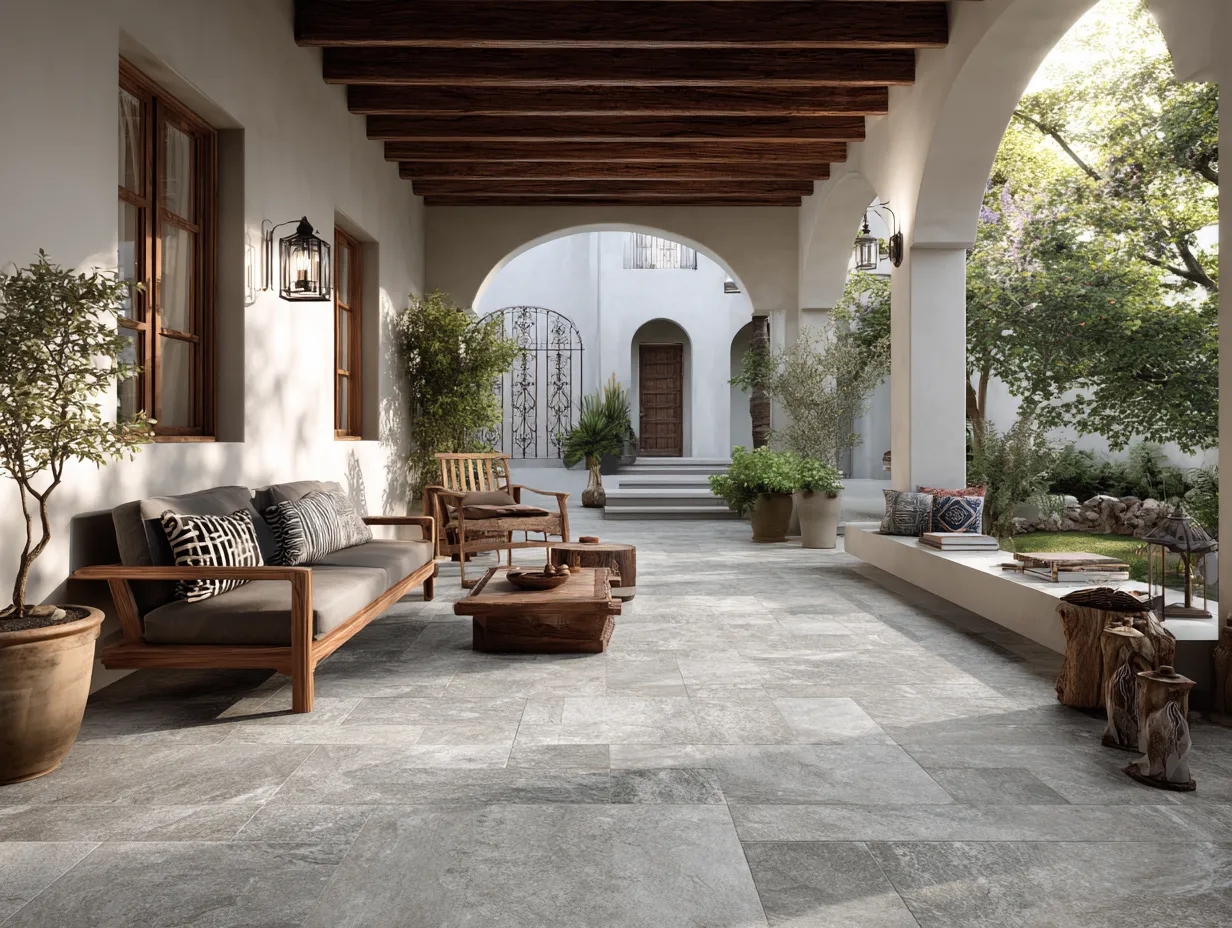
The most common mistake is choosing tile on looks alone without checking the frost rating. A product that looks perfect in a showroom but is not rated for freezing temperatures can crack within a single winter, and a full patio replacement costs far more than the saving on the original tile. The mirror-image mistake with concrete is skipping sealing and ignoring small cracks, which allows them to widen over time.
Who should choose which
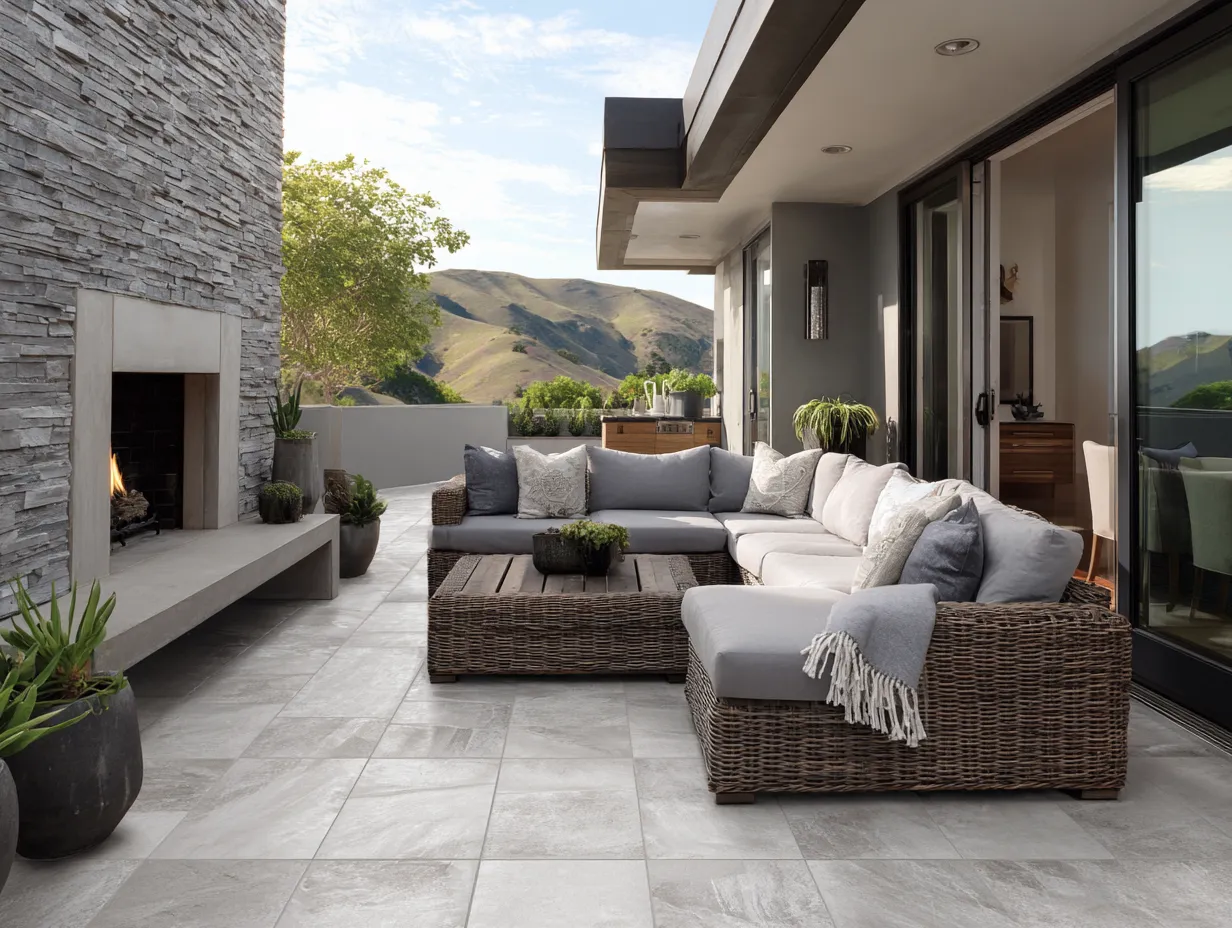
Choose outdoor tile if appearance matters most, you want large-format or stone-look surfaces, and you would like repairs to be limited to one piece at a time. Choose a concrete patio if you want the quickest installation, a smooth surface and fewer decisions to make. In a freeze-thaw climate, either option works only if it is chosen and prepared for that weather, so confirm the frost rating for tile and plan regular sealing for concrete.