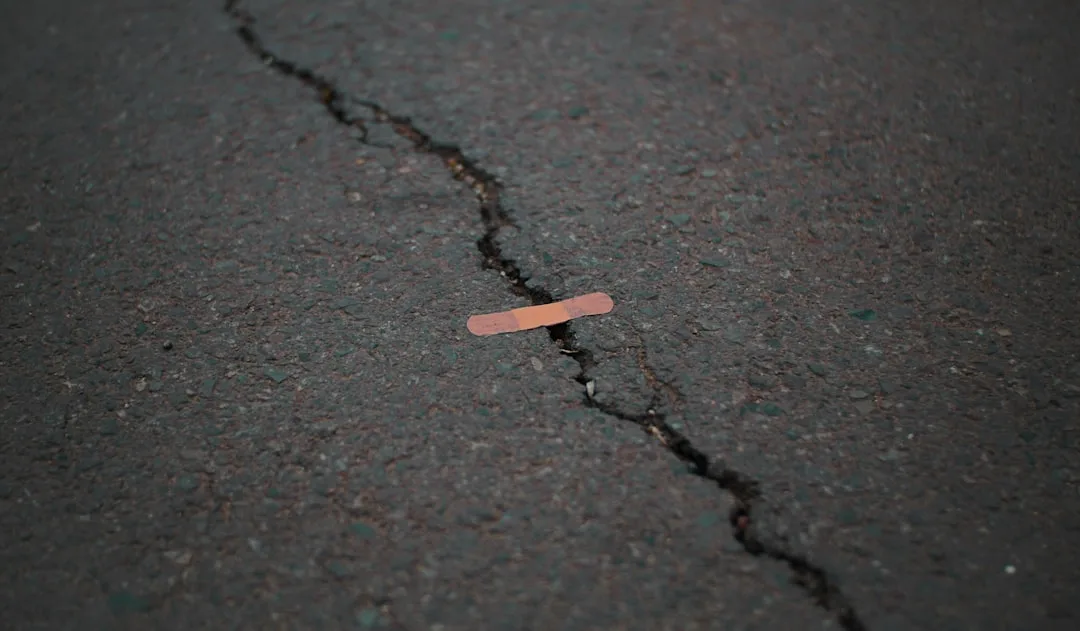
A hairline fracture runs across a three-year-old concrete driveway. The owner expects replacement costs of $8,000 to $12,000. Instead, microcapsules embedded in the concrete matrix rupture under stress, releasing healing agents that seal the crack autonomously. Self-healing concrete is no longer laboratory speculation — it’s a 2026 material standard reshaping expectations around maintenance costs, structural longevity, and sustainability.
Why Self-Healing Concrete Dominates Material Specifications Now
Concrete accounts for 8% of global carbon emissions. Traditional mixes fail within 20–40 years due to water infiltration, rebar corrosion, and stress cycling. Self-healing concrete extends structural life to 60–80 years by repairing micro-cracks before they propagate into failure zones. This single capability eliminates 30–50% of replacement demolition waste per structure.
Architects and contractors specify self-healing formulas because they reduce lifecycle costs. A standard concrete sidewalk costs $12–18 per square foot; self-healing variants run $18–26 per square foot. Over 50 years, the self-healing option saves $4,000–$7,000 per 1,000 square feet in repair and replacement labor. That’s the difference between reactive patch work and proactive material intelligence.
The trend accelerated because three factors converged in early 2026: climate regulation tightened around embodied carbon, insurance companies began discounting structures with self-healing certifications, and adoption by Dexcraft and Acciona (two major concrete manufacturers) proved commercial viability. This isn’t niche anymore.
Quick Tips
- Specify capsule density of 3–5% by volume for residential patios; commercial foundations need 5–8%
- Healing agents (polymerized linseed oil, sodium silicate) activate only when cracks exceed 0.3 mm width
- Request third-party durability testing (ASTM C1698 compliance) before committing to large projects
- Pair self-healing concrete with permeable subgrades to maximize water drainage and crack prevention
- Budget 18–24 months for full healing cycles; cracks don’t seal overnight
| Product/System | Capsule Type | Cost per sq ft |
|---|---|---|
| Dexcraft HC-100 | Polyurea microencapsules | $22–$26 |
| Acciona Vercrete Self-Heal | Sodium silicate gel | $18–$24 |
| Sika Crystalline AddX | Crystalline mineral pack | $20–$25 |
| Standard reinforced concrete | None | $12–$18 |
| Polished concrete (non-healing) | None | $8–$15 |
How Microcapsule Healing Agents Work Inside the Matrix
Dexcraft HC-100, priced at $22–$26 per square foot, embeds polyurea-encapsulated healing resin directly into the concrete during the wet-mix phase. When hairline cracks form and water enters, capsule walls rupture. The resin polymerizes on contact with moisture, filling voids and re-bonding concrete fragments. This costs 40% more upfront than standard concrete but eliminates $3,000–$6,000 in repair interventions over 15 years for a typical 1,500-square-foot driveway.
Sika Crystalline AddX ($20–$25 per square foot) works differently. It activates dormant mineral particles already present in Portland cement, which crystallize when water penetrates cracks. No external healing agent is needed — the concrete essentially heals itself using its own chemistry. This method performs exceptionally well in wet climates and underground structures where water exposure is constant.
Acciona Vercrete Self-Heal ($18–$24 per square foot) uses sodium silicate gel capsules. When cracks release the gel, it reacts with carbon dioxide in air and calcium hydroxide in cement to form calcium carbonate — essentially new concrete. The mechanism is slower (18–36 months for full seal) but produces permanent structural recovery, not just cosmetic patching.
Where Self-Healing Concrete Fails and What to Avoid
The critical failure mode: contractors assume self-healing concrete eliminates all cracking prevention measures. It doesn’t. A driveway installed over poor drainage, inadequate base preparation, or in freeze-thaw zones will still crack faster than the healing system can repair. One homeowner in Minnesota poured Dexcraft HC-100 concrete in February without proper subgrade thermal insulation. Ground heave fractured the surface within two years — the healing agents activated but couldn’t outpace the structural movement caused by soil expansion. The lesson: self-healing concrete addresses usage cracks and environmental stress fractures, not design or installation failures.