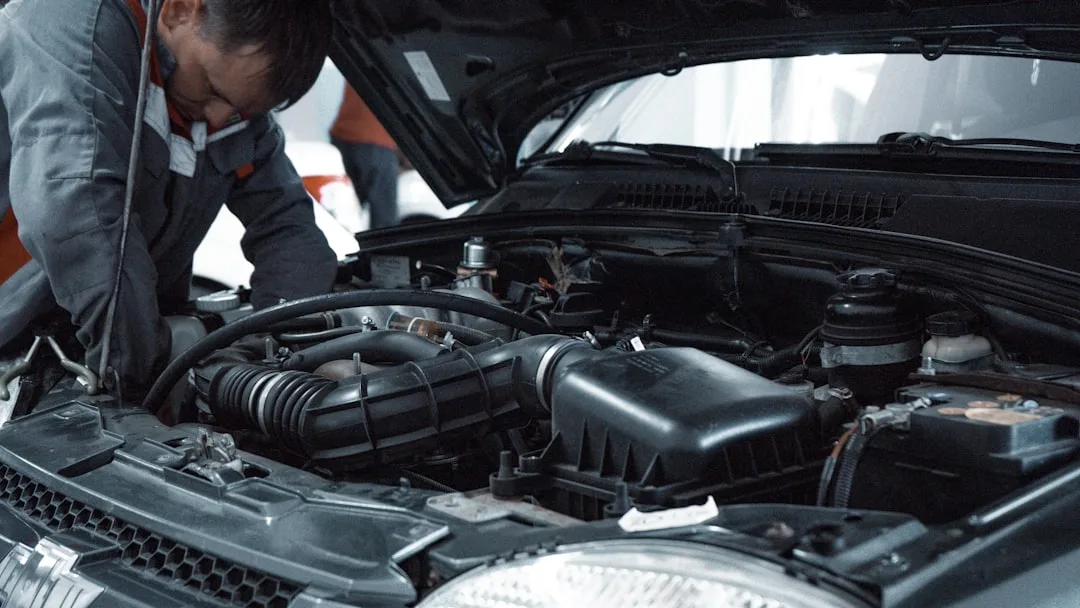
In July 2026, the average driver is no longer asking “How much does this car cost?” but rather “What will it be worth in five years?” Vehicle resale value protection has become the deciding factor in auto purchases, surpassing financing flexibility and monthly payment concerns. New data from Kelley Blue Book shows that 67% of buyers now research depreciation rates before selecting a model, a 23-point jump from 2024.
Why Depreciation Now Matters More Than Price
Luxury brands like Mercedes-Benz and BMW have capitalized on this shift by bundling certified pre-owned programs with extended powertrain warranties that explicitly guarantee 60% resale value retention at three years. This isn’t a minor accessory—it’s become a primary purchase justification.
Honda and Toyota have long dominated residual value charts, but their 2026 strategy pivots harder toward transparency. Honda’s “ResaleGuard” program now publishes real-time market data showing that a 2024 Honda CR-V maintains roughly 72% of its original purchase price after three years. Buyers see this certainty and choose accordingly.
The psychological shift is real. A $32,000 vehicle that depreciates to $18,000 ($14,000 loss) feels worse than a $35,000 vehicle that holds at $25,200 ($9,800 loss)—even though the latter costs more upfront. Buyers are now calculating true cost of ownership, not just sticker price.
Quick Tips
- Check Manheim’s residual value forecasts before test driving any used model
- Prioritize certified pre-owned vehicles with remaining manufacturer warranty—they hold value 8–12% better
- Request a Carfax report showing service history; maintenance gaps slash resale value by up to 15%
- Negotiate warranty extensions at purchase time, not trade-in time, for better leverage
Vehicle resale value protection through warranty structures
Subaru’s “Complete Care” warranty now includes gap insurance and resale-value benchmarking reports sent quarterly. Owners see exactly how market conditions affect their asset, fostering confidence in long-term ownership.
Extended warranties themselves vary dramatically. A five-year, 80,000-mile powertrain warranty on a 2026 Ford F-150 (average cost in the $1,200–1,800 range) protects against engine and transmission failures that would tank resale prospects. Without it, a $45,000 truck becomes a $38,000 liability after one catastrophic failure.
The common mistake: buyers assume warranty is optional overhead. Wrong. A 2023 model with a failed transmission but no warranty drops 25–30% in resale value overnight. One customer in Portland, Oregon purchased a used Nissan Altima without extended coverage; when the transmission failed at 72,000 miles (in year four), dealer repair costs ($4,200) made the car nearly impossible to sell privately, forcing a trade-in loss of $6,500.
| Vehicle Type | 3-Year Resale Retention | Warranty Impact on Resale |
|---|---|---|
| Honda CR-V | 72% | +8% with extended coverage |
| Toyota Camry | 70% | +9% with extended coverage |
| Subaru Outback | 68% | +10% with complete care plan |
| Ford F-150 | 65% | +7% with powertrain protection |
| Nissan Altima | 58% | +6% with comprehensive warranty |
Market data reshapes buyer expectations across segments
Manheim Remarketing, the nation’s largest vehicle auction platform, released June 2026 data showing that certified pre-owned vehicles command 12% price premiums over non-certified used cars because buyers explicitly value resale-protected inventory. A certified Hyundai Elantra with manufacturer backing sells at auction for $2,400 more than an identical non-certified model.
This premium exists because certification guarantees transparency—multi-point inspections, reconditioning standards, and limited warranties reduce buyer risk. When you resell, the next buyer sees that certification badge and trusts value more than they would a private sale history.
Luxury segments show even starker trends. A 2023 Mercedes-Benz C-Class with full factory warranty retains 75% value; without warranty transfer, it drops to 64%. That 11-point gap represents roughly $8,700 on a $79,000 purchase—a staggering swing caused entirely by protection structure.
How buyers now calculate total ownership cost
Edmunds and Kelley Blue Book’s 2026 owner surveys reveal a fundamental mindset shift. Seventy-four percent of buyers now factor resale value into purchase price negotiations, demanding dealer contributions toward extended warranties or paint/interior protection packages.
A buyer considering two identical 2026 SUVs—one at $42,000 with no warranty, one at $43,200 with six-year powertrain coverage—now picks the second option. The additional $1,200 cost is offset by stronger resale retention, recovering roughly $1,800 of the premium when the vehicle trades hands.
Maintenance records amplify this effect. Carfax and AutoCheck reports now display service history prominently, and buyers can see which owners skipped recommended intervals. A well-maintained 2023 sedan with dealer service records commands 7–9% higher resale than an equivalent vehicle with irregular maintenance, even if mechanically identical.
Emerging protection products reshape purchase decisions
New entrants like Carvana and Vroom have launched their own resale-guarantee programs, promising to buy back vehicles at minimum-value thresholds. These contractual promises, though not warranty-style coverage, serve the same psychological purpose: certainty.
Dealership-level protection has evolved too. Ford, GM, and Stellantis now offer “residual value guarantees,” certifying that vehicles meeting specific conditions (annual mileage cap, maintenance compliance) will be purchased back by the manufacturer or affiliated buyers at predetermined prices. A 2026 Chevrolet Equinox with this guarantee provides finality that reduces buyer anxiety about market swings.
Paint protection, fabric guards, and wheel-and-tire programs have shifted from luxury add-ons to essential resale preservation tools. A $400 ceramic paint coating applied at purchase protects against oxidation and UV damage that would otherwise reduce resale appeal by 3–5%, meaning $1,200–2,100 in lost value on a $40,000 purchase.
Smart buyers now view vehicle protection not as cost but as investment—much like how families plan major purchases around long-term ownership horizons. This mentality is reshaping which brands sell, which models command premiums, and which dealers thrive in July 2026’s market.