Minimalist window treatment ideas solve a deceptively simple problem: how to dress a window so it disappears into the room instead of competing with it. The right choice controls light and privacy without adding visual noise, which is exactly what a clean interior needs. If you want the short answer — motorized roller blinds, sheer linen panels, and solid blackout curtains cover roughly 90% of minimalist scenarios and each one does a specific job.
All three approaches share the same underlying logic: nothing decorative that lacks a function, no hardware that draws more attention than the window itself, and no fabric heavy enough to make the room feel smaller. Whether the goal is smart-home convenience, filtered daylight, or total darkness for sleep, there is a clean solution that fits a minimalist interior design framework without compromise.
Installed costs for residential window treatments range from $30 to $600 per window according to current market data, which means budget almost never blocks the look. The choice comes down to function first, then material, then hardware finish — in that order.
- Motorized roller blinds eliminate visible cords, integrate with smart-home systems, and can be programmed to adjust automatically through the day.
- Sheer linen curtains filter daylight without blocking it, adding warmth and texture to rooms that might otherwise feel cold.
- Solid blackout curtains in a neutral tone provide complete light control for bedrooms and media rooms while keeping the design minimal.
- Hardware matters as much as fabric — hidden tracks and understated rods keep the wall clean.
- Cordless and motorized systems are the safer choice for homes with children or pets.
- Mount rods higher and wider than the frame to make windows read larger and walls feel taller.
Motorized Blinds for Minimalist Window Coverings in Smart Homes


Motorized blinds are the clearest expression of minimalist window treatment ideas in a connected home. The operating mechanism disappears completely — no cords, no wands, no hardware cluttering the frame — and what remains is a single roll of fabric that moves on command. Systems compatible with platforms like Google Home or Apple HomeKit allow the blinds to respond to voice commands, smartphone apps, or time-of-day schedules, all without anyone touching the window.
The practical case for motorized blinds is strongest in rooms with large glazing or difficult-to-reach windows. Scheduling the blinds to close during the hottest part of the afternoon can meaningfully reduce cooling load — a useful benefit given that motorized blind systems typically start around $300 per window and can reach $1,000 for custom configurations, per industry cost data. That upfront investment pays back over time through lower energy bills and reduced HVAC wear. The absence of dangling cords is not just aesthetic; it is the safer choice in any household with young children or pets.
Think of a motorized blind as infrastructure rather than decoration. A well-chosen roller fabric in off-white or warm gray sits flush against the window box when open and essentially vanishes. When closed, it reads as a flat, matte surface — which is exactly what a room stripped of ornament needs. Avoid fabrics with a sheen or a visible pattern; those choices reintroduce visual noise the treatment was supposed to remove. The best minimalist move is to match the blind fabric as closely as possible to the adjacent wall color so the window and the wall share the same quiet register.
Motorized systems also pair naturally with solar shades — a mesh fabric that cuts glare and UV exposure without blocking the view. Solar shades typically cost $60–$520 per window installed. In a south-facing room where daylight is an asset in winter but a problem in summer, a motorized solar shade handles both conditions without requiring a separate curtain layer. One treatment, one motor, no compromise on the clean line of the room.


Integration with a broader smart-home ecosystem is where motorized blinds earn their premium. A blind that closes automatically when the thermostat detects overheating, or one that rises with a morning alarm to bring in natural light, is doing more than covering a window — it is actively managing the room’s environment. That kind of quiet intelligence is the hallmark of a well-designed minimalist home: function that works without announcing itself.
One honest caveat: motorized systems require either a wired power connection or rechargeable battery motors. Battery-powered motors need recharging every few months depending on frequency of use. Plan the power solution during the design phase, not after installation — running visible cables to a battery-powered unit on the wall defeats the aesthetic purpose entirely. Recessing the blind into a ceiling pocket during construction is the cleanest solution, though it adds cost and works only in new builds or major renovations.
Sheer Linen Panels as Minimalist Modern Window Treatments


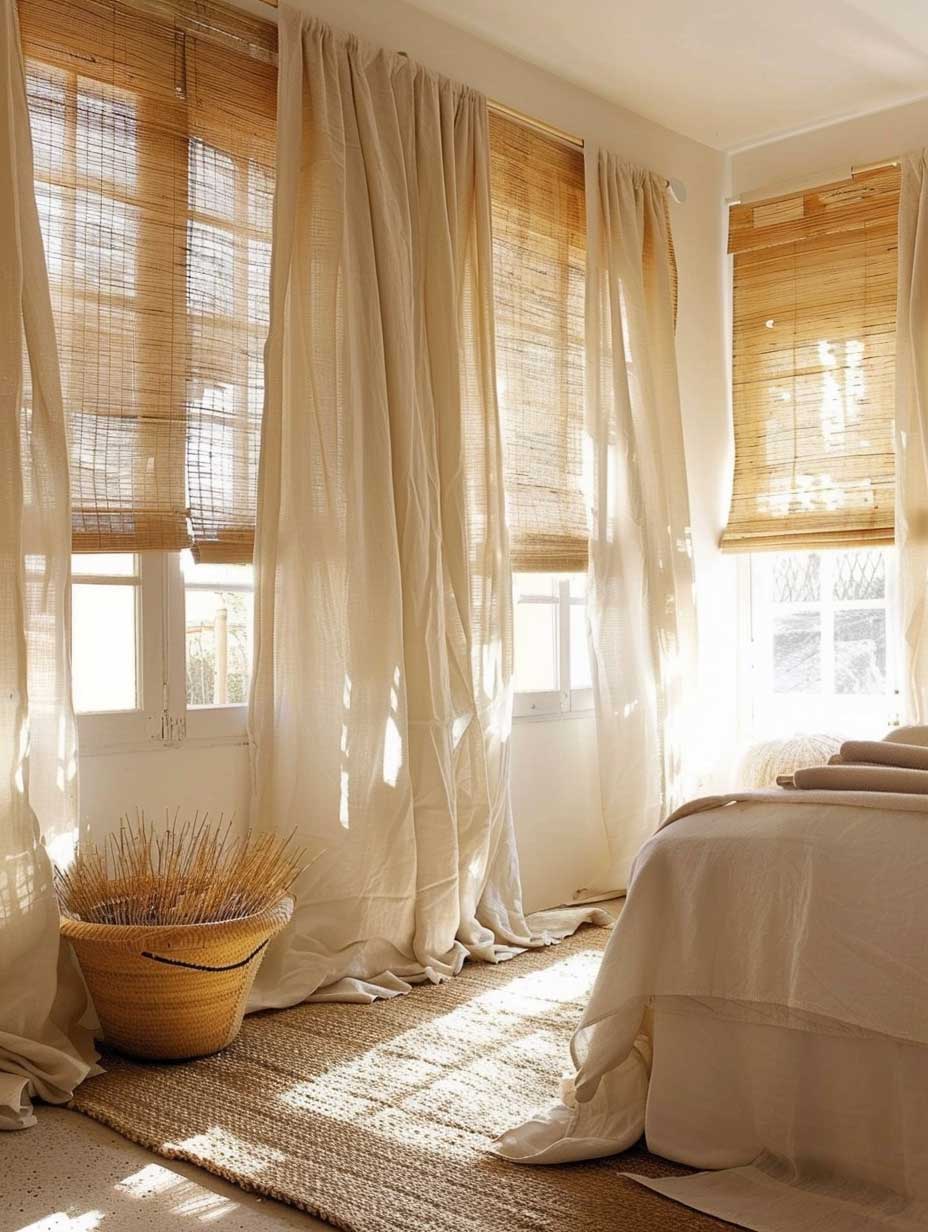
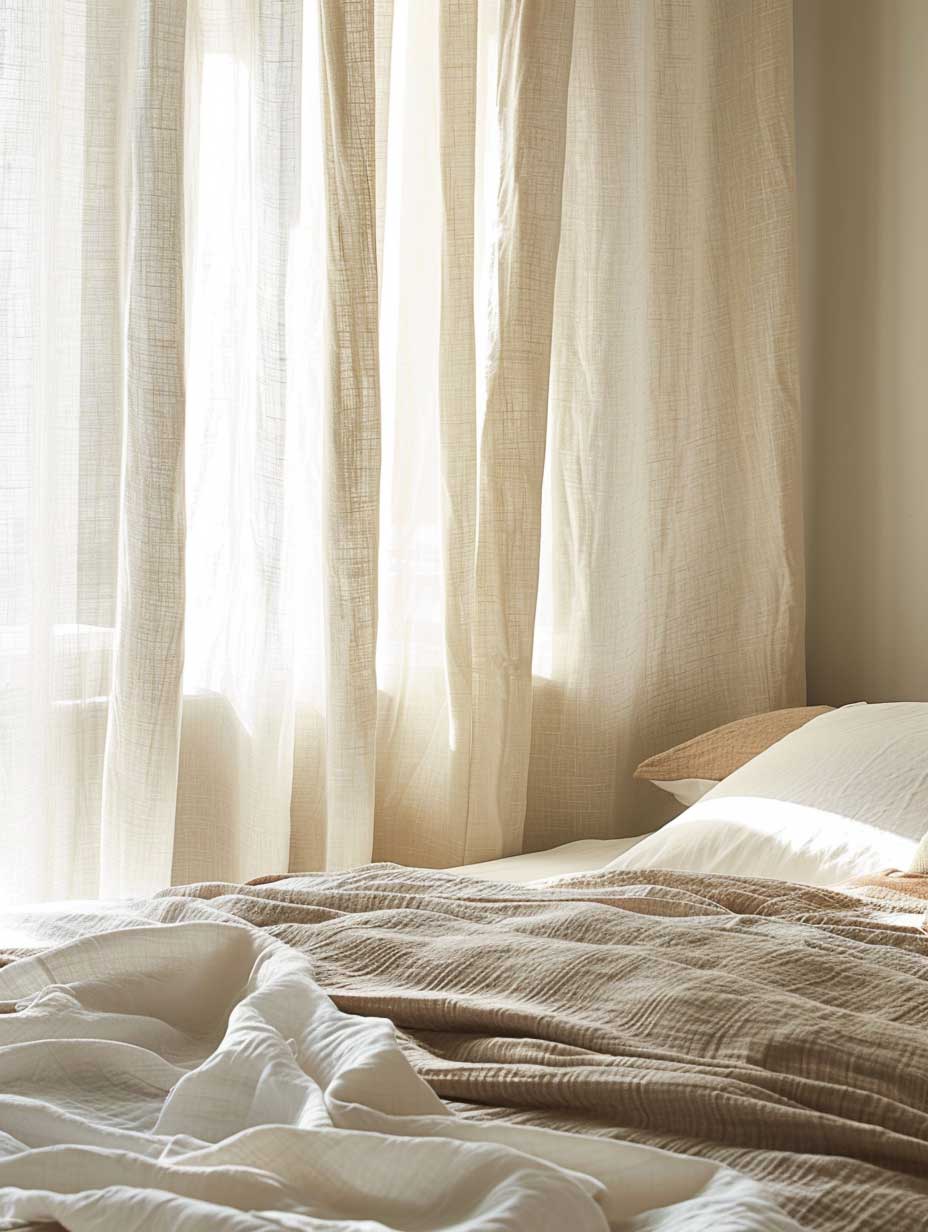
Sheer linen curtains do something that blinds and shutters cannot: they make light behave differently rather than simply blocking or transmitting it. The woven natural fibers scatter direct sunlight into a diffused glow that fills the room evenly. On a bright afternoon the effect resembles the quality of light inside a Japanese paper screen — soft, even, warm — without the architectural commitment of built-in screens. This quality makes sheer linen the most popular modern minimalist window treatment for living areas and dining rooms where natural light is the primary design element.
What distinguishes linen from cheaper sheer alternatives like polyester voile? The natural irregularities in linen fiber create a slightly different texture at every point along the panel, which means the fabric holds light rather than simply transmitting it. It also hangs better than most synthetics — the weight-to-transparency ratio is close to ideal for a floor-length panel that needs to move gracefully in a cross-breeze without billowing like a sail. Linen does wrinkle, which is either a flaw or a feature depending on the design intent. In a minimalist interior, gentle creasing reads as organic rather than sloppy.
Is linen hypoallergenic? Natural linen fibers carry antibacterial properties and are less likely to harbor dust mites than heavier synthetic fabrics — a practical advantage for bedrooms in households with allergy concerns. The fabric also breathes, which keeps rooms from feeling stuffy on warm days when the windows are closed. Do not choose synthetic sheers as a budget substitute and expect the same result; the plastic quality of polyester shows immediately in strong light and undercuts the premium feel the treatment is meant to create.


Hardware selection for sheer linen panels deserves as much attention as the fabric itself. The goal is to install a rod or track that does not compete for attention. Matte black, brushed brass in a slim profile, or a concealed ceiling track — any of these work, provided the hardware reads as thin rather than substantial. A thick, decorative rod with finials adds visual weight that fights the transparency of the fabric. The rod should look as if it barely exists; the panel should look as if it is floating.
For privacy, sheer linen panels work best in rooms that face a garden or an inner courtyard rather than a busy street. At night, once interior lights come on, the sheer fabric provides no meaningful privacy from outside. Pairing the panels with a roller blind on the same window — the blind for night privacy, the sheer for daytime light — is the solution most often used by interior designers. The two layers share the same track, the blind rolls up and disappears behind a pelmet or recess, and the sheer curtain remains the visible treatment for most of the day.
| Treatment Type | Best Application | Typical Cost/Window (installed) | Privacy Level | Light Control |
|---|---|---|---|---|
| Motorized roller blind | Any room, smart home | $300–$1,000 | Full when closed | Programmable, precise |
| Sheer linen curtain | Living areas, dining | $50–$500 | Low at night | Diffused daylight |
| Solid blackout curtain | Bedrooms, media rooms | $50–$500 | Full when closed | Complete darkness |
Solid Blackout Curtains Deliver Minimalist Window Design at Its Plainest


Solid blackout curtains make their argument through absence. There is no pattern to read, no texture to register, no decorative hardware to notice — just a single plane of fabric that covers the window and disappears into the wall when opened. Among all minimalist window treatment ideas, this one demands the most from color choice and installation quality because the fabric itself has nothing to hide behind. A well-hung solid panel in the right tone is nearly invisible; a poorly hung one in the wrong color is impossible to ignore.
The functional case for blackout fabric is specific and strong. In a bedroom, complete darkness improves sleep quality — a measurable outcome that justifies the choice beyond any aesthetic preference. In a media room, eliminating reflected light from windows improves contrast and viewing comfort in a way that cannot be replicated by dimming the lights alone. The dense woven structure that blocks light also provides thermal insulation — the fabric traps a layer of air between itself and the cold glass, reducing heat loss in winter and heat gain in summer. That thermal benefit is most noticeable in rooms with large, single-glazed windows.
Color selection follows a simple rule: match the curtain to the wall, not the furniture. A curtain that blends into the wall surface reads as architectural rather than decorative — exactly the register a minimalist interior needs. White curtains on white walls, warm gray on warm gray, off-white on plaster — these combinations make the window disappear when the panels are closed. A muted accent color is acceptable if the goal is to introduce one deliberate point of contrast in an otherwise neutral room, but the fabric’s saturation should stay low. Dark forest green or deep charcoal in a room with warm wood tones can carry the weight; anything brighter starts to function as a feature wall, which undermines the minimalist premise.


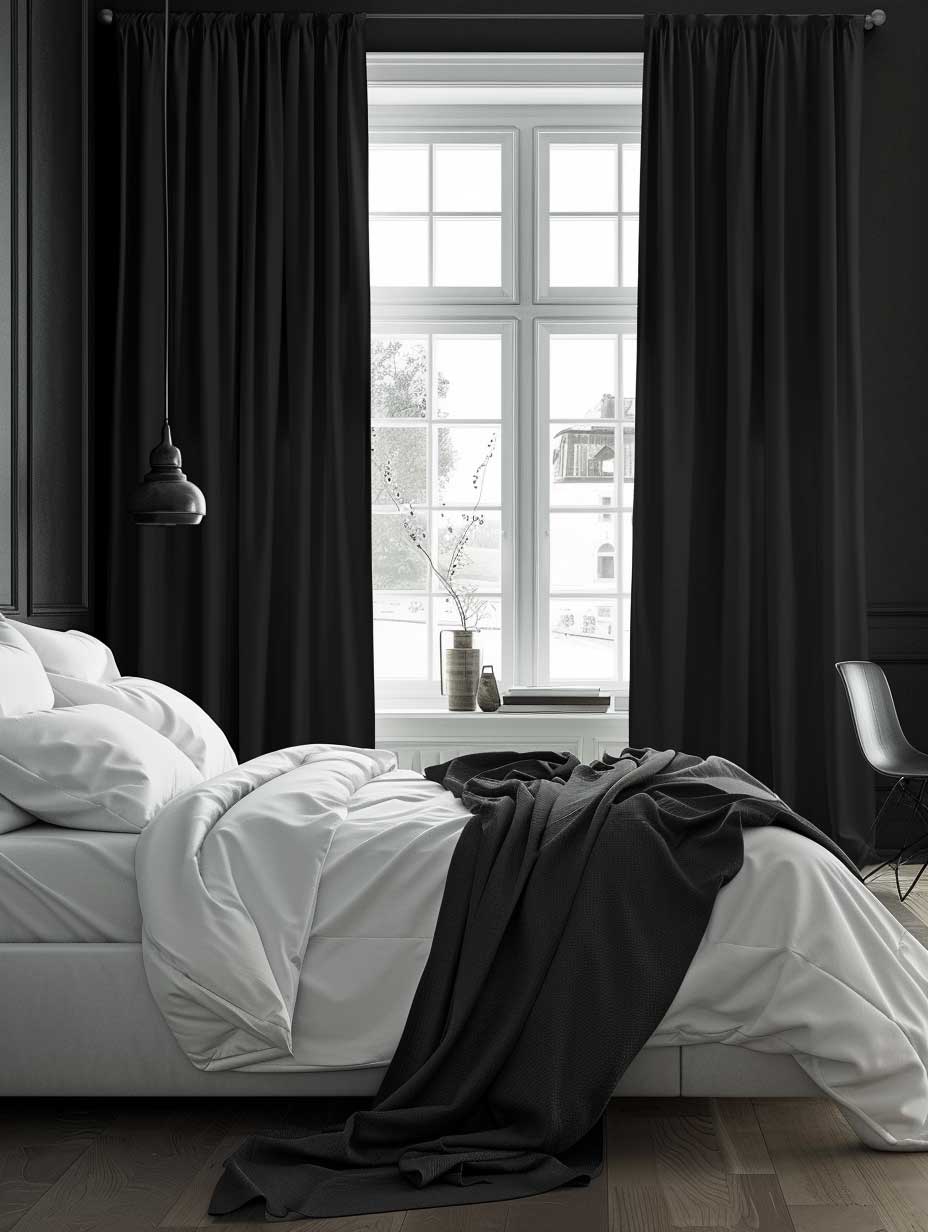

Installation precision matters more with solid blackout curtains than with patterned or sheer alternatives because any imperfection — uneven hem, sagging track, gap between panel and wall — is immediately visible against the unbroken surface. Mount the rod or track at ceiling height rather than just above the frame. Extend the track 12–16 inches beyond each side of the window so the panels stack completely clear of the glass when open. Use a return bracket at each end to fold the fabric back to the wall, which eliminates side light gaps and gives the treatment a tailored, architectural finish.
The one thing to avoid with solid blackout curtains is a shiny or heavily textured surface. Velvet blackout panels look rich in a maximalist room and wrong in a minimalist one. Thick ribbing or woven patterns defeat the purpose of a solid treatment. The correct fabric is flat-faced, matte, and dense — a medium-weight cotton-linen blend or a purpose-made blackout fabric with a bonded liner on the back. For technical guidance on what window treatments cost at each quality level, HomeGuide’s data at homeguide.com/costs/window-treatment-cost breaks down current installed price ranges across blinds, shades, and curtain types.
For a deeper look at how different window treatment materials perform alongside natural wood furniture and warm-toned interiors, the detailed breakdown in mid century modern window treatments for real homes covers price ranges, lifespan data, and practical mounting rules that apply equally well to minimalist and mid-century contexts.
- Don’t hang sheer panels in a street-facing bedroom and expect privacy after dark — the fabric becomes a backlit screen the moment interior lights turn on.
- Don’t place the curtain rod directly above the window frame — it shortens the apparent wall height and makes the room feel lower than it is.
- Don’t use corded blinds in homes with young children or pets — cordless and motorized systems eliminate the risk entirely and cost very little more at entry-level.
- Don’t choose patterned or textured fabric for a solid-color treatment — the surface should be flat enough that the eye passes over it without stopping.
What to Remember Before Choosing
Minimalist window treatment ideas work because they solve a real problem — light, privacy, or both — before they address appearance. The treatments that succeed in these rooms share three qualities: clean lines when closed, near-invisibility when open, and hardware that stays out of the conversation.
Motorized blinds suit rooms that need precise, programmable control without any manual intervention. Sheer linen panels suit rooms where filtered daylight is the primary design element. Solid blackout curtains suit rooms where function — complete darkness, thermal insulation — is the non-negotiable requirement. All three can coexist in the same home; the mistake is applying one solution to every window regardless of how the room actually functions.
Installation quality is the variable that separates a successful minimalist treatment from a mediocre one. Mount hardware at ceiling height, extend tracks beyond the frame, use return brackets to seal side gaps, and measure for exact hem length. The fabric choice matters far less than the execution.
Budget realistically using the $30–$600 per-window range for most options and reserve the higher end for motorized systems or oversized windows that need custom sizing. Order samples before committing to fabric, hang the hardware before the panels arrive, and make any adjustments while the wall is still bare. The window should look finished — not covered.