
Mid century style is the only design movement from the postwar era still showing up in new construction briefs, renovation pitches, and architecture magazine covers without a single apology. It peaked between 1945 and 1969, yet today nearly 1 in 3 interior designers in North America names it as their most-requested aesthetic. That is not nostalgia. That is staying power earned through proportion, material honesty, and a stubborn refusal to decorate for its own sake.
This hub collects everything on this site connected to the mid century modern aesthetic — from bathroom mirrors to porch railings, from color theory to furniture silhouettes — organized by room and by theme so you can move through a renovation or a single room refresh without losing the thread.
What Mid Century Style Actually Means (and What People Get Wrong)
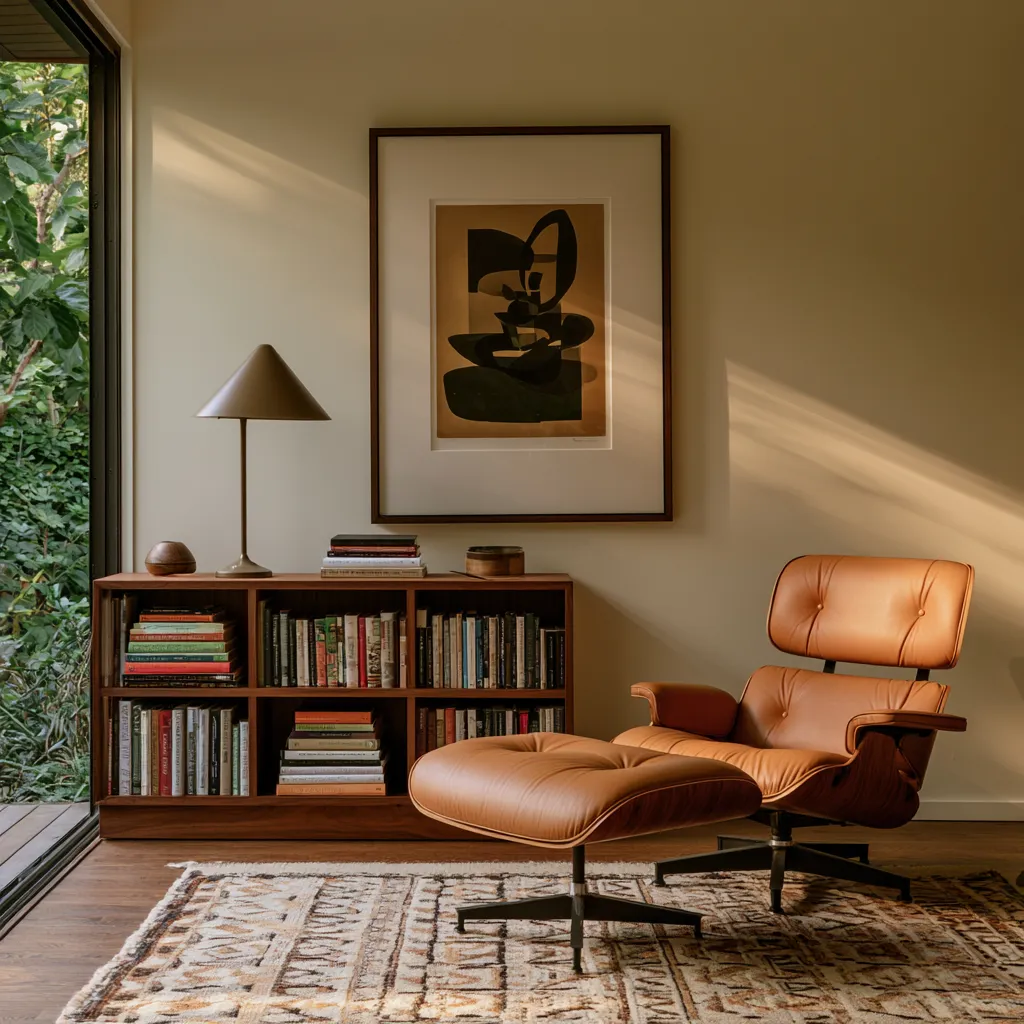
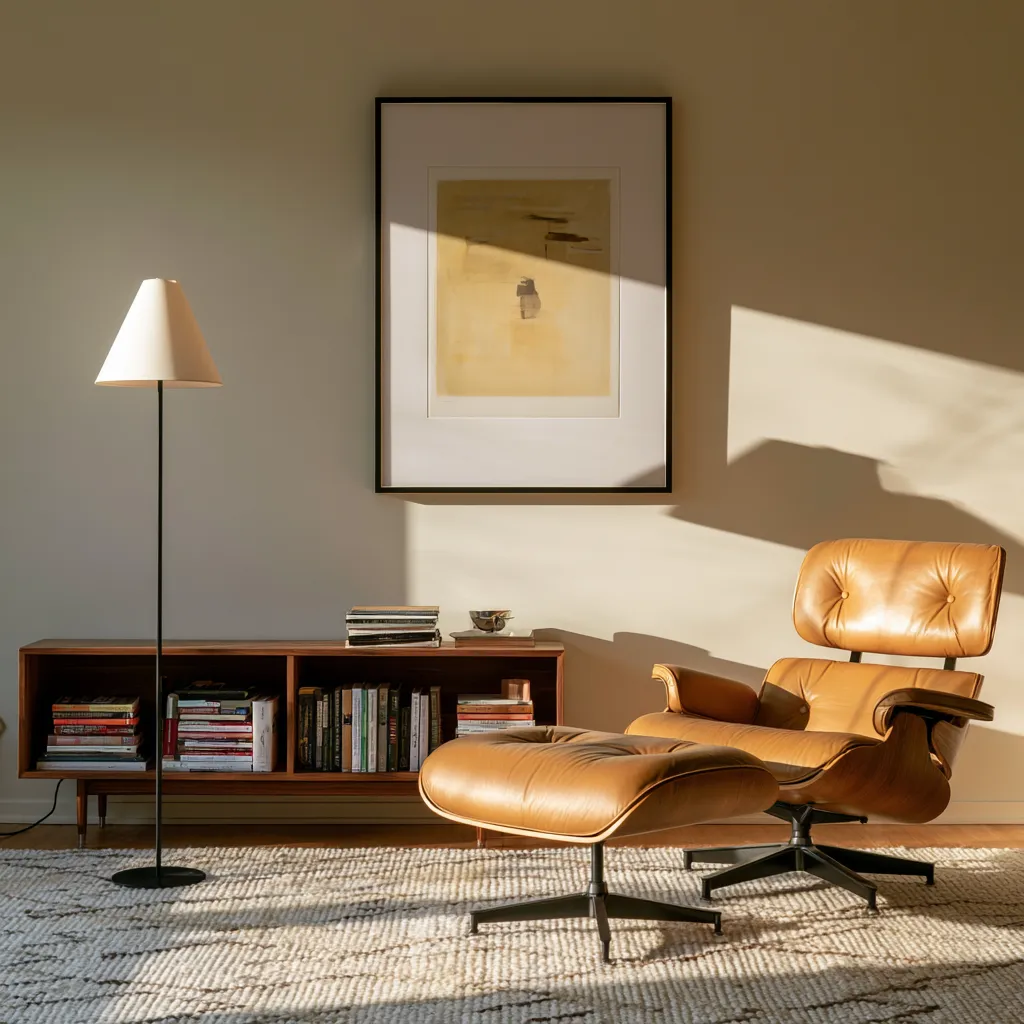
The term gets used loosely. People reach for it when they mean retro, or Scandi, or simply “not maximalist.” The real mid century modern aesthetic rests on four pillars that were radical in their moment and remain structurally sound today: organic form over rigid geometry, honest materials left largely unadorned, integration of indoor and outdoor space, and function as the primary driver of form. An Eames lounge chair looks the way it does because molded plywood bends exactly that way under a human spine — not because someone decided it should look cool.
The materials that define mid century style interiors are specific: teak and walnut dominate the wood palette because both are warm-toned, open-grained, and age gracefully. Brass was the hardware of choice from the late 1940s through the 1960s and has returned with full force after a two-decade detour through chrome and brushed nickel. Stone, terrazzo, and wool textiles appear constantly. Plastic and fiberglass — genuinely new materials in the postwar context — show up in chairs and lamp shades without apology.
The Color Logic Behind Authentic Mid Century Modern Interiors
Mid century color is not a single palette — it is a philosophy. The background reads neutral: warm whites, stone grays, soft greiges. Against that ground, one or two saturated accents do the emotional work. Avocado green, harvest gold, burnt orange, teal, and olive were the colors of the era, and they hold up because they are warm-adjacent: none of them fight natural wood tones. The jewel tone revival currently underway — deep sapphire, rich burgundy, forest green — fits comfortably within this logic as a slightly more sophisticated update.
| Color Approach | Background Base | Primary Accent | Secondary Accent | Best Room |
|---|---|---|---|---|
| Classic Warm | Warm white / cream | Burnt orange | Walnut wood | Living room |
| Teal and Walnut | Soft gray | Deep teal | Brass hardware | Bedroom / dining |
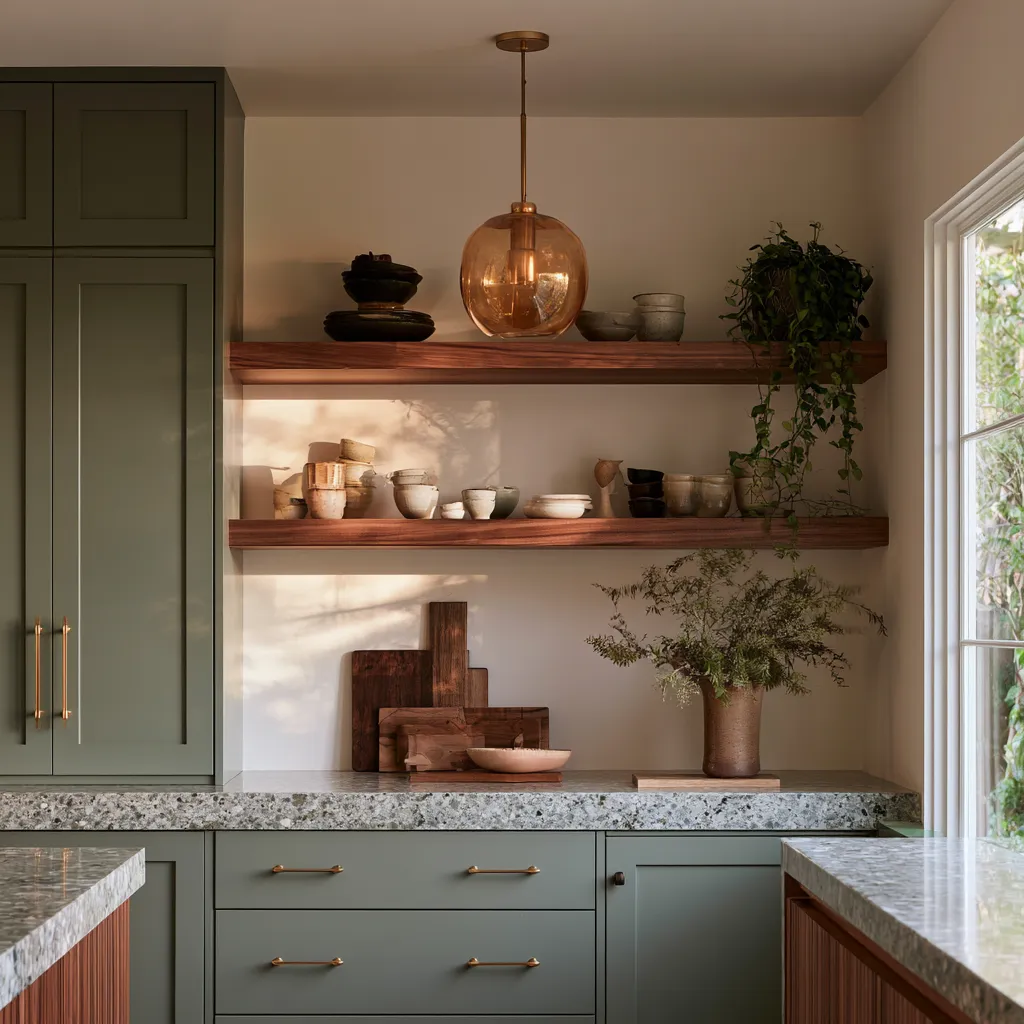
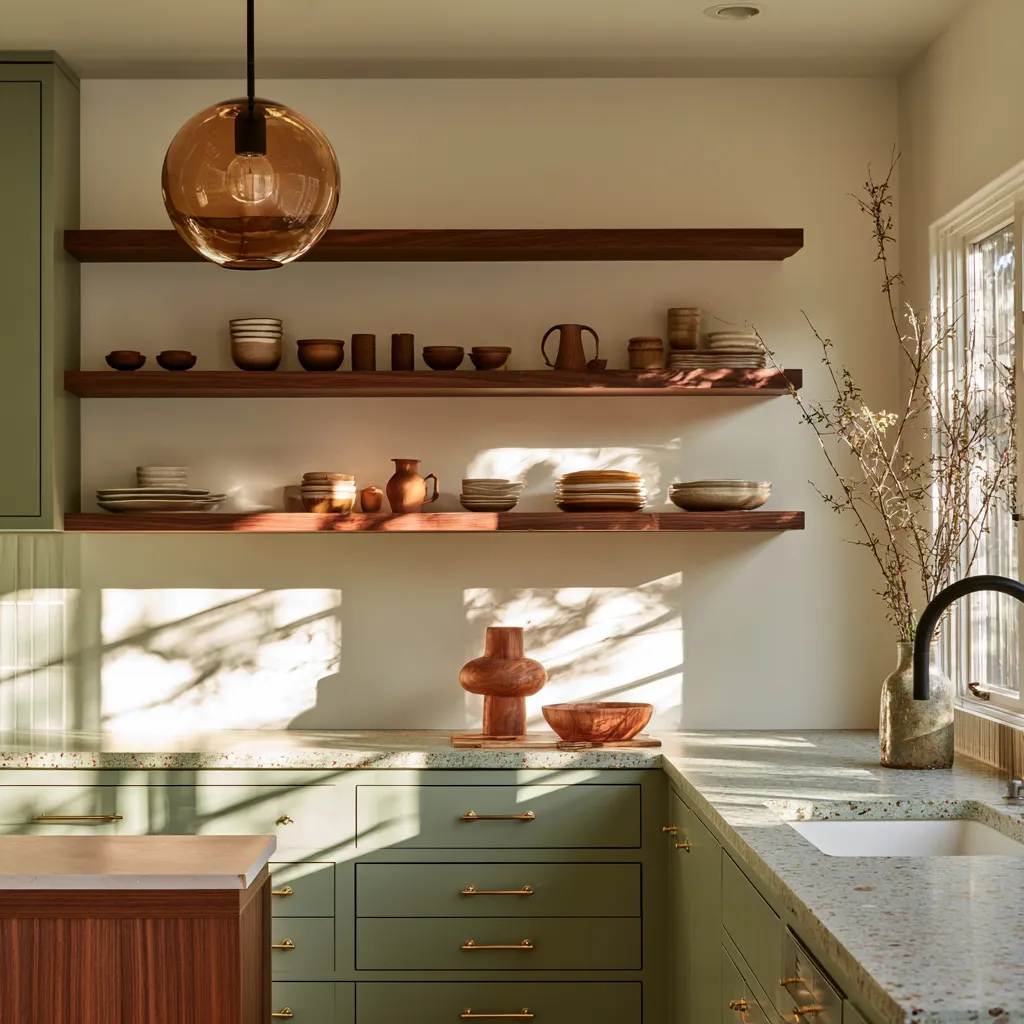
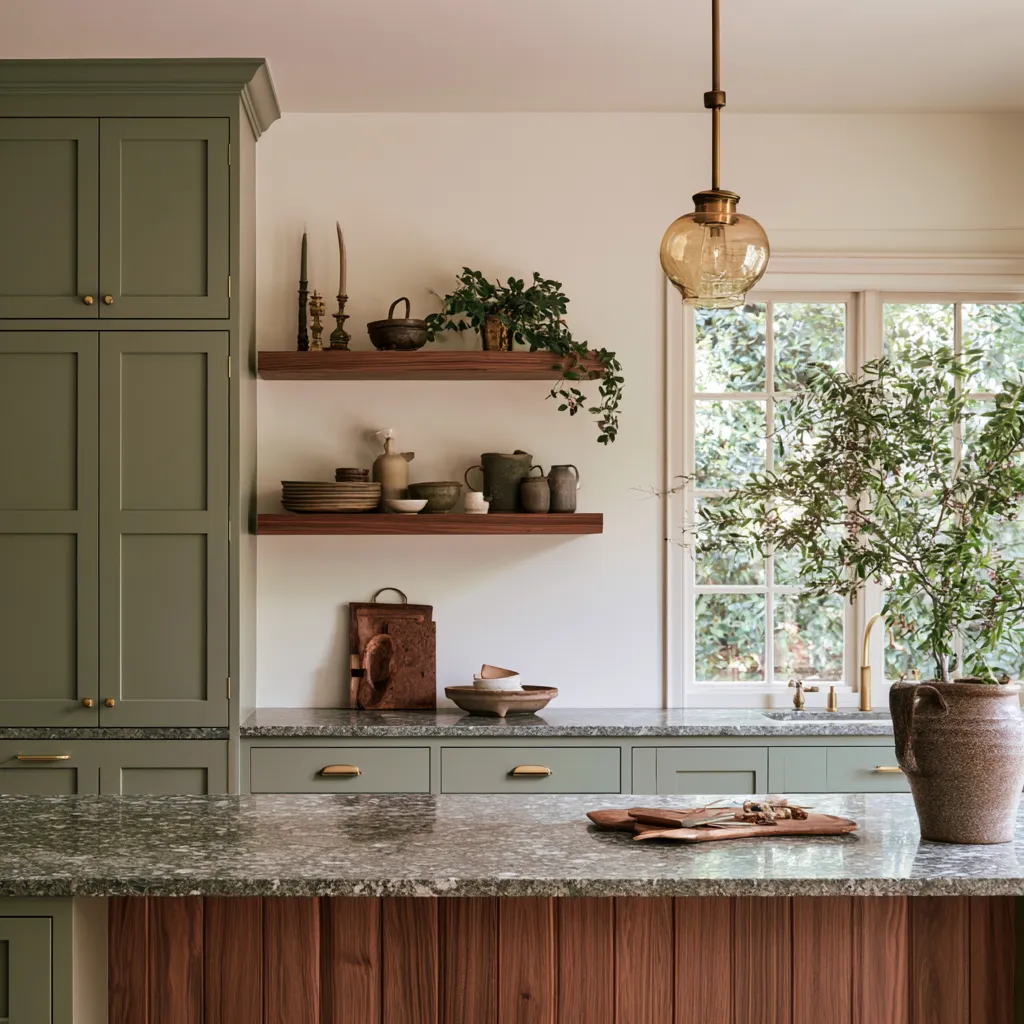
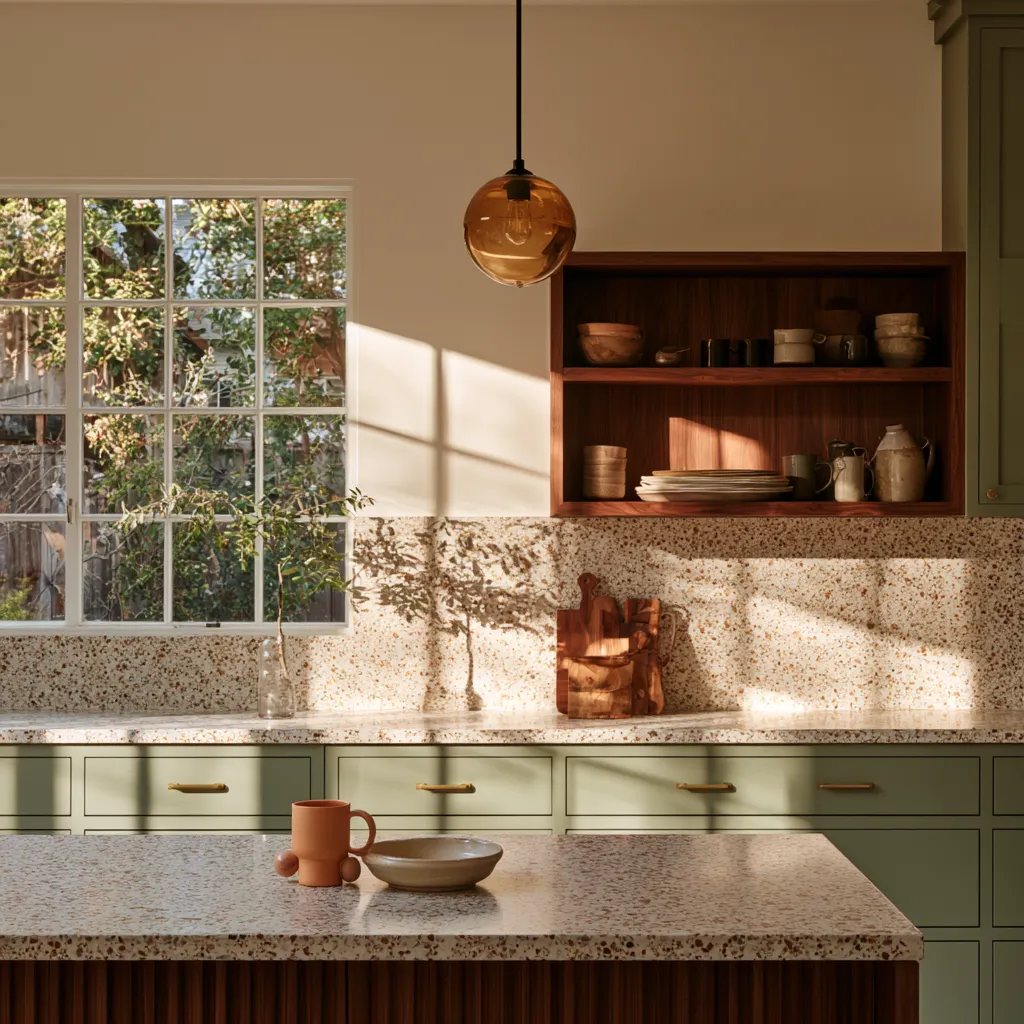
| Muted Kitchen | Stone greige | Sage or olive | Brushed brass | Kitchen |
| Moody Modern | Charcoal gray | Forest green | Warm black | Study / lounge |
| Black Sophistication | Warm white | Matte black | Natural oak | Bedroom |
| Gray Subtle | Cool medium gray | Blush or dusty rose | Chrome or nickel | Bathroom |
Explore the color angles in depth through these articles:
- Saturated Jewel Tones Redefine Interior Color Strategy
- 3 Best Color for Home Interior Options for a Vibrant Mid-Century Design
- 3 Mid-Century Modern Color Schemes for Interior Design Makeovers
- 3+ Interior Decorating Colour Schemes Infusing Mid-Century Modern Charm
- 7+ Muted Kitchen Cupboard Colour Ideas for Mid-Century Modern Style
- 10+ Mid-Century Modern Gray Interior Design Ideas
- 7+ Mid Century Decor Ideas in Gray for Subtle Elegance
- 3+ Mid Century Decor Ideas in Black for a Sleek Style
Kitchen Rooms Where Mid Century Style Holds the Floor
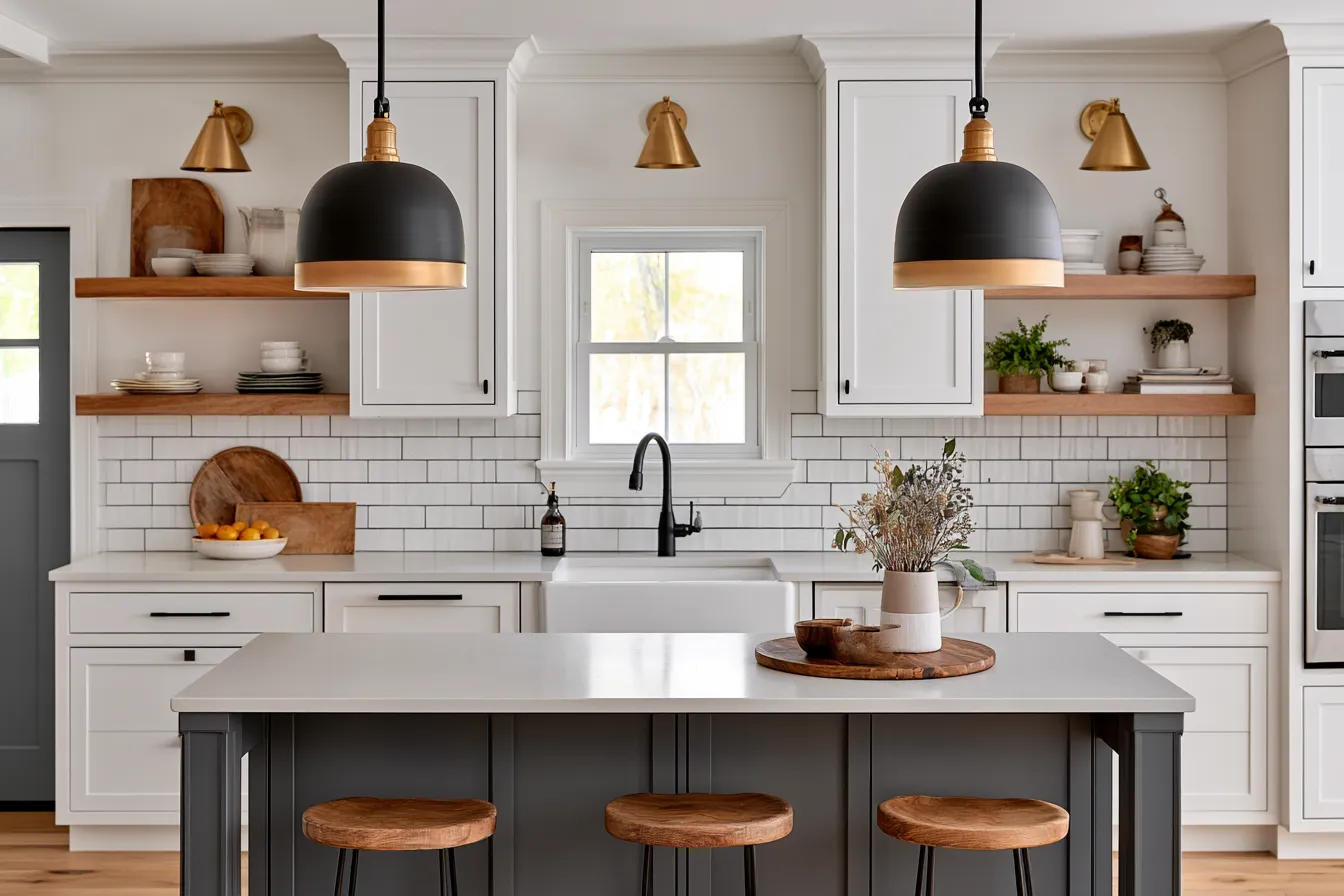
The kitchen is where mid century modern aesthetic makes its most practical argument. Open plans, integrated appliances, and minimal upper cabinetry — staples of the style — happen to align exactly with how contemporary households cook and entertain. A mid century kitchen is not a retro pastiche; it is a functional room where the design logic never went out of date. Flat-front cabinet doors, a range hood treated as a sculptural element, and a strong pendant over the island are the three moves that signal the aesthetic without locking the room into a theme park version of the past.
- 10+ Inspirations for Your Open Concept Mid-Century Modern Kitchen Makeover
- How to Choose the Perfect Color Palette for Your Mid Century Modern Kitchen
- 5+ Essential Elements of a Small Mid Century Modern Kitchen
- Exploring the Beauty of Mid Century Modern Kitchen Features
- 19+ Mid-Century Modern Nice Kitchen Designs for a Trendy Home
- 6+ Mid-Century Modern Kitchen Light Fixtures Ideas
Living Rooms That Prove Mid Century Modern Interiors Age Better Than Their Owners
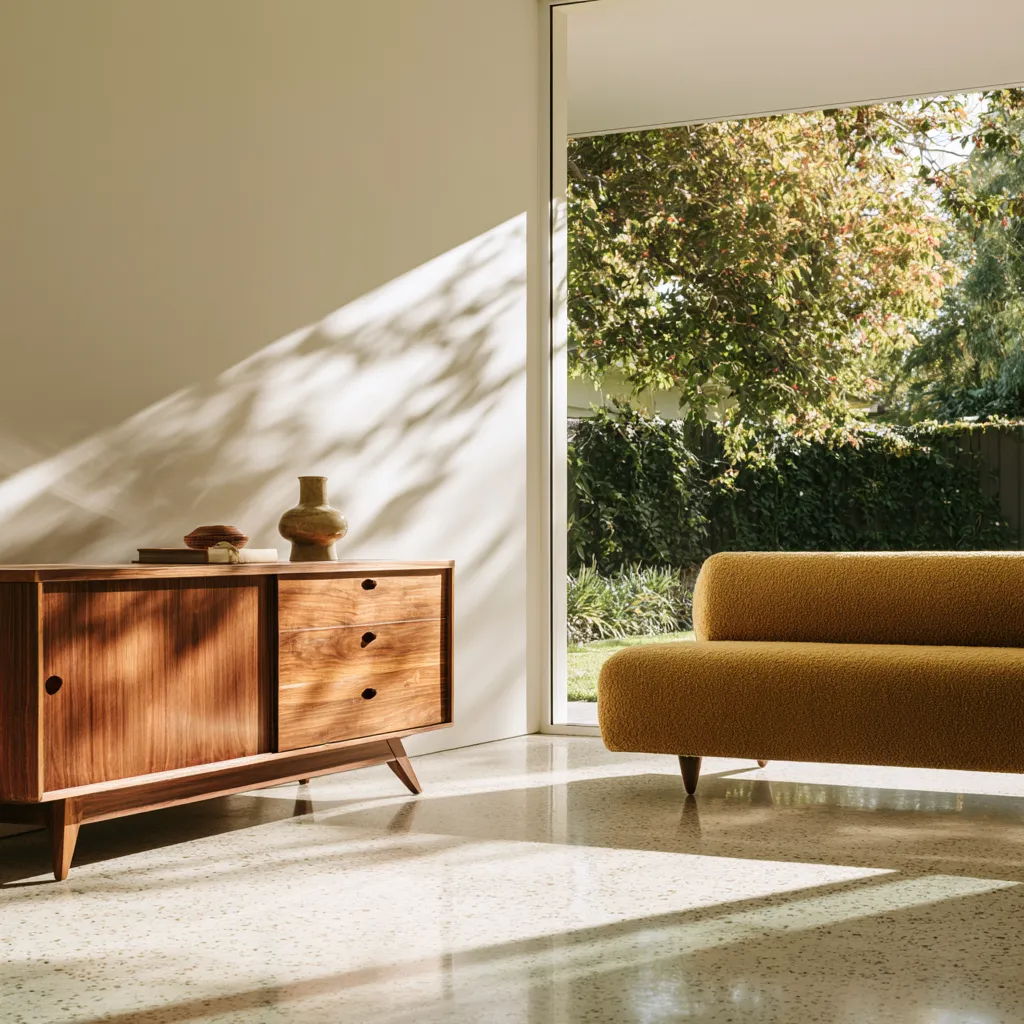
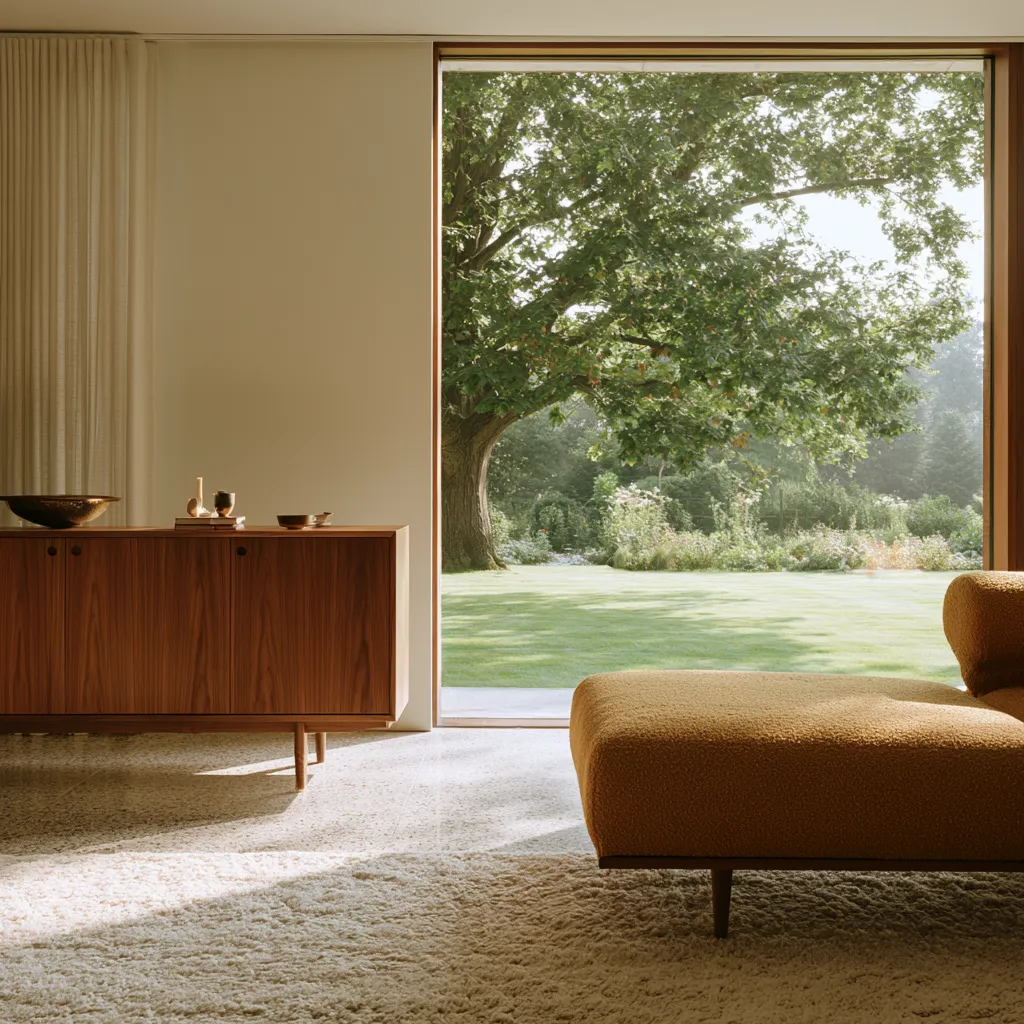
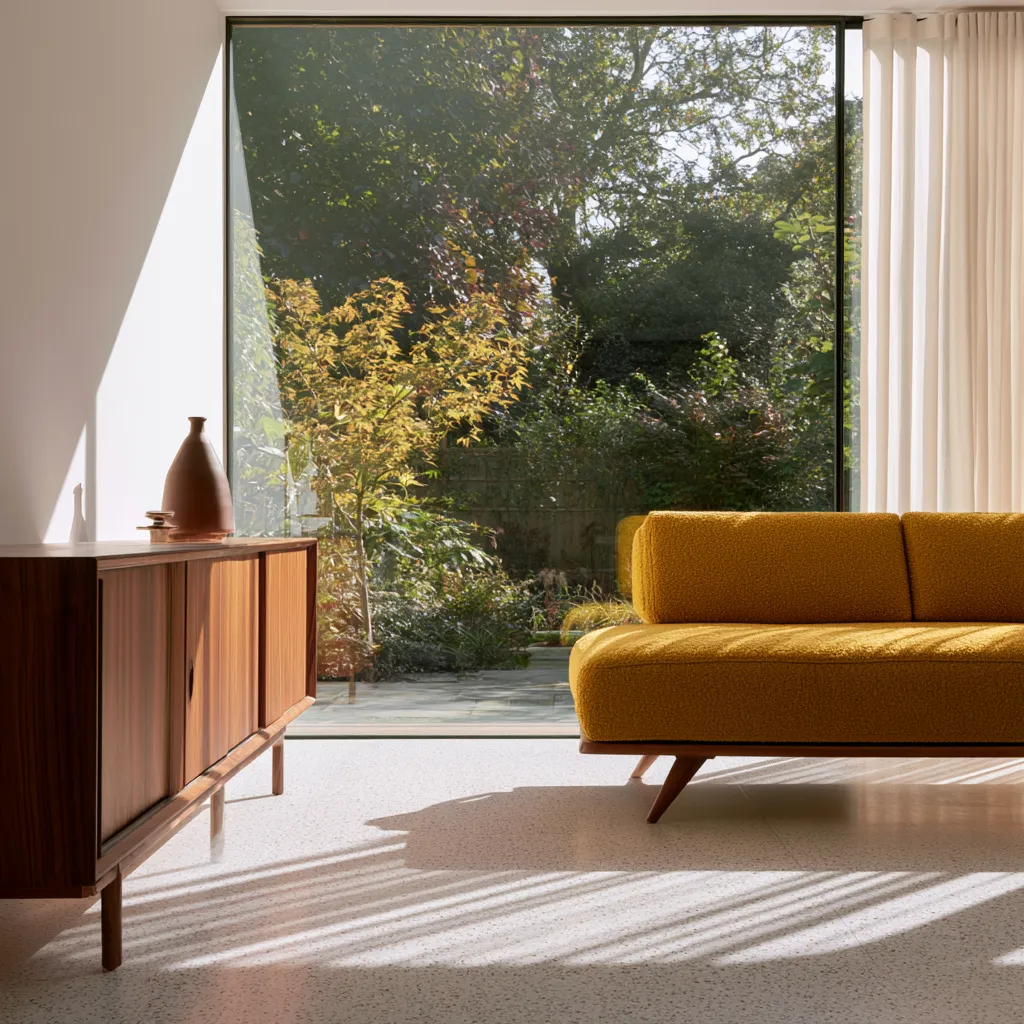
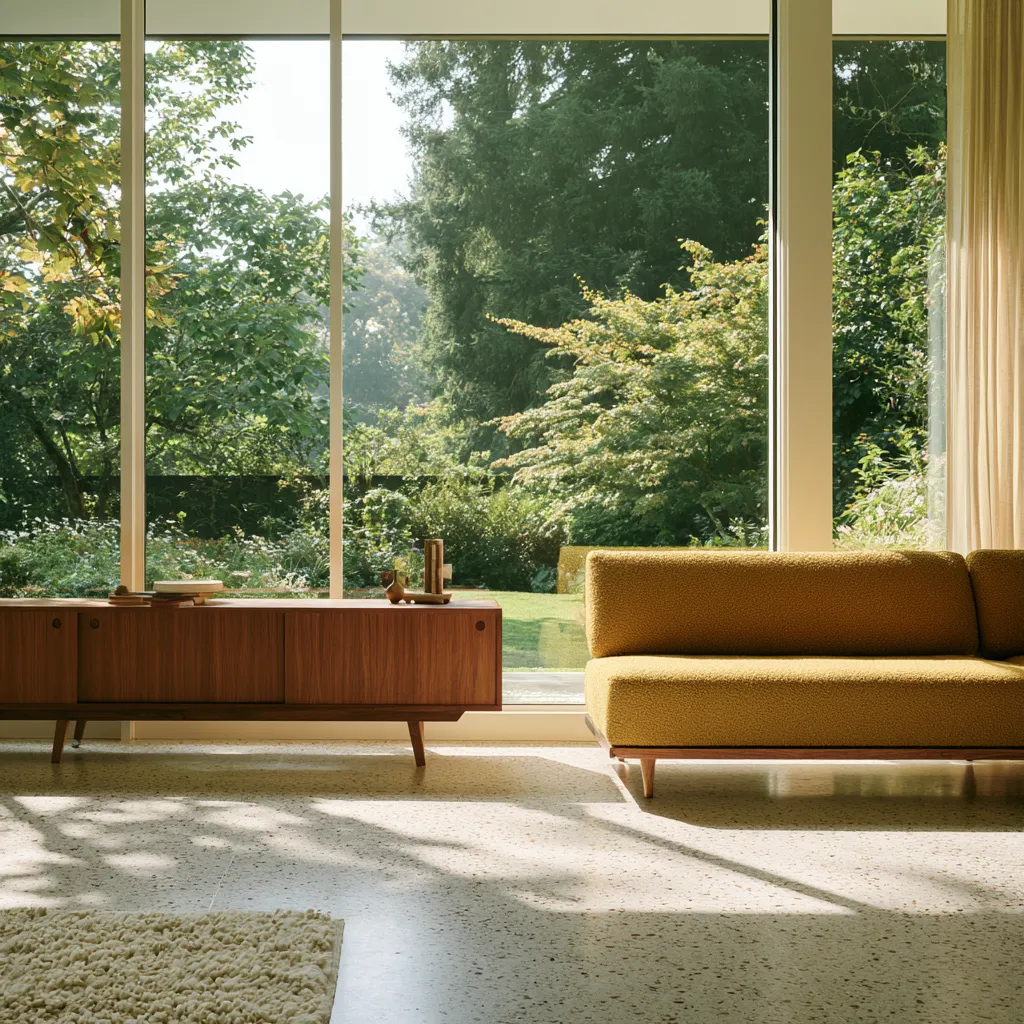
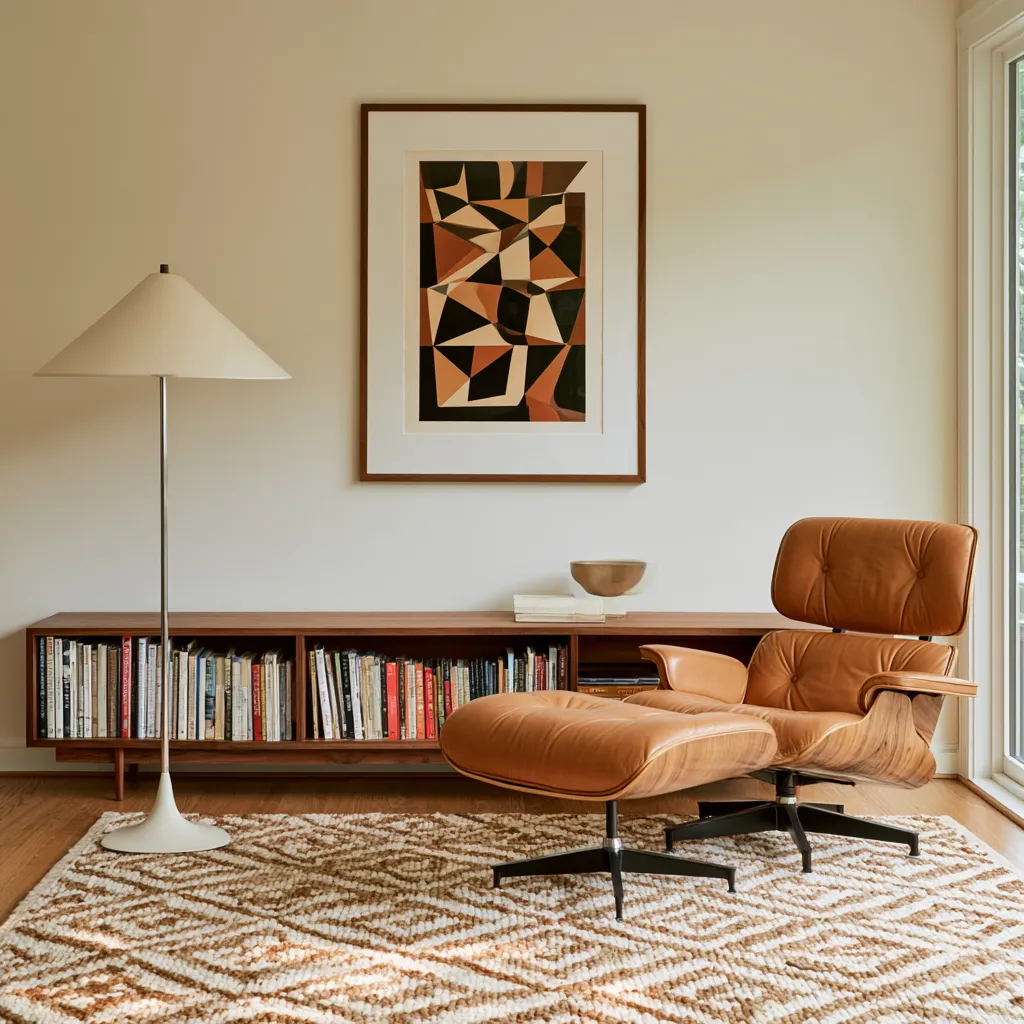
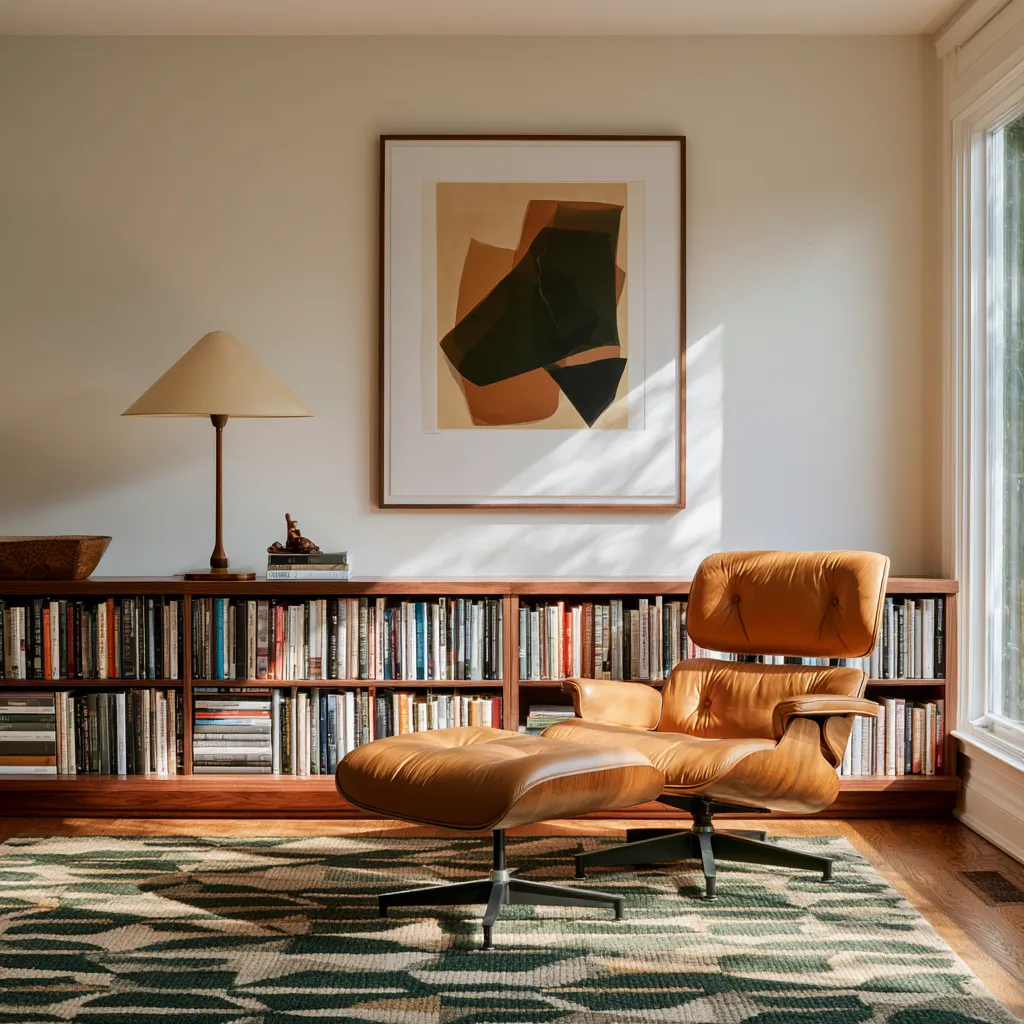
The living room is the most photographed room in any mid century modern home, and for good reason: this is where the furniture silhouettes, the material palette, and the spatial logic all converge in a single view. Low-slung sofas on tapered legs, a credenza running the length of one wall, a statement lounge chair in the corner, and a rug with a bold geometric pattern — these are not just visual preferences. They are spatial decisions that make a room feel larger, lighter, and more deliberate than rooms designed around a television console.
The eclectic mid century approach — layering the base aesthetic with contemporary art, natural fibers, or even Japandi-influenced objects — is currently the most searched variation of the style. It works because the mid century framework is restrained enough to absorb other influences without losing coherence.
- How to Create the Perfect Mid Century Modern Living Room
- 10+ Fresh Takes on Mid Century Modern Living Room Ideas
- Cozy Mid Century Modern Living Room Inspirations
- 8+ Living Room Furnishing Ideas with Walnut and Teal Accents
- Your Mid-Century Eclectic Living Room — Mixing Styles Without the Mess
- Mid Century Geometric Rugs Making a Statement in a Modern Living Room
- 12+ Lounge Furniture Ideas for a Timeless Mid Century Vibe
- Mid-Century Modern Living Room Charm with Stylish Drapery Designs
- Moody Mid Century Modern Decor for Sophisticated Interiors

Bathrooms Reimagined Through a Mid Century Lens
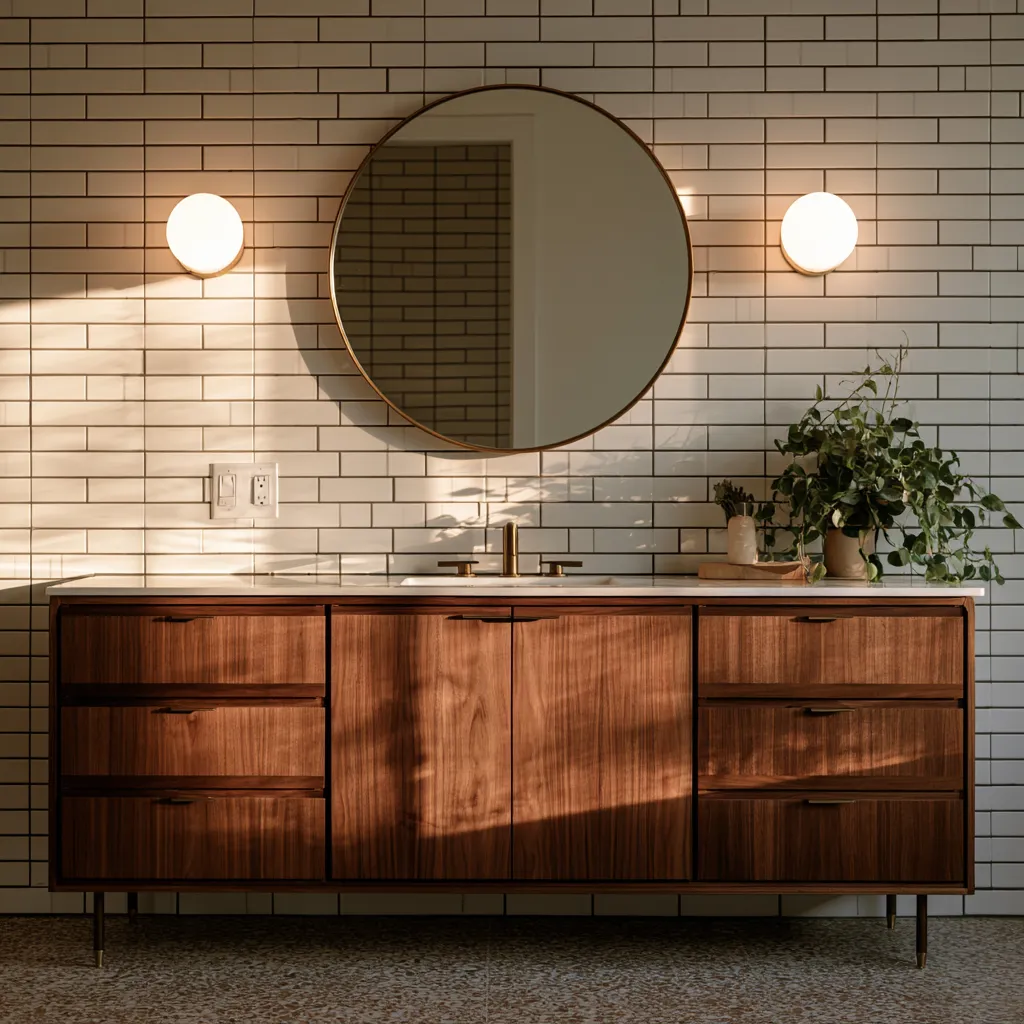
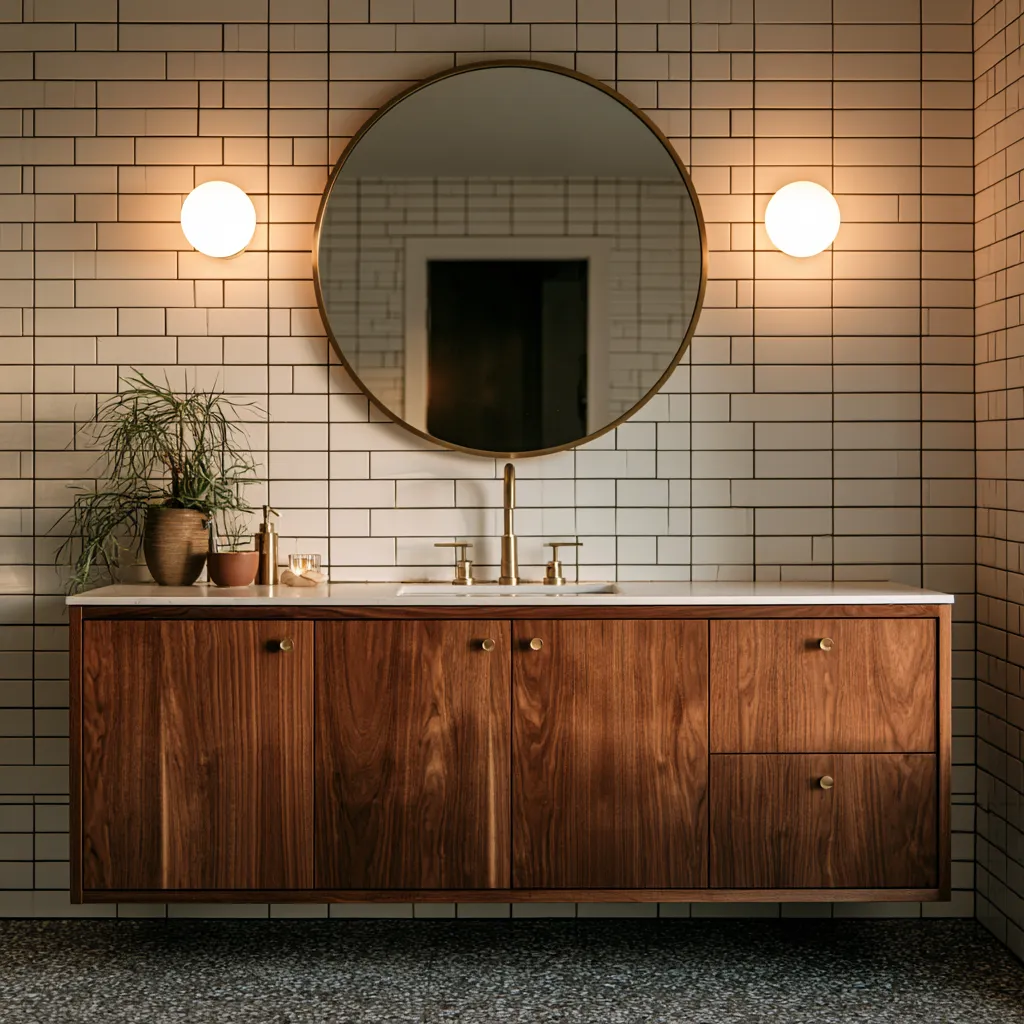
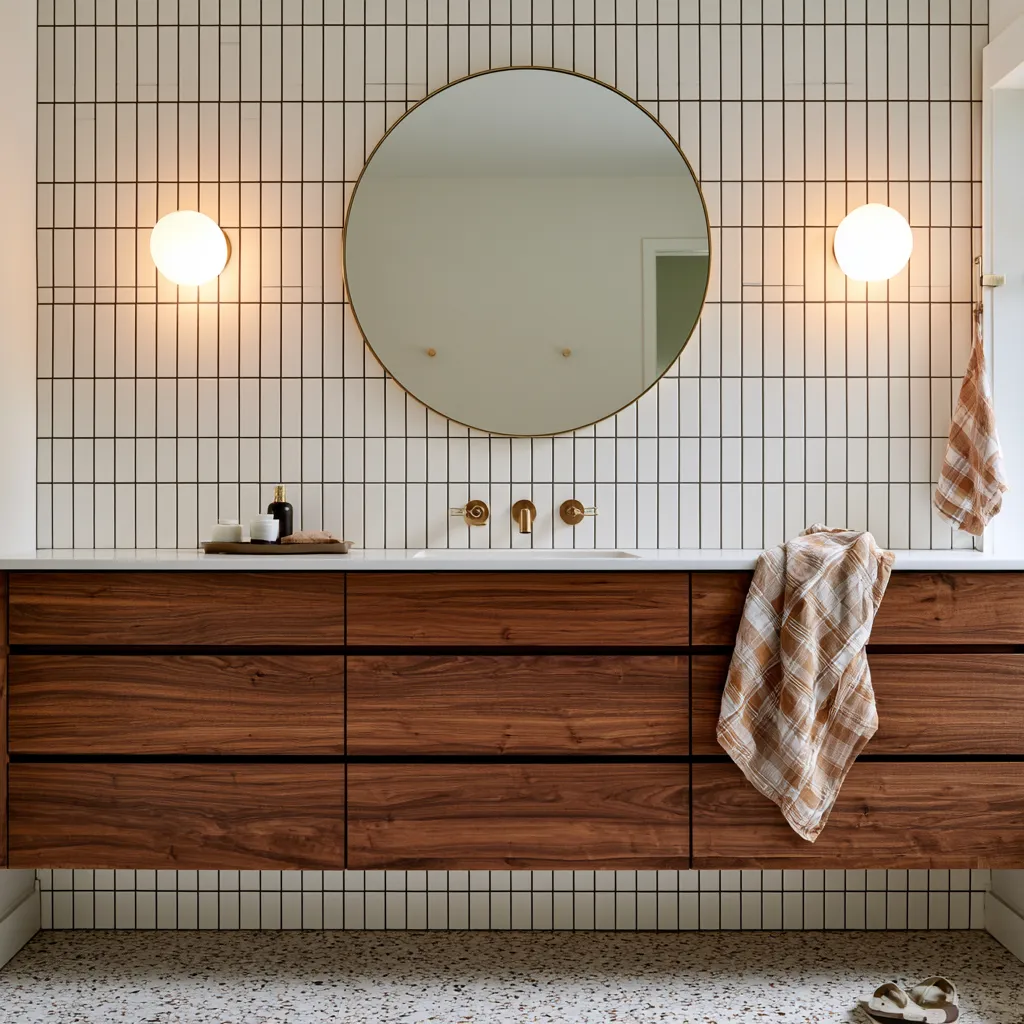
The bathroom is the room where mid century style gets the least credit and delivers the most dramatic results. Swap a generic vanity for one with tapered legs and a wood face, replace a standard rectangular mirror with a brass-framed round or asymmetrical one, and the room changes character entirely. Brass and stone fixtures — the combination currently driving the most high-end bath renovations in North America — arrived directly from mid century precedent: stone for its weight and materiality, brass for its warmth against white tile.
- Midcentury Modern Bathroom Ideas to Ignite Your Imagination
- 8+ Beautiful Bathrooms with Mid-Century Modern Touches
- 15+ Amazing Mid-Century Bathroom Design Ideas
- 8+ Mid-Century Modern Bathroom Furniture Ideas
- Celebrating Mid Century Modern Bathroom Vanity Designs
- Brass Rays and Walnut Frames — Mid Century Modern Bathroom Mirror Ideas
- Brass and Stone Bathroom Fixtures That Transform Wet Spaces
Bedrooms Where Mid Century Style Earns Its Rest
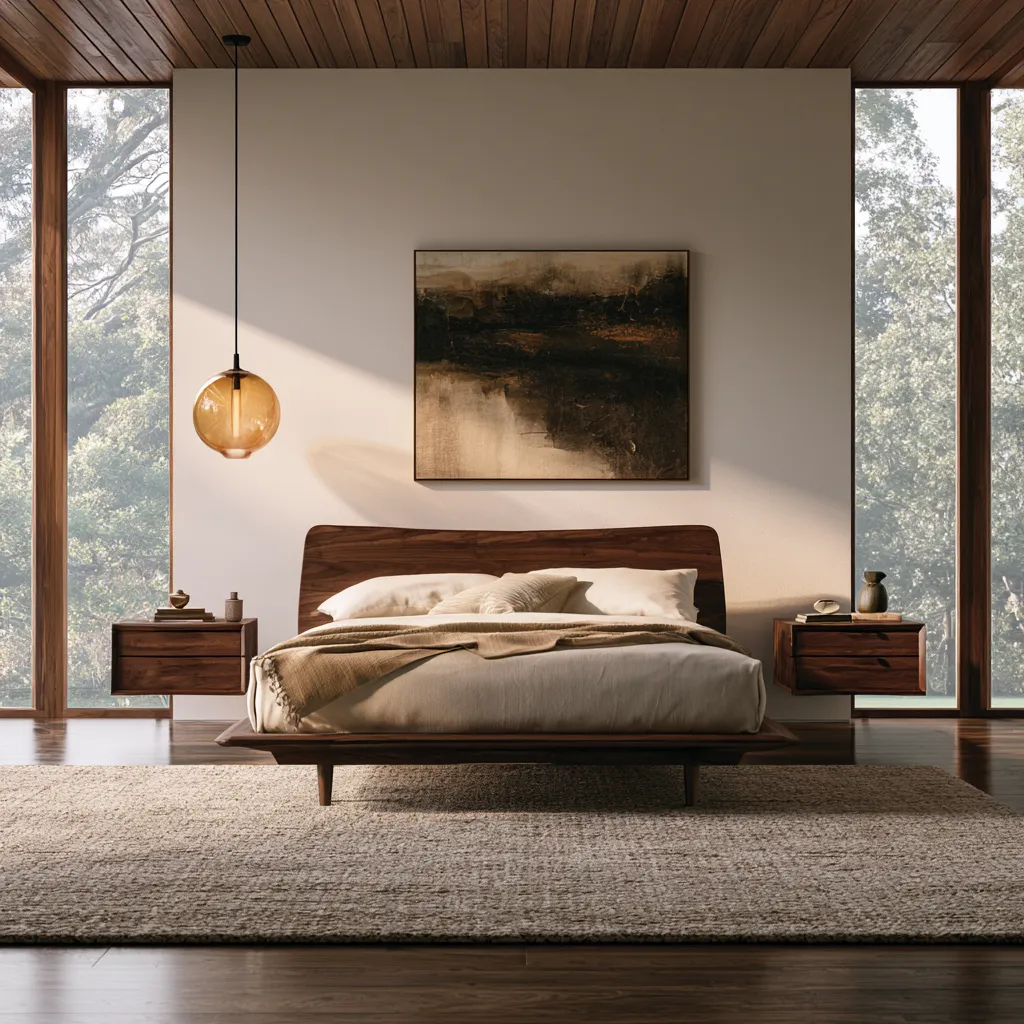
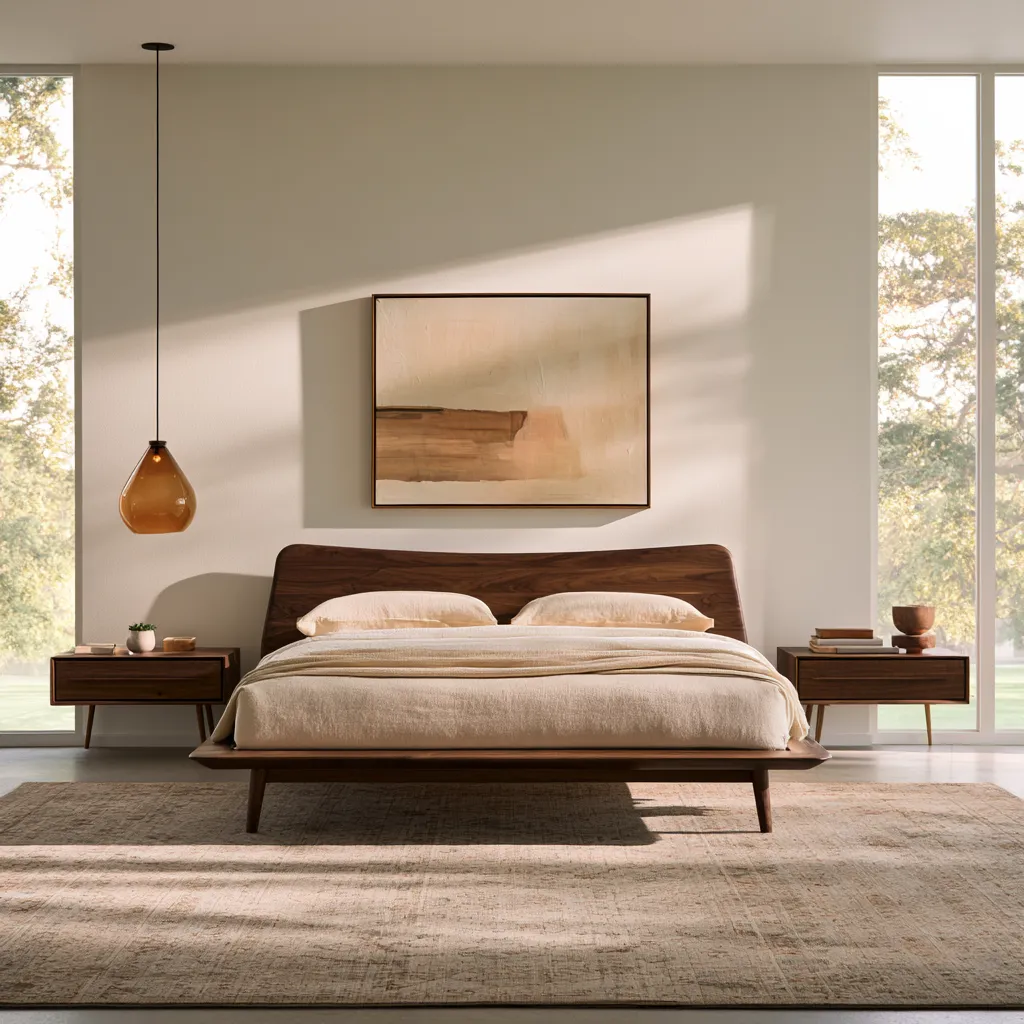
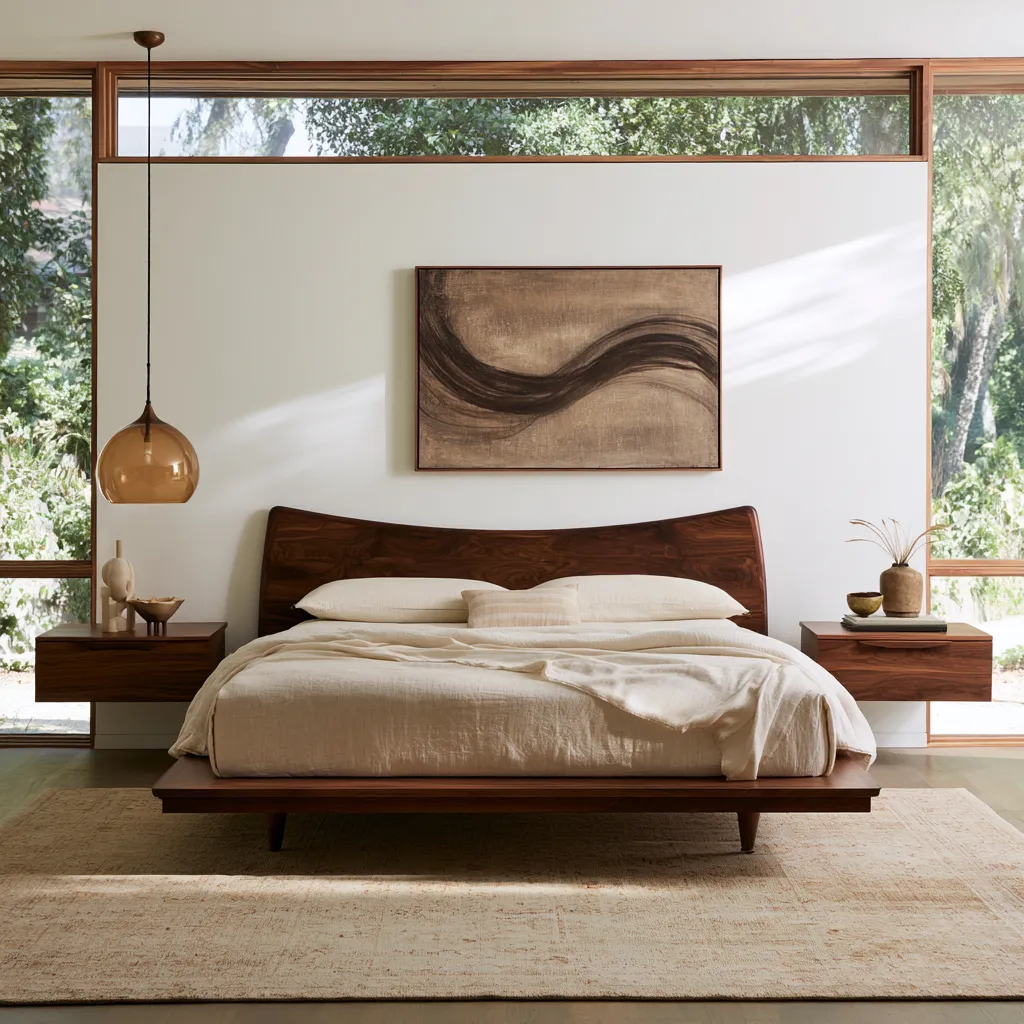
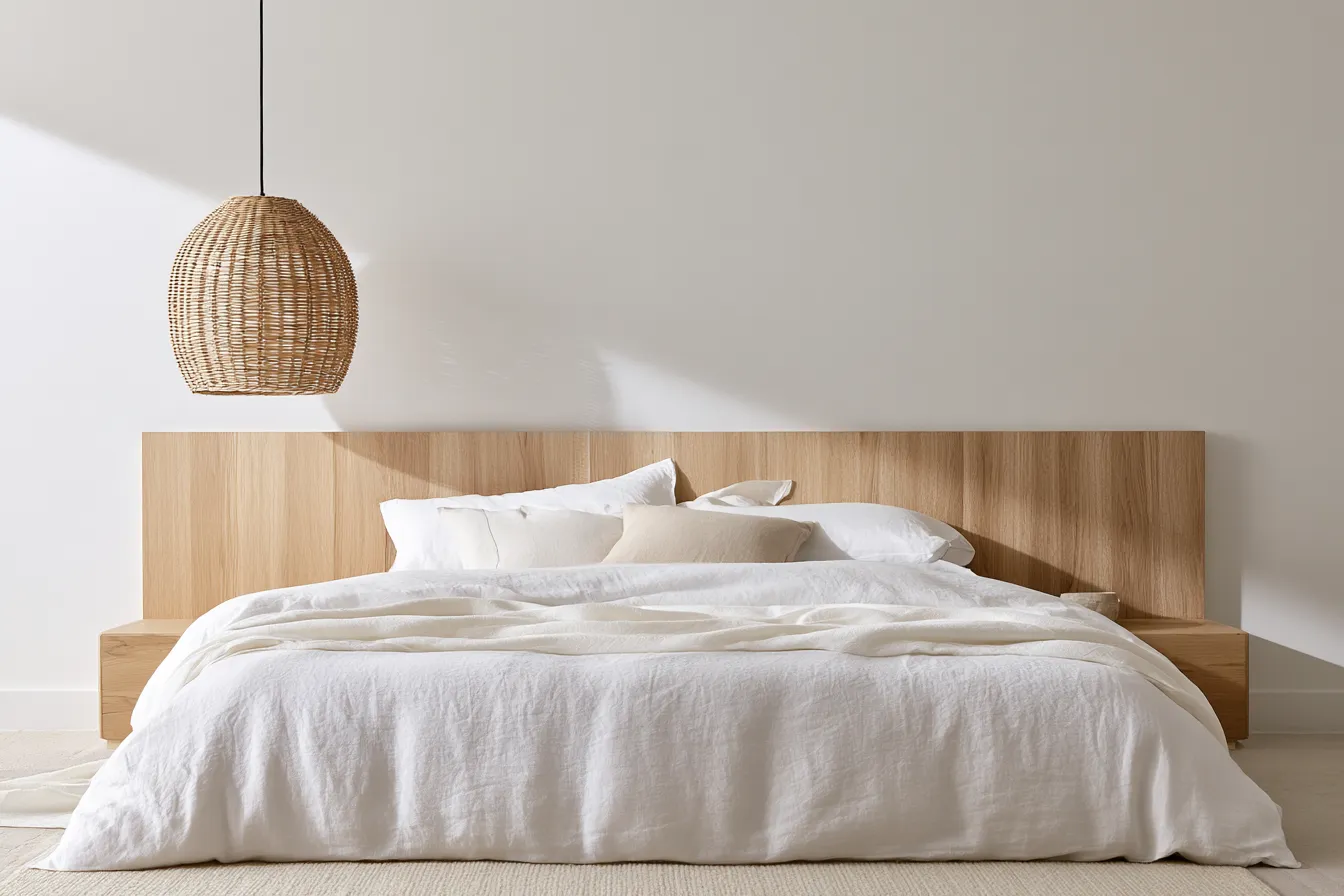
Mid century bedrooms succeed by doing less. The platform bed with a walnut headboard, a pair of floating nightstands, and one statement pendant overhead — that is the skeleton. Everything else — a curved accent chair, a geometric rug, a piece of abstract wall art — layers in gradually. The style’s resistance to clutter is what makes it such a reliable framework for bedrooms specifically: the room stays calm even when the palette is bold.
Black bedroom furniture reads unexpectedly well in mid century contexts because the style’s warm wood tones provide natural contrast, and the dark frames echo the thin black metal legs on so much original mid century seating. White bedroom furniture in this aesthetic works best when the finish has warmth — an off-white or cream rather than a clinical stark white.
- Curved Bedroom Furniture — Why Soft Lines Replace Sharp Edges
- 12+ Mid-Century Modern Black Bedroom Furniture Decorating Ideas
- 9+ Mid-Century Modern White Bedroom Furniture Ideas
- 10+ Guest Bedroom Decor Updates in Retro Mid Century Style

Dining Rooms, Outdoor Spaces, and the Rest of the House
The dining room in a mid century home is a study in proportion: a round or oval table on a pedestal base (or four tapered legs), chairs with upholstered seats and exposed wood frames, and a pendant that hangs low enough to anchor the table without blocking the view across it. Wall decor in the dining room follows the same logic as the rest of the house — meaningful rather than decorative, graphic rather than fussy.
Mid century style extends naturally outdoors, particularly through teak furniture that weathers and ages in ways that only improve the aesthetic. The lake house interpretation of the style — natural materials, generous glazing, connection to water and trees — is one of the most coherent regional variations of the mid century modern vocabulary.
- 4+ Dining Table Decor Ideas with Vintage Mid Century Flair
- 11+ Mid-Century Modern Dining Room Wall Decor Ideas
- 3+ Mid Century Teak Patio Furniture Design Ideas
- 9+ Mid-Century Lake House Decor Ideas for Retro Flair
- Retro-Inspired Simple Porch Design for Mid-Century Modern Homes
- Basement Wet Bar Design — How Home Bartending Transforms Entertaining
Furniture, Fixtures, and the Materials That Define the Midcentury Modern Look
Furniture is where mid century style becomes most legible. The silhouettes are distinct enough that a single piece — a walnut sideboard on hairpin legs, a tulip table, a wire shell chair — can shift an entire room’s register. The movement produced some of the most-copied furniture designs in history: Eames, Saarinen, Nelson, Wegner, Jacobsen, and Nakashima all working within a ten-year window and producing objects still in active production or high demand on the vintage market.
The current furniture landscape shows two parallel movements inside the mid century aesthetic: artisan-made pieces that recover the handcrafted quality of the originals, and curved soft-line furniture that reinterprets the era’s organic forms through a contemporary lens. Both movements are a reaction to the mass-market flat-pack furniture that dominated the 2010s — a decade that produced very little worth keeping.
- Curved Furniture Interiors Replace Sharp Angles in Modern Homes
- Why Curved Furniture Is Displacing the Mid-Century Angular Look
- Why Artisan-Made Furniture Is Replacing Mass Market Design
- 3D Printed Furniture Transforms Interior Spaces With Precision Customization
- Brass and Stone Fixtures That Transform Wet Spaces Into Statement Rooms
- Recycled Aluminum Materials Transforming Interior and Exterior Design
- Radiant Floor Heating Transforming Luxury Home Renovation
Wall Decor, Lighting, and the Details That Finish a Mid Century Interior
The detail layer — mirrors, wall art, window treatments, rugs, light fixtures — is where mid century style either coheres or collapses. The rules are simple but require restraint: every decorative decision should have a reason, and that reason should connect back to form, material, or scale rather than trend. A starburst mirror over the mantle reads as a cliché in 2025; an asymmetric brass-framed mirror at the right scale reads as a considered material choice.
Window treatments in a mid century interior serve the light rather than block it. Sheer panels, roller blinds in natural linen, or no treatment at all on a window with a strong view — these are the moves. Heavy drapery returns only when it can double as a color or texture statement.
- 10+ Mid-Century Modern Hanging Wall Decor Ideas
- How to Blend Mid Century Modern Window Treatments into Your Decor
- Mid-Century Modern Living Room Charm with Stylish Drapery Designs
- 20+ Modern LED TV Wall Panel Designs That Elevate Mid-Century Spaces
- Mid-Century Modern Latest Designs of Main Doors
- 3D Printed Custom Jewelry — Where Precision Meets Personalization
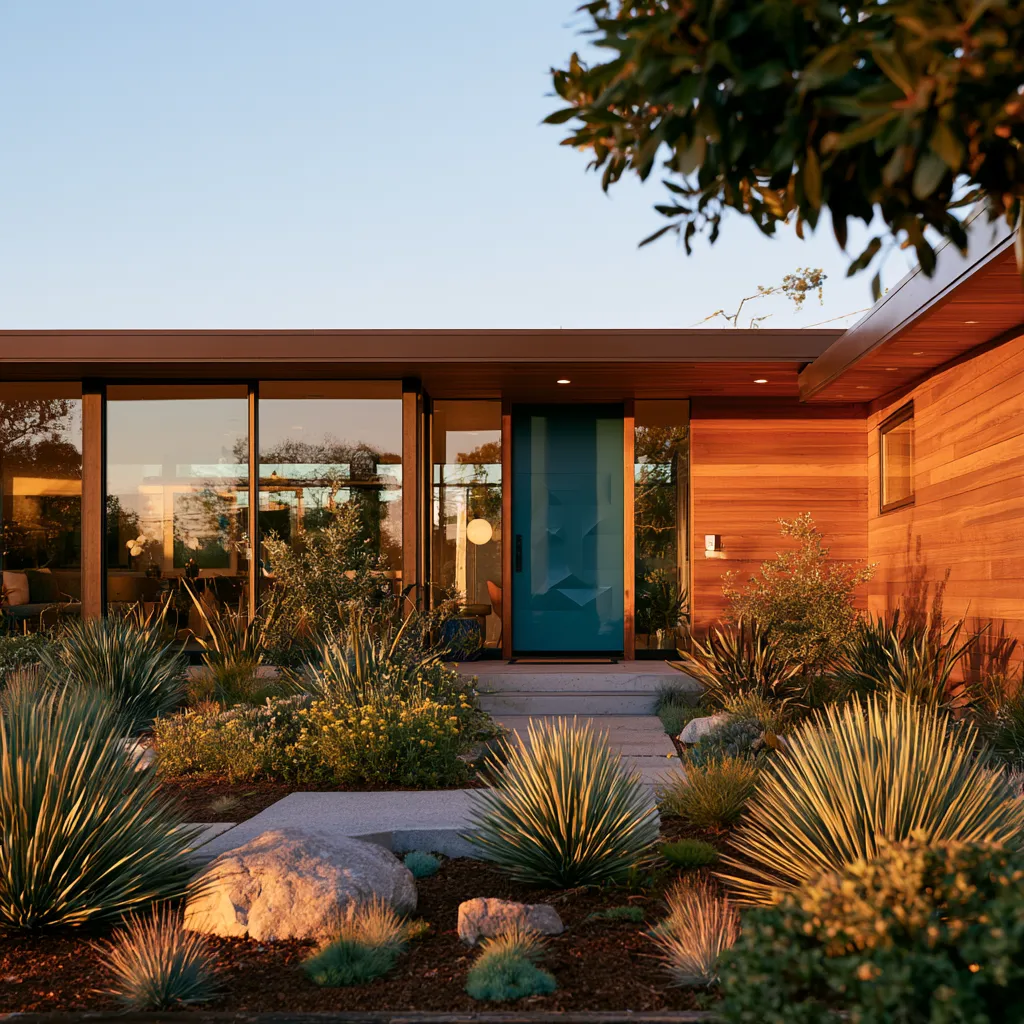
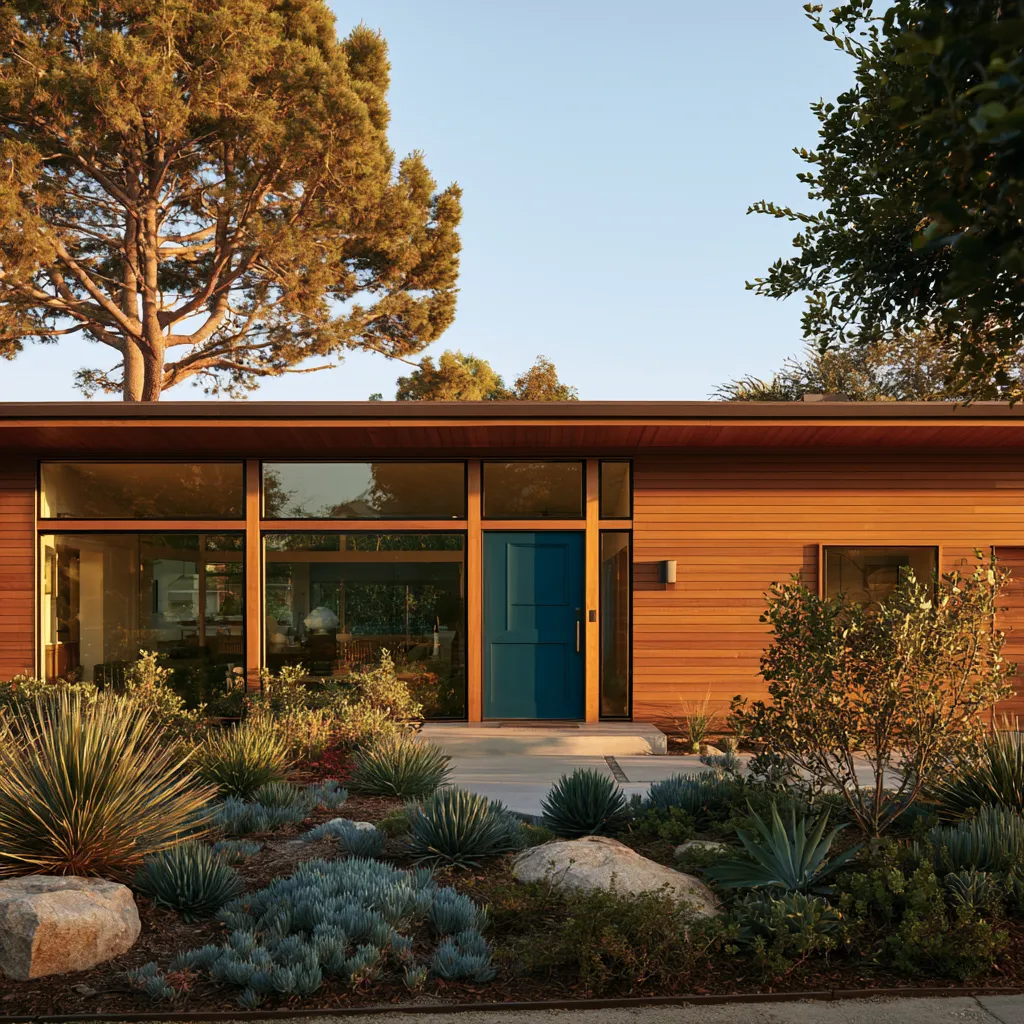
Architecture, Technology, and Where the Mid Century Modern Aesthetic Goes Next
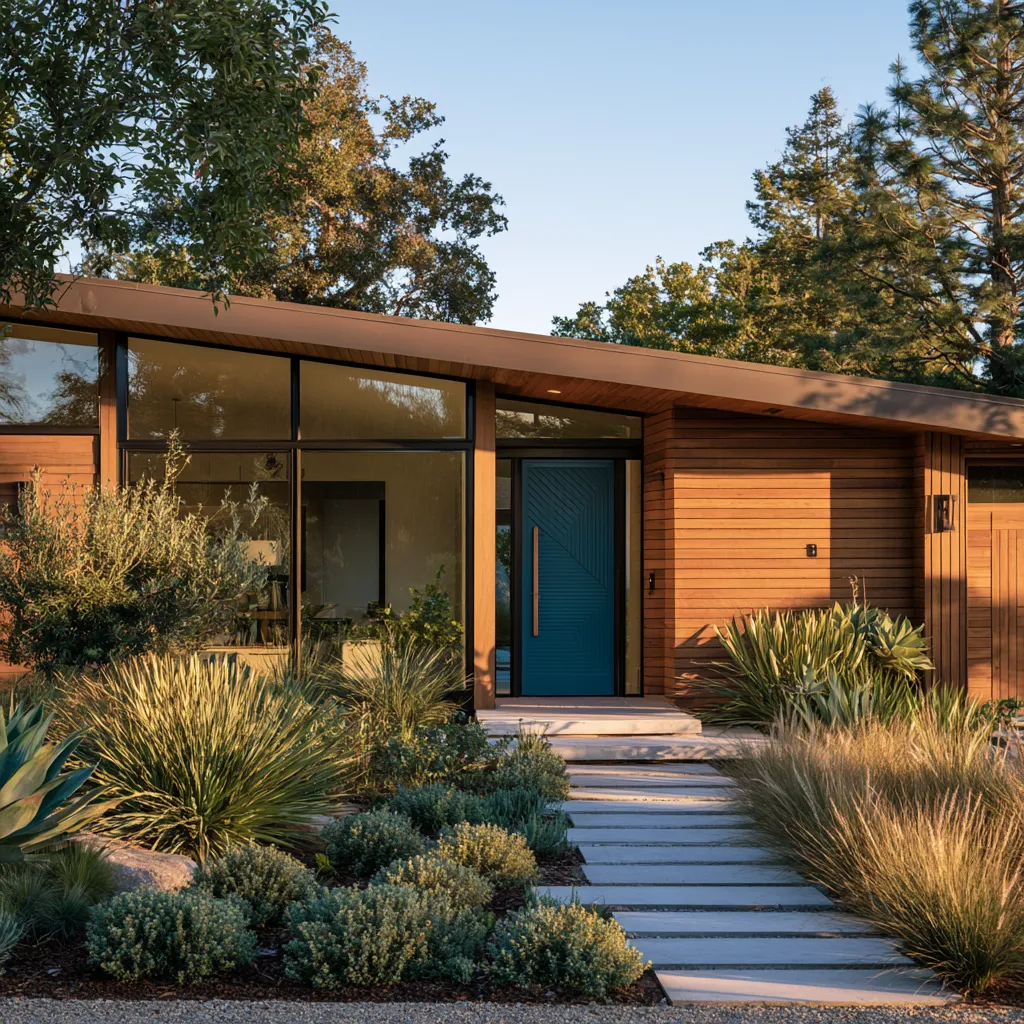
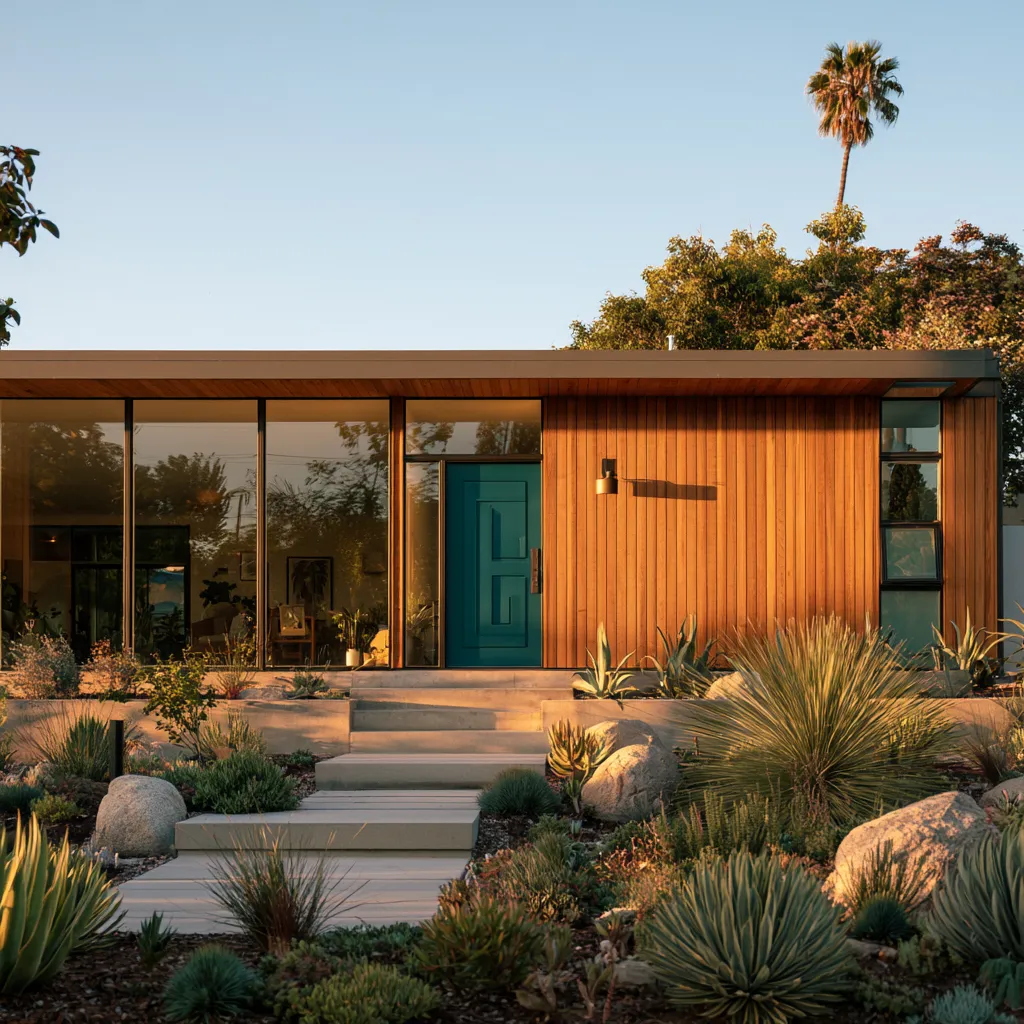
Mid century style has always been comfortable with technology. The original movement embraced new manufacturing techniques — fiberglass molding, welded steel rod, injection-molded plastic — as eagerly as it embraced natural materials. It follows that the style absorbs contemporary technology without friction. 3D-printed furniture and custom jewelry production fit the mid century logic of precision manufacture in service of individual form. Radiant floor heating — invisible, clean, and functional — aligns perfectly with a design ethos that hides infrastructure and celebrates surface.
The liquid house concept — metal integrated into residential architecture as a primary material — connects the mid century’s love of industrial materials with the contemporary demand for buildings that feel engineered as well as designed. These are not departures from mid century style. They are continuations of its original argument.
- Metal Meets Mid-Century: The Evolution of Liquid House
- 3D Printed Furniture Transforms Interior Spaces With Precision Customization
- Radiant Floor Heating Is Transforming Luxury Home Renovation
- Recycled Aluminum Materials Transform Interior and Exterior Design
How to Build a Cohesive Mid Century Style Without Starting From Scratch
Most people come to mid century style not through a full renovation but through a single piece of furniture or a bathroom fixture that leads them somewhere unexpected. The style rewards incremental commitment: one walnut credenza in a room that otherwise does not change is already a design decision that improves the room. From there, the next move is usually color — one accent pillow, one throw, one piece of wall art — followed eventually by lighting, then rugs, then hardware.
The one thing to avoid is the costume version of the aesthetic: a room where every object is period-accurate but the space has no warmth, no life, and no sense that anyone actually lives there. Mid century style at its best is not a museum recreation. It is a set of principles — honest materials, considered proportion, restrained ornament, and strong connection to the natural world outside — applied with enough confidence to leave room for imperfection.
You Might Also Like

Related Topics