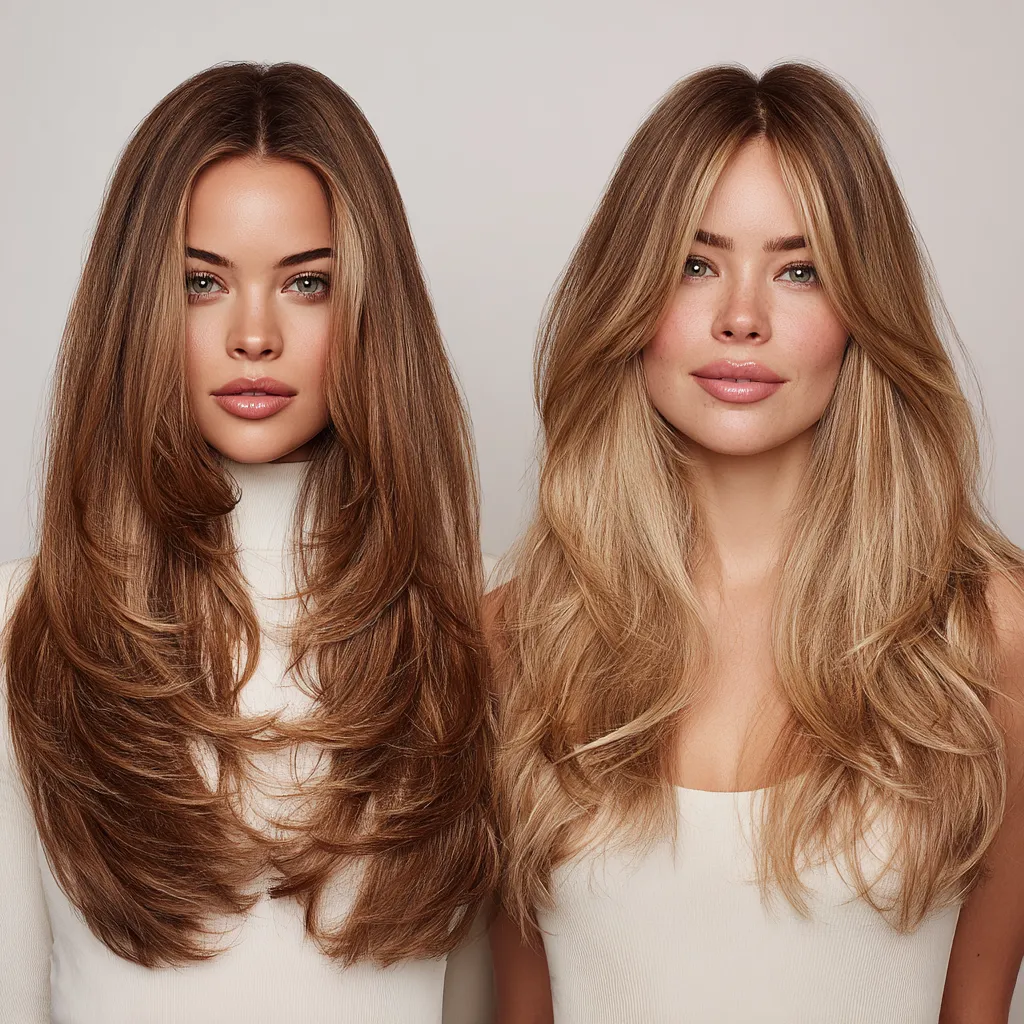
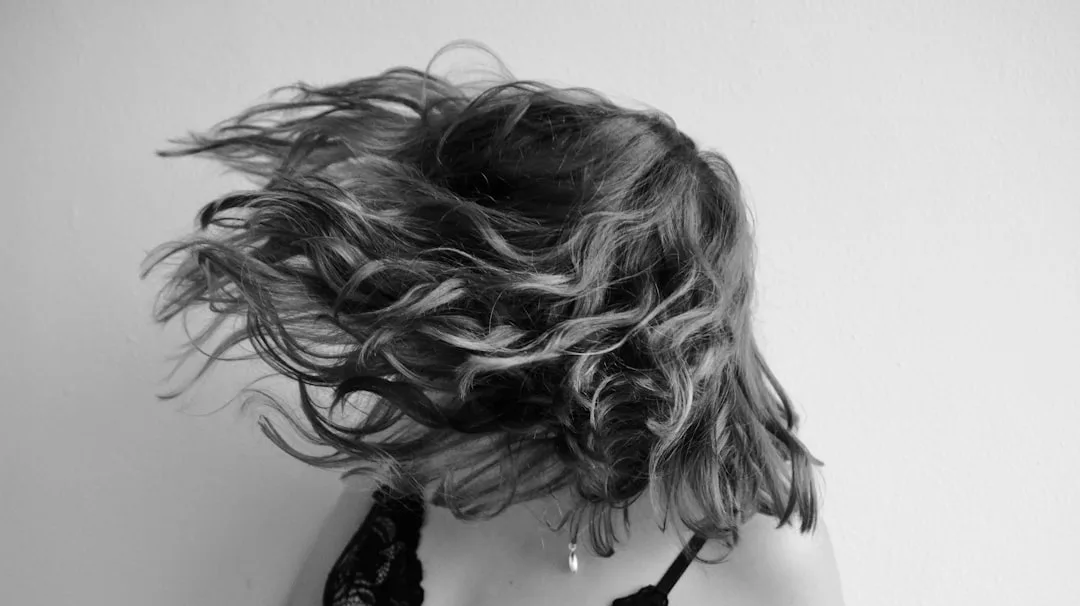
Angled haircuts for thin straight hair solve a structural problem that products alone can’t fix. Sharp directional lines redirect the eye, shorter backs lift the silhouette, and longer front panels frame the face with geometry that reads as density — even when the individual strands are fine. The result is a cut that does the volume work for you before a single product touches your hair.
Vivid color accelerates every benefit here. Magenta, turquoise, and violet are not merely aesthetic choices — each hue increases light reflection along the hair shaft, making edges appear crisper and weight distribution more dramatic. On thin straight hair, that optical contrast is exactly the illusion you need.
Stylists consistently recommend angled cuts as one of the most reliable structural solutions for fine strands that collapse under their own length. The three variations below — asymmetrical, graduated, and long-front — cover different face shapes and maintenance preferences, so there is a workable version regardless of how much chair time you want to commit to.
- Angled cuts work on thin straight hair by redirecting weight rather than adding bulk
- Asymmetric designs draw attention to shape, not strand density
- Graduated stacking removes bulk at the nape and creates lift at the crown
- Long front panels elongate the neck and add profile drama without volume spray
- Fine hair needs trims every 4–6 weeks or the angle collapses at the nape
- Color Wow Raise the Root ($26) is a reliable root-lift spray for maintaining shape between appointments
Sharp Asymmetry Pulls Focus Away from Density — Magenta Angled Bob
An extreme angled bob with deliberate asymmetry is one of the most effective angled haircuts for thin straight hair because it redirects the viewer’s eye to the cut’s geometry rather than the hair’s density. Deliberate imbalance in length creates a geometric silhouette that looks intentionally sculpted at every angle. A vivid magenta tone amplifies each edge, making the structural lines impossible to miss even in motion.


The cut begins with a precise short nape that rises steeply toward longer front pieces — a slope that hugs the jawline and creates the illusion of curve on otherwise flat strands. Ask yourself: does the shape alone convince you that the hair is fuller? That is the test any structural cut should pass on fine hair. The weight in each section distributes toward the longer panel, giving the appearance of density without adding a single gram of product. Fine hair with the right angled cut doesn’t need heavy mousse — the geometry does what the mousse is usually hired to fake.
Magenta earns its place here beyond trend value. The saturated hue reflects light along every sharp edge of the cut, making the lines sharper than they would read in a neutral tone. Darker roots with luminous mid-lengths also create a depth gradient that adds the optical impression of more strands. Avoid washing vivid color daily — frequency strips tone within days, and on thin straight hair, faded magenta reads flat rather than lived-in.
Styling is a two-step routine: a light heat protectant misted from eight inches, then a flat iron to seal each section. Color Wow Raise the Root ($26 for 5 fl oz) applied at the roots before blow-drying adds lift without stiffness — the product is formulated specifically for fine hair. Skip heavy serums on this cut; they sit on straight strands and pull the nape edge inward by midday, which turns a sharp silhouette into a limp flip. A dime-sized drop of lightweight shine mist on the ends is enough to highlight the color without weighing the cut down.
- Don’t use thinning shears on fine hair — they remove what little weight the strands have and leave wispy ends that no product can rescue
- Don’t go longer than 6 weeks between trims — fine hair shows nape collapse and uneven growth faster than thick hair, and the shape can be unrecoverable without a full reshaping appointment
- Don’t apply heavy serums before air-drying — they drag the angled edge downward and read as greasy on straight strands before noon
- Don’t wash vivid color daily — magenta, turquoise, and violet fade within four to five washes on fine hair; use color-safe shampoo every three days maximum
Graduated Layers and Turquoise — Where Angled Haircuts for Thin Straight Hair Get Structural Lift
Graduated layers paired with a turquoise tone represent one of the most technically reliable angled haircuts for thin straight hair — the stacking technique removes bulk at the nape while building visual weight where it matters most. Unlike a one-length angled bob, a graduated cut creates a curved back section that pushes the silhouette outward at the crown. Hair Cuttery stylists note that fine hair needs trims every 4–6 weeks to prevent ends from becoming thin and fragile — a schedule that matters especially for graduated cuts, where the stacked layers lose their shape faster than blunt perimeters.


The technique starts at the nape with the shortest point, then builds forward through stacked layers that grow progressively longer toward the face. Think of it like a staircase viewed from the side: each step is intentional, and the structure holds even without product. On straight fine hair, this subtle stacking is the closest thing to natural volume — the layers don’t require curling to read as textured, and a round-brush blowout takes less than ten minutes. What does not work is asking a stylist for this cut and then skipping the nape precision — a poorly graduated nape on straight hair flips outward and reads as a styling failure rather than a structural choice.
Turquoise amplifies the layer structure by catching light differently across each graduated section. The cooler tone creates what colorists call “icy brilliance” — a reflective quality that reads as texture even on strands that lie perfectly flat. Why does this matter on fine hair? Because texture is perceived visually before it is felt, and turquoise creates the impression of it without a single product. The layered lines become distinct under direct light, showing the cut’s architectural detail with every movement.
Color Wow Raise the Root ($26), applied to damp roots and activated with a blow dryer, is the one product worth the counter space for this style — it forms a flexible lift at the root without stiffness or residue. For maintenance, stylists recommend trimming the stacked nape every four to six weeks; letting it grow out past six weeks on thin straight hair creates an undefined mass rather than a clean graduated shape. For more on how layering techniques build volume in fine hair without sacrificing structure, the artfasad.com article on styling layers in a haircut for thin hair to look thicker covers the mechanical logic behind each approach.
Long Front Panels in Violet — Straight and Thin Hair Rendered Dramatic
Long straight and thin hair styles with extended front lengths reframe the entire problem of fine strands — instead of fighting flatness, they use directional length to pull the silhouette forward and down. The longer front panel, brushing the collarbone or below, draws the eye along a line rather than across a volume. On thin straight hair, that linear reading is far more flattering than any attempt at fullness, because the cut works with the hair’s natural fall rather than against it.


The defining detail is the severe slope from a short, shaped back to a front panel that lands at or below the collarbone. This steep angle gives a dynamic side profile that no blunt cut produces — from the front, the hair frames the face asymmetrically; from the side, the drop reads as intentional structure. For thin straight hair, this avoids the flatness problem entirely because length itself becomes the visual anchor rather than density. The trick is keeping the back genuinely short — long in the back softens the angle and undoes the architectural effect that makes fine hair look considered rather than limp.
Violet adds depth without overwhelming the cut. The darker root area and lighter, luminous ends create a gradient that gives the illusion of thickness at a distance — the same optical logic that interior designers use when painting a wall in ombre to make a narrow room read as wider. On fine straight hair, any gradient color creates perceived texture that a flat single-process cannot. The Living Proof Perfect Hair Day 5-in-1 Styling Treatment ($30) applied to damp hair and left to air-dry keeps the violet ends smooth without the greasy residue that most serums leave on straight fine strands by noon.
Styling involves a flat iron pass for the back sections and a gloss-enhancing mist for the longer front. Tucking one side behind the ear shifts the visual symmetry and reveals the angle from a fresh perspective — a small adjustment that changes the entire impression of the cut without touching a single product. For women with fine hair, salon professionals recommend trimming every 4–6 weeks to prevent ends from thinning and losing the cut’s structural integrity; at that frequency the long front stays sharp rather than gradually blending into an undefined length. For additional context on low-maintenance short straight styles that pair well with this length range, the artfasad.com article on low maintenance short haircuts for straight hair explains which back-nape approaches work across different straight textures.
| Style | Best For | Trim Interval | Key Product |
|---|---|---|---|
| Magenta Asymmetric Bob | Maximum geometric drama, any face shape | Every 4–5 weeks | Color Wow Raise the Root ($26) |
| Turquoise Graduated Bob | Crown lift on flat fine hair | Every 4–6 weeks | Root-lift spray + round brush |
| Violet Long Front Panel | Linear profile, elongating neck | Every 5–6 weeks | Living Proof 5-in-1 ($30) |
Final Take
Angled cuts don’t add volume — they make volume irrelevant.
Sharp directional geometry redirects the eye to the cut’s lines rather than the hair’s density. All three styles here prove the same point: the right angle on thin straight hair beats any volumizing product on the market.
Fine hair demands trims every 4–6 weeks — skip one appointment and the structural edge that makes these cuts work collapses at the nape. Budget the chair time alongside the color maintenance.
Save this post before your next salon consultation.