A teal and yellow kitchen works because the two colors sit on opposite sides of the color wheel — complementary contrast that creates energy without chaos. Teal reads as cool and grounding, yellow reads as warm and forward-moving. Together they prevent the space from collapsing into a single mood, which is exactly what small kitchens need.
The challenge is scale. In a compact room, bold color decisions have nowhere to hide. Applied right, this palette makes the kitchen feel intentional and confident. Applied wrong — too much of both at equal weight — it turns into visual noise that exhausts the eye by 9am.
The three small kitchen furniture approaches below each distribute teal and yellow differently: one bets on cabinets and backsplash, one leads with a dining set, one relies on open shelving. Any of the three can work in under 120 square feet — the difference is where you want the room’s energy to land.
- Teal cabinets pair best with yellow ceramic backsplash tile — ceramic installs for $6–$28 per square foot depending on complexity.
- Yellow dining sets work hardest in narrow galley kitchens where the table acts as the room’s visual anchor.
- Open shelving with painted teal and yellow boards holds 50–100 lbs per shelf with proper brackets — enough for full dishware sets.
- Avoid splitting teal and yellow at perfect 50/50 across all surfaces — one color must dominate, the other accent.
- Turquoise reads warmer than true teal; if natural light is limited, turquoise-leaning shades prevent the palette from feeling cold.
What Happens When Teal Cabinets Meet a Yellow Backsplash
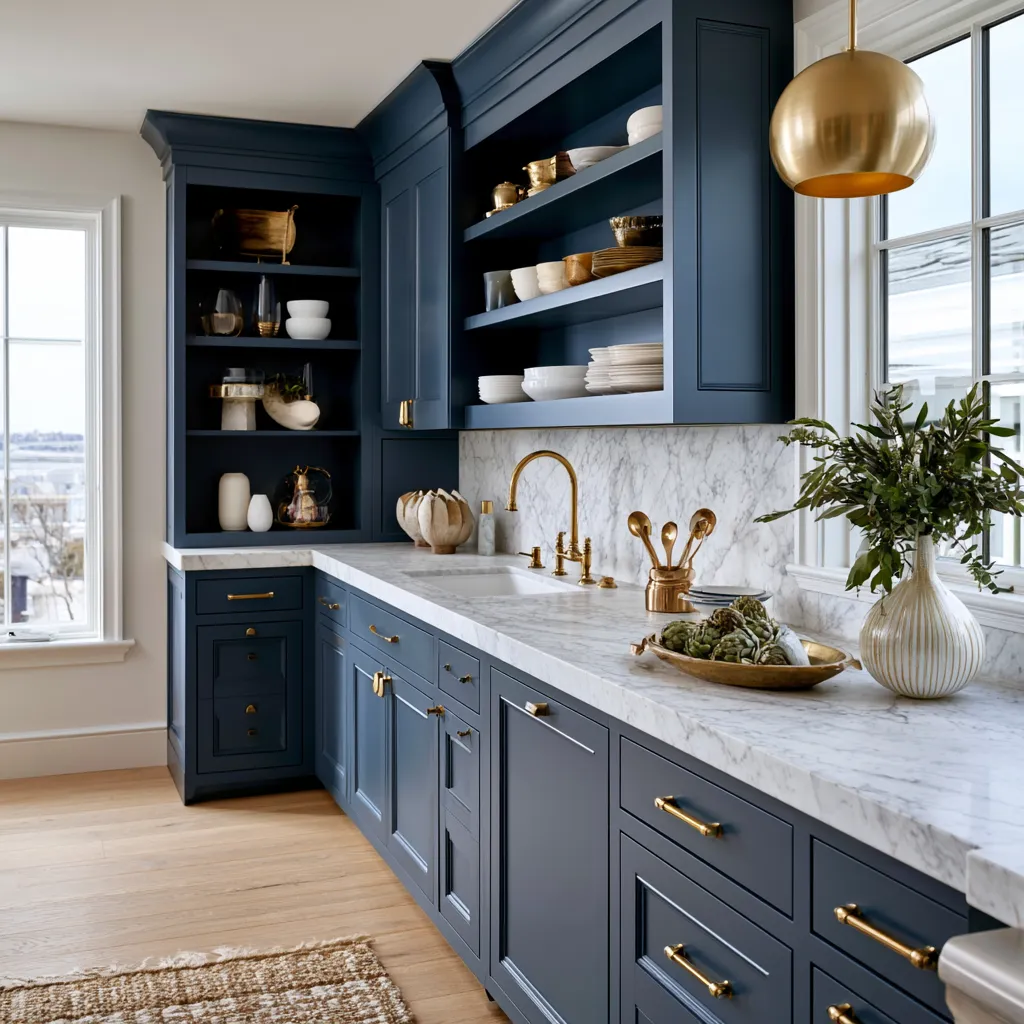
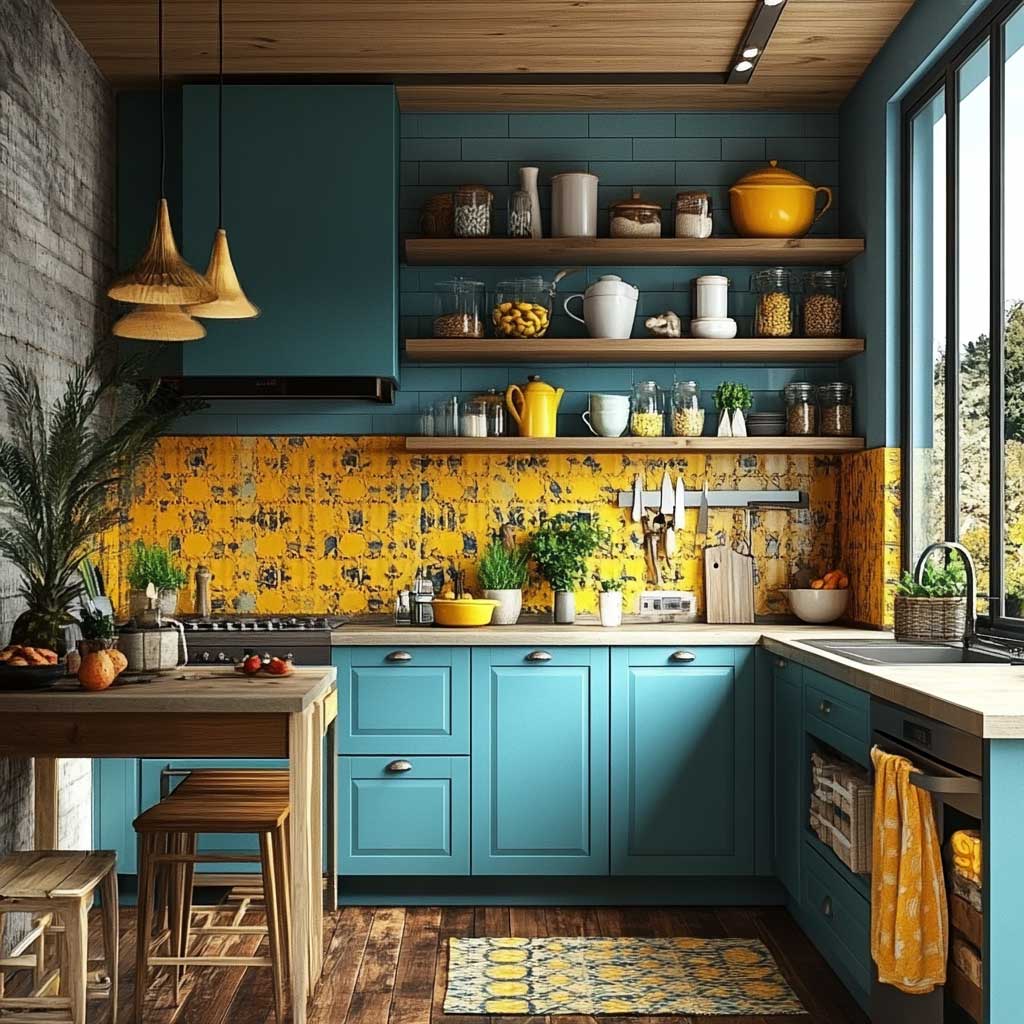
Teal and yellow kitchen design reaches its highest contrast in the cabinet-plus-backsplash setup, where the color split is architectural rather than decorative. The cabinets claim the largest surface area; the backsplash answers from the wall. Neither has to fight for dominance because they occupy different planes of the room. Ceramic backsplash tile installed professionally runs $6–$28 per square foot, making yellow ceramic subway tiles the budget-conscious way to commit to the palette without repainting cabinetry.


Teal cabinet paint ranges from the deeper blue-green end (closer to peacock) to lighter aqua. Peacock shades absorb more light and make a small kitchen feel moody rather than bright — an effect that can read as sophisticated in a well-lit room and oppressive in one with a single north-facing window. The lighter aqua shades reflect more light back into the room, which is generally the smarter choice below 100 square feet. Farrow & Ball color expert Patrick O’Donnell notes that teal paired with buttery yellows creates a “more established, settled look” rather than the jarring contrast people fear. What works against this palette: adding a third accent color. Yellow plus teal plus anything else tips into chaos, and small kitchens pay the price immediately.
Refinishing existing cabinets in teal costs $1,500–$4,500 for a professional paint job versus full replacement — a realistic entry point for renters or anyone not ready for a full remodel. Wood countertops in walnut or oak add warmth that neither teal nor yellow alone can supply. Stainless appliances keep the overall read from going too retro. For yellow and teal paint combinations that extend beyond the kitchen, the same principles apply: one color as foundation, the other as accent.
Does the backsplash have to be solid yellow? No — and all-over saturated yellow grout lines can feel relentless at close range. A better approach is mustard-toned subway tile in a staggered pattern with white grout, which reads as yellow without the intensity. Pendant lights in aged brass or matte black over a small dining nook pull the whole setup together without introducing a fourth material that complicates the palette. Avoid chrome pendants in this setup — they echo the stainless appliances but add a clinical note that works against the warmth the yellow is trying to supply. According to Livingetc’s color experts, gold-tinted artificial light at night draws out teal’s depth in a way cooler-temperature bulbs never manage.
Yellow Dining Set Centered in a Teal and Yellow Kitchen
Flipping the hierarchy — putting yellow into the furniture and teal into the walls or accents — changes the entire room logic. A yellow dining table in a small kitchen acts like a lamp: it radiates warmth from a fixed point and everything else in the room reads relative to it. This approach suits galley kitchens especially well because the table provides a visual stop at the end of the run, preventing the space from feeling like a corridor.


Mustard yellow holds better than pure chrome yellow in dining furniture because it has enough grey in the pigment to age gracefully. Chrome yellow furniture starts to read as children’s furniture within a few years — not the intent. Dining chairs with teal upholstered seats against a yellow table frame hit the color ratio without requiring the walls to carry any work. The split works because neither piece is monochromatic: the chair seat is the teal, the frame or the table is the yellow, and the surrounding kitchen cabinetry can stay neutral white or natural wood without looking timid.
A round table is almost always the right call for a kitchen eating area under 60 square feet. Round tables can seat the same number of people as square tables of similar dimension while taking up less circulation space — no corner to catch a hip on the way past. What doesn’t work: upholstered yellow dining chairs in a kitchen where cooking produces steam or grease mist. Fabric absorbs odors and discolors within months. Opt for molded plastic seats in yellow with a powder-coated steel frame, or solid wood chairs with a yellow lacquer finish that wipes clean.
Teal accents in this setup — cushions, placemats, a pendant light shade — don’t need to be expensive to land correctly. The color is doing the work, not the material. A teal ceramic pendant shade over a yellow table costs under $60 at most home goods retailers and creates a coherent overhead moment that pulls the eye upward, making the kitchen feel taller. Avoid teal and yellow in equal proportion on the same object: a table that is half teal and half yellow reads as a craft project rather than a design decision.
Don’t use both teal walls and a teal dining set in the same small kitchen — the yellow furniture loses all contrast and the room reads as a single-color space. The dining set needs a neutral or near-neutral backdrop to do its job as a focal point. Neutral white, warm grey, or natural wood — any of these lets the yellow furniture carry the moment without competition.
Open Shelving as the Color Delivery System in a Teal and Yellow Kitchen
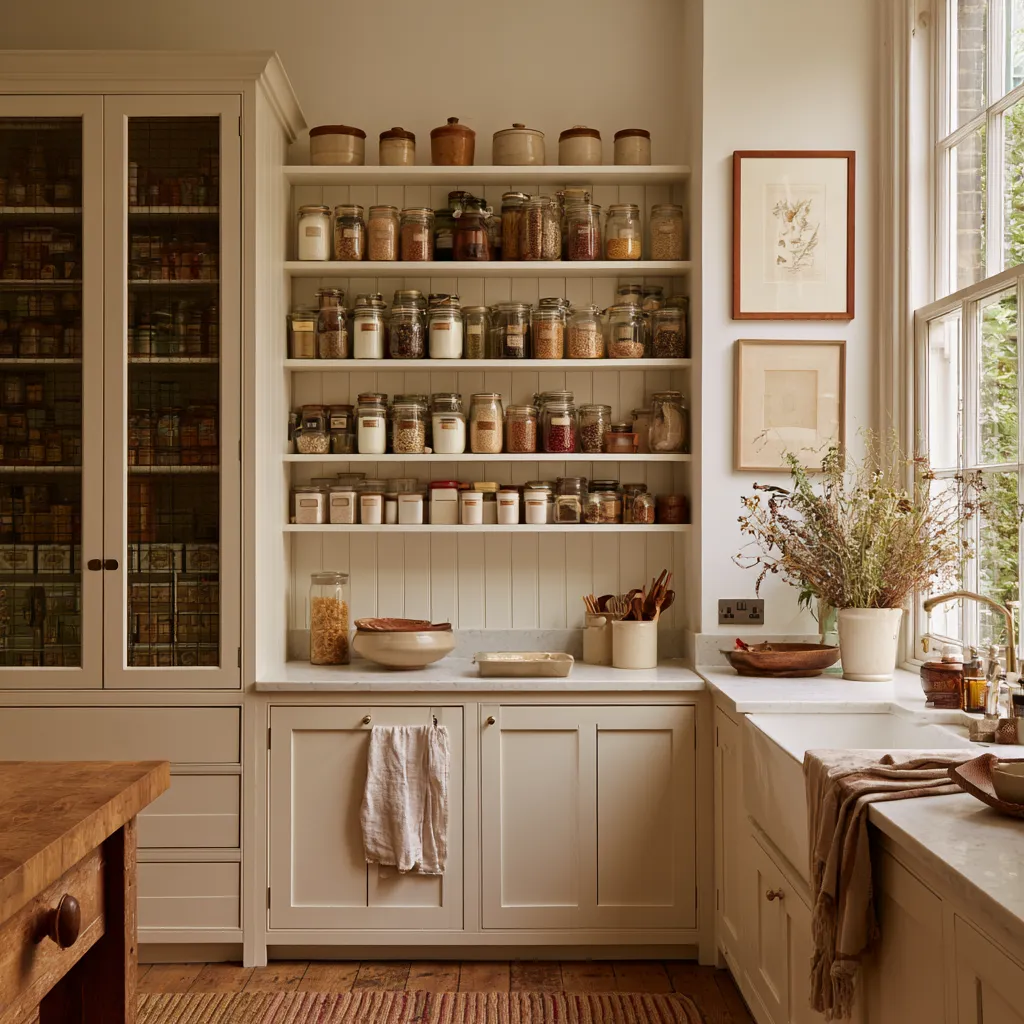
Open shelving distributes teal and yellow across the vertical plane of the kitchen rather than concentrating them at counter height or on a single piece of furniture. Alternating painted boards — one teal, one yellow, one teal — turn the shelves themselves into the color story, so even neutral dishware reads within the palette. Kitchen floating shelves with proper stud-mounted brackets hold 50–100 lbs per shelf, which covers a full set of ceramic dinner plates and a row of glass storage jars without any structural concern.
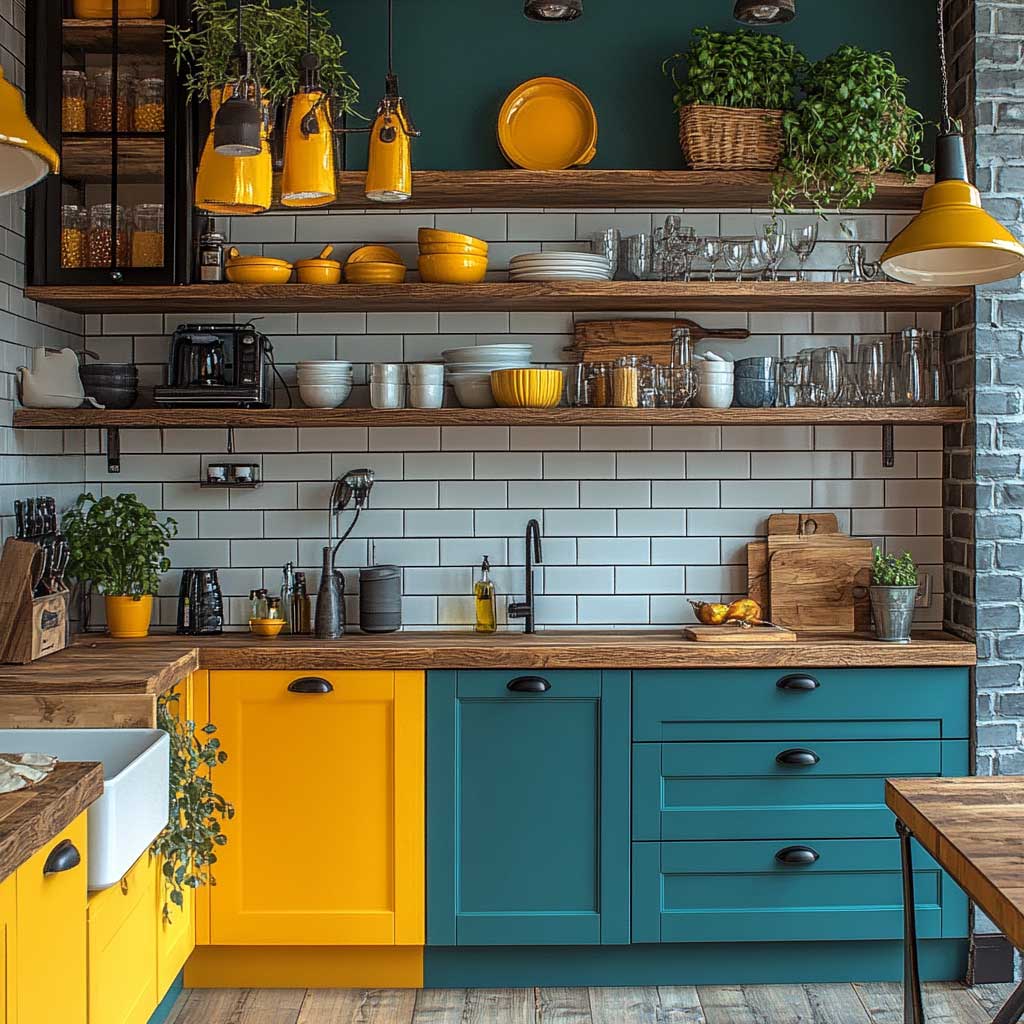


The trickiest part of open shelving is the wall behind the shelves. Painting the back wall white reflects the teal and yellow shelf colors and keeps the setup light. Painting the back wall a third color — anything beyond white or a very light grey — collapses the whole concept into clutter. Stylists recommend keeping the back wall strictly neutral and letting the shelf paint carry all the chromatic work. Think of the back wall as the quiet side of a conversation: the shelves are talking, the wall is listening.
What to put on the shelves matters as much as the shelf color. Glass storage jars, terracotta planters, and white ceramic dishes all read well against both teal and yellow backgrounds. Avoid storing items that are visually inconsistent — a random stack of takeout containers next to a vintage pitcher destroys the curated look open shelving requires. The storage approach that actually works: put everyday items behind cabinet doors if you have any, and reserve the open shelves for the 20 percent of your kitchen objects that are worth looking at. For more ideas on storage logic in tight spaces, small kitchen storage solutions on a budget covers the broader category.
LED strip lighting mounted underneath each shelf adds about $25–$40 per shelf run and transforms the setup after dark — the teal and yellow boards glow from beneath rather than reading flat. This works especially well in kitchens that face north or have limited window area. One thing to avoid: open shelving directly above the stove. Grease mist from cooking coats everything on those shelves within weeks, and repainting teal boards every season is not a realistic maintenance schedule.
| Approach | Color Placement | Best For | Key Risk |
|---|---|---|---|
| Teal Cabinets + Yellow Backsplash | Teal on largest surface, yellow on wall | Kitchens with natural light and upper cabinets | Aqua too dark in north-facing rooms |
| Yellow Dining Set + Teal Accents | Yellow in furniture, teal in cushions/pendants | Galley kitchens with eating nook | Fabric seats absorb grease and odors |
| Teal and Yellow Open Shelving | Color on shelf boards, neutral back wall | Kitchens with limited or no upper cabinets | Grease buildup above stove level |
Final take
A teal and yellow kitchen works when one color leads and the other answers.
Split the palette evenly and both colors fight for attention — the result feels busy, not bold. Let teal dominate the cabinet or shelf surface area, and let yellow arrive as the second voice through tile, chairs, or painted boards.
Open shelving is the most reversible approach: a can of paint and an afternoon change the entire room. Cabinets are the most committed move, but at $1,500–$4,500 to refinish rather than replace, the cost of changing your mind is manageable.
Save this post — and come back when you’re standing in a hardware store holding two paint swatches and can’t decide which one is actually teal.
FAQ
What is the best shade of teal for a small kitchen?
Can turquoise replace teal in a yellow kitchen?
How do I add yellow to a teal kitchen without repainting?
Does a teal and yellow kitchen work with wood floors?
What countertop color works with teal cabinets and a yellow backsplash?
How much does it cost to paint kitchen cabinets teal?
Complete guide
Furniture Decor Ideas for Every Room in Your Home
Living room, bedroom, dining, kitchen, outdoor — all in one place
Complete guide
Every Modern Kitchen Design Idea Worth Stealing Right Now
Layout, cabinets, islands, materials, color, lighting — all in one place
Complete guide
Small House Design Ideas That Make Every Square Foot Feel Intentional
Exteriors, layouts, kitchens, bedrooms, bathrooms, outdoor — all in one place