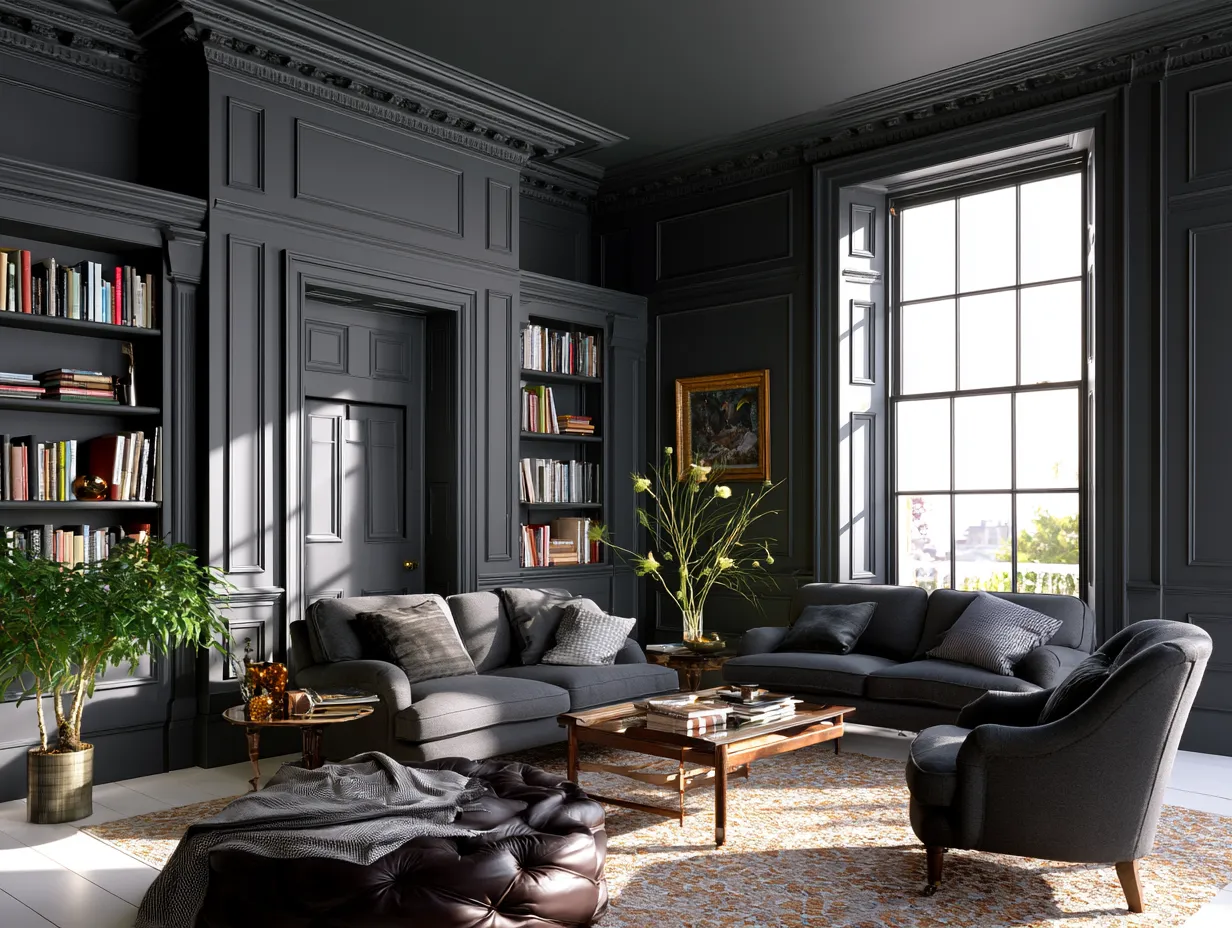
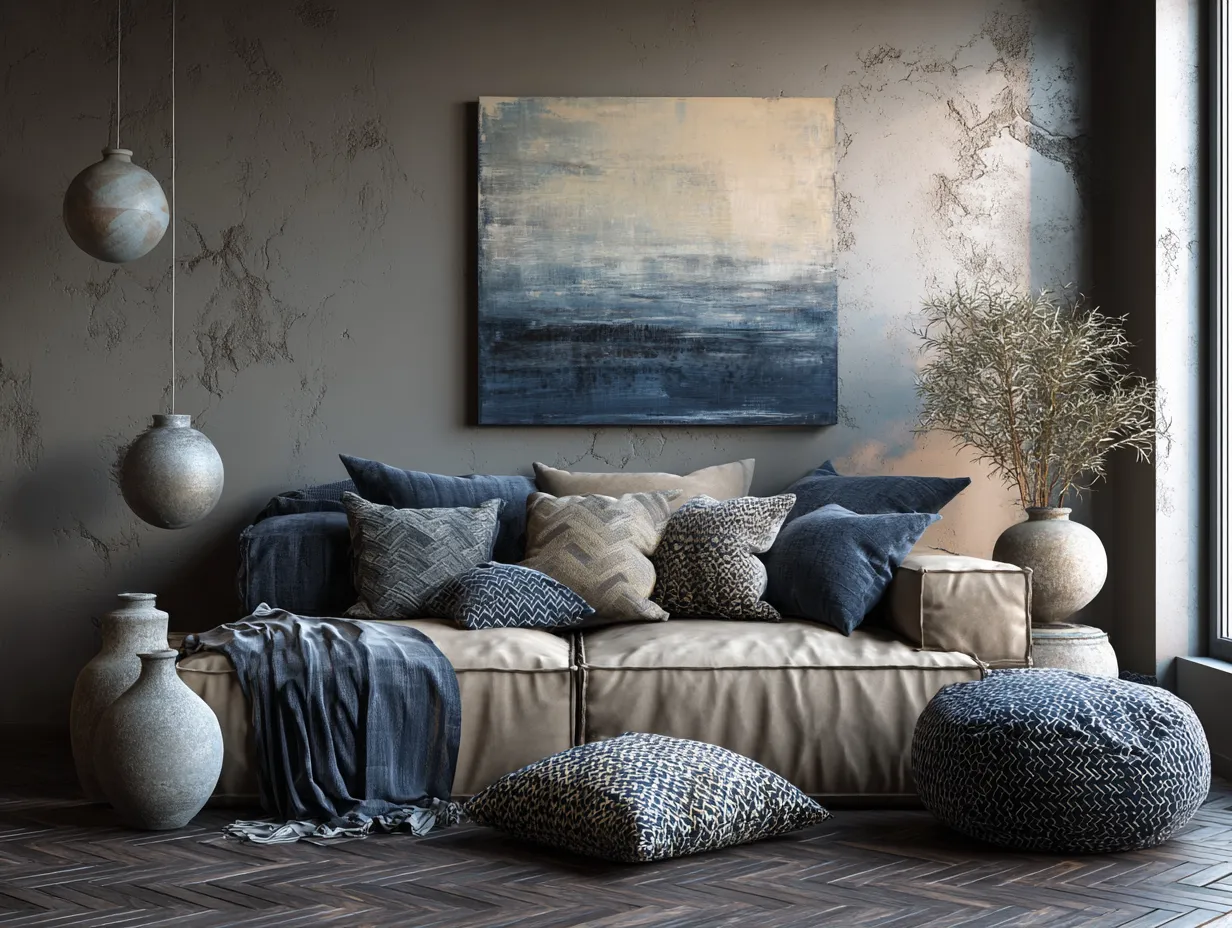
Gray and blue PVC wall panels for a living room solve a problem most homeowners only notice after the fact: a room can have the right furniture and still feel flat. The wall is doing nothing. Panel it in a cool gray-blue combination and the whole space locks into focus — depth, texture, and a palette that holds itself together without requiring you to match seventeen throw pillows.
Material cost for PVC panels runs $2–$10 per square foot depending on finish and thickness, which makes them one of the cheapest ways to change what a room communicates. A single accent wall behind a sofa — roughly 40–60 square feet — lands between $80 and $600 in materials, installed in a weekend. Paint covers the same wall for less upfront but needs redoing every few years; quality PVC holds for 20 to 30 years with only a damp cloth for maintenance.
The gray-blue combination earns its place because both colors operate the same way emotionally. According to color psychology research published by Decorilla, blue calms the mind and slows heart rate, while gray provides neutrality and sophistication — together they create a room that reads as composed without feeling cold. The trick is picking the right tone and pairing it with lighting that doesn’t fight the panel’s undertone.
- Material cost: $2–$10/sq ft; a 50 sq ft accent wall costs $100–$500 in panels
- Lifespan: 20–30 years with basic cleaning — no repainting, no warping
- Gray panels work with every sofa color; blue panels anchor the room and reduce echo in open-plan spaces
- Matte finishes hide seams and look better under single overhead fixtures than gloss panels do
- Lighting temperature matters: warm 2700K–3000K bulbs keep gray-blue panels from reading cold or clinical
- Panels under 8 mm thick will telegraph wall imperfections — 8 mm or thicker is the minimum worth buying
What Sophisticated Gray PVC Wall Panels Actually Do to a Living Room

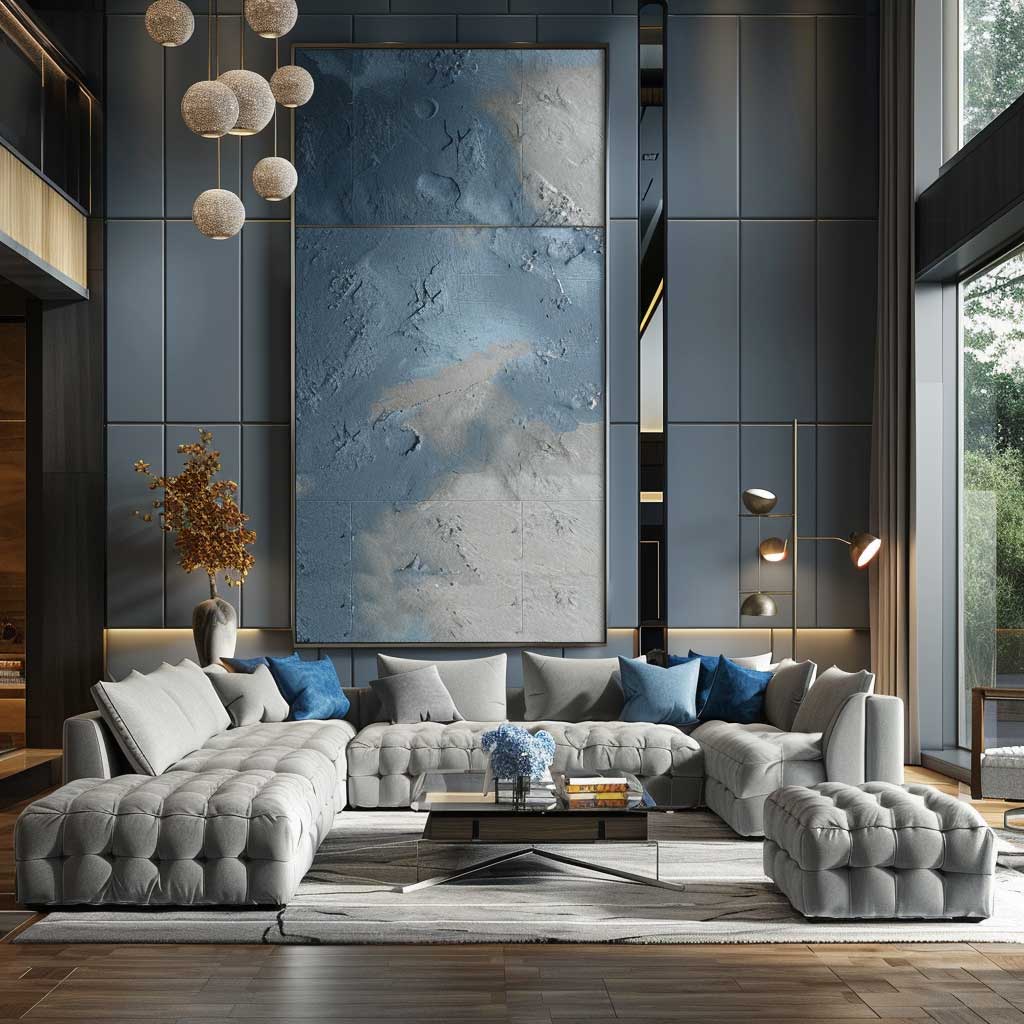
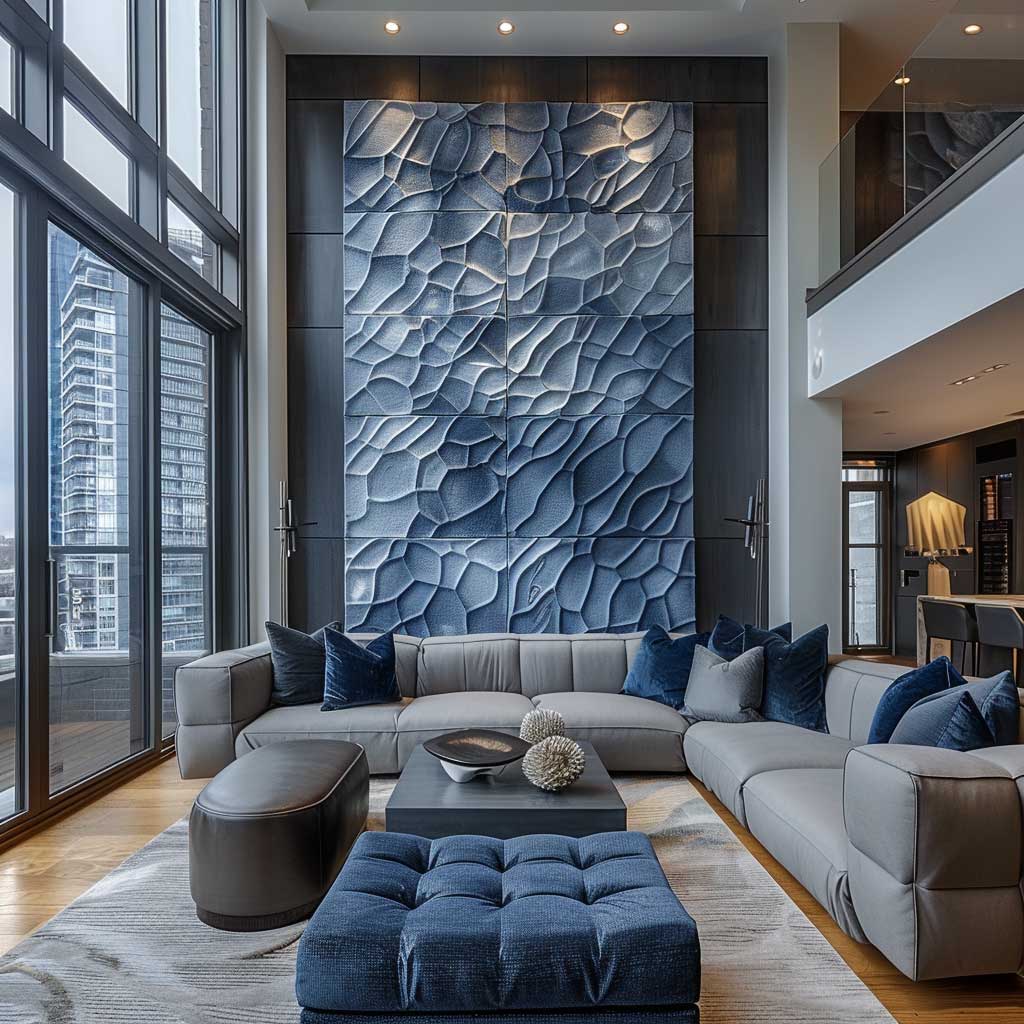

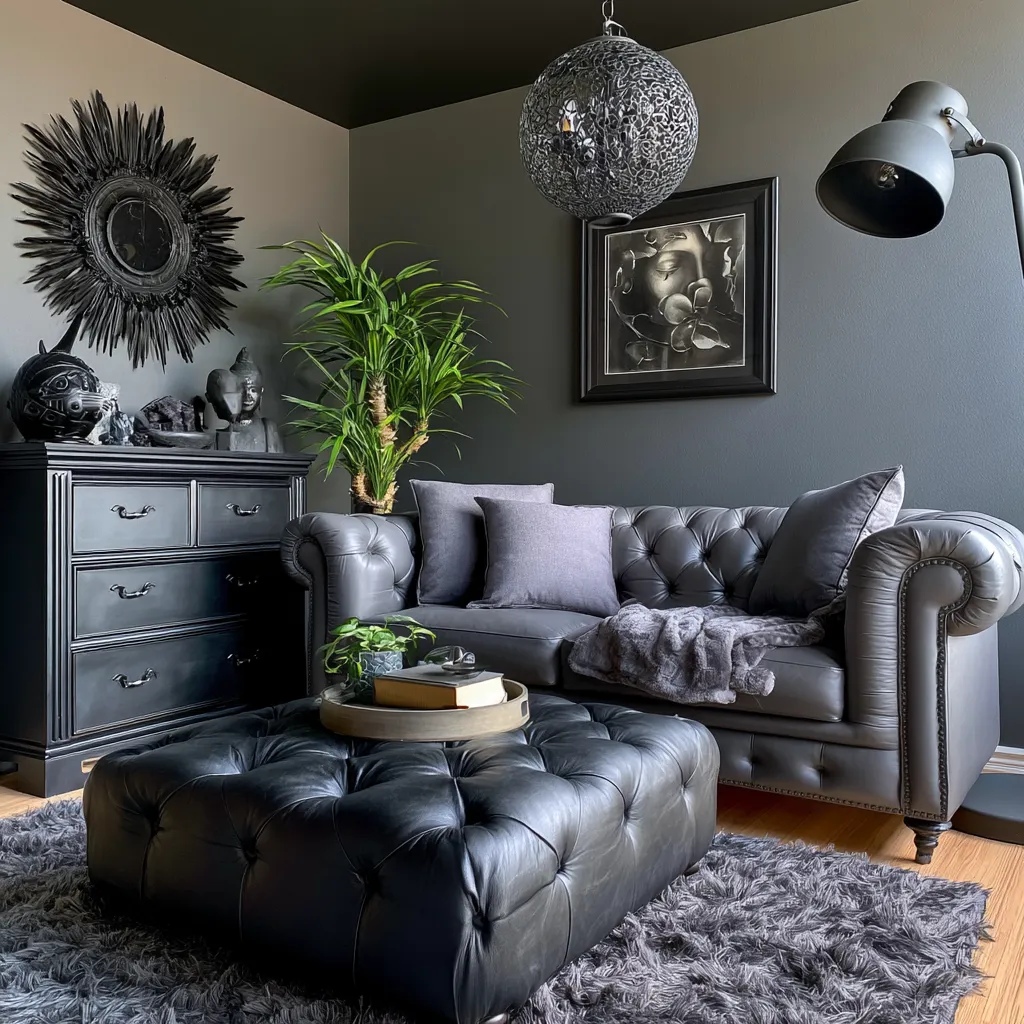
Sophisticated gray PVC wall panels work in a living room the way a good suit jacket works in an outfit: they establish the tone and everything else organizes around them. A mid-tone gray panel — not the pale silver that reads white under bad lighting, not the dark charcoal that absorbs all the light in a north-facing room — gives the sofa, rug, and shelving something to answer to. Stylists recommend mid-tone matte gray for accent walls in rooms under 250 square feet, because gloss panels in small spaces bounce light erratically and make seams conspicuous.
What most people get wrong: choosing a gray panel with a blue-purple undertone in a room that already has warm oak flooring. The undertone clash is invisible on a sample tile but jarring on a full wall. Hold the panel sample flat on the floor next to actual flooring before committing — the undertone conflict shows up immediately in side-by-side context that it can’t hide in isolation. Gray panels with a slightly warm or greige undertone marry better with wood tones; cooler blue-gray panels belong in rooms where the floor is concrete, tile, or pale stone.
Panel thickness makes the practical difference most buyers underestimate. At 5 mm, a panel will telegraph every bump and hollow in the underlying drywall. At 8 mm or more, minor wall imperfections disappear behind the rigid panel surface. Prices at Home Depot and Lowe’s for 8 mm matte gray panels start around $3–$5 per square foot — roughly $150–$250 for a standard 10-by-5-foot accent wall in materials alone. Is there a reason people consistently overpay for texture and then cut corners on thickness? The texture is what they see in photos; the thickness is what determines whether it still looks good in three years.
Lighting is the variable that decides whether a gray panel looks sophisticated or institutional. Warm 2700K–3000K bulbs give gray walls depth and softness; cool 5000K daylight bulbs make the same panel feel like a hospital corridor. Position at least one light source at 45 degrees to the panel surface — a sconce, picture light, or adjustable track — and the texture will cast soft shadows that make the wall look more expensive than it is. A single overhead fixture pointed straight down does almost nothing for a textured surface, which is a waste of the panel’s main visual asset.
- Don’t panel all four walls in gray — one accent wall behind the sofa or TV unit is enough. All-gray rooms absorb natural light and start reading as storage space, not living room.
- Don’t buy gloss panels for a room with a single ceiling fixture — the overhead light reflects off gloss surfaces as a harsh stripe that shows every seam joint and edge line.
- Don’t mix gray panels with cool-white or daylight LED bulbs — the combination reads clinical. Swap to 2700K warm white and the same panel suddenly looks like an intentional design choice.
- Don’t skip the undertone check — gray panels with blue undertones clash with warm oak or honey-colored wood floors. Always compare sample to actual flooring before ordering.
Blue PVC Wall Panel Designs for Living Room Walls That Hold the Whole Palette
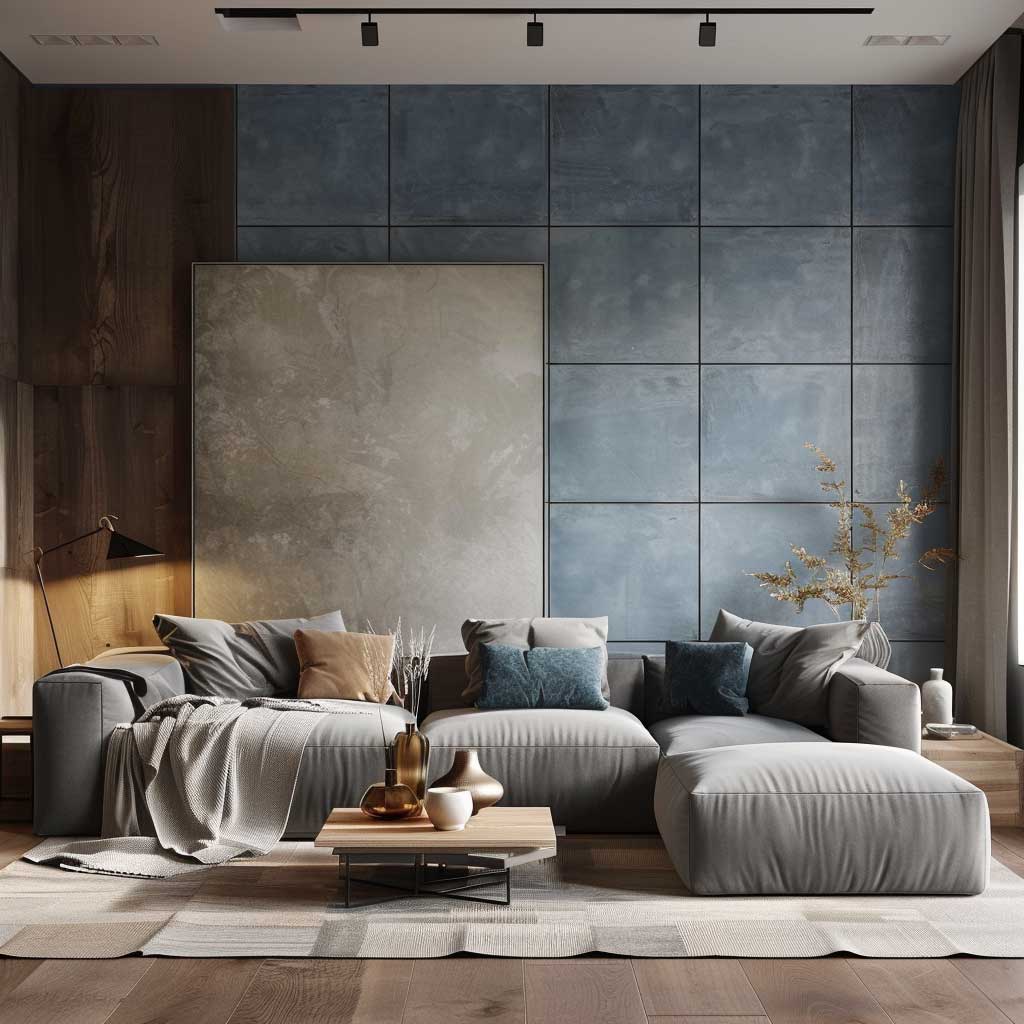


Blue PVC wall panels for a living room are the color equivalent of a strong foundation: they anchor the whole room and give every other piece of furniture a direction to face. Color psychology research from Decorilla documents that blue reduces heart rate and blood pressure — which explains why blue-paneled living rooms consistently photograph and live better than their bold-red or saturated-yellow equivalents. Muted dusty blue and slate blue land in a register that is calming without being cold, provided the room has enough warm texture to balance them.
The shade choice matters more with blue than with almost any other color. Pale powder blue on a south-facing wall in good natural light reads airy and coastal. The same powder blue on a north-facing wall under artificial light reads gray-lavender or just gray, which is rarely what was intended. Slate blue and denim blue are more forgiving across lighting conditions — their saturation means they hold their identity even when the light shifts. For rooms with limited natural light, mid-tone slate blue panels at $4–$7 per square foot are the range that holds up under multiple lighting scenarios without looking washed out.
A useful pairing trick: blue panels read warmer when the furniture closest to them is in natural linen, warm white, or light oak. The contrast between a cool panel and a warm-toned sofa fabric creates a visual warmth that the blue alone cannot generate. This is the same mechanism a fashion stylist uses when pairing a navy blazer with a caramel scarf — neither element changes, but together they read warmer. Avoid pairing blue panels with cool gray upholstery unless the room has strong natural light; that combination can make a living room feel like a waiting room by late afternoon. For more on how PVC wall panel designs enhance living room decor across different color palettes and finish types, that rundown covers the full picture.
Panel orientation changes how blue reads on a wall. Vertical panels draw the eye upward, making blue feel more dramatic and formal — appropriate when the goal is a room with presence. Horizontal planks emphasize the room’s width and ground the color, which suits open-plan spaces where the living area flows into a dining zone. Mixing orientations on the same accent wall — vertical panels in the center section, horizontal trim above and below — creates the kind of architectural detail that usually requires built-in millwork at several times the cost. PVC panels make that accessible for under $8 per square foot in most configurations.
Gray and Blue Together — Where the PVC Wall Panel Color Combination Actually Works
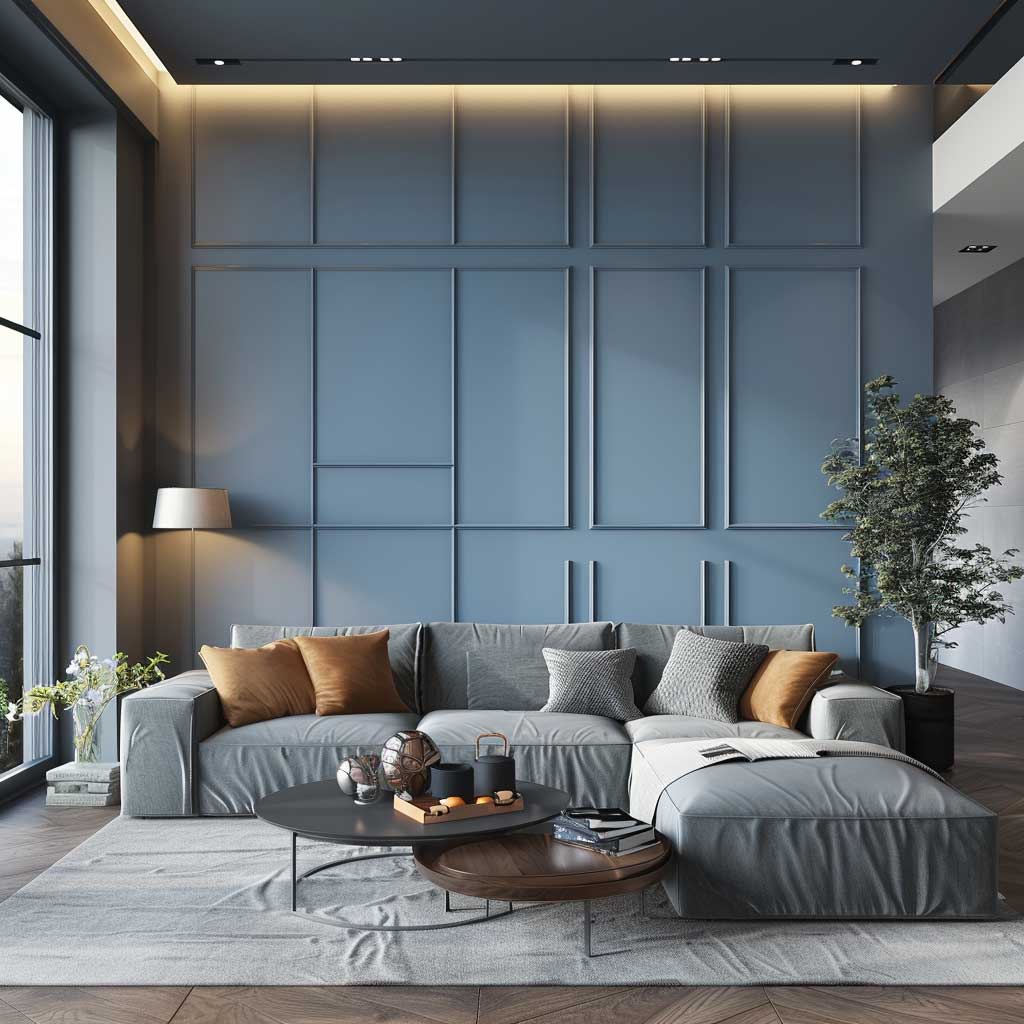
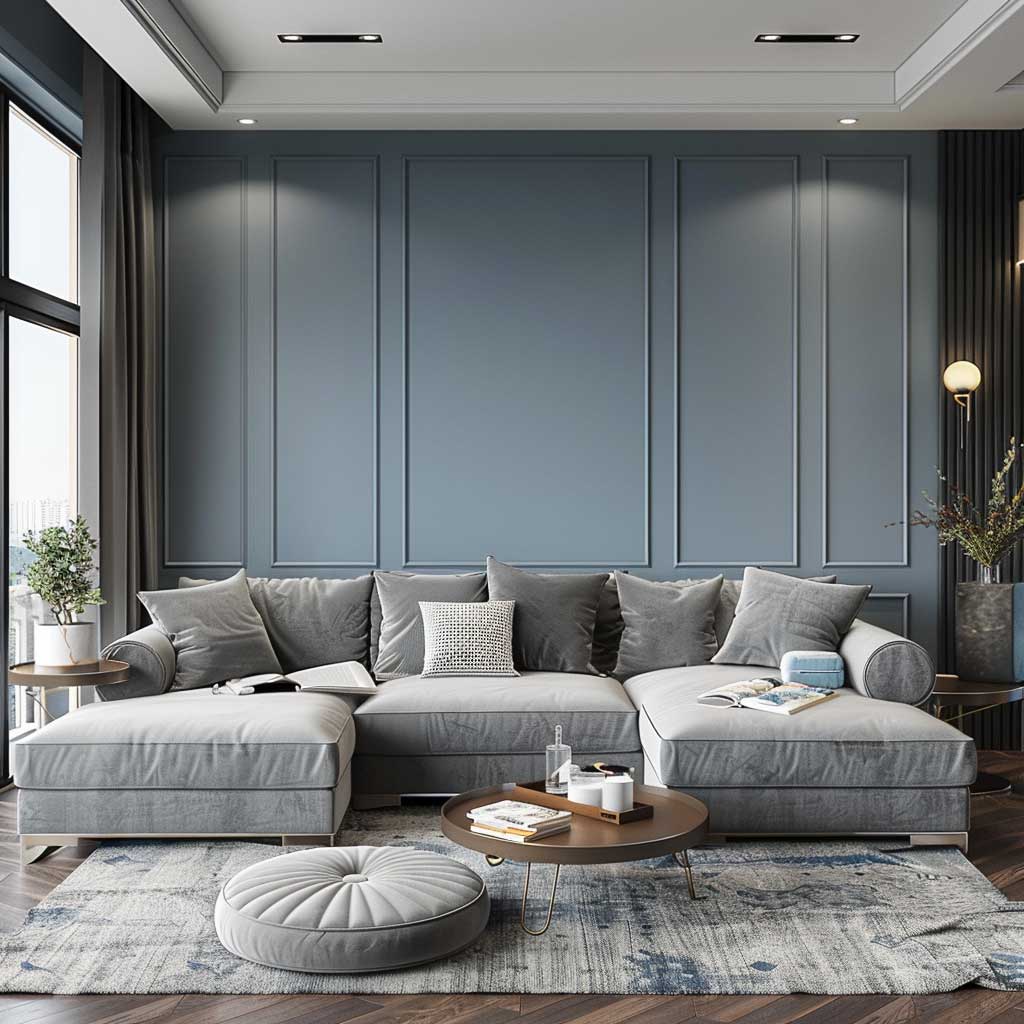
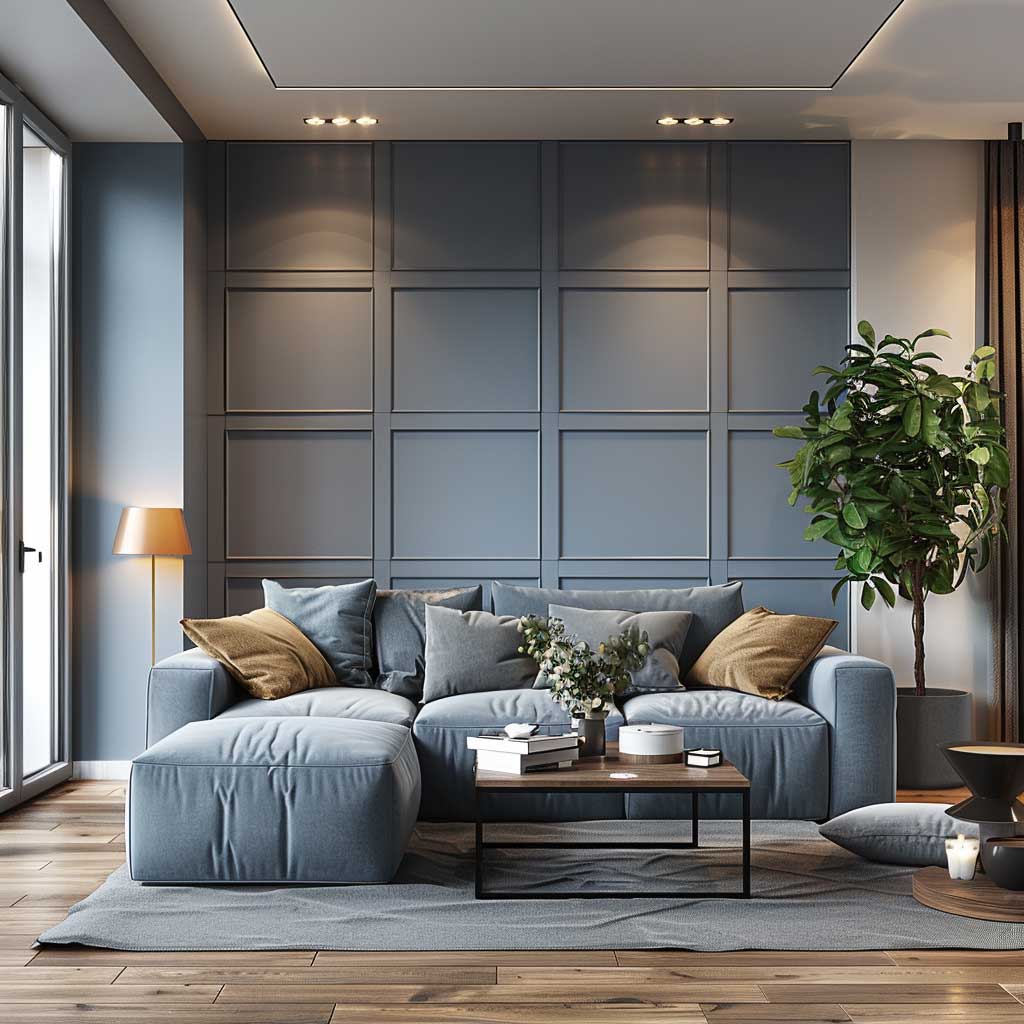

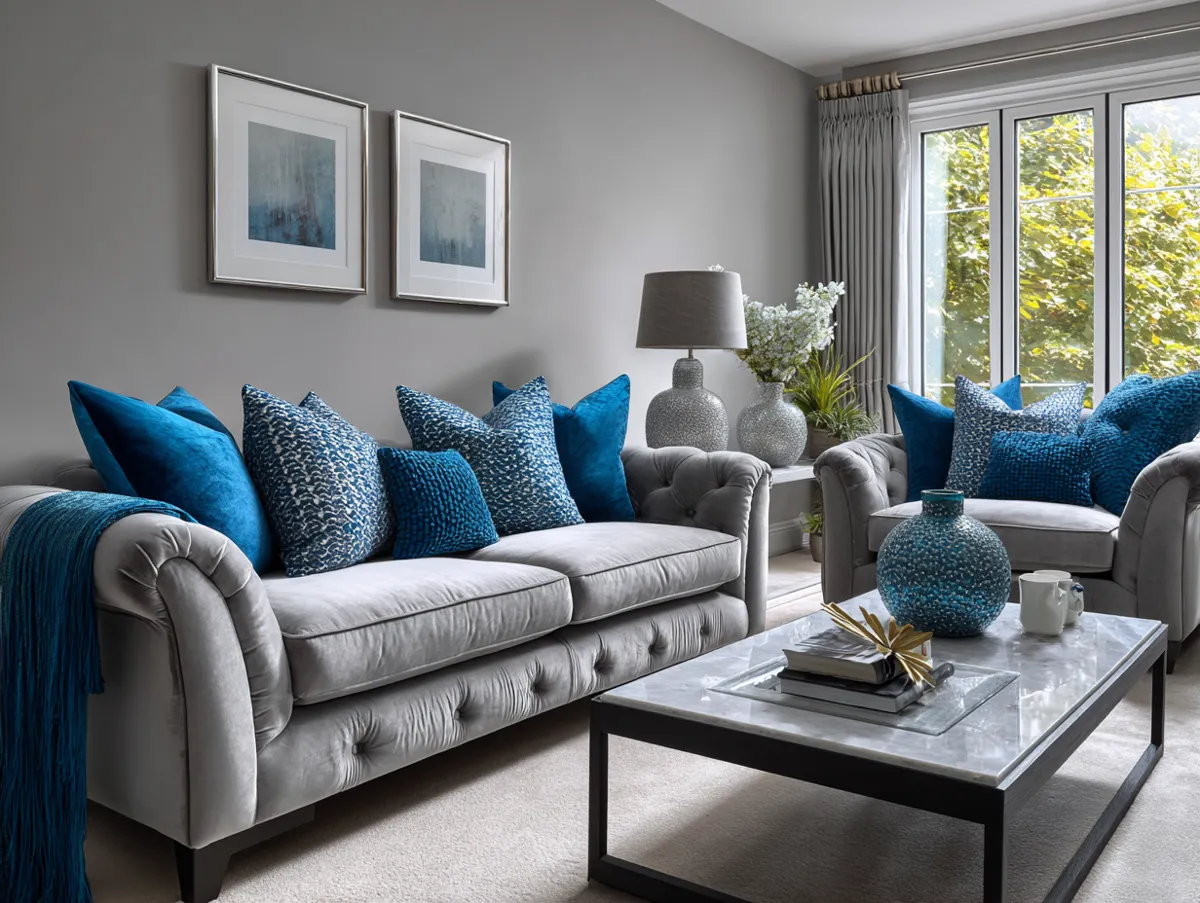
Gray and blue PVC wall panels succeed as a combination because the two colors share a coolness that prevents them from fighting each other, while operating at different levels of visual weight. The most readable approach is a dominant gray panel covering the main accent wall with blue used as a secondary element — either through a contrasting panel strip, blue-painted ceiling above a gray-paneled lower section, or blue upholstery against a gray-paneled wall. Attempting to panel the entire room in half gray and half blue usually produces a busy, segmented feel rather than the composed palette that makes this combination attractive in the first place.
The ratio worth aiming for: 70% gray surface, 30% blue introduction through panels, textiles, or both. That structure mirrors what professional colorists recommend as the 60-30-10 rule for interior palettes, with white or off-white taking the remaining 10% through ceiling, trim, and hardware. A 10-by-12-foot living room where the main wall is gray PVC panels ($3–$5/sq ft), the opposite wall is painted blue-gray, and the sofa is natural linen will land in this ratio without requiring a designer’s eye — the math does the work.
What doesn’t work is using two different PVC panel finishes across the same gray-blue color scheme. Matte gray panels next to gloss blue panels create a visual inconsistency that makes the room feel unresolved even when the colors are technically correct. Stick to the same sheen level across all paneled surfaces and vary only the color. The finish consistency is the thing that separates a room that reads as intentional from one that reads as two separate decorating attempts meeting in the middle. For additional context on how finish choice shapes the result in living rooms with PVC wall panel design for living rooms, those 21 examples break down exactly how gloss versus matte performs across different room types.
Furniture scale relative to panel pattern is the detail most buyers overlook. A large-format, low-relief gray panel behind a low-slung sofa creates horizontal continuity that makes a room feel longer. The same panel behind a tall bookcase or an oversized sectional looks chopped up because the furniture interrupts the panel surface at irregular intervals. A common approach is to keep paneling below shelf height and transition to a painted surface above — the panels anchor the lower visual zone while the upper zone breathes. This partition-style approach also reduces material cost by roughly 40% compared with floor-to-ceiling paneling.
| Panel Color | Best Finish | Works With | Key Risk |
|---|---|---|---|
| Mid-tone gray | Matte | Oak floor, linen sofa, warm LED | Reads cold under daylight bulbs |
| Slate blue | Matte or satin | White trim, natural wood, warm metal | Turns purple-gray in low light |
| Pale gray-blue | Matte | South-facing rooms, light wood floors | Washes out in north-facing rooms |
| Charcoal gray | Satin | White or cream upholstery, brass fixtures | Shrinks a room below 180 sq ft |
Color psychology research documented by Decorilla confirms that blue tones reduce perceived stress and slow metabolism, making them one of the strongest evidence-backed choices for a living room wall — a room designed for exactly that kind of decompression. Gray provides the neutral anchor that keeps blue from tipping into cold. Used together on PVC panels, they create a surface that holds up visually over decades, not just in next week’s photos. Decorilla’s interior design color psychology resource covers the full physiological and psychological evidence behind this color family for anyone who wants the detail behind the recommendation.
Bottom line
Gray and blue PVC panels are the most durable, lowest-maintenance way to give a living room a defined palette — and they last 20 to 30 years.
Material costs run $2–$10 per square foot depending on finish and thickness. Choose 8 mm or thicker panels in a matte finish to avoid seam problems and lighting glare.
Use warm 2700K–3000K bulbs — the single change that most reliably prevents gray-blue panels from reading cold or institutional.
Pair gray as the dominant surface with blue introduced through a contrasting panel section or textiles. The 70/30 ratio keeps the combination composed rather than busy. Save this post before you buy a single panel sample.