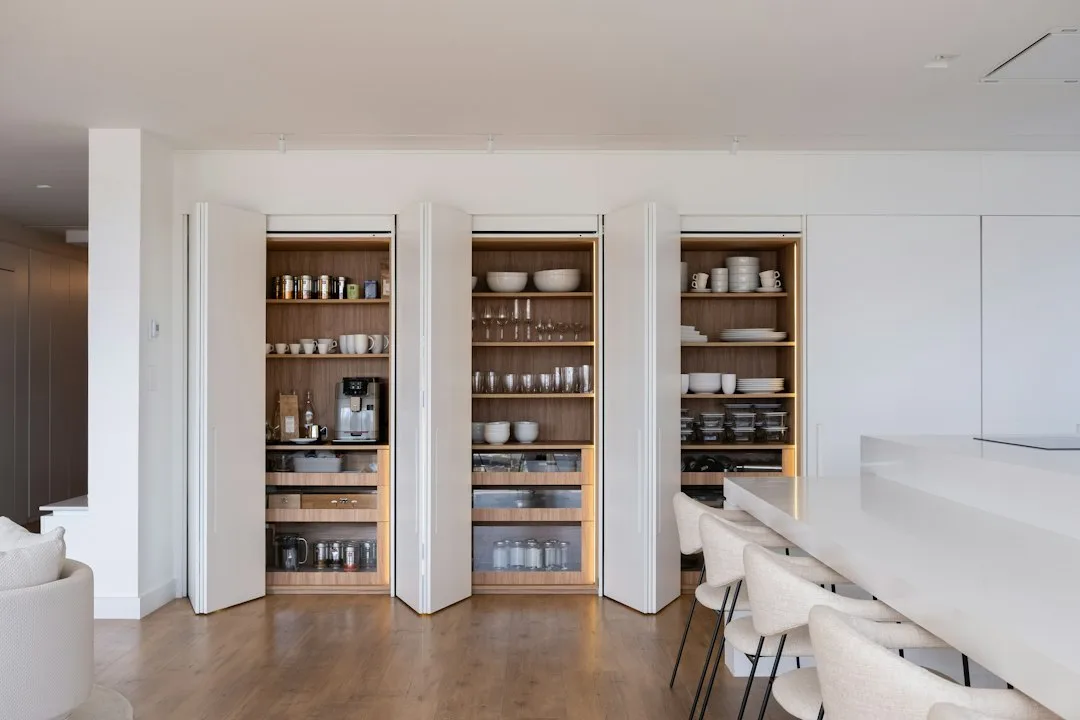
In September 2026, kitchen design strategists at major home renovation platforms noticed a spike in pantry door hardware searches—up 34% compared to the same period last year. The reason is simple: pantry doors are no longer hidden utility elements. They’re visible, daily-use focal points that homeowners now want to match their kitchen’s aesthetic and performance standards.
Kitchen pantry door hardware is the intersection of function and style that most renovators overlook until the moment of installation. A single hinge choice, a catch mechanism, or a handle selection changes how your pantry integrates into your kitchen’s visual narrative. This isn’t about replacing your doors—it’s about replacing what holds them together.
Soft-Close Hinges Replace Slamming Doors
Soft-close hinges have become the baseline expectation in contemporary kitchens. Brands like Blum and Hettich manufacture hinges with internal dampers that slow the closing motion in the final 15–20 centimeters, preventing the acoustic shock of a slamming pantry door. Installation typically costs between $15–40 per hinge, depending on the mechanism complexity.
The real benefit emerges over time. Children stop slamming doors out of physics, not behavior management. Your pantry contents—canned goods, dry pasta, glassware—stop shifting with each close. That absence of vibration also protects the door’s alignment longer, delaying the warping that uncontrolled closes accelerate.
Quick Tips
- Measure your door thickness before purchasing hinges—standard is 35–45mm for kitchen cabinet doors
- Test soft-close weight capacity: most standard hinges support 10–30 pounds per hinge
- Install magnetic catches on lightweight pantry doors to eliminate noise without soft-close expense
- Choose stainless steel or brushed nickel finishes if your kitchen has open shelving nearby
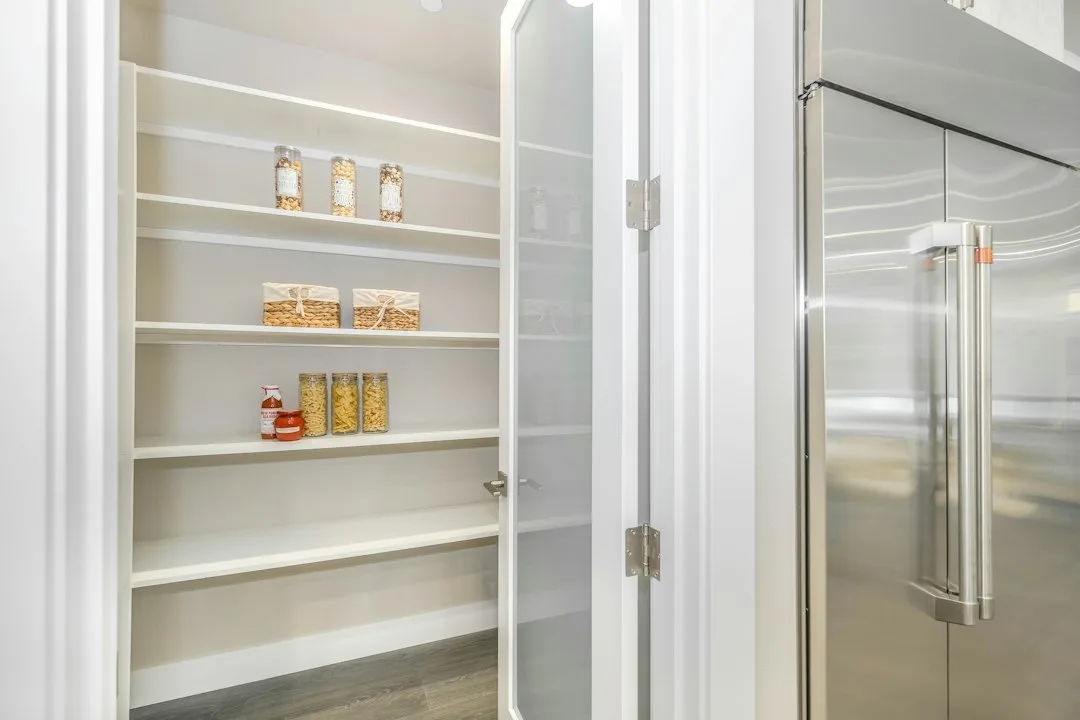
Magnetic Catches Control Lightweight Doors
Magnetic catches offer a mechanical simplicity that soft-close hinges cannot match. Hafele and Grass manufacture magnetic latch systems that use permanent magnets embedded in strike plates to hold doors closed without requiring the force of a push-to-open mechanism. Installation is adhesive-based; no drilling required.
These work best on pantry doors weighing under 15 pounds. A typical two-door pantry with standard hollow-core doors sits comfortably within this range. The magnetic force provides enough holding power to prevent drafts from opening the door while allowing one-finger closing.
| Hardware Type | Cost Range | Best For |
|---|---|---|
| Soft-Close Hinges | $15–40 per hinge | Heavy solid-wood doors, daily-use pantries |
| Magnetic Catches | $8–18 per catch | Lightweight hollow-core doors, low-budget upgrades |
| Push-to-Open Latches | $20–60 per door | Handleless modern kitchens, minimal-touch aesthetics |
| Decorative Handles | $12–50 per handle | Statement pantries, kitchen islands with open shelving |
| Ball-Bearing Hinges | $25–55 per hinge | Heavy doors, commercial-grade durability |
The Handleless Pantry Mistake Homeowners Make
The #1 hardware failure occurs when homeowners install handleless push-to-open pantry doors without upgrading the interior catch mechanism. A handleless door looks sleek. The reality after six months: the latch fails, the door swings open randomly, and contents spill during high-impact activities like unloading the dishwasher or cooking dinner.
Push-to-open latches require a pressure point—usually a touch latch or a spring-loaded ball bearing embedded in the frame—that triggers the door release. Budget-grade versions use plastic springs that fatigue within 1,500–2,000 cycles. A family of four using the pantry 3–5 times daily depletes that lifecycle in eight to twelve months. The correct installation pairs a handleless door with a dual-action catch system, like Blum’s Tip-On mechanism, which costs $35–65 per door but delivers five-year durability.
This is why handles exist on most pantries—they’re the fail-safe. A simple recessed pull or a decorative bar handle ensures your door stays closed when the mechanical system falters.
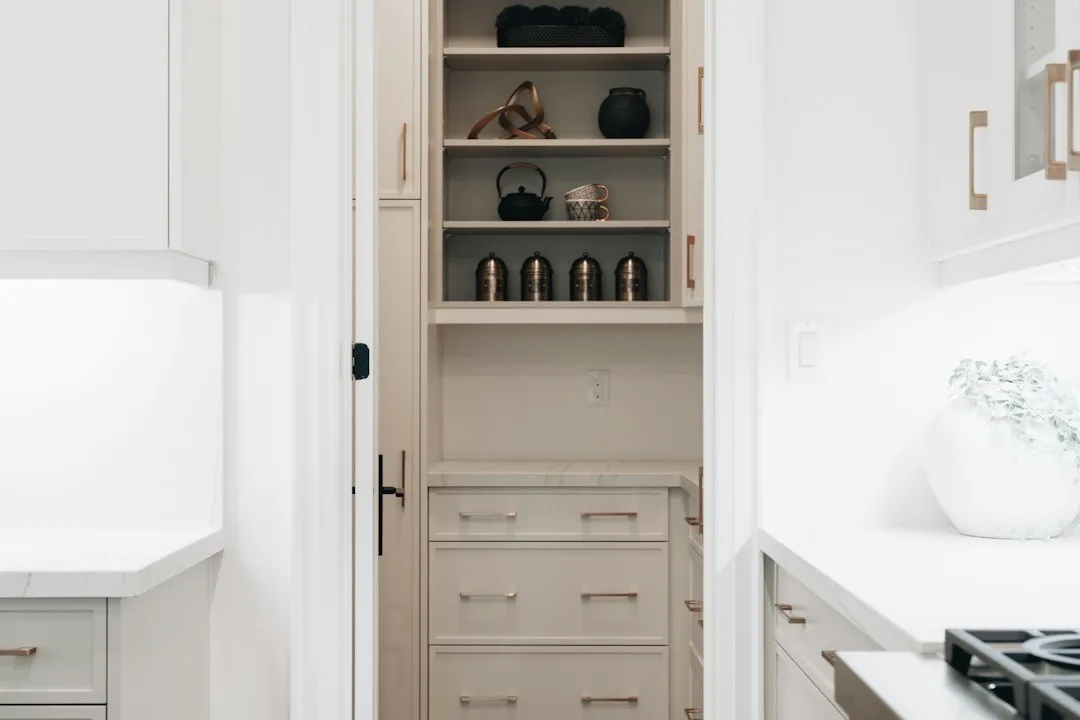
Decorative Hardware Anchors Kitchen Identity
Hardware finish has become a kitchen’s visual anchor. In October 2026, brushed brass and matte black are replacing polished chrome across mid-to-premium renovations. Anthropologie’s home collection and Williams Sonoma Home offer pantry handle sets in finishes ranging from satin brass to oil-rubbed bronze, each designed to pair with their respective color palettes.
A pantry door handle in the right finish ties together your cabinet hardware, faucet, and light fixtures without additional cost. A 6-inch pull handle installed on a pantry door costs $18–45. Replacing that same handle in two years costs nothing if the finish outlasts the trend. Matte black finishes, however, show fingerprints and dust faster than brushed nickel, increasing visible maintenance.
Paired with a soft-close hinge, a decorative handle also improves daily ergonomics. Handles give children and elderly family members a reliable grip point to close the door smoothly. This is particularly valuable in kitchens where pantry access happens during high-motion cooking.
Ball-Bearing Hinges Support Heavy Solid-Wood Doors
If your pantry is a solid-wood construction or a custom cabinet built with 1.5-inch MDF, you need ball-bearing hinges, not standard cup hinges. Salice and Grass manufacture ball-bearing hinges rated for 40–60 pound doors. These hinges feature a metal bearing surface instead of a plastic or rubber cup, allowing the hinge pin to rotate smoothly under heavier loads without binding.
Installation remains identical to standard hinges. The durability difference is measurable: ball-bearing hinges maintain alignment after 50,000+ cycles. Standard cup hinges begin sagging at 15,000–20,000 cycles. For a high-traffic pantry in a growing family home, ball-bearing hinges cost $25–55 per hinge and save you a rehang in five years.
When combined with soft-close damping, ball-bearing hinges create the smoothest pantry experience available. This is the pairing that luxury kitchen brands like Sub-Zero and Wolf use in their integrated pantry designs. Upgrade Your Home with These 3 Improvement Projects often includes hardware as a foundational choice for longevity.
Building Code Compliance for Heavy Door Installations
Pantry doors that weigh over 25 pounds require hinge sizing that matches load-bearing capacity. Building codes in most US jurisdictions (particularly California Title 24 and energy code updates) mandate that pantry doors above this weight use hinges rated for that specific load. This isn’t aesthetic—it’s structural safety.
A certified installer will weigh your pantry door before hardware selection. If your door exceeds capacity by even five pounds, a hinge failure becomes liability. Hiring a cabinet specialist costs $150–300 in labor but ensures your hardware selection aligns with code and manufacturer specifications. This is especially critical if your pantry door is custom-built or reclaimed wood.
Elevating Your Living Space Through Architectural Innovation and Home Improvement includes making choices that last beyond the trend cycle. Hardware selection is one of the few kitchen decisions that genuinely compound in value over time.