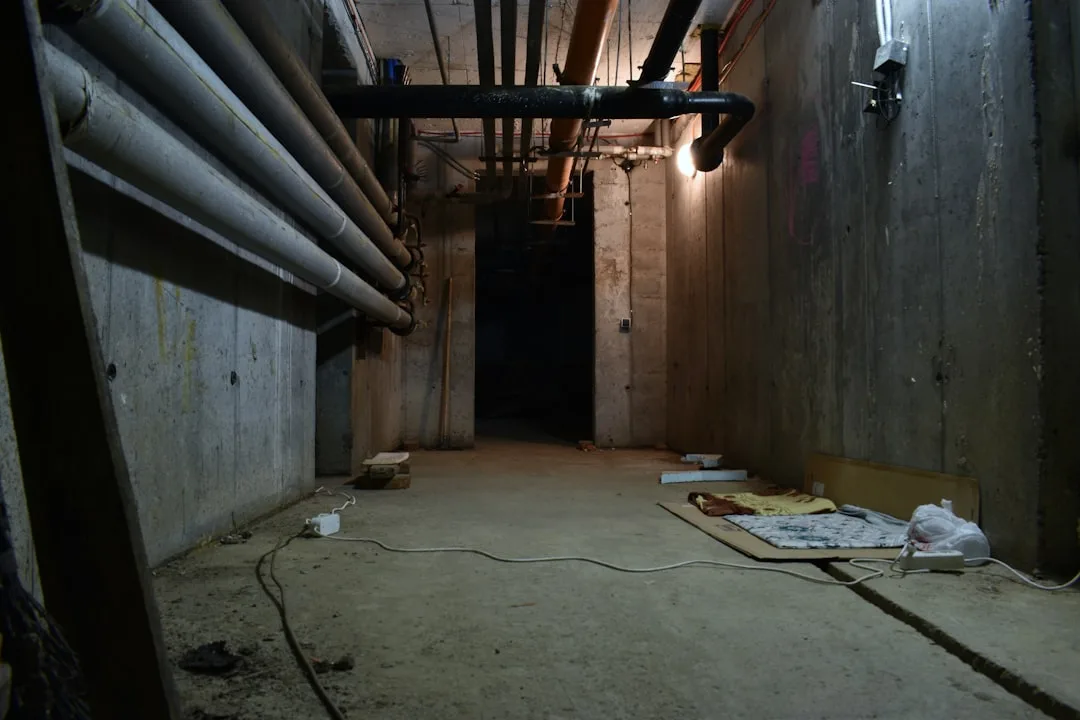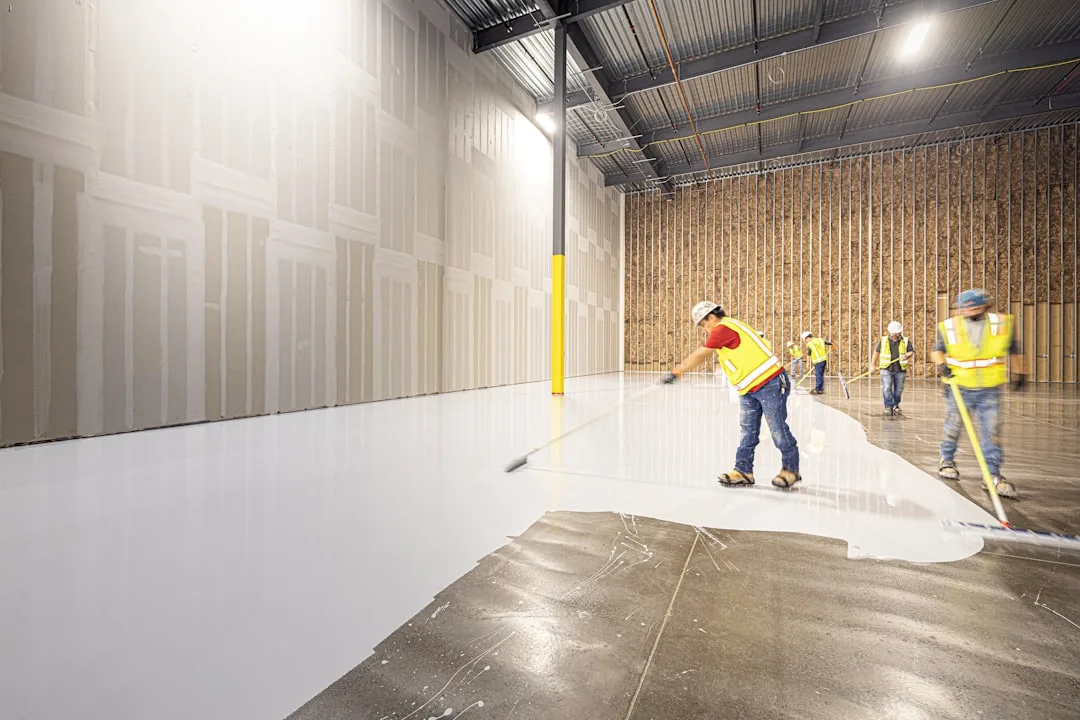
When homeowners renovate basements in 2026, concrete epoxy floor coatings are now competing directly with tile, vinyl, and laminate—and winning. Concrete epoxy floor coatings bond chemically to concrete surfaces, creating a waterproof, seamless finish that lasts 15 to 20 years under normal wear. Unlike surface treatments that peel or chip, epoxy actually hardens into the concrete itself, making it the closest thing to permanent basement flooring available at mid-range price points.
The reason this trend exploded is twofold: moisture control and visual flexibility. Basements are inherently damp environments; traditional flooring installed over concrete wicks water from below, leading to mold, odor, and early failure. Epoxy eliminates that failure mode entirely by sealing the concrete and preventing moisture migration upward.
Why Epoxy Outperforms Traditional Basement Flooring
MAPEI, a leading manufacturer of concrete coatings and sealers, reports that epoxy systems rated for basements now account for 34% of their residential concrete surface sales—a jump from 19% in 2023. The shift reflects a simple truth: epoxy does five jobs at once.
It seals. It waterproofs. It resists staining. It looks finished. It costs less than tile per square foot, including labor.
A typical two-part epoxy system (Part A: resin, Part B: hardener) is mixed on-site and applied in two or three coats. The first coat soaks into the concrete’s pores; the second creates the wear layer; a third optional coat adds slip resistance or a final sheen. Once fully cured—typically 7 days before foot traffic, 30 days before heavy use—the result is a monolithic surface that moves with the concrete, preventing the cracking and separation that plagues tile and luxury vinyl plank over time.
Quick Tips
- Prep concrete thoroughly: grind away stains, sealers, and existing coatings. Poor prep is the #1 failure reason.
- Choose epoxy formulation based on location—garage epoxy is different from basement epoxy due to UV and moisture demands.
- Apply in cool, dry conditions (50–85°F, below 85% humidity). Hot or wet conditions cause bubbling and weak cures.
- Use epoxy with anti-slip additive if the room will have a kitchen or wet bar—glossy epoxy is slippery when damp.
- Hire a contractor with 5+ basement epoxy projects; the application skill gap is enormous compared to paint or stain.
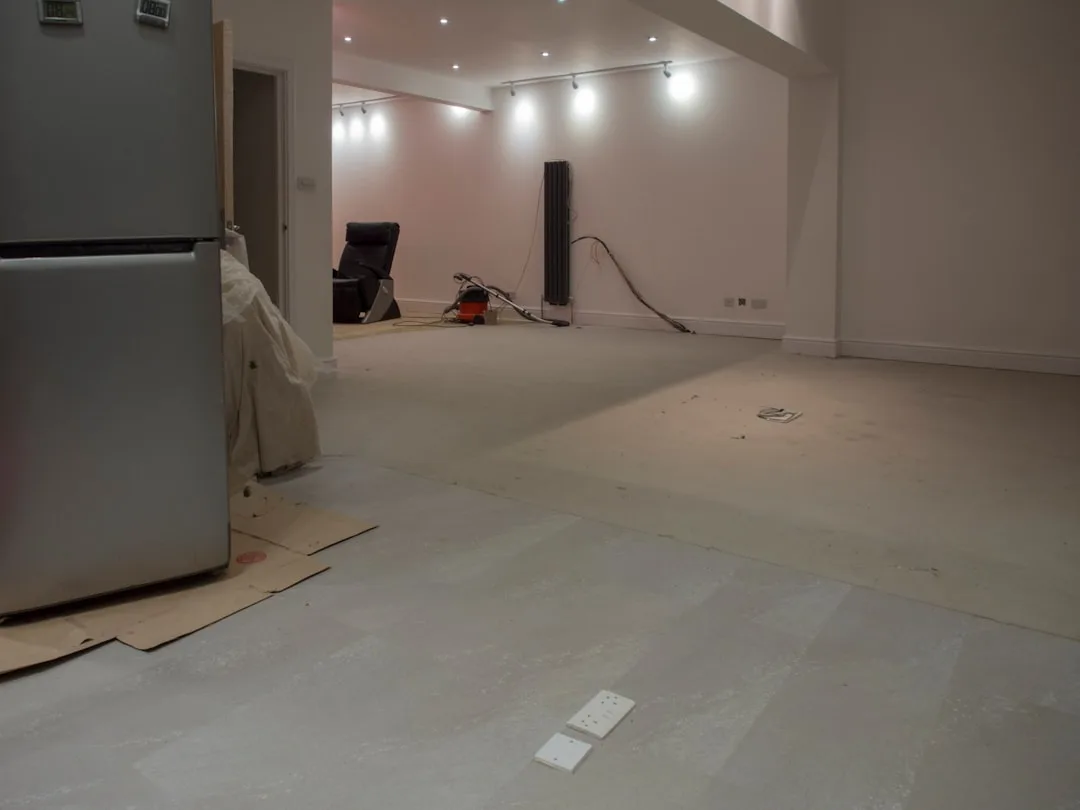
Concrete Epoxy Floor Coatings Come in Four Finishes
The visual range has expanded dramatically. Homeowners are no longer limited to industrial gray or basic brown; custom epoxy systems now offer matte, satin, gloss, and metallic finishes, plus colored flakes, quartz aggregate, or even terrazzo-style inlays.
| Epoxy Type | Best For | Durability |
|---|---|---|
| Standard two-part epoxy | Basements, utility rooms, garages | 15–20 years |
| Epoxy with decorative flakes | Finished spaces, playrooms, home offices | 15–20 years |
| Metallic epoxy | Modern, high-end finishes | 10–15 years (UV-sensitive indoors) |
| Polyaspartic (faster-curing epoxy) | Quick turnarounds needed | 15–20 years |
Rust-Oleum EpoxyShield and Quikrete EpoxyGard are the most accessible DIY-friendly products, sold at most big-box retailers. Both come in standard gray, charcoal, or tan, with optional decorative chip kits that add dimension and hide minor stains.
Professional-grade systems from Sherwin-Williams, Behr, and Benjamin Moore offer custom color matching and specialized formulations for moisture-prone spaces. These contractors typically apply systems under warranty, which matters: epoxy applied in the wrong conditions or over inadequately prepped concrete will bubble, peel, or fail early.
The Moisture Preparation That Most Homeowners Skip
Here is where 80% of failed basement epoxy projects fail before application even begins. Concrete holds moisture—sometimes dormant for years—and if that moisture is trapped beneath epoxy, it will lift the coating from below.
A concrete moisture test (calcium chloride or relative humidity probe) must show the concrete is dry enough for epoxy: typically below 3 pounds of moisture per 1,000 square feet per 24 hours. Many homeowners skip this step because it takes time and a test kit costs money. The result: beautiful epoxy that bubbles and delaminates within months.
To see why: imagine water vapor trapped beneath a perfectly sealed surface—it has nowhere to go but up, and it will peel the epoxy away from the concrete like a blister. This is not a cosmetic failure; it ruins the moisture barrier that was the whole point.
Before application, concrete must be mechanically cleaned—grinding, power washing, or shot-blasting to remove stains, old sealers, and the top layer of concrete itself. Acid etching is an older method that is less effective for epoxy than mechanical grinding and is being phased out by professional applicators.
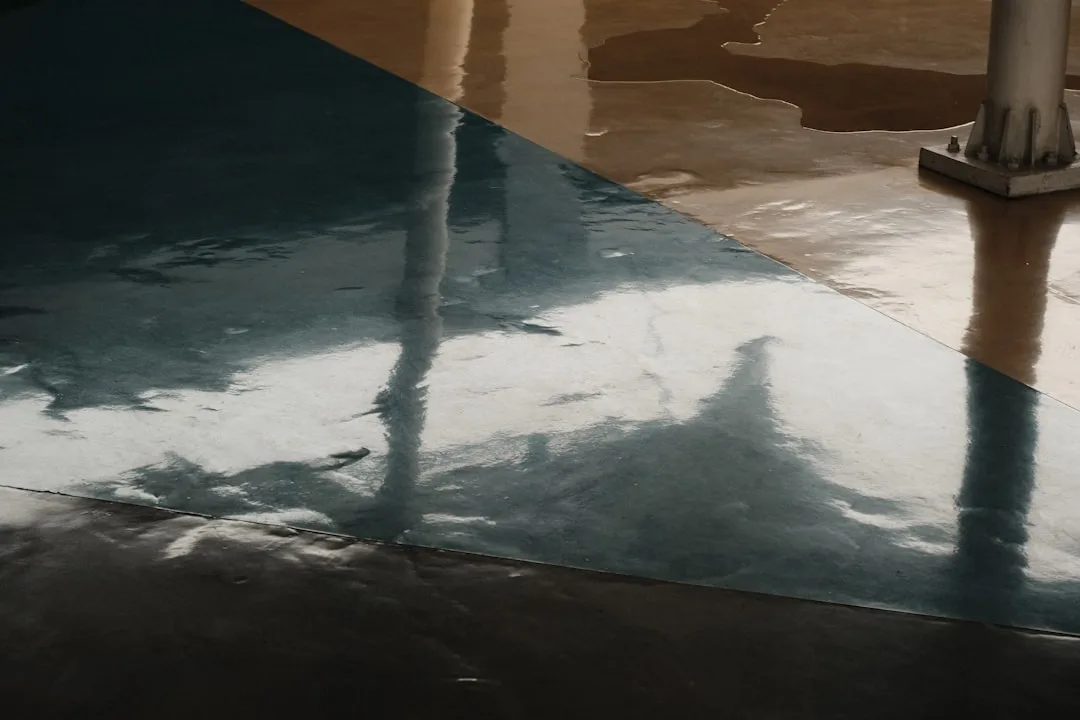
Cost Reality and Long-Term Savings
Professional concrete epoxy floor coatings typically run between $3 and $8 per square foot, installed, depending on surface prep, finish complexity, and regional labor rates. A 500-square-foot basement would cost $1,500 to $4,000 fully installed with a professional contractor.
Tile, by comparison, often runs $8 to $15 per square foot with demo and prep. Luxury vinyl plank runs $5 to $10 installed. Epoxy’s mid-range pricing becomes attractive when durability is added to the equation: unlike tile grout (which degrades in 8–10 years) or luxury vinyl (which stains and wears at edges), epoxy is monolithic and improves with age if properly sealed annually.
The real savings emerge over 15 years. Tile basement that cracks or stains requires grinding and replacement; vinyl warps or stains; epoxy remains intact and can be top-coated in a weekend if gloss fades. Professional junk removal services are sometimes needed after demo of old flooring, an expense that epoxy renovations can entirely avoid by applying directly over existing concrete.
Maintenance and Long-Term Performance
Epoxy does not require much care—a major reason homeowners choose it. Sweep weekly, mop with mild detergent monthly, and reseal the top coat every 2–3 years with a urethane topcoat. This topcoat protects the epoxy from UV, minor abrasion, and chemical spillage.
In comparison, sealed concrete without epoxy requires resealing every 1–2 years and offers no stain protection. Epoxy with a topcoat can go 3 years between maintenance applications, saving time and money over the life of the floor.
For homes in very humid climates or with active moisture issues, installing a sump pump or dehumidifier alongside epoxy flooring increases performance dramatically. AC maintenance and dehumidification work together to prevent the moisture environment that could cause any floor finish—including epoxy—to struggle.
Why Homeowners Choose Epoxy Over Alternatives Right Now
In 2026, basement finishing is moving away from temporary, reversible solutions and toward permanent structures that add real home value. Epoxy signals that shift because it looks finished, costs less than tile, lasts longer than vinyl, and requires no subfloor—meaning basements can be converted from damp storage spaces into livable rooms in weeks, not months.
The aesthetic range has also closed the gap between epoxy and luxury finishes. Flaked epoxy in charcoal or tan can pass for a high-end aggregate finish; matte epoxy looks like polished concrete; metallic epoxy mimics designer concrete. None of these cost luxury prices.
Homeowners are also prioritizing moisture control more than they did five years ago, after widespread flooding events and insurance claims related to hidden basement water damage. Epoxy is not a replacement for proper drainage and gutters—it is a complement to them—but it is the only affordable basement flooring that guarantees the concrete below stays dry and protected.
Planning Your Basement Epoxy Project: Practical Resources
These tools cover the steps most homeowners hit after reading about epoxy — checking whether the concrete is actually ready, and choosing a finish color before buying product.
How do I know if my basement has a moisture problem before I coat the floor?
Can I see what different epoxy colors actually look like on a concrete floor before I buy?
Where can I compare floor coating finishes and calculate how much product I need for my basement?