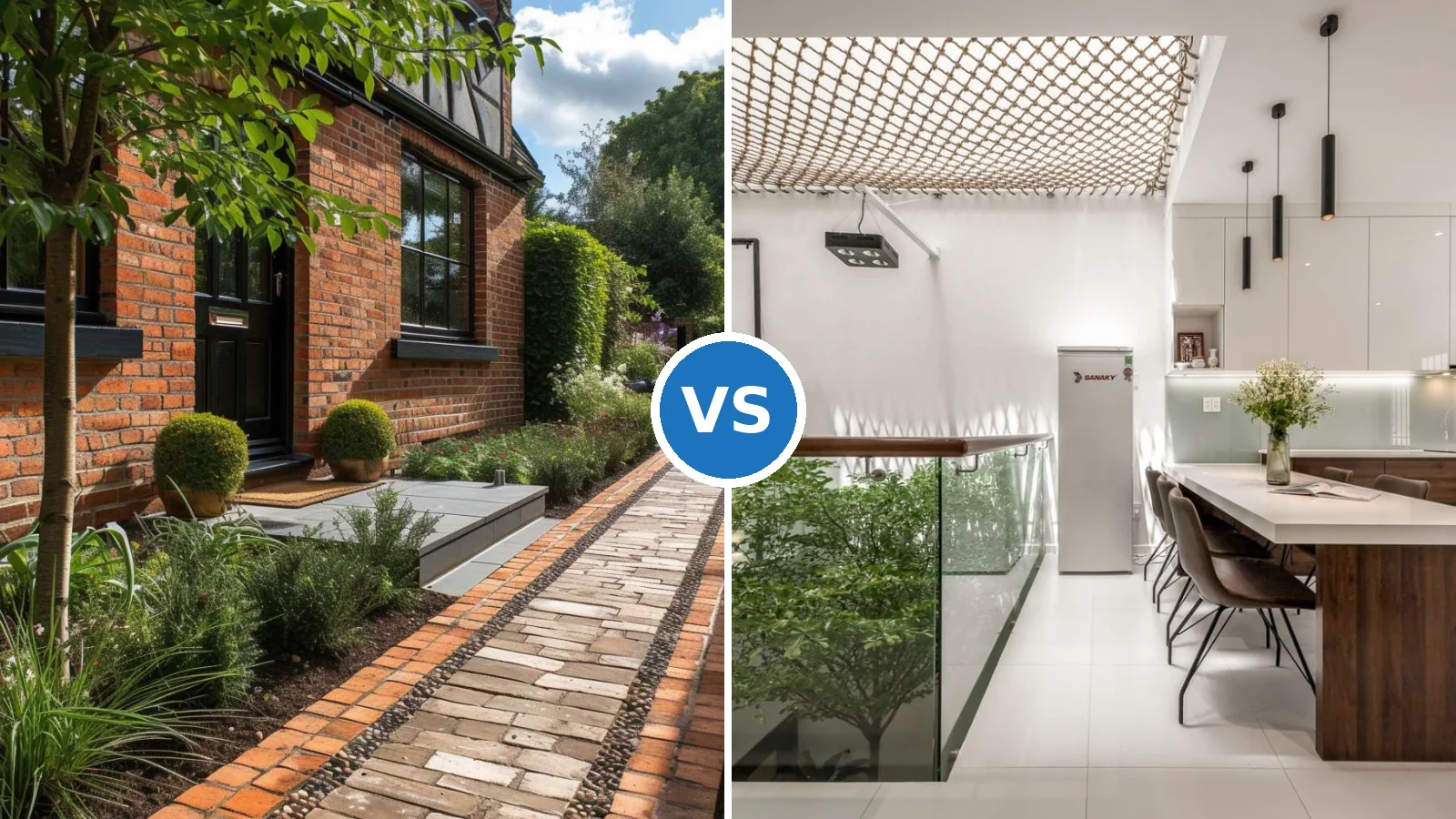
Picture a front garden where the boundary has to do two jobs at once: look good from the street and offer some privacy. That is the real decision behind a brick wall vs concrete wall choice, and the answer depends on how much ground you have. The brick option suits homeowners who want a warm, classic edge with patterns to play with. The concrete option suits tight plots where greenery can climb the building itself.

What each option actually is
A brick wall is a boundary built from individual bricks, laid in sleek linear courses or in patterns such as herringbone and basketweave. The source piece on modern front garden brick walls presents it as a durable, warm boundary that also adds curb appeal to a home.
The concrete facade works differently. In the concrete facade house design, the building itself becomes the wall, with flower beds, shrubs and trees built into its surface, patios and terraces. That house was planned for a plot of 5 × 16 meters where three generations live together, so greenery takes over the job a separate garden would normally do.
Quick Verdict
- Choose brick wall if you want a warm, classic boundary with patterns and a traditional street look.
- Choose brick wall if durability in the boundary matters most and you have room for a separate wall strip.
- Choose concrete facade if your plot is tight and you want greenery on the building rather than beside it.
- Choose concrete facade if privacy from neighbours and a green inner courtyard matter more than a freestanding feature.

Brick wall vs concrete wall head to head on the criteria that count
| Criteria | Brick Wall | Concrete Facade |
|---|---|---|
| Look | Linear and patterned bricks with a warm natural texture | Smooth built-in facade softened by planted terraces |
| Space use | Needs a boundary strip along the property edge | Greenery moves up the building, saving ground |
| Durability | Described in the source as durable | Solid, heavy build that carries the living structure |
| Privacy | Adjustable through the spacing between bricks | Planting and terraces keep interiors hidden from view |
| Greenery | Planting sits beside the wall | Flower beds and trees are built into the facade |
| Care | Joints need ongoing attention over time | Planted surfaces also need ongoing watering and pruning |
| Best plot | Wider front gardens and street boundaries | Tight plots surrounded by neighbouring buildings |
Neither source publishes pricing, so compare local quotes before you commit. Look, space, durability and privacy are the criteria that tend to decide this choice. Care comes out as a tie, because both options need ongoing attention.


Where brick walls pull ahead
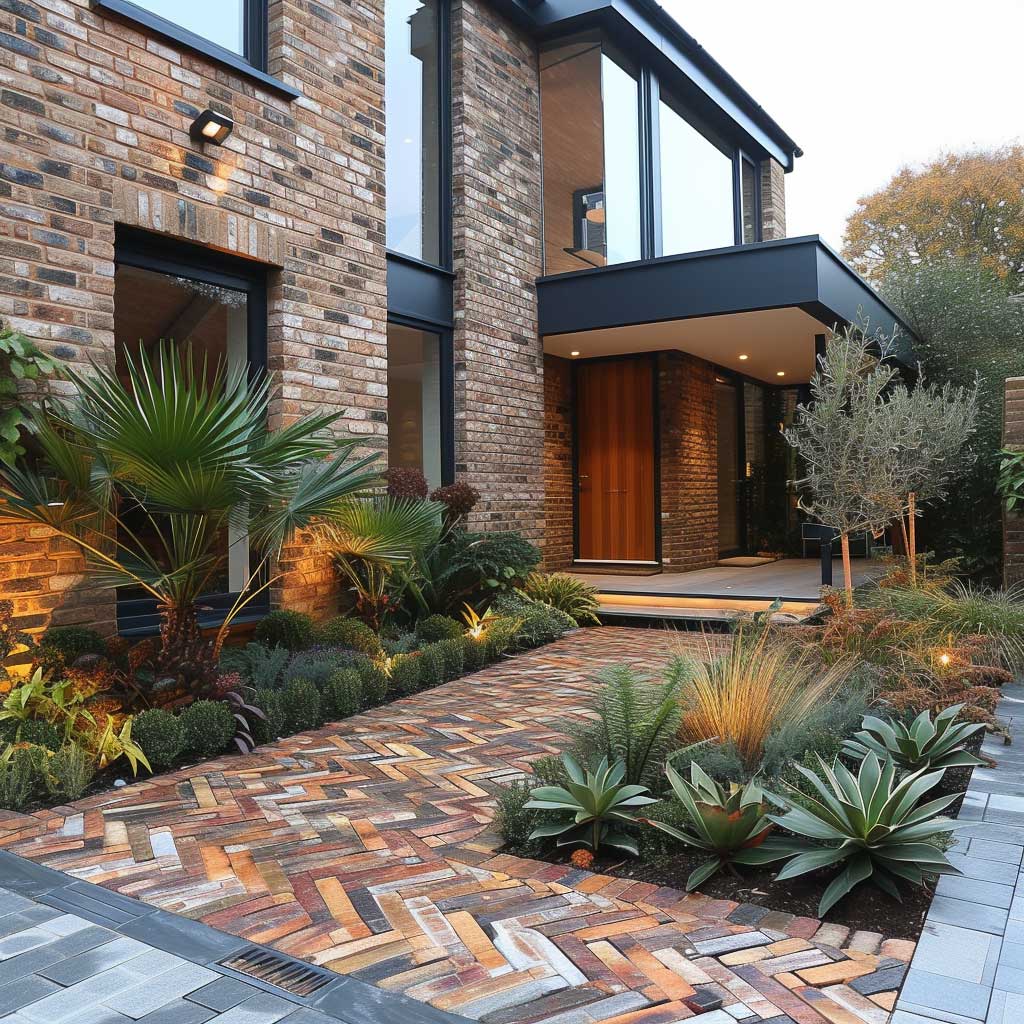
Brick earns its place on look and durability. Its linear courses and herringbone or basketweave patterns give a front garden a warm, structured edge. A built-in facade cannot copy that boundary character.
The source describes brick as a durable material with timeless beauty. That matters for a boundary that faces weather and daily knocks. A brick wall also works well on a wider front garden, where it can stand as a feature in its own right.
Colour is flexible too. Whitewashing or grey and black bricks can shift the wall toward a contemporary palette. Strategic lighting can bring out the texture after dark.


Where concrete facades win
The concrete facade wins on space and greenery. With a plot of 5 × 16 meters and neighbouring buildings close by, there was no room for a full garden. Flower beds and trees moved into the architecture instead.
Privacy is another strength. Planted terraces and panoramic windows let residents enjoy outdoor corners that stay hidden from the street. The source notes that the volumes remain out of view even though they feel open inside.
For three generations sharing one house, separate levels gave each family group private rooms and a shared green zone. That layout is hard to recreate with a simple boundary wall.


The mistake of choosing by the photo alone
A common error is picking a wall because the photo looks good, without checking the site. A buyer might copy a dense planted facade onto a wide lot with plenty of sun and no one to water it. Another might install a bare brick boundary on a shaded, tight plot where little will grow.
Start with the site. Measure how much ground you have, how much light reaches the wall, and who will maintain the planting. Only then compare looks.
Final verdict on which wall suits your garden
Choose the brick wall if your front garden is wide enough for a boundary feature. It suits anyone who wants a warm, classic look with durable construction and room for pattern play.
Choose the concrete facade if the plot is tight, neighbours are close, and you want greenery and privacy built into the home itself. Neither option is a blanket winner. The site and how you plan to use it make the call.