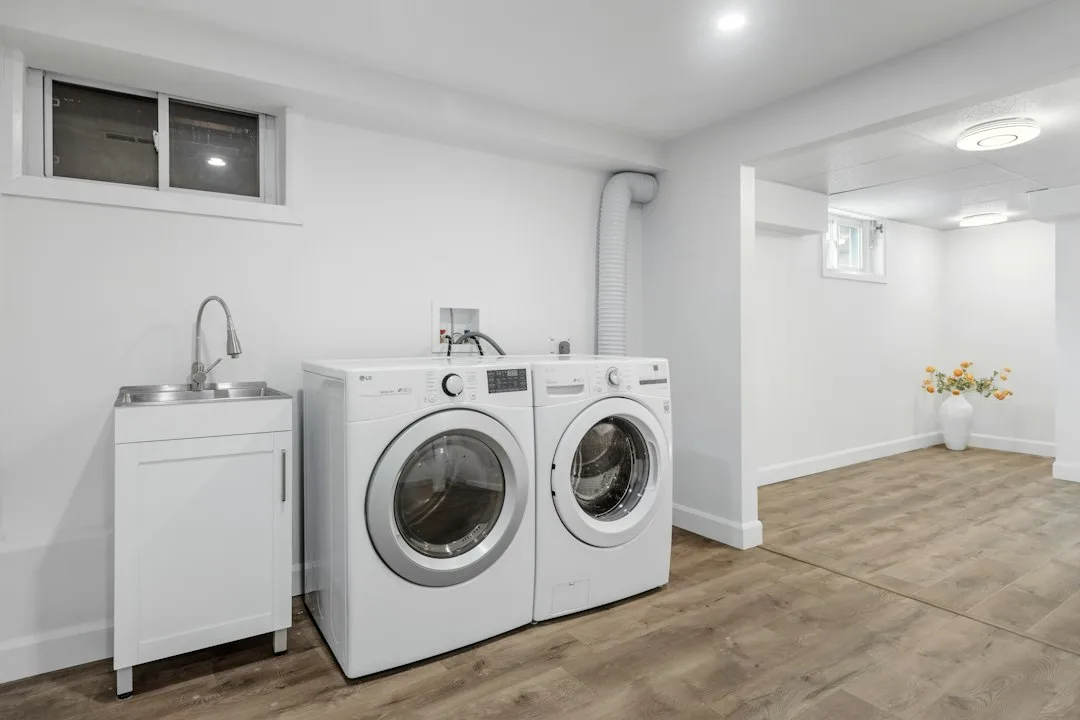
Laundry room ventilation systems have become non-negotiable in homes built after 2020, yet most homeowners still use recirculating dryer vents or skip ductwork entirely. This isn’t a minor oversight—it’s the single largest driver of moisture damage in finished basements and laundry spaces. When humid air from dryers stays inside your home, it settles in walls, under flooring, and inside insulation cavities, creating conditions for mold within weeks and structural rot within months.
Why humid air from dryers causes wall and foundation damage
A standard electric dryer produces 5–7 gallons of moisture per load. That water vapor doesn’t vanish; it migrates into adjacent drywall, wood framing, and concrete foundation walls where it condenses at night or during temperature drops. Humidity levels above 60% create ideal conditions for mold spore germination.
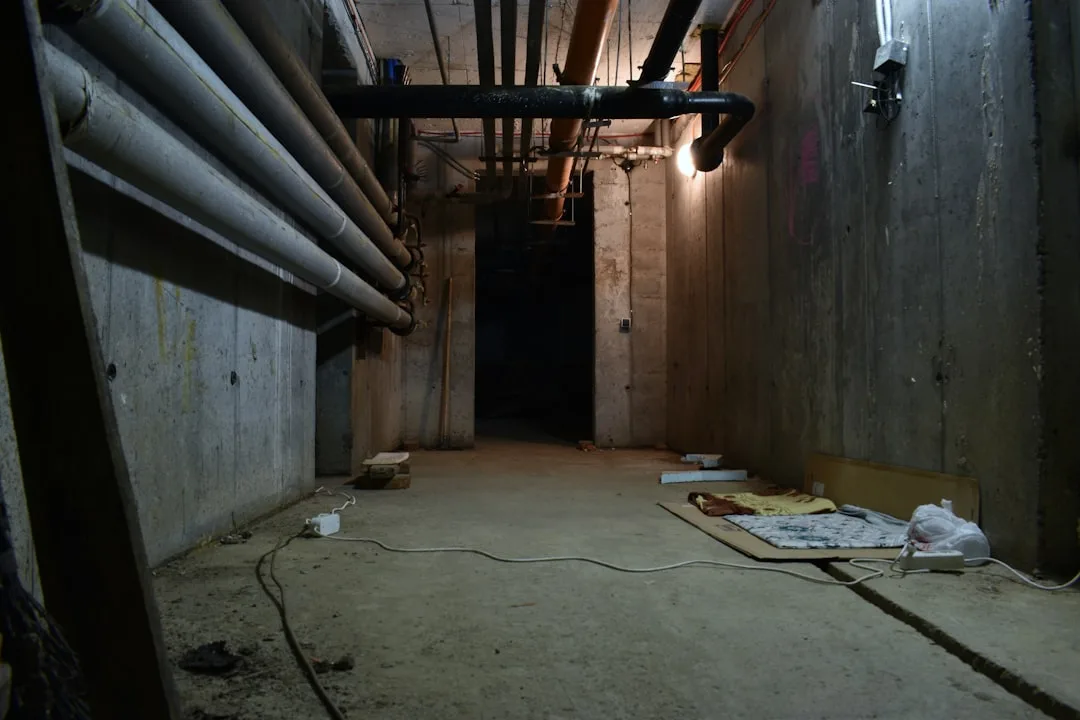
Damp basement walls and laundry rooms are the second-most common moisture problem homeowners report after basement seepage, according to field reports from contractors managing 2024–2026 renovations. The difference: seepage is visible; vapor infiltration is invisible until damage appears on exterior walls or basement ceilings.
Heat and moisture also accelerate drywall joint compound degradation and corrode metal framing fasteners. Concrete that’s repeatedly wet-dry cycles faster than concrete exposed to constant moisture.
Quick Tips
- Use rigid metal ductwork, never vinyl flex duct—it traps moisture and collapses, blocking airflow within 2–3 years
- Duct diameter must match your dryer outlet: most modern dryers require 4-inch rigid ducting minimum
- Install an outdoor vent cap with a damper to stop backdraft and prevent outside air from entering during cold months
- Slope ductwork slightly downward (1/8 inch per foot) toward the exterior to prevent moisture pooling inside the pipe
- Never terminate laundry room ventilation into attics, crawl spaces, or interior walls—always run to exterior wall or roof
Dryer vent dampers and termination methods that actually work
Broan-NuTone, a leading manufacturer of residential ventilation products, offers ductless damper caps ($40–$60 range) designed to auto-close when airflow stops, preventing outdoor air from entering your home during winter. Manual dampers require homeowner maintenance and often stick or fail silently.
Most building codes now require either rigid aluminum or galvanized steel ductwork with an insulated exterior jacket where ductwork passes through unconditioned spaces. Uninsulated metal duct in cold crawl spaces or attics causes condensation—the moisture drips back into your dryer or the laundry room.
| Ductwork Type | Lifespan & Issues | Best For |
|---|---|---|
| Vinyl Flex Duct | 2–4 years; collapses, traps lint and moisture | Temporary or short runs only |
| Rigid Aluminum | 15+ years; lightweight, affordable, prone to dents | Most residential installations |
| Galvanized Steel | 20+ years; durable, slightly heavier installation | Long runs or high-vibration areas |
| Insulated Duct Wrap | Prevents condensation; adds cost but saves moisture damage | Runs through attics or unheated basements |
The laundry room ventilation failure most homeowners make
The #1 mistake: using a recirculating vent cap instead of ducting to exterior. These caps contain a filter that traps lint, but they also recirculate 100% of the humid air back into your home. Over 6 months, the filter clogs, airflow drops, and moisture backs up into drywall and floor joists beneath the laundry room.
One contractor documented this in a 2025 basement renovation: a homeowner had used a recirculating dryer vent for 3 years without replacing the filter. When walls were opened, the framing wood showed active mold growth, and concrete floors showed efflorescence (white mineral salt deposits indicating water migration). The cost to remediate exceeded $8,000.
Never rely on recirculating vents if your laundry room shares walls with finished living spaces, bedrooms, or crawl spaces. Exterior ducting is the only solution.
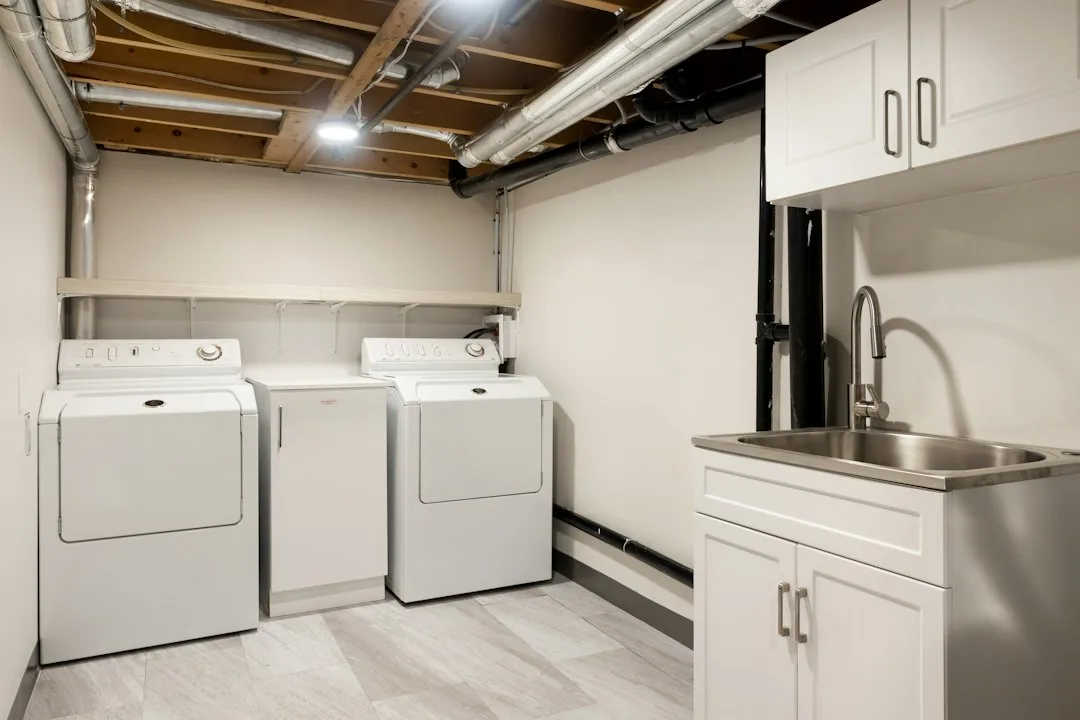
Fan sizing and ductwork routing for different home layouts
Panasonic WhisperDry, a 50-CFM (cubic feet per minute) inline dryer booster fan, is designed for homes where dryers sit more than 20 feet from exterior walls. Standard dryer airflow is 4,000–5,000 CFM; over long runs, friction loss can reduce that to 2,000–3,000 CFM, which isn’t sufficient to evacuate moisture.
For basement laundry rooms, ductwork should exit through exterior rim joist (the band of framing between foundation and first floor) rather than through roof. Roof terminations require longer runs, more bends, and greater condensation risk in winter.
Ductwork with more than three 90-degree bends requires fan boost or oversized ducting. Each bend adds approximately 10–15 CFM of friction loss. Plan your route before cutting holes.
Building code compliance and inspection requirements
The 2024 International Residential Code (IRC) Section M1502 mandates that clothes dryers be vented to the outdoors with a duct not exceeding 35 feet in length (or 30 feet if bends are present). Most municipalities enforce this strictly during final inspection.
Inspectors check for: rigid ductwork, proper diameter match, exterior termination with damper, and slope toward exit. Vinyl flex duct or recirculating vents fail inspection in most jurisdictions and must be corrected before sign-off.
Budget for ventilation during any basement finishing project or laundry room renovation. Skipping it saves $300–$600 upfront but costs $5,000–$15,000 in moisture remediation within 2–4 years. As part of elevating your living space through architectural innovation and home improvement, ventilation is foundational—visible finishes don’t matter if the structure underneath is rotting.
Laundry room ventilation performance after first full season
Homes retrofitted with rigid exterior ducting show humidity levels 20–30% lower in adjacent rooms within the first heating season. Basement concrete floors dry completely after washing, and wall cavities remain below 50% moisture content year-round.
Condensation on basement windows and concrete weeping stops within weeks after proper ventilation is installed. These are not cosmetic changes—they’re structural preservation in real time.
When planning your next home improvement cycle, laundry room ventilation should rank above aesthetic upgrades. For a complete approach to structural integrity, review upgrade your home with these 3 improvement projects that prioritize durability alongside design.
Related Topics