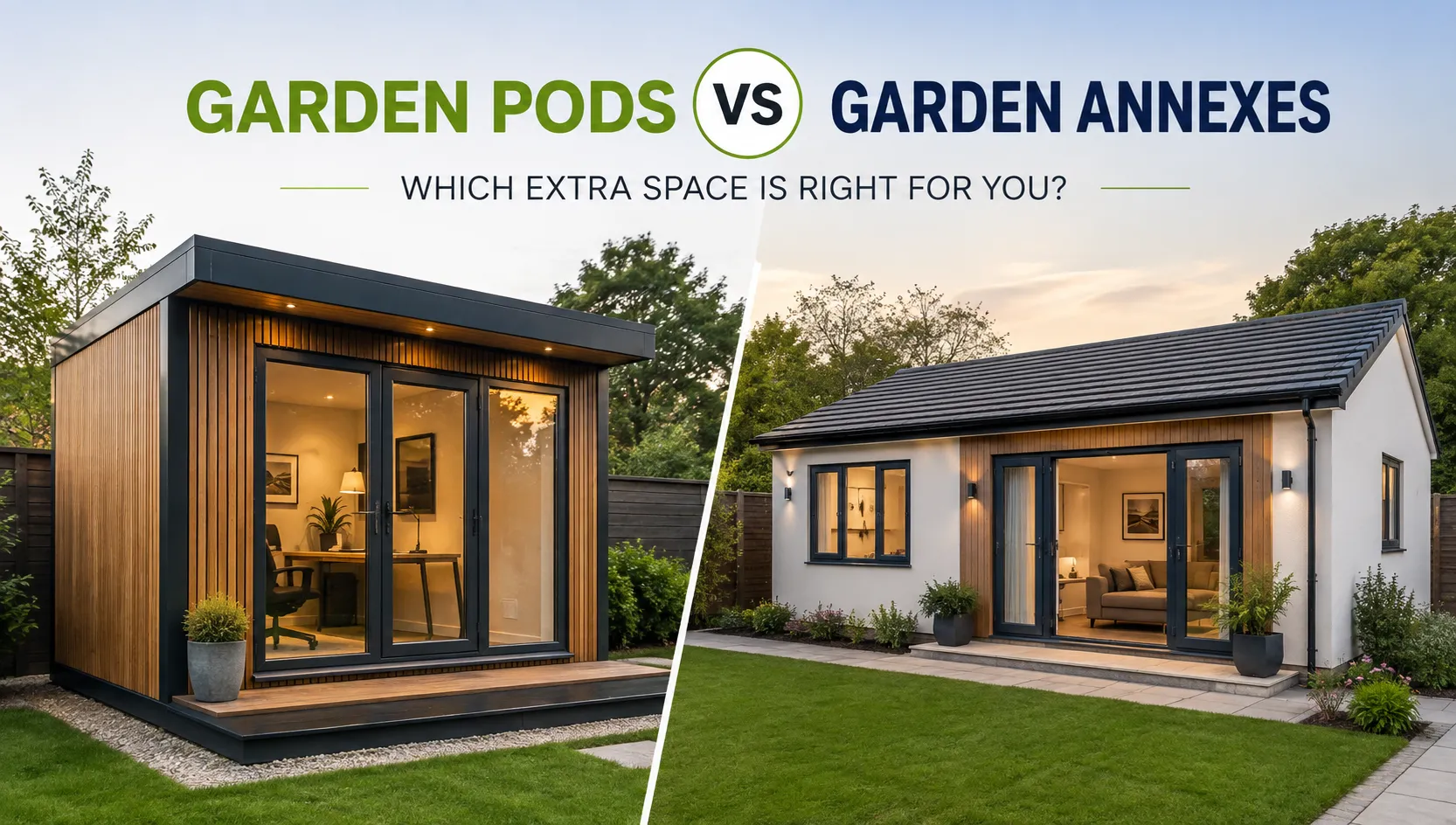
Creating extra space at home does not always mean taking on the cost, disruption, and complexity of a traditional extension. Garden buildings have become a practical alternative for homeowners who want more room without dramatically changing their main property.
Two popular options are garden pods and garden annexes. Although both can provide valuable additional space, they are designed for different needs. Understanding their features, uses, costs, and practical considerations can help you choose the right solution for your home.
Understanding Garden Pods and Garden Annexes
What Are Garden Pods?
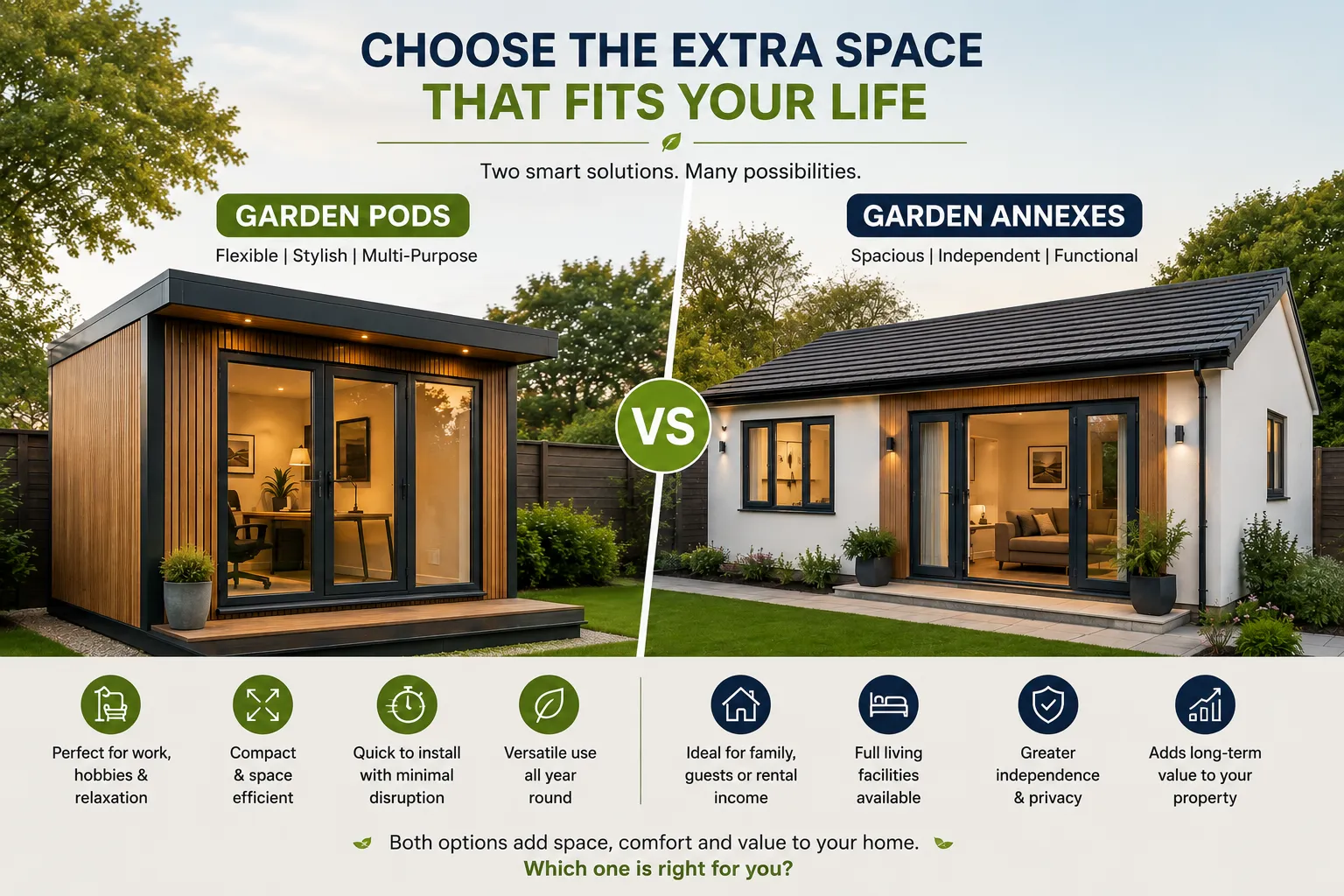
Garden pods are compact, purpose-built structures installed within a garden. They can be designed for a variety of uses, including home offices, creative studios, gyms, hobby rooms, guest spaces, and relaxation areas.
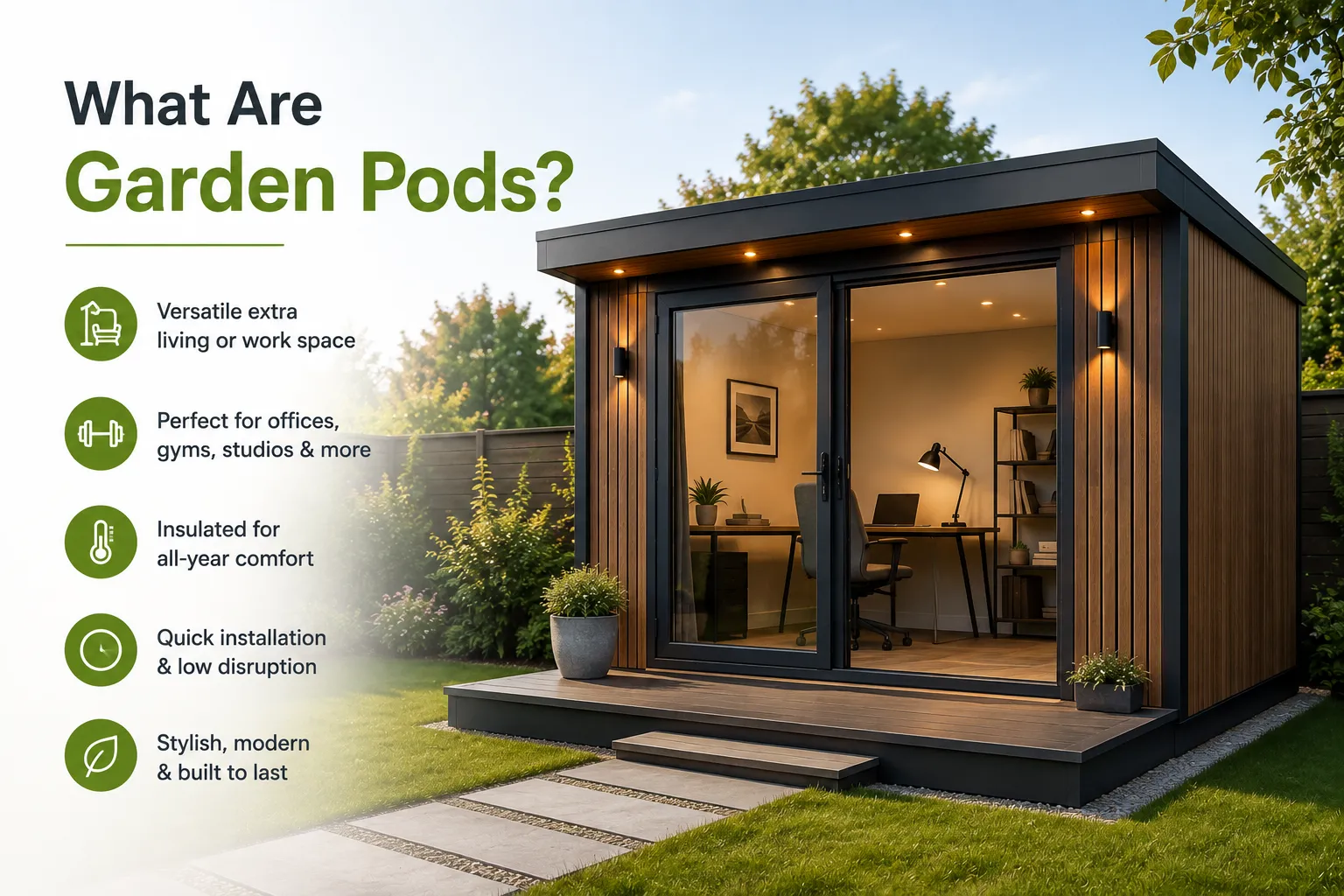
Their biggest advantage is flexibility. A well-designed pod can make use of an otherwise underused part of the garden while keeping the main house relatively untouched.
Garden pods can also be highly personalised. Depending on the design, homeowners can choose insulation, heating, lighting, electrical installations, windows, doors, and interior finishes to create a comfortable space that works throughout the year.
What Are Garden Annexes?
Garden annexes are generally larger and more accommodation-focused than standard garden pods. They can include features such as bedrooms, bathrooms, kitchens, living areas, and dedicated entrances, depending on the design and applicable planning and building regulations.
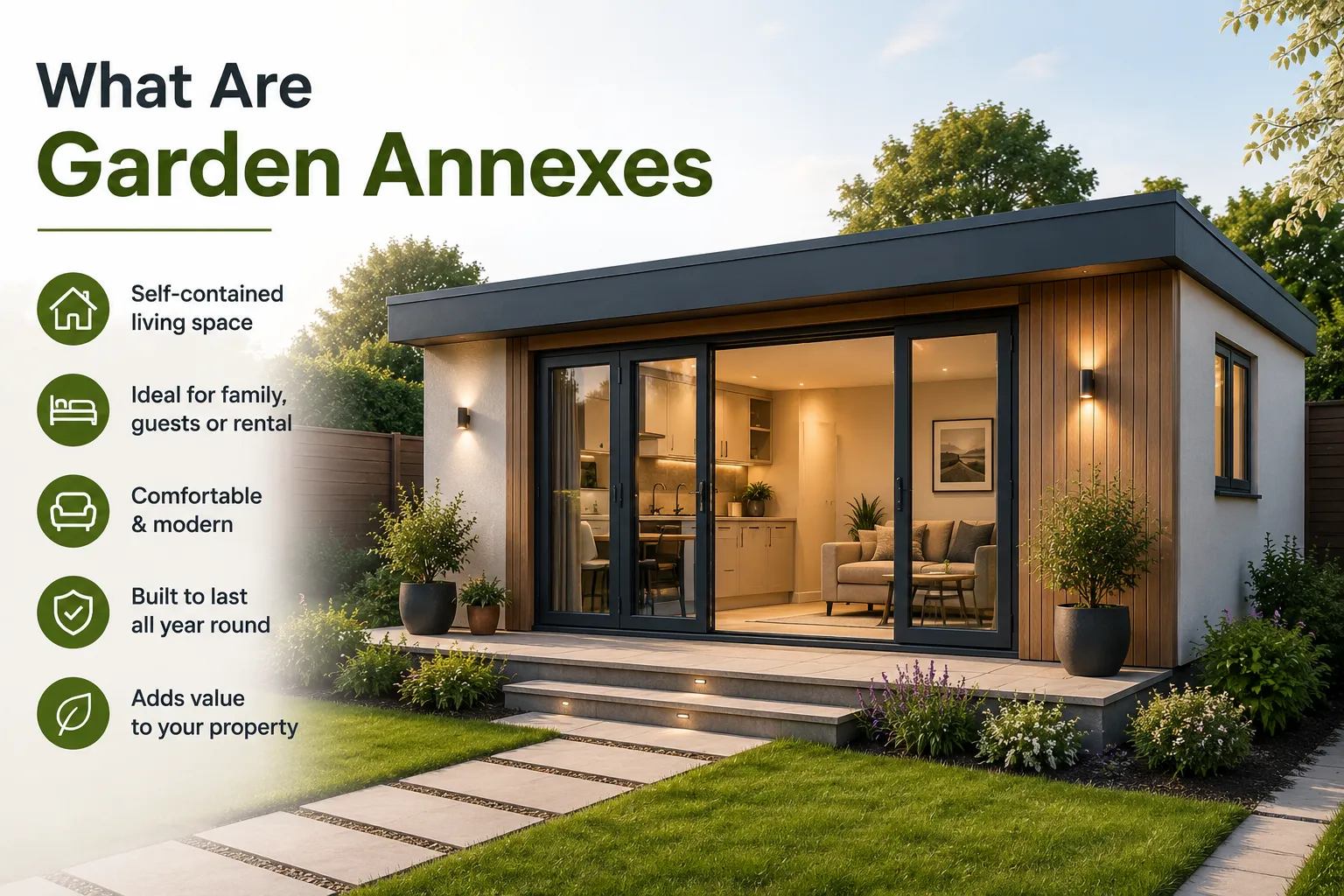
This makes an annex particularly useful when the additional space needs to function more like a self-contained living environment.
For example, a garden annex could provide accommodation for an older relative, a visiting family member, or an adult child who wants some independence while remaining close to the main household.
Garden Pods vs Garden Annexes: Which One Should You Choose?
The right option depends largely on how you intend to use the additional space. Before making a decision, consider your household’s current needs as well as how those needs could change over the next few years.
Choose a Garden Pod for Flexible Extra Space
A garden pod could be a better choice if your main objective is creating a dedicated room rather than a complete living unit.
Popular uses include:
- Home offices for remote workers
- Garden gyms and fitness rooms
- Art and craft studios
- Music or hobby rooms
- Reading and relaxation spaces
- Guest rooms
- Children’s play areas
- Creative workspaces
For instance, someone working from home may not need a kitchen or bathroom. Instead, they may benefit more from excellent insulation, comfortable heating, good natural light, reliable internet connectivity, and effective acoustic treatment.
A pod can therefore provide a focused environment without requiring a major alteration to the house.
Choose a Garden Annex for Independent Accommodation
A garden annex is worth considering when you need significantly more functionality and independence.
An annex may be suitable for:
- Elderly relatives
- Adult children
- Long-term guests
- Multi-generational households
- Additional accommodation
- A private living and sleeping area
Because an annex can incorporate several rooms and facilities, it can offer a greater degree of independence than a typical garden pod.
However, homeowners should check local planning requirements and building regulations before committing to an annex project, particularly when it is intended to provide independent residential accommodation.
Consider Your Available Garden Space
The size and layout of your garden will also influence your choice. A compact garden may be better suited to a smaller pod, while a larger property could potentially accommodate a more substantial annex.
Before ordering a building, measure the available area carefully and consider access for construction. Think about surrounding trees, fences, drainage, utility connections, and how much garden you are willing to sacrifice.
It is also worth considering the building’s position in relation to the house. A convenient location can make everyday use much easier.
Practical Tips for Choosing the Right Garden Building
Think About Your Long-Term Requirements
Avoid choosing a garden building based solely on what you need today. Consider how your household might change in the future.
A home office may be perfect now, for example, but perhaps you may eventually want to use the same building as a guest room or hobby space.
Ask yourself:
- Who will use the building?
- How frequently will it be used?
- Will it need heating throughout the year?
- Do you need plumbing or cooking facilities?
- Will you need high-speed internet?
- Does the space need to provide privacy?
- Could its purpose change in the future?
Answering these questions can make the decision considerably easier.
Prioritise Insulation and Comfort
A garden building should not simply look attractive from the outside. If you expect to use it throughout the year, insulation and ventilation should be key considerations.
Good insulation can help maintain a more comfortable internal temperature and reduce the amount of energy required for heating or cooling.
Windows and doors should also be selected carefully. High-quality glazing can bring in natural light while helping the building remain comfortable.
Plan Electrical and Plumbing Requirements Early
If your building will be used as an office, studio, gym, or accommodation, think about utilities before construction begins.
You may require:
- Multiple electrical sockets
- Dedicated lighting
- Internet connectivity
- Heating and cooling
- Water supply
- Drainage
- Kitchen facilities
- Bathroom facilities
Adding these features later can be more complicated and expensive, so it is better to plan them from the beginning.
Don’t Forget Sound and Privacy
Location matters when noise is a concern. If your garden building will be used for meetings, studying, music, or relaxation, consider its position in relation to neighbouring properties and busy areas.
Acoustic materials can also help create a quieter and more comfortable interior, particularly when the building is being used as an office or entertainment space.
Common Mistakes to Avoid
Choosing a Building That Is Too Small
One of the most common mistakes is underestimating how much space is actually required. A room may look large on a plan but feel considerably smaller once furniture, storage, desks, and equipment are added.
Think about how the space will function rather than simply focusing on its external dimensions.
Ignoring Planning and Building Requirements
Planning rules can vary depending on the building’s size, location, intended use, and other factors. This is particularly important when considering accommodation.
Always investigate the relevant requirements before construction starts. If you are unsure, seek professional advice rather than assuming that a project automatically falls under permitted development.
Focusing Only on Appearance
A beautiful garden building is not necessarily a practical one. Consider insulation, ventilation, heating, security, maintenance, electrical requirements, and accessibility alongside the design.
A balance between appearance and functionality will generally produce a much better long-term result.
Forgetting About Access
Large building components may need to be transported through gates, side passages, or other restricted areas. Check access before ordering your building to avoid unexpected installation problems.
Finding the Right Solution for Your Home
If you need a dedicated workspace, studio, gym, or flexible garden room, garden pods can provide an efficient way to create additional space without extending the main house.
On the other hand, if your priority is creating a more independent accommodation solution with facilities for sleeping, living, and potentially cooking and bathing, garden annexes may be more appropriate.
Ultimately, there is no universal winner. The best choice depends on your available garden space, budget, intended use, household requirements, and future plans.
Make Your Extra Space Work Harder
Adding a well-designed garden building can transform an underused outdoor area into a genuinely useful part of your property. Whether you choose a compact pod for focused activities or a larger annex for independent accommodation, careful planning will help you get much more value from the investment.
Start by defining exactly what you want the space to achieve. Once you understand your priorities, comparing designs, specifications, costs, and regulations becomes much simpler.