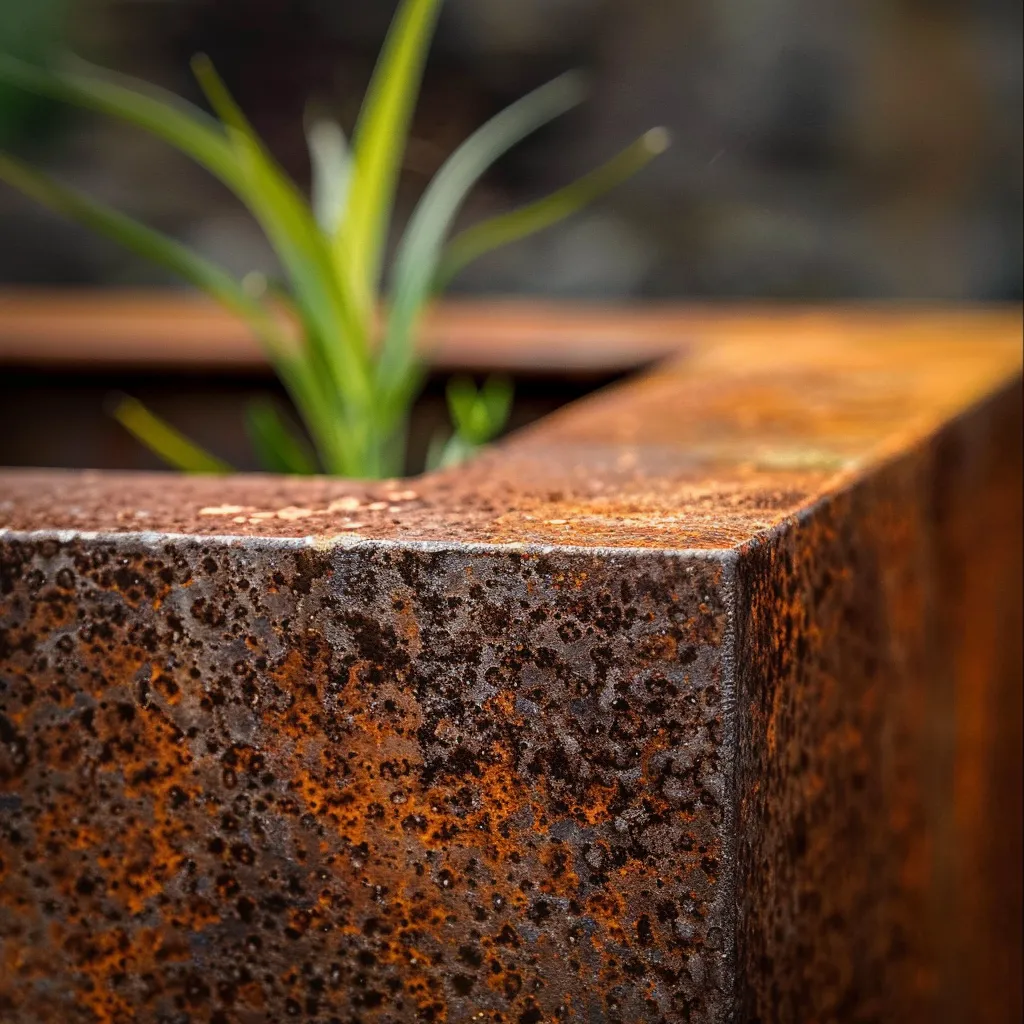
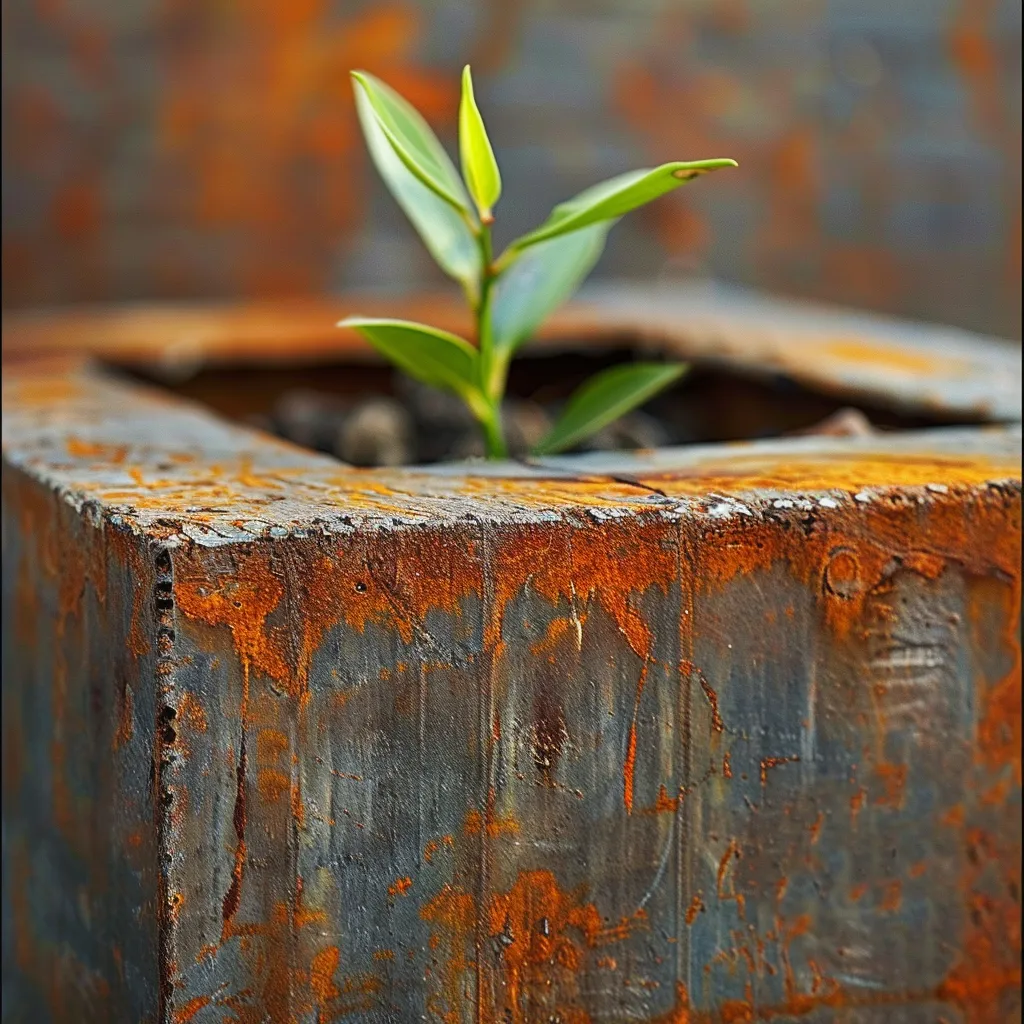
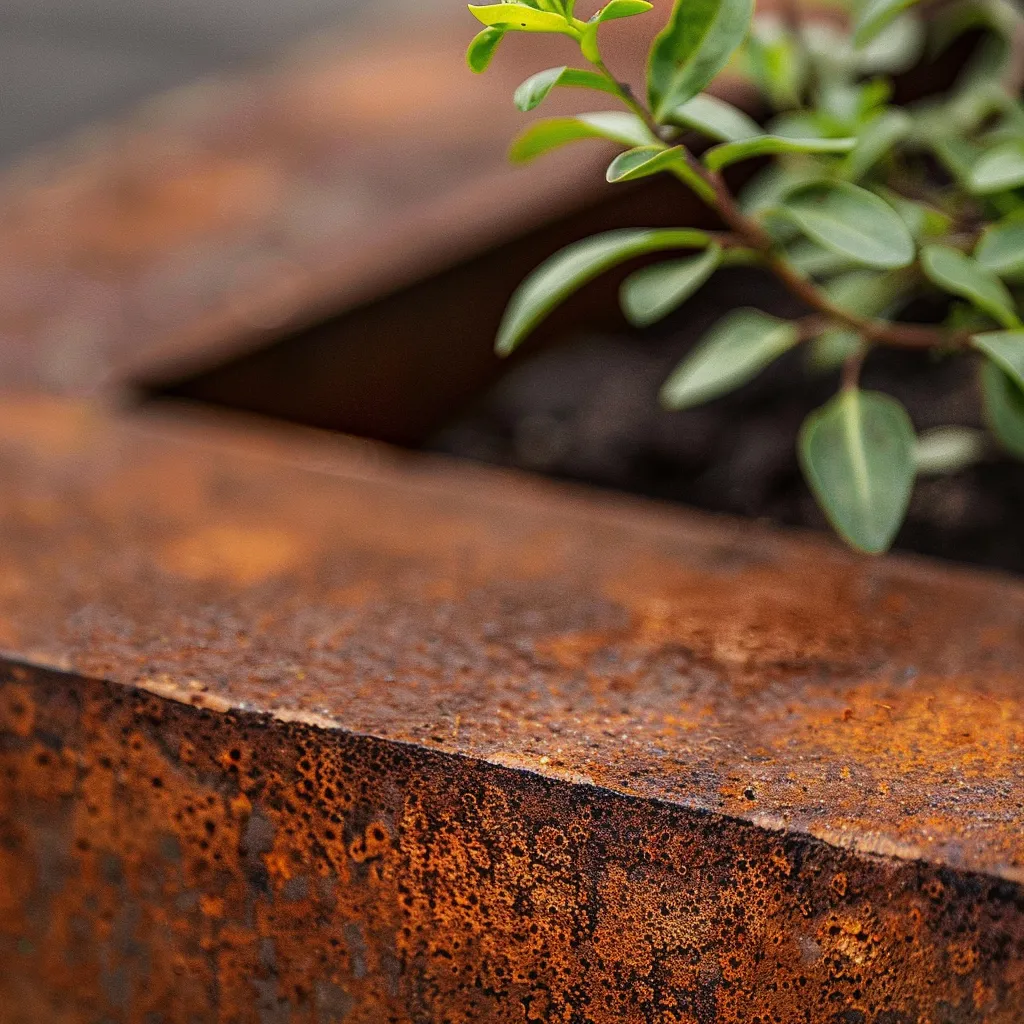
There is a category of garden material that improves with age — not despite weathering, but because of it. Corten steel, formally known as weathering steel or by the trade designation COR-TEN, is the most architecturally compelling of them. Left exposed to rain and air, it develops a stable iron oxide patina in layered tones of amber, ochre, rust-red, and deep burnt sienna. The patina is not deterioration: it is the material reaching its finished state. Once fully formed — typically within 18 to 36 months of outdoor exposure — the oxidised surface layer becomes self-limiting, sealing the steel beneath from further corrosion and producing a surface that requires no paint, no sealant, and no ongoing maintenance beyond occasional cleaning of overflow staining.
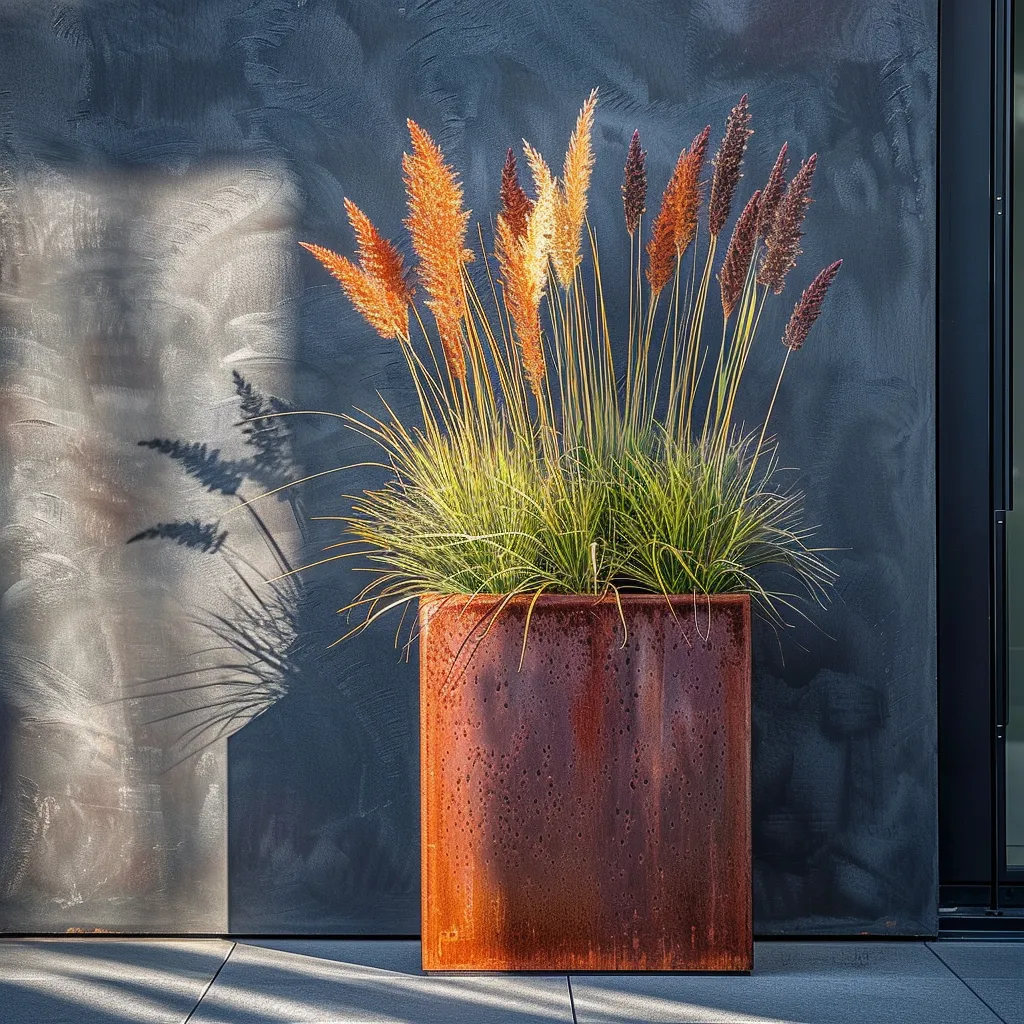
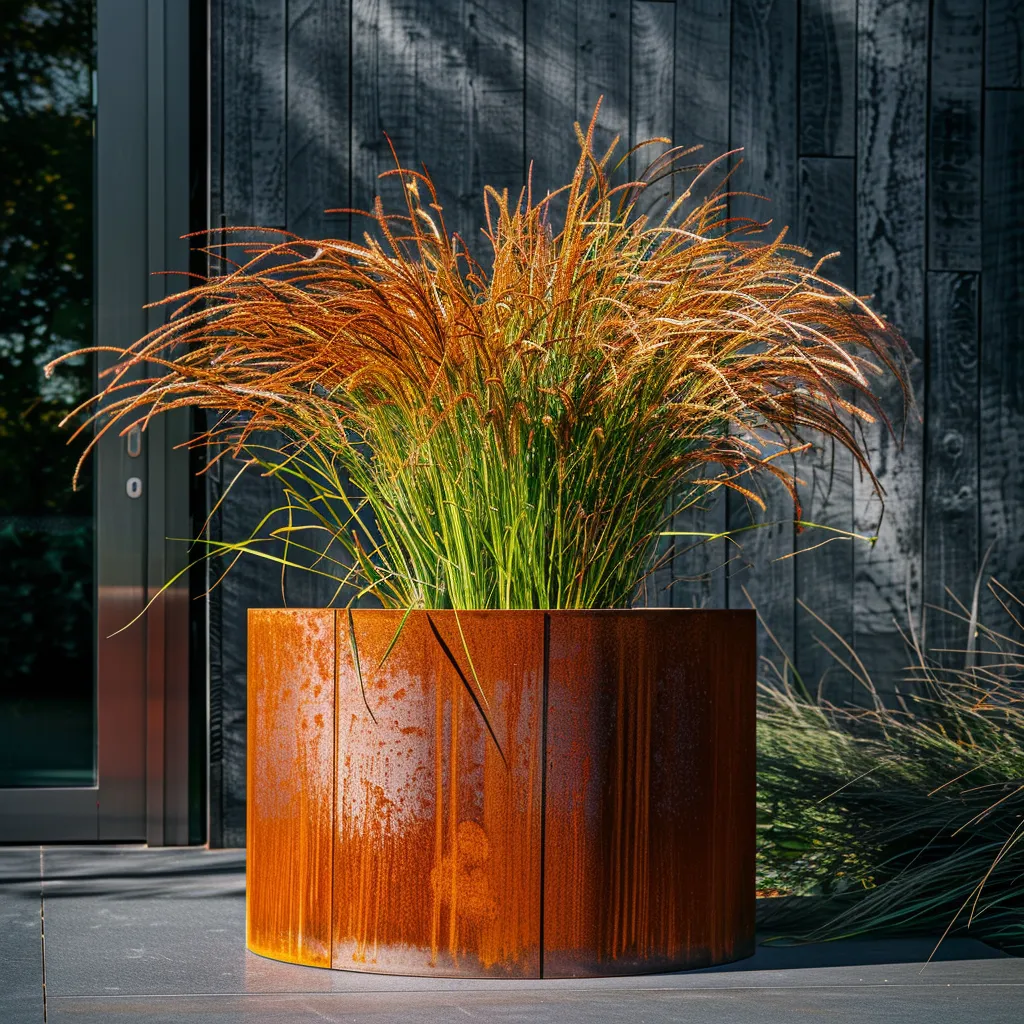
For garden design, corten steel planters sit in a precise aesthetic position that no other container material occupies. They are warmer in tone than bare concrete or galvanised steel, more structural than terracotta or timber, and more honest in their industrial materiality than powder-coated alternatives. This quality — warm, heavy, deliberately undecorated — makes corten planters one of the most versatile materials in contemporary garden design. They work in urban courtyard schemes, against rendered house walls, in rural landscape settings where they echo fallen timber and exposed earth, and in minimalist compositions where a single large planter becomes the entire design statement.
This guide covers the full range of corten steel planter ideas for garden design — from basic material understanding and weathering management through to species pairings, scale logic, composition strategies, and the specific contexts where corten planters outperform every other option available.
What Corten Steel Is and Why It Works So Well in Garden Design
Corten is an alloy steel developed in the 1930s by United States Steel Corporation. Its composition includes small quantities of copper, chromium, nickel, and phosphorus — elements that collectively cause the surface to form a tightly adherent oxide layer rather than the flaking, expansive rust that destroys standard mild steel. The ASTM A588 standard governs weathering steel composition in North America; equivalent European standards include EN 10025-5. The key mechanical property for garden planters is that once the patina stabilises, the material’s structural integrity is unaffected — unlike ordinary rust, which progressively converts iron to weaker, hydrated iron oxides that eventually compromise the base metal.
Typical wall thickness for corten garden planters ranges from 3mm for small containers up to 6–8mm for large raised bed formats. A 3mm wall loses approximately 0.3mm to initial patination weathering over the first few years before stabilising — a 10% nominal reduction that is accounted for in any professionally specified planter. At 5mm and above, the structural reserve is substantial: corten planters at this specification are routinely used in public realm projects and commercial landscape installations where 25–30 year service life is the design expectation.
The global corten garden products market was valued at approximately $340 million USD in 2023 according to the Landscape Products Industry Report, with residential planter sales accounting for 38% of total volume. That growth trajectory reflects a broader shift in residential garden design toward materials with inherent character — surfaces that visibly record their exposure to weather rather than resisting or concealing it. In a design culture that values authenticity and honest material expression, corten delivers both at a price point that sits between standard powder-coated steel and custom architectural metalwork.
The Patination Process — Managing the First Season of Corten Planter Weathering
The most important practical consideration with corten steel planter ideas for garden design is not the finished effect — it is the transition period. During the first 12 to 24 months of weathering, corten produces iron-rich runoff water that will stain any porous surface it contacts: concrete paving, natural stone, timber decking, gravel, and render all absorb orange-brown staining that is extremely difficult to remove once dried and oxidised into the surface. This is not a defect of the material — it is an inherent property of the patination process — but it requires planning at the installation stage.
The standard approach for new corten planters positioned on paved surfaces is either to mount them on feet or a recessed plinth that allows runoff to drain away from the immediate surface, or to treat the surrounding paving with a penetrating sealer prior to installation. Dark-toned paving materials — anthracite porcelain, dark basalt, or charcoal concrete — absorb initial staining far less visibly than pale limestone, white concrete, or light sandstone. Where pale surfaces are adjacent to new corten planters, a 30–50mm gravel reveal around the base provides a sacrificial zone that accepts staining invisibly. After 24–36 months, once the patina is fully formed and the runoff rate drops to near zero, the gravel reveal can remain as a design detail or be removed.
In dry climates or sheltered installations where the planter surface does not receive consistent wetting and drying cycles, the patination process slows significantly and the surface may remain in an intermediate, uneven state for longer. To accelerate patination in such conditions, dampening the steel surface with a diluted solution of vinegar or hydrogen peroxide once or twice per week during the first season speeds oxidation without compromising the long-term patina quality. Several specialist garden product suppliers offer pre-patinated or accelerated-finish corten planters for installations where immediate finished appearance is a priority.
Corten Steel Planter Sizes and Garden Design Formats
Corten planters are available across a wider range of formats and dimensions than any other contemporary container material. Understanding which format suits which garden design context is the foundation of effective corten planter specification — because the wrong size in the right position produces the same visual failure as the right size in the wrong position.
| Format | Typical Dimensions | Dry Weight | Primary Use Context | Price Range (UK / US) | Best Pairing |
|---|---|---|---|---|---|
| Cube planter, small | 30 × 30 × 30 cm | 4–6 kg | Tabletop, step accent, repeated grouping | £60–£110 / $70–$130 | Sempervivum, dwarf grasses, herbs |
| Cube planter, medium | 50 × 50 × 50 cm | 12–18 kg | Terrace accent, repeated border rhythm | £130–£200 / $160–$250 | Agapanthus, ornamental grasses, Lavandula |
| Cube planter, large | 80 × 80 × 80 cm | 35–55 kg | Focal point, entrance flanking, courtyard statement | £350–£600 / $420–$720 | Acer palmatum, Phormium, clipped Pittosporum |
| Rectangular trough, low | 120 × 40 × 40 cm | 25–35 kg | Border edging, window sill, wall-top definition | £200–£380 / $240–$460 | Lavandula, Festuca, Stachys byzantina |
| Rectangular trough, tall | 100 × 40 × 80 cm | 40–60 kg | Privacy screening, raised bed substitute | £380–£650 / $460–$780 | Bamboo, columnar conifers, tall Miscanthus |
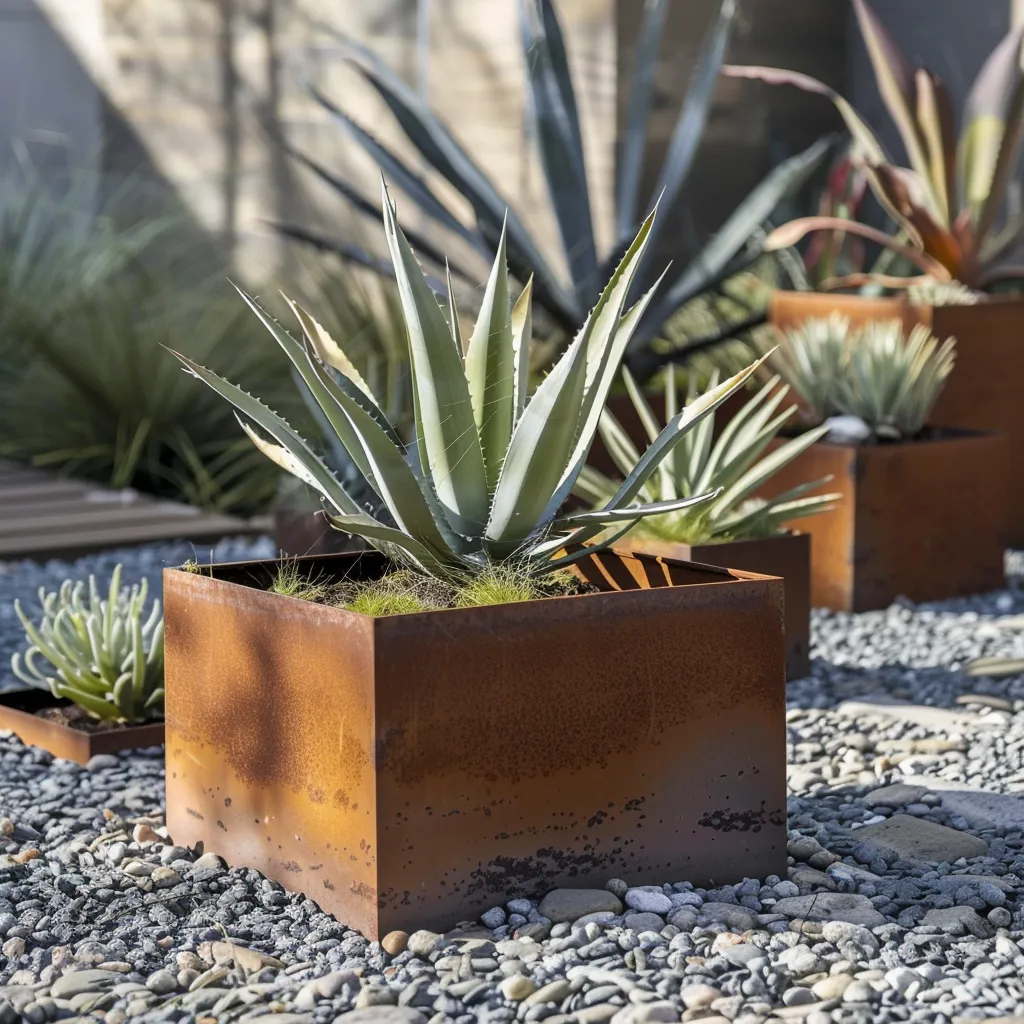
| Circular drum planter | 60 cm diameter × 60 cm H | 20–30 kg | Standalone sculpture, informal grouping | £220–£400 / $260–$480 | Olive tree, Agave, bold single specimen |
| Large raised bed panel | 200 × 80 × 60 cm | 80–120 kg | Vegetable growing, large perennial border | £700–£1,400 / $840–$1,680 | Mixed edibles, ornamental perennials, herbs |
| Tapered column planter | 35 × 35 × 100 cm | 18–28 kg | Vertical accent, entrance pair, narrow space | £280–£500 / $340–$600 | Topiary ball, standard Laurus, clipped Buxus |
Weight is a practical constraint that frequently surprises first-time buyers of corten planters. A large cube planter fully planted and irrigated can weigh 150–250 kg — far beyond the safe load of most standard timber decking, typically rated at 150–200 kg per square metre. For rooftop terraces, first-floor balconies, or elevated deck installations, structural assessment before installation is essential. Lightweight growing media — perlite-augmented mixes, low-density substrates — reduce planter weight by 30–40% compared to standard garden soil and are standard practice for any elevated corten installation.
Corten Steel Planter Ideas for Entrance and Facade Settings
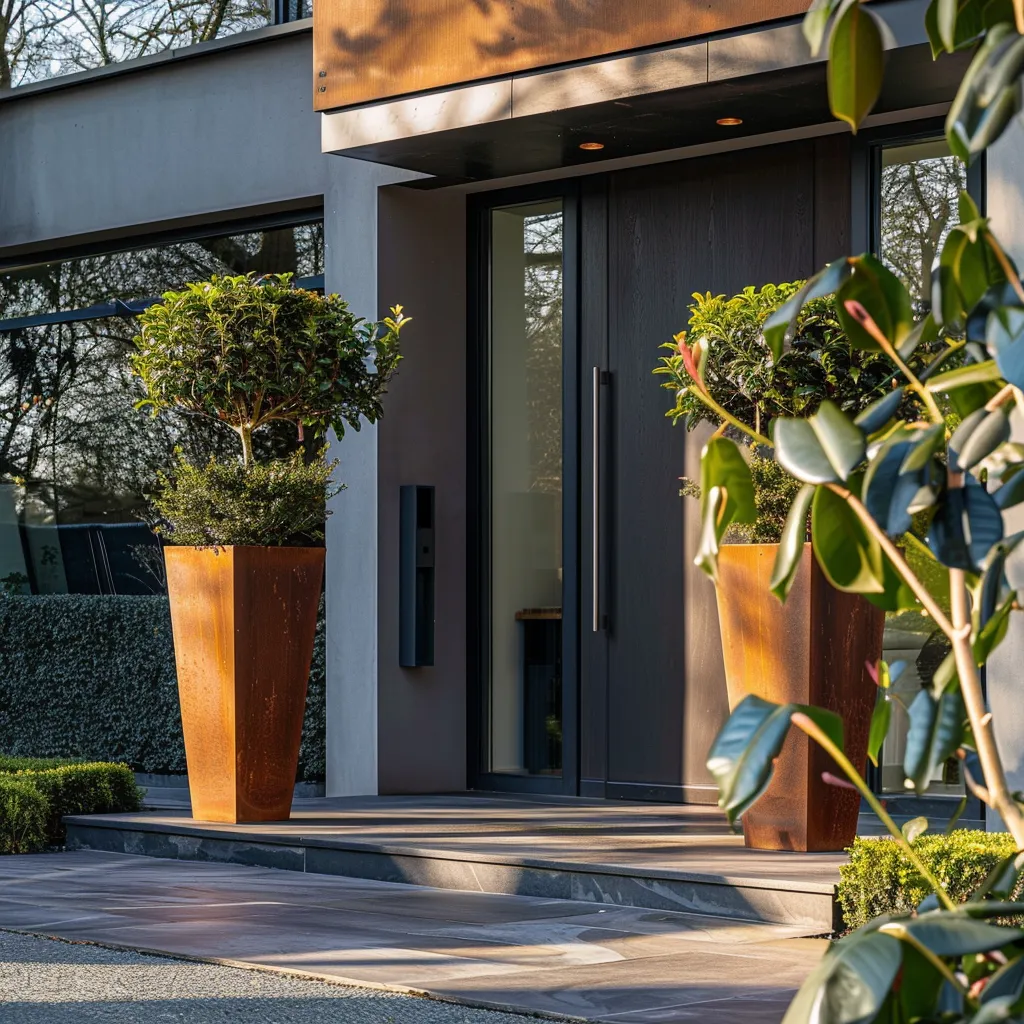
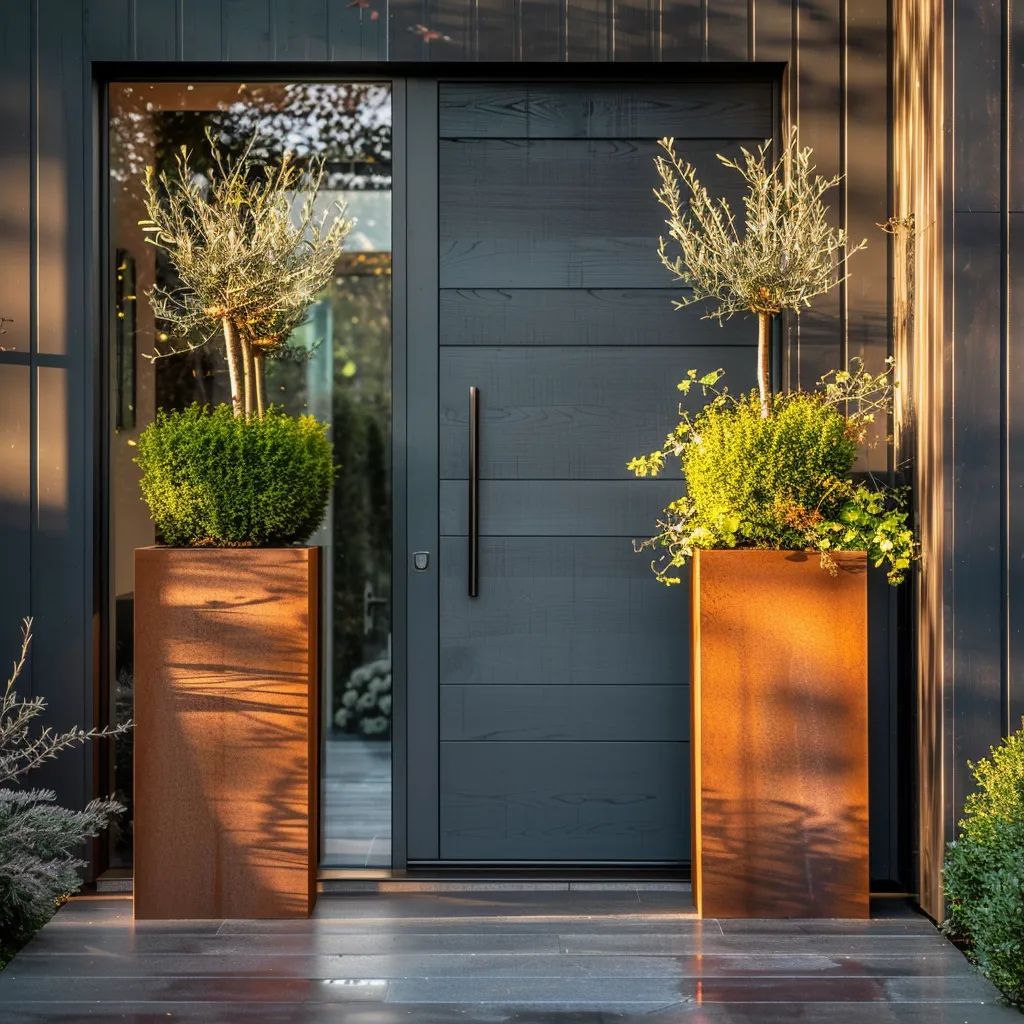
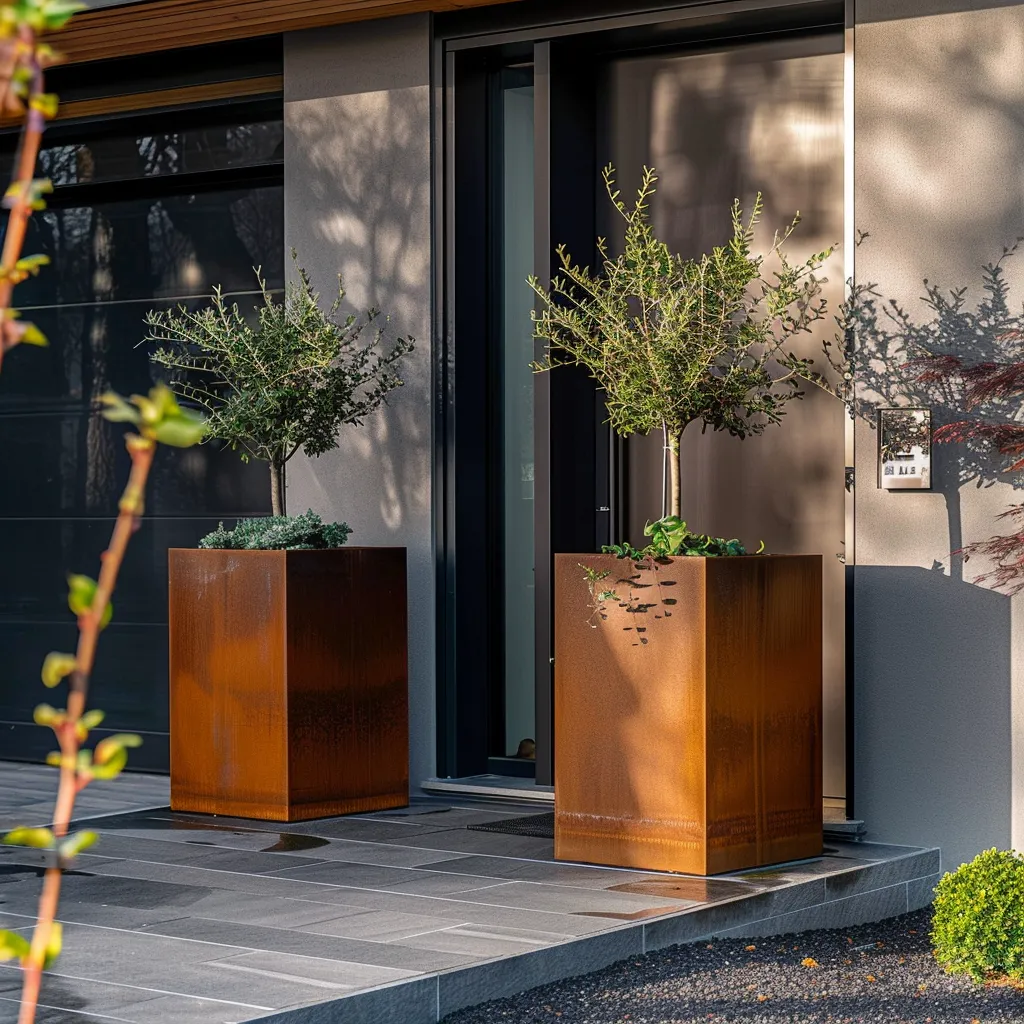
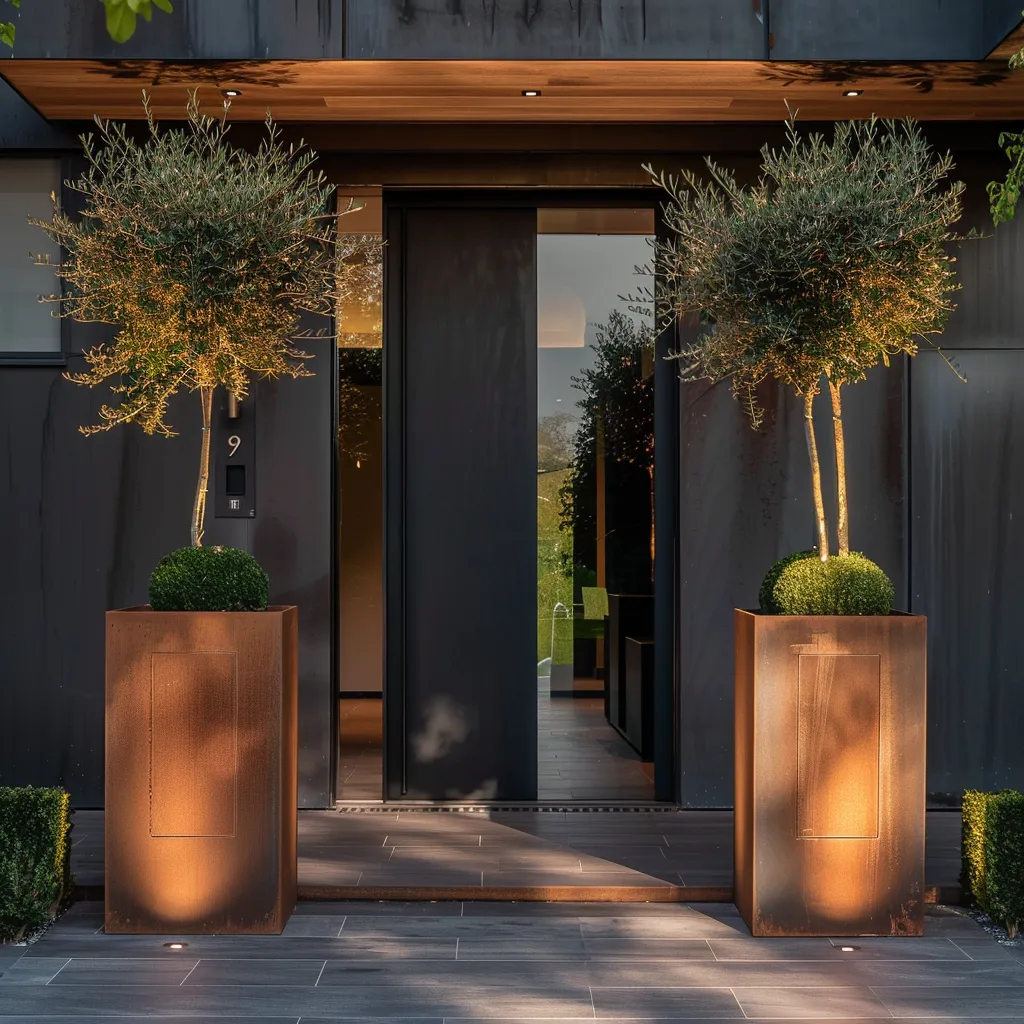
The entrance zone is where corten steel planter ideas have the highest visual impact relative to the investment required. A flanking pair of tall corten planters at either side of a front door — ideally identical in format and planted symmetrically — creates an immediate architectural statement that transforms even a modest entry. The rust-red tones of weathered corten coordinate naturally with virtually every contemporary facade material: dark render reads the corten as a warm counterpoint, pale render receives the planter tones as strong foreground contrast, and timber cladding shares the same organic material palette as the weathered steel.
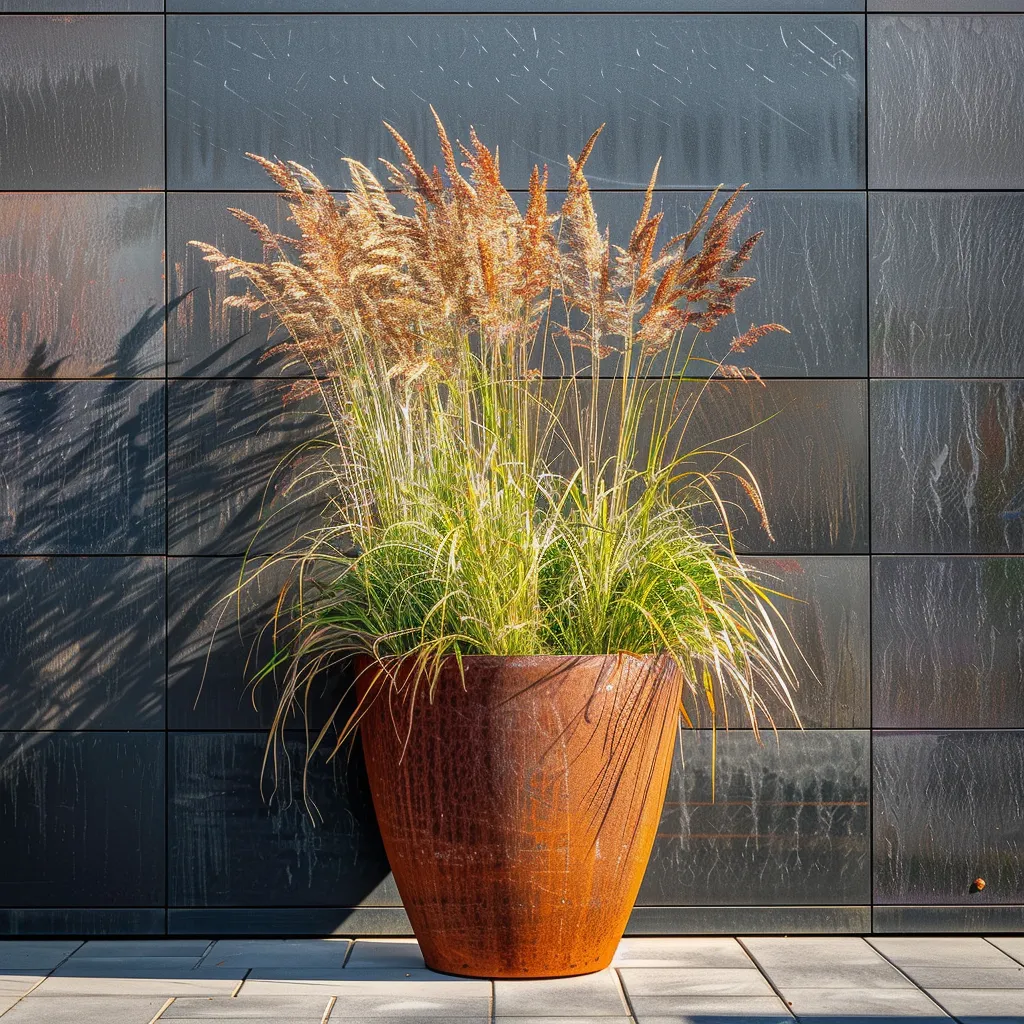
For entrance settings, tall column or tapered planter formats of 80–100 cm height and 30–40 cm width work better than low or wide containers because they match the vertical emphasis of a door opening and create a visual gateway rather than a ground-level accent. Planted with a single clipped standard — Laurus nobilis, Olea europaea, or Ligustrum jonandrum — they read as deliberately formal without appearing traditional. For a more contemporary effect, a single structural ornamental grass such as Calamagrostis ‘Karl Foerster’ allowed to develop naturally within the planter produces movement and seasonal change that a clipped standard cannot offer.
The relationship between entrance planting and the broader garden design approach is explored extensively in the context of sculptural elements in modern garden design, where the principle of treating containers as three-dimensional objects rather than simply growing vessels is developed in detail. Corten planters occupy exactly this sculptural role at the garden entrance — they are as much objects in the space as they are containers for plants.
Courtyard and Terrace Corten Steel Planter Ideas for Garden Design
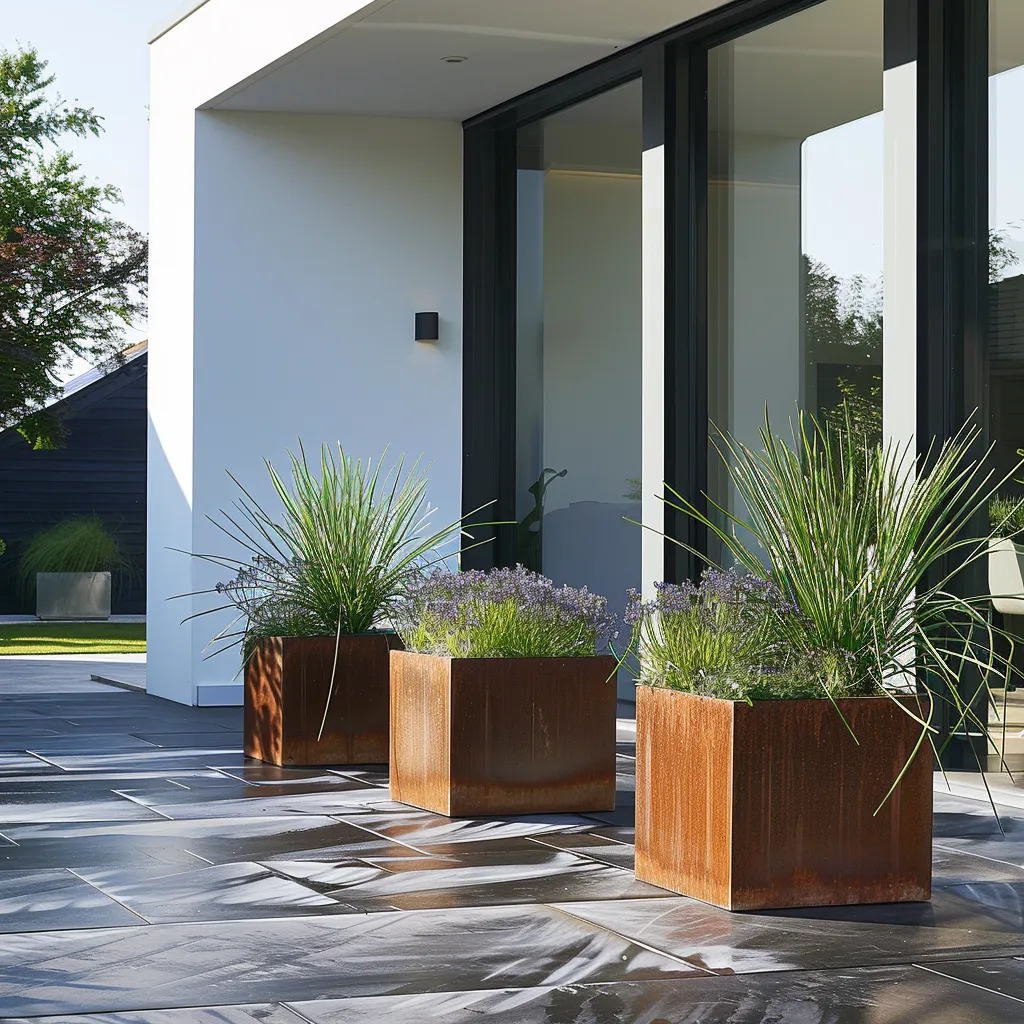
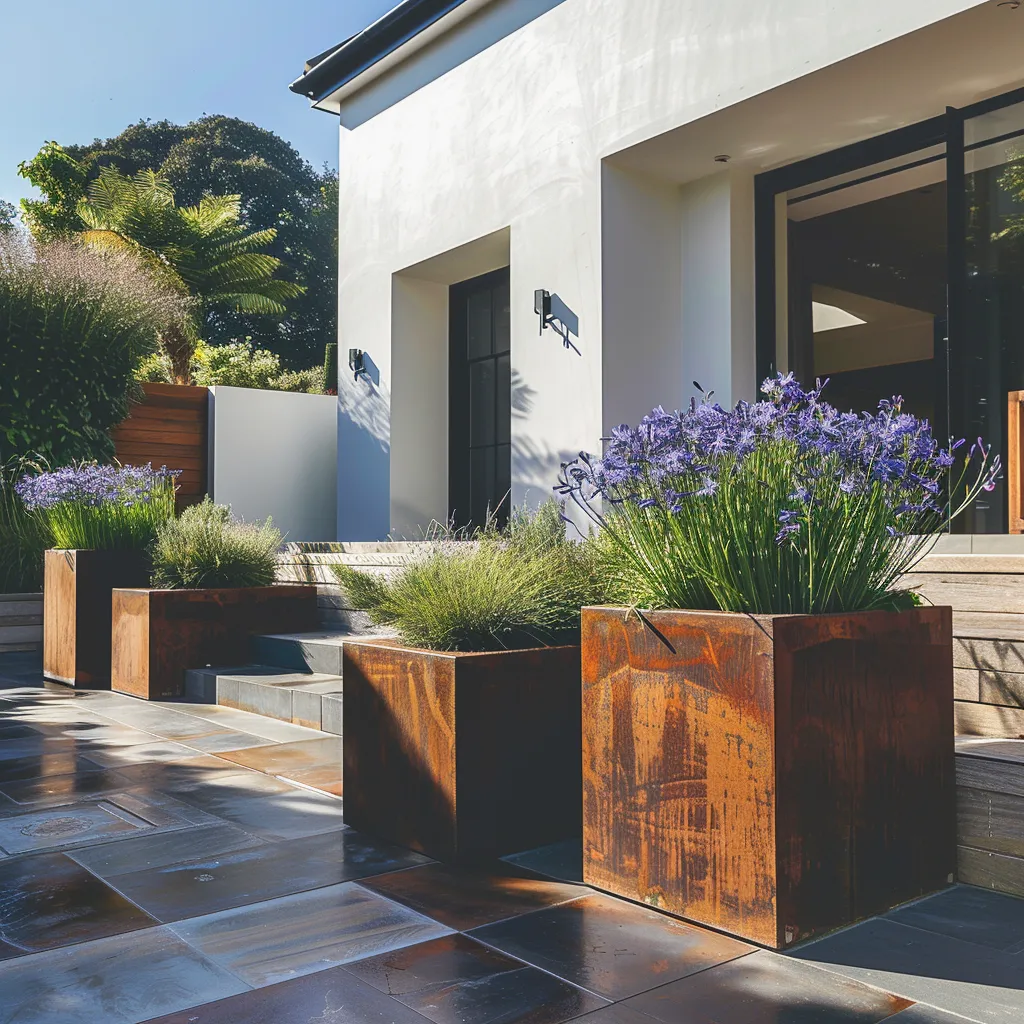
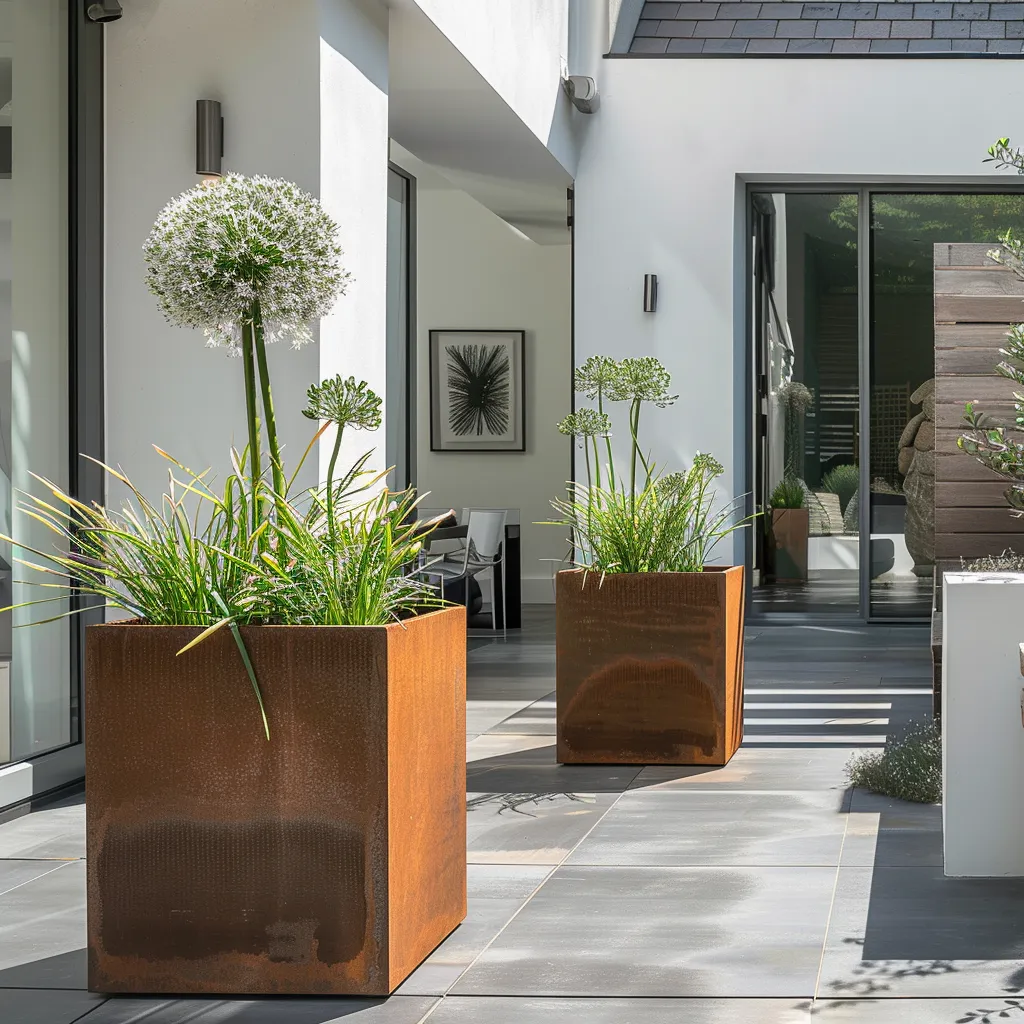
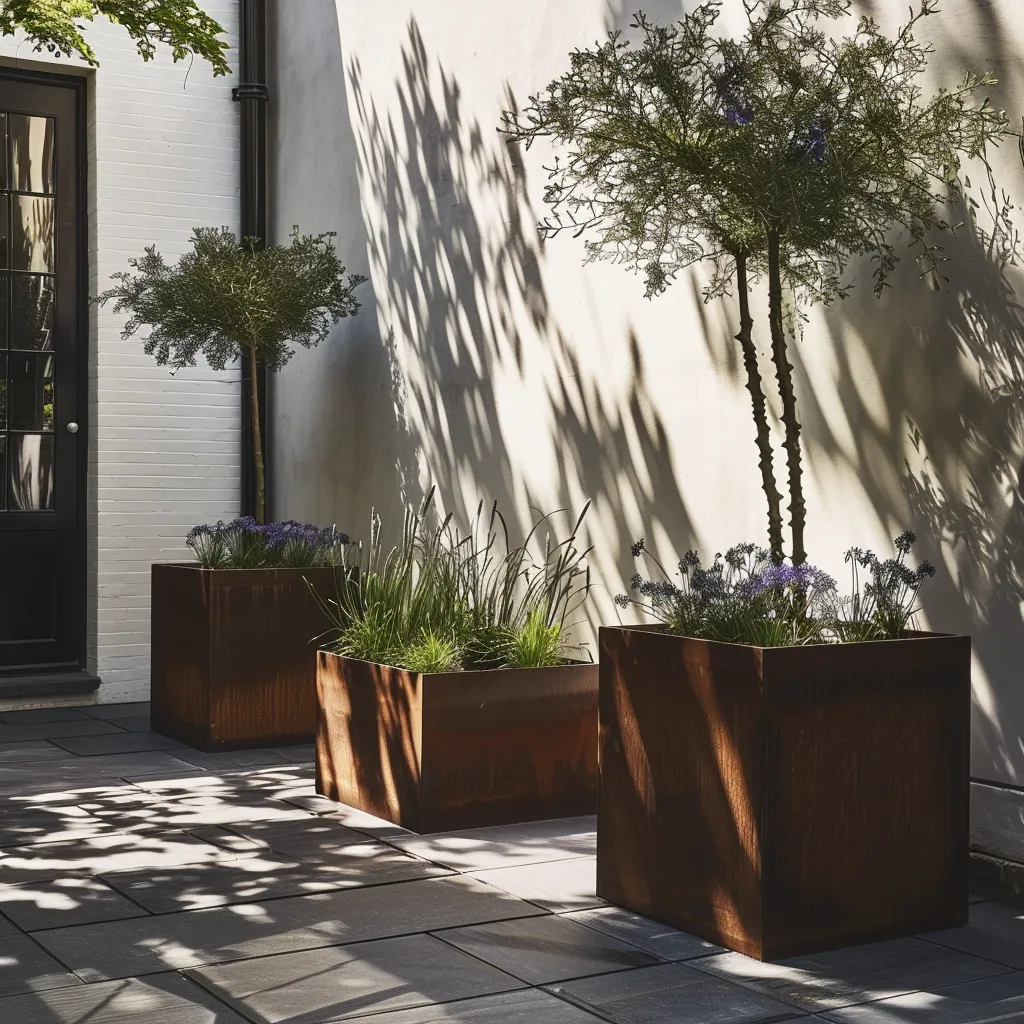
Courtyards and paved terraces are the garden context where corten steel planters are most frequently specified by professional designers — and where they are most effective. The constraints of a walled courtyard or hard-surfaced terrace make corten’s properties especially valuable: the planters bring soil-based growing capacity to a space that has no ground planting, their visual weight gives small enclosed spaces a sense of presence and permanence, and their warm tones add colour temperature to spaces that can feel cold and grey when constructed entirely from concrete, stone, and glass.
The most successful courtyard corten planter schemes use repetition with variation — a consistent format or material repeated across the space in different sizes or configurations rather than a collection of unrelated container types. Three identical large corten cubes at different heights, using low plinths or the ground itself to create stepped levels, create a composition that reads as designed. The same three cubes in three different shapes and finishes create a collection that reads as assembled over time.
For terrace settings where dining or social use is primary, corten trough planters along the perimeter wall perform a dual function: they define the edge of the terrace as a planted boundary rather than a hard wall and simultaneously provide privacy screening when planted with tall structural species. Bamboo in contained root systems, columnar hornbeam Carpinus betulus ‘Fastigiata’, or tall Miscanthus sinensis cultivars all achieve 1.8–2.5 metre screening height within one to two growing seasons while providing the visual layering that distinguishes a designed outdoor room from a simple paved area. The approach to creating intimacy and separation in outdoor spaces is further developed in the context of Mediterranean container garden design, where container planting at perimeter zones is a central compositional tool.
Best Plants to Pair with Corten Steel Planter Garden Design Ideas
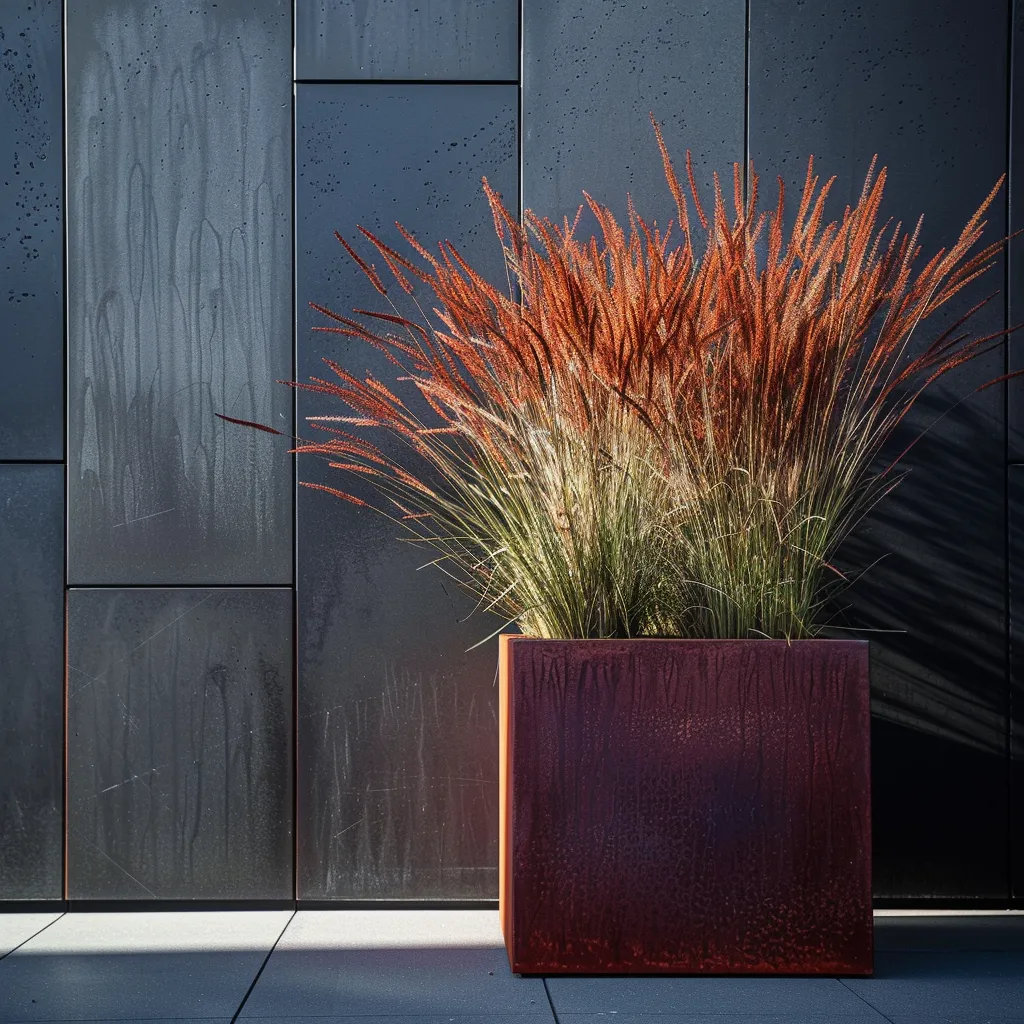
Plant selection for corten planters is guided by one overriding principle: the rust-red, amber, and sienna tones of weathered corten are warm and visually strong. Plants that contrast with or complement this warmth make better pairings than those that visually merge with it. This means warm-toned plants — orange Carex, red-brown Heuchera, burnt-sienna Stipa — can become invisible against a fully weathered corten surface, while cool greens, silvers, dark purples, and near-blacks read with maximum clarity and visual impact.
The following plant pairings reflect proven visual performance across multiple seasons in corten planter contexts. Minimum planter volume recommendations are included because root space is the single most common limiting factor in container planting — many visually successful corten planter schemes fail horticulturally within two to three years because the planter was undersized for the root requirements of the chosen species.
- Agapanthus ‘Midnight Blue’ or ‘Black Buddhist’ — Deep indigo-blue summer flowers, strap foliage, strongly contrasts with rust tones. Minimum 40-litre planter volume. Full sun. Performs in UK climate zones 8 and above, or can be overwintered indoors in colder regions.
- Phormium tenax ‘All Black’ or ‘Platt’s Black’ — Near-black strap foliage, 1–1.5 m height, strongly architectural. Minimum 60-litre planter volume. Excellent year-round evergreen structure, tolerates coastal exposure and drought.
- Acer palmatum ‘Bloodgood’ — Deep burgundy-red foliage, contrasts with corten via tone-on-tone depth rather than colour contrast. Minimum 80-litre planter volume. Requires afternoon shade in hot climates. Stunning autumn colour intensification.
- Festuca glauca ‘Intense Blue’ — Silver-blue compact grass, intensely cool-toned against warm corten. Minimum 8-litre planter volume. Drought tolerant, very low maintenance, excellent in mass plantings within large trough formats.
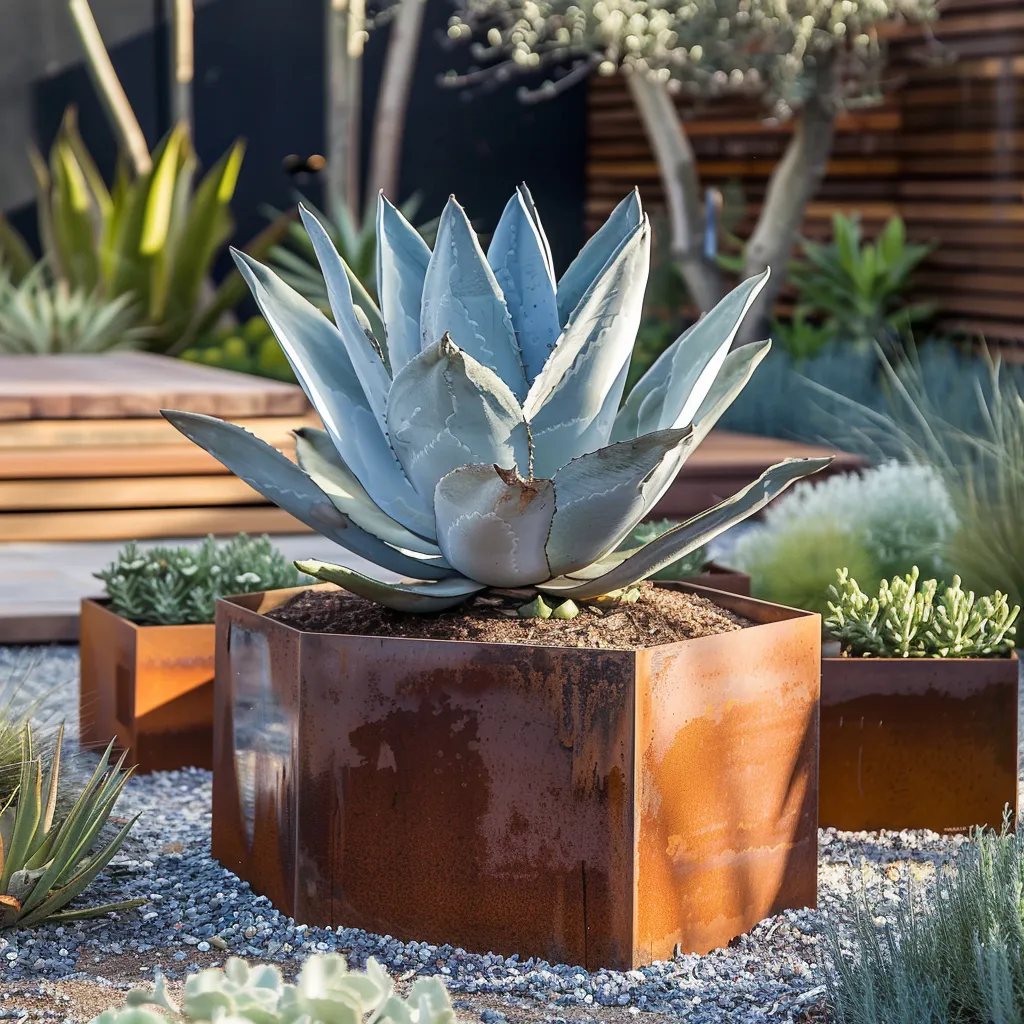
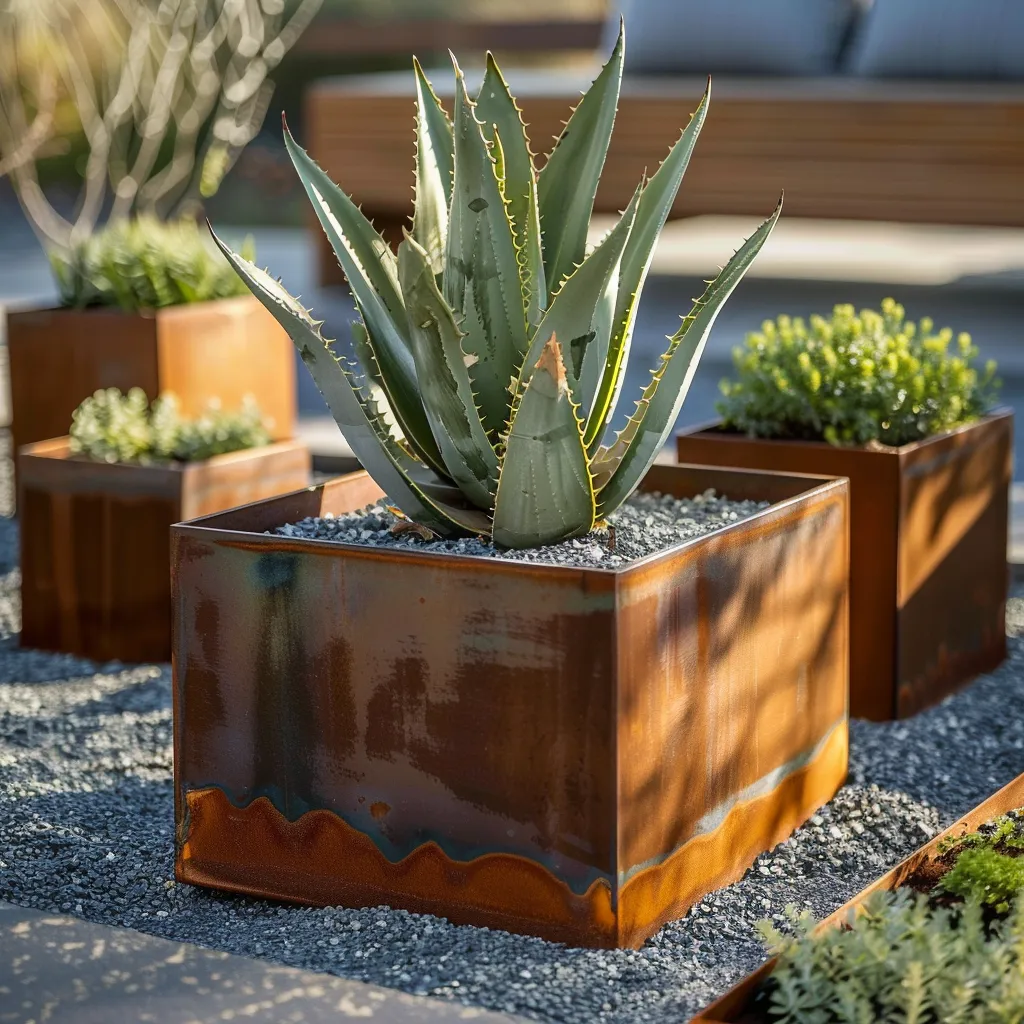
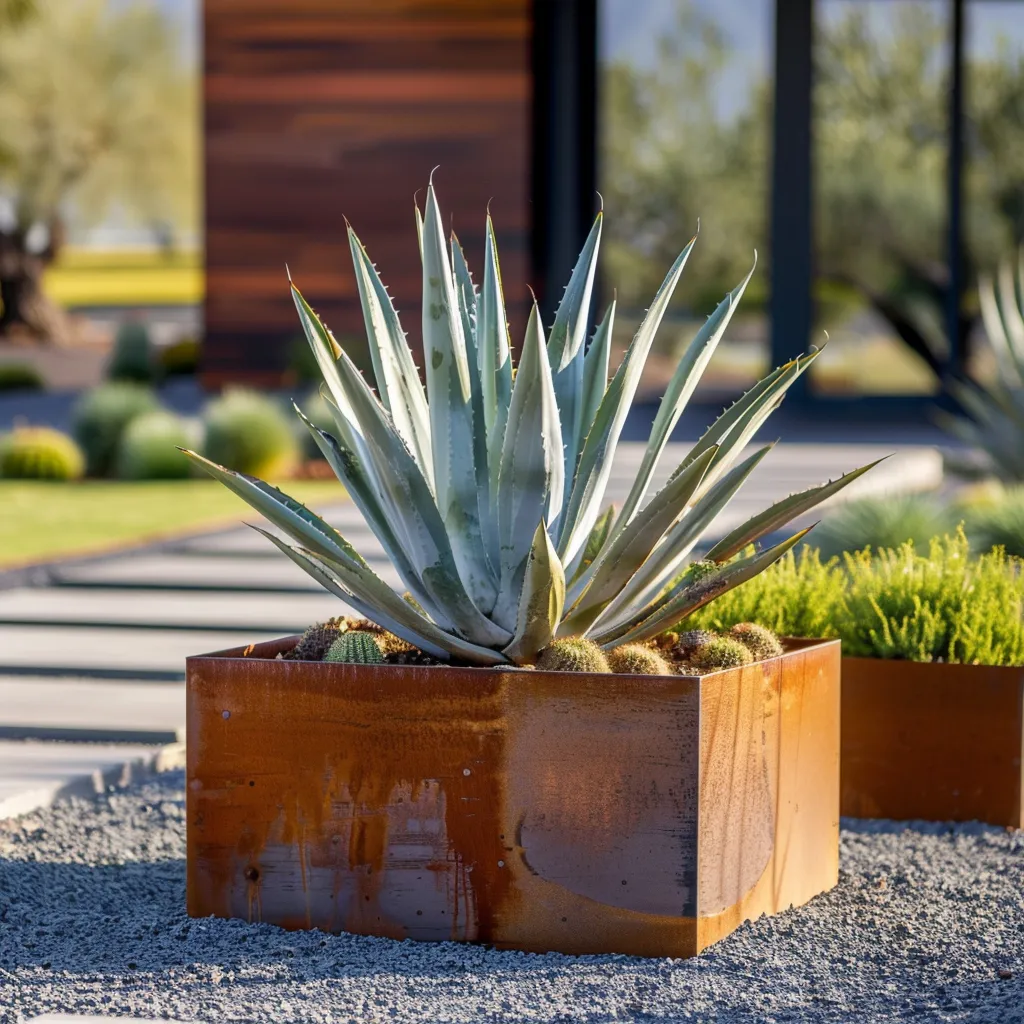
- Agave americana or Agave parryi — Structural rosette form, blue-grey, almost geometric against corten’s organic texture. Minimum 40-litre per plant. Drought tolerant, very slow growing, requires frost protection below -8°C.
- Ophiopogon planiscapus ‘Nigrescens’ — Near-black strap leaves, semi-evergreen groundcover, 15–25 cm height. Minimum 5 litres per plant. Works as a mass underplanting in large corten raised beds beneath taller specimens.
- Miscanthus sinensis ‘Malepartus’ — Tall ornamental grass to 2 m, silver-pink plumes in autumn and winter, strong vertical form. Minimum 80-litre planter volume. Outstanding movement and winter presence against weathered steel.
- Echinacea purpurea ‘Magnus’ — Pink-purple daisy flowers, architectural seed heads, excellent for large corten troughs in mixed perennial combinations. Minimum 20-litre per plant. Long flowering season July–September.
- Lavandula angustifolia ‘Hidcote’ — Deep purple, strongly aromatic, silver-grey foliage. Minimum 10-litre planter. Excellent in low trough formats, contrasts warmly and aromatically with corten.
- Olea europaea (olive tree standard) — Silver-grey foliage, twisted trunk, Mediterranean character. Minimum 100-litre planter for long-term establishment. Drought tolerant, iconic pairing with corten circular drum planters.
Corten Steel Raised Bed Ideas for Vegetable and Kitchen Garden Design
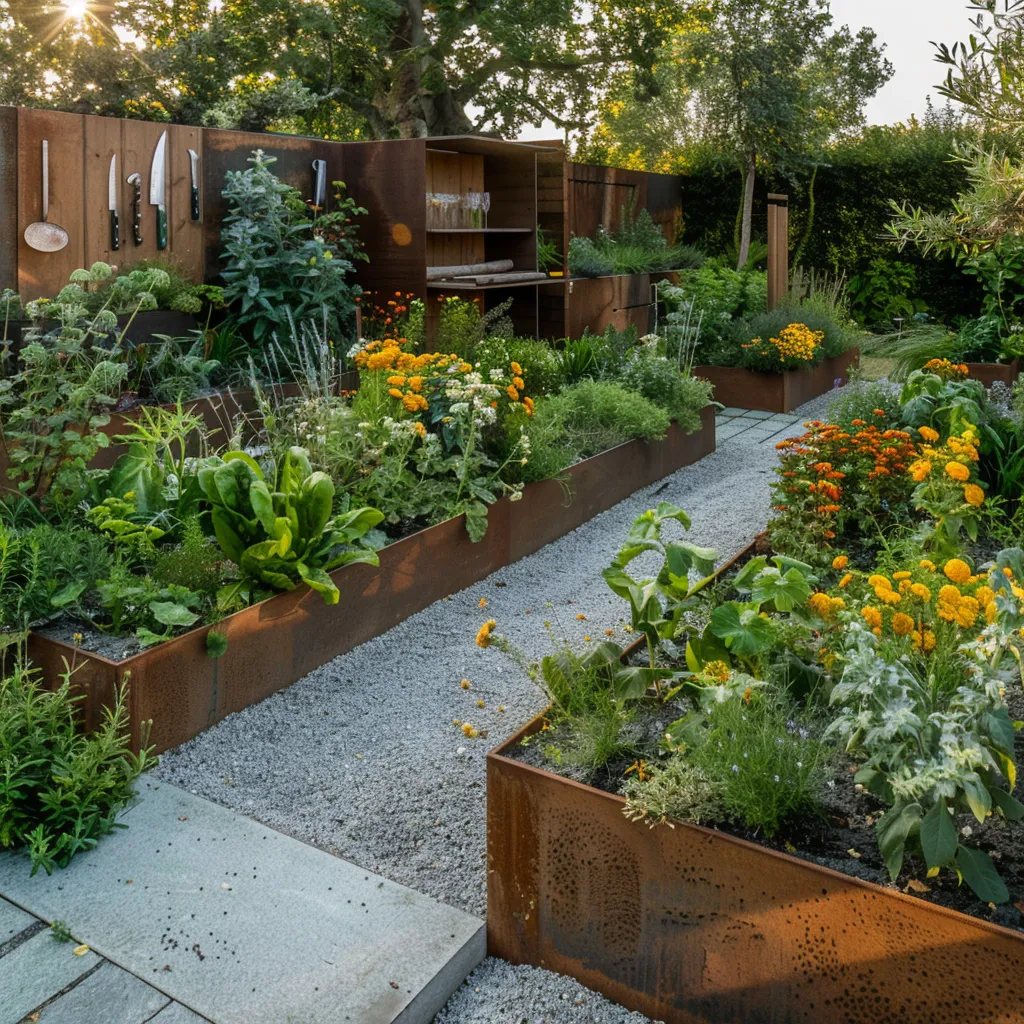
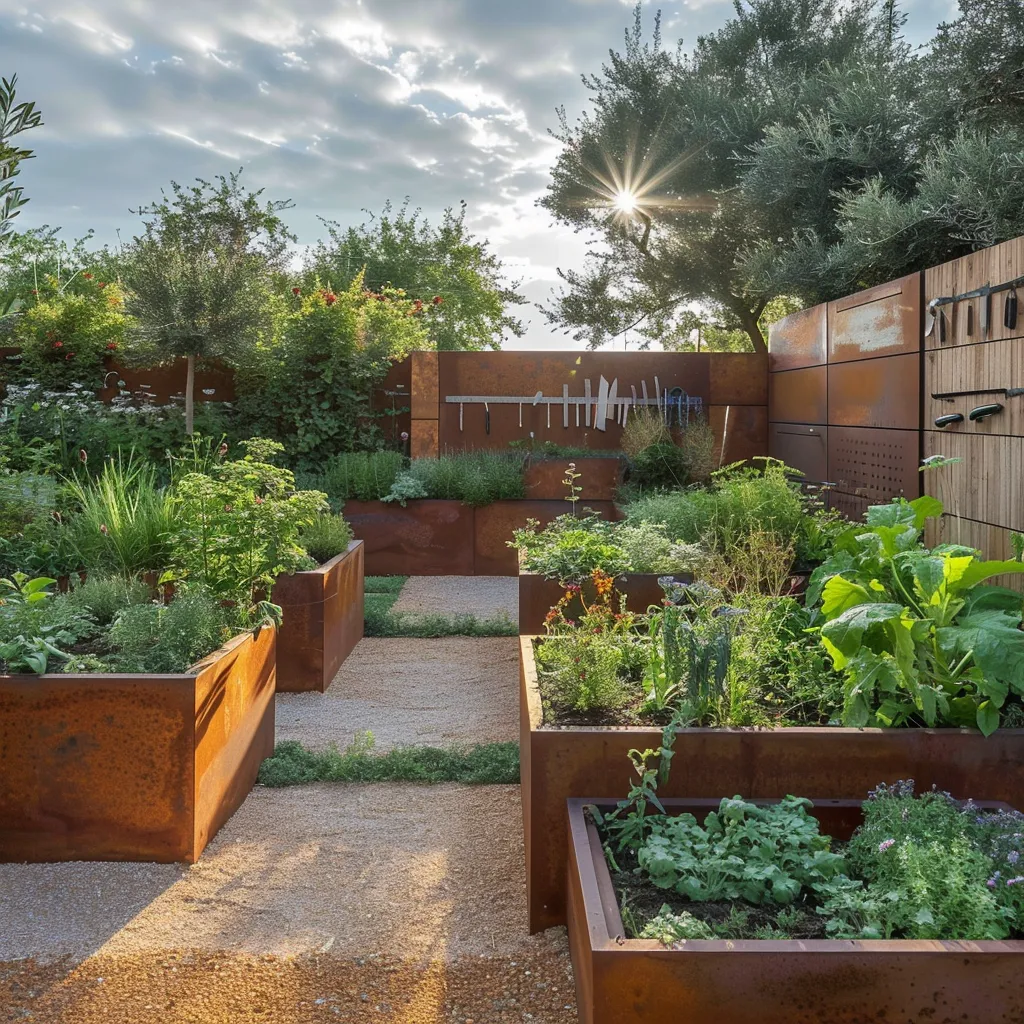
Corten steel raised beds have become the defining aesthetic of the contemporary kitchen garden — replacing treated timber, galvanised corrugated steel, and brick construction as the material of choice for productive gardens where visual resolution matters alongside yield. The reasons are practical as much as aesthetic: corten requires no preservative treatment, does not leach chemicals into soil, does not rot, split, or require repainting, and achieves a visual quality that makes the kitchen garden an amenity space rather than a utility area. The oxidised surface layer is chemically stable and poses no dietary risk to edible plants growing within the beds — a concern occasionally raised but comprehensively addressed in peer-reviewed agronomic literature on weathering steel contact with growing media.
Raised bed heights in corten typically range from 45 cm — the minimum for effective root depth in most vegetables — to 75–90 cm, which is working height that eliminates bending and aligns with accessibility standards. A 2024 survey of UK kitchen garden installations by the Garden Media Guild found that 62% of new residential kitchen garden projects specified steel raised beds, with corten steel accounting for 41% of that total — a significant share given the higher upfront cost versus galvanised steel alternatives, typically 35–55% more per linear metre.
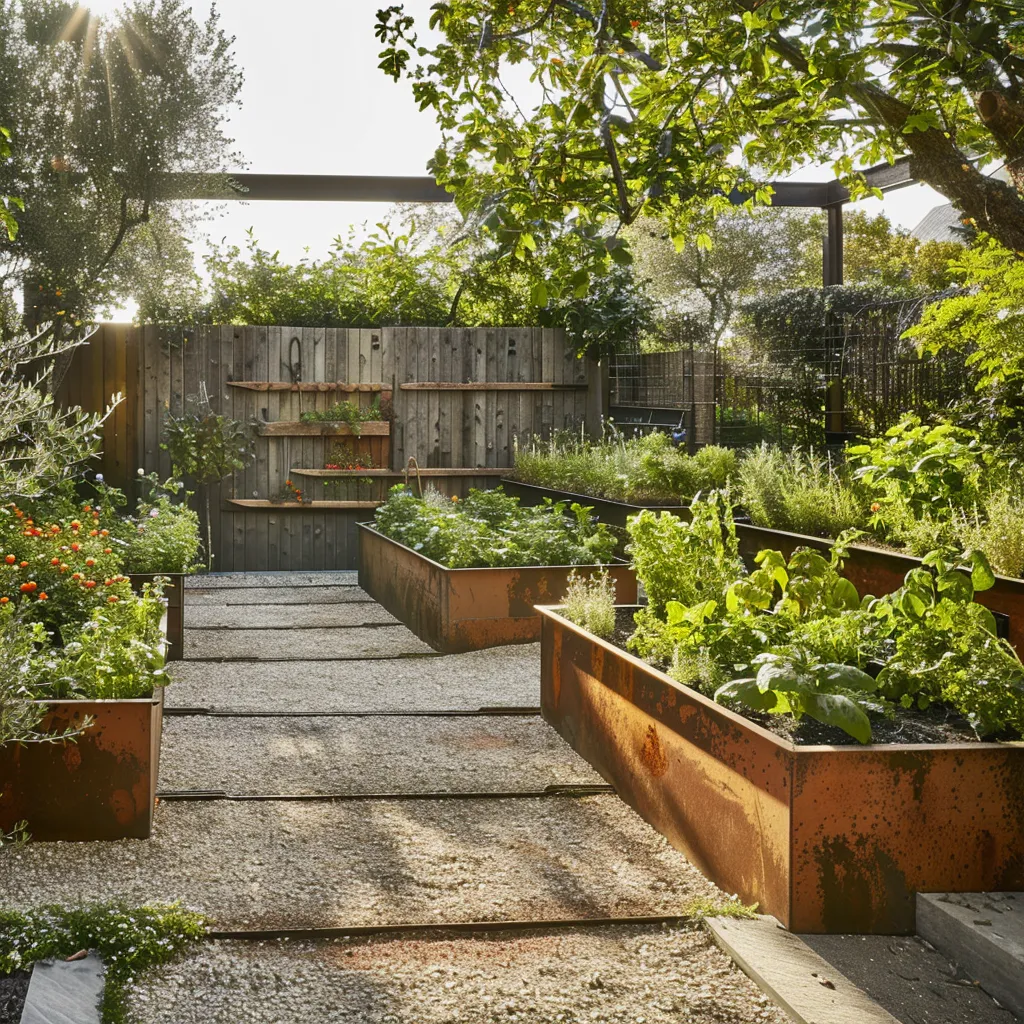
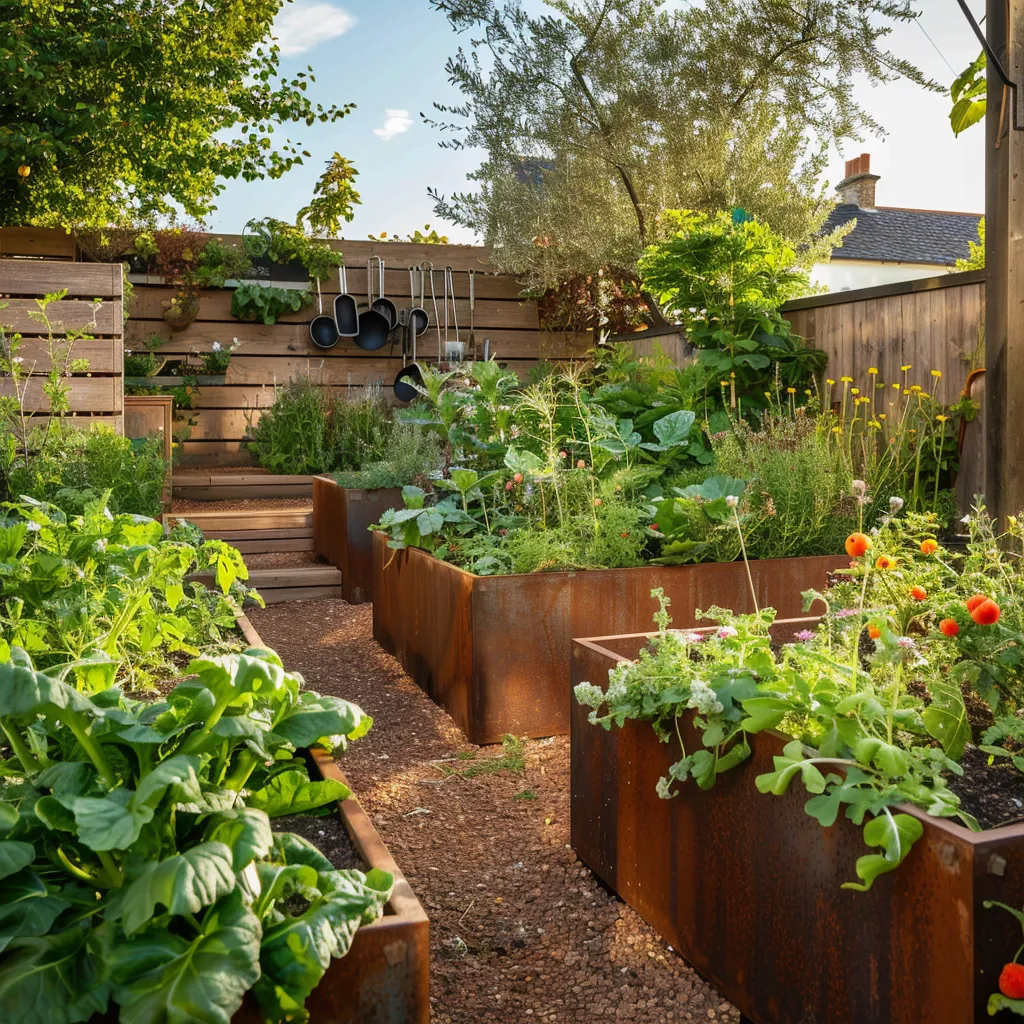
Path material between corten raised beds matters as much as the beds themselves for overall design coherence. Gravel paths — dark slate, black basalt, or decomposed granite — coordinate well with corten and allow runoff staining to dissipate invisibly. For a more resolved kitchen garden aesthetic, large-format concrete or porcelain pavers between beds create a surface that reads as equally designed rather than utilitarian. The proportional relationship between raised bed height, bed width, and path width is the key spatial dimension: beds of 45 cm height with 90–120 cm path widths create proportions that feel comfortable and workable, while beds above 60 cm height benefit from slightly wider paths of 120–150 cm to maintain visual balance.
The integration of productive and ornamental planting within corten raised beds is an approach that the broader design principle of minimalist garden edging design addresses directly — because the visual line between the corten wall face and the path surface is as important to the overall kitchen garden aesthetic as the planting within the beds themselves.
Corten Steel Planter Ideas for Garden Design in Urban and Small Space Contexts
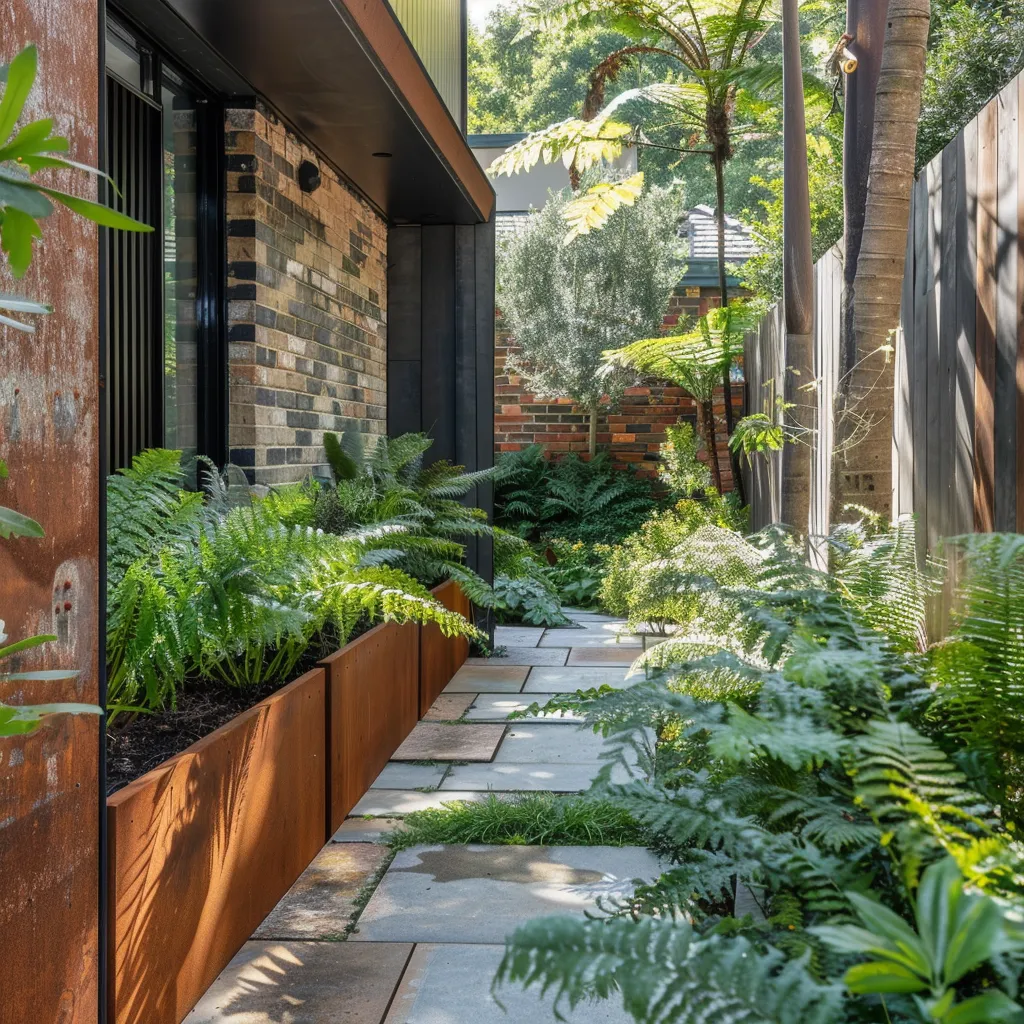
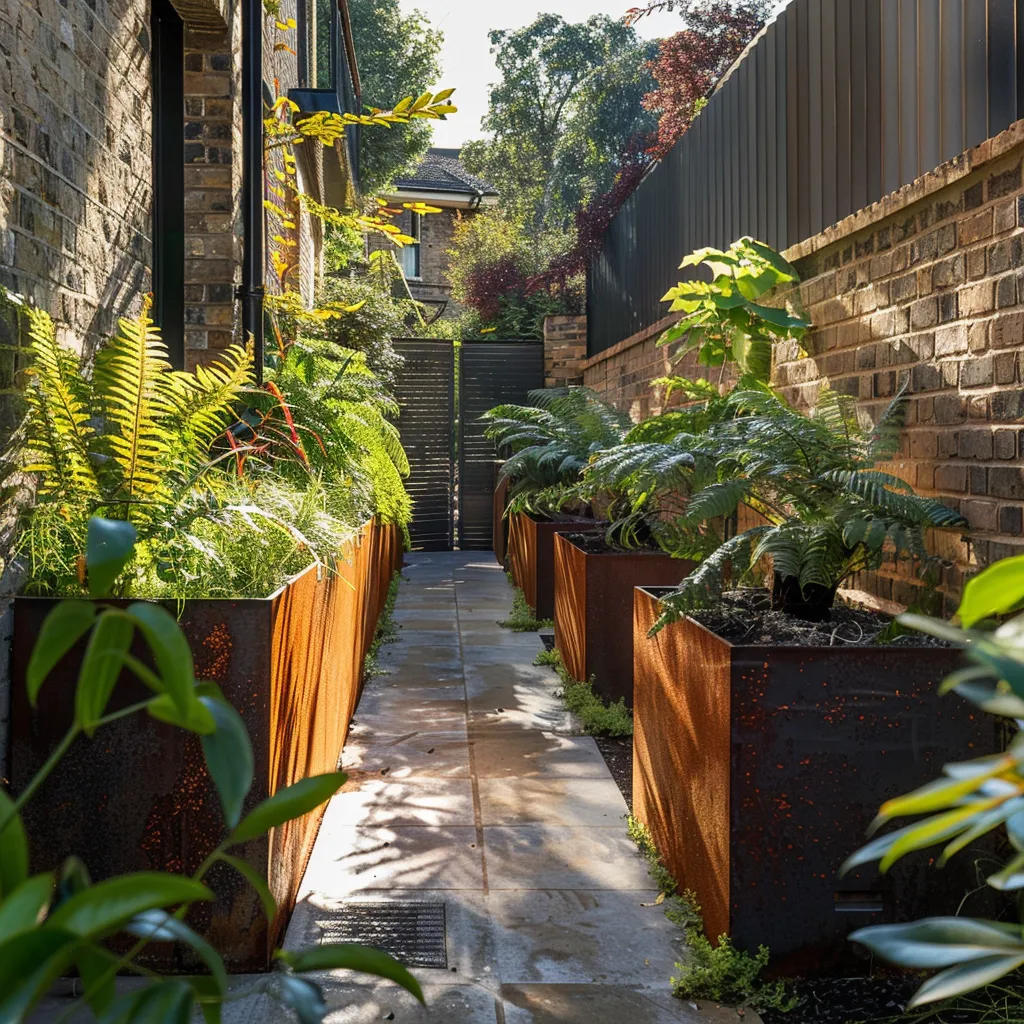
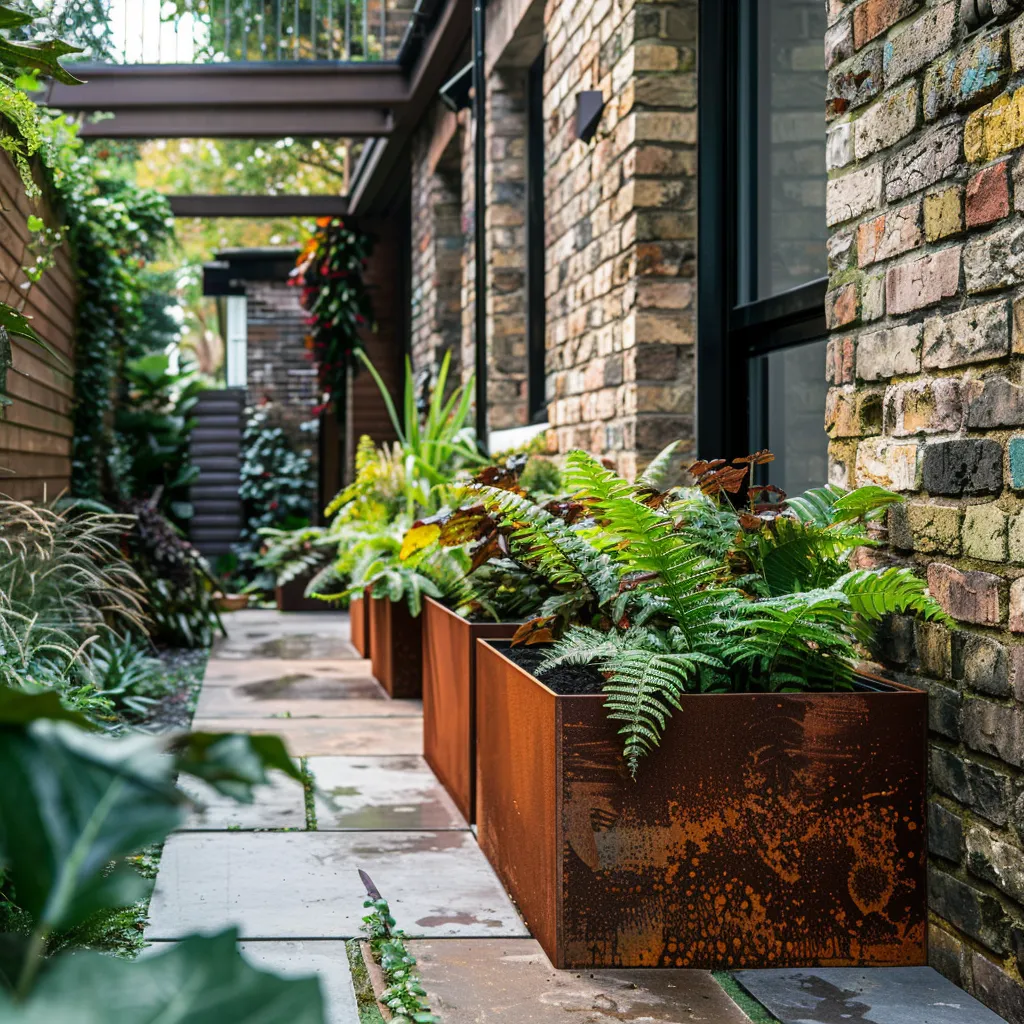
Urban gardens — basement courtyards, side returns, narrow terraces, and small walled gardens — present a specific design challenge that corten steel planters address better than most container alternatives. These are spaces where every material choice is visible at close range, where surfaces age visibly within the confines of a small area, and where the difference between a composed, resolved scheme and an improvised one is immediately apparent. Corten planters bring visual authority and material quality to small spaces that lightweight plastic, basic terracotta, or mismatched containers cannot achieve regardless of what is planted in them.
For spaces under 20 square metres, the most effective corten planter strategy is typically one or two dominant format planters — large cube or tall trough — that establish the material language of the space, supplemented by smaller-format repetitions of the same corten material. Introducing multiple different container materials in a small space creates visual fragmentation; corten planters in a single consistent format with size variation instead create a coherent family of objects that the space can hold without appearing cluttered.
Wall-mounted corten planter systems are particularly effective in urban gardens where horizontal floor space is limited. Welded-bracket corten wall planters, or horizontal corten trough units cantilevered from a masonry or steel-framed wall, bring planting to eye and shoulder height and free the floor plane for furniture and movement. These systems are directly related to the vertical garden design approaches covered in detail in the article on vertical garden systems for small spaces, where the structural and aesthetic principles of wall-mounted growing capacity are explored for both residential and commercial contexts.
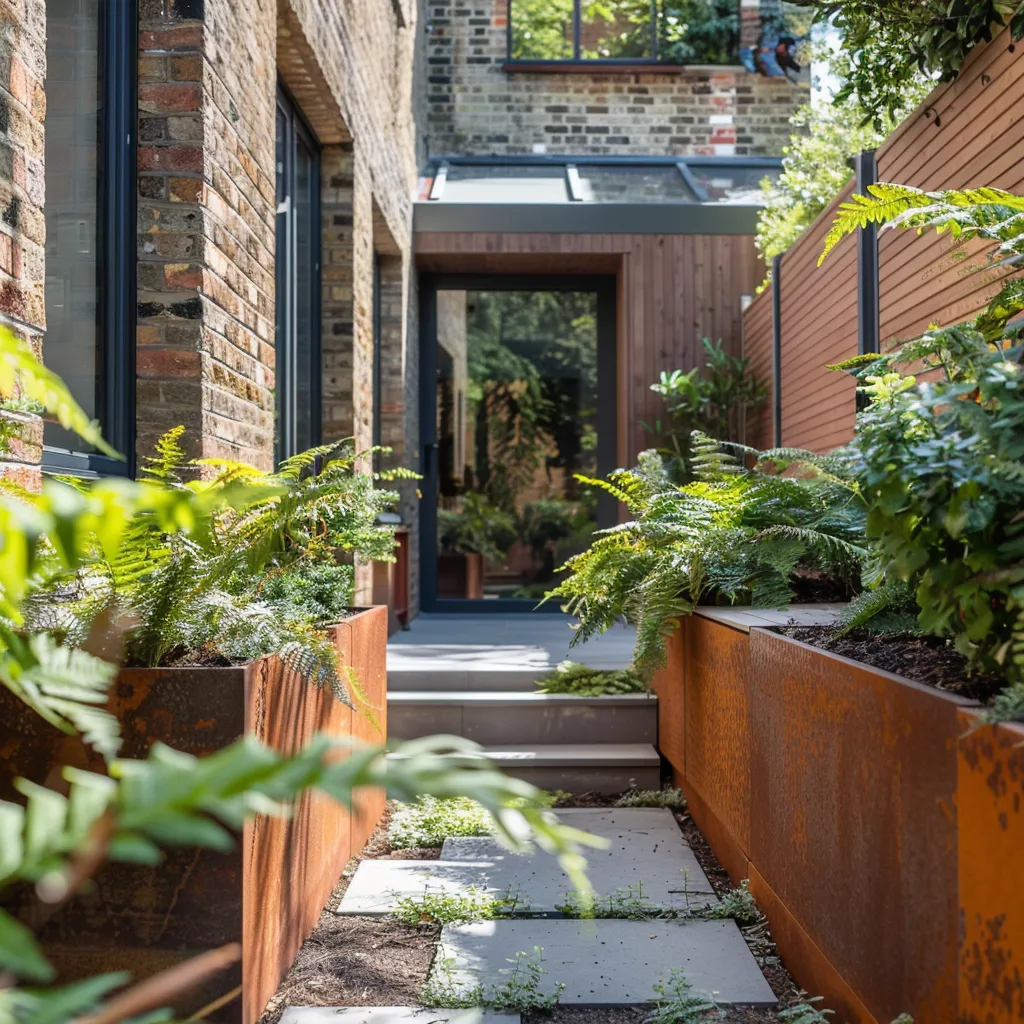
Composing with Corten Steel Planters Across the Contemporary Garden Landscape
Beyond specific product and context applications, corten steel planters function as compositional elements within the broader landscape — anchoring views, creating rhythm, and defining spatial transitions in ways that ground-level planting or conventional containers cannot achieve. Understanding how to use corten planters compositionally, rather than simply as individual objects, is what separates a professionally resolved garden design from a well-stocked one.
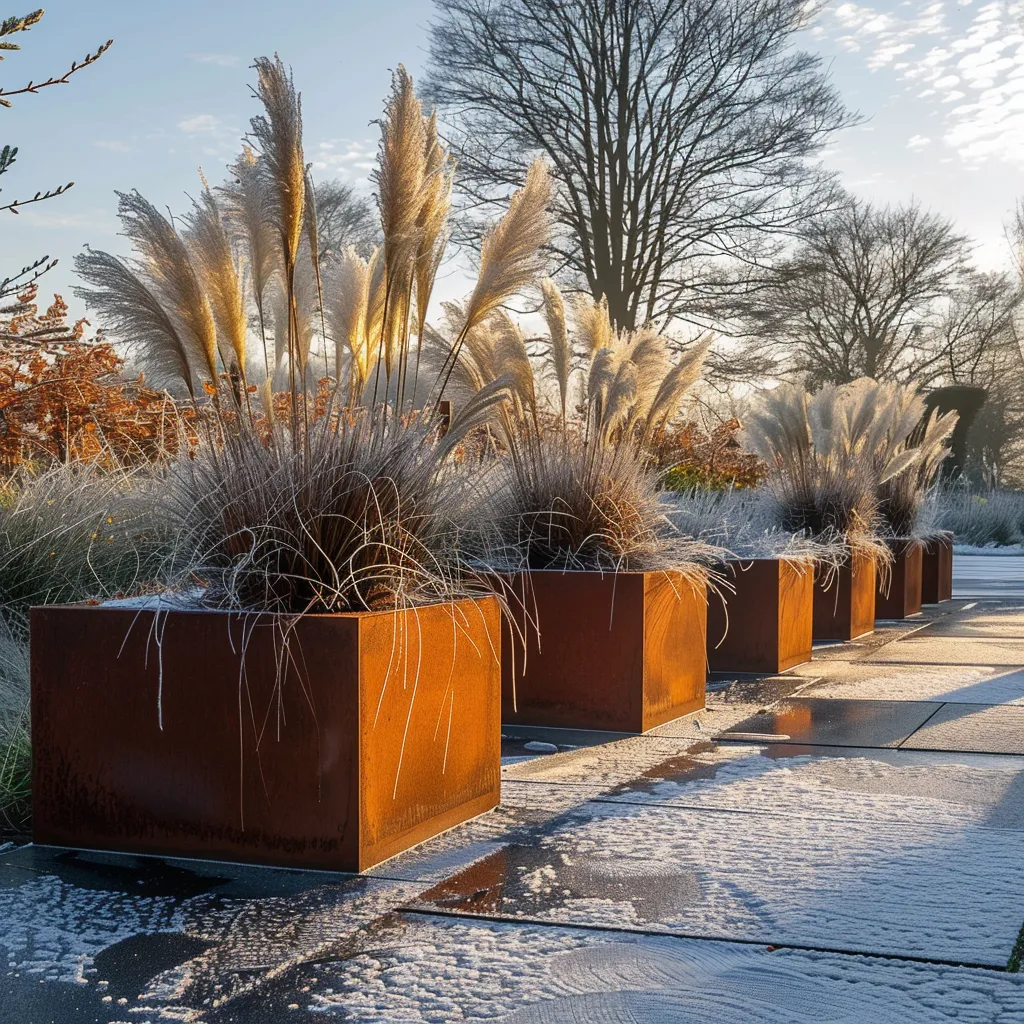
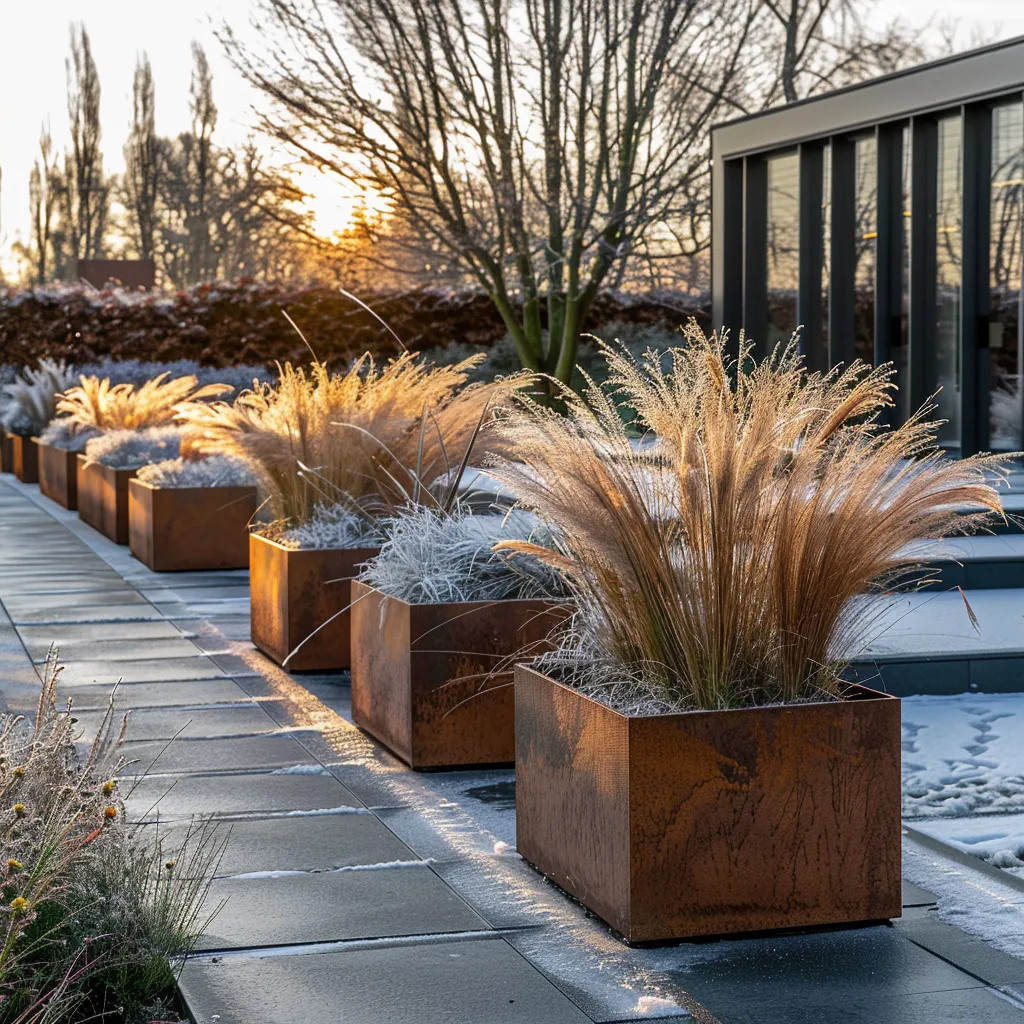
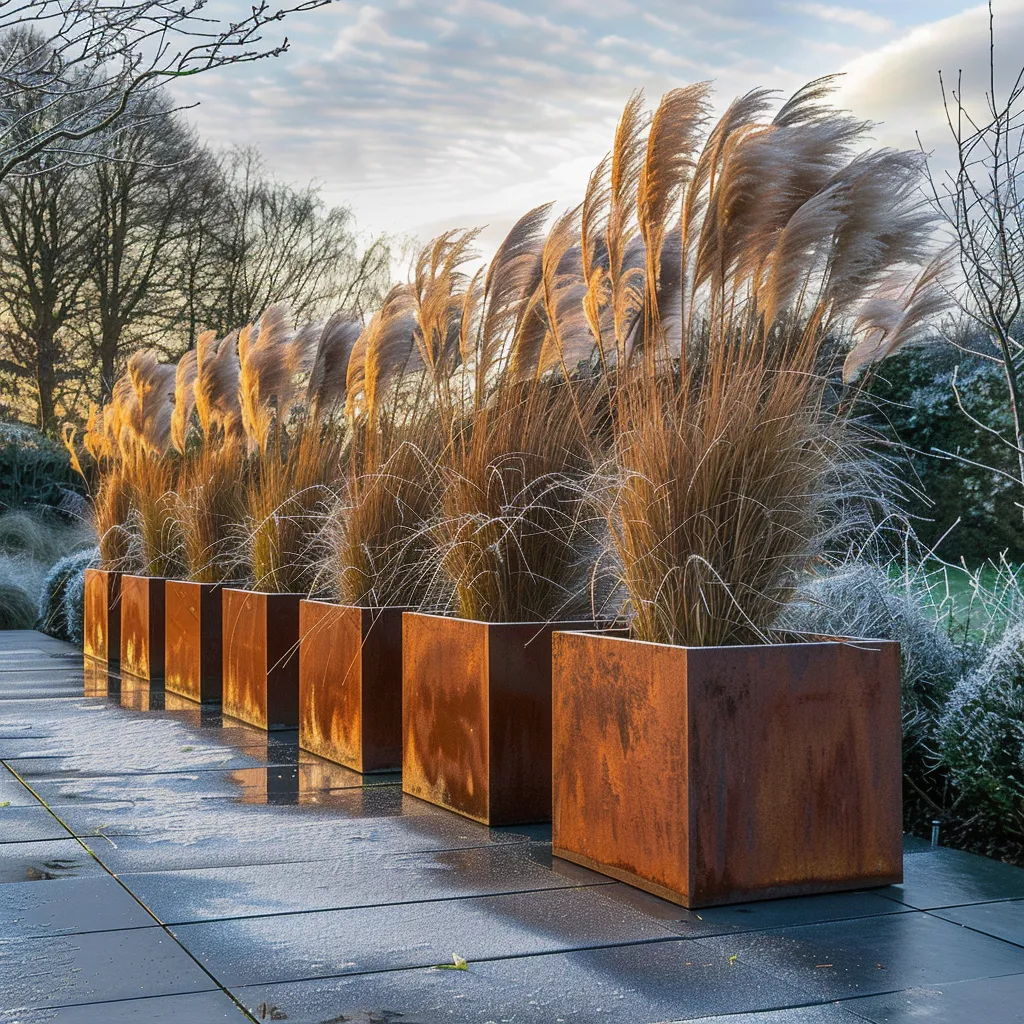
Rhythm through repetition is the most powerful compositional tool. A single corten planter reads as an accent; three identical planters create a rhythm; five or more create a structural landscape element. In a long narrow garden — one of the most common residential plan types in urban environments — a repeated sequence of same-format corten planters along one boundary creates a strong directional emphasis that makes the garden read as longer and more resolved than mixed planting at equivalent intervals. The visual weight of corten also anchors this rhythm in a way that lightweight terracotta or timber cannot, even at identical spacing.
Level change and terracing present another strong context for corten planter integration. Large-format corten raised planters or corten retaining wall sections integrated into a sloped garden perform the same function as traditional masonry retaining walls while adding material warmth and horticultural capacity. A 60 cm high corten retaining planter accommodates 50–60 cm of growing depth — sufficient for most ornamental perennials, shrubs, and small specimen trees — and can be designed as a single continuous element or in modular sections.
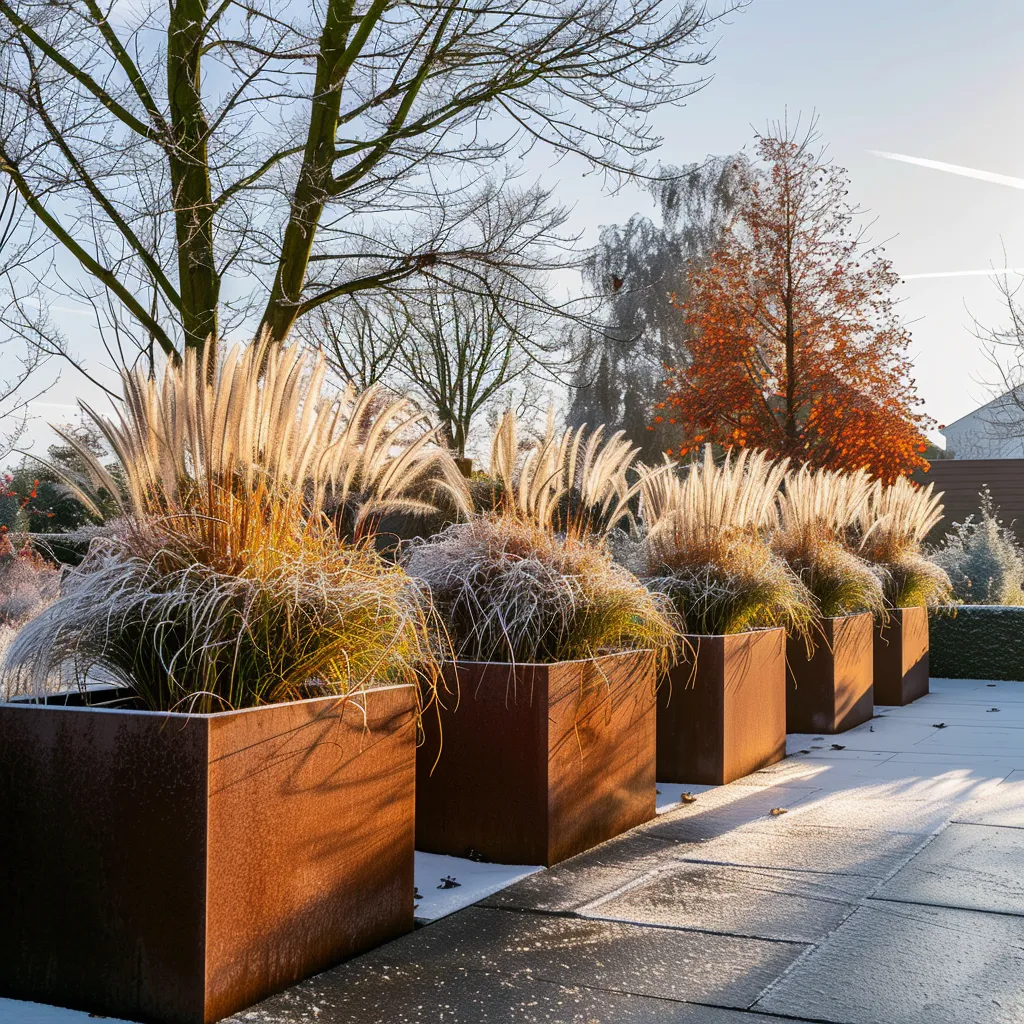
Seasonal performance in corten planter garden design benefits from the same year-round planning logic applied to ground-level planting. The material itself contributes to winter performance — the rust-red patina reads as warm and composed even when planted species are dormant or reduced — which means corten planters do not require the same winter-interest planting investment that neutral concrete or galvanised containers demand. A Miscanthus sinensis left uncut through winter, its silver-buff plumes catching low light against a weathered corten surface, is one of the most effective winter garden images in residential landscape design. For a comprehensive look at how contemporary garden design handles year-round visual performance across all elements including containers, the approach outlined in contemporary garden design for modern homes provides the broader framework within which corten planter decisions sit.
Specifying and Sourcing Corten Steel Planters for Garden Design Projects
Quality variation in corten garden planter supply is significant and not always apparent from photography or product listings. The primary differentiators at the point of specification are steel grade, wall thickness, weld quality, and drainage provision — each of which affects both long-term durability and immediate visual quality in ways that matter over the 20–30 year design life of a properly specified planter.
True weathering steel to ASTM A588 or EN 10025-5 standard is the minimum specification for a planter intended to achieve stable, consistent patination. Lower-cost alternatives labelled as “corten-style” or “rust-finish” are frequently standard mild steel with an applied weathered coating — these deteriorate rapidly, chip and flake rather than forming a stable patina, and will fail structurally within 5–10 years rather than the 25–30 year expected service life of genuine weathering steel. Reputable UK suppliers including Corten Garden, Designscape, and Harrod Horticultural, and US suppliers including Cor-Ten Art and Direct Metals, supply verified-grade material with mill certificates available on request for commercial and high-specification residential projects.
Weld quality is visible at close inspection and determines both the structural integrity of the planter under soil load and the visual character of the finished object. Continuous welded seams with ground and finished corners read as architectural quality; intermittent tack welds or visible gaps at corners read as budget-grade regardless of the steel specification. For planters above 60 cm height or 80 cm width that will hold moist soil under load, continuous full-penetration welds at all corner joints are the minimum structural standard. Drainage provision — typically one or more 15–20 mm holes per 30 cm of base area — is equally critical for plant health and should be specified rather than assumed.
Custom sizing is available from most specialist corten garden suppliers at modest premium over standard sizes — typically 15–25% above list price for non-standard dimensions. For garden design projects where standard sizes do not fit available space or compositional requirements, custom specification is frequently the correct approach rather than compromising proportions to fit an available product. Lead times for custom corten planters typically run 4–8 weeks from order confirmation, which should be factored into project programming for new garden builds or renovation projects with defined completion targets.