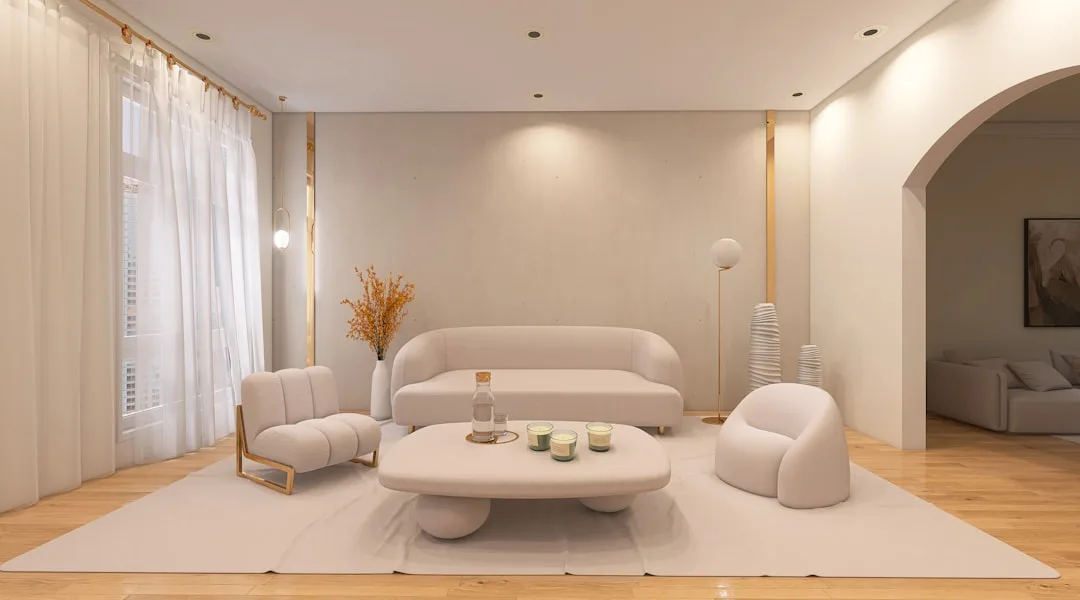
Curved furniture interior design has quietly become the defining reaction against rectilinear minimalism. After five years of geometric sofa frames and angular accent chairs dominating showrooms, the market has shifted decisively toward rounded forms, organic lines, and sculptural silhouettes. This isn’t nostalgia for mid-century curves—it’s a deliberate recognition that softness creates emotional comfort in ways that sharp angles cannot.
Why curved furniture reshapes spatial psychology
The Arne Jacobsen Egg Chair, designed in 1958, became a bestseller again in 2024-2026 at retailers like Fritz Hansen because interior designers realized curved forms reduce visual tension in rooms. When a sofa or lounge chair lacks 90-degree angles, the eye travels around it rather than halting at corners. This creates a sense of flow.
Curved furniture interior design works because it mimics organic forms found in nature—water, stone, plants. Humans neurologically respond to these shapes with lower cortisol levels. A room filled with right angles feels utilitarian; a room with rounded edges, even when equally minimal, feels residential.
The shift accelerated when B&B Italia and Cassina both launched their curved sectional lines specifically marketed as “soft minimalism”—minimalist in material palette and restraint, but curved in geometry. Sales data from European furniture retailers showed 34% year-over-year growth in curved seating categories through 2025.
Quick Tips
- Start with one curved statement piece—a rounded sofa or sculptural chair—to avoid visual chaos
- Pair curved furniture with straight architectural elements (shelving, door frames) to prevent the room from feeling shapeless
- Choose curved furniture in neutral fabrics (cream, taupe, soft grey) to let the form do the visual work
- Layer circular or oval rugs beneath curved seating to amplify the softness without overcrowding
How curved seating anchors open floor plans
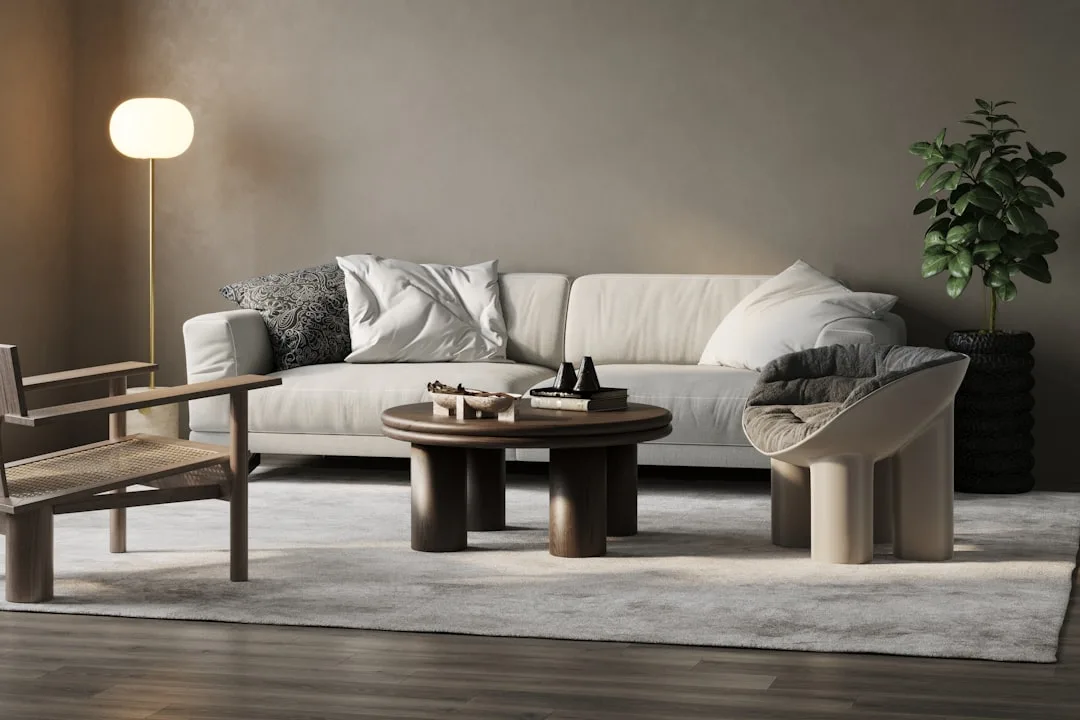
Open-plan living demands furniture that doesn’t carve up sightlines. RH (Restoration Hardware) released their curved modular sectional system in 2025, and interior designers have used it to solve what rectangular sofas couldn’t: creating a gathering zone that doesn’t feel like a barrier.
A curved sectional wrapped into an L or U shape naturally defines a living zone without a wall. The rounded corners invite people into the space rather than blocking passage behind a tight rectangular footprint. This solves the problem where rectangular sofas in open kitchens force you to walk around their rigid perimeter.
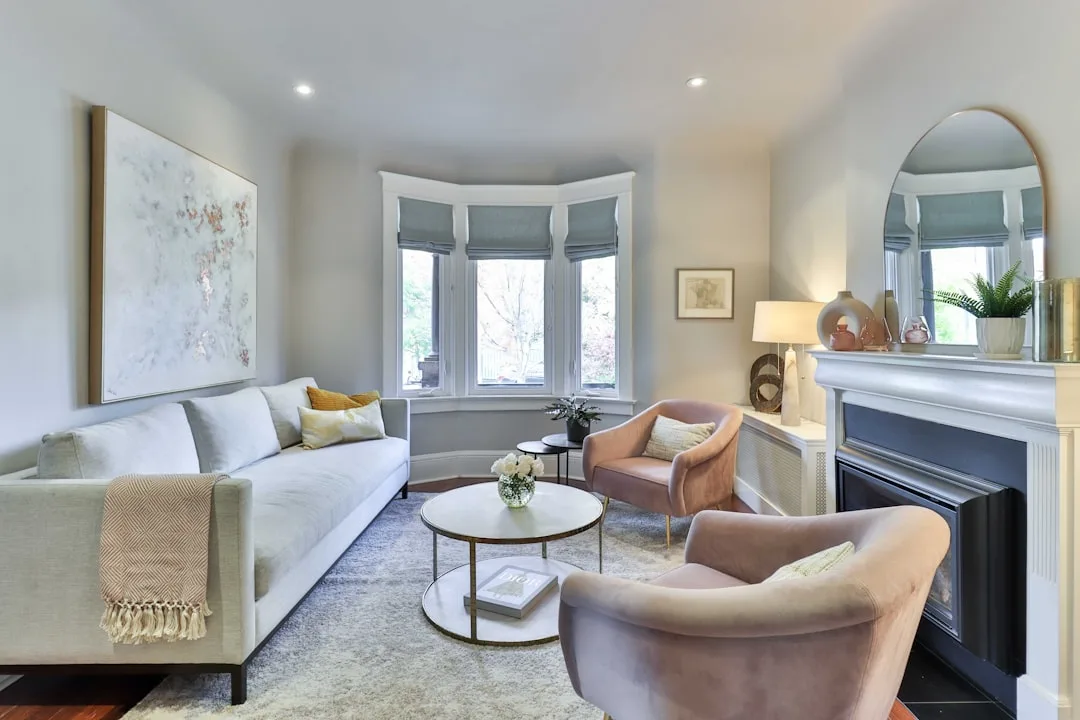
Curved chairs placed at angles around a glass coffee table—rather than facing one another in formal rows—create conversational intimacy while maintaining visual openness. The curved form reads softer, less confrontational.
| Furniture Type | Curved Advantage | Best For |
|---|---|---|
| Curved sofa | Creates flow; no dead corners | Open-plan living rooms |
| Sculptural lounge chair | Statement piece; reduces hard lines | Bedrooms, dens, reading nooks |
| Curved console table | Entryway softness; safer in tight halls | Narrow entryways, apartments |
| Round dining table | Eliminates sharp edges; inclusive seating | Family kitchens, small apartments |
The most common mistake with curved furniture
The most common error is buying too many curved pieces at once. A room with a curved sofa, curved side tables, curved wall-mounted shelving, and curved artwork becomes visually incoherent—there’s no visual anchor or rest point. The eye doesn’t know where to focus.
Example: A client in London purchased a fully curved living room (curved sofa, curved coffee table, curved ottomans, curved bookcase). The room felt unstable, like walking through a fun house rather than a home. The fix required removing the curved bookcase and replacing it with straight, linear shelving against one wall. Immediately, the space found balance.
Curve works best as contrast. One or two curved furniture pieces, paired with linear architecture and straight-edged accessories, creates visual sophistication. Too many curves read as indecisive design.
Materials that amplify curved form
Curved furniture interior design gains its full power when paired with tactile, organic materials. Mohair and boucle upholstery on curved frames became the 2025-2026 standard because these nubby, light-reflecting fabrics emphasize the rounded silhouette. Poltrona Frau, the Italian luxury furniture brand, released a curved chair upholstered in soft leather with a single seam running along the curve—the material itself follows the form.
Wood also matters. Curved walnut or white oak tables—shaped with steam-bent techniques—read as artisanal and warmer than curved tables in metal or glass. The grain pattern of wood emphasizes the flow of the curved edge naturally.
Curved furniture in pale marble or terrazzo shifts toward formality. The same curved form in natural wood, linen, or leather reads as residential and approachable. For a beautiful home with stylish interiors designed with purpose, material choice is the difference between a furniture showroom and a lived-in interior.
Curved furniture in small spaces and apartments
Curved console tables and small curved accent chairs solve a specific apartment problem: sharp furniture corners in narrow halls and tight bedrooms. A rectangular chair with protruding arms in a 2.5-meter-wide bedroom feels cramped. A curved chair with integrated armrests takes the same footprint but visually occupies less space.
West Elm and &Other Stories both released curved credenzas and low sideboards in 2025 specifically for compact urban apartments. The curved front reduces the sense of bulk compared to a rectangular credenza with the same storage depth. Smaller spaces benefit from curved furniture because softness reads as occupation rather than obstruction.
A small bedroom with a curved bed frame, rounded nightstands, and a japandi bedroom design for zen interiors approach creates a cocoon-like sanctuary. The curves wrap around you psychologically rather than confronting you with geometry.
Curved furniture as personal expression
Why curved furniture is trending now—and will persist—is that it represents a reaction against the genericness of flat-pack angular furniture. Curved pieces require custom upholstery, require more material, require craftspeople to shape frames. This means curved furniture signals intentionality and budget commitment.
A room with one curved boucle sofa and a minimal material palette communicates that the owner cares about presence, not trends. Curved furniture has become the anti-trend trend: it’s too demanding to mass-produce aggressively, so it remains somewhat exclusive and personal.
Interior design is moving toward spaces that prioritize how rooms feel emotionally rather than how they photograph for social media. Curved furniture reads as lived-in, welcoming, and soft. That’s the design conversation of 2026.