Japandi bathroom design is reshaping how homeowners think about spa spaces. Not a purely Japanese aesthetic, and not Scandinavian either—Japandi borrows the meditative emptiness of Japan with the tactile warmth of Nordic interiors. Discovering Japandi Bedroom Design for Zen Interiors introduced this concept to bedroom sanctuaries, and now bathrooms are the next frontier.
By August 2026, bathroom renovation searches for ‘Japandi’ jumped 340% year-over-year, outpacing searches for ‘luxury marble bathroom’ and ‘subway tile trends.’ Homeowners are rejecting maximalist bathroom design—the over-styled, cluttered countertop aesthetic—in favour of spaces that breathe.
Pale wood vanities replace marble and dark cabinetry
Brands like Duravit and Scarabeo have launched Japandi-aligned bathroom furniture lines in 2026, featuring vanities in ash, oak, and larch wood with minimal hardware. A typical pale wood vanity measures 900–1200mm wide and sits on tapered legs, leaving floor space visible. This creates the illusion of a lighter, airier bathroom.
Marble vanities dominated 2022–2024, but they stain easily and demand constant sealing. Pale wood paired with sealed plaster or concrete countertops lasts longer and feels warmer. You lose the cold luxury look but gain a space you actually want to sit in.
The key detail: wood grain should run lengthwise, not cross-grain, for a sense of forward movement and calm flow.
Quick Tips
- Source vanities from Japanese makers (Toto, Inax) or Scandinavian suppliers (Laufen, Vigour) for authentic proportions
- Seal pale wood with matte polyurethane, not glossy, to preserve a natural finish
- Pair wood with concrete or light terrazzo countertops, not polished marble
- Leave at least 100mm of floor clearance under the vanity for visual lightness
Natural plaster walls replace painted drywall and tile
Textured plaster finishes—lime-based, clay, or polished concrete—have replaced flat painted walls in high-end Japandi bathrooms. Brands like Beeck and Keim produce moisture-resistant plaster systems rated for wet spaces, applied in layers 8–12mm thick. The surface absorbs humidity and releases it, naturally regulating bathroom moisture. Painted drywall cannot do this.
A plaster bathroom typically costs 30–50% more than tile or drywall, but eliminates the need for half-wall tiling and awkward grout lines. You get one cohesive, textured surface that feels like a Japanese tea house or Scandinavian cabin.
| Material | Moisture Durability | Tactile Feel |
|---|---|---|
| Natural Plaster | High (breathable) | Warm, organic |
| Painted Drywall | Medium (requires ventilation) | Flat, cold |
| Ceramic Tile | Very High | Hard, clinical |
| Minimalist Japandi Hybrid | High (tile only at tub surround) | Balanced, serene |
Japanese soaking tubs become centrepiece, not afterthought
Ofuro-style soaking tubs—small, deep Japanese baths designed for sitting rather than reclining—are now appearing in Western bathrooms as a Japandi centrepiece. Japanese maker Toto produces ductile iron and acrylic versions in 1000–1500mm lengths, roughly half the footprint of a standard Western bath. The shallow-wide styling suits apartment and terrace bathrooms where space is limited. You sit with your knees drawn up, immersed to the shoulders.
This is the single biggest shift in Japandi bathroom psychology. A soaking tub forces ritual—you cannot multitask or rush—making the bathroom feel like a genuine retreat, not just a plumbing facility.
Pairing a soaking tub with pale wood surrounds and river stone flooring completes the aesthetic. How to Build a Beautiful Home with Stylish Interiors by Designing With a Purpose explores how one intentional piece can anchor an entire room’s intention.
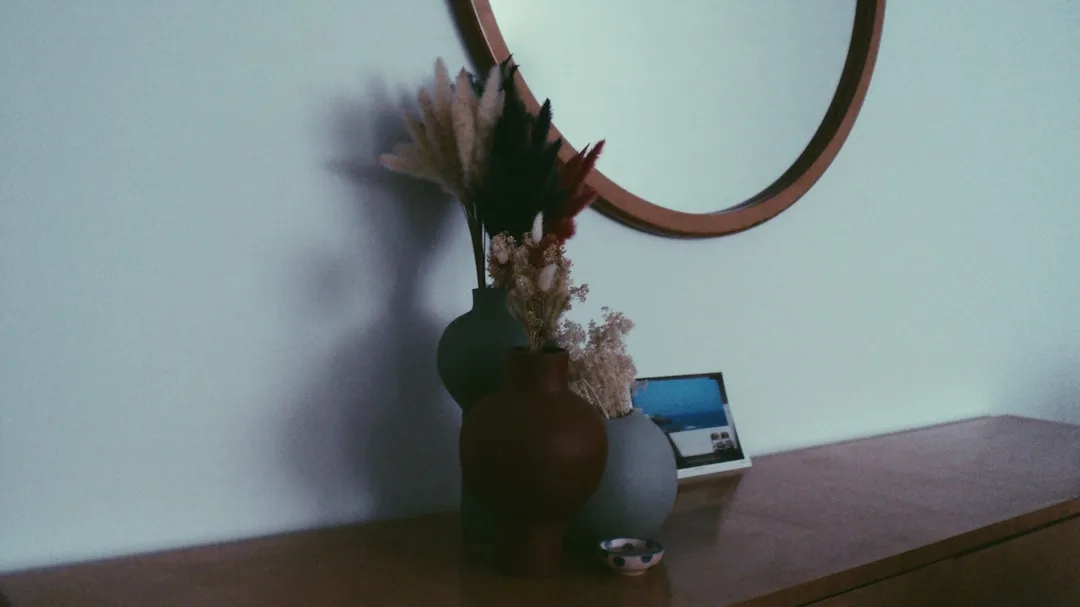
Common mistake: overcrowding with accessories ruins the zen
The number-one Japandi bathroom failure is adding too much décor. Homeowners install pale wood vanities and plaster walls, then fill shelves with bamboo organizers, ceramic soap dispensers, folded towel stacks, and floating plants. Suddenly the space feels cluttered again.
True Japandi minimalism means: one soap dispenser (ceramic, matte), one toothbrush holder, towels stored inside the vanity, and zero decorative objects on the countertop. Shelving should hold one basket of folded linens, period. Negative space is the final material—it should feel as intentional as the plaster walls.
If you inherited a bathroom full of clutter, start by removing 70% of visible objects. See how the space breathes. Then add back only items you use daily.
Stone and ceramic finishes ground the aesthetic in nature
Bathroom flooring in Japandi design uses smooth river pebbles, light basalt, or pale limestone—never high-gloss tile. Brands like Mutina and Ceramiche Vogue produce unglazed, matte-finish ceramic tiles in warm grey and sand tones that mimic natural stone. A typical bathroom floor uses 300x300mm or 400x400mm formats laid in a simple grid, with minimal grout lines.
The matte finish is crucial. Glossy tile reflects light harshly, breaking the calm. Matte surfaces absorb light and feel grounded, almost meditative. Your feet touch a surface that feels like river stone, not a gymnasium.
Pair stone flooring with a single woven rug—jute or natural linen, 600x900mm—placed in front of the vanity for warmth underfoot. This small textile touch echoes Japanese tatami floors without literal tatami (which mould in wet bathrooms).
Lighting becomes sculptural, not purely functional
Japandi bathrooms reject bright overhead downlights. Instead, light sources sit at eye level: a single pendant in frosted glass or paper over the vanity mirror, and a low-voltage wall sconce beside the soaking tub. Japanese makers like Nendo and Danish brands such as & Tradition produce minimal pendant and sconce designs in ceramic, brass, and natural paper that age beautifully.
Warm-white colour temperature (2700K) is non-negotiable. Cool 4000K bathroom lighting feels sterile and contradicts the warmth of pale wood and plaster. Your bathroom should feel like candlelit, not surgical.
Dimmer switches transform the space. Morning light is bright enough to shave and shower; evening light softens to bathroom-as-sanctuary mode. This single detail separates Japandi bathrooms from ordinary minimal designs.